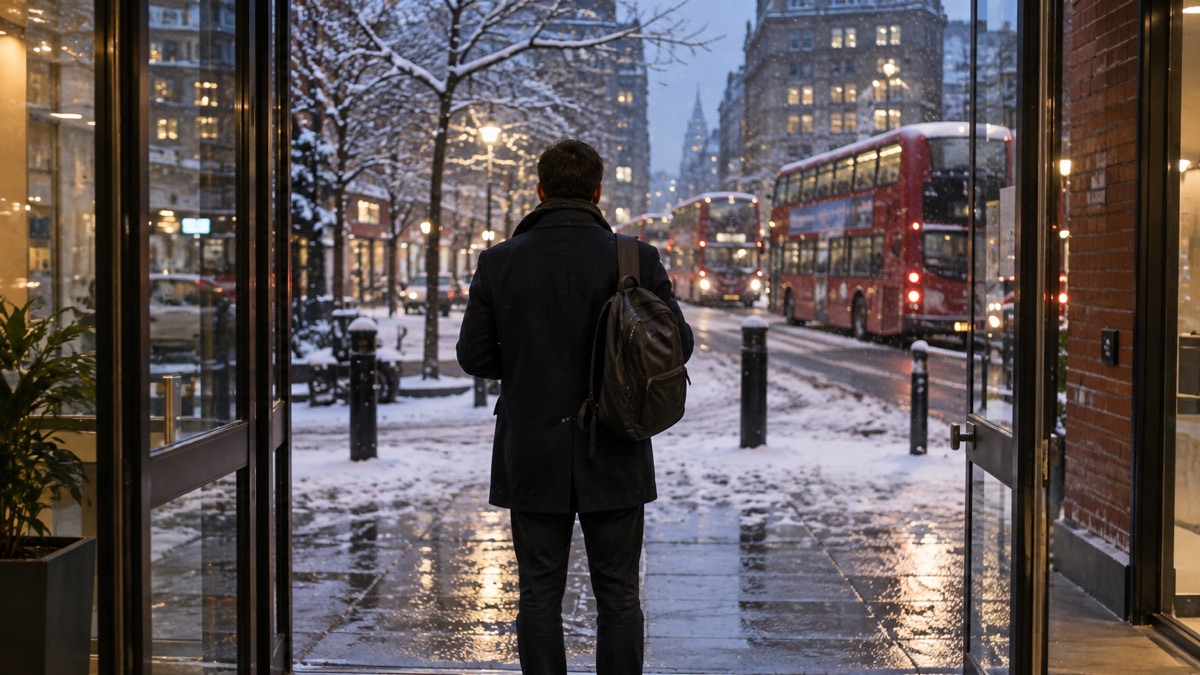
Most emergency advice assumes you are at home when something goes wrong. In practice, a heavy snowfall, a power cut or a transport shutdown can leave you at work for a night, or send you home by a route you did not plan. A small bag in your desk or locker covers that gap, and it costs very little to put together.
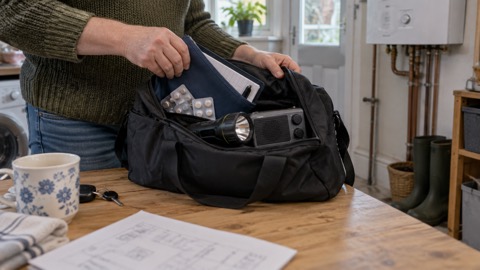
The essentials are the things you cannot borrow from an office: your own medicine, spare glasses, a phone charger, warm and dry clothing, and a paper copy of your household plan and phone numbers. A grab bag helps if you have to leave home quickly in an emergency, or your power or water are disrupted1.
Keep it somewhere you can reach easily, and make sure everyone in your house knows where it is kept2. Then check it each season, so the batteries work and the clothes still fit.
Work grab bag checklist: what to keep at your desk or in your locker
Pack a small, easy-to-carry bag with essentials and store it somewhere accessible, ready to go1. At the very least, keep an up-to-date list of what should go into it, so you can assemble it quickly if a warning comes1. The list below covers what official household and grab bag guidance suggests, adapted for a desk.
Medication, glasses and prescription details come first
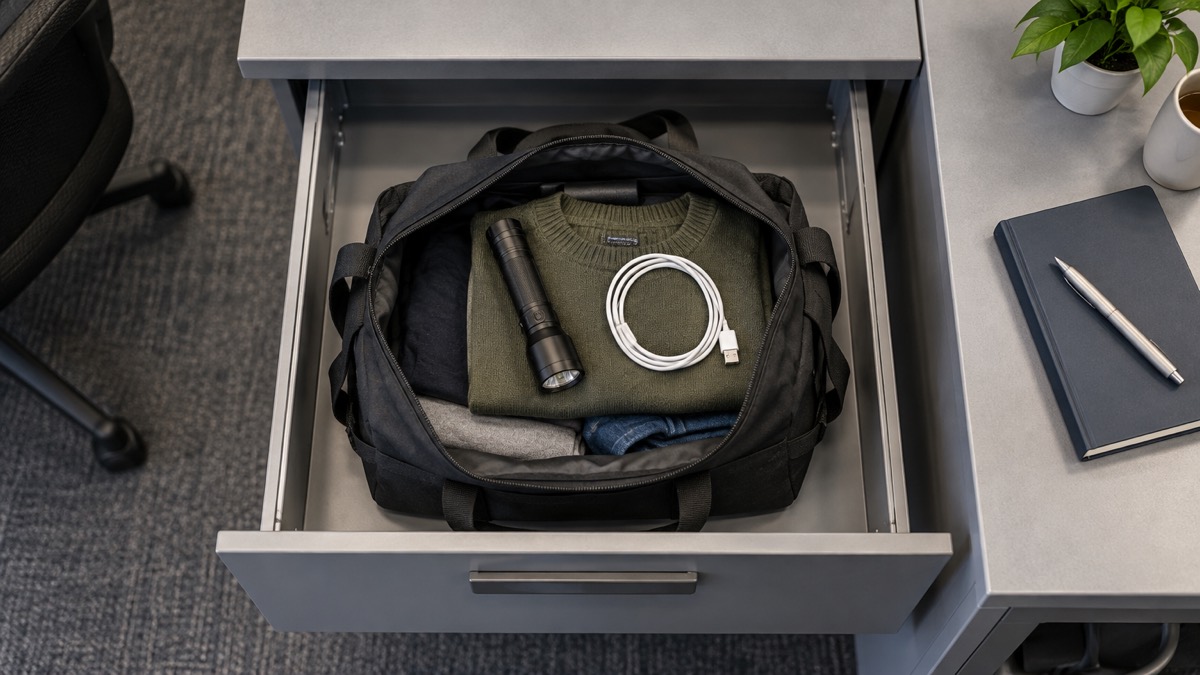
If you take regular medicine, that is the item that decides whether a night at work is an inconvenience or a problem. Official grab bag lists put prescribed medication and medical aids at the top, alongside copies of important documents in a waterproof wallet3. Household kit lists add spare glasses or contact lenses, hearing aid batteries and details of important medicines4.
Keep a small supply at work only if your prescriber or pharmacist agrees, and rotate it so it does not go out of date. Write down what you take and the dose, so someone else can help if you are unwell. The NHS advises people preparing for winter emergencies to keep a small bag ready with essentials such as nightwear, toiletries, comfortable clothing, a phone charger, glasses, hearing aids and emergency contact details12.
Keep a record of contact details for your work, doctor, schools, water supplier, electricity network operator, gas supplier, telephone and internet provider, home insurer and an emergency friend13. Store important documents and items such as medication and identification somewhere you can reach them easily if you have to leave at short notice14.
Phone, charger and a copy of your household plan
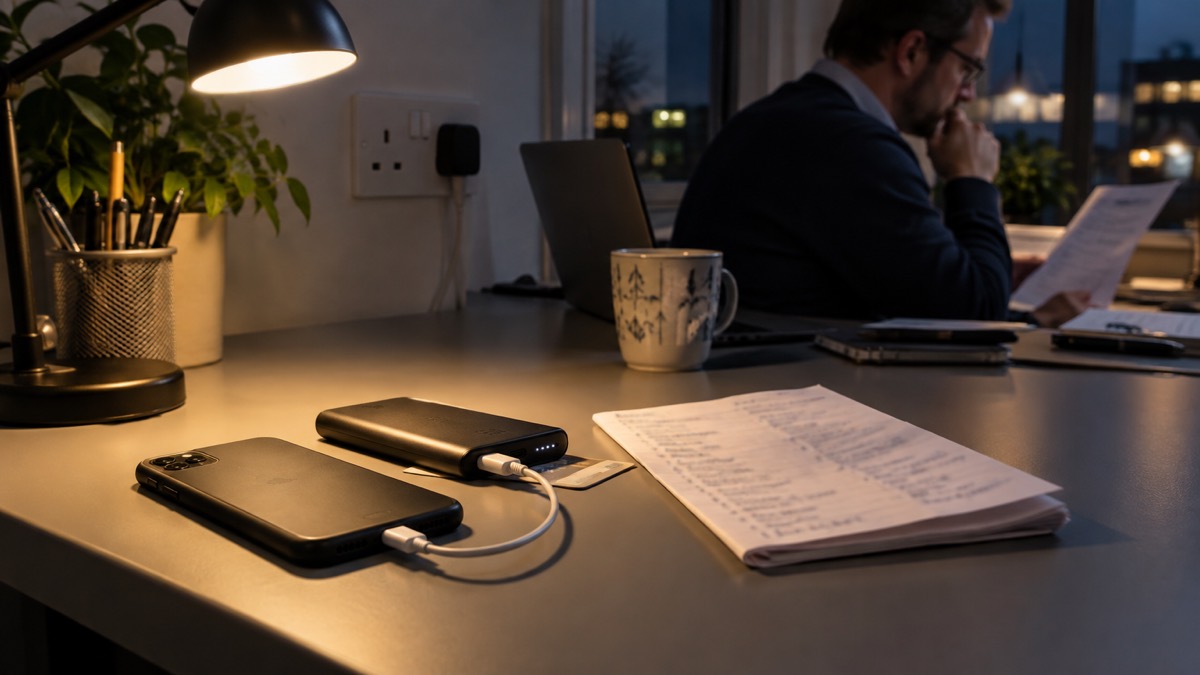
Your phone is the item you will reach for first, so keep it charged and keep a way to charge it. Official power cut advice suggests a power bank or solar charger, and says a charged power pack is worth having even if it only charges a phone, because it keeps you in contact with loved ones3. Keep a paper copy of important phone numbers in case your phone loses power or you cannot access your contacts5.
Your household emergency plan belongs in the bag too. Keep the plan with important documents and save a copy to your phone15. The plan should cover how your family will stay in contact, where you would go if asked to evacuate, and the emergency procedures for your workplace and your child's school16. Store one or more emergency contact numbers on your phone or keep a written copy in your wallet or purse, using the ICE or Medical ID feature if your phone has one17.
Spare clothing for a night away from home
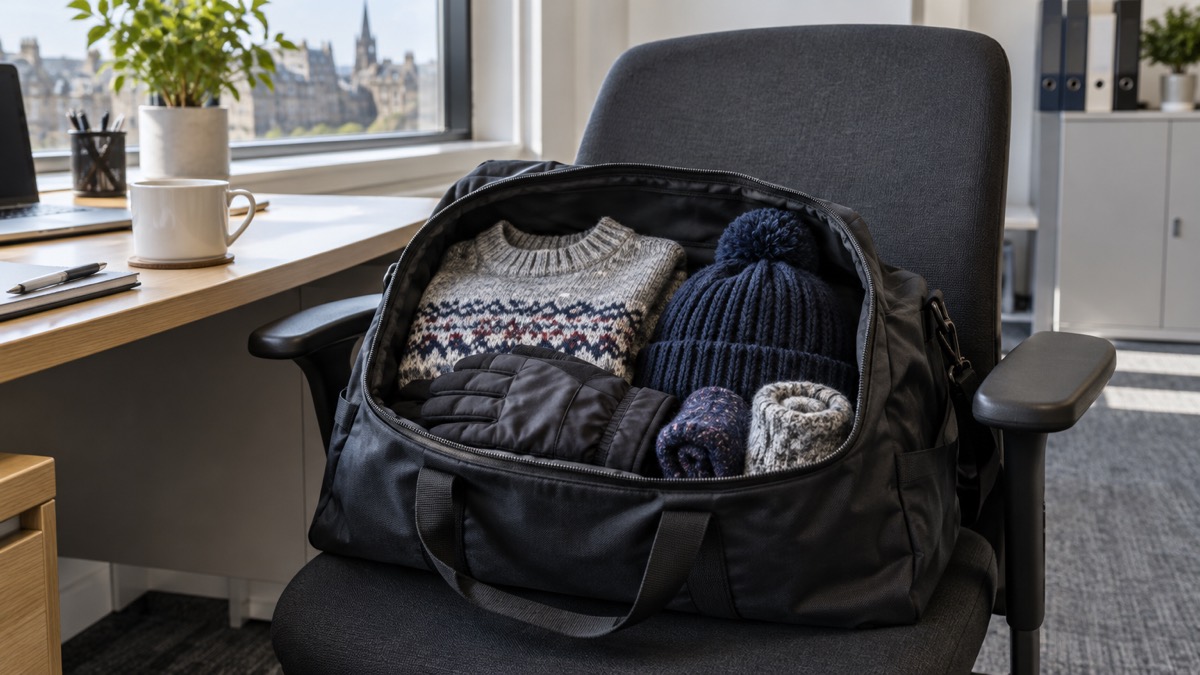
If you cannot get home, the difference between a uncomfortable night and a manageable one is usually dry, warm clothing. Official kit lists suggest one complete change of clothing and sturdy footwear, waterproof clothing, a hat and gloves, and a blanket or sleeping bag for each household member7. A hospital-style grab bag list adds spare underwear, a change of comfortable clothes and a cardigan or shoulder wrap if you feel the cold18. Fire and rescue services include spare clothing in their grab bag guidance19.
Think about the season you are most likely to be caught in. Winter travel advice for drivers suggests a torch, warm clothes and blankets, high-visibility clothing, food and drink and a shovel, and the same instinct applies to a bag at work20. If your journey home involves a walk in the dark, a torch and something reflective matter as much as a jumper.
Check the bag regularly so it is ready when you need it
A bag you have not opened since last winter is a bag you cannot rely on. Official advice is to store emergency items in a bag so they are easy to access in an emergency, particularly if you need to leave your home in a hurry, and to make sure everyone in your house knows where it is kept2. At work, that means a locker, drawer or cupboard, and one colleague who knows where it is.
Check it at the change of season and whenever you change medication or glasses. Replace water and food before they expire, test the torch and radio batteries, and make sure the clothes still fit and suit the weather. If your household plan changes, replace the copy in the bag.
Where to get help and how the four nations differ
Emergency planning is devolved, so the body that publishes household advice differs across the UK, but the core items are the same. In England, the government's Be Ready campaign and local resilience forums publish grab bag and household kit guidance20. In Scotland, Ready Scotland sets out an emergency kit list that includes a mobile phone charger, spare chargers or power banks for equipment you rely on, and essential medication and prescriptions23. In Wales, local councils and fire services publish their own household checklists24. In Northern Ireland, household advice follows the same pattern through local councils and the NI Direct service.
If you need extra help, tell your employer about any medical equipment you rely on, and keep a hard copy of emergency telephone numbers and a torch close by, with phones well charged and a battery back-up considered for essential medical equipment10. For more on what to keep at home, see the household emergency pack and the grab bag guide. If you drive to work, the car kit guide covers what to keep in the boot, and the checking and restocking guide explains how to keep dates under control.
Sources (25)
- Preparing your family: step 1, Essex Prepared, 2026
- Preparing for an emergency, Nottinghamshire County Council, 2026
- Power cuts, West Yorkshire Prepared, 2026
- Phone and broadband outages, Prepare campaign, 2026
- Preparing for civil emergencies, Argyll and Bute Council, 2026
- Preparing for emergencies, North Hertfordshire District Council, 2015
- Emergency kit checklist, Neath Port Talbot Council, 2026
- Emergency pack, Lancashire Prepared, 2026
- Emergency home emergency plan, Royal Borough of Windsor and Maidenhead, 2025
- ICE template, Surrey County Council, 2026
- Power cuts, Wigan Council, 2026
- Be prepared for winter emergencies, NHS Norfolk and Suffolk ICB, 2026
- Protecting yourself, West Northamptonshire Council, 2024
- Emergency supplies kit, Denbighshire County Council, 2020
- Emergency planning, Scottish Borders Council, 2026
- Emergency preparations you can do, Moray Council, 2026
- Travel advice, Prepare campaign, 2026
- Planning ahead, Torbay and South Devon NHS Foundation Trust, 2025
- Reduce the risk of wildfire damage, Hampshire and Isle of Wight Fire and Rescue Service, 2026
- Be ready for emergencies, Be Ready campaign, 2026
- Stay safe this winter, North Wales Fire and Rescue Service, 2016
- Preparing yourself for emergencies, London Resilience Partnership, 2026
- Emergency kit, Ready Scotland, 2026
- Get prepared, Carmarthenshire County Council, 2026
- Wildfires, South Wales Fire and Rescue Service, 2026
 30-Day Household Checklist
 Emergency Plan Template
 Supply Interruption Checklist