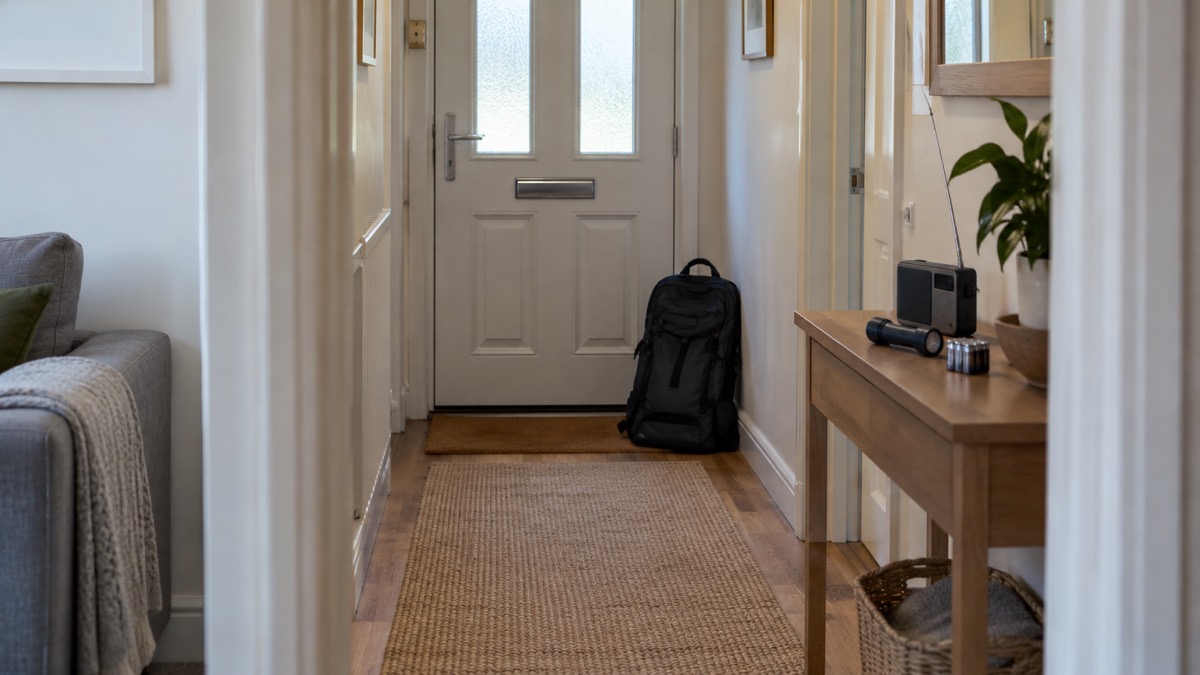
For most emergencies in the UK, the official advice is the same wherever you live: go in, stay in and tune in. Go indoors, close doors and windows, stay there until the emergency services or local radio tell you otherwise, and listen to local radio, television or official sources online for public information and advice1. The reason is simple: in emergencies where the danger is outside, such as a chemical release or a radiation emergency, your home is usually the safest shelter available, and moving about outside puts you in the danger zone and in the way of responders4.
The big exception is fire. If there is a fire in your home or affecting your home, get out, stay out and call 999, and follow the advice of the fire and rescue service6. Do not stop to collect belongings or valuables7. Floods sit somewhere in between: official advice is often to stay in your home and move upstairs rather than leave, because flood water itself is a danger8.
This page explains how to weigh staying put against leaving when no instruction has been given, why official instructions always come first, and how to be ready for either choice. If you have been told to evacuate, see What to Do If You Are Asked to Evacuate; if you have been told to shelter, see Sheltering in Place: Staying Indoors When Danger Is Outside.
Most emergencies: go in, stay in, tune in
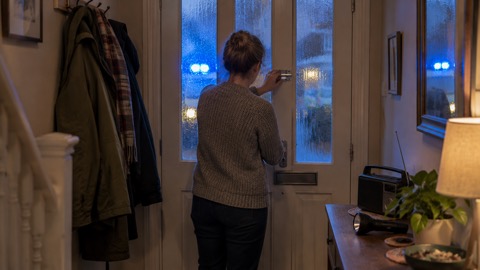
For most emergencies, the advice is normally GO IN, STAY IN AND TUNE IN1. It means three things. Go indoors and close all doors and windows. Stay indoors until you are told otherwise by the emergency services or local radio. Tune in to local radio, TV or the internet, where public information and advice from the emergency responders will be broadcast11.
The logic is that in most major emergencies the danger is outside12. If you are told you are near a radiation emergency, the most important thing to do is go indoors as soon as you can and stay there, close the doors and windows, and stay as far away from external walls as possible5. The same sheltering advice applies if you are outside and alerted to a chemical emergency nearby: shelter, go in, stay in, tune in4. The UK government's Prepare campaign puts it plainly: those affected may be asked to "Go in, Stay in and Tune in" to local or national radio stations or to check official sources of information online3.
Some councils add a simple framework for the first moments of any emergency: STAR, meaning Stop, Think, Assess, Respond, and contact 999 if people are injured or in danger13. Staying in does not mean ignoring the situation: remain indoors as long as it is safe to do so and wait until the emergency has passed14, and keep listening so you hear the moment the advice changes.
When to leave straight away without waiting to be told
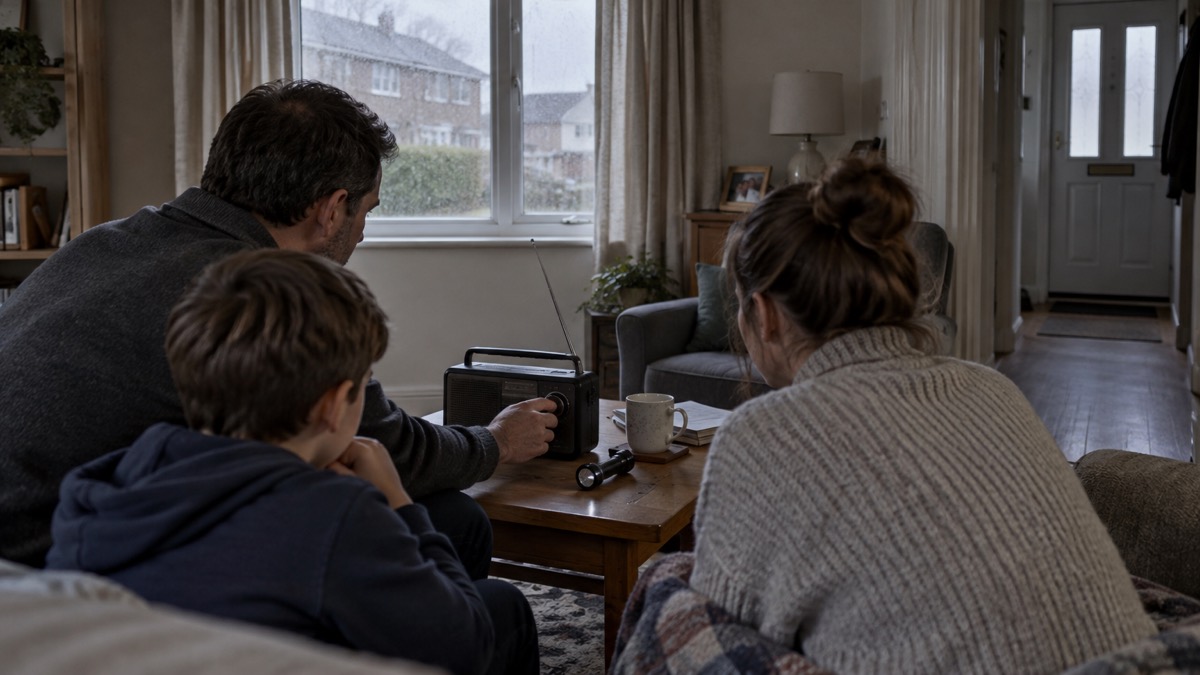
Fire is the clear case where you leave immediately, without waiting for anyone to tell you. If there is a fire in your home, get out, stay out and call 999 when it is safe to do so, and follow the advice of the fire and rescue service6. Warwickshire's fire escape plan advice is blunt about speed: "In an emergency, get out as quickly as possible and don't stop to collect personal belongings or valuables"7. The same rule applies to your grab bag: it is there for planned evacuations, not for a fire, and nothing in it is worth going back for.
The same rule applies wherever you are living. If there is a fire in a caravan or mobile home, get out, stay out and call the fire and rescue service immediately15. The pattern is consistent: get out, stay out, call 99916.
What you must not do is go back. Once you are out, do not re-enter your home until the fire and rescue service has made it safe6. This applies even when it is hardest: if someone is still inside, wait for the fire and rescue service to arrive, tell them about the person, and they will find them quicker than you17. Firefighters have protective equipment and training; you do not.
Leave when the emergency services tell you to
When the emergency services ask you to leave, the instruction is not a suggestion. Scottish Borders Council's emergency planning advice states: "If the police ask you to leave your home, please do so. They will ask you to go to a place of safety. If you decide to go somewhere else, let them know so you can be accounted for"10. Being accounted for matters: if the emergency services do not know where you are, they cannot check you are safe, and they may send people into a dangerous area looking for you.
The UK government's Prepare campaign explains the stakes directly. Delaying or refusing to evacuate may put your life at risk, as well as putting emergency responders in danger if they later have to return to properties to deliver the evacuation request again, or to rescue someone trapped3. A refusal does not only affect you.
If you are evacuated overnight and you choose not to stay at the rest centre the council has opened, you still need to make yourself accountable: inform the emergency services of where you have gone and how you can be contacted by calling 10118. For the full process of an evacuation, including what happens at a rest centre, see What to Do If You Are Asked to Evacuate and Rest Centres: Where You Go If You Are Evacuated.
Stay put in a high-rise flat fire: when it applies and when to get out
Flat and high-rise buildings have their own fire procedures, and the right action depends on where the fire is and what your building's strategy is. If you live in a block of flats or a high-rise building, there will be specific advice about what to do in the event of a fire, so find out your building's procedure before anything happens19.
The general principle for most high-rise domestic buildings is stay put. The Scottish Fire and Rescue Service's advice for high-rise residents is: "Unless you are directly affected by heat smoke or fire, or you have been told to leave your flat by the Scottish Fire and Rescue Service, stay inside with the front door closed"9. South Wales Fire and Rescue Service gives the same instruction: if your building's procedure is to stay put, remain in your flat unless there is smoke or flames entering, and if you need to escape, call 999 and wait for directions20. London Fire Brigade's easy-read guidance puts it simply: it is usually safer to stay in your own flat unless fire or smoke is affecting you, and you should do what the fire brigade or people who provide you with support say21.
The exceptions are clear. You should leave your flat if you are directly affected by heat, smoke or fire, or if the fire and rescue service or police tells you to get out9. And if the fire is in your flat, you leave the flat and the building: close all doors on your way out and do not use the lift21.
| Situation | What to do |
|---|---|
| Fire in your flat | Leave the flat and the building, close all doors on your way out, do not use the lift, call 99921 |
| Fire elsewhere in the building, stay put building | Stay in your flat with the front door closed unless heat, smoke or fire affects you, or the fire service or police tells you to leave9 |
| Fire elsewhere in the building, Stay Safe policy building | You can remain in your flat; you do not need to leave the building22 |
| Smoke or flames entering your flat | Call 999 and follow directions to escape20 |
Some buildings operate a Stay Safe policy rather than a traditional stay put policy. Manchester Fire and Rescue Service explains the difference: if there is a fire in your flat you should leave the flat and the building, but if there is a fire somewhere else in the building, you can remain in your flat and do not need to leave the building22. Check which policy your building operates, because it changes what you do.
If you do have to escape from a flat, Manchester Fire and Rescue Service gives a sequence worth learning: where possible and safe, close the door to the room where the fire is, alert people in the flat, activate any manual alarms, call 999 and stay on the phone whilst evacuating, stay low if there is smoke, close all doors behind you, use the stairs and keep left, and do not use the lift unless instructed by a firefighter23. Once outside, move away from the building, go to the assembly point and wait for the fire service to arrive, and do not re-enter until told it is safe by a firefighter23. For more on fire, carbon monoxide and gas risks at home, see Home Emergencies: Fire, Carbon Monoxide, Gas Leaks and Burst Pipes.
Floods: when moving upstairs is safer than leaving
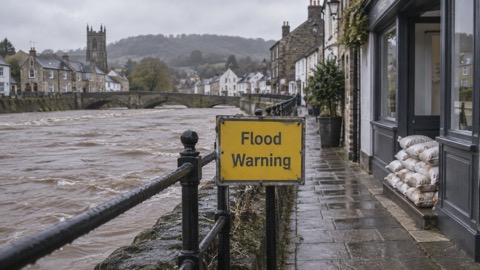
Flooding is the emergency where staying in can beat leaving, because the danger is often the water between you and the way out. Mid and West Wales Fire and Rescue Service's flooding advice is: "Stay in your home if you can - move upstairs unless clearly unsafe to do so"8. Moving upstairs keeps you out of flood water, which can be fast-moving, contaminated and deeper than it looks, while leaving may mean wading or driving through exactly the hazard you should avoid.
The judgement is about your own home. If moving upstairs is clearly unsafe, if the water is rising into the upper floor, or if you are told to leave, then the balance changes. As with every emergency, listen to what the emergency services and local radio are saying, because the advice can shift as the situation develops. For a fuller guide to preparing for and getting through floods, see Flooding: A Household Guide.
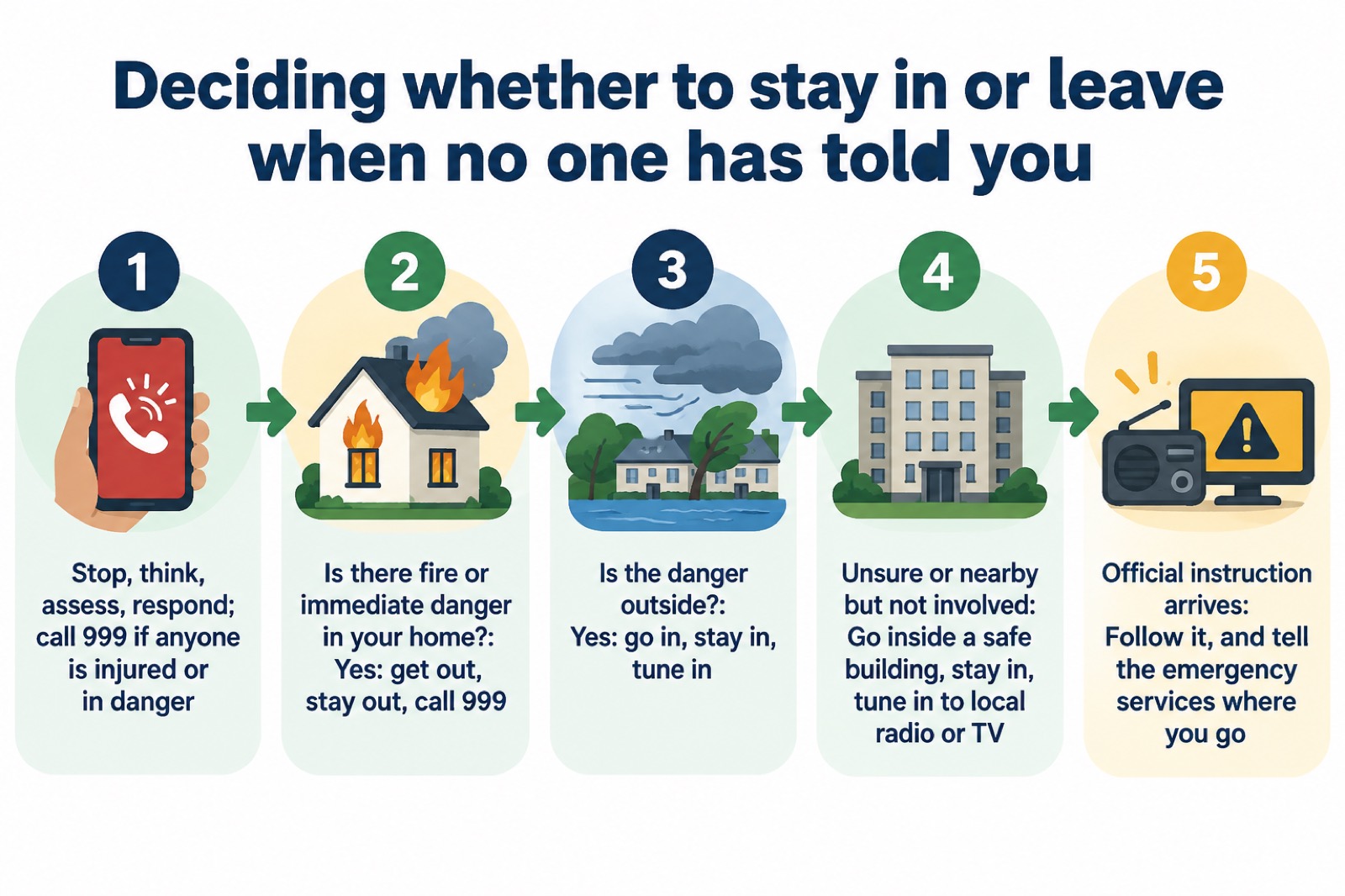
How to decide if no one has told you what to do
Sometimes an emergency begins and no instruction has reached you. Lincolnshire Council's advice for major emergencies covers this moment: if you are not involved in the incident but are close by or believe you may be in danger, the best thing to do is go inside a safe building, stay inside until advised otherwise, and tune in to local radio or TV for information24. In other words, the default is the same go in, stay in, tune in.
Before deciding, use the STAR approach from community preparedness guidance: Stop, Think, Assess, Respond, and contact 999 if people are injured or in danger13. Ask yourself where the danger is. If the danger is outside, go in, stay in, tune in12. If the danger is inside your home, above all fire, get out, stay out and call 9996. If you are unsure, getting indoors and finding official information is almost always the safer first move, because it buys you time to hear what the emergency services are advising without putting yourself in harm's way.
Two things should not drive your decision. Do not go back inside to collect anything once you have escaped a fire7. And if someone is still inside, wait for the fire and rescue service and tell them about the person, as they will find them quicker than you6. The grab bag is for planned evacuations, not immediate ones.
Getting ready for either choice before an emergency
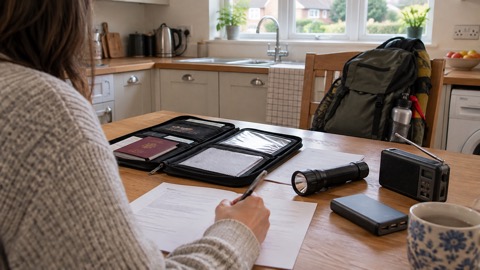
The best time to make the stay-or-leave decision is before anything happens, when you are calm and can check things. Have a household emergency plan ready, including who you would stay with if your home was evacuated14. That single question covers both halves of the decision: your way out, and your destination.
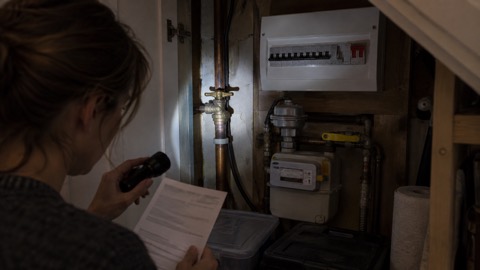
If you are asked to evacuate and you have time, Scottish Borders Council advises checking the home before you go: make sure that fires are out, your water, gas and electricity are switched off, and your property is locked up10. Knowing where your stopcock, gas valve and fuse box are before an emergency means you can do this quickly: see Finding Your Stopcock, Gas Valve and Fuse Box.
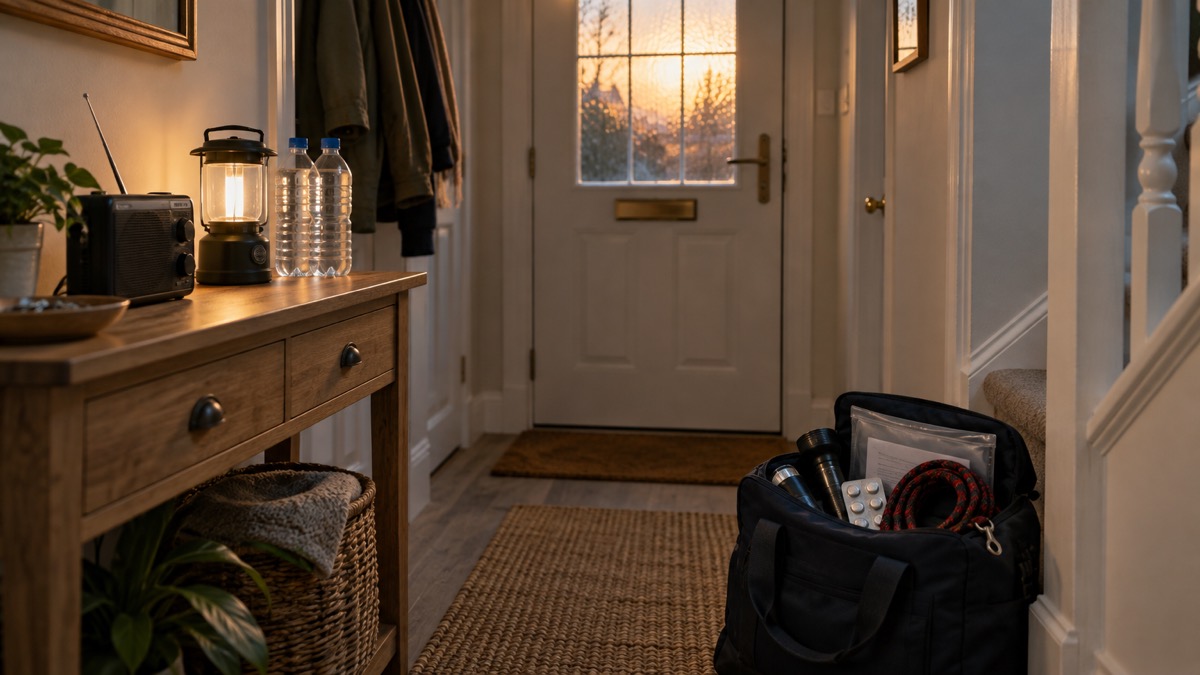
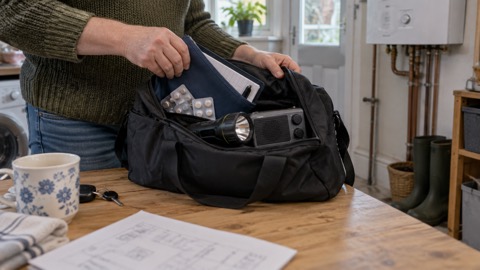
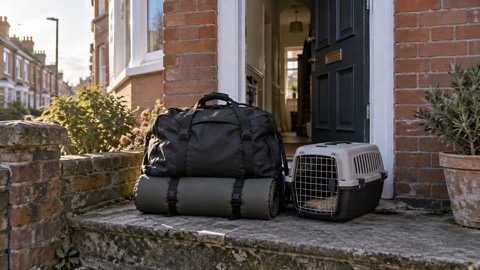
For the leaving half of the decision, keep a grab bag ready and available in case an emergency evacuation requires you to leave quickly25. If you are at home when an emergency happens, try to gather some essential items before you leave your property, and keep such items in the same place within the home so you can find them fast26. If you have a car, Lincolnshire Council advises keeping a half tank of fuel in it at all times in case you need to evacuate27. For what to put in the bag itself, see Emergency Kit: What a UK Household Should Keep Ready and Before You Leave Home in an Emergency: Checklist.
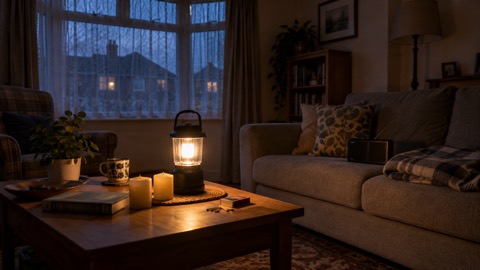
For the staying half, agree with your household how you would shelter, and identify which room you would gather in. As part of your planning, know the safest way to leave your home and consider where you could stay temporarily, including who you would stay with if your home was evacuated28. A written household plan holds all of this in one place: see How to Make a Household Emergency Plan and the Household Emergency Plan Template.
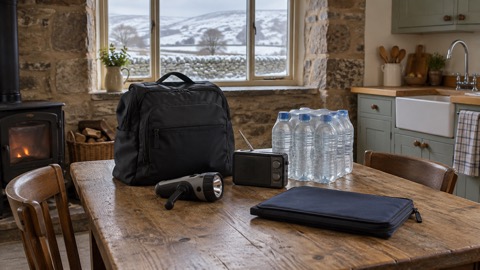
*A grab bag kept by the door means a planned evacuation takes minutes, not an hour of searching.
Leaving safely: what to take and who to tell
If the evacuation is planned rather than immediate, take the essentials. Essential medication comes first26, along with baby and pet supplies if anyone in the household needs them26. If you have pets that cannot be left alone for a sustained period, take some food, a basket or bed, and leads10. Take your pets with you27.
Before you leave, if you have time, put out fires, switch off water, gas and electricity, and lock up10. Then tell people. If you go somewhere other than the place of safety the police suggest, let them know so you can be accounted for10. If the evacuation is overnight and you are not staying at the rest centre, inform the emergency services of where you have gone and how you can be contacted by calling 10118.
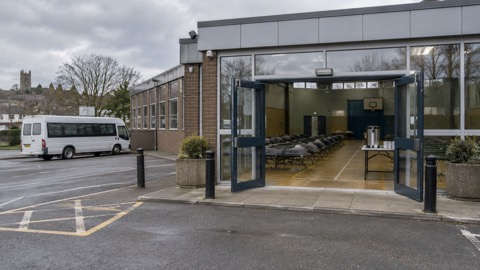
Where you go is your choice within the options. Somerset Council lists them: if you are asked to evacuate your home, you can go to relatives, friends, a community place of safety or a local authority rest centre29. Greater Manchester Combined Authority's resilience guidance adds that the best option is to see if you can stay with any friends or relatives, and that the local authority may open a rest centre14. The Greater London Authority's guidance for London agrees: the best option is to see if you can stay with any friends or relatives30.
Pets need a plan of their own, because not everywhere will take them. Wiltshire and Swindon Prepared advises that not all shelters are suitable for pets, so consider where you might take them in an emergency, and listen to local emergency services when asked to evacuate or shelter at home31. The Greater London Authority warns that some emergency shelters may only be able to take assistance animals30. Birmingham City Council suggests you agree a plan with a trusted neighbour and make sure they know your pet and where to find a lead or carrier32. Westminster City Council's older guidance is firmer still: you are advised not to bring pets to an evacuation centre, so have a plan for where they can stay28. For a full guide, see Pets and Animals in an Emergency: A Household Guide.
Where to get official advice during an emergency
During the emergency itself, official information is what should move you from staying to leaving or back. Tune in to local radio, TV or the internet, where public information and advice from the emergency responders will be broadcast33. Local radio is repeatedly named in official guidance because it works when other channels fail and carries information specific to your area1.
If people are injured or in danger, contact 99913. For non-emergency contact with the police, such as telling them where you have gone after an overnight evacuation, call 10118. For staying informed and in touch when networks are under strain, see Staying Informed and in Touch in an Emergency: A Household Guide.
Neighbours are part of where help comes from, and where you can give it. Surrey Council asks households to check on anyone in their neighbourhood who may not be known to emergency, health and social care services but may need help in an emergency, and to support them if they can18. If they need more than you can provide, such as transport, medication, temporary accommodation or medical attention, alert the local council13. Households that need extra help, including older, disabled and medically dependent people, can find specific advice at Extra Help in an Emergency, and community-level preparation is covered in Community Resilience: A Guide for Neighbours and Local Groups.
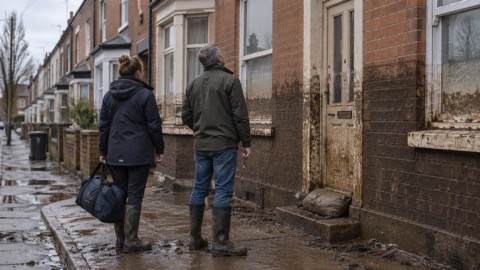
When the emergency is over, do not enter a dangerous area until the emergency services tell you it is safe14, and after a fire never re-enter until the fire and rescue service has made it safe6. See Returning Home After an Emergency and Recovering After a Major Emergency for what comes next.
Sources (33)
- Northumbria Local Resilience Forum, Northumberland County Council
- Get Prepared for Emergencies, Carmarthenshire County Council
- Be Informed About Hazards, UK Government Prepare campaign
- What to Do in a Chemical Emergency, GOV.UK, 2024
- Hazardous Substance Exposure, Essex Prepared
- What to Do If You Have a Fire, Devon and Somerset Fire and Rescue Service
- Fire Escape Plan, Warwickshire County Council
- Flooding Advice, Mid and West Wales Fire and Rescue Service
- High-Rise Safety, Scottish Fire and Rescue Service
- Emergency Planning, Scottish Borders Council
- Get Prepared - Carmarthenshire County Council, Carmarthenshire County Council
- Community Risk Register 2025, North Yorkshire Local Resilience Forum, 2025
- Are You Ready booklet, Culham Parish Council, 2025
- Prepare Yourself, Greater Manchester Combined Authority
- Simple Steps to Stay Safe This Summer, Northern Ireland Fire and Rescue Service, 2024
- Planning an Escape Route, Manchester Fire and Rescue Service
- Book a Home Safety Visit, Devon and Somerset Fire and Rescue Service
- Homes Prepared, Surrey County Council
- Home Fire Safety - Northern Ireland Fire & Rescue Service, Northern Ireland Fire & Rescue Service
- In the Event of a Fire, South Wales Fire and Rescue Service
- Easy Read Fire Safety Booklet, London Fire Brigade
- Fire Safety Information for Residents Living in Flats Operating a Stay Safe Policy, Manchester Fire and Rescue Service
- Fire Safety Information for Residents Living in Flats Operating an Evacuation Strategy, Manchester Fire and Rescue Service
- Get Help and Advice in an Emergency, Lincolnshire County Council
- Emergency Kits and Grab Bags, Central Bedfordshire Council
- NPT Prepared Emergency Kit Checklist, Neath Port Talbot Council
- Get Help and Advice in an Emergency: Evacuation, Lincolnshire County Council
- Prepare Your Household for Emergencies, Westminster City Council, 2014
- Preparing for Emergencies, Somerset Council
- London Preparedness Guidance, Greater London Authority
- Your Pets, Wiltshire and Swindon Prepared
- Are You Ready, Birmingham City Council
- Emergency Advice for Residents, Warwickshire County Council
 30-Day Household Checklist
 Emergency Plan Template
 Supply Interruption Checklist
 Household Emergency Plan
 Emergencies to Prepare For
 Community Risk Registers
 What to Do in an Emergency
 Sheltering in Place
 If You Are Asked to Evacuate
 Planning Your Evacuation
 Rest Centres
 Stopcock, Gas Valve and Fuse Box
 Returning Home
 Recovering After an Emergency
 Scotland Emergency Planning