
If you are evacuated from your home, you can usually take your dog or cat to an emergency rest centre, but space for animals is limited and not every shelter can accept them. West Yorkshire Prepared says rest centres "will have a limited capacity to house pets, but every effort will be made to accommodate your pets"1. Surrey County Council puts it more simply: pets can be taken to rest centres, and you will be advised what to do with them on arrival2.
The safest approach is to plan where your pet will stay before you ever have to leave. Lancashire Prepared advises that if you have pets, you should plan where they can stay, as there will only be basic facilities at the rest centre3. Some emergency shelters can only take assistance animals4. If you and your pet cannot stay together, call friends, family, a vet or a boarding kennel in a safer area to arrange care5.
Take your pet with you when you evacuate6. Pack pet food, a water bowl, any medication, and a lead or carrier for every animal7.
Rest centres take pets where they can, but space is limited
A rest centre is a temporary shelter for people who have been evacuated and cannot stay with family or friends. Ashford Borough Council describes it as a place where basic care and welfare support, information and advice are provided10. They are usually set up in local venues such as a leisure centre or community building1.
On pets, the picture varies by council and by the incident. Some authorities say plainly that pets can be brought and that you will be told what to do on arrival2. Others warn that some emergency shelters may only be able to take assistance animals4, and that not all shelters are suitable for pets, so you should think about where you might take yours11. Greater Manchester Combined Authority says some emergency shelters only permit animals that assist people12.
Where a council runs the rest centre, arrangements will be made to keep pets safe13. Westminster City Council goes further: if it makes a reception centre available, you may bring your dog or cat to a specific pet area within the centre, and you remain responsible for the animal's welfare and for making sure it is not a risk to other people and animals7.
| What the guidance says | Who says it |
|---|---|
| Limited capacity for pets, but every effort to accommodate them | West Yorkshire Prepared1 |
| Pets can be taken; you will be advised on arrival | Surrey County Council2 |
| Some shelters may only take assistance animals | London.gov.uk4 |
| Not all shelters are suitable for pets | Wiltshire and Swindon Prepared11 |
| Specific pet area, owner responsible for welfare | Westminster City Council7 |
The practical lesson is the same everywhere: assume your pet can come, but do not assume it will be comfortable or that there will be room. Ask your council in advance whether its rest centres accept pets, and check again if an evacuation is called.
Plan where your pet will stay before you have to leave
The single most useful thing you can do is decide, now, where your pet would go if you had to leave home. Birmingham City Council advises planning so your pets have a safe place to stay13. Slough Borough Council warns that some emergency shelters cannot accept pets, and that it may be difficult, if not impossible, to find shelter for your animals in the middle of a disaster, so plan ahead5.
Your options, in order of preference:
- With you at the rest centre, if the centre can take pets and has space1.
- With family or friends in a safer area. Slough advises calling friends, family members, vets or boarding kennels in a safer area to arrange safe foster care if you and your pet cannot stay together5.
- At a boarding kennel or with a vet outside the affected area, arranged in advance where possible5.
- In the car, if you have driven to a reception centre. Cumbria's guidance for a reception centre says that if you bring pets in a car, leave them in the car but do not fully close the windows14.
Write the plan down and keep it with your household emergency plan. Include your pet's microchip details, medication and vet contact. North Yorkshire Fire and Rescue Service suggests checking, before a storm, whether your pet has medication it would need away from the property, and making sure identification tags are on and the animal is microchipped15. The same checks apply to any evacuation.
What to pack for your pet
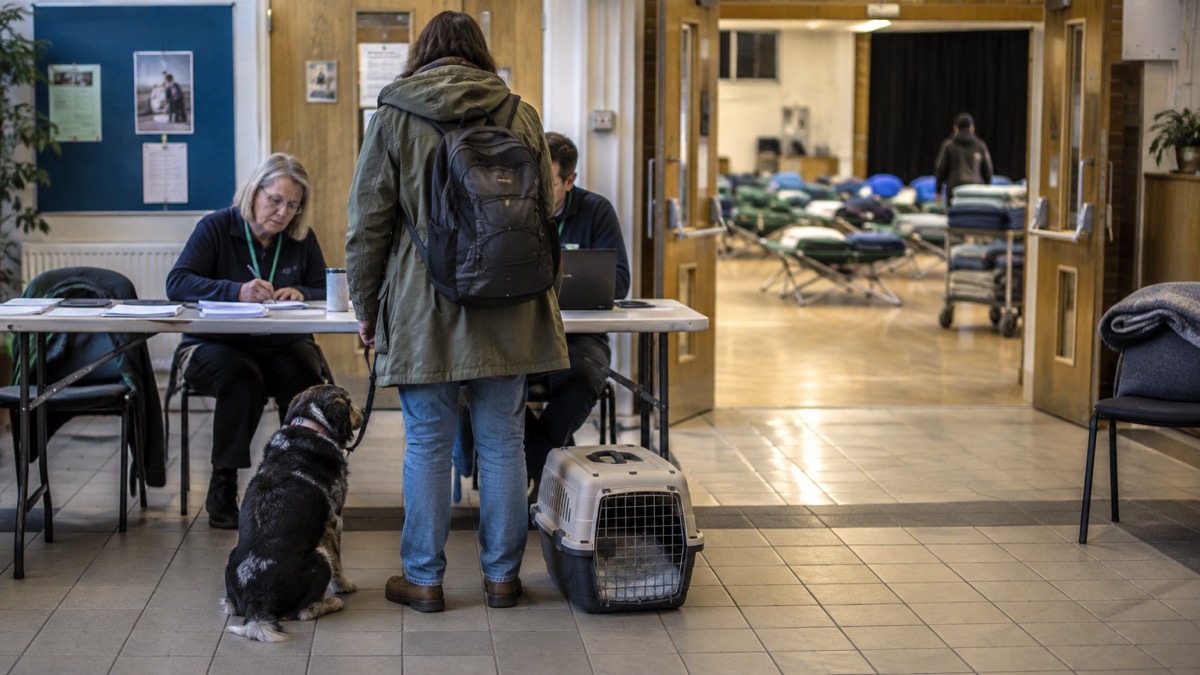
Rest centres provide for people, not animals. Bring what your pet needs for at least the first day. Medway Council's pet emergency grab bag list is a good model: a lead or carrier for every animal, any medications your animals need, pet food, vaccination certificates, litter, paper towelling or bedding if needed, and toys8. If leads and carriers will not fit in the bag, keep them as close to it as possible8.
Other councils add detail. North Devon Council lists pet food, medication, a water bowl and a suitable carrier where needed16. Wiltshire Council includes emergency medication and food for pets17. Northern Ireland's nidirect service says to put some food in your kit for them and anything else they might need, such as a collar or lead, water bowl or medication18. Scottish Borders Council advises taking some food, a basket or bed, and leads for pets that cannot be left alone for a sustained period19.
| Item | Why it matters |
|---|---|
| Lead or carrier for every animal | Put cats and small animals in a pet carrier or secure box7 |
| Pet food and treats | Take their food with you7 |
| Water bowl | Part of the kit you pack for your pet7 |
| Medication | Part of the kit you pack for your pet7 |
| Vaccination certificates | Useful if your pet needs to go to a kennel or vet8 |
| Litter, bedding, paper towelling | Part of the kit you pack for your pet7 |
Keep a supply of pet food and supplies at home too. Newport City Council advises keeping baby and pet supplies at home in case of an emergency20. A separate guide covers how much pet food and water to store for an emergency.
What to expect at the rest centre: basic facilities only
Rest centres can provide short-term shelter, warmth, food and refreshment1. Moray Council says a rest centre is usually for a short-term duration, but could in certain circumstances be required overnight21. Lewisham Council describes the facilities as seating and very basic sleeping facilities, such as blankets and airbeds22.
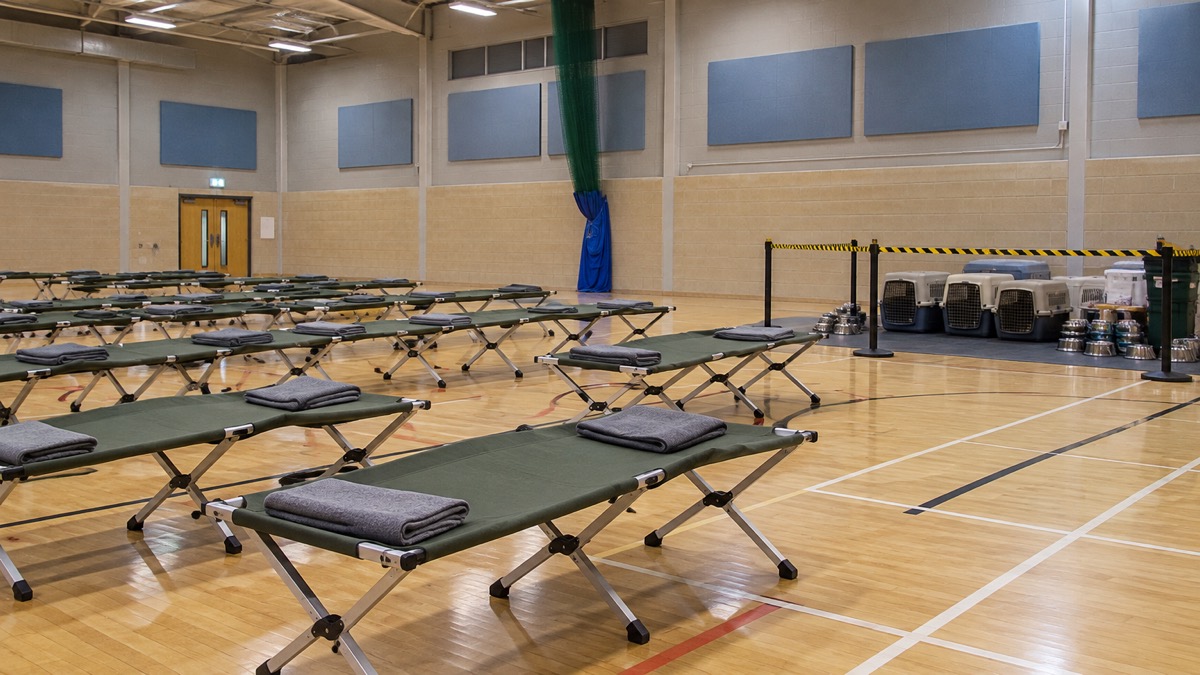
When you arrive you will be asked to provide details of yourself and any family members present22. Moray lists the support typically offered: registering evacuees so they receive appropriate support, catering, arranging longer-term accommodation, first aid, helping people contact family and friends, and providing information on the emergency21.
For your pet, expect the basics and no more:
- A designated area, if you are lucky. Westminster's model is a specific pet area within the centre7.
- Your own supplies. Food, bowls, bedding and litter are yours to bring8.
- A lead or carrier at all times. Lewisham asks that if you have a pet with you, you keep it under control22.
- Responsibility stays with you. Westminster says you remain responsible for the animal's welfare and for ensuring it is not a risk to others7.
In some cases the RSPCA may be able to help accommodate pets or assist with minor injuries, but Lewisham says an inspector will be asked to attend if this is necessary22. Do not rely on it; it is a fallback, not a service you can book.
If your pet cannot stay with you at the rest centre
Sometimes the centre is full, or the shelter only takes assistance animals4. Have a second plan ready.
- Call ahead. Use your written list of family, friends, vets and boarding kennels in a safer area5.
- Ask the council. If you go to a rest centre run by your local council, arrangements will be made to keep pets safe13. Tell staff as soon as you arrive.
- Use the car if you have one. At a reception centre, Cumbria advises leaving pets in the car with the windows not fully closed14.
- Tell the emergency services where you are. Surrey County Council says that if the evacuation is overnight and you choose not to stay at the rest centre, you should inform the emergency services of where you have gone and how you can be contacted by calling 1012.
If you truly cannot take your pet, tell the emergency services and your council what you have left behind and where. A separate guide covers what to do if you have to leave a pet behind in an evacuation.
Assistance dogs, small pets and livestock
Assistance dogs. These are treated differently. Some emergency shelters may only be able to take assistance animals4. Ready Scotland advises that if you have an assistance dog, you should include arrangements for their food, water, transport and evacuation in your emergency plan23. Tell staff on arrival that your dog is an assistance dog.
Cats and small animals. Most evacuation centres will let you bring your pets; take their food and put cats and small animals in a pet carrier or secure box24. The same advice appears in the government's personal flood plan: many centres will allow you to bring your pet, and cats or small animals should go in a carrier or small box9. Natural Resources Wales gives the same guidance for Wales25.
Livestock and farm animals. Livestock cannot be accommodated at a reception centre14. If you keep farm animals, plan separately for where they will go and how they will be moved. A separate guide covers horses and livestock in floods and snow.
If an ambulance is coming. If someone in the household needs an ambulance, put pets somewhere safe before the crew arrives26.
Where to get help and how to prepare
- Your council. Ask whether its rest centres accept pets and what it would expect you to bring. Check with your council if pets are allowed at evacuation centres27.
- Your household emergency plan. Include your pet's food, water, transport and evacuation arrangements, and for assistance dogs say so explicitly23. See including your pets in a household emergency plan.
- Your emergency kit. Add pet food, a bowl, medication and a lead or carrier18.
- Chemical incidents. If there is a chemical accident, bring pets indoors28.
- Flooding. For flood-specific pet advice, see keeping pets safe before, during and after a flood.
The local authority will provide a rest centre for your initial safety and welfare if required29. Treat it as a safe place to be, not a place set up for animals, and you will arrive prepared for whatever it can offer your pet.
Sources (29)
- Pets, West Yorkshire Prepared, 2026
- Homes prepared, Surrey County Council, 2026
- Terrorist attack, Lancashire Prepared, 2026
- Preparing yourself for emergencies, London.gov.uk, 2026
- You prepare for emergency, Slough Borough Council, 2026
- Get help and advice in an emergency, Lincolnshire County Council, 2026
- Pet welfare emergency, Westminster City Council, 2025
- Looking after your pets in an emergency, Medway Council, 2026
- Personal flood plan, GOV.UK, 2023
- Flooding and sandbags advice on what to do to protect your own home, how we can support you and what to do during an evacuation., Ashford Borough Council
- Your pets, Wiltshire and Swindon Prepared, 2026
- Prepare yourself, Greater Manchester Combined Authority, 2026
- Are you ready, Birmingham City Council, 2026
- Reception centre guidance, Cumbria County Council, 2023
- Stay safe during Storm Babet, North Yorkshire Fire and Rescue Service, 2023
- Be prepared for emergencies, North Devon Council, 2026
- Planning for an emergency kit, Wiltshire Council, 2026
- Household emergency kit, nidirect, 2026
- Emergency planning, Scottish Borders Council, 2026
- Emergency kit checklist, Newport City Council, 2026
- Emergency preparations you can do, Moray Council, 2026
- What to do if you are evacuated, Lewisham Council, 2023
- Disabled people and carers, Ready Scotland, 2026
- Preparing your home for flooding, Cotswold District Council, 2020
- What to do in a flood, Natural Resources Wales, 2026
- What to do when the ambulance is coming, South Western Ambulance Service NHS Foundation Trust, 2026
- What to do in an emergency, Lincolnshire County Council, 2010
- Chemical incidents, Fareham Borough Council, 2026
- Don't panic, prepare, West Yorkshire Prepared, 2020
 Pet Emergency Documents
 Storing Pet Food and Water
 Carer's Emergency Plan
 Pet Birds in Cold Weather
 Birds and Chickens in Heat
 Breaking a Car Window for a Dog
 Keeping a Cat Cool in a Heatwave
 Chocolate Poisoning in Dogs
 Christmas Hazards for Pets
 Dog Left Alone on a Hot Day
 Dog in a Hot Car
 Hypothermia in Dogs and Cats
 Dogs in Water or Coast Trouble
 Fireworks and Small Pets
 Fish in a Power Cut