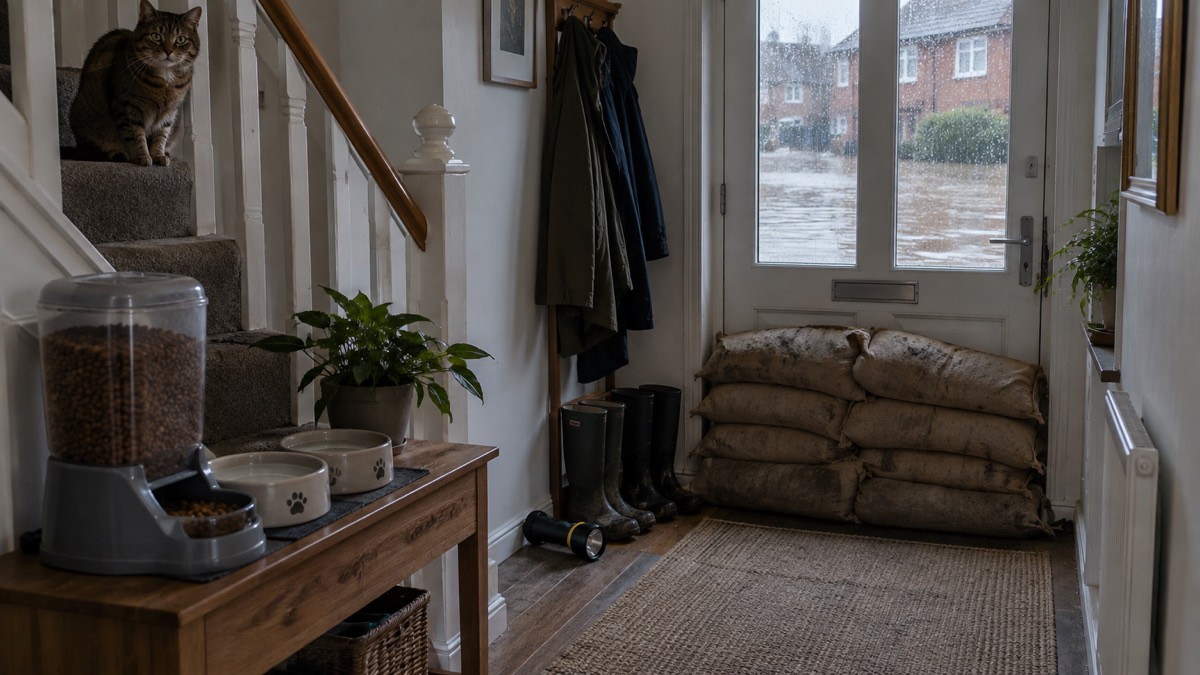
If you are told to leave your home and you have a pet, the first answer is simple: take your pet with you. Official guidance from councils across the UK is consistent on this. Lincolnshire County Council's emergency advice says plainly to take your pets with you1, and Slough Borough Council puts it more strongly: "If you must evacuate in the event of a disaster the most important thing you can do to protect your pets is to evacuate them too"2. Leaving an animal behind, even in a room you have made comfortable, is likely to result in their being injured, lost or worse2.
The good news is that most evacuation centres will let you bring your pets3. You should take their food, and put cats and small animals in a pet carrier or secure box3. But not every shelter can take every animal, facilities are basic, and the plan only works if you have thought about it before the knock at the door.
This page sets out what to do now, what to pack, how to arrange a safe place in advance, and what to do if you are not at home when the evacuation happens.
Take your pet with you if you possibly can
The default in every piece of official guidance is evacuation together. When a flood warning leads to an evacuation, the multi-agency partners will do their best to evacuate you and your family and any pets that you own, though this may be done in several journeys, with those most at risk assisted first8. In practice that means you may be asked to wait, or to make more than one trip, so have your pet's kit ready to move quickly.
What you take depends on the animal. Scottish Borders Council advises that pets which cannot be left alone for a sustained period should travel with some food, a basket or bed, and leads9. Essex Prepared says to take pets with suitable carriers, leads and food supplies10, and Nottinghamshire County Council's evacuation advice is to get your pets together with leads, cages and the like11. Surrey County Council's household template asks you to consider whether you need to take your pets with you at all, which is the right question for a short, controlled evacuation where you will be back the same day12.
Before you leave, if it is safe to do so, turn off electricity, gas and water supplies, and make arrangements for your pets as part of the same routine13. Tell family and friends where you are going14. Take your pets with you, with leads, cages, carriers and food supplies, so they are not left behind5.
Many evacuation centres will take pets, but check first
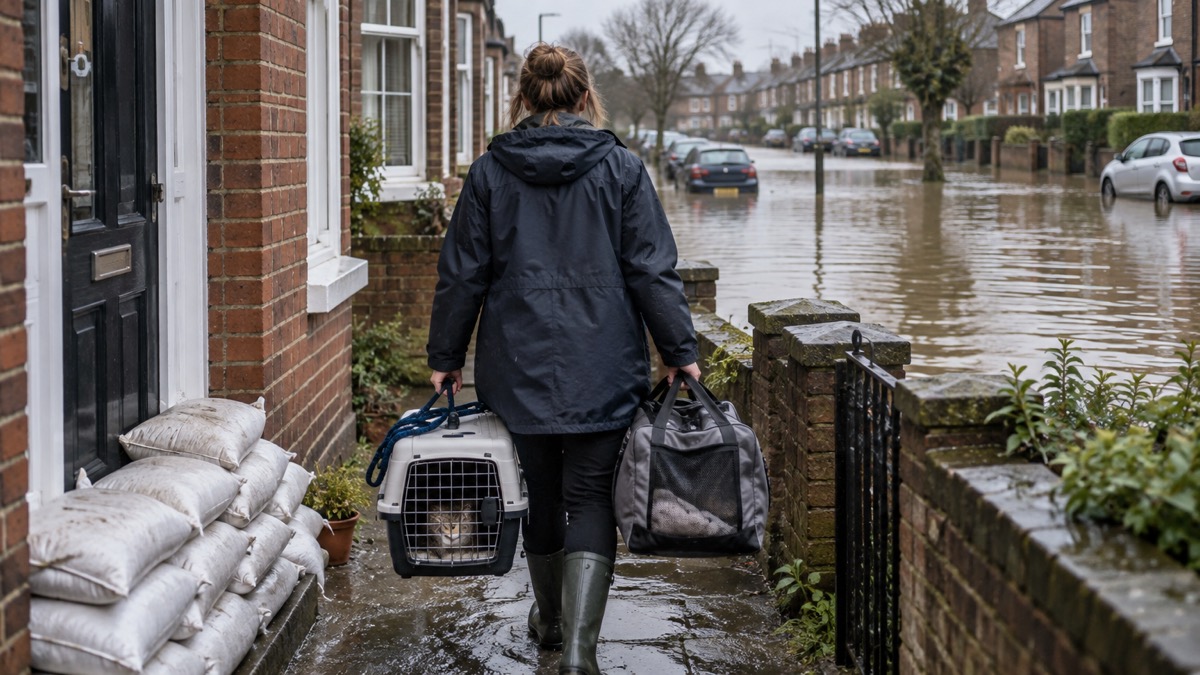
Most evacuation centres will let you bring your pets3. Natural Resources Wales says the same for Wales: most evacuation centres will let you bring your pets, so take pet food and put cats and small animals in a pet carrier or secure box15. At rest centres you will be advised what to do with them on arrival16. Free food and bedding is provided for people, and staff are trained to give support and advice17.
There are limits. The London Resilience Partnership warns that if you were evacuated from your home, some emergency shelters may only be able to take assistance animals4. Lancashire Prepared advises planning where your pet can stay, as there will only be basic facilities at the rest centre18. Westminster City Council's household guidance goes further and advises that you should have a plan for where pets can stay if you are evacuated, rather than bringing them to an evacuation centre19. Wiltshire and Swindon Prepared puts it simply: not all shelters are suitable for pets, so consider where you might take them in an emergency5.
The practical answer is to ring your council before an emergency and ask whether pets are allowed at evacuation centres in your area17. If you are told to go to a rest centre and your pet cannot come inside, you may be able to leave a dog in the car with the windows partly open, as Cumbria's guidance for its reception centre allows, but never fully close the windows20. That is a short-term measure only, not a plan for a night.
| Situation | What official guidance suggests |
|---|---|
| General evacuation | Take your pets with you1 |
| Rest centre | Most will let you bring pets; you will be advised on arrival16 |
| Some shelters | May only take assistance animals4 |
| Reception centre (Sellafield example) | Leave pets in the car but do not fully close the windows20 |
| Livestock | Cannot be accommodated at some reception centres20 |
If you are away from home: a neighbour who can get your pet out
The hardest case is being out when the evacuation happens. The answer is a neighbour buddy: someone who knows your pet, can get into your home, and knows where the lead or carrier is kept. Birmingham City Council advises agreeing on a plan with a trusted neighbour21. Medway Council suggests that if you have a neighbour you trust with a house key, you talk to them about rescuing your pets if you are out of the house during an emergency, and keep a contact number for them22. Wiltshire and Swindon Prepared recommends a neighbour buddy, such as family, friends or a neighbour, who might be able to take care of your pet in an emergency5.
Family outside the household matter too. Medway advises contacting family or friends you do not live with to see if you could stay with them in an emergency, or if they could look after your pets if you were unable to22. Westminster's guidance on emergency friends describes the same idea: provide each other with a place to stay if you have been evacuated from your home or if it has been affected by a flood, fire or utility failure19.
Make the arrangement concrete:
- Introduce them to the animal before anything happens, so the pet is not handled by a stranger.
- Show them where the kit is: the lead or carrier for every animal should be kept as close to the pet's emergency bag as possible22.
- Leave a key and a number, and agree what they should do if they cannot reach you.
- Tell them about medication and any handling quirks.
If a neighbour needs further help, such as transport, medication, temporary accommodation or medical attention, alert the local council23.
Plan a safe place for your pet before you need it
The single most useful thing you can do is decide, in advance, where your pet will go. Birmingham's advice is to plan so your pets have a safe place to stay21. Buckinghamshire's grab bag guidance is blunt: many public shelters and hotels do not allow pets inside, so know a safe place where you can take your pets before disasters and emergencies happen24.
Your options, in order of preference:
- With you, at a centre that accepts pets3.
- With family or friends outside the affected area22.
- With a neighbour buddy who can take the animal in5.
- At home, only as a last resort, with food, water and a note in the window6.
North Yorkshire Fire and Rescue Service, advising households at risk of flooding, says to ensure pets are microchipped and to consider where you could send them if you need to evacuate25. Microchipping matters because a frightened animal that slips a lead can be reunited if it is chipped and the details are up to date. The same service suggests thinking through whether it is safe for your pet to go outside, how to keep them indoors, where they would go if you evacuate, whether they have medication they need away from the property, and how to reduce stress or anxiety26.
Keep a separate emergency bag for pets in case you need to be evacuated13. Medway's list is a good model: a lead or carrier for every animal, any medications, pet food, vaccination certificates, litter, paper towelling or bedding, and toys22. Wiltshire and Swindon Prepared adds an extra collar or harness, a copy of your pet's ID and registration documents, a suitable carrier for all pets, litter bags, and toys, treats and bedding5.
If your pet has to stay behind
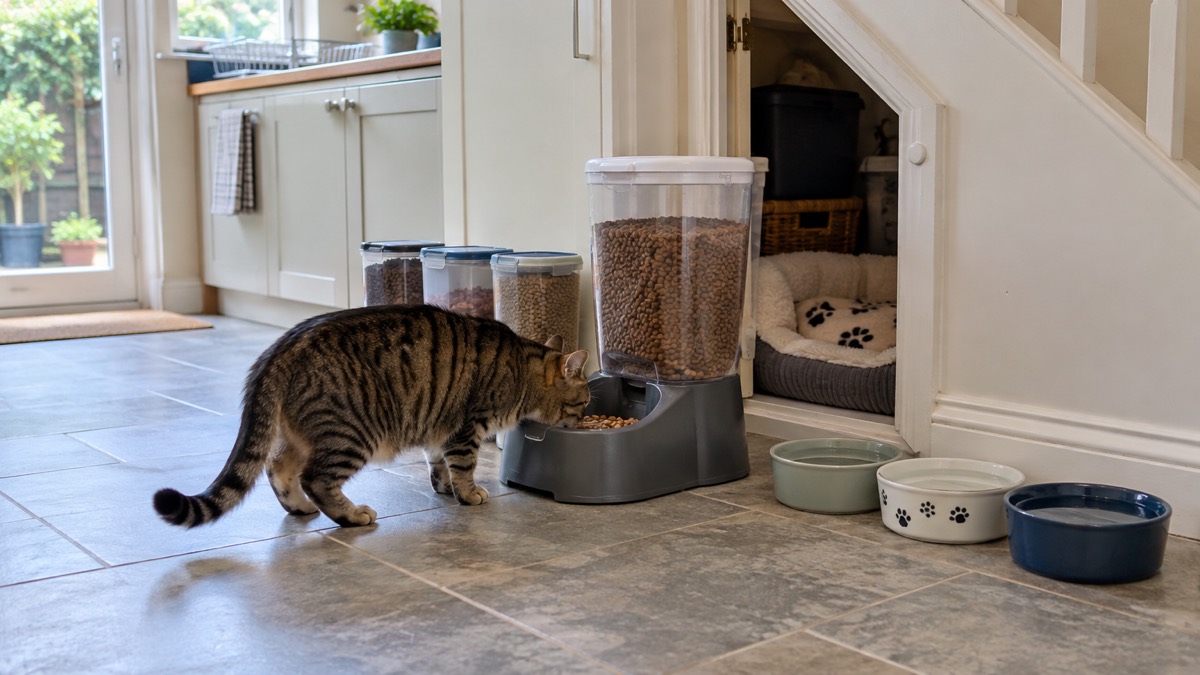
Sometimes there is no choice. The official guidance for that case is specific: if you must leave pets, place them upstairs if possible, otherwise somewhere dry, with food and water6. Do not shut them in a room with no ventilation, and do not leave them somewhere that could flood.
Leave a note in the window to inform the emergency services that there is an animal inside7. That note is what turns a locked house into a rescue. Put it where it can be seen from the street, and say how many animals there are and where in the house they are.
In a chemical incident the advice changes. Wandsworth Council says pets should be kept under cover, but do not go looking for your cat or dog if it is out when the emergency is announced; they can be cared for when the emergency is over27. Going outside to find an animal in a toxic fume incident puts you in the same danger.
If you are away and a pet is at home alone, the neighbour buddy is your route in.
Livestock and larger animals
Livestock need a plan of their own, because they cannot be moved at short notice and some reception centres will not accommodate them at all20. If you must evacuate, the most important thing you can do to protect your animals is to evacuate them too2, so the arrangements have to be made before the water rises.
- Identify somewhere to go now, and check that it will take the number and type of animals you keep.
- Ask your council about further help and support if you need transport or temporary accommodation23.
- Microchip and identify what you can, as advised for pets at risk of flooding25.
For more on moving larger animals, see Horses and Livestock in Floods and Snow and the Horse Evacuation Kit Checklist.
Where to get help and how to prepare
Your council is the first point of contact: it can tell you whether pets are allowed at evacuation centres17 and can be alerted if a neighbour needs further help23. The Environment Agency's personal flood plan asks you to record what you would do with your pets, which is a good prompt to write the plan down28.
To build the plan into your household preparations, see Including Your Pets in a Household Emergency Plan and Keeping Pets Safe Before, During and After a Flood. For the kit itself, the Pet First Aid Kits page and How Much Pet Food and Water to Store for an Emergency cover what to keep in. If you are unsure whether a rest centre will take your animal, Can I Take My Dog or Cat to an Emergency Rest Centre? answers that directly.
Sources (28)
- Emergency advice: get help and advice in an emergency, Lincolnshire County Council
- Are you ready?, Slough Borough Council
- Preparing your home for flooding, Cotswold District Council
- Preparing yourself for emergencies, London Resilience Partnership
- Your pets, Wiltshire and Swindon Prepared
- Animals in a flood, Deanshanger Parish Council
- Pets, West Yorkshire Prepared
- What to do in a flood, Wiltshire and Swindon Prepared
- Emergency planning, Scottish Borders Council
- Step 2: during an emergency, Essex Prepared
- Evacuating your home, Nottinghamshire County Council
- Surrey Prepared ICE template, Surrey County Council
- Home emergency plan, Isle of Anglesey County Council
- Layout 1, Isle of Anglesey County Council
- What to do in a flood, Natural Resources Wales
- Homes prepared, Surrey County Council
- What to do in an emergency, Environment Agency and Nottinghamshire County Council
- Terrorist attack, Lancashire Prepared
- Prepare your household for emergencies, Westminster City Council
- What to do in an emergency, Cumbria County Council
- Are you ready?, Birmingham City Council
- Looking after your pets in an emergency, Medway Council
- Are you ready booklet, Culham Parish Council
- Emergency grab bag, Buckinghamshire Council
- Advice for those at risk of flooding due to recent heavy rainfall, North Yorkshire Fire and Rescue Service
- Stay safe during Storm Babet, North Yorkshire Fire and Rescue Service
- Chemical accidents and toxic fumes, Wandsworth Borough Council
- Personal flood plan, Environment Agency
 Pet Emergency Documents
 Storing Pet Food and Water
 Carer's Emergency Plan
 Pet Birds in Cold Weather
 Birds and Chickens in Heat
 Breaking a Car Window for a Dog
 Keeping a Cat Cool in a Heatwave
 Chocolate Poisoning in Dogs
 Christmas Hazards for Pets
 Dog Left Alone on a Hot Day
 Dog in a Hot Car
 Hypothermia in Dogs and Cats
 Dogs in Water or Coast Trouble
 Fireworks and Small Pets
 Fish in a Power Cut