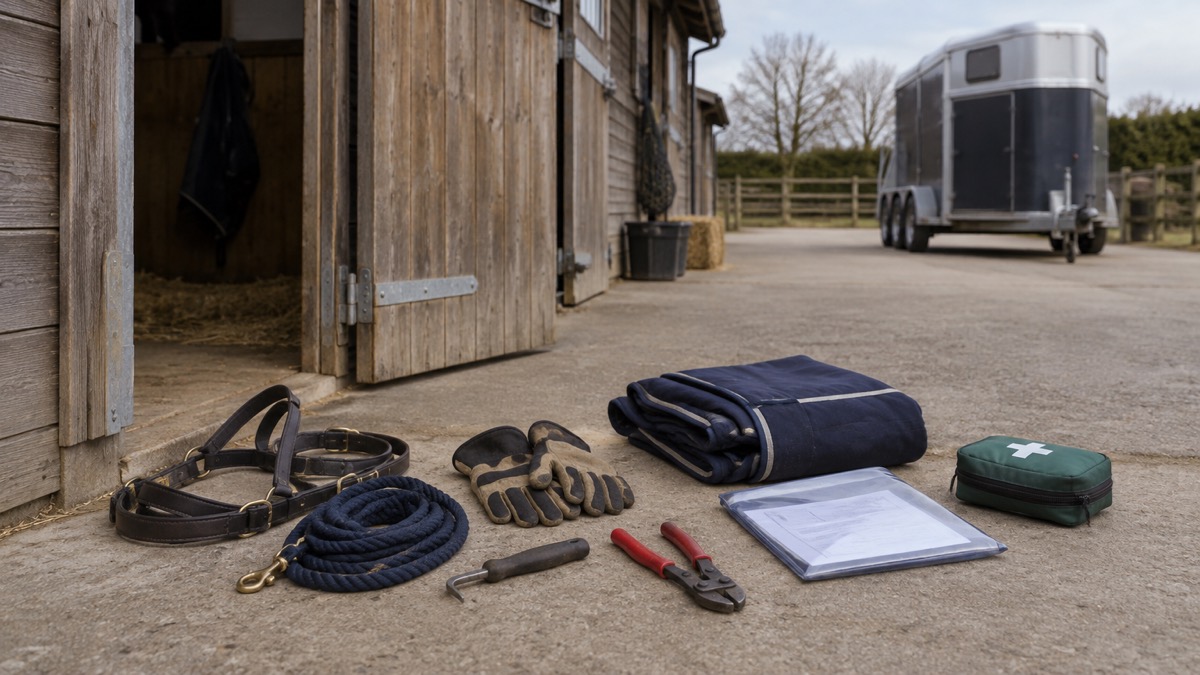
If you keep a horse, the moment you are told to evacuate is not the moment to start looking for a halter. A horse evacuation kit is a small, packed set of handling kit, documents and contacts that lets you lead, load and settle your horse quickly, and lets anyone helping you find what they need. Official guidance for animals in a disaster lists the core items: bandanas to use as a blindfold, blankets, an emergency contact list, heavy gloves, a hoof pick, hoof nippers, wire cutters, and leather or cotton halters and leads1.
The aim is not to carry everything your horse owns. It is to have the things that decide whether you can move safely: something to lead with, something to cover a frightened horse's eyes, gloves to protect your hands, a hoof pick to clear a foot, cutters to free a trapped animal, and a blanket to keep a horse warm. Add your documents, your contacts and a first aid kit, and you have a kit that works1.
Keep it packed, in one place, and checked before winter. The sections below set out the full checklist, then explain why each group of items matters and how to keep the kit ready to grab.
The horse evacuation kit checklist
Work through this list and tick each item off. Each line says what the item does for you and your horse.
Bandanas: a blindfold to calm a frightened horse
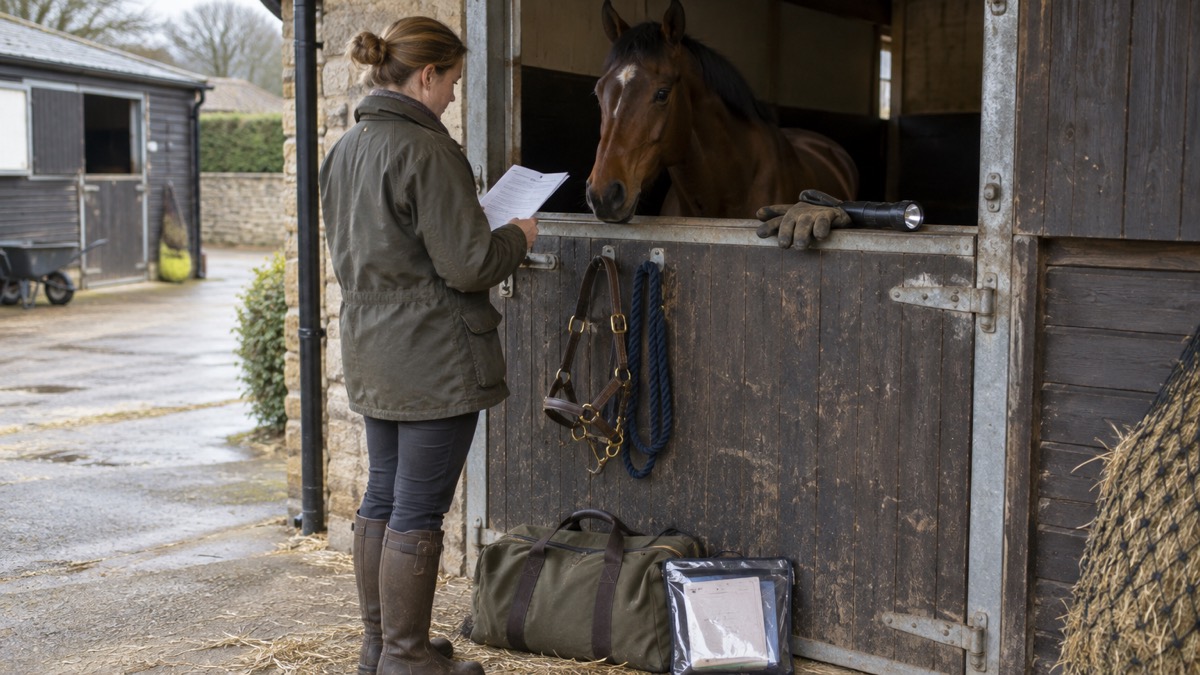
A bandana is on the official list for one reason: used as a blindfold, it can help a frightened horse. A horse that can see the activity around it, the traffic, the water, the other animals, may pull back and resist. Covering its eyes removes some of that stimulus and lets you lead it forward1.
Use it with care. The blindfold should be loose enough not to press on the eye, and you should only use it when you have a clear, safe route to lead the horse along. Have a second person with you if you can, one to lead and one to watch the horse and close gates. Take the blindfold off once the horse is loaded or in a safe place, so it can settle.
The same principle applies to loading. A reluctant horse is usually a frightened horse, and force makes it worse. Give yourself time, keep the ramp and the area around the lorry clear, and use the blindfold as one tool among several. Practise loading before you ever need to, so the routine is familiar.
Blankets, gloves and a hoof pick for handling on the move
The handling items on the list are simple, but each does a job that matters when you are moving a horse in bad conditions1.
- Blankets keep a horse warm. The NHS advises that a person in shock should be kept warm with coats or blankets6, and the same instinct applies to an animal that has been through a frightening or wet experience.
- Heavy gloves protect your hands. A horse that pulls a lead rope through bare hands can cause a rope burn, and gloves give you a better grip.
- A hoof pick lets you clear a foot before you move. A stone or a build-up of mud can make a horse lame at the worst moment.
- Hoof nippers and wire cutters are for the situations you hope not to meet: a horse caught in wire, or a foot that needs attention before it can travel.
Add warm, waterproof clothing and footwear for yourself5. You may be standing in a field or on a road in the rain for an hour or more, and cold, wet hands are clumsy hands. A torch and spare batteries belong in the kit too, as part of a winter emergency kit2.
An emergency contact list your helpers can find
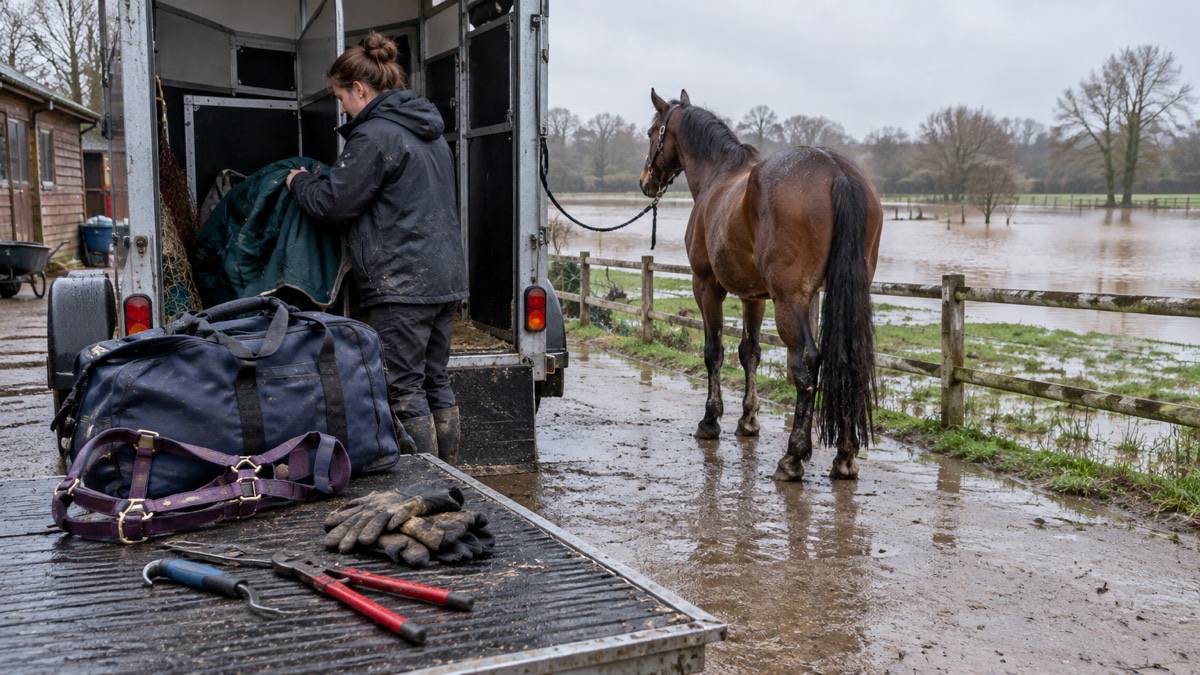
The contact list is the item most often forgotten and the one that helps most. Official guidance says to keep a list of emergency contact numbers at home9, and for a flood plan it says to include your utility provider, your insurance provider with the policy number, your GP's telephone number, your local council's contact number and your pets' veterinary contact details4.
For a horse, build the list around the people who can actually help:
- Your vet, including the out-of-hours number.
- Two or three people who can handle your horse and who know where your kit is.
- Anyone with a lorry or trailer who could move a horse.
- Possible places to take the horse, such as a yard, a livery or a boarding stable. Official guidance suggests making a list of local boarding kennels or other animal shelters that may help in an emergency2.
- Your local Flood Warden, if you have one3.
Keep a copy with the kit and a copy at home, and tell your helpers where it is. If you must leave an animal behind, official flood guidance says to contact a neighbour, your local Flood Warden or the RSPCA on 0300 1234 999, and to place notices on the rooms where you have left animals3.
Keeping the kit packed and ready to grab
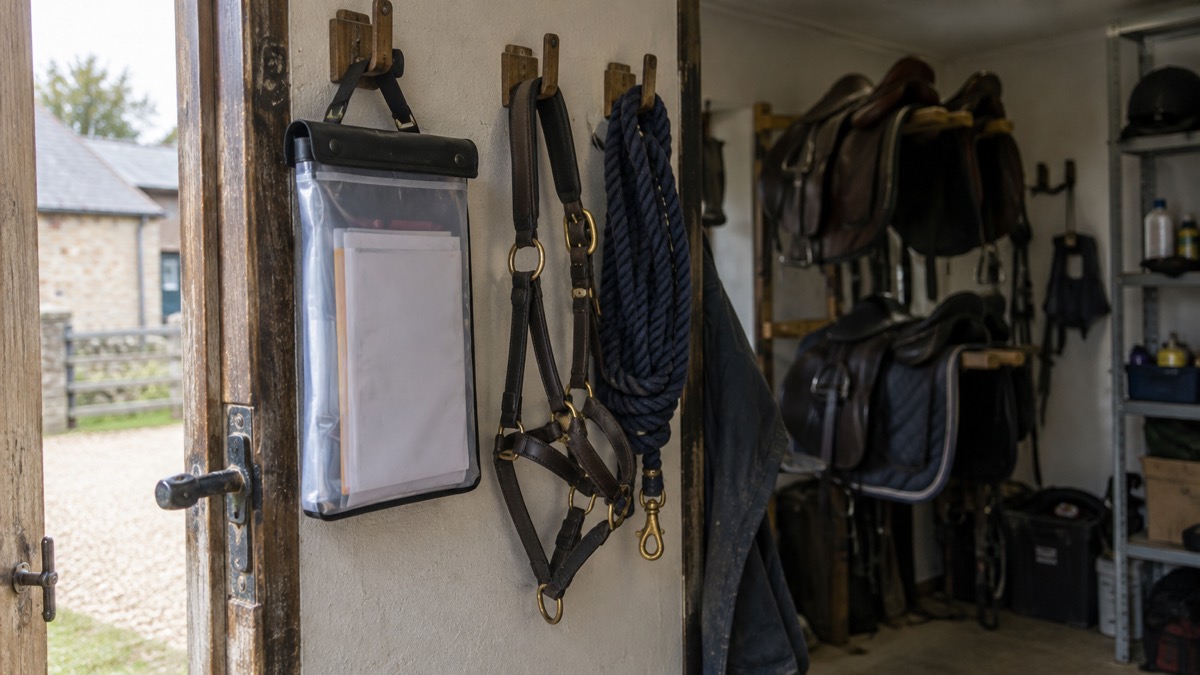
A kit that is scattered across the yard is not a kit. Keep it packed, in one place, and checked on a routine.
Where to store it. Choose somewhere dry and quick to reach: a tack room, a feed store or a labelled lorry or trailer. Keep documents in a waterproof bag3. Tell anyone who might help you where the kit lives.
What to check before winter. Go through the kit before the cold sets in. Check blankets are clean and dry, gloves are not split, and the hoof pick and cutters are where they should be. Winter brings ice, so add warm waterproof clothing and footwear10, and check your vehicle before you travel: official winter driving advice is to pack an emergency travel kit, check your lights and tyres, and clear all windows of frost and snow8.
Leaving with several horses. You cannot lead several horses safely on your own. Agree a plan in advance with a trusted neighbour, and make sure they know your animals and where to find a lead or carrier2. Have a halter and lead for each horse, and know in advance where they will go.
If you have to leave an animal behind. Contact a neighbour, your local Flood Warden or the RSPCA on 0300 1234 999, and place notices on the rooms where you have left animals3. Fire and rescue services have specialist animal rescue teams, including rope rescue and wading teams, for animals in difficulty11.
Sources (11)
- Are you ready? Pets and livestock, Slough Borough Council, 2026-10-29
- Are you ready?, Birmingham City Council, 2026-06-05
- Animals in a flood, Deanshanger Parish Council, 2023
- Preparing for a flood, Wiltshire and Swindon Prepared, 2026-10-25
- Flooding guide for older communities | Beta | SEPA | Scottish Environment Protection Agency, Scottish Environment Protection Agency (SEPA)
- Shock first aid, NHS Inform, 2026-07-24
- Preparing for a flood | nidirect, nidirect (Northern Ireland government)
- Winter driving tips, Isle of Anglesey County Council, 2026-05-20
- Emergency kit checklist, Neath Port Talbot Council, 2026-10-29
- Be ready for emergencies, UK Government, 2026-10-21
- Farm fire safety, Mid and West Wales Fire and Rescue Service, 2026-10-29
 Beekeeping Starter Equipment
 Pet Hens Starter Kit
 Bringing Home Rescue Hens