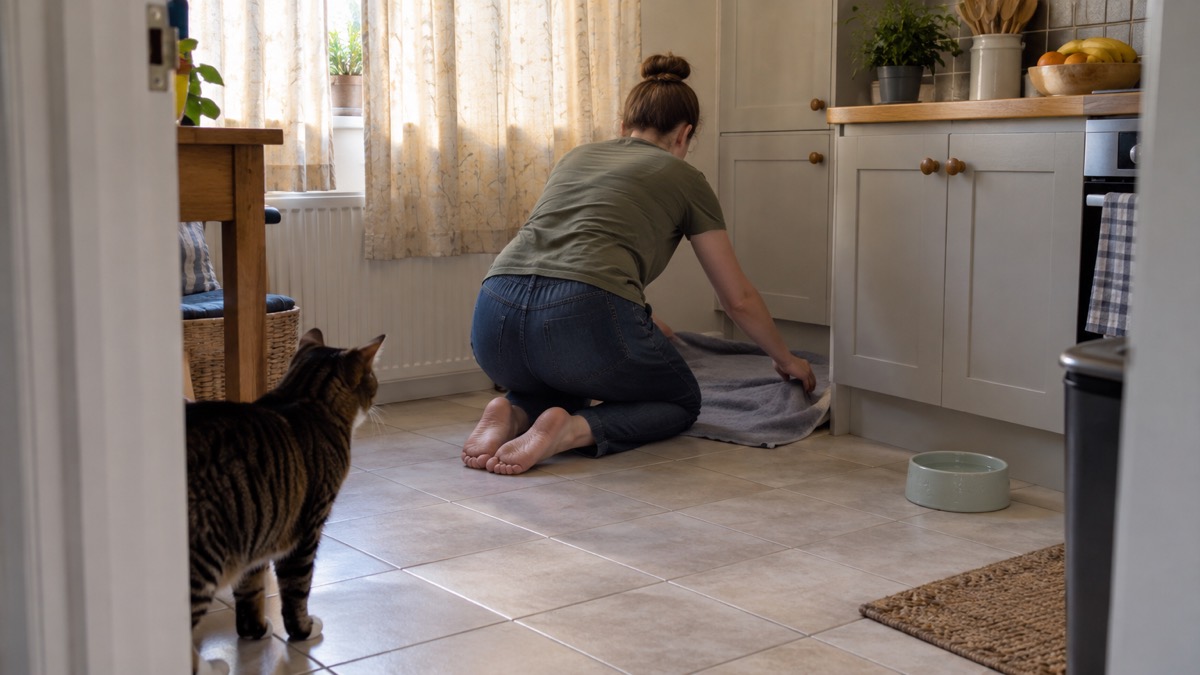
Cats are good at looking after themselves in warm weather. The RSPCA notes that cats will often seek shade and drink more water to keep themselves safe in hot weather1. Your job is to make sure they have somewhere cool to go, fresh water within reach, and no way to get trapped somewhere that heats up fast.
The simplest help is a damp towel to lie on or an ice pack wrapped in a towel, both of which give welcome relief from the heat1. Cats Protection suggests wrapping a frozen bottle of water in a towel and putting it near where your cat sleeps, without putting it directly on your cat or forcing them to be near it2. Never leave a cat in a conservatory, greenhouse, shed or car on a hot day: heatstroke happens when a cat becomes dangerously overheated, for example if trapped in a hot area such as a greenhouse or a shed3.
If your cat shows signs of heatstroke, contact your vet immediately while you cool them down by moving them to a cool place with a draught and gently wetting their coat with cool, but not freezing, water3. Signs include collapse, excessive panting, dribbling and diarrhoea3.
Give your cat somewhere cool to lie
The first thing to do is give your cat a cool surface and a cool corner, and let them choose. The RSPCA advises giving your pet damp towels to lie on or an ice pack wrapped in a towel, both of which provide welcome relief from the heat1. Cats Protection's version is a frozen bottle of water wrapped in a towel, placed near where your cat sleeps, with the clear instruction not to put it directly on your cat or force them to be near it2.
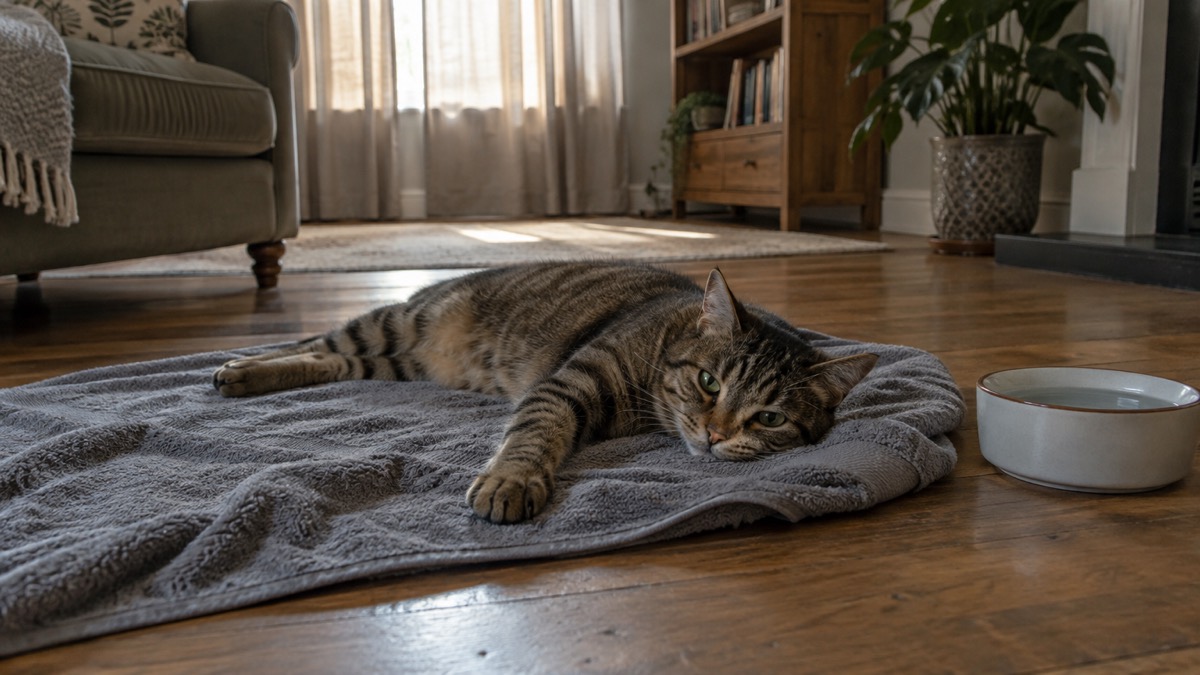
That last point matters. A cat that is startled or handled when it wants to be left alone will simply leave, and may end up somewhere hotter. Put the cool item down and step back. A cat will use it when they want to.
The same principle applies outdoors. If your cat goes outside, make sure they can always get back in. Cats Protection's cold-weather advice makes the point that a cat should have free access to get back indoors, ideally through a cat flap4. In hot weather that access matters just as much: a cat shut out of the house on a hot day has fewer places to escape the sun.
A few practical points:
- Put cool items in the shade, not in direct sun, where they will warm up quickly.
- Offer more than one cool spot, so a cat can move away from a spot that has warmed up.
- Keep the cool items away from food and water bowls, so they do not put a cat off eating or drinking.
- Check the cool spot through the day and replace a towel that has dried out or warmed up.
Cooling a cat with a damp towel or wet hands
If your cat is hot but not in distress, gentle cooling is enough. Blue Cross advises moving an overheated cat to a cool place with a draught and gently wetting their coat with cool, but not freezing, water3. The same principle appears in human heat advice: NHS guidance suggests taking cool, not cold, baths or showers and splashing yourself with cool water5, and a cool bath or shower, a damp cloth or a splash of water on the back of the neck can cool you down better than a fan and is more affordable6.
For a cat, the practical version is a damp cloth or your wet hands passed gently over the coat, especially on the back and neck, in a cool room with a draught. Do not soak the cat, do not use cold or iced water, and stop if the cat becomes distressed. A cat that dislikes water can still be cooled this way if you go slowly and let them move away.
If your cat has been out in the sun and is simply warm, a cool room and a damp towel to lie on may be all they need. If they are panting, dribbling or unsteady, treat it as an emergency and go to the next section.
Signs of heatstroke and when to call the vet
Heatstroke is a serious condition that can occur when a cat's internal body temperature rises to dangerous levels, so high that they cannot cool themselves2. It is not the same as a cat being a bit warm. It is a medical emergency, and it can develop quickly.
Blue Cross lists the signs in cats as collapse, excessive panting, dribbling and diarrhoea3. The Met Office's heat-health advice, written for pets generally, says to watch out for early signs of heatstroke such as heavy panting, restlessness and lack of coordination8. Blue Cross adds that animals can suffer fatal heatstroke within minutes, with obvious signs including collapse, excessive panting or breathing heavily, and dribbling9.
| Sign | What it can mean | What to do |
|---|---|---|
| Heavy panting, restlessness, lack of coordination | Early signs of heatstroke8 | Move the cat somewhere cool and start gentle cooling |
| Collapse, excessive panting, dribbling, diarrhoea | Signs of heatstroke in cats3 | Contact your vet immediately while cooling the cat3 |
| Cat trapped in a greenhouse, shed or conservatory | A common cause of dangerous overheating3 | Get the cat out, cool them, and call the vet if signs appear |
If you are worried that an animal is suffering from heatstroke, contact a vet10. Do not wait to see whether the cat improves on its own.
Heatstroke: call the vet while you cool the cat down
If you suspect heatstroke, the order is: phone the vet, then cool the cat while you wait or travel. Blue Cross is explicit: contact your vet immediately while cooling them down, by moving them to a cool place with a draught and gently wetting their coat with cool, but not freezing, water3.
The same pattern appears in first aid advice for other animals. The Scottish SPCA says that if a dog is showing any signs of heatstroke, they need to be seen by a vet urgently, and should be cooled down as quickly as possible before moving them11. For rabbits and rodents, the RSPCA advises moving them to a cool, shaded place, wrapping them in a cool, damp towel and phoning your vet immediately12.
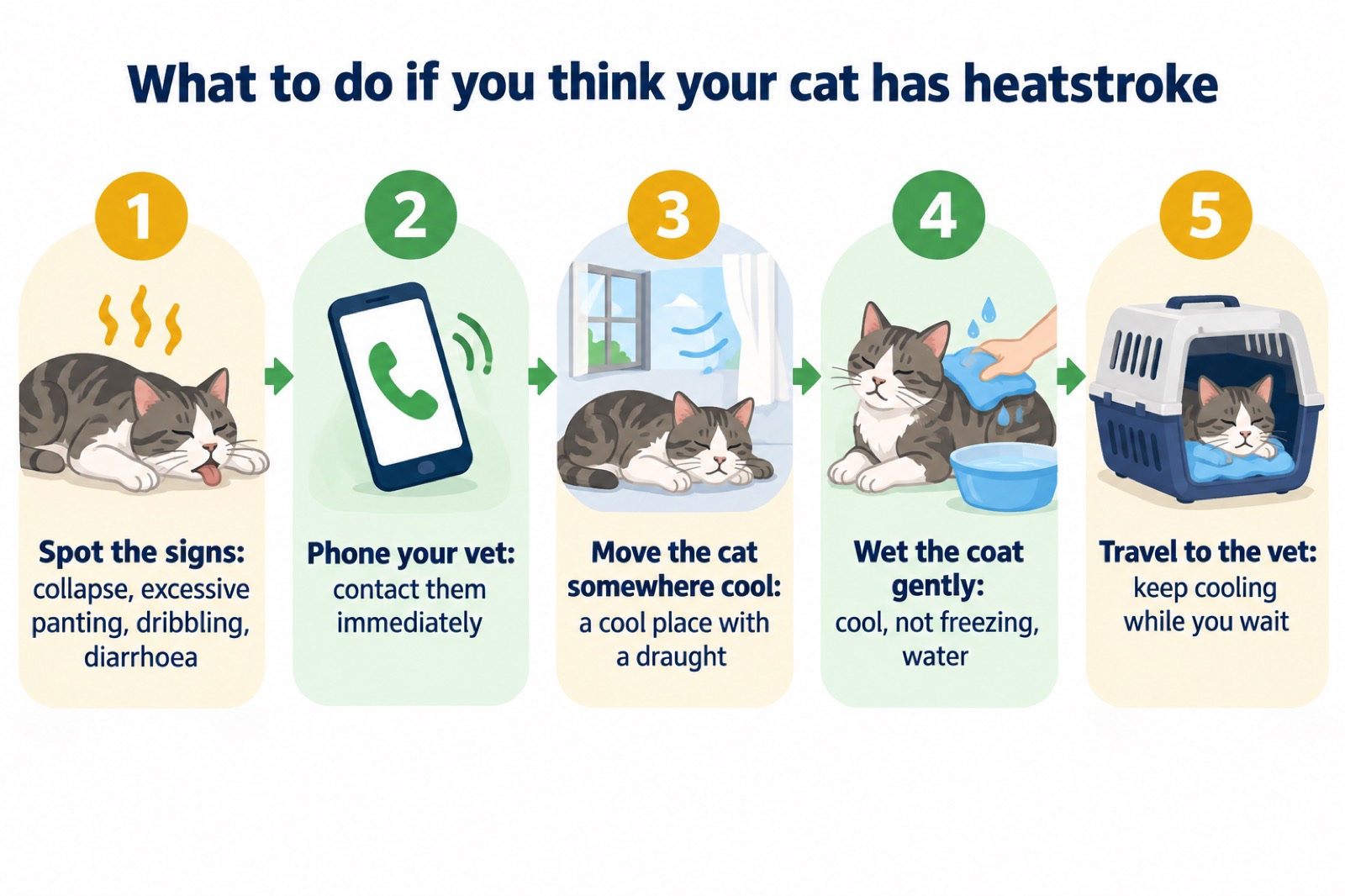
A few things not to do. Do not use ice-cold water or ice directly on the cat: the advice is cool, not freezing, water3. Do not force food or water on a cat that is unwell; Cats Protection's cold-weather guidance warns that forcing food or water can make them unwell13.
Keeping indoor rooms cool
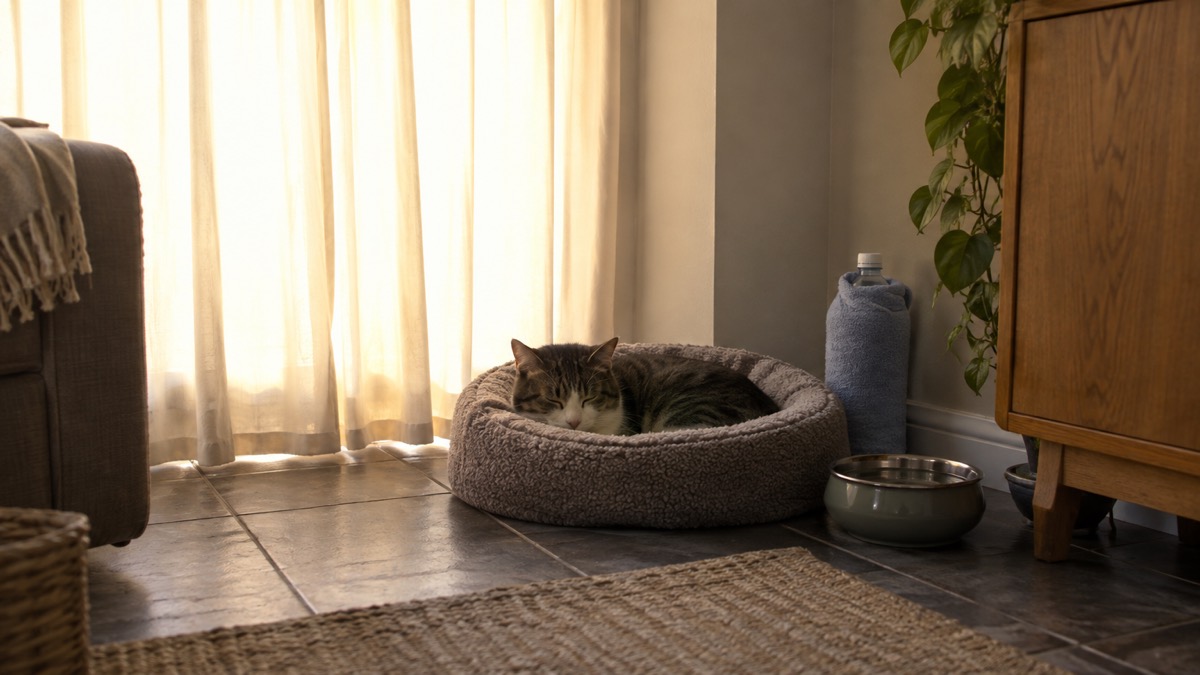
Most of the work of keeping a cat cool happens to the room, not the cat. The Met Office advises keeping rooms cool by using shades or reflective material outside the windows; if that is not possible, use light-coloured curtains and keep them closed, because metallic blinds and dark curtains can make the room hotter14. Stay inside in the coolest rooms as much as possible, and close curtains in rooms that get a lot of sun, preferably curtains rather than metal Venetian blinds15.
Windows need managing through the day. NHS guidance is to keep windows closed while the room is cooler than it is outside, and open them when the temperature inside rises and at night16. That is the pattern to follow for a cat room too: shut the heat out during the day, let the cool air in at night.
For a cat specifically:
- Keep the coolest room in the house available to the cat, with water and a cool spot.
- Keep older or poorly cats inside during hot days, as they are sensitive to the heat3.
- Keep windows closed while the room is cooler than it is outside, and open them when the temperature inside rises and at night6.
Older cats, long-haired cats and cats that dislike water
Not every cat copes with heat in the same way. Blue Cross says it is especially important to keep older or poorly cats inside during hot days, as they are sensitive to the heat3. Older cats may also be less able to move themselves to a cooler spot, so check where they are through the day and move their water and cool spot closer to where they rest.
Long-haired cats carry more coat, which makes a cool surface and a cool room more important, not less. The same cooling advice applies: a damp towel to lie on, an ice pack wrapped in a towel nearby, and a cool room with the curtains closed1.
Cats that dislike water do not need to be soaked. Put the cool items down and let the cat choose2. A cat that will not tolerate a damp towel can still be helped by a cool room, shade, fresh water and a frozen bottle wrapped in a towel placed near their bed2.
Water, shade and leaving a cat alone
Cats will often seek shade and drink more water to keep themselves safe in hot weather1. Make fresh water easy to reach, in more than one place if your cat moves around the house, and check it through the day. The general heat advice for people is to drink plenty of fluids17, and the same principle holds for a cat: water within reach, always.
If you have to leave a cat alone on a hot day:
- Keep them indoors in the coolest room, with curtains closed on sunny windows14.
- Keep windows closed while the room is cooler than outside, and open them when the inside temperature rises and at night16.
- Leave fresh water in more than one place1.
- Leave a damp towel or a wrapped frozen bottle near where they sleep1.
- Never leave a cat in a conservatory, greenhouse, shed or car3.
If you are going out and the day is forecast to be very hot, ask a neighbour to check on the cat, or arrange for someone to look in. The Met Office's heat-health advice for people applies to the household as a whole: stay out of the sun and keep cool where you can8.
Where to get help
If your cat is showing signs of heatstroke, phone your vet immediately3. If your own vet is closed, an out-of-hours service can help; see our guide to emergency vets and out-of-hours care for how the 24-hour rule works.
For general advice on keeping animals cool, the RSPCA and Cats Protection both publish seasonal guidance1. If you are worried that an animal is suffering from heatstroke, contact a vet10.
For the wider household picture, our guides to keeping dogs, cats and small animals cool in hot weather and to heatwaves and drought cover the rest of the plan. If you are preparing for a summer that may bring power cuts as well as heat, our power cuts guide explains what to do when the fans and the fridge go off.
Sources (17)
- Cats in summer, RSPCA, 2026
- Cats and warm weather, Cats Protection, 2026
- Top tips for keeping your cat cool in summer, Blue Cross, 2023
- Cats in winter, RSPCA, 2026
- Keeping cool, Electricity North West, 2026
- Adverse weather events, Llangattock Community Council, 2026
- How to keep guinea pigs cool in the summer, Blue Cross, 2023
- Hot weather and its impacts, Met Office, 2026
- How to keep pets cool in summer, Blue Cross, 2023
- Hot weather advice, nidirect, 2026
- Dogs die in hot cars, Scottish SPCA, 2026
- Rabbits and rodents in summer, RSPCA, 2026
- Keeping Cats Warm & Preventing Hypothermia | Cats Protection, Cats Protection
- Severe weather, West Yorkshire Prepared, 2026
- Summer safety advice, North East Ambulance Service NHS Foundation Trust, 2026
- Heatwave guidance, West Suffolk NHS Foundation Trust, 2020
- Enjoy the sunshine safely, Wiltshire and Swindon Prepared, 2026
 Pet Emergency Documents
 Storing Pet Food and Water
 Carer's Emergency Plan
 Pet Birds in Cold Weather
 Birds and Chickens in Heat
 Breaking a Car Window for a Dog
 Chocolate Poisoning in Dogs
 Christmas Hazards for Pets
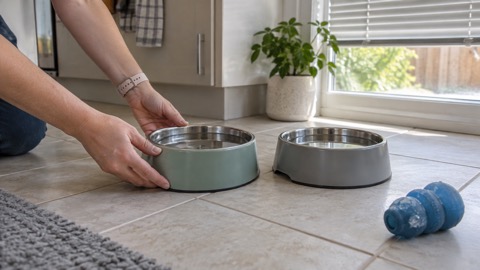 Dog Left Alone on a Hot Day
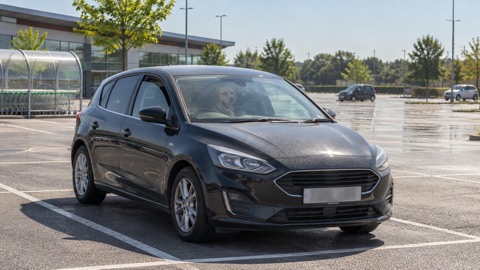 Dog in a Hot Car
 Hypothermia in Dogs and Cats
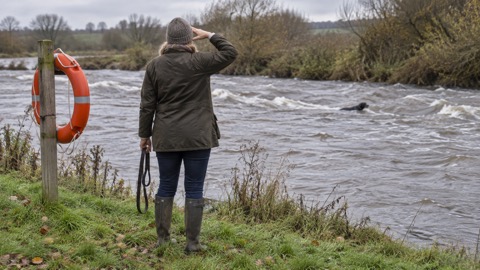 Dogs in Water or Coast Trouble
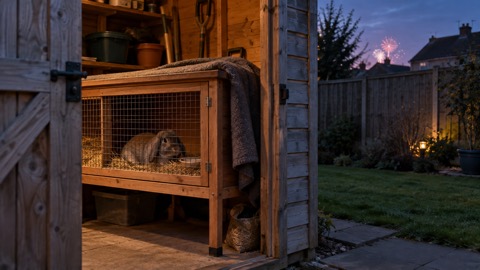 Fireworks and Small Pets
 Fish in a Power Cut
 Flystrike in Rabbits