If your dog has had a walk at dawn or late in the evening, the RSPCA's guidance is that you can leave them for up to four hours on a hot day, and they should be happy napping or with things to do1. That is the working limit for most healthy adult dogs. It is not a target to stretch: it depends on the dog, the house and how hot the day actually gets.
The walk is what makes the four hours work. Dogs are 10 times more likely to suffer heat-related illness when out in hot weather than from overheating in cars, according to the RSPCA, so the exercise has to happen in the cool part of the day, not squeezed in before you leave at midday2. Walk early or late, then leave the dog to rest through the heat.
Before you go, set the house up: shade, fresh water in more than one bowl, a cool room with a floor to lie on, and a plan for someone to look in if the day turns very hot. The sections below take each of those in turn, and explain where four hours stops being safe.
Up to four hours, with the walk done first
The four-hour figure comes from the RSPCA, and it is conditional on two things: the dog has had a dawn or late evening walk, and you are not leaving them longer than four hours1. Get those right and a healthy adult dog should settle and sleep through the hottest part of the day.
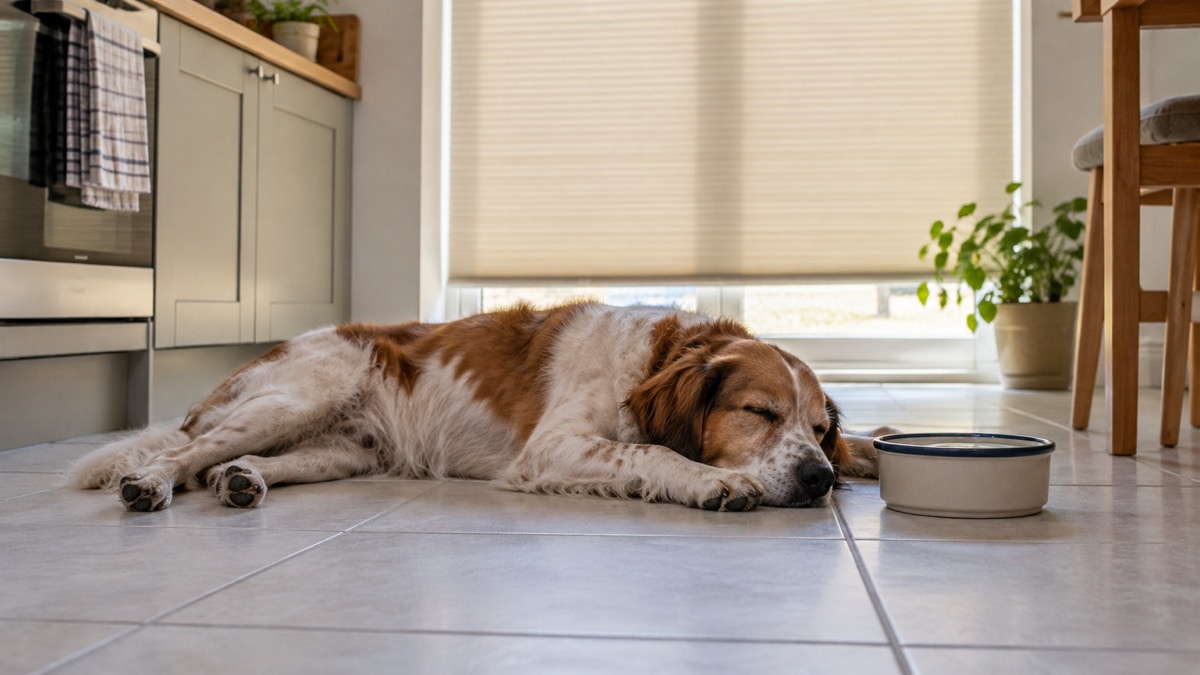
Why the walk matters so much: a dog that has not been out will be restless, and restlessness in heat is how dogs overheat. The RSPCA notes that more dogs suffer heatstroke from exercise than from being left in a hot car each year7. A dog walked at 7am and left with a cool floor and water is in a far better position than one walked at noon and shut in.
What affects the four hours:
- The dog. Puppies under 6 months, dogs over 8 years, overweight dogs and flat-faced breeds such as Pugs and French Bulldogs are at higher risk in hot weather, according to the Scottish SPCA4. Shorten the time for any of these.
- The room. A north-facing room with a hard floor stays cooler than a conservatory or a room with sun pouring in. Never leave a dog in a conservatory or outbuilding in warm weather6.
- The day. On a very hot or humid day, the PDSA says it may be safer to miss the walk altogether rather than go out in the heat7. A missed walk and a shorter absence beat a hot walk and a long one.
Walk times on a hot day: early morning and late evening
Every official source in this guide says the same thing: walk the dog at the cooler ends of the day. Derbyshire County Council's severe weather advice is not to walk pets during the hottest time of the day, usually 11am to 3pm3. NHS Inform advises planning activities like dog walking for cooler times such as morning or evening8, and the same instruction appears in Met Office, UK Government, ambulance service and council guidance across the UK9.
The practical version for a working day is a walk before you leave, however early that is, and another when you get home in the evening once the heat has dropped. The Blue Cross advises keeping pets indoors when the sun is strongest, between 11.00am and 3.00pm16.
Two checks before you set out:
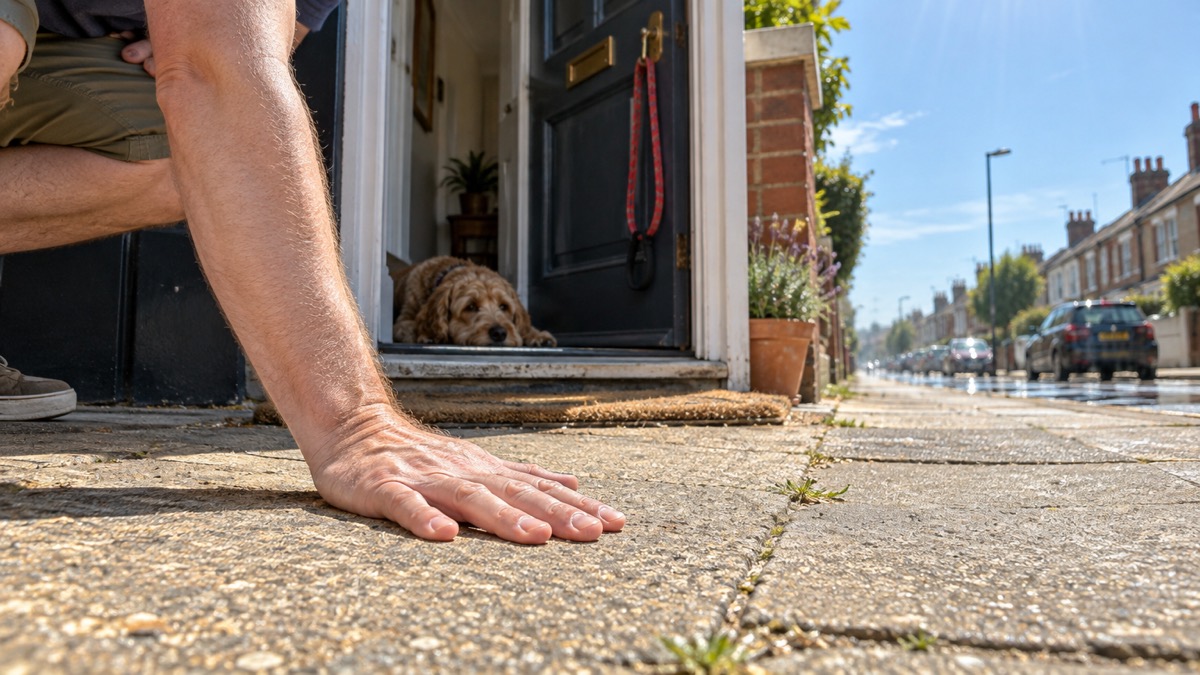
- The five-second tarmac test. The Scottish SPCA says if you cannot hold your hand down on the tarmac for five seconds, it is too hot for your dog's paws4. Dogs Trust gives the same test and says to walk later once the ground has cooled17.
- The seven-second surface test. The PDSA says if you can comfortably place your palm on a surface for seven seconds it is okay, and warns that sand, artificial grass and tarmac get especially hot18.
Most dogs will be comfortable walking between 15°C and 25°C, the Scottish SPCA says, though this depends on age, breed, size, coat length, amount of exercise and general health4. Above that range, keep the walk short and shaded, or skip it.
Where four hours stops being safe
Four hours is a guide for a healthy adult dog in a prepared house. It stops being safe in four situations.
The dog is in a higher-risk group. The Scottish SPCA lists overweight dogs, flat-faced breeds such as Pugs and French Bulldogs, dogs over 8 years old and puppies under 6 months old as at higher risk in hot weather4. For these dogs, treat four hours as a ceiling you stay well under, and arrange a check-in if you can.
The space is small and closed. The UK Government's Beat the Heat guidance warns that small, closed spaces such as stationary cars can get dangerously hot very quickly, and says babies, children, older people and pets should not be left alone in them10. The same applies to a conservatory, a caravan or an outbuilding: the RSPCA says never leave dogs in cars or other vehicles, caravans, conservatories or outbuildings in warm weather, even if only for a short while6.
The dog is showing signs of heatstroke. Early signs are heavy panting, restlessness and lack of coordination, according to the Met Office9. Dogs Trust lists heavy or continuous panting even when the dog has stopped exercising, bright pink or red gums and lips, excessive drooling, vomiting and diarrhoea, wobbliness, collapse and seizures17. If you come home to any of these, act at once.
The day is extreme. On a very hot or humid day, the PDSA says it may be safer to miss the walk altogether7. If the forecast is for a heatwave, shorten the time alone and ask someone to check in.
Getting the house ready before you go out
The house does most of the work while you are away. Set it up before you leave, in this order.
- Pick the coolest room. A room out of direct sun, with a hard floor and a window you can leave on a secure vent, is where the dog should spend the day. Close curtains on sun-facing windows before you go.
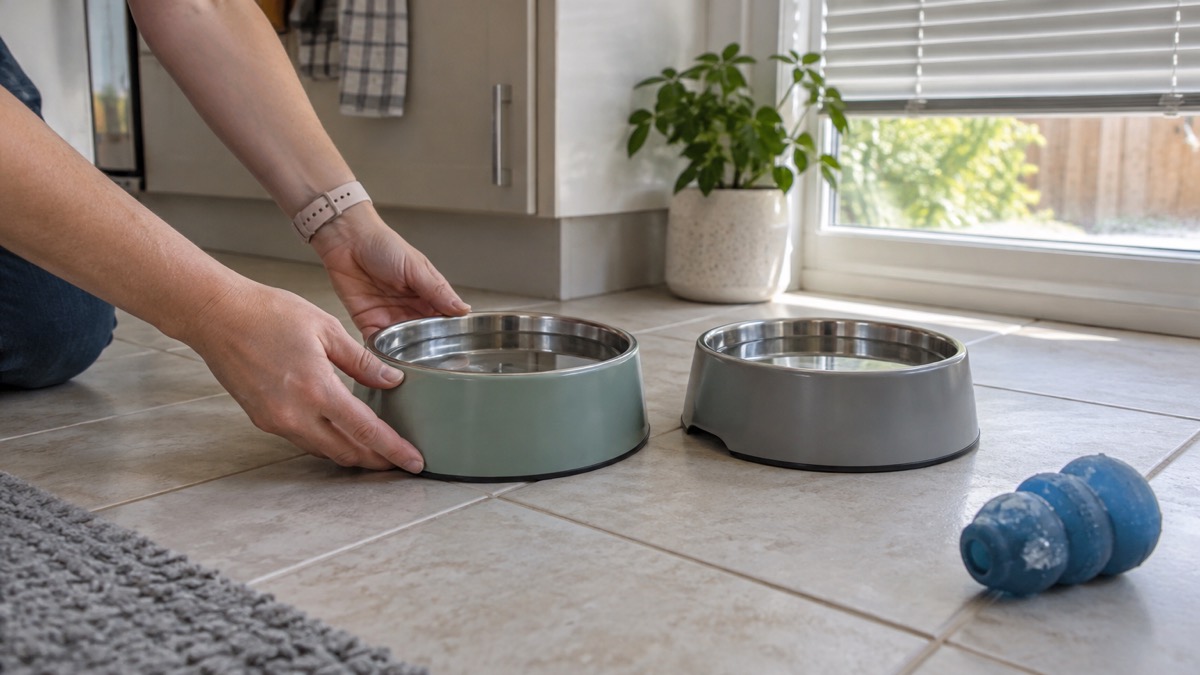
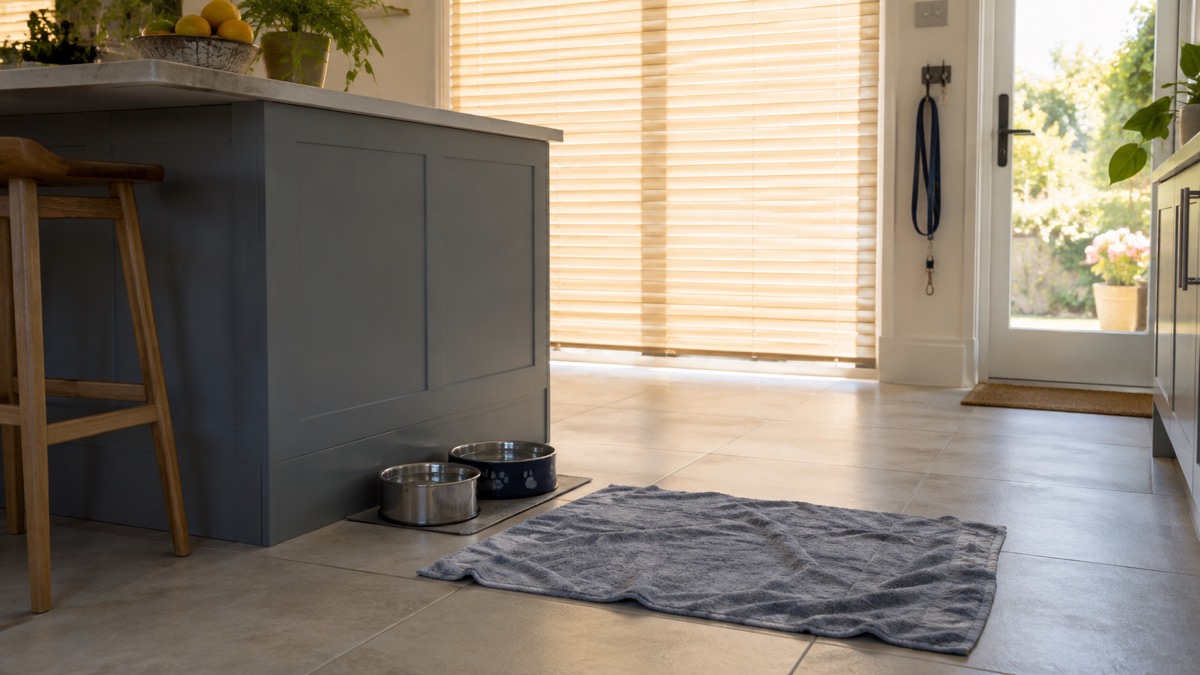
- Leave water in more than one place. Welsh fire and rescue advice is to make sure pets have a constant supply of fresh water5. Use bowls that will not tip, put them in shade rather than sun, and leave a second bowl in case one is spilled.
- Leave something to do. The RSPCA's four-hour guidance assumes the dog is napping or has things to do1. A chew or a food toy gives the dog something to settle to.
- Check the forecast before you leave. If a heatwave is forecast, plan for a shorter absence or a check-in.
- Arrange a check-in if you can. A neighbour or friend with a key can top up water, check the dog is settled and call you if anything is wrong. This matters most for puppies, older dogs and flat-faced breeds4.
If you must leave a pet in the property for a longer period, Westminster City Council advises making sure they have food and water for 3 days20. That is emergency planning guidance, not a target for a hot day, but it is a sensible baseline for the water you keep in the house.
For the wider picture on keeping a dog cool at home, see Keeping Dogs, Cats and Small Animals Cool in Hot Weather, and for planning ahead, Including Your Pets in a Household Emergency Plan.
Dogs left in cars, even for a minute
The answer here is simple and every source agrees. Dogs should never be left in a car on warm or hot days, the PDSA says7. Northern Ireland's official hot weather advice is never to leave animals inside a car on a hot day11. The RSPCA says never leave dogs in cars or other vehicles, caravans, conservatories or outbuildings in warm weather, even if only for a short while6.
The reason is how fast a car heats. When it is 22°C outside, a car can reach 47°C within an hour, the RSPCA says, even parked in the shade with the windows open21. Westminster City Council warns that cars can become dangerously hot in minutes, and that this is not just a risk in summer20. The Met Office adds that even on cool days, strong sunshine can make car interiors very hot22.
If you see a dog in a hot car, the Scottish SPCA's advice is to try to work out how long the dog has been left in the car, and a visible pay and display ticket may help19. For the full steps, see What to Do If You See a Dog in a Hot Car and Dogs in Hot Cars: How Fast a Car Heats Up.
Signs of heatstroke and what to do
Know the signs before you leave the house, so you recognise them when you get back.
| Early signs | Serious signs |
|---|---|
| Heavy panting, restlessness, lack of coordination9 | Collapse, seizures, loss of consciousness17 |
| Panting even when the dog has stopped exercising17 | Bright pink or red gums and lips17 |
| Excessive drooling, vomiting, diarrhoea17 | Confusion or disorientation2 |
| Wobbliness, shade seeking, lethargy17 | Noisy breathing, muscle spasms2 |
If you suspect heatstroke, the RSPCA says to stop the dog heating up further by stopping exercise or movement, removing the dog from hot vehicles or buildings and getting them into shade2. The Scottish SPCA says the dog needs to be seen by a vet urgently and should be cooled down as quickly as possible before moving them19. NHS Wales lists heatstroke as a medical emergency and says to call 999 if someone is still unwell after 30 minutes of resting in a cool place, being cooled and drinking fluids24.
For more on emergency vet care, see Emergency Vets: Out-of-Hours Care and the 24-Hour Rule.
Where to get help and advice
- Your vet. For any sign of heatstroke, call your vet immediately. Out-of-hours numbers are on practice websites and answerphones.
- The RSPCA. The charity runs a Cool Dog Summer workshop covering spotting signs of heatstroke, shade and hydration, with dates through the year; book by emailing campaigns@rspca.org.uk with your preferred date1.
- Dogs Trust and the Scottish SPCA. Both publish hot weather advice for dog owners, including the signs of heatstroke and the paw tests17.
- Your council. Many councils publish severe weather and pet welfare advice, including what to do if you must leave a pet at home3.
- The Blue Cross. Publishes advice on keeping pets cool in summer and preparing for a flood with your pet16.
For the wider household picture, see Heatwaves and Drought: A Household Guide and Pets and Animals in an Emergency: A Household Guide.
Sources (25)
- Dogs in hot cars infographic, RSPCA, 2026
- Heatstroke in dogs, RSPCA, 2026
- Severe weather planning, Derbyshire County Council, 2026
- Dog care in summer, Scottish SPCA, 2026
- Adverse weather events, Llangattock Community Council, 2026
- Dogs in summer, RSPCA, 2026
- Dogs die in hot cars and on hot walks, PDSA, 2026
- Heatstroke and heat illness, NHS Inform, 2026
- Tips for keeping older people cool, Met Office, 2026
- Beat the heat: staying safe in hot weather, UK Government, 2026
- Hot weather advice, nidirect, 2026
- Keeping safe and well in warmer weather, London Ambulance Service, 2026
- Hot weather advice, Scottish Ambulance Service, 2026
- Beat the heat, Wiltshire and Swindon Prepared, 2026
- Coping with hot weather in London, Greater London Authority, 2026
- How to keep pets cool in summer, Blue Cross, 2023
- Hot weather advice for dogs, Dogs Trust, 2026
- Heatstroke in dogs, PDSA, 2023
- Dogs die in hot cars, Scottish SPCA, 2026
- Pet welfare emergency, Westminster City Council, 2025
- Safe car travel for pets, PDSA, 2026
- Hot weather and its impacts, Met Office, 2026
- Staying well in hot weather, Berkshire Healthcare NHS Foundation Trust, 2026
- Heat exhaustion and heatstroke, NHS 111 Wales, 2026
- Preparing for a flood with your pet, Blue Cross, 2023
 Pet Emergency Documents
 Storing Pet Food and Water
 Carer's Emergency Plan
 Pet Birds in Cold Weather
 Birds and Chickens in Heat
 Breaking a Car Window for a Dog
 Keeping a Cat Cool in a Heatwave
 Chocolate Poisoning in Dogs
 Christmas Hazards for Pets
 Dog in a Hot Car
 Hypothermia in Dogs and Cats
 Dogs in Water or Coast Trouble
 Fireworks and Small Pets
 Fish in a Power Cut
 Flystrike in Rabbits