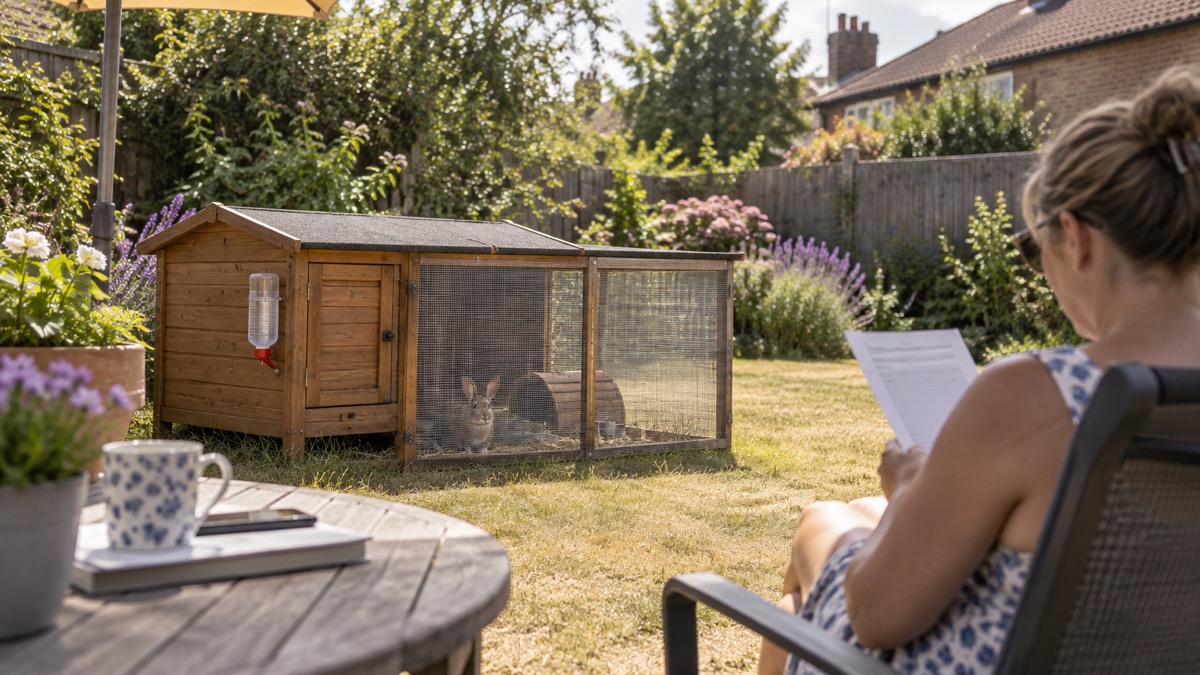
Flystrike, also called myiasis, happens when flies lay their eggs on or near a rabbit or guinea pig. The eggs hatch into maggots, which feed on the animal, causing pain, severe shock and often death1. Warm and humid weather makes flies more active, so the risk rises in summer, and it applies to indoor pets as well as outdoor ones1. The single most useful thing you can do is check your pet all over, especially around the rear end and tail area, at least twice a day in warm weather3.
Alongside the checks, keep the hutch or cage out of direct sunlight and in the shade, and move it somewhere cooler if the weather turns hot1. Position hutches and runs in the shade, moving them as necessary, and keep them off the ground to improve ventilation3. If you bring a pet indoors, choose a quiet, well-ventilated room and keep flies out.
What flystrike is and why warm weather raises the risk
Flystrike is a nasty condition that occurs when flies lay their eggs on or near rabbits. These hatch into maggots and then feed on the rabbit, causing pain, severe shock and often death6. In guinea pigs the process is the same: flies lay eggs on the fur, and once the eggs hatch the maggots eat away at the flesh, which is extremely painful and often life-threatening4.
The risk climbs in summer because flies are more active in warm and humid weather. The RSPCA notes that there is an increased risk of fleas, ticks and flystrike during the summer, and that infestations can cause pain, distress and can sometimes be fatal2. That is why the advice is not just to treat a problem once it appears, but to check for it constantly through the warm months.
Some pets are more vulnerable than others. Rabbits that have difficulties keeping themselves clean, because of old age, arthritis or dental problems, are at higher risk3. The same is true of guinea pigs: older guinea pigs, or those suffering with arthritis or dental problems, are more at risk of flystrike because they are less able to keep themselves clean4. A rabbit's summer moult adds to the problem, because the extra fur is prone to matting, which may increase the risk of flystrike6. Regular brushing helps them maintain their coat3.
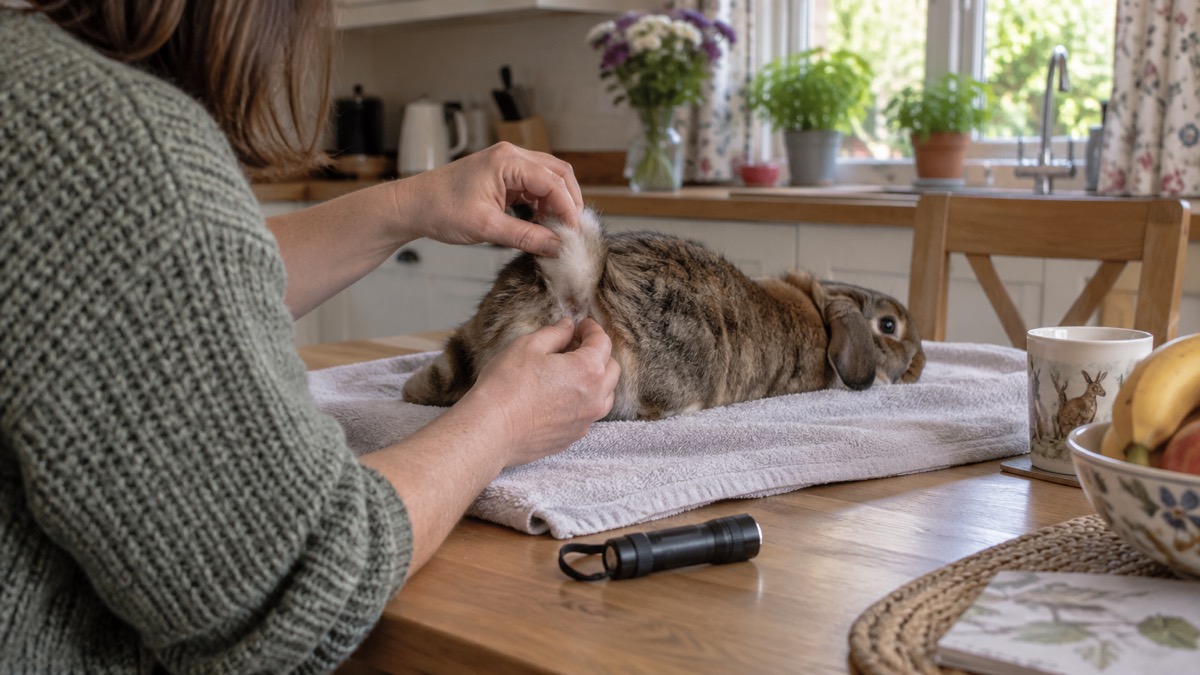
The checks themselves are simple. In warm weather, check your pet all over their body, especially around their rear end and tail area, at least twice a day3. It is essential to check both outdoor and indoor rabbits at least twice a day to make sure they are clean and free from anything that may attract flies3. If you see maggots or eggs, or a soiled, matted patch of fur, treat it as urgent and contact your vet.
Bring hutches and enclosures into a quiet room, garage or shed
When the weather is hot, or when flies are about, the first move is to get the hutch or cage out of the sun. Outdoor rabbits should have their enclosure in the shade during the hottest parts of the day if possible, or shade provided, like a parasol, or even a reflective cover to deflect heat3. Keep pets and cages, runs or hutches out of direct sunlight1. Position hutches and runs in the shade, moving them as necessary, and keep them off the ground to improve ventilation6.
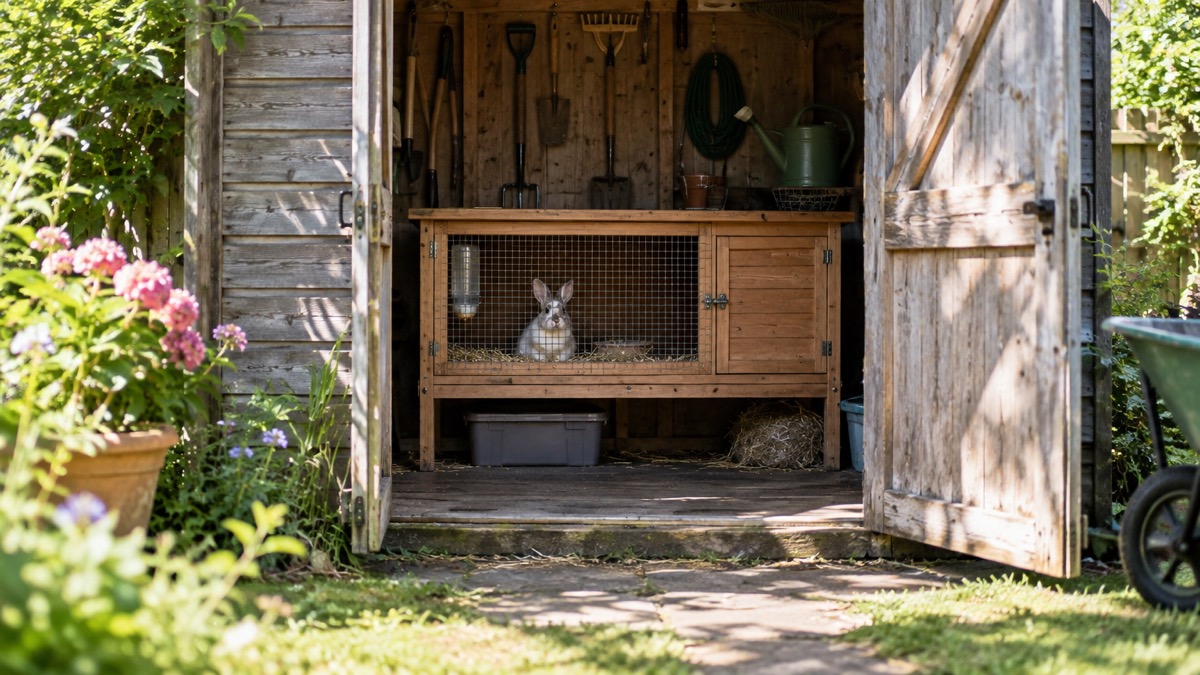
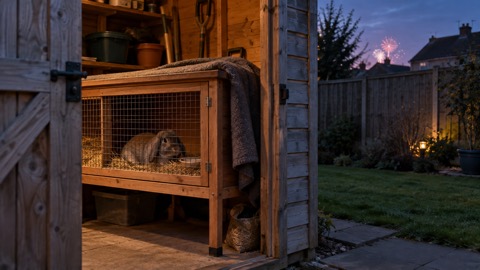
If the hutch cannot be kept cool where it is, bring it in. Hutches, cages and enclosures should, if possible, be brought into a quiet room indoors, or into a garage or shed7. The same guidance appears in the Blue Cross fireworks advice, which recommends moving an outdoor hutch into a car-free garage or shed a few nights before fireworks are expected5. The principle is the same for heat: a sheltered, ventilated space away from the worst of the weather.
A quiet room means exactly that. Keep doors, windows and cat and dog flaps closed, draw the curtains, and play music with a repetitive beat to help mask sounds5. For indoor small pets, draw the curtains, move their enclosure away from windows, and increase the volume of music or the TV if they are used to it7. Close all windows and doors, block off cat flaps, draw the curtains and switch on the TV or radio at increased volume if the animals are used to it7.
If you use a fan in the room, do not blow it directly onto the rabbits, make sure they have enough room to move away if they wish, and keep wires out of reach3. A cold wrung-out towel on the run creates evaporative cooling3.
Where an outdoor pet should not go: a garage with a car in it
A garage with a car in it is not a safe place for a rabbit or guinea pig. The guidance is specific: move the hutch into a car-free garage or shed5. The reason is straightforward. A car left in a garage brings fumes, and the space is not the quiet, ventilated environment a small pet needs. The same official advice that recommends a garage for a hutch assumes it is car-free.
There are other places to rule out. Do not house pets in greenhouses, conservatories and other glass buildings, as they can heat up very quickly and become dangerous1. Glass buildings and wooden sheds can heat up very quickly, making them dangerously hot for rabbits3. Never leave animals in cars, conservatories, outbuildings or caravans on a warm day, even for a short while2.
If you are using a garage or cellar for storage or as a temporary space, make sure it is well ventilated and is not accessible to children and animals8. That is official advice aimed at flood preparation, but the principle holds for any enclosed space a pet might be kept in.
A garden shed can be a reasonable temporary home if it is cool, ventilated and secure. Make sure rabbits have an escape-proof home whether they are indoors or out9. If the shed is hot, or if it houses a car, choose a cool room indoors instead.
Bedding and insulation for a hutch that has to stay outside
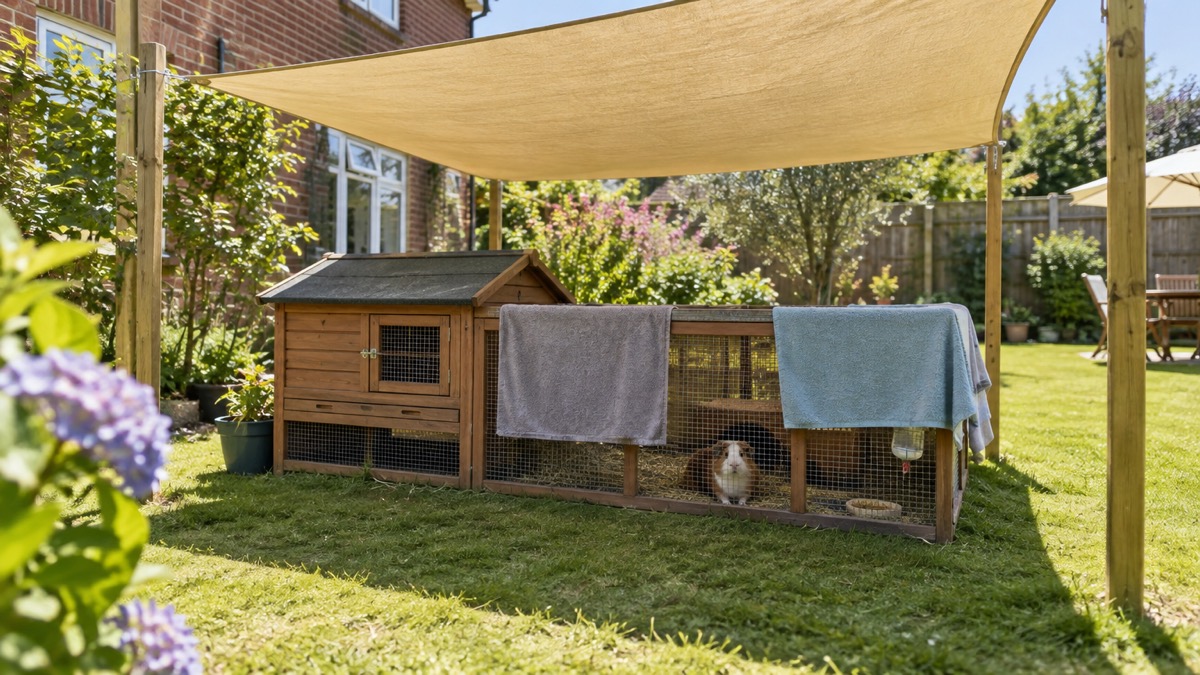
Not every household can bring a hutch indoors, and in warm weather the priority outside is shade and airflow rather than warmth. Move the hutch and run out of direct sunlight; a gazebo or sun sail placed over the hutch can create a shaded area, and wooden hutches should never be left in the sun3. If your guinea pigs live outside, move their hutch and run into the shade and out of the sun, or use a sun parasol moved through the day4. You can provide extra shade to guinea pigs and rabbits by covering the top of wire mesh runs with damp towels10.
Bedding matters too. Give your pet extra bedding to burrow into so they feel safer7. In hot weather, keep the bedding clean and dry, because soiled bedding attracts flies. It's essential to check both outdoor and indoor rabbits at least twice a day to make sure they're clean and free from anything that may attract flies6.
| What the hutch needs | Why it matters | Source |
|---|---|---|
| Shade over the hutch or run | Keeps direct sun off the pet | 3 |
| Hutch off the ground | Improves ventilation | 6 |
| Damp towels over wire mesh runs | Provides extra shade | 12 |
| Clean, dry bedding | Reduces what attracts flies | 6 |
| Extra bedding to burrow into | Helps the pet feel safer | 7 |
In winter the same hutch needs different treatment. Keep the hutch out of the wind, rain, snow and sleet, raise it to prevent frost from the ground, and insulate the walls with cardboard, blankets or insulation boards while keeping it well ventilated13. Domestic rabbits and guinea pigs are vulnerable to the cold despite their warm coats, which is why owners need to be vigilant and take steps to ensure their hutches are protected from the snow, cold draughts and winter rain13. For the cold-weather side of hutch care, see how to keep rabbits and guinea pigs warm in winter.
Choosing a quiet room, and when to move them back outside
A quiet room is one away from noise, direct sun and draughts, where the hutch can sit with good ventilation. Draw the curtains and move the enclosure away from windows7. Draw the curtains and, if the pet is used to it, put on the TV or radio at increased volume to mask sounds7. Keep the room cool: move rabbits from conservatories to a cooler room, because glass buildings and wooden sheds heat up very quickly, and basements are usually a good option3.
Move them back outside once the hot or humid spell has passed and the hutch can sit in shade with good ventilation. Bring them in again whenever warm, humid weather returns, because that is when flies are most active2. Throughout the warm months, keep up the twice-daily checks3.
If you are planning for more than a hot spell, the wider pets and animals guide covers planning, floods and evacuation. For the heat itself, see keeping dogs, cats and small animals cool in hot weather and how to keep an outdoor rabbit hutch cool. If a rabbit shows signs of heatstroke, heatstroke in rabbits explains what to do. For fireworks, when a hutch may also need moving, see protecting rabbits and guinea pigs from fireworks.
Sources (13)
- Summer advice for rabbits and rodents, RSPCA, 2026
- Summer advice, RSPCA, 2026
- How to keep your rabbits cool in the summer heat, Blue Cross, 2023
- How to keep guinea pigs cool in the summer, Blue Cross, 2023
- Pets and fireworks, PDSA, 2026
- Keeping your Pet Safe in the Summer Sun | Blue Cross, Blue Cross
- Fireworks and pets, Blue Cross, 2025
- Keeping children safe during flood, nidirect, 2025
- Lost and found pets - PDSA, PDSA
- Weather hacks to try as clocks go back, Met Office, 2023
- Storm damage: how to protect your home from a thunderstorm, Which?, 2026
- Hot weather and its impacts - Met Office, Met Office
- Winter advice for rabbits, RSPCA, 2026
 Pet Emergency Documents
 Storing Pet Food and Water
 Carer's Emergency Plan
 Pet Birds in Cold Weather
 Birds and Chickens in Heat
 Breaking a Car Window for a Dog
 Keeping a Cat Cool in a Heatwave
 Chocolate Poisoning in Dogs
 Christmas Hazards for Pets
 Dog Left Alone on a Hot Day
 Dog in a Hot Car
 Hypothermia in Dogs and Cats
 Dogs in Water or Coast Trouble
 Fireworks and Small Pets
 Fish in a Power Cut