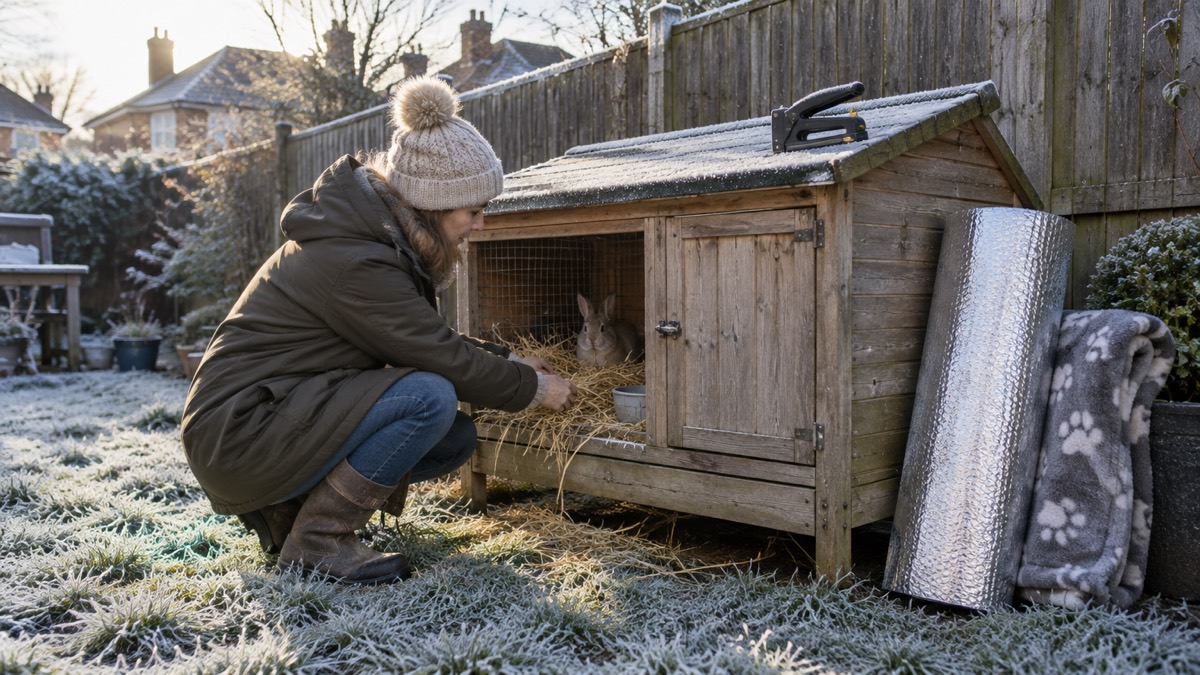
Rabbits and guinea pigs are tougher than they look, but not as tough as their coats suggest. The British Veterinary Association says domestic rabbits and guinea pigs are vulnerable to the cold despite their warm coats, which is why owners need to be vigilant and protect hutches from snow, cold draughts and winter rain1. The RSPCA's winter advice is the same in substance: provide a well-insulated shelter with plenty of bedding, keep the living area dry and free from draughts, and consider a heat lamp or pad if necessary2.
So the job breaks into four parts. Insulate the hutch and site it out of the weather. Keep the bedding deep and dry. Find where draughts and damp get in and block them without sealing off ventilation. And on the coldest nights, add warmth safely, or move the animals somewhere warmer. Rabbits do not hibernate, so a rabbit that seems dormant in winter is not simply sleeping through the season2.
If the weather turns severe, or the heating fails, the same principles apply at short notice. The pets in cold weather, snow and ice guide covers the wider picture for all household animals.
A well-insulated shelter keeps rabbits and guinea pigs warm
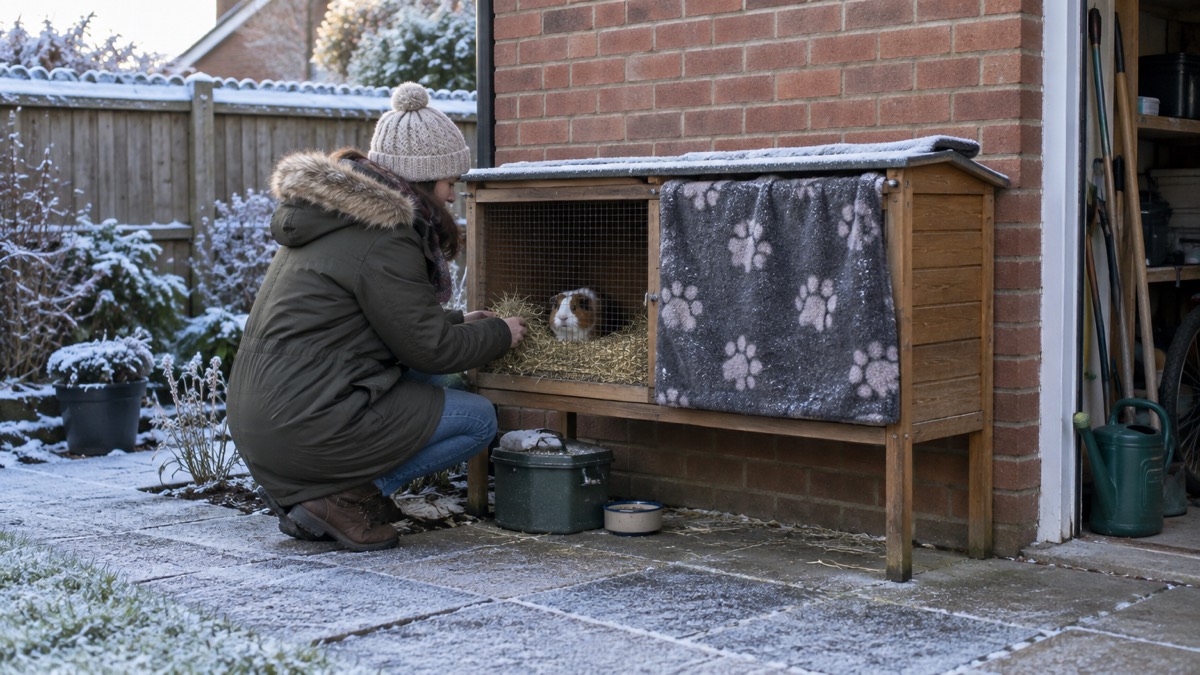
The hutch itself is the first line of defence. The RSPCA's starting point is a well-insulated shelter with plenty of bedding2. The Met Office, relaying British Veterinary Association advice, says owners need to be vigilant and take steps to ensure their hutches are protected from the snow, cold draughts and winter rain1. Before the cold arrives, check the fabric of the hutch: South Gloucestershire Council's guidance for pets in an emergency is that hutches should be in good repair and weather tight5.
That means looking at the roof for gaps, the floor for damp, and the mesh for holes. A hutch that lets water in will never be warm, however much bedding you add. Position matters too: siting the hutch out of prevailing wind and rain, with the open mesh side facing away from the weather, does more than any accessory. If the hutch stands on cold or wet ground, raising it helps keep the floor dry.
Insulation can be improvised. The PDSA advises insulating small pets' homes with old blankets while keeping them ventilated4. The principle is a layer between the animal and the outside: blankets, cardboard or purpose-made covers over the hutch, leaving the ventilation openings clear. Never block every gap. A sealed hutch traps damp air, and damp is the enemy of warmth.
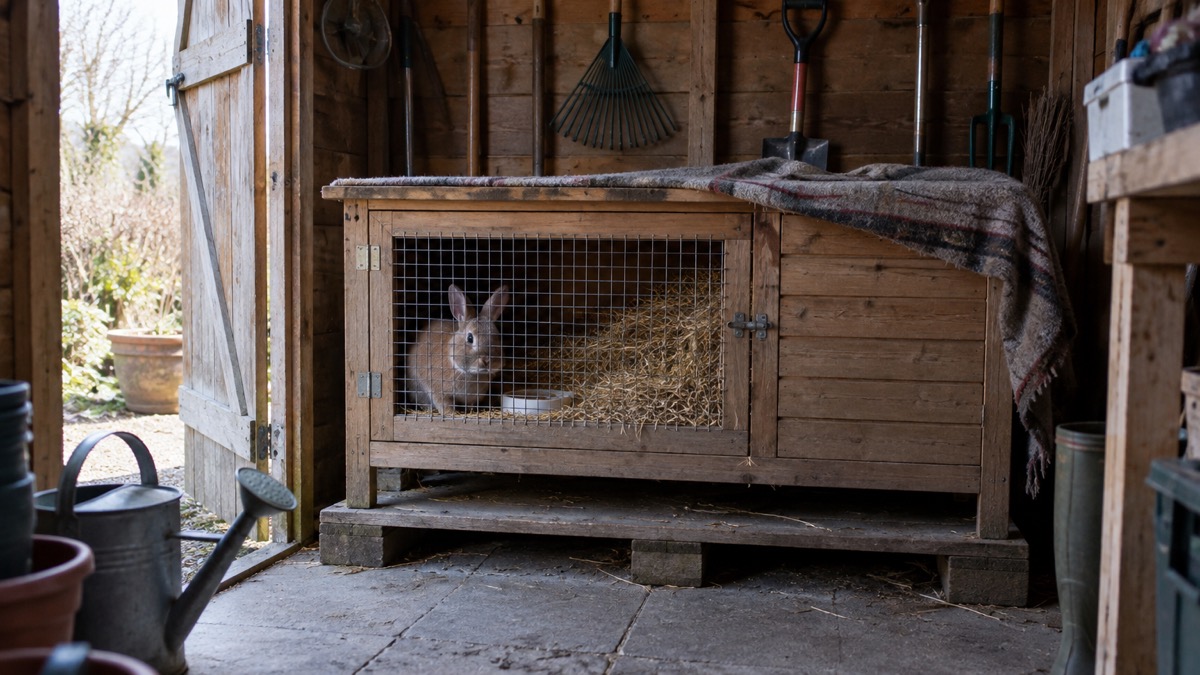
If the hutch cannot be made weather tight, or the cold is severe, moving the animals is the better answer. The PDSA advises moving small pets such as rabbits and guinea pigs indoors, or into a car-free garage or shed, during the colder months4. A car-free garage matters: exhaust fumes are dangerous, and a car engine started in an attached garage can fill the space.
Plenty of bedding, kept dry
Bedding does two jobs: it traps warmth and it gives the animal something to burrow into. The RSPCA pairs plenty of bedding with the insulated shelter as the core of winter care2. For guinea pigs that have to stay outdoors, the Blue Cross advises a secure shelter with plenty of places to hide, and says extra hay and straw can help them feel more comfortable6.
Dry is as important as deep. The RSPCA's advice is to keep the living area dry as well as free from draughts1. Damp bedding pulls heat away from the animal, so a hutch that is warm on Monday can be cold by Wednesday if the bedding has soaked up moisture. Check by hand, especially in corners and under hiding places, and replace anything damp. In wet weather, check daily.
A practical routine for the winter months:
- Top up hay and straw so there is enough to burrow into, not just a thin layer2.
- Feel the bedding in the corners and under hiding places, and remove anything damp2.
- Check the water bottles regularly to make sure they are not frozen over3.
- Check the hutch for leaks, gaps and loose mesh, and repair before the next cold spell5.
- Give guinea pigs places to hide within the shelter, with extra hay and straw6.
Water is part of the bedding routine because a frozen bottle is a winter emergency in miniature. In hard frost, check morning and evening, and replace frozen water with fresh. A rabbit that cannot drink will stop eating, and that is a welfare problem whatever the temperature.
Where draughts and damp get in, and how to stop them
Draughts are the quiet killer of hutch warmth. The RSPCA's advice is to keep the living area free from draughts2, and the Met Office names cold draughts alongside snow and rain as the things hutches must be protected from1. The places to look are predictable: the gap under the roof, the join between panels, the mesh frame, and the door.
The same draught-proofing principles that apply to a house apply to a hutch, in miniature. NHS guidance on keeping warm at home suggests fitting draught proofing to seal gaps around windows and doors, and drawing curtains at dusk7. For a hutch, that translates into draught excluders or an old towel over gaps, as NHS winter guidance suggests for homes8, and a blanket over the mesh at night. The PDSA advises partly covering hutches and outdoor cages with blankets, so they are more sound-proofed but still well ventilated9.
Damp gets in through the roof, the floor and the mesh. Keep the hutch off wet ground, clear leaves and debris from around it so water drains away, and check after storms. The same principle sits behind the Met Office's cold weather advice to protect your property, which includes checking that pipes are adequately lagged and getting your chimney or flue swept10: fix the leak before the frost, not after.
If the hutch sits in an exposed spot, consider a temporary windbreak, such as a board or a sheet of plywood, set a little distance away so air still moves. The aim is to stop wind driving rain onto the mesh, not to wrap the hutch airtight.
Extra warmth for the coldest nights
On the coldest nights, insulation and bedding may not be enough on their own. The RSPCA suggests considering a heat lamp or pad if necessary, alongside the well-insulated shelter and plenty of bedding1. If you use one, choose a product made for pets, follow the maker's instructions, and make sure the animal can move away from the heat. Check the cable and plug for damage, and keep wiring out of reach of teeth.
The safer alternative, and the one the PDSA leads with, is relocation. Move small pets such as rabbits and guinea pigs indoors, or into a car-free garage or shed, during the colder months4. A well-ventilated outbuilding or a spare room works. Give them extra bedding for warmth and cardboard boxes or tunnels to hide in, as Which? advises for small pets during severe weather10.
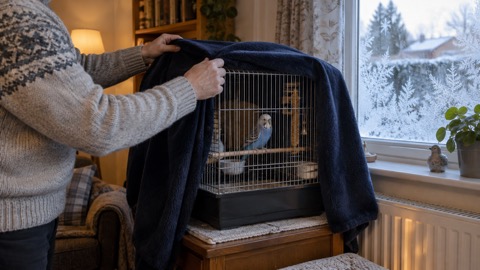
If you bring animals indoors, keep the hutch away from radiators and draughts. The RSPCA's advice for pet birds in winter, to provide plenty of additional dry, warm bedding such as straw and to cover enclosures to keep the wind and rain out11, applies to any small animal moved inside: a spot that is warm but not hot, and out of the draught from a door or window.
A power cut changes the calculation. If the heating fails and the house cools, the animals feel it too. The power cuts guide covers keeping a household warm without mains power, and the heating and cooking without mains power guide covers the alternatives. For animals, the priority is the same: move them to the warmest room, add bedding, and check the water.
Signs a rabbit is too cold, and when to get help
Some winter behaviour is normal. The RSPCA says normal behaviours for rabbits in winter can include curling up into a ball or huddling together to share body heat1. Rabbits do not hibernate1, so a rabbit that seems dormant is not simply sleeping through the season.
What matters is a change from normal. A rabbit that stays hunched when others are active, feels cold to the touch, is reluctant to move, or stops eating needs attention. If you are worried, contact your vet. The emergency vets guide explains out-of-hours care and the 24-hour rule.
For guinea pigs, the Blue Cross advises checking on them frequently and monitoring them closely for any signs of stress or illness if they remain outdoors6. That is the practical test: an animal that is eating, moving and interested is coping; one that is not needs help.
If cold weather is part of a wider emergency, such as a flood or a long power cut, the pets and animals in an emergency guide and the household emergency plan guide set out what to prepare. For the hutch itself, the outdoor rabbit hutch in hot weather guide covers the other extreme, and the fireworks guide for rabbits and guinea pigs covers the nights when moving the hutch into a shed is advised for noise as well as cold.
Sources (11)
- Rabbits in winter, RSPCA, 2026
- WeatherReady weather hacks, Met Office, 2026
- WeatherReady weather hacks, Met Office, 2026
- Hypothermia in pets, PDSA, 2021
- Preparing your pets for an emergency, South Gloucestershire Council, 2010
- Guinea pigs and fireworks, Blue Cross, 2026
- Keep well, keep warm, NHS, 2022
- Stay Well this Winter, NHS England, 2025
- Pets and fireworks, PDSA, 2026
- Storm damage: how to protect your home, Which?, 2026
- Birds in winter, RSPCA, 2026
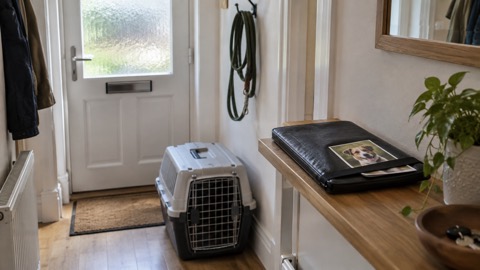 Pet Emergency Documents
 Storing Pet Food and Water
 Carer's Emergency Plan
 Pet Birds in Cold Weather
 Birds and Chickens in Heat
 Breaking a Car Window for a Dog
 Keeping a Cat Cool in a Heatwave
 Chocolate Poisoning in Dogs
 Christmas Hazards for Pets
 Dog Left Alone on a Hot Day
 Dog in a Hot Car
 Hypothermia in Dogs and Cats
 Dogs in Water or Coast Trouble
 Fireworks and Small Pets
 Fish in a Power Cut