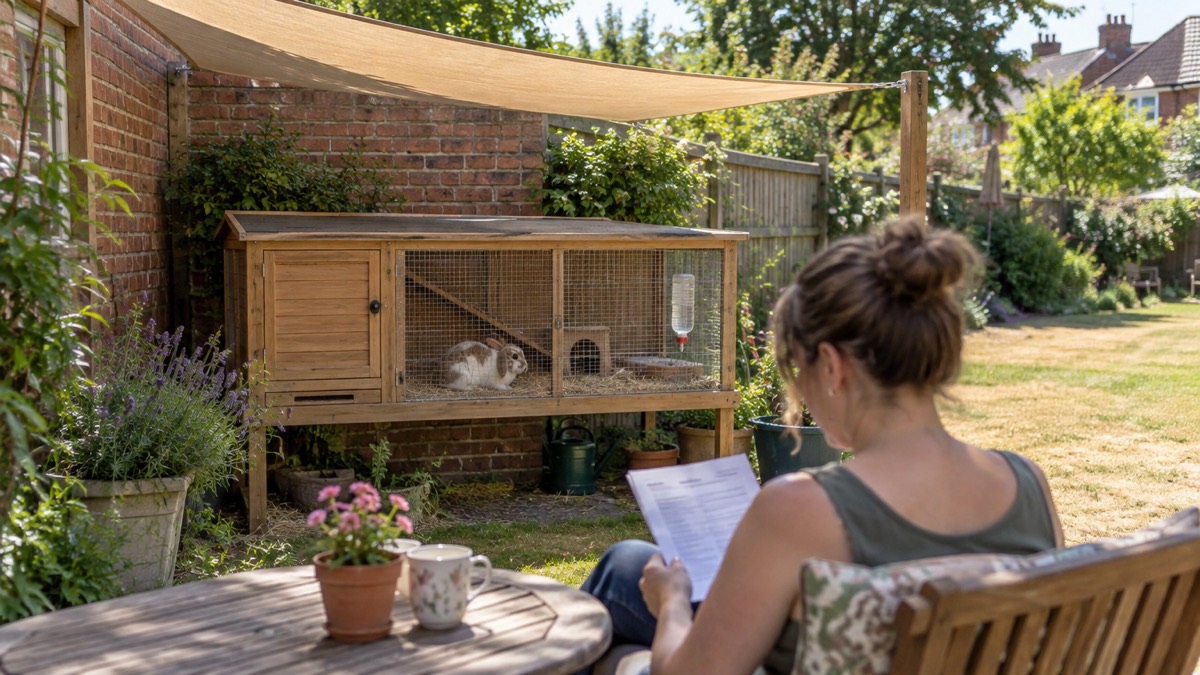
Rabbits do not sweat, and a wooden hutch left in full sun can become far hotter inside than the air around it. The single most useful thing you can do is get the hutch and run out of direct sunlight and keep them there as the sun moves. A gazebo, parasol or sun sail over the hutch creates shade, and a reflective cover can deflect heat1. Wooden hutches should never be left in the sun2.
After shade comes air. Keep the hutch off the ground so air can move underneath, and make sure the hutch is well ventilated3. Then add water: freeze plastic bottles of water and place them in the enclosure to help the rabbit stay cool, alongside plenty of fresh water to drink5. A fan aimed at a frozen water bottle circulates cooler air; a fan on its own only moves warm air around and will not cool your rabbit2.
The same hutch has to work in winter, when rabbits are vulnerable to cold, snow, draughts and winter rain6. The good news is that the summer and winter jobs overlap: a hutch that is raised, sheltered, well built and well ventilated is the right hutch in both seasons. This page sets out where to put it, how to shade and insulate it, what to do on the hottest days, and how to adjust it between summer and winter.
Where to put the hutch: shade, shelter and moving it as the sun moves
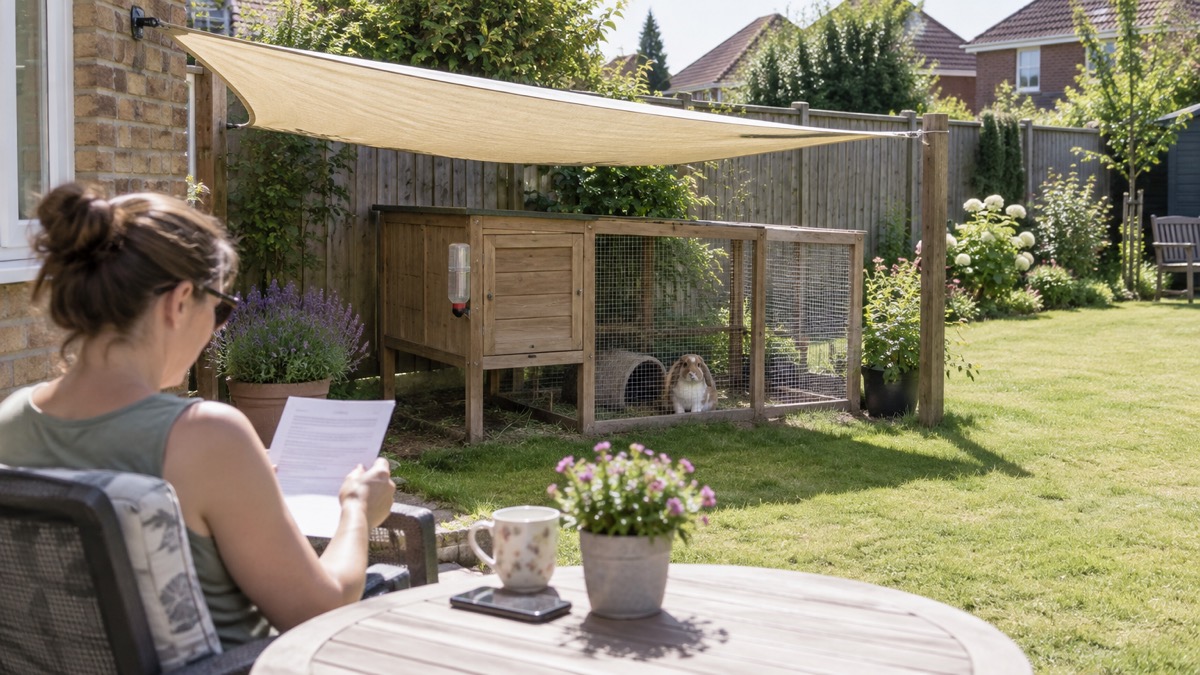
Position is the first decision and the one that does most of the work. Outdoor rabbits should have their enclosure in the shade during the hottest parts of the day if possible, or shade provided, such as a parasol or even a reflective cover to deflect heat2. Move the hutch and run out of direct sunlight, and move them again as necessary through the day2. A gazebo or sun sail placed over the hutch can create a shaded area2.
The hutch also has to face the other three seasons. Keep it out of the wind, rain, snow and sleet, and raise it to prevent frost from the ground6. Those two instructions, out of the weather and off the ground, are the same ones that keep a hutch cool in summer, which is why getting the position right once saves work later.
If the forecast turns severe, you have a further option. If your rabbit or guinea pig lives in an outside hutch, temporarily move them into a well-ventilated outbuilding or bring them inside, giving them extra bedding for warmth and cardboard boxes or tunnels to hide in7. That advice is written for storms, but the same move applies when heat is extreme. What you should not do is move them into a glass building or a wooden shed: glass buildings and wooden sheds can heat up very quickly, making them dangerously hot for rabbits2. A cool room indoors, or a well-ventilated outbuilding, is the safer choice.
- Do: move the hutch and run out of direct sun, and again as the sun moves2.
- Do: provide shade with a parasol, gazebo, sun sail or reflective cover2.
- Do: raise the hutch off the ground3.
- Do not: leave a wooden hutch in the sun2.
- Do not: move rabbits into a glass building or wooden shed in hot weather2.
Insulated walls keep heat out as well as in
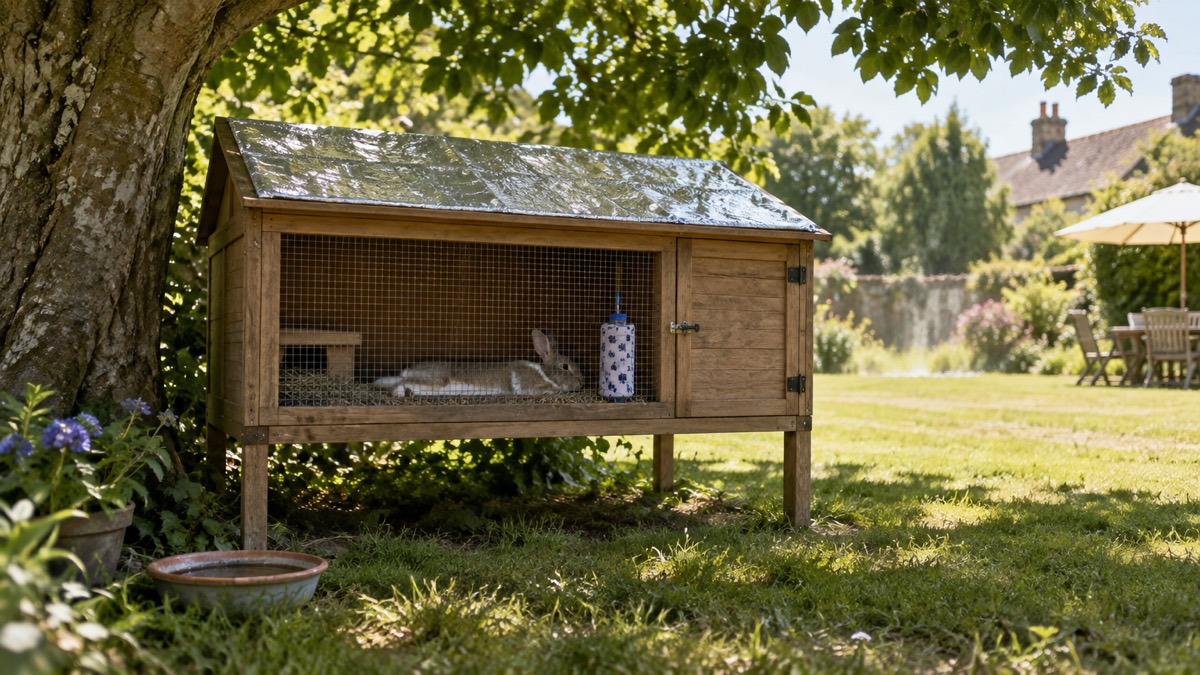
Insulation is usually thought of as a winter job, but the principle runs both ways. Having your loft and cavity walls insulated will keep the heat in when it is cold and keep it out when it is hot8. Loft insulation does not just keep your house warm in winter, it also stops heat entering from above in summer9. The same logic applies to a hutch: a layer between the sun and the rabbit slows the heat coming through.
For a hutch, insulate the walls with cardboard, blankets or insulation boards while keeping it well ventilated6. The ventilation is not optional. Insulation without airflow traps warm, stale air, and adequate ventilation is part of keeping cool10. The aim is a hutch that is shaded on the outside, insulated in the walls and open to moving air.
There is a wider household point here that bears on the animals. Keeping a home cool where possible is official hot weather advice11, and the same measures that cool a house cool the space around a hutch. Keep indoor plants and bowls of water in the house, as evaporation helps cool the air12. If the hutch sits against a wall or fence that bakes in the sun, shading that surface helps too.
Airflow under a raised hutch
A hutch sitting flat on the ground has no way for air to move beneath it. Keeping hutches and runs off the ground improves ventilation3, and on a hot day that moving air is what carries heat away. A raised hutch also lifts the animals away from frost on the ground in winter6, so the stand earns its place all year.
Ventilation is a general principle of keeping cool, not just a rabbit one: ensuring adequate ventilation is part of official summer advice10. For a hutch, that means clear mesh, open vents and a gap underneath. It does not mean a draught. In winter the hutch should be out of cold draughts6, so the airflow you want in summer is gentle and continuous rather than a wind blowing through.
Fans need care. Do not blow a fan directly onto the rabbits, and ensure they have enough room to move away if they wish2. Keep fan wires out of reach2. A cold, wrung-out towel placed on the run creates evaporative cooling2, and a fan aimed at a frozen water bottle circulates cooler air around it2.
Covering the hutch front and adding water
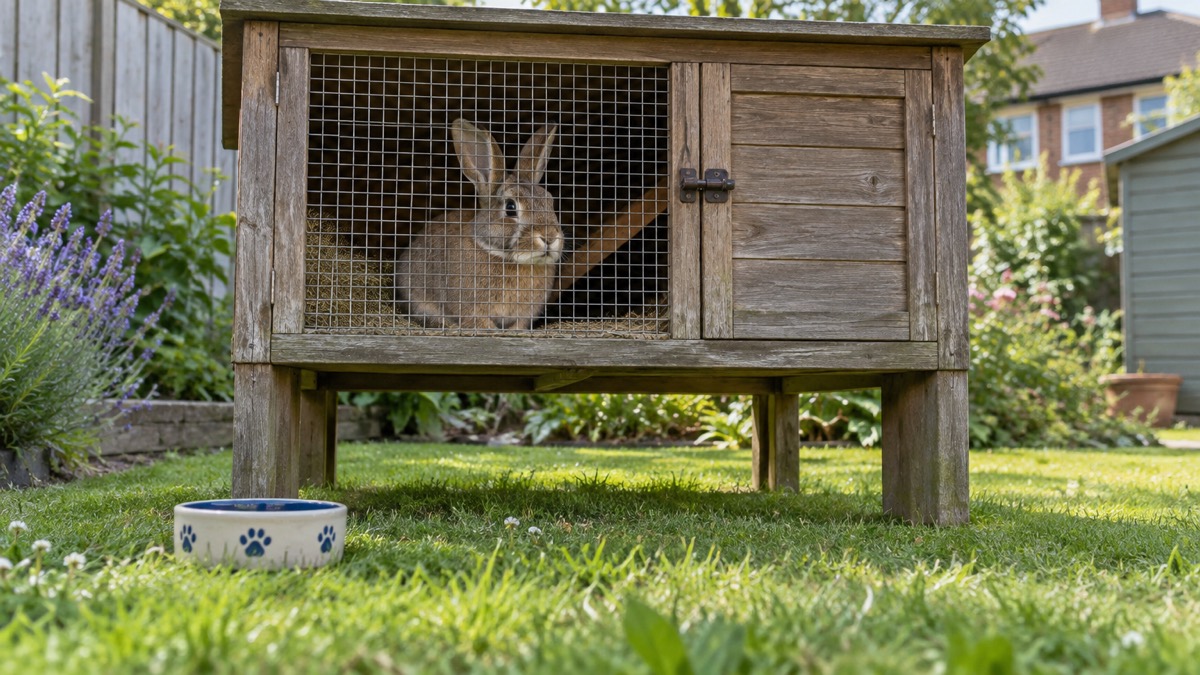
Covering the front of a hutch is where good intentions can backfire. A cover that blocks the sun but also blocks the air turns the hutch into a warm box. The safe versions of covering are specific. You can provide extra shade to guinea pigs and rabbits by covering the top of wire mesh runs with damp towels5. Partly cover hutches and outdoor cages with blankets, so they are more sound-proofed but still well ventilated13. Note the word partly, and note that the blanket advice is about sound-proofing for fireworks, not about heat.
Water does more for a rabbit in hot weather than any cover. Freeze plastic bottles of water and place them in the rabbit's enclosure to help them stay cool, alongside plenty of fresh water5. Lightly misting rabbits' ears with cold water is also effective if it does not cause them stress5. Mist your rabbit with cool water to help cool them down, and you can dampen their ears with your wet hands during very hot days3. Rabbits need plenty of clean, fresh water to drink and a cool, shady place to rest14.
Adjusting the hutch between summer and winter
The hutch does not need rebuilding twice a year, but it does need adjusting. In summer the priorities are shade, airflow and water. In winter they are shelter from the weather and warmth. The British Veterinary Association's advice is that domestic rabbits and guinea pigs are vulnerable to the cold despite their warm coats, which is why owners need to be vigilant and take steps to ensure their hutches are protected from the snow, cold draughts and winter rain6.
| Job | Summer | Winter |
|---|---|---|
| Position | In shade, moved as the sun moves2 | Out of wind, rain, snow and sleet6 |
| Height | Off the ground for ventilation3 | Raised to prevent frost from the ground6 |
| Walls | Insulated with cardboard, blankets or boards, ventilated6 | Insulated with cardboard, blankets or boards, ventilated6 |
| Cover | Top of run covered with damp towels for shade5 | Partly covered with blankets, still ventilated13 |
| Water | Frozen bottles in the enclosure, fresh water to drink5 | Fresh water, checked for freezing |
Some winter measures have summer equivalents worth knowing. Move small pets such as rabbits and guinea pigs indoors, or into a car-free garage or shed, during the colder months15. In summer, the equivalent move is into a cool room or well-ventilated outbuilding when heat is extreme7. In both cases the point is to remove the animal from the worst of the weather without sealing it into a hot or stuffy space.
Normal winter behaviour in rabbits can include curling up into a ball or huddling together to share body heat6. That is not a sign of illness, but it is a reminder that the hutch has to do different work in different seasons. Make sure hutches are in good repair and weather tight16, because a hutch that leaks or has a broken panel fails in both directions.
What to do on the hottest days
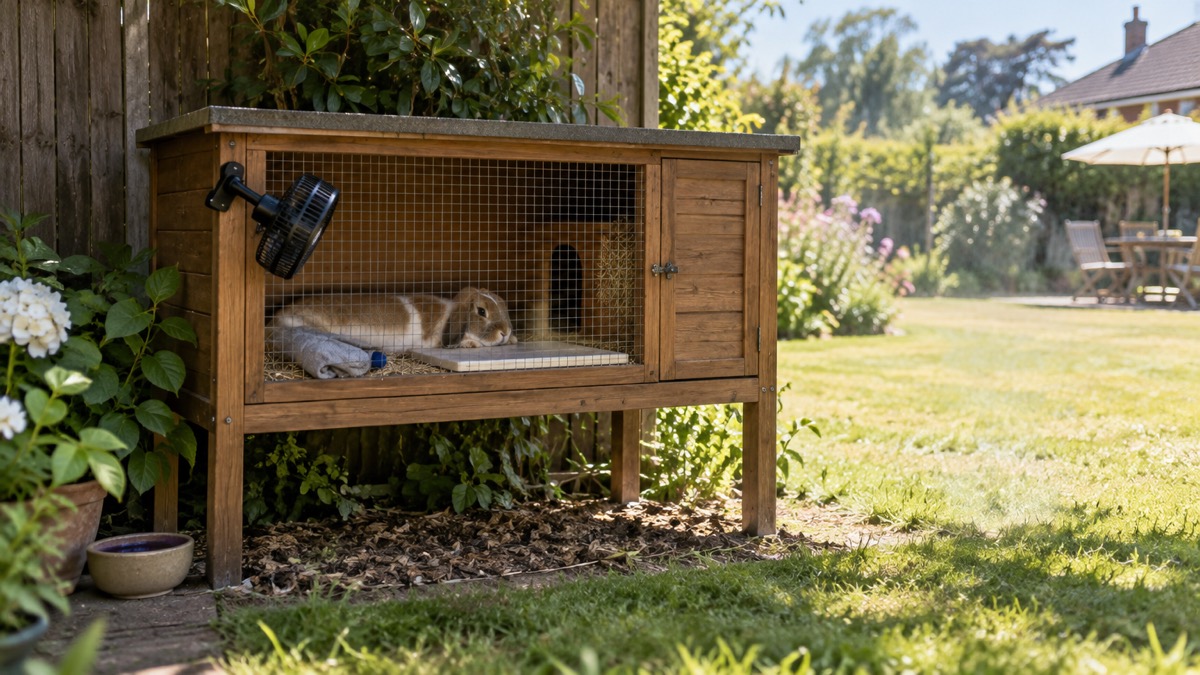
On a day when heat is forecast, work through the same short list in order. Move the hutch and run out of direct sunlight, and move them again as the sun moves2. Put frozen bottles of water in the enclosure and check the fresh water5. Aim a fan at a frozen bottle rather than at the rabbit, and keep the wires out of reach2. Mist the rabbit's ears with cool water if it does not cause stress5.
If the animal seems affected by the heat, move it to a cool, shaded area2. Heat exhaustion in people is treated by moving somewhere cool, resting, drinking water and cooling down17, and the same instinct, get the animal out of the heat and cool it, is the right first move for a rabbit. For signs of heatstroke in rabbits and what to do next, see Heatstroke in Rabbits: Signs and What to Do.
Where to get help and further reading
If you are unsure whether your set-up is right, the animal charities publish free guidance. The RSPCA covers rabbits and rodents in summer1, the Rabbit Welfare Association and Fund covers hot weather care in detail2, and Blue Cross covers keeping rabbits cool in the summer heat3. Your vet is the right person to ask about a rabbit that is struggling in the heat.
For the wider picture, see Keeping Dogs, Cats and Small Animals Cool in Hot Weather and Heatwaves and Drought: A Household Guide. If you keep birds or chickens as well, Keeping Pet Birds and Chickens Cool in Hot Weather covers them. For the winter side of the same hutch, see How to Keep Rabbits and Guinea Pigs Warm in Winter. And if you are building a household plan that includes the animals, Including Your Pets in a Household Emergency Plan sets out what to write down.
Sources (17)
- Rabbits and rodents in summer, RSPCA
- Hot weather care, Rabbit Welfare Association and Fund, 2026
- How to keep your rabbits cool in the summer heat, Blue Cross, 2023
- How to keep pets cool in summer, Blue Cross, 2023
- Rabbits in winter, RSPCA
- Weatherhacks to try as clocks go back, Met Office, 2023
- Storm damage: how to protect your home from a thunderstorm, Which?, 2026
- How to keep your home cool in hot weather, Centre for Sustainable Energy, 2026
- Hot weather advice, nidirect, 2026
- Keeping cool in summer, Derbyshire County Council
- Safe car travel for pets, PDSA
- Preparing your pets for an emergency, South Gloucestershire Council
- Pets and fireworks, PDSA
- Hypothermia in pets, PDSA
- Keeping your home warm in winter, Met Office
- How to stay warm for less, Centre for Sustainable Energy, 2024
- How to keep cool this summer, Lancashire County Council
 Pet Emergency Documents
 Storing Pet Food and Water
 Carer's Emergency Plan
 Pet Birds in Cold Weather
 Birds and Chickens in Heat
 Breaking a Car Window for a Dog
 Keeping a Cat Cool in a Heatwave
 Chocolate Poisoning in Dogs
 Christmas Hazards for Pets
 Dog Left Alone on a Hot Day
 Dog in a Hot Car
 Hypothermia in Dogs and Cats
 Dogs in Water or Coast Trouble
 Fireworks and Small Pets
 Fish in a Power Cut