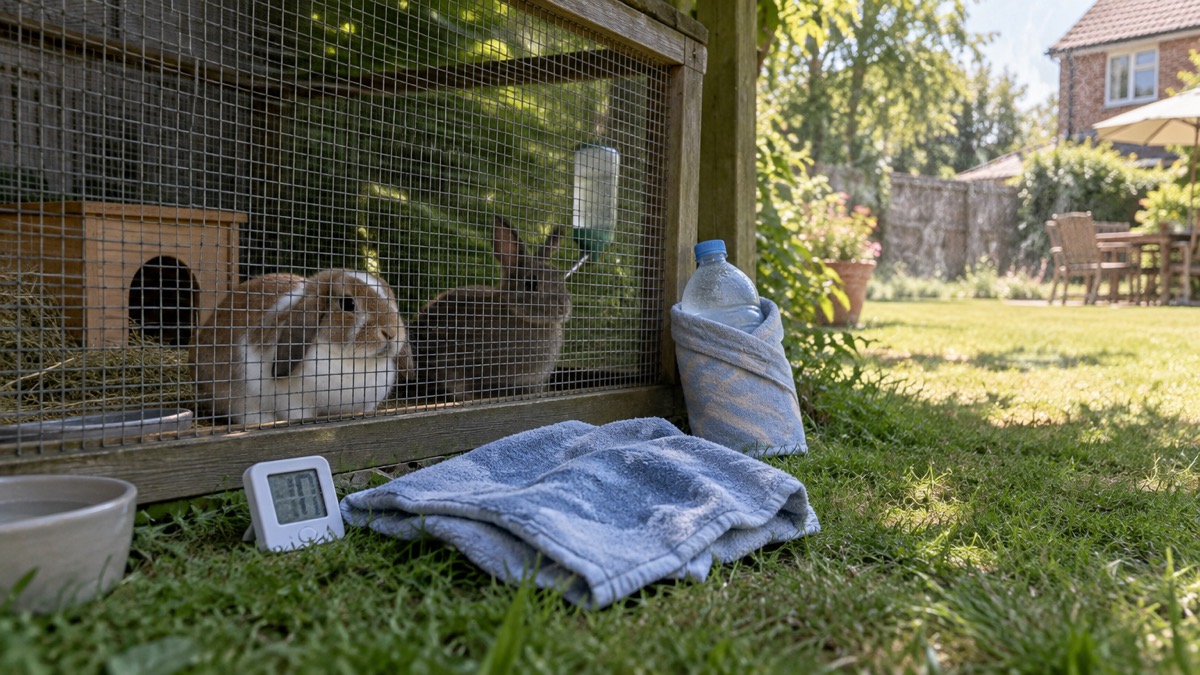
Rabbits do not cope with heat well, and heatstroke in a rabbit is a genuine emergency. Temperatures above 25 degrees Celsius are too hot for rabbits and can increase the risk of heatstroke, and rabbits and guinea pigs are more at risk from heatstroke in hot weather than many other pets1. Once it starts, it can progress very quickly and is often fatal for rabbits1.
If you think your rabbit has heatstroke, ring a rabbit-savvy vet immediately3. While you get help, move the rabbit to a cool, shaded place, put it on top of a cold, wet towel, create a breeze and gradually dampen its ears with cool water1. Do not submerge it in cold water: the shock can prove fatal1.
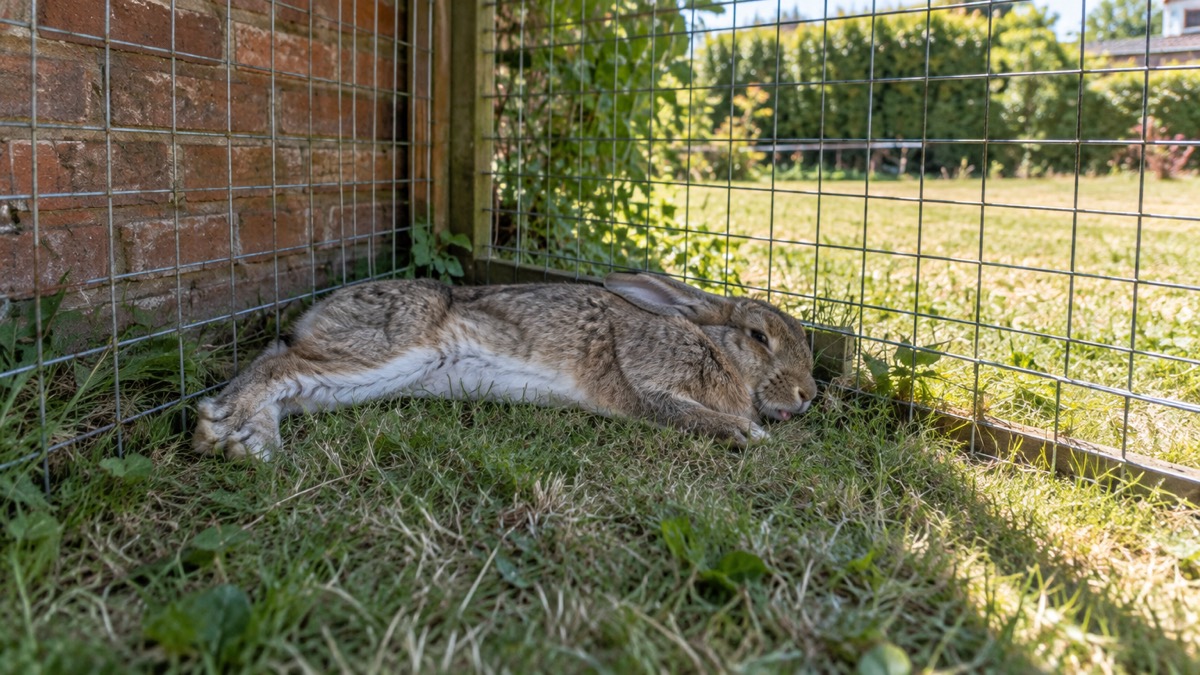
The signs to act on are weakness and lethargy, panting, warm red ears, salivating, confusion and convulsions1. Do not wait to see whether your rabbit improves on its own. Heatstroke can develop very suddenly and may lead very quickly to unconsciousness5.
Why heatstroke is so dangerous for rabbits
Heatstroke is a serious condition that can progress very quickly, often making it fatal for rabbits1. Animals can suffer fatal heatstroke within minutes, and obvious signs include collapse, excessive panting or breathing heavily, and dribbling2. Heatstroke can kill, it can develop very suddenly, and it may lead very quickly to unconsciousness5.
Rabbits are not simply uncomfortable in hot weather; they are among the pets most at risk. Rabbits and guinea pigs are more at risk from both heatstroke and flystrike in hot weather2. The threshold is lower than many owners expect: temperatures above 25 degrees Celsius are too hot for rabbits and can increase the risk of heatstroke1.
Heat exhaustion can lead to heatstroke, so the earlier stages matter too6. Heat exhaustion or heatstroke can develop quickly over a few minutes, or gradually over several hours or days7. That gradual build-up is the trap for a rabbit in a hutch: a run of warm days with no cool nights lets the animal's condition worsen before anyone notices.
| What raises the risk | Why it matters |
|---|---|
| Temperatures above 25 degrees Celsius | Too hot for rabbits and can increase the risk of heatstroke1 |
| A hutch in direct sun or a still, airless shed | No way for the rabbit to escape the heat |
| Hot weather generally | Rabbits and guinea pigs are more at risk from heatstroke in hot weather2 |
| A rabbit already unwell or lethargic | Signs are easy to miss until they are severe1 |
If you keep rabbits outdoors, the practical work of shade, ventilation and frozen water bottles is set out in how to keep an outdoor rabbit hutch cool, and the wider household picture is in keeping dogs, cats and small animals cool in hot weather.
Signs of heatstroke: panting, warm red ears, weakness
The recognised signs of heatstroke in rabbits are weakness and lethargy, panting, warm red ears, salivating, confusion and convulsions1. Read that list as a progression. A rabbit that is merely quiet and off its food may already be in trouble, and a rabbit that is panting, drooling or fitting is critically ill.
Some of these signs overlap with what owners see in other pets. Early signs of heatstroke across animals include heavy panting, restlessness and lack of coordination8. In dogs, the most common heatstroke symptoms are breathing changes, such as panting excessively or changes to breathing effort, and lethargy or drowsiness9. A rabbit showing the same pattern, breathing hard and going flat, should be treated as an emergency.
- Panting or rapid breathing: the most visible early sign3
- Warm red ears: the ears are how a rabbit dumps heat, and they flush1
- Salivating or drooling: a listed sign in rabbits1
- Weakness and lethargy: the rabbit stops responding normally1
- Confusion: disorientation that is not normal for your rabbit1
- Convulsions: a late and very serious sign1
What to do now: call your vet immediately
Ring a rabbit-savvy vet immediately: heatstroke can be fatal quickly3. Contact a vet if you are worried that an animal is suffering from heatstroke5. Do not spend time searching for home remedies first; the call and the cooling happen together.
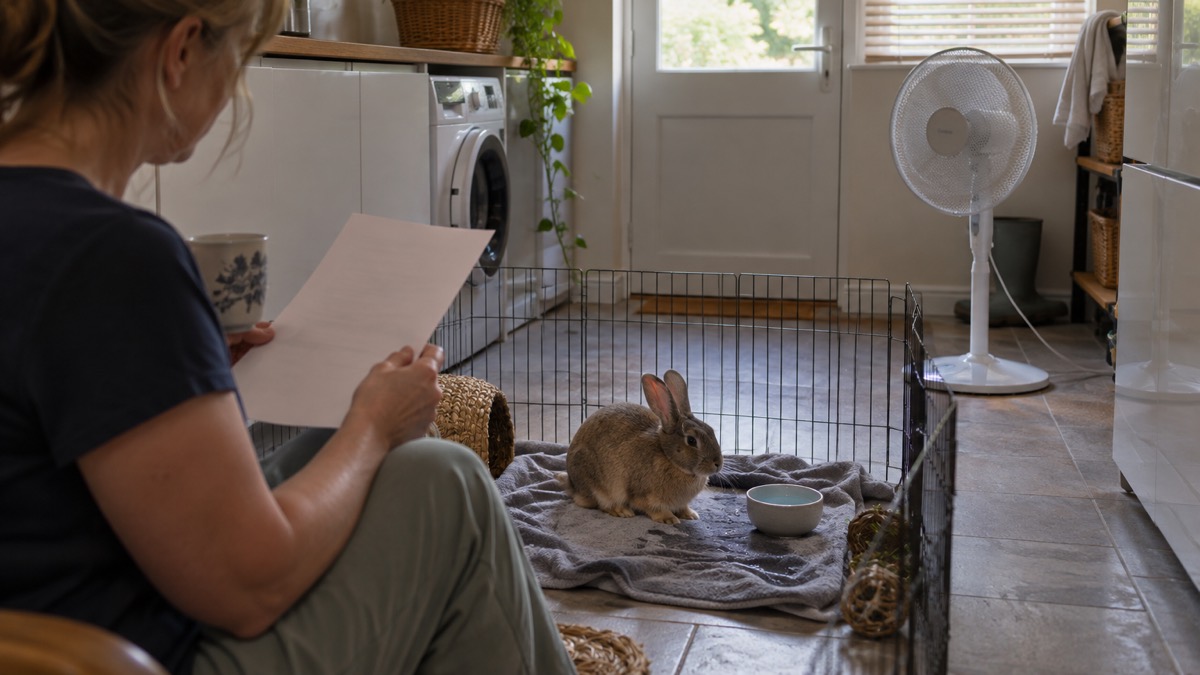
While you are on the phone, start cooling. The RSPCA's advice for a rabbit, guinea pig or other pet you suspect is suffering heatstroke is to move them to a cool, shaded place, wrap them in a cool, damp towel and phone your vet immediately4. The Blue Cross sets out the same steps in more detail: put the rabbit on top of a cold, wet towel, create a breeze, then gradually dampen the ears with cool water1. Dampen the fur and ears with cool water and seek veterinary attention immediately1.
The same warning applies to other small pets: never place a guinea pig directly into cold water, as the shock can be fatal10. Be very careful not to stress an animal out with water if it is not used to it, which includes rabbits, small rodents and most cats11.
If your rabbit is still unwell after resting in a cool place, being cooled and drinking fluids, do not wait: call a rabbit-savvy vet immediately, because heatstroke can be fatal quickly12. For a rabbit, ring first, cool while you wait, and travel as soon as your vet advises.
Cooling a rabbit safely while you get help
Cooling is not a substitute for the vet; it is what you do on the way. Work through these steps in order and keep the rabbit as calm as you can.
- Move the rabbit to a cool, shaded place4.
- Put it on top of a cold, wet towel, not under a covering1.
- Create a breeze in the room, without blowing it directly at the rabbit1.
- Gradually dampen the ears with cool water, then the fur1.
- Dampen the ears and feet with cool, not cold, water3.
- Ring your vet and travel as soon as they advise3.
A few details decide whether this helps or harms. Do not blow a fan directly onto the rabbits, and make sure they have enough room to move away if they wish1. Keep fan cables out of reach of a rabbit that may chew them1. A cold, wrung-out towel draped over the run creates evaporative cooling1. Opening windows or using a fan to increase ventilation is standard advice in hot weather13.
Never put a rabbit in cold water
This is the single most important safety rule on the page. Do not encourage your rabbits to swim or submerge them in cold water: the shock can prove to be fatal1. The same applies to guinea pigs, where placing the animal directly into cold water can be fatal through shock10.
There is a second mistake owners make: covering the animal. Do not cuddle an overheated pet or cover it with a wet towel, as this will make it hotter11. In dogs, wet towels laid over the body can trap in the heat12. For a rabbit, the towel goes underneath, the water goes on the ears and fur, and the breeze does the rest1.
"Do not encourage your rabbits to swim or submerge them in cold water. The shock can prove to be fatal."
Keeping the hutch cool before it becomes an emergency
Prevention is far easier than cooling a rabbit in distress. Freeze plastic bottles of water and place them in the rabbit's enclosure to help them stay cool, alongside plenty of fresh water; lightly misting rabbits' ears with cold water is also effective if it does not cause them stress8. The same official guidance covers pets generally: watch out for early signs of heatstroke, such as heavy panting, restlessness and lack of coordination8.
- Frozen water bottles in the enclosure, plus plenty of fresh drinking water8
- Shade and ventilation, with a fan that the rabbit can move away from1
- A cold, wrung-out towel over the run for evaporative cooling1
- Light misting of the ears with cold water, if it does not stress the rabbit8
- Check the rabbit often on any day above 25 degrees Celsius1
Rabbits are also at higher risk of flystrike in hot weather, so warm days are the time to check the rear end as well as the breathing. The checks are set out in flystrike in rabbits and guinea pigs.
Where to get help
Your first call for a rabbit with heatstroke is a rabbit-savvy vet3. If your own practice is closed, use an out-of-hours service; how the 24-hour rule works is explained in emergency vets: out-of-hours care and the 24-hour rule.
For human heat illness, the NHS advises calling 999 if someone has signs of heatstroke, including still being unwell after 30 minutes of resting in a cool place, being cooled and drinking fluids, hot skin that is not sweating, a fast heartbeat, fast breathing or shortness of breath, confusion and lack of coordination, or a seizure or fit12. The same signs in a person are a 999 call, not a vet call12.
If a heatwave is forecast, plan for your animals before the hot days arrive. Including your pets in a household emergency plan covers water, shade and who checks the animals, and keeping dogs, cats and small animals cool in hot weather covers the household as a whole. For the wider picture, see heatwaves and drought: a household guide.
Sources (14)
- How to keep your rabbits cool in the summer heat, Blue Cross, 2023
- How to keep pets cool in summer, Blue Cross, 2023
- Hot weather care, Rabbit Welfare Association and Fund, 2026
- Rabbits and rodents in summer, RSPCA, 2026
- Hot weather advice, nidirect, 2026
- Staying well in hot weather, Berkshire Healthcare NHS Foundation Trust, 2026
- Heat exhaustion and heatstroke, nidirect, 2025
- Hot weather and its impacts, Met Office, 2026
- Hot weather, Dogs Trust, 2026
- How to keep guinea pigs cool in the summer, Blue Cross, 2023
- First aid for heatstroke, PDSA, 2023
- Heat exhaustion and heatstroke, NHS, 2026
- Stay safe and cool in the sun, South East Coast Ambulance Service NHS Foundation Trust, 2021
- Heatstroke in dogs, RSPCA, 2026
 Pet Emergency Documents
 Storing Pet Food and Water
 Carer's Emergency Plan
 Pet Birds in Cold Weather
 Birds and Chickens in Heat
 Breaking a Car Window for a Dog
 Keeping a Cat Cool in a Heatwave
 Chocolate Poisoning in Dogs
 Christmas Hazards for Pets
 Dog Left Alone on a Hot Day
 Dog in a Hot Car
 Hypothermia in Dogs and Cats
 Dogs in Water or Coast Trouble
 Fireworks and Small Pets
 Fish in a Power Cut