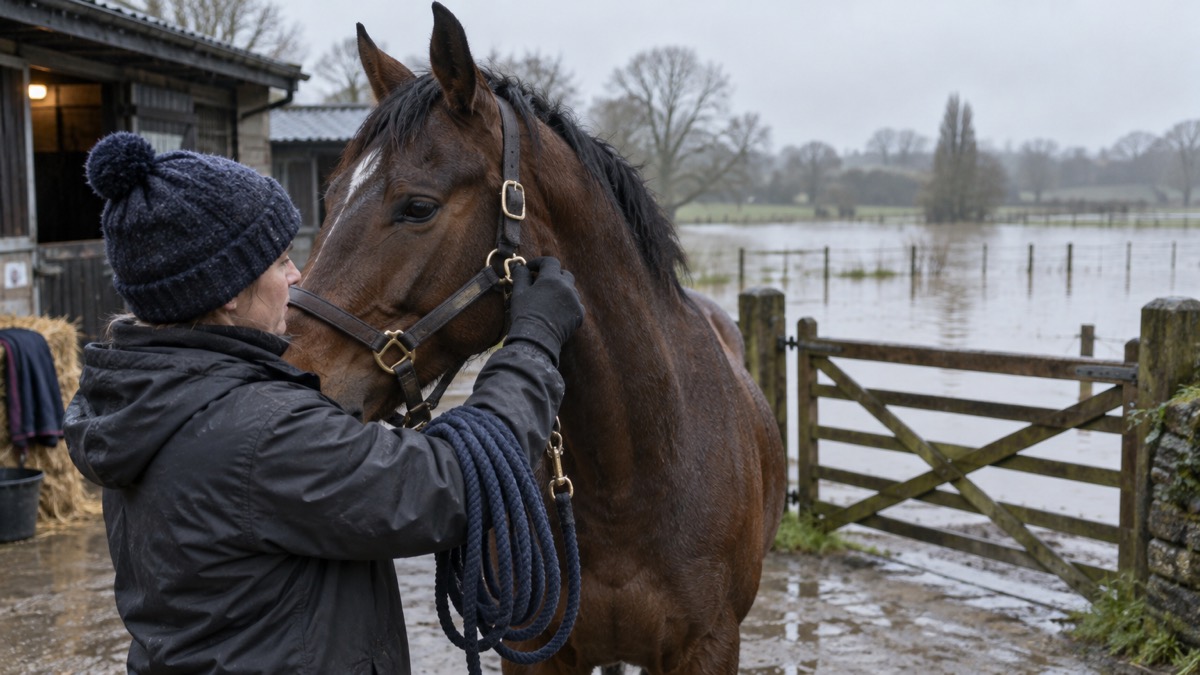
If flooding threatens your horses, ponies or livestock, the single most important action is to move them to high ground with emergency food and water, and to do it before the water arrives rather than after1. The Scottish Environment Protection Agency's guidance for farms and livestock is blunt on the point: identify fields on higher ground and gain permission to use them in advance of flooding so animals can be moved to safety1. Once animals are stranded, the rules change completely. Never put yourself at risk to reach them, and never enter flood water to rescue an animal: call 999 and let the fire and rescue service do it3.
This page is for ordinary keepers: someone with a horse or pony on livery or at home, a smallholder with chickens, goats or sheep, or a household whose pets share a flood-prone property. It covers what to do when a flood warning arrives, how to prepare fields and plans in advance, what fire and rescue crews can actually do for trapped animals, how to dry animals that get soaked in cold weather, and what to do with small pets in the house. For the wider household picture, see our flooding guide and the pets and animals section.
When a flood warning arrives: move animals to high ground
The moment a flood warning is issued, your animals move up the priority list alongside your family. The official advice across the UK is consistent: move your family, pets and important items to safety, for example upstairs or to higher ground7, and farmers and keepers should consider moving livestock and equipment away from areas likely to flood4. The Northern Ireland Fire and Rescue Service puts it simply: during flooding, have plans in place to move animals to high ground6. In a flood, move livestock to high ground with emergency food and water if you have not done so already2.
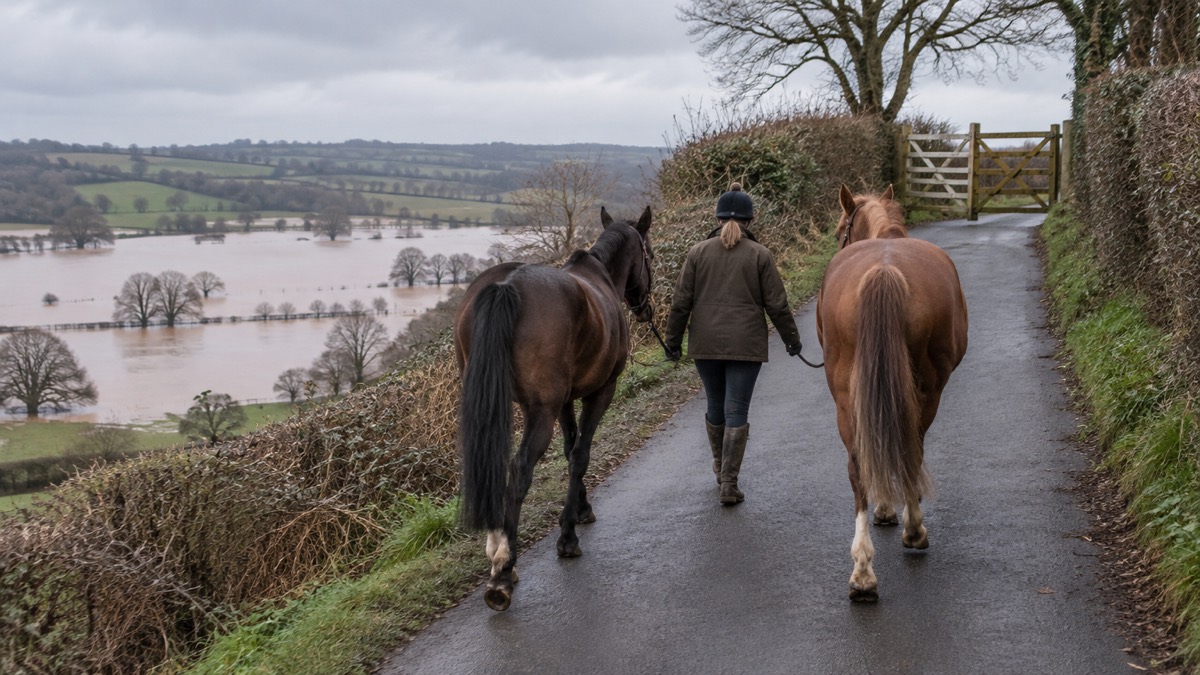
Move animals before the water reaches them, not once it is rising around their legs. Flood water moves faster and deeper than it looks, and driving or walking through it to reach a field you left too late is one of the most dangerous things you can do. Never walk or drive through flood water8, and never drive through floodwater even on a familiar lane9. If you have many horses, try to move them together as this helps to keep them calm, and wear a hat and gloves while you do it1.
While you move the animals, do not forget the things around them that can make flooding worse. Identify and move any chemicals or fuels on the property that could contaminate flood water, and move them to safety1. Move vehicles to higher ground as well10, both because you may need them to transport animals or feed later, and because a flooded vehicle is a loss you can avoid in minutes.
If you keep chickens, goats or horses and your location is at risk from flooding, find a site nearby that is not at risk so you have somewhere to evacuate your animals if the need arises5. That site is only real if you have permission to use it: agree it with the owner in advance, in writing if you can, and note it in your flood plan so anyone helping you knows where the animals go.
Never put yourself at risk to reach an animal
This is the rule that saves human lives, and every fire and rescue service in these islands states it in the same terms. Mid and West Wales Fire and Rescue Service's farm safety guidance says: "NEVER put yourself at risk"3. Natural Resources Wales adds: "Do not put your life or someone else's life in danger to rescue an animal"4. The Scottish Environment Protection Agency's advice for horse owners is specific: "Do not put yourself at risk to rescue a horse, contact the emergency services or the SSPCA who may be able to help"1.
"DO NOT PUT YOUR LIFE, OR THE LIVES OF OTHERS IN DANGER IN ATTEMPTING TO RESCUE OR PROTECT ANIMALS"
The reason is not caution for its own sake. People die trying to reach animals in water. Derbyshire County Council's flooding guidance is explicit: "Never enter the water to rescue anyone, or an animal in difficulty in the water. Telephone: 999 immediately"12. Devon and Somerset Fire and Rescue Service, which attends animal rescues as a routine part of its work, asks people to "never try to enter water or climb heights to rescue an animal yourself"13. Forestry and Land Scotland's water safety advice adds what to do instead: if you see a person or animal in distress in the water, immediately call for help, do not jump in after them, and if there is no public rescue equipment nearby, throw anything that will float14.
The same principle applies to dogs and other pets. Dorset and Wiltshire Fire and Rescue Service advises dog owners: if your dog cannot get out of the water, do not enter the water yourself as you could be putting yourself in danger; call 999 and ask for the Fire and Rescue Service inland, or the Coastguard at the sea, as the emergency services are trained and ready to rescue your dog15. Our page on dogs in trouble in water or at the coast covers this in more detail.
Who to call, and what fire and rescue crews can do
If livestock needs rescuing, call 999. That is the direct instruction from Mid and West Wales Fire and Rescue Service: "In the event of your livestock needing rescuing, call 999"3, and the same service repeats it in Welsh for its farming communities18. Crews attending animal rescues carry specialist equipment, and the service can deploy specially trained rope rescue teams and wading teams to rescue an animal from height, water and unstable ground, such as slurry pits12.
Fire and rescue crews are equipped for this work, which is precisely why they ask you not to attempt it yourself. Mid and West Wales Fire and Rescue Service states that crews carry specialist equipment and can deploy specially trained rope rescue teams and wading teams to rescue an animal from height, water and unstable ground, such as slurry pits3. So a horse stuck on a flooded field, an animal fallen into a slurry store or a cow trapped on unstable ground are all situations the service trains and equips for.
The emergency services also have a duty to save lives in the event of serious flooding, which means rescuing people trapped or likely to become trapped by water and protecting them from serious harm19. If livestock needs rescuing, the instruction from Mid and West Wales Fire and Rescue Service is to call 9993. If you are unsure whether the situation counts as an emergency, call and let the control room decide: they would far rather take an early call than a late one.
| Situation | Who to call | Notes |
|---|---|---|
| Livestock or horse trapped, in water or on unstable ground | 999, ask for fire and rescue | Crews carry specialist equipment, rope and wading teams3 |
| Animal in danger or distress in a flood (Wales) | RSPCA on 0300 1234 999, or 999 in an emergency | Number given by Natural Resources Wales4 |
| Horse needing rescue (Scotland) | 999, or the SSPCA | SEPA guidance for horse keepers1 |
| Dog that cannot get out of water | 999 for the Fire and Rescue Service inland, Coastguard at the sea | Do not enter the water yourself15 |
| You must leave pets behind when evacuating | A neighbour, your local Flood Warden, or the RSPCA on 0300 1234 999 | Place notices on the rooms where you have left animals2 |
That last row matters more than people expect. If you are evacuated and cannot take animals with you, contact a neighbour, your local Flood Warden or the RSPCA on 0300 1234 999, and place notices on the rooms where you have left animals so rescuers know where to look2. Our page on what to do if you have to leave a pet behind in an evacuation goes through this step by step.
Prepare before a flood: safe sites, gates and a written plan
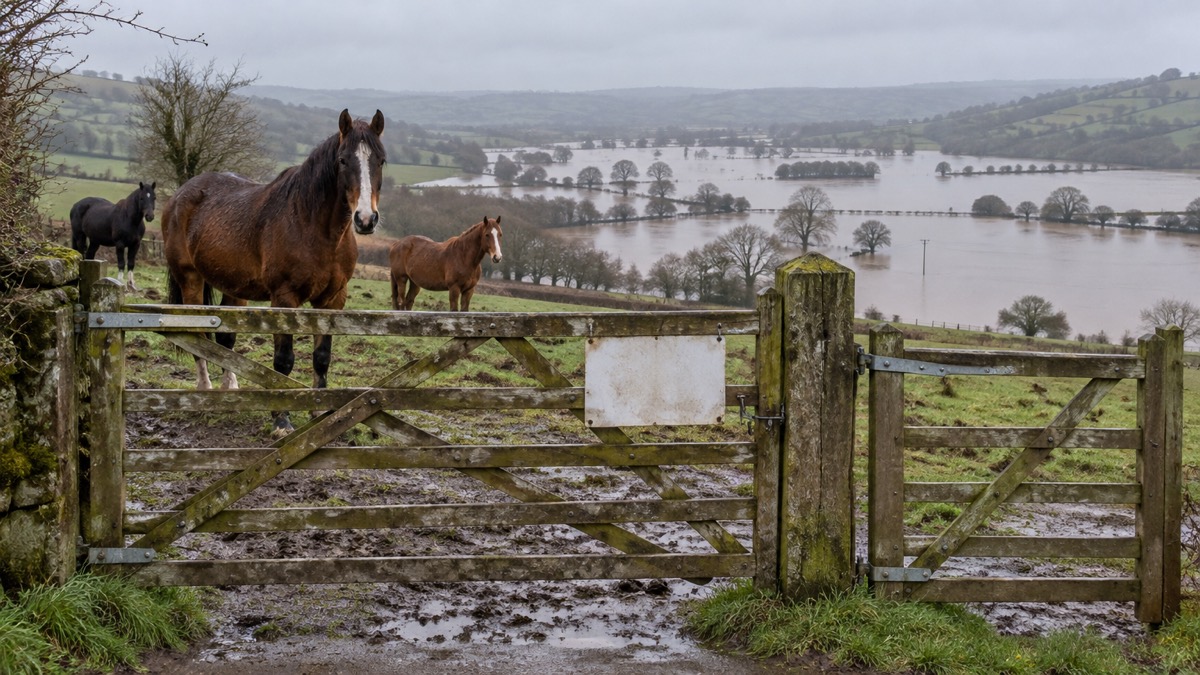
Everything above becomes easier, and safer, if it is arranged weeks or months before the rain arrives. The Scottish Environment Protection Agency's guide to protecting your farm and livestock sets out the preparation in plain terms, and it applies to a paddock with two ponies as much as to a working farm.
Find and secure higher ground. Identify fields on higher ground and gain permission to use these in advance of flooding so livestock and horses can be moved to safety1. Walk the route between your fields and the safe ground now, in daylight and dry weather, and check it does not cross a ditch, ford or low bridge that floods first.
Fit emergency access and label your fields. Ensure additional gates are fitted, and attach your contact details on field gates if your field is at risk of flooding1. Extra gates mean that if one route is underwater, you or the fire and rescue service can still get animals out from another side. Your contact details on the gate mean a neighbour, a Flood Warden or a crew can reach you quickly if animals are in trouble when you are not there.
Write a flood plan and keep it where it can be found. List everything you need in the event of a flood, include emergency contact numbers, for the emergency services, the local authority, insurance companies, horse transporters, feed suppliers and the vet, and keep this in a safe place. Add a flood plan to your emergency procedures1. Make sure everyone in your household knows where your flood kit is stored and what to do if flooding happens20. If you have employees, friends or a sharer who help with the animals, make sure they know the plan too.
Prepare a flood kit for your horse. The Scottish Environment Protection Agency lists what to include: a spare head collar and lead rope with contact details attached to the head collar, your horse's passport and first aid kit, any medication your horse needs, wire cutters in case you cannot leave the field through a gate, and a warm waterproof rug1. Our horse evacuation kit checklist expands on this, and the wire cutters deserve a second look: a gate jammed by flood debris or a broken fence can turn a planned evacuation into a trapped one.
Store feed and water above flood level. Store as much feed and water as possible above flood level, enough to last until clean water and food can be delivered1. Floods close roads and contaminate standing water, so assume both deliveries and your usual water source will be unavailable for a period. Our page on getting water for livestock during a supply interruption covers the water side in detail.
Maintain fences. Devon and Somerset Fire and Rescue Service, which attends animal rescues, asks keepers to maintain fences so that livestock and other animals do not get trapped13. A fence in poor repair is how animals end up in ditches, rivers and slurry stores in the first place.
Think about the household side too. The Environment Agency's personal flood plan asks households to think about what to do with pets if a flood happens: where they might go, food, carriers and medicines21. The same plan's action list for the moment a flood arrives includes turning off electricity, water and gas supplies, moving important items to safety, moving pets and vehicles away from flood areas, and making sure mobile phones or devices are charged21. Our page on including your pets in a household emergency plan ties the animal and household sides together.
Small animals and pets: bring them inside and upstairs
For pets in the home, the rule is simpler than for livestock but just as firm. If it looks as though your home might be at risk, move everyone, including pets, upstairs or to higher ground22. Nottinghamshire's flood advice, based on Environment Agency guidance, says to fill jugs and saucepans with clean water and move your family and pets upstairs, or to a high place with a means of escape23. Natural Resources Wales adds the practical steps around it: turn off gas, electricity and water, get your flood kit, and prepare to move people and pets to a safe place4.
Have carriers ready before you need them, along with food and any medicines your pets take21. A cat that has never seen a carrier will not cooperate calmly on the night the water comes in, so leave carriers out and familiar in advance. If you keep rabbits, guinea pigs or birds outside, bring hutches and cages indoors or upstairs as well; our pages on keeping rabbits and guinea pigs warm in winter and keeping pet birds warm in cold weather cover the cold-weather side.
Two safety points from the official guidance apply to pets as much as to people. Do not touch an electrical switch if you are standing in water7, and do not let children or pets onto affected grass or paved areas until they have been cleaned24. That cleaning matters as much for a dog or cat as for a child: animals walk through flood water and then lick their paws, so anything they have waded through needs to be washed off before they are allowed to settle on floors or furniture. Keep children and pets out of the affected area until the clean-up is complete when you return25.
After the water: drying animals and keeping them warm
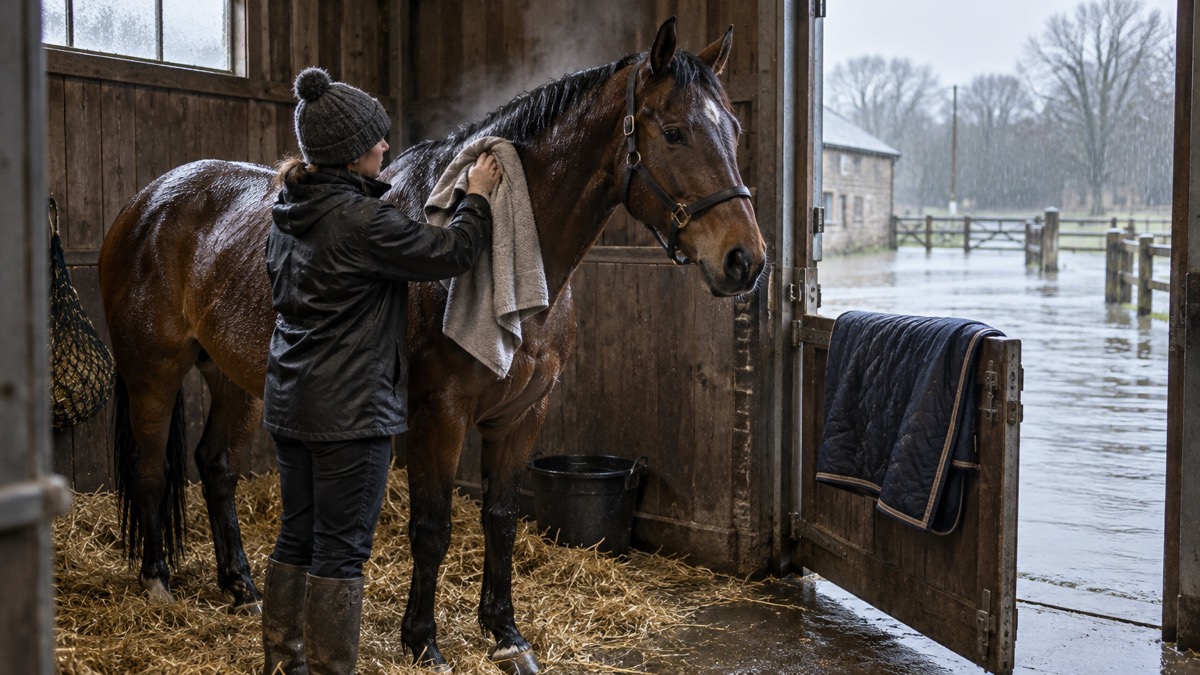
Animals that get wet in cold weather lose heat fast, and the official advice is to act quickly. For pets after a walk in snowy, icy or wet conditions, dry your pet off as quickly as possible and make sure they keep warm26. The same principle applies to horses and livestock that have been through flood water or heavy rain: a wet coat loses its insulating effect, and a warm waterproof rug for your horse is on the flood kit list for exactly this reason1.
For horses and livestock turned out after a flood, the ground itself is part of the problem. Do not let children or pets onto grass or paved areas affected by flood water until these have been cleaned24. The same caution applies to turned-out animals: keep them off ground that has been flooded until it has been cleaned, and check them over once they are back in a safe area.
In snow and freezing weather, the same preparation habits carry over. Check water troughs and buckets so animals can drink, and store water above flood level as part of your flood plan so a supply problem does not catch you out1. Our page on pets in cold weather, snow and ice covers the household side, including walking a dog safely in snow and darkness and dogs and frozen ponds.
Warning others: neighbours, stables and community groups
A flood warning you keep to yourself helps only your own animals. Tell neighbouring stables, smallholders and keepers as soon as you know flooding is expected, because moving animals to high ground takes time they will not have if they hear late1. In Scotland, Resilient Communities groups can activate flood signage in their areas when flooding threatens27, so a message to a local resilience group or your Flood Warden can put the warning in front of everyone on the watercourse at once.
If you have to leave animals behind, the notices you place on the rooms or fields where you have left them are a warning to rescuers as much as a request for help2. And if you are the neighbour receiving the call, remember the standing rule: help, but never put your life or anyone else's in danger doing it3.
Frequently asked questions
What should I do about my horse when fireworks are going off nearby?
Fireworks are a separate worry from flooding, but the same planning habit serves both: know where your horse will be, have a spare head collar and lead rope with your contact details attached, and keep the passport, first aid kit and any medication where you can reach them quickly1. Our page on keeping horses safe during fireworks sets out the steps in full.
Should I warn nearby stables and other keepers that a flood is coming?
Yes. Telling neighbours with horses or livestock what you know gives them time to move animals to high ground before the water arrives1. In some areas, community resilience groups activate flood signage when flooding threatens27, so a quick message to a local group or Flood Warden spreads the warning further than you can alone.
Is it safe to ride while fireworks are going on, or in bad weather?
No. A startled horse is a danger to its rider and to others, and the same caution applies in floods and storms: never walk or drive through flood water8, and if you must travel in heavy rain and flooding, use main roads20. Plan rides for daylight hours away from displays, and check warnings before you set out.
Do young, old or pregnant animals need different treatment?
Move them first and give them the driest, most sheltered ground you have. All animals should be dried off as quickly as possible and kept warm after exposure to wet, cold conditions26, and young, old or pregnant animals have the least reserve to cope with it. Keep them off grass and paved areas affected by flood water until these have been cleaned24.
How do I move chickens, goats and other small livestock?
Have carriers, feed and water ready, and move animals before water reaches them. Plan where each animal will go and how you will get it there, so that when a flood warning comes you can act on it rather than work it out in the moment.
How much feed and water should I store?
Store as much feed and water as possible above flood level, enough to last until clean water and food can be delivered1. Floods close roads and contaminate supplies, so assume delays. Keep the store above the expected water level and note its location in your written flood plan1.
Where to get help
- 999 for any animal trapped in water, at height or on unstable ground, and for any immediate risk to life3
- RSPCA on 0300 1234 999 for animals in danger or distress in floods in Wales, and if you must leave pets behind2
- SSPCA in Scotland, alongside the emergency services, for horses needing rescue1
- Your local Flood Warden or resilience group for warnings and flood signage in your area2
- Your vet, feed supplier and horse transporter, with their numbers written into your flood plan1
For the household side of the same events, see our guides on flooding, storms, snow and ice, and keeping pets safe before, during and after a flood.
Sources (28)
- Protecting your farm and livestock from flooding, Scottish Environment Protection Agency
- Animals in a flood, Deanshanger Parish Council, 2023
- Farm fire safety, Mid and West Wales Fire and Rescue Service
- What to do in a flood, Natural Resources Wales
- Preparing your pets for an emergency, South Gloucestershire Council, 2010
- Other safety advice, Northern Ireland Fire and Rescue Service, 2026
- Help during a flood, GOV.UK, 2026
- Storms and gales, Lancashire Prepared, 2026
- What to do after a flood, Natural Resources Wales, 2026
- During a flood, Nottinghamshire County Council, 2026
- Flooding during a flood, easy read, Nottinghamshire County Council, 2025
- Communities affected by flooding, Derbyshire County Council, 2026
- Top causes of rescues and how to avoid them, Devon and Somerset Fire and Rescue Service, 2026
- Water safety, Forestry and Land Scotland, 2026
- Water safety outdoors, Dorset and Wiltshire Fire and Rescue Service, 2025
- Flooding and health, Public Health Wales, 2026
- Flooding advice, Cornwall Fire and Rescue Service, 2026
- Diogelwch tân fferm, Mid and West Wales Fire and Rescue Service, 2026
- Flood advice, Argyll and Bute Council, 2026
- Keeping safe during high winds and heavy rain, North Yorkshire Fire and Rescue Service, 2024
- Personal flood plan, Environment Agency, 2023
- Flooding safety advice, Dorset and Wiltshire Fire and Rescue Service, 2023
- What to do in a flood, Environment Agency leaflet, Environment Agency via Nottinghamshire County Council, 2010
- Staying safe in a flood, Herefordshire Council, 2026
- Keeping children safe during a flood, nidirect, 2025
- Staying warm in winter, nidirect, 2026
- Resilient Communities, Scottish Borders Council, 2026
- Flood recovery support, Argyll and Bute Council, 2026
 Beekeeping Starter Equipment
 Pet Hens Starter Kit
 Bringing Home Rescue Hens
 Animal Disease Outbreaks
 Honey Bee Health
 Beekeeping for Beginners
 Chicken Health