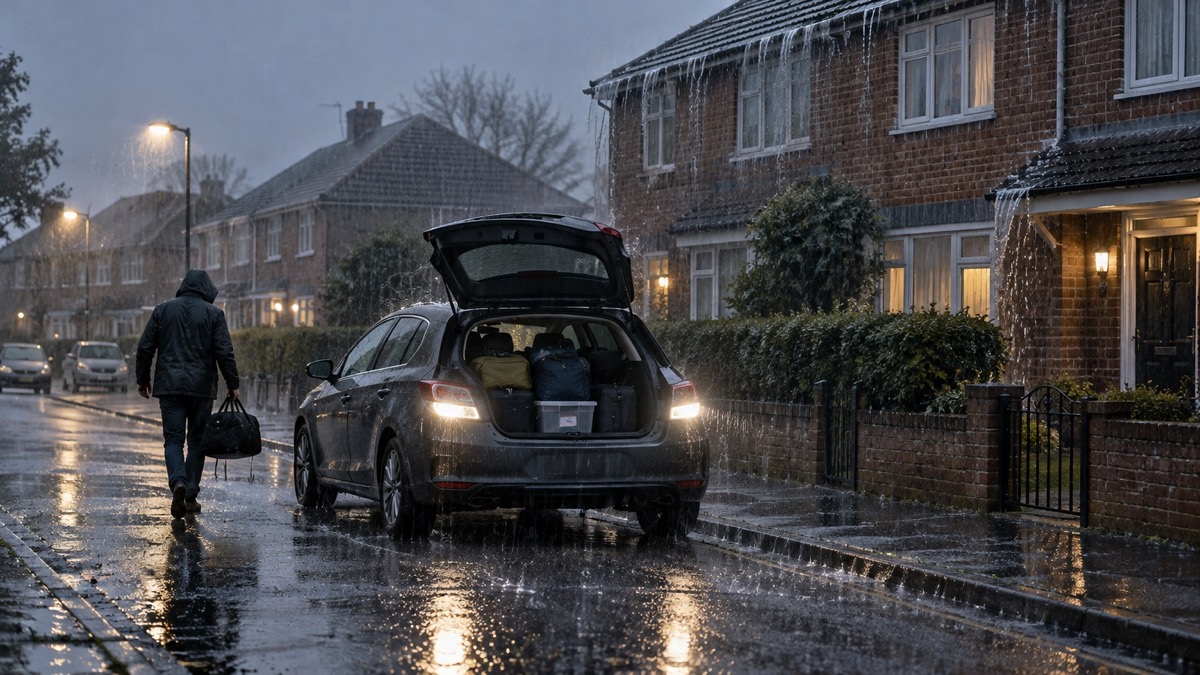
If you are ever asked to leave your home, whether because of fire, flooding, a gas leak or a larger emergency, the decisions you need to make will come at you all at once: who is in the house, where you are going, what you take with you and who you tell. Households that have thought this through in advance leave more quickly, more calmly and more safely. Nottinghamshire County Council's guidance on evacuating your home is blunt about the first step: account for all family members before you do anything else1.
The core of the plan is simple. Agree in advance where you would go and how you would get there, make sure everyone in the household knows the plan, write it down, and practise it. Somerset Council sets out your options plainly: if you are asked to evacuate, you can go to relatives, friends, a community place of safety or a local authority Rest Centre2. Warwickshire's fire escape guidance adds the other half of the arrangement: agree a meeting place away from the building where you will all gather to check everyone is safe3.
This page covers the whole arrangement: accounting for everyone, choosing destinations and routes, the fire escape plan that every household needs regardless of any other emergency, pets, children and older relatives, what to take, and how to stay in touch. For the moment of leaving itself, see What to Do If You Are Asked to Evacuate; for what to pack, see Before You Leave Home in an Emergency: Checklist.
Account for everyone before you leave
The first thing any evacuation plan must solve is knowing who is in the household and where they are. Nottinghamshire County Council's evacuation guidance makes this the explicit first step: account for all family members1. In the stress of an evacuation, with alarms sounding or water rising, it is surprisingly easy to assume someone is with you when they are not, or to leave without knowing whether a child, a lodger or a grandparent is still inside.
Dorset and Wiltshire Fire and Rescue Service puts it in practical terms: make sure everyone in the property knows how to get out, and be clear on who might need help6. That means your plan should name, out loud and on paper, anyone who would need assistance: a baby, someone with limited mobility, a person who sleeps deeply, someone who does not hear an alarm well. Staffordshire Fire and Rescue Service goes further and says to involve everyone who lives in your home when you make the plan, including children, older or disabled people and any lodgers7. A lodger or a student living with you is part of the household for this purpose, and they need to know the plan as much as you do.
Accounting for people also continues after you leave. Surrey's household emergency plan template reminds you to tell family, friends and carers where you are going, and to let NHS or social care providers know if you receive visits from them8. If a district nurse or a carer is due to call at your home tomorrow, they need to know you will not be there. Build this into the plan as a written step rather than something you remember on the day.
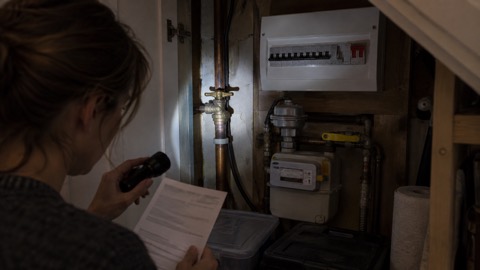
Royal Berkshire's emergency home plan template sets out the sequence of actions before evacuating: getting the grab bag, isolating utilities, and informing contacts9. Isolating gas, electricity and water takes seconds if you know where the valves are, and it prevents a secondary emergency in an empty house. If you do not know where yours are, see Finding Your Stopcock, Gas Valve and Fuse Box.
Agree where you would go and how you would get there
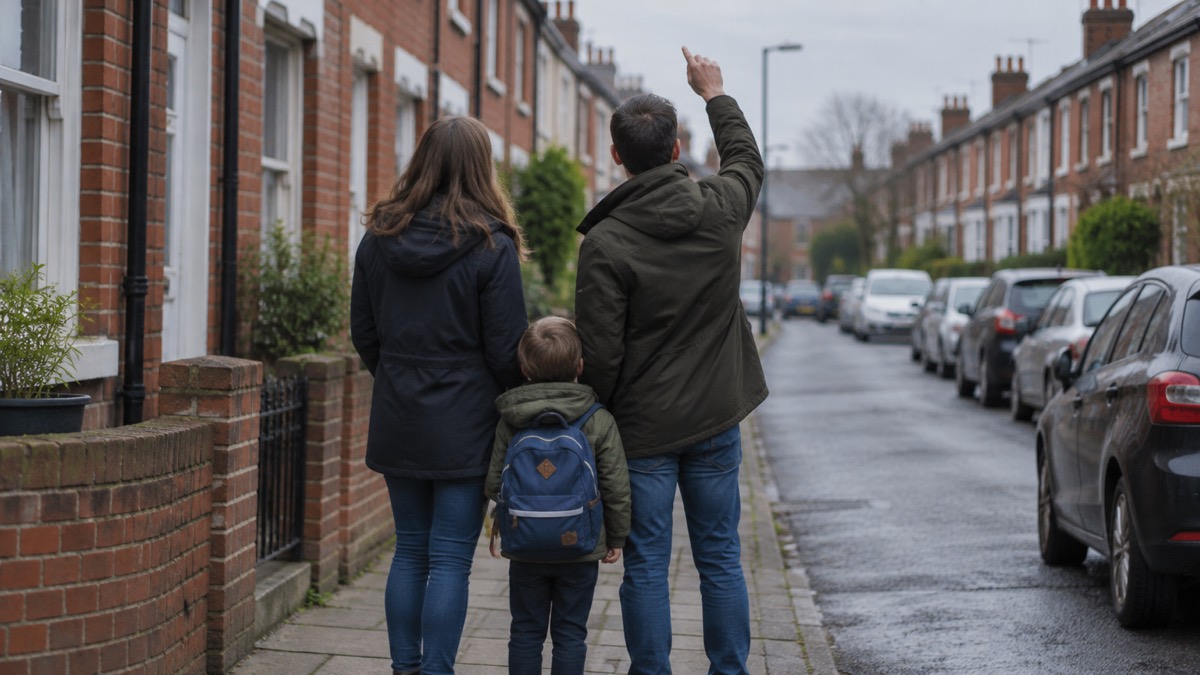
The question Nottinghamshire asks households directly is: "Who would you stay with if your home was evacuated?"10. Answer it now, while nothing is happening. Most households will be far better off with family or friends than in a Rest Centre, which is a council-run building such as a leisure centre or school hall used when large numbers of people are displaced. See Rest Centres: Where You Go If You Are Evacuated for what to expect from one.
West Yorkshire Prepared's community response planning guidance lists the questions worth working through for any destination: where you would go, what facilities would be available such as toilets and somewhere warm and dry, what you would do about food and drink, what you would do with pets, and how you would know when it was safe to return11. Ask these of your own choices. If you would go to your sister's house two towns away, does she have room, does she know she is your first choice, and could you get there if the roads in your area were closed?
Agree more than one destination if you can, in different directions from your home, because the reason you are evacuating may close the obvious route. Flooding closes roads in low-lying areas; a chemical incident may close everything downwind. Your plan should name at least two people or households you could stay with, and both should know they are on your list.
Getting there: with a car and without
Lincolnshire Council's emergency advice covers both halves of transport planning. If you have a car, keep a half tank of fuel in it at all times in case you need to evacuate. If you do not have a car, plan how you will leave if you have to5. The half-tank rule matters because fuel stations lose power in many emergencies, and queues form fast when an evacuation is announced. Somerset Council adds that you can keep a basic emergency kit in your vehicle depending on the time of year2.
If you do not drive, your plan should name how you would leave: a lift from a named neighbour or relative, public transport routes out of your area, or council-arranged transport. Culham Parish Council's community booklet advises that councils can help with transport for people who need it during an evacuation12, so if arranging your own transport would be genuinely difficult, tell your council before anything happens rather than during it.
| Destination | Who it suits | What to check in advance |
|---|---|---|
| Relatives or friends | Most households, if within reach | That they know, have room, and can take pets |
| A second household in another direction | Anyone whose first choice could be cut off | Distance and route from your home |
| Community place of safety | Households caught out without arrangements | What your community plan says, if you have one |
| Local authority Rest Centre | Large evacuations, households with nowhere to go | What your council announces at the time |
Call 999 if there is a fire or immediate danger
Every source in this area gives the same instruction, and it overrides all planning. The government's Prepare website says to call 999 if you or someone else is in immediate danger13. For fire specifically, the instruction repeated across fire and rescue services is: get out, stay out and call 999. Manchester Fire and Rescue Service states it as "get out, stay out and call 999"4, and the government's domestic fire guidance says the same: "Get out, stay out, call 999"14.
Two points from the fire services deserve emphasis. North Yorkshire Fire and Rescue Service notes that 999 calls are free15, so never hesitate over cost. Devon and Somerset Fire and Rescue Service adds a warning against assuming someone else has made the call: call 999 as soon as you are safe to do so, because in a block or building with many households, several people often each believe another has phoned16. If you are trapped by fire and cannot get out, Essex Prepared's guidance is still to call 999, and London Fire Brigade advises being ready to describe where you are in the building and the quickest way for firefighters to reach you17.
South Wales Fire and Rescue Service widens the point beyond fire: if at any time you feel unsafe or unsure during an incident, call 999 for information and advice19. The 999 service is not only for a fire in progress. If you are unsure whether your situation is dangerous, calling is the right move.
"Get out, stay out and call 999. Remember 999 calls are free."
Make a home fire escape plan
A fire escape plan is the one evacuation plan every household needs, regardless of flood risk, storm exposure or anything else in your local risk register. Fire is the emergency most likely to force you out of your home with no notice at all, and it is the one where seconds decide outcomes. Staffordshire Fire and Rescue Service's advice is to plan an escape route so that you can get out of your home if there was a fire20, and the government's domestic fire guidance says to plan and practise an escape route so that everyone knows what to do in an emergency and how to escape14.
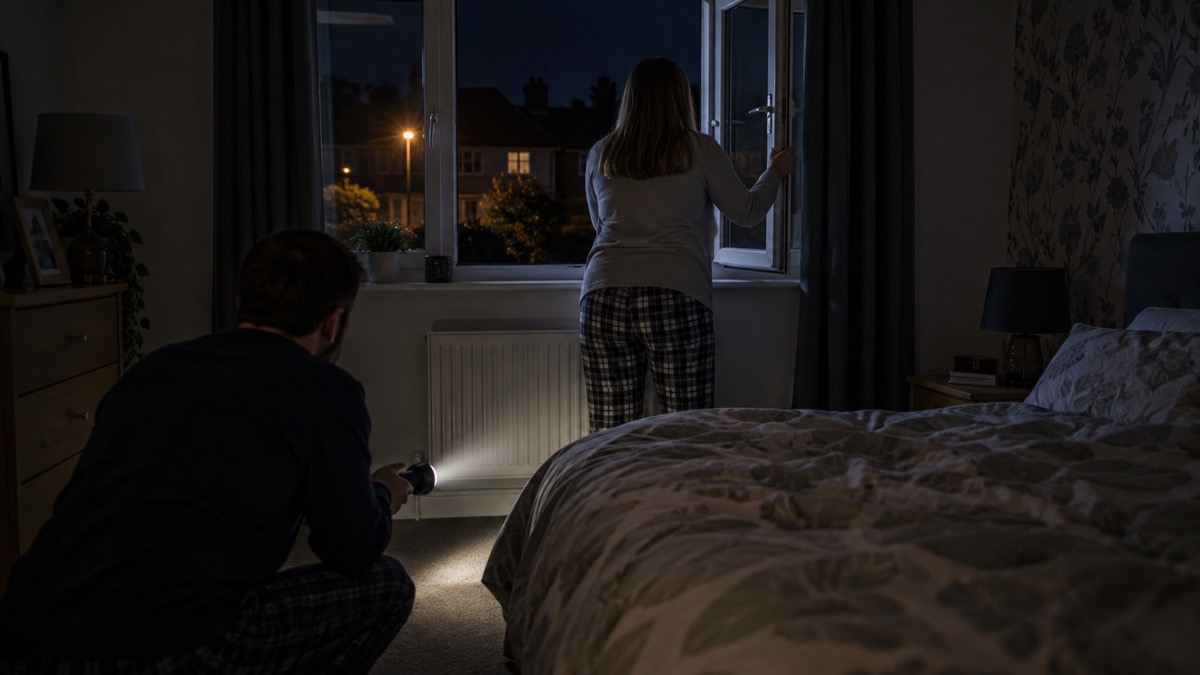
The most detailed method comes from South Wales Fire and Rescue Service's escape plan template. Draw a plan of your home showing all doors and windows, look in each room and draw two ways you could get out, and make sure all windows and doors open easily so you can use them to get outside21. The two-ways rule is the heart of it: if your normal route out is blocked by fire or smoke, each room needs a second option, and that second option needs to actually open. A window painted shut since 1995 is not an escape route.
Warwickshire's guidance adds the household-wide requirement: everyone in your household should know the location of the escape routes and the plan22. Northern Ireland Fire and Rescue Service says the same, and adds a practical point that is easy to overlook: keep escape routes clear23. The hallway piled with boxes and the landing used for storage are the things that turn a workable plan into a blocked one. Check your routes are clear as part of practising.
The bedtime routine
North Yorkshire Fire and Rescue Service's bedtime route and escape plan addresses the highest-risk scenario: a fire at night, when everyone is asleep and reactions are slow15. Its advice is to plan your escape route and know what to do if fire breaks out at night, and South Wales Fire and Rescue Service's template pairs the escape plan with a bedtime routine21. Before you go to bed, close internal doors (a closed door slows fire and smoke), check escape routes are clear, and know where keys are kept. If you would need a key to open a door or window from the inside, that key must be reachable in the dark in seconds.
If someone might struggle to escape
London Fire Brigade's guidance for houses and converted flats says that if you, or anyone you live with, might find it difficult to escape quickly without assistance in an emergency, make extra plans to get them to safety and book a free home fire safety visit18. If your household includes anyone who would need help to leave, booking one is the single most useful step on this page.
Evacuating with pets: take them with you
Lincolnshire Council's emergency advice is direct: take your pets with you5. Pets left behind in an evacuation may not be reachable again for days, and in a fire they will not escape on their own. That means your destination needs to be able to accept them, or you need a second arrangement for them, agreed before anything happens.
Birmingham's guidance also covers the situation where you are away from home when an evacuation happens: agree a plan with a trusted neighbour, and make sure they know your pet and where to find a lead or carrier24. This is worth doing even if you are usually home, because evacuations do not wait for convenience. Tell the neighbour where the carrier, lead and any medication are kept.
Practically, your pet arrangements belong in two places in your plan: the destination (which friend or relative can take a dog, and what about a cat, or something less common) and the kit (carrier, lead, food, medication, registered in the grab bag). For a fuller treatment, see Pets and Animals in an Emergency: A Household Guide.
What to take when you leave home
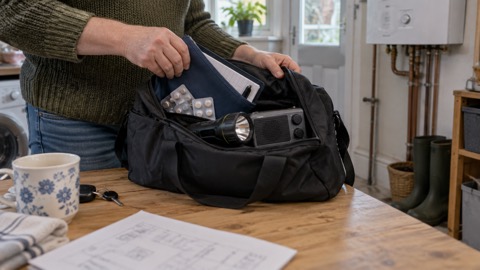
Hillingdon Council's household emergency plan guidance sets out what the plan itself should include: emergency contact numbers, medical needs or support for family members, plans for pets, important documents to take with you, how to turn off gas, electricity and water, and a safe meeting place if you need to leave your home25. Those six items are the skeleton of a written plan, and the grab bag is what you carry them in.
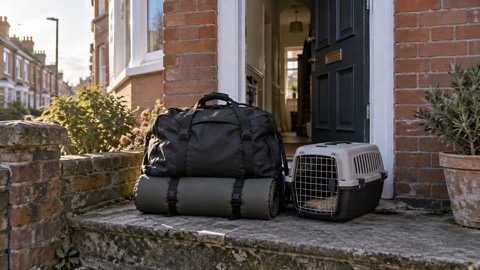
Hillingdon's evacuation advice gives the sequence for the moment itself: listen to the advice of the emergency services, collect your emergency grab bag, check you have your keys, wallet and phone, grab some warm clothing to change into, move pets to safety, make sure you secure your home properly, and follow the directions from the emergency services25. Note the order: keys, wallet and phone are checked deliberately, because they are the items most often left behind and the hardest to manage without.
If you have to leave your home, the items you gather in the minutes before you go matter as much as where you go. What goes in the grab bag itself is covered in Emergency Kit: What a UK Household Should Keep Ready and Before You Leave Home in an Emergency: Checklist.
- Emergency contact numbers, written down25
- Medical needs and support for family members25
- Plans for pets25
- Important documents25
- How to turn off gas, electricity and water25
- A safe meeting place25
- Keys, wallet and phone, checked before you leave25
- Warm clothing to change into25
Plans for children, older relatives and anyone who needs help
A plan made by two adults for a household of five is weaker than a plan all five have walked through. When you make your escape plan, involve everyone who lives in your home, including children, older or disabled people and any lodgers. Children in particular should know the escape routes and the meeting point, in terms suitable to their age.
For anyone who might find it difficult to escape quickly without assistance, London Fire Brigade's advice is to make extra plans to get them to safety and to book a free home fire safety visit18. "Extra plans" means naming who helps them, how, and what happens if that person is not home. If you care for someone who lives elsewhere, an older relative for example, the plan needs to work in both directions: how they get out, and how you would reach or contact them if their area were evacuated.
In blocks of flats, there is a further layer. North Yorkshire Fire and Rescue Service's guidance on residential personal emergency evacuation plans explains that the Responsible Person for a building must prepare a building-wide emergency evacuation plan, which should include a copy of instructions to residents, whether there are relevant residents who need help, and any additional safety features in place such as an evacuation alert system26. If you or someone you live with would need assistance to leave a block of flats, ask your building manager about being included in that plan, and make sure you have the residents' instructions.
For households that depend on medical equipment, medication schedules or care visits, Surrey's reminder to let NHS or social care providers know where you are going applies with extra force8. See Extra Help in an Emergency: Older, Disabled and Medically Dependent Households for the fuller arrangements, including the Priority Services Register.
Keeping in touch if you are separated
Evacuations split households. Children may be at school, a partner at work, and the evacuation may happen while you are apart. Your plan needs a communication arrangement that does not assume everyone has a charged phone and a signal. The written contact list from Hillingdon's guidance is the backbone: emergency contact numbers, on paper, in the grab bag25. Surrey's plan template adds the instruction to tell family, friends and carers where you are going8, which matters doubly when you are separated: an out-of-area contact who knows where each of you are is the simplest way to reconnect two people who cannot reach each other directly.
The meeting point agreed under your fire escape plan3 serves the same purpose in a wider evacuation: a named place, known to everyone, where the household gathers if you cannot contact each other. Choose one close to home for fire, and think about a second, further one for area-wide evacuations where the immediate surroundings may be closed. For keeping phones working and staying informed, see Staying Informed and in Touch in an Emergency: A Household Guide.
Write it down, practise it, and keep it current
A plan that lives in one person's head fails when that person is at work. Greater Manchester Combined Authority's preparedness guidance says to prepare a Household Emergency Plan that contains all the information you need to leave your property quickly and calmly, using the template on the government's Prepare website27. For a walkthrough of filling one in, see Household Emergency Plan Template: What to Fill In.
Practising is what turns a written plan into a usable one. The government's domestic fire guidance says to plan and practise an escape route and make sure everyone knows what to do in an emergency and how to escape14. Essex Prepared's fire safety advice explains why: by planning and practising how you will escape with the whole family, you can be more confident about a safe escape28. Practise the fire routes, including at night, and check while you do it that windows open, routes are clear and keys are where they should be21.
Neighbours and the wider community
Culham Parish Council's community booklet advises households to support neighbours who may need help during an evacuation, and to alert the local council if further help and support is required, such as transport, medication, temporary accommodation or medical attention12. The practical version of this is a conversation before anything happens: know which neighbours would need a knock on the door, and agree with a trusted neighbour who takes in whose pets24. West Yorkshire Prepared's community response planning guidance is the framework many communities use to organise this collectively11, and it is worth knowing whether your parish, village or neighbourhood has one. See Community Resilience: A Guide for Neighbours and Local Groups.
Returning home
Two rules cover return. In a fire, Warwickshire Fire and Rescue Service is absolute: do not go back in for anything29. In a wider evacuation, Wyre Forest's household emergency plan template says to secure your premises before you leave if you have time, and not to return home until you are told it is safe to do so30. The instruction to leave comes from the emergency services; so does the instruction that it is safe to return. For the fuller process, see Returning Home After an Emergency.
Sources (30)
- Evacuating your home, Nottinghamshire County Council
- Preparing for emergencies, Somerset Council, 2026-09-17
- Fire escape plan, Warwickshire County Council
- Your safety: fire safety, Manchester Fire and Rescue Service
- Get help and advice in an emergency, Lincolnshire Council
- Plan your escape, Dorset and Wiltshire Fire and Rescue Service, 2020-12-01
- Plan your escape, Staffordshire Fire and Rescue Service
- ICE template, Surrey Prepared, Surrey County Council
- Emergency home emergency plan, Royal Borough of Windsor and Maidenhead, 2025-10
- Preparing for an emergency, Nottinghamshire County Council
- Community response planning, West Yorkshire Prepared
- Are You Ready booklet, Culham Parish Council, 2025-09
- Be ready for emergencies, UK Government Prepare campaign, 2026-10-21
- Domestic fire, UK Government Prepare campaign, 2026-10-12
- Bedtime route and escape plan, North Yorkshire Fire and Rescue Service, 2026-03-27
- Escape plan, Devon and Somerset Fire and Rescue Service, 2026
- If you are trapped by fire, Essex Prepared
- Escape plan: houses and converted flats, London Fire Brigade, 2026-10-25
- In the event of a fire, South Wales Fire and Rescue Service, 2026-10-25
- Home fire safety visits, Staffordshire Fire and Rescue Service
- Escape plan template and bedtime routine, South Wales Fire and Rescue Service, 2020
- Making a home escape plan, Warwickshire County Council
- A safer Christmas starts at home, Northern Ireland Fire and Rescue Service, 2024-12-05
- Are you ready, Birmingham City Council, 2026-06-05
- Household emergency plan, London Borough of Hillingdon
- Residential personal emergency evacuation plans (PEEPs), North Yorkshire Fire and Rescue Service, 2026-03-30
- Prepare yourself, Greater Manchester Combined Authority
- Home safety advice, Essex Prepared
- Making a home escape plan, Warwickshire County Council
- Household Emergency Plan Template, Wyre Forest District Council, 2017
 30-Day Household Checklist
 Emergency Plan Template
 Supply Interruption Checklist
 Household Emergency Plan
 Emergencies to Prepare For
 Community Risk Registers
 What to Do in an Emergency
 Sheltering in Place
 Staying Put or Leaving
 If You Are Asked to Evacuate
 Rest Centres
 Stopcock, Gas Valve and Fuse Box
 Returning Home
 Recovering After an Emergency
 Scotland Emergency Planning