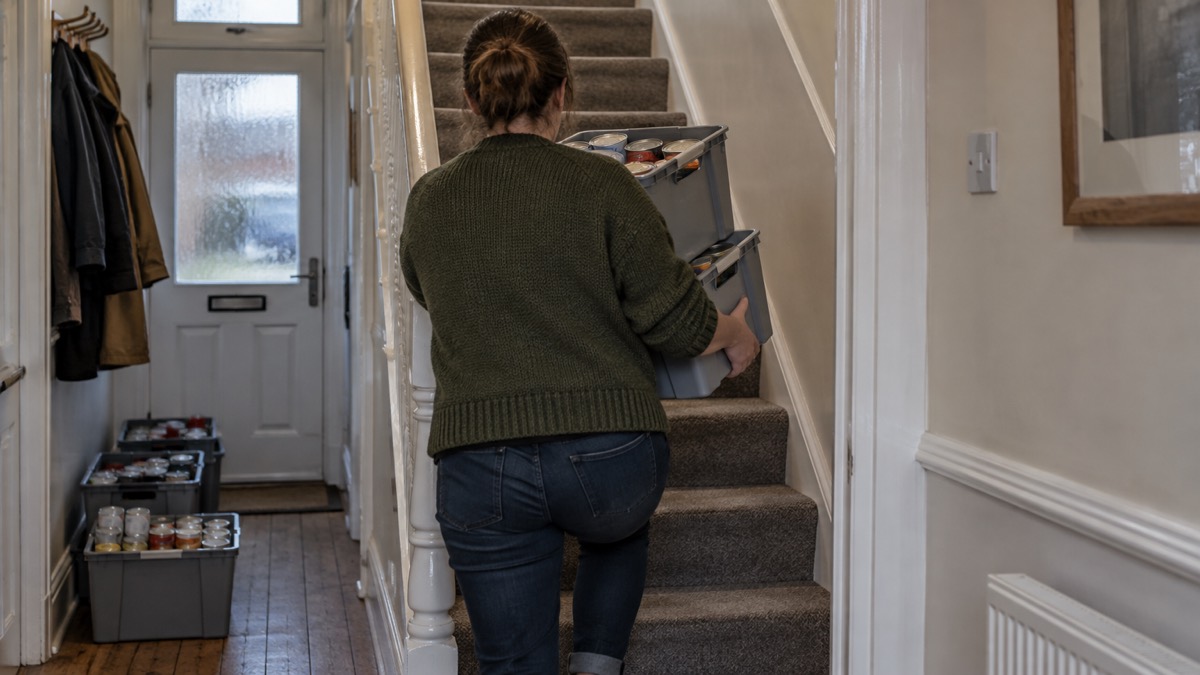
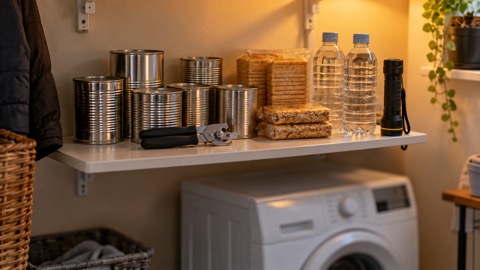
If you live somewhere that floods, the safest place for an emergency food store is high up and easy to move: a top shelf, a high cupboard or an upstairs room, kept in containers you can lift and carry. Flood water ruins anything it touches, and official advice is blunt about it: do not eat any food that has come into contact with flood water1. The aim is to keep your store dry in the first place, and to be ready to move it before the water arrives.
That means watching for warnings. When flooding is forecast, official guidance is to move important documents and valuable items to a safe place, and when a flood warning comes, to move your family, pets and important items to safety, for example upstairs or to higher ground2. Your food store is one of those important items. A few minutes spent carrying it upstairs at the warning stage is far easier than replacing it afterwards.
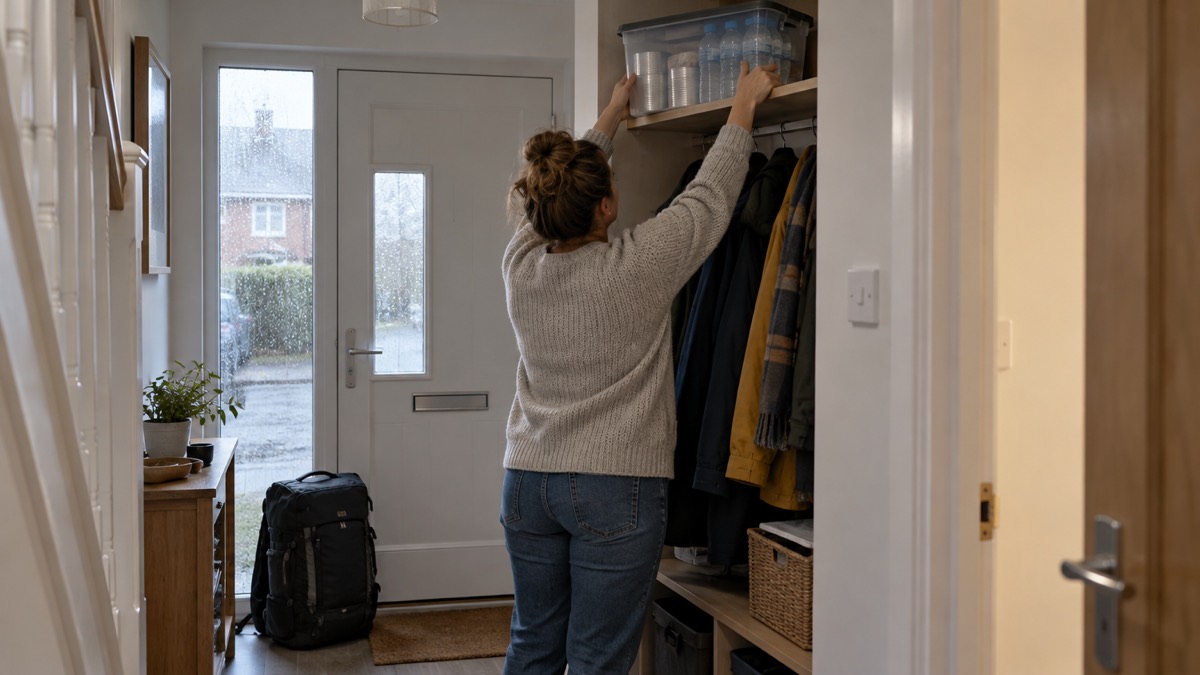
If you have to leave, take your store with you where you can. If there is time, take any medication, warm clothes, any special foods, personal documents and valuables with you, and before you go make sure fires are out, switch off gas, water and electricity, and lock up4. This page sets out how to store food with flooding in mind, what to do as water approaches, and how to stay safe with food and water afterwards.
Watch flood warnings so you can move your store in time
The single most useful thing you can do for your food store is to know a flood is coming while there is still time to shift it. Official guidance for when flooding is forecast is to keep your mobile phone fully charged, move your vehicle out of the flood risk area, move important documents and valuable items to a safe place, make sure all flood protection products are in place and working correctly, move pets and animals to a safe place with enough food and water, and check on your local community3. Your store belongs in that list of valuable items.
Warnings come in stages, and each stage tells you to do a little more. In Wales, a flood alert means prepare a flood kit of essential items, monitor local river levels and check the five day flood risk7. A flood warning is more urgent: move your family, pets and important items to safety, for example upstairs or to higher ground2. Treat your food store as one of those important items and move it at the warning stage, not when water is already in the street.
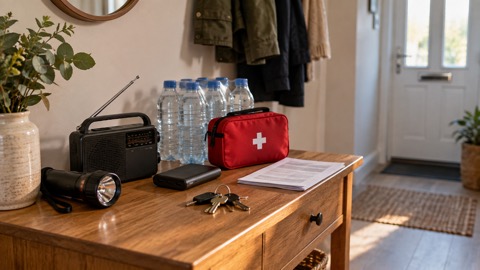
Keep a way of hearing warnings that does not depend on the mains. Flood and weather forecasts, and school closure information, will be on local radio and TV8. A battery or wind-up radio is worth keeping with your store for exactly this reason. The Staying Informed and in Touch in an Emergency guide covers radios and alerts in more detail.
It also helps to think ahead about the practicalities. Official advice suggests thinking about your car and where you could move it in the event of a flood warning9; the same forward planning applies to a heavy store. If your store is in a cupboard you can lift, or split into a few smaller boxes rather than one large one, you can carry it upstairs on your own in a few trips.
Barriers that help keep water away from your supplies
You cannot sandbag a cupboard, but you can slow water down before it reaches the room your store is in, and you can keep the store itself off the floor. Official guidance describes placing sandbags and domestic floodgates in risk areas to prevent flooding10. Getting flood protection products, for example flood doors or self-closing air bricks, reduces flood damage11. Options include flood gates or flood sacks, specialist doors and seals for airbricks6.
| Barrier | What it does | Where it helps your store |
|---|---|---|
| Sandbags and domestic floodgates | Placed in risk areas to prevent flooding10 | Slows water at doors and low openings before it reaches the store room |
| Flood doors and self-closing air bricks | Reduce flood damage11 | Keeps water out of the room itself |
| Flood gates or flood sacks | Property protection options6 | Doorways and gaps at ground level |
| Raised shelving and sealed containers | Keeps food off the floor and dry | The last line of defence if water gets in |
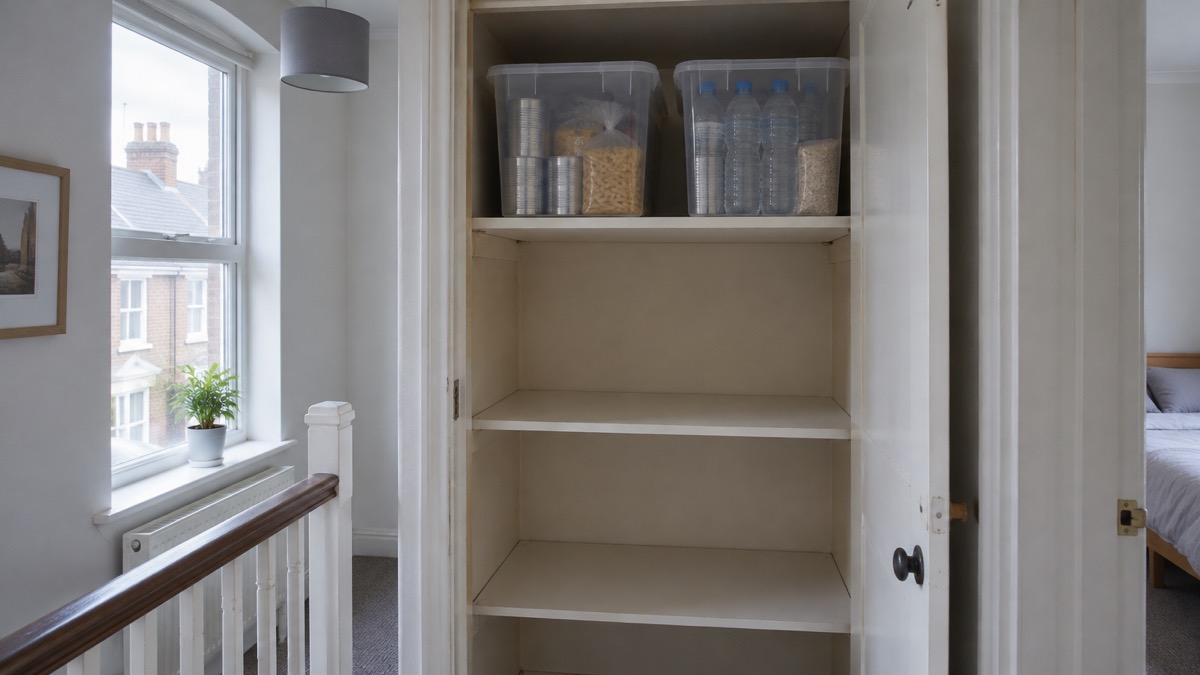
None of these is a guarantee, which is why the store should still be high and movable. A barrier buys you time; height and portability mean you do not depend on the barrier holding.
There is simple maintenance too. Removing leaves and debris that are covering the top of your grids will help prevent blockages which could cause localised flooding in heavy rainfall12. If your store room is near a drain or gully, clearing it before heavy rain is a small job that reduces the chance of water pooling at your door.
If you have to leave: turn off the mains and take your store with you
Sometimes the water wins and you have to go. The instruction is clear: leave the area if the emergency services tell you to evacuate2. Staying put is not a safe alternative. If you decide to stay in an area evacuated due to flooding, it may not be possible for assistance such as food, drinking water or medical supplies to reach you, and there may be no way to flush toilets or get rid of waste13. Refusing to evacuate and changing your mind later may put yourself, your family and rescuers at risk13.
Before you leave, do these things in order, if you have time:
- Make sure fires are out14.
- Switch off your water, gas and electricity14.
- Take any medication, warm clothes, any special foods, personal documents and valuables with you4.
- Lock up doors and windows4.
Know how to turn off your gas, electricity and water before the day comes, because you will need to turn these off if you have to leave your home due to flooding15. Practise it once so it is not a scramble in the dark.
Your emergency store fits into step three. Take what you can carry of it, prioritising special foods, medication and anything a household member depends on. If you cannot take it all, take the most useful and leave the rest high up. The Emergency Food section explains how to build a store that is light enough to move and useful enough to be worth moving.
Never eat, drink or wade through anything flood water has touched
This is the part that matters most for your health. Flood water is not clean water. It could contain sewage and contaminate drinking water16. It contains hidden dangers such as heavy debris, sharp objects, open manhole covers, sewage and chemicals, so keep children and pets away from it17. Never drive through floodwater18.
For food, the rule is simple and repeated by every official source: do not eat any food that has come into contact with flood water11. If in doubt, throw it out19. Do not consume any food or drink that has been contaminated by floodwater, and discard all tins, bottles and cans containing food or drink if they have come into contact with flood water5. Discard any food stored or wrapped in paper, cardboard or plastic wrappers, such as cereal, rice, flour, sugar and baked goods20. In the garden, discard above-ground, flood-touched produce like cabbages21.
Disposing of spoiled food needs care too. Recycle your food waste or double-wrap contaminated food in plastic bags and put it in your green bin for your next refuse collection; if you do not have a green bin, do not put it out earlier than necessary, as extra food waste in plastic sacks might attract animals21. Any food which has come into contact with flood water should be disposed of immediately, preferably in plastic refuse sacks, double bagged if possible, and put out for your next refuse collection1.
Wash your hands, and wash children's hands regularly23. The Food After a Flood page goes through what to keep and what to throw away in more detail, and Tinned Food explains what to do about damaged cans.
Who to call during and after a flood
Know who to contact if flooding happens24, and know the difference between an emergency and a question. If there is an immediate risk to life, dial the emergency services on 99925. If there is any risk of danger to people, property or the environment as a result of flooding, call 99926. If the flood is endangering your safety, contact the emergency services right away27. If you become stranded in flood water and you feel there is a risk to life, dial 999 for emergency help23.
| Situation | Who to call |
|---|---|
| Immediate risk to life, or flood endangering your safety | 99925 |
| Stranded in flood water with a risk to life | 99923 |
| Urgent medical help that is not a 999 emergency | NHS 11128 |
| Flooding in Northern Ireland | Flooding incident line 0300 200 010029 |
For medical concerns that are not life-threatening, NHS 111 is the number to call28. Keep it with your emergency contacts so you are not searching for it in the dark.
After the water goes down, take advice before you eat or drink anything that may have been affected, and follow the food safety guidance above. The Flooding section covers the wider job of cleaning up and recovering a home, and Getting Emergency Food Help explains where to turn if your store is lost and you need food in the days that follow.
Sources (29)
- Flooding, Runnymede Borough Council, 2026-10-26
- Help during a flood, GOV.UK, 2026-10-25
- Before, during and after a flood, Scottish Environment Protection Agency, 2026-10-29
- Emergency Preparations you can do, Moray Council
- Be prepared, Lancaster City Council, 2026-10-29
- Flooding, West Yorkshire Prepared, 2026-10-29
- What to do in a flood, Natural Resources Wales, 2026-10-29
- Flooding during a flood (easy read), Nottinghamshire County Council, 2025-11-02
- Flooding advice, Mid and West Wales Fire and Rescue Service, 2026-10-29
- Resilient communities, Scottish Borders Council, 2026-10-29
- Protect your property, GOV.UK, 2026-10-29
- Flooding support, Lancashire County Council, 2026-10-29
- Flood support, Ashford Borough Council, 2026-10-29
- Emergency planning, Scottish Borders Council, 2026-10-29
- Be ready for emergencies, GOV.UK, 2026-10-21
- Keeping children safe during a flood, nidirect, 2025-12-09
- Driving in severe weather, Met Office, 2026-10-25
- What to do after a flood, Natural Resources Wales, 2026-10-29
- Flooding before, during and after: frequently asked questions, Nottinghamshire County Council, 2026-10-29
- Flooding food safety advice, Food Standards Scotland, 2026-10-25
- Clearing up after a flood, Oxford City Council, 2026-10-29
- Create a flood pack, Bradford Council, 2026-10-29
- Thunderstorms: weather warning, advice and information, nidirect, 2026-08-30
- Responsibilities for flooding, Scottish Environment Protection Agency, 2026-10-29
- Types of flooding and who to contact, St Helens Borough Council, 2026-10-29
- Report a flood in Suffolk, Suffolk County Council, 2026-10-29
- Water safety campaign, North Yorkshire Fire and Rescue Service, 2026-08-18
- Household emergency plan, West Yorkshire Prepared, 2026
- Staying warm in winter, nidirect, 2026-10-06
 Long-Term Storage Kit Checklist
 Store Cupboard Checklist
 30-Day Household Checklist
 Baby Formula in a Power Cut
 Refreezing Defrosted Meat
 Leftovers in the Fridge
 Reducing Botulism Risk
 Sterilising Jars
 Spotting Spoiled Preserved Food
 Boiling Water in Glass Jars
 Mylar Bag Food Shelf Life
 Mylar Bag Sizes
 Are Mylar Bags Food Safe
 Oxygen Absorber Activation
 Silica Gel With Stored Food