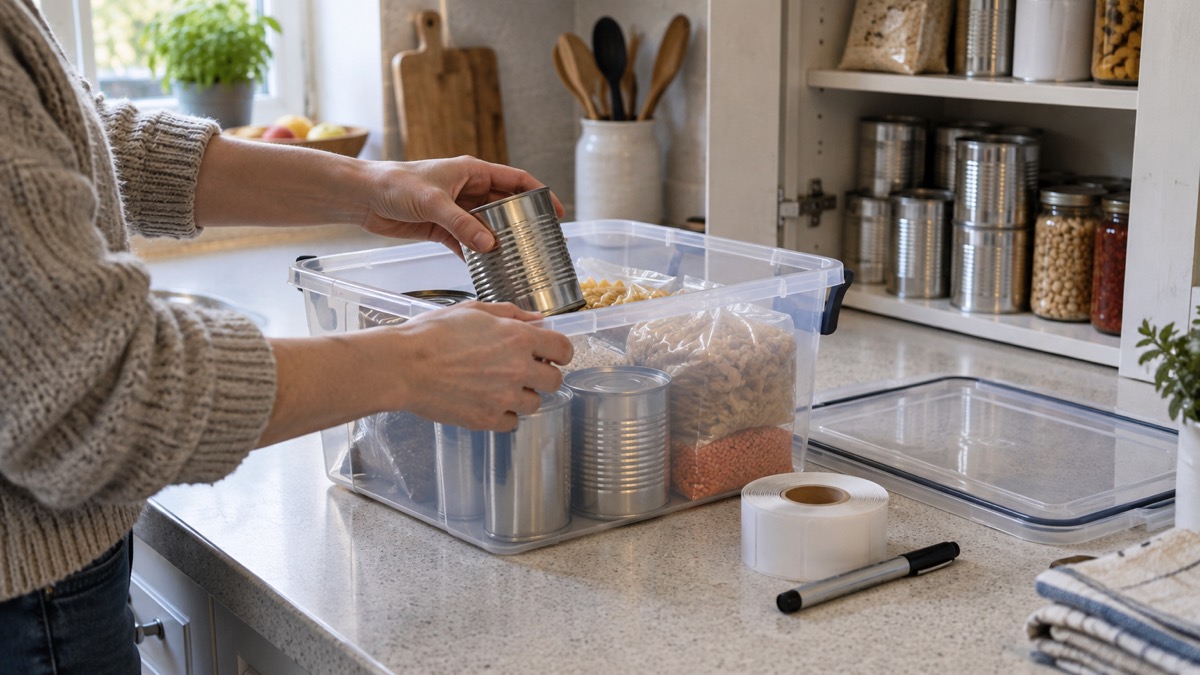
If someone in your household has a medical condition, a religious diet or a serious allergy, the standard emergency food advice needs adjusting. The general rule still holds: store food with a long shelf life that does not need refrigeration or cooking, and buy food you would usually eat1. But the NHS advises that if you have a medical condition or special dietary requirements, you should follow advice from your healthcare professional2. That professional advice sits above anything a general guide can tell you.
Start with the food you already buy and eat. A store built from your normal shopping rotates itself, and it is far less likely to contain something a household member cannot safely eat. Add the specific items that make the difference: ready-made baby formula if there is an infant, and pet food if there is an animal3.
The risks are specific and manageable. Allergy information on a label can be wrong, which is why foods are recalled5. Cross-contamination in a makeshift kitchen is a real hazard, and Food Standards Scotland sets out exactly how to avoid it6. And in an evacuation you may have only minutes to take the right things with you7. This guide covers what to stock first, how each kind of special diet changes the plan, how to store allergy-safe food so it stays safe, and where to get help.
What to stock first when someone has a special diet
The first principle is to build the store from food the household already eats. Official guidance is explicit that it is best to buy food you would usually eat when building your emergency food store9. For a household with a special diet, that principle does more work than any list: the products you already trust, already read the labels of and already know are safe are the ones to lay down in quantity.
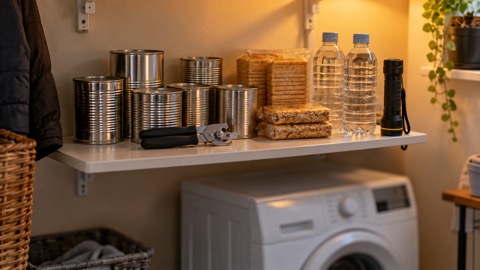
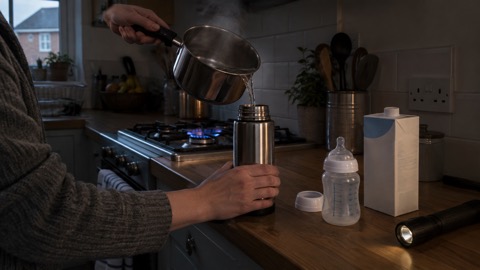
The second principle is to cover the items that cannot wait and cannot be improvised. Official guidance on power cuts says to store non-perishable food that does not need cooking, plus a tin opener, ready-made baby formula and pet food if needed3. Ready-made formula matters because it needs no mixing with water. A household emergency kit list from Greater Manchester advises bottled water and non-perishable tinned food that does not need cooking, such as ready-to-eat tinned meat, fruit or vegetables, with a tin opener, and again ready-made baby formula and pet food if needed10.
The third is to keep medication with the food. A household emergency pack should include medication11, and a flood kit should include essential medicines12. If someone takes medication with food, the food that goes with it belongs in the same box.
A workable order for a special-diet household:
- Write down every food the household relies on and every food that must be avoided.
- Buy a little extra of the safe foods each shop, choosing long-life versions where they exist.
- Add the items that cannot be improvised: ready-made baby formula, baby food, pet food3.
- Put medication and a first aid kit with the food store11.
- Check dates and rotate as you go, so nothing sits forgotten at the back.
For the general store cupboard, the emergency store cupboard checklist covers the everyday items, and how much emergency food to store per person helps you size the store. The special-diet additions sit on top of that base.
Medical diets: diabetes, coeliac disease and kidney conditions
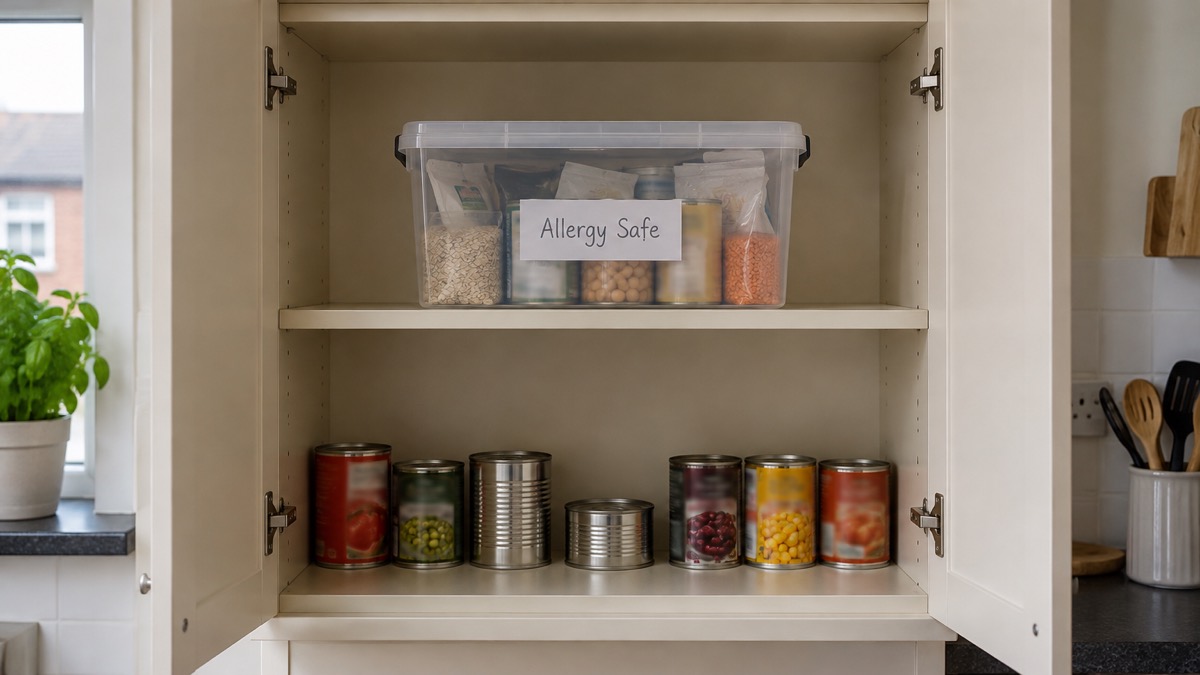
For any medical diet, the starting point is the same: follow advice from your healthcare professional2. A general guide cannot tell you what is safe for a particular condition, and it should not try. What it can do is make sure the practical arrangements do not undermine the advice you have been given.
For diabetes, the practical issue is that the food you store has to fit the eating pattern you have been advised to follow. Store long-life versions of the foods that already form part of your meals, and keep them where you can reach them if cooking is disrupted. The NHS advises that if you have a medical condition or special dietary requirements, you should follow advice from your healthcare professional2. Ask what to do about meals if you cannot cook, and write the answer into your household plan.
For coeliac disease, the risk is contamination as much as ingredients. A product that is gluten free by recipe can still be unsafe if it is prepared on a surface used for ordinary bread or pasta. Food Standards Scotland's cross-contamination advice applies directly: keep raw and ready-to-eat foods separate, use different boards, plates and utensils, and wash hands, worktops and utensils thoroughly between uses6. In a shared kitchen during a power cut, that discipline matters more, not less.
For kidney conditions, the same principle applies: the store should be built from the foods your dietitian or clinician has approved, in long-life form where possible. Keep the written advice with the store so that anyone helping you can follow it.
A household emergency plan should record the condition, the foods that are safe, the foods that must be avoided, and who to contact. Keep a copy with the food store and a copy in the grab bag.
Religious diets: halal, kosher and vegetarian stores
A religious diet is a set of rules about what may be eaten and how it is prepared, and an emergency store has to respect it in the same way it respects a medical diet. The practical answer is the same as for any special diet: buy food you would usually eat9, in long-life form, from sources you already trust.
Official guidance on power cuts recommends storing non-perishable food that does not need cooking, plus a tin opener, ready-made baby formula and pet food if needed3. For a halal or kosher household, that means tinned meat, fish and vegetables that carry the certification you rely on, and dried fruit and nuts from suppliers you already use. The Be Ready checklist's list of long-life foods, tinned meat, fish or vegetables, dried fruit and nuts, is a starting shape, not a shopping list1. Substitute within it according to your diet.
Vegetarian households have an easier time of it, because many long-life staples are vegetarian by nature. The same discipline applies: check labels each time, because recipes change, and keep a small buffer of the specific products you rely on.
Where a rest centre is opened, official guidance for strategic rest centres says people are provided with a place to sleep temporarily, food, refreshments and a quiet place for prayers14. That is a general provision, not a guarantee of a particular diet, so take your own safe food if you can.
| Diet | What to look for on the label | What to store first |
|---|---|---|
| Halal | Certification you recognise; no prohibited ingredients | Tinned meat and fish with recognised certification, dried fruit, nuts |
| Kosher | Certification you recognise; separation of meat and dairy | Tinned fish, vegetables, dried fruit, nuts |
| Vegetarian | No meat or fish ingredients; check stocks and sauces | Tinned vegetables, pulses, dried fruit, nuts |
| Vegan | No animal products at all, including dairy and honey | Tinned pulses and vegetables, dried fruit, nuts |
The what to keep in an emergency store cupboard page sets out the general list these choices sit within.
Storing allergy-safe food so it stays safe
An allergy is the diet where storage itself becomes a safety measure. The food has to stay free of the allergen, and that means keeping it separate, sealed and labelled.
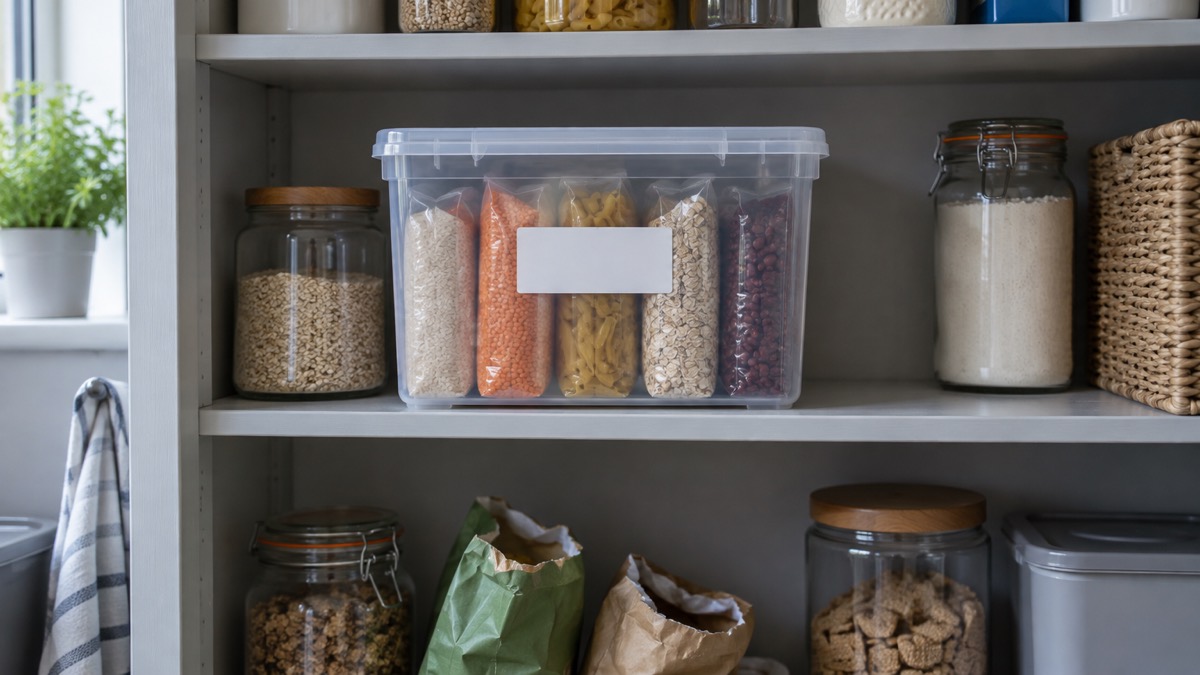
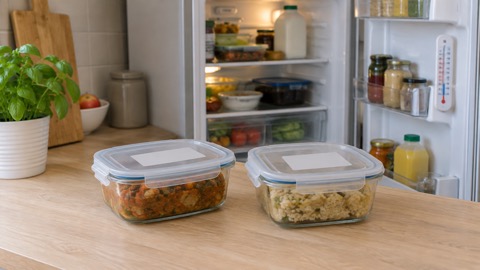
Food Standards Scotland advises keeping cupboard and pantry food in sealed bags or containers, which helps to keep food fresh and stops anything falling into the food by accident15. For an allergy-safe box, that advice is essential rather than tidy: a sealed container is what stops a trace of the wrong food reaching someone who cannot have it. Always check food labels so you are sure about the right way to store your food15.
Avoid fresh or perishable food and keep longer lasting products such as tinned food for emergencies16. That suits allergy households well, because tinned and dried foods are sealed by nature and carry full labelling.
A severe allergic reaction is a medical emergency. NHS guidance lists severe allergic reactions among the conditions that accident and emergency departments treat17, and Somerset's guidance for families lists severe allergic reactions among the serious, life-threatening problems A&E treats18. If someone has a severe reaction, call 999.
Practical storage rules for an allergy-safe store:
- Keep allergy-safe foods in a separate sealed box, clearly labelled with the name of the person they are for.
- Keep the original packaging so the label and any precautionary wording stay with the food.
- Store the box away from open packets of the allergen, and never decant the allergen into an unlabelled container nearby.
- Check dates and recall notices as part of rotation.
- Keep a written list of safe products and their brands inside the box.
The long-term food storage kit checklist covers containers and labelling supplies, and keeping a long-term store cool, dry and free of pests covers the conditions that keep sealed food sound.
Where special diets can go wrong in an emergency
Most special-diet failures in an emergency are not about the food itself. They are about the moment when the usual kitchen, the usual shop and the usual routine all stop at once.
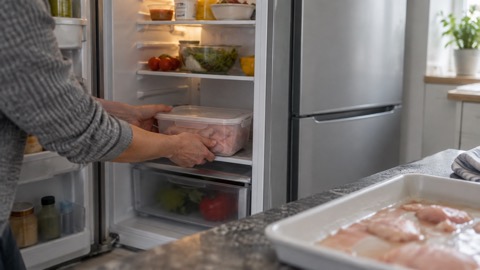
The first failure is cross-contamination in a makeshift kitchen. Food Standards Scotland's advice is specific: keep raw meat and unwashed vegetables separate from ready-to-eat foods during storage and preparation; use different chopping boards, plates and utensils for raw and cooked food, or wash them thoroughly between uses; wash your hands, worktops and utensils thoroughly after touching raw meat, poultry, fish and eggs; keep raw meat in a sealed container at the bottom of the fridge; never wash raw meat; and use separate shopping bags for raw and ready-to-eat foods6. In a kitchen lit by torchlight, with a camping stove and limited washing water, every one of those steps is easier to skip and more important to keep.
The second is the evacuation you did not plan for. Official guidance says that if there is time, you should take along medicines, warm clothes, any special foods, and personal documents7. The phrase "if there is time" is the warning: pack the special foods where you can grab them, not at the back of a cupboard.
The third is the assumption that help will arrive with the right food. Rest centres provide short-term shelter, warmth, food and refreshment19, and strategic rest centres provide food, refreshments and a quiet place for prayers14, but neither is a guarantee of a specific diet. Take your own where you can.
The fourth is the medical emergency you cannot manage at home. A&E is for patients requiring emergency care for serious and life-threatening conditions, such as loss of consciousness, chest pain, breathing difficulties, severe bleeding that cannot be stopped, severe allergic reactions, severe burns or scalds, stroke, and major trauma17. Knowing where to go, and when, is part of the plan. The NHS service finder helps you locate urgent and emergency care20.
Where to get help with food for special diets
Help with food in an emergency comes from councils, rest centres and local support, and the route in differs across the UK.
In England, councils publish emergency food and essential items support. Cumberland Council, for example, offers urgent help finding food and essential items, or support if you are struggling to cope with your current situation22. Your own council's emergency planning pages are the place to start, and the getting emergency food help page explains food banks, councils and local support in more detail.
In Scotland, the Western Isles food support line is run by Comhairle nan Eilean Siar on 01851 60050119. Ready Scotland publishes emergency planning guidance for households13, and the Scottish cold, snow and ice guidance advises picking up extra food, water, toiletries or medications for people who need extra help21.
In Wales and Northern Ireland, the same pattern applies: council emergency planning pages and local rest centres are the first contact. Rest centres can provide short-term shelter, warmth, food and refreshment23.
The Priority Services Register is the other route. It is run by energy suppliers and network operators, and eligibility includes people who have extra communication needs8 and people who temporarily need extra support24. The help includes advance notice of power cuts8, which gives a special-diet household time to move food, charge equipment and prepare. Surrey County Council's fire and safety checks page explains how to sign up for the Priority Services Register25.
| Nation | Where to start | What is offered |
|---|---|---|
| England | Your council's emergency food support page, e.g. Cumberland22 | Urgent help finding food and essential items22 |
| Scotland | Ready Scotland and local food support, e.g. Western Isles 01851 60050119 | Emergency planning guidance and local food support19 |
| Wales | Council emergency planning and rest centres23 | Short-term shelter, warmth, food and refreshment23 |
| Northern Ireland | Council emergency planning and rest centres23 | Short-term shelter, warmth, food and refreshment23 |
For households with additional needs, the extra help in an emergency page covers older, disabled and medically dependent households, and babies, young children and medical diets in an emergency covers the youngest members of the household.
Sources (25)
- Be Ready checklist, Be Ready, 2026
- Stay warm and nourished, NHS Norfolk and Suffolk ICB, 2026-10-16
- Power cuts, Be Ready, 2026-10-21
- Get help and advice in an emergency, Lincolnshire County Council, 2026-10-29
- Why food is recalled, Food Standards Scotland, 2026-10-25
- Preparing and cooking food safely, NHS Inform, 2025-02-21
- Emergency planning, Scottish Borders Council, 2026-10-29
- Priority Services Register, Derbyshire County Council, 2026-10-29
- Be ready for emergencies, Be Ready, 2026-10-21
- Loss of essential services, Greater Manchester Combined Authority, 2026-10-29
- Create a household emergency plan, Dumfries and Galloway Council, 2026
- Preparing for flood, nidirect, 2025-09-11
- Emergency plan, Ready Scotland, 2026-03-24
- Humanitarian assistance and evacuations, Cornwall Council, 2026-04-01
- Food storage, Food Standards Scotland, 2026-10-25
- What is a national power outage, Wiltshire and Swindon Prepared, 2026-10-25
- Emergency care and 999, NHS Surrey and Sussex ICB, 2026-10-29
- Health emergencies, Somerset Council, 2026-10-28
- Resilience, NHS Western Isles, 2026-10-28
- Find urgent and emergency care services, NHS, 2026-10-29
- Poisoning and accidental swallowing, Healthier Together, 2026-10-29
- Emergency food, essential items and support, Cumberland Council, 2026
- Pets and animals in an emergency, West Yorkshire Prepared, 2026-10-29
- Priority Services Register Scotland, Scottish Borders Council, 2026-10-29
- Fire and safety checks, Surrey County Council, 2026-09-09
 Long-Term Storage Kit Checklist
 Store Cupboard Checklist
 30-Day Household Checklist
 Baby Formula in a Power Cut
 Refreezing Defrosted Meat
 Leftovers in the Fridge
 Reducing Botulism Risk
 Sterilising Jars
 Spotting Spoiled Preserved Food
 Boiling Water in Glass Jars
 Mylar Bag Food Shelf Life
 Mylar Bag Sizes
 Are Mylar Bags Food Safe
 Oxygen Absorber Activation
 Silica Gel With Stored Food