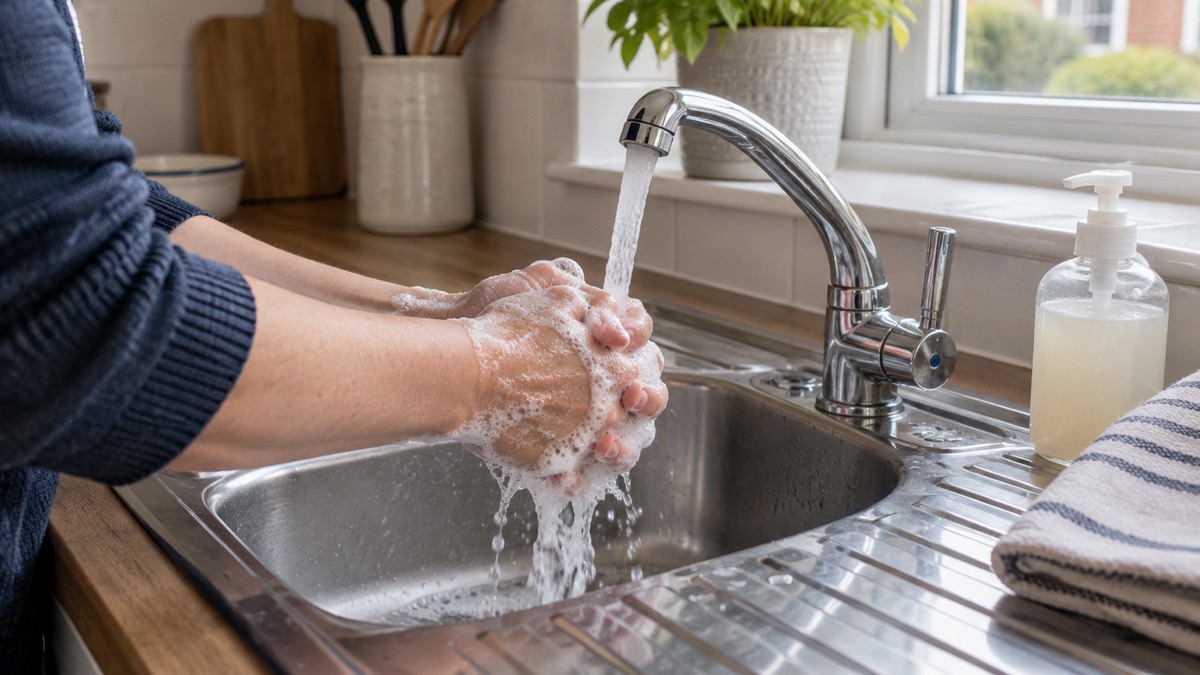
Wash your hands for at least 20 seconds, with soap and clean running water. That is the figure the UK's public health guidance keeps returning to, and it is the one to remember: 20 seconds of scrubbing, then rinse well and dry thoroughly1. Soap and water are the first choice. Hand sanitiser is the fallback for when soap and water are not immediately available, and only for hands that are not visibly dirty1.
The length matters because it is the time it takes to cover the whole hand properly: the backs, between the fingers and under the nails, not just the palms. But when you wash matters just as much as how long. Get the moments right and you cut the spread of the infections that cause food poisoning and stomach bugs.
This page sets out the 20 second rule, the moments that matter most, what to do when the taps are off or you are out, and how to teach children to do it well. It is written for an ordinary household with no medical background, and it sticks to what official UK guidance says.
Wash for at least 20 seconds, and do it properly
Twenty seconds is the minimum, and the guidance is consistent across the UK's preparedness and health sources. The Prepare campaign, the government's public preparedness site, says to wash regularly with soap and clean running water for at least 20 seconds1. West Yorkshire Prepared gives the same figure and adds the fallback: hand sanitiser if soap and water are not available2.
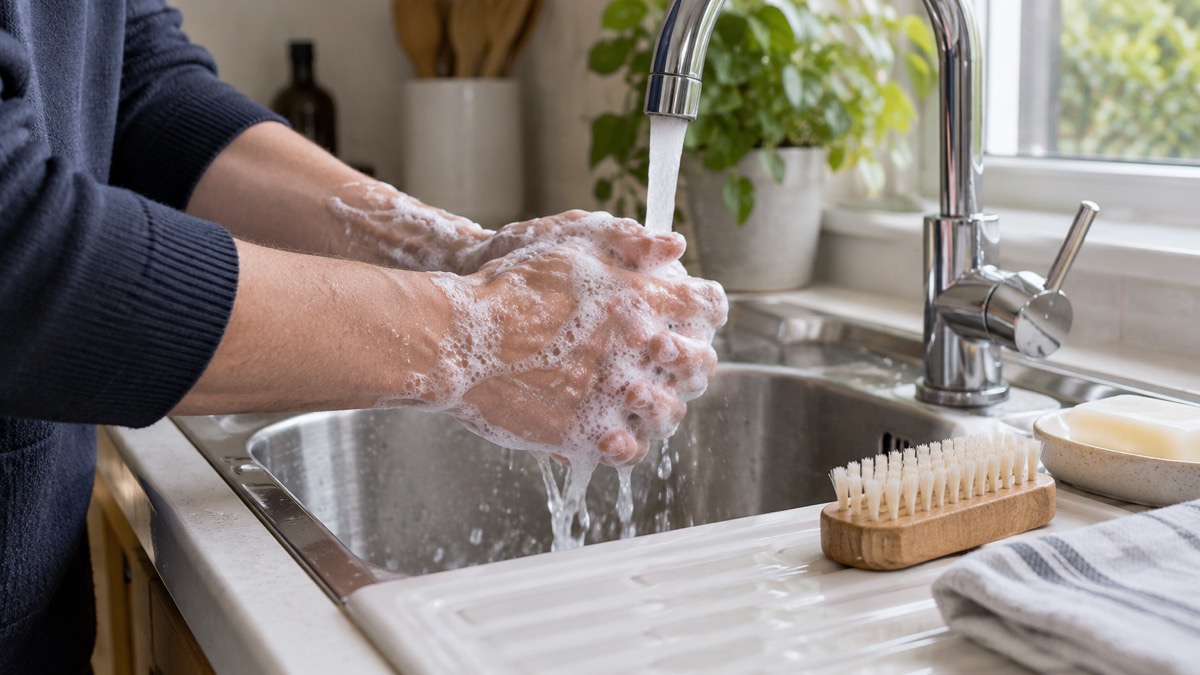
The method is what fills those 20 seconds. NHS inform's food safety guidance sets it out step by step: wet your hands and apply soap, rub your hands together to make a lather, scrub the backs of your hands, between your fingers and under your nails, rinse well with warm water, and dry thoroughly using a clean towel3. It puts the scrubbing time at 20 seconds before rinsing3.
A common mistake is to rinse too soon, or to skip drying. Drying thoroughly with a clean towel is part of the method, not an optional extra3. Another is to wash only the palms. The backs of the hands, the spaces between the fingers and under the nails are where dirt and germs collect, which is why the guidance names them3.
When to wash: the moments that matter most
The 20 second rule only helps if you apply it at the right moments. Official guidance groups them into a short list, and it is worth learning because it covers most of the day.
- Before you prepare, cook or eat food, and before serving it3.
- After handling raw food, such as raw meat, uncooked eggs and unwashed fruit and vegetables3.
- After using the toilet, and after changing a nappy or helping a child6.
- After coughing, sneezing or blowing your nose8.
- After touching the bin, or handling animals including pets3.
- After contact with someone who is ill, and before handling food for others5.
Derbyshire's flu guidance puts the key times plainly: after coughing and sneezing, before preparing food and eating, and after using the toilet8. Shropshire's food poisoning guidance says to wash your hands after contact with a sick person and before handling food, and not to share towels or face cloths with them7.
If someone in the house has diarrhoea and vomiting, the advice steps up. Wash your hands regularly, every time you use the toilet, and before eating or drinking, and disinfect door handles, toilet flush levers, kettle and fridge door handles regularly throughout the day10. That is because the viruses that cause stomach bugs spread easily from hands to surfaces and back again.
Hand sanitiser when soap and water are not available
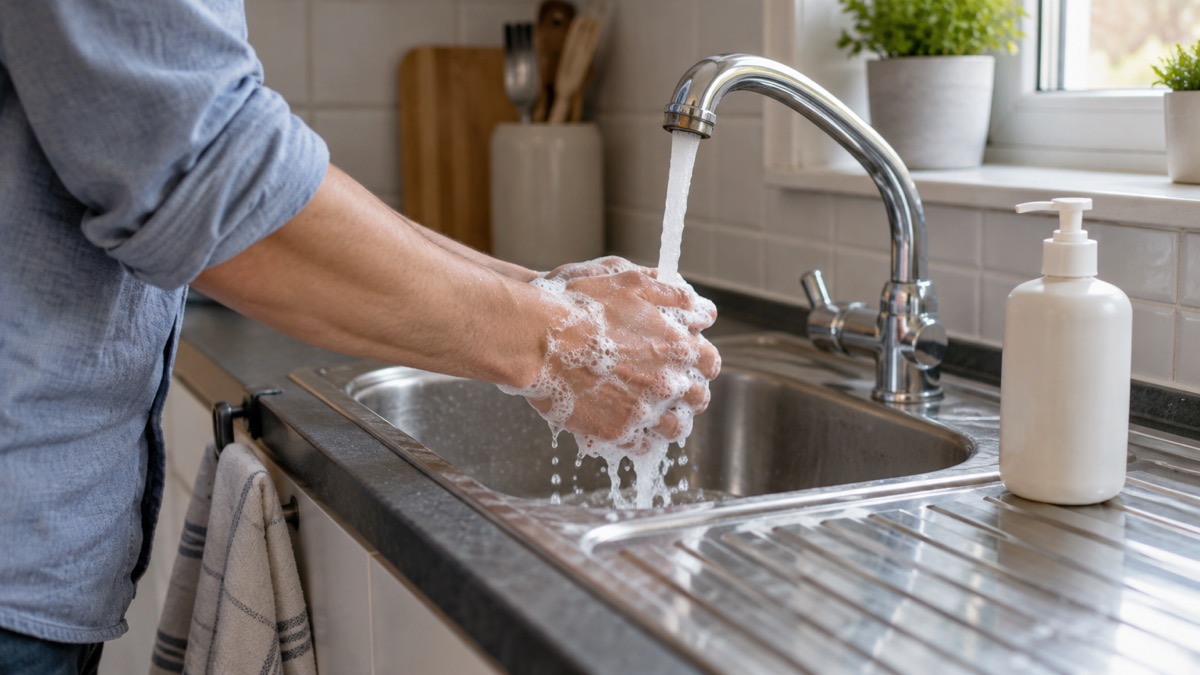
Hand sanitiser is useful, but it is a fallback, not a replacement. The Prepare campaign says that if you do not have immediate access to soap and water, hand sanitiser can be used to clean hands that are not visibly dirty1. It then adds an important limit: hand sanitiser does not effectively remove all types of disease-causing organisms, such as norovirus, so soap and water should be used to wash hands wherever possible1. That is the sentence to remember. For norovirus, the stomach bug that spreads quickly through households, soap and water is the one that works.
Devon's public health team gives the same fallback: if you do not have immediate access to soap and water, use alcohol-based hand rub if available11. Northern Ireland's nidirect guidance, in its advice for water supply cut-offs, recommends alcohol-based hand sanitiser for cleaning your hands before touching food12.
| Situation | First choice | Fallback |
|---|---|---|
| At home, taps working | Soap and clean running water, at least 20 seconds1 | Hand sanitiser if soap and water are not immediately available1 |
| Out and about | Soap and water if you can find it | Alcohol-based hand rub on hands that are not visibly dirty1 |
| Taps off, water cut | A bowl of water with soap or household disinfectant4 | Alcohol-based hand sanitiser before touching food12 |
| Hands visibly dirty or greasy | Soap and water1 | Not sanitiser: wash with soap and water when you can1 |
The pattern is consistent: soap and water first, sanitiser when you cannot get to it, and never rely on sanitiser for norovirus1.
Washing hands when the water is off
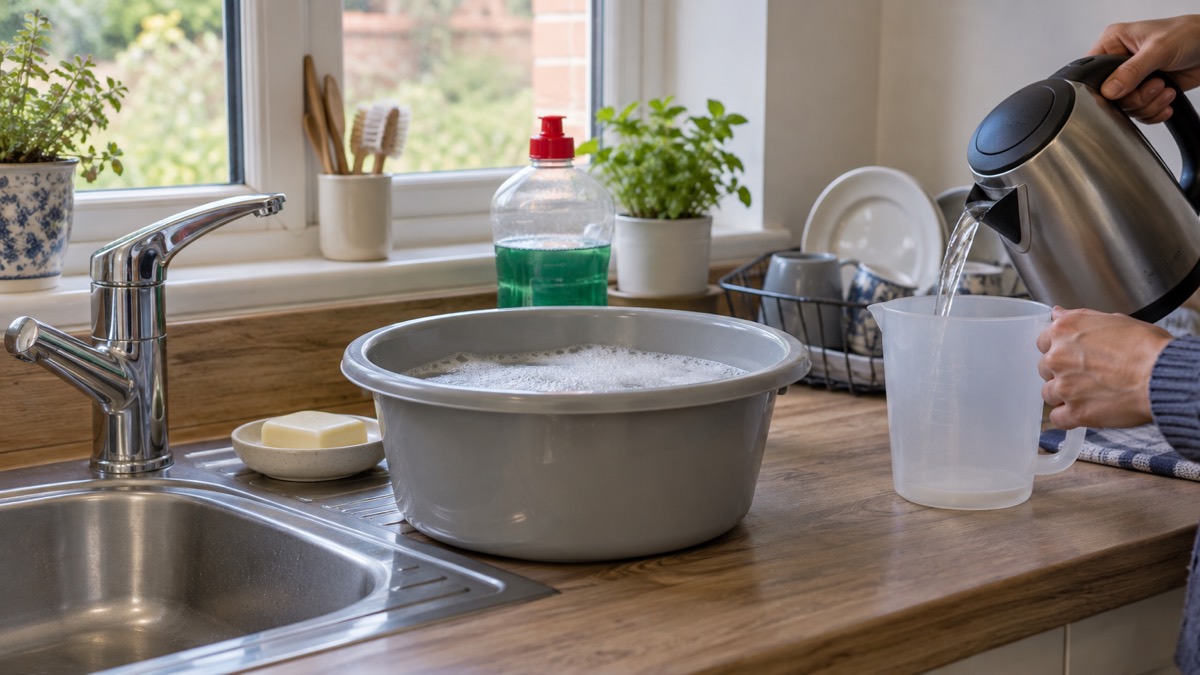
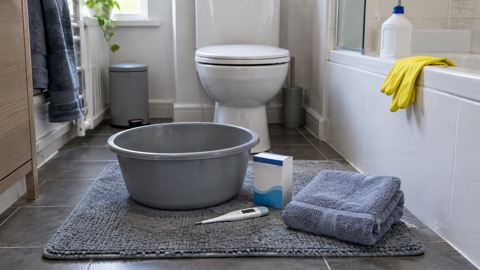
A water cut, a flood or a burst pipe can leave you without running water for a time, and handwashing still matters. The Prepare campaign's water supply guidance gives a practical method: fill a large clean bowl, such as a washing up bowl, with water and add some soap or a household disinfectant13. The same guidance adds a reason to be careful with water: keeping water usage to a minimum will prolong alternative sources of water4.
Food Standards Scotland's flooding advice offers a simpler fallback for food handling: if you have no running water, you can use alcohol gels or wet wipes to clean hands before handling food14. Perth and Kinross's flooding checklist says to wash your hands regularly with soap and warm clean water, or use wet wipes if there is no clean water available, and to keep cuts clean and use waterproof plasters15. Public Health Wales adds that children's hands should be washed frequently and always before meals16.
If you are storing water for an outage, the same discipline applies: keep a bowl and soap where you can reach them, and use the bowl method rather than letting a tap run. Turning off the tap while you wash your hands can save up to 6 litres of water per minute, according to the Prepare campaign's drought guidance17. That matters most when supply is short.
Handwashing during an outbreak or pandemic
When an infectious disease is spreading, handwashing moves from routine to central. Surrey's emergency planning guidance for pandemics says to practise good hygiene habits, always wash your hands thoroughly, and cough or sneeze into disposable tissues18. The West Midlands community risk register, published in December 2023, lists regular handwashing with soap and warm water among the practical steps households can take, alongside vaccines and keeping personal stocks of over-the-counter medication19.
The UK National Risk Register, published in 2017, explains why: flu germs can live on some surfaces for hours, and if you have flu you can protect others by carrying tissues, catching coughs and sneezes, binning the tissue, and washing your hands with soap and water or using a sanitiser gel20. Westminster's household preparedness guidance, from 2014, gives the same basic advice for pandemic flu: wash your hands frequently with soap and water to reduce the spread of the virus from your hands to your face or to other people21.
The pattern across all of these is the same, whatever the outbreak: wash hands frequently, use soap and water, and cover coughs and sneezes. The advice does not change with the name of the virus. For more on how households should prepare for an outbreak, see Pandemics: How the UK Plans and What Households Should Do and Stopping Infections Spreading at Home: Hands, Cleaning and Fresh Air.
Why handwashing stops food poisoning and infections spreading
Handwashing is not a small habit. Shropshire's environmental health team puts it plainly: handwashing is the single most effective way to stop the spread of infection5. That is the sentence that explains why the 20 second rule appears in guidance on flu, norovirus, food safety, flooding and pandemics alike.
The mechanism is simple. Germs on your hands move to your mouth, to food, or to surfaces that other people touch. Washing removes them. The guidance on food poisoning makes the link explicit: hand washing with anti-bacterial soap, and keeping work surfaces and utensils clean and disinfecting them, are the core prevention measures5. When someone is ill at home, washing your hands after contact with them and before handling food is one of the main ways to stop it spreading to the rest of the household5.
Food safety guidance adds a specific warning about raw meat. Always clean surfaces, utensils, plates and hands thoroughly after they have touched raw or thawing meat, to stop bacteria spreading around the kitchen9. That is why the key moments list includes handling raw food: it is not just about your own hands, but about everything they touch next.
The same logic applies to children. Public Health Wales advises washing children's hands frequently and always before meals16, and the NHS sepsis guidance says to wash your hands regularly and teach children how to wash their hands well22. Children pick up and pass on infections easily, so the habit is worth teaching early. For more on keeping a household safe when someone is ill, see Staying at Home When Ill: Keeping Your Household and Others Safe and Norovirus: Symptoms, How Long It Lasts and Stopping It Spreading.
Sources (22)
- Be informed about health and infectious disease outbreaks, Prepare campaign (UK government), 2026-10-12
- Infectious disease and pandemics, West Yorkshire Prepared, 2026-10-29
- Preparing and cooking food safely, NHS inform, 2025-02-21
- Loss of essential services - Greater Manchester Combined Authority, Greater Manchester Combined Authority
- Food poisoning and waterborne infections, Shropshire Council, 2026-10-29
- Norovirus, Derbyshire County Council, 2026-10-29
- Infectious diseases, Northumberland County Council, 2026-10-28
- Flu, Derbyshire County Council, 2026-10-29
- Chilling, Food Standards Scotland, 2026-10-25
- Infection prevention and control, South Western Ambulance Service NHS Foundation Trust, 2026-10-29
- Health protection, Devon County Council, 2026-10-29
- Strong winds and heavy rain warning information and advice, nidirect, 2026-01-27
- Water supply interruptions or outages - Be Ready, prepare.campaign.gov.uk (UK Government Be Ready campaign)
- Flooding, Food Standards Scotland, 2026-10-25
- Flooding checklist for residents, Perth and Kinross Council, 2024-08-01
- Flooding and health, Public Health Wales, 2026-07-31
- Droughts, Prepare campaign (UK government), 2026-10-19
- Risks, Surrey County Council, 2026-10-28
- West Midlands community risk register, West Midlands Local Resilience Forum, 2023-12
- UK National Risk Register 2017, Cabinet Office, 2017-09
- Prepare your household for emergencies, Westminster City Council, 2014-04
- Sepsis, NHS 111 Wales, 2026-01-12
 Medicine Cabinet Checklist
 Sick at Home Supplies Kit
 Caring for Someone Ill at Home
 How Long to Stay Home With COVID
 Time Off After Sickness
 Stopping Flu Spreading at Home
 When to Call 111 or 999
 When Your GP Is Closed
 Disposing of Unused Medicines
 Medicines in a Heatwave
 Taking Someone Else's Medicine
 Ordering Repeat Prescriptions
 Treating Dehydration at Home
 Cold-Health Alerts Explained
 The Glass Test for Meningitis