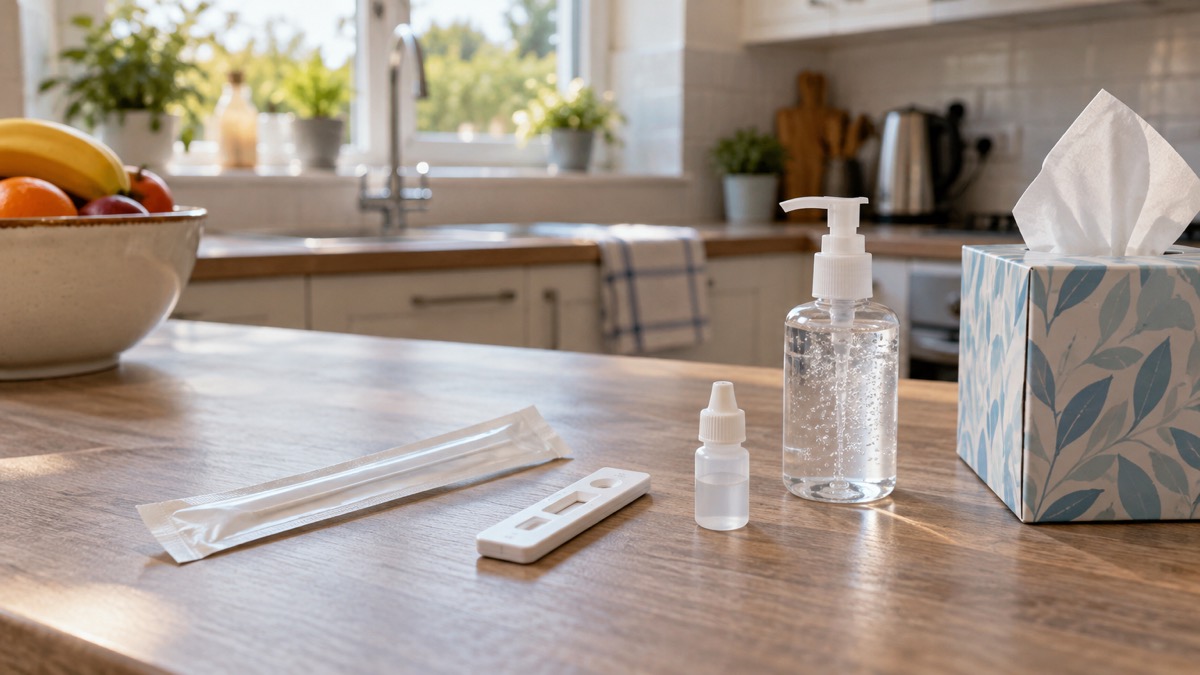
If you have a high temperature, a new continuous cough, or a loss or change in your sense of smell or taste, it could be COVID-19, and the main advice is simple: try to stay at home and avoid contact with other people until you no longer have a high temperature and feel well enough to do your normal activities1. If you test positive, the NHS asks adults to stay at home and avoid contact with others for 5 days after the day the test was taken, and children and young people under 18 for 3 days1. Most people are no longer infectious to others after 5 days, but some people can be infectious for up to 10 days from the start of their infection2.
There are no COVID-19 restrictions in the UK, so staying at home is advice rather than law3. It still matters, because you can spread COVID-19 even without symptoms, and because some people in your household and community are at higher risk of becoming seriously ill. This page sets out what to do, in the order you need it: recognising symptoms, staying at home, looking after yourself and your family, who can still get a free test, and when to get help from the NHS. For the wider picture on outbreaks and how the UK responds, see our guide to pandemics.
The symptoms to look for
COVID-19 is an illness that can affect your lungs and airways, caused by a type of virus called coronavirus7. It can present with a wide range of symptoms, from mild to severe6. The three symptoms most often singled out in official guidance are:
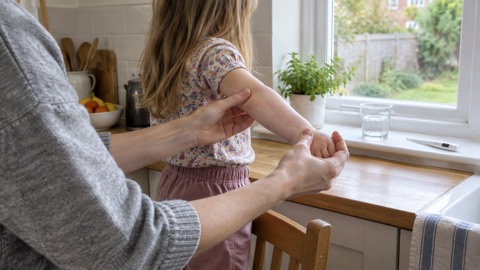
- A high temperature. This means you feel hot to touch on your chest or back, and you do not need to measure your temperature7. In adults, a fever is about 38C or higher8.
- A new, continuous cough. This means coughing a lot for more than an hour, or 3 or more coughing episodes in 24 hours4.
- A loss of or change in your sense of smell or taste4.
Because COVID-19 shares symptoms with flu and other common respiratory infections, official guidance treats them together. Symptoms of COVID-19, flu and common respiratory infections include a continuous cough, high temperature, fever or chills, loss of or change in sense of taste or smell, shortness of breath, unexplained tiredness, muscle aches, loss of appetite, unusual headache, sore throat, stuffy or runny nose, diarrhoea, and feeling sick or being sick2. If you are trying to work out which illness you have, our page on whether it is a cold, flu or COVID-19 goes through the differences.
One point worth knowing: the drinking water supply is not a route for transmission of the virus, according to the Drinking Water Inspectorate, so there is no need to worry about tap water during an outbreak9. The virus is thought to spread between people who are in close contact with one another9, in droplets when someone carrying it speaks, breathes, coughs or sneezes, which are then breathed in or picked up from surfaces and carried to the eyes, nose or mouth10.
Try to stay at home if you have COVID-19
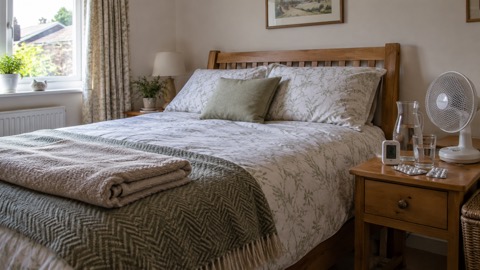
The core advice from the UK government and the NHS is to try to stay at home. If you have symptoms of a respiratory infection such as COVID-19, and you have a high temperature or do not feel well enough to go to work or carry out normal activities, try to stay at home and avoid contact with other people until you no longer have a high temperature or no longer feel unwell2. If you have COVID-19, you should try to stay at home3.
If you take a test and it is positive, the advice is more specific:
| Your situation | How long to stay at home and avoid contact |
|---|---|
| Adult with a positive test | 5 days after the day you took the test1 |
| Child or young person under 18 with a positive test | 3 days after the day the test was taken1 |
| Symptoms but no test taken | Until you no longer have a high temperature and feel well enough for normal activities2 |
| Positive test, no symptoms | Still stay at home and avoid contact for the 5 days (adults)12 |
Suffolk's winter guidance spells out that a positive result means trying to stay at home and avoiding contact with other people for 5 days after the day you took the test, even if you have no symptoms12. Children and young people tend to be infectious for a shorter time, which is why their period is shorter5. Our page on how long to stay at home after a positive COVID test covers this in more detail.
While you are at home, older Public Health England advice on home isolation still describes the practical shape of it: remain in your home except for getting medical care, and do not go to work, school or public areas, or use public transport or taxis, until you have been told it is safe to do so13. The North West Ambulance Service adds a point that catches many households out: do not go to a pharmacy if you or someone you live with has COVID-19 symptoms. Try calling or contacting the pharmacy online instead14.
Children: when they can go to school and when to keep them home
The rules of thumb for children are consistent across England, Scotland and Wales. Children and young people with mild symptoms, such as a runny nose, sore throat or slight cough, who are otherwise well, can continue to attend their education setting1. If your child has mild symptoms and feels well enough, they can go to school or childcare1.
Children who are unwell and have a high temperature should stay at home and avoid contact with other people where they can. They can resume normal activities when they no longer have a high temperature and are well enough to attend15. Children with severe symptoms should also stay at home, and return to education when they feel well enough15.
If a child tests positive, the guidance is to keep them at home for 3 days after the day the test was taken, if you can1. After 3 days, if they feel well and do not have a high temperature, they can return to education15.
If you do keep your child at home, phone the school or nursery on the first day, let them know your child will not be in, and give the reason17. If your child has an infection that could be passed on, such as a cold sore or head lice, let their teacher know17. Our page on when to keep your child off school or nursery covers other illnesses and the time-off rules for each.
Caring for yourself at home
Most people with COVID-19 or a similar respiratory infection can be looked after at home. The UK government's guidance is straightforward: get plenty of rest, drink water to keep hydrated, and use medications such as paracetamol to help with symptoms2. NHS guidance on flu, which overlaps heavily, adds: rest and sleep, take paracetamol or ibuprofen to lower your temperature and treat aches and pains, and drink plenty of water to avoid dehydration, aiming for pee that is light yellow or clear18.
A few specific points from NHS guidance on COVID-19 itself:
- Try a teaspoon of honey if you have a cough, but never give honey to babies under 12 months1.
- Do not lie on your back if you have a cough; lie on your side or sit upright instead1.
- Do not use a fan to cool your room, as it may spread the virus1.
- Try to stay calm if you are feeling breathless, as distress can make it worse1.
Keep an eye on how things develop. NHS inform in Scotland advises contacting your GP practice for symptoms that are not improving, a high temperature for more than 3 days, breathlessness that is not improving, a cough lasting more than 3 weeks, or if you have a long-term medical condition or a weakened immune system8. For supplies to have ready, see our medicine cabinet checklist and our checklist for staying at home when ill. If you take regular prescription medicines, our guide to keeping enough prescription medicine at home is worth reading before you become unwell.
Who can still get a free COVID-19 test?
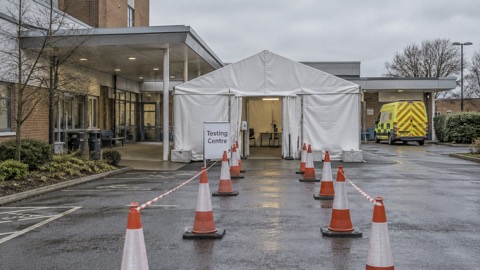
Testing has changed substantially since the height of the pandemic. Most people cannot get free COVID-19 tests3, and most people can no longer access free testing2. Free tests remain available for individuals at high risk of becoming seriously ill6, and rapid lateral flow tests are available free on the NHS to people who are eligible for COVID-19 treatment5. In Scotland, you can still access testing if you have a health condition which means you are eligible for coronavirus treatments8.
If you are eligible for COVID-19 treatments, the NHS advises keeping rapid lateral flow tests at home and testing as soon as you develop symptoms, even if they are mild19. If your test is positive, call your GP practice, hospital specialist or NHS 111 as soon as possible, because treatments work best when started early19.
If you are not eligible for a free test, you should be able to buy one at your local pharmacy6. Our page on lateral flow tests explains how to use a home test properly.
A small number of groups still have access to symptomatic testing through organised programmes rather than as individuals. In Suffolk's summary of the national position, these include NHS patients in hospital, NHS staff and staff in NHS-funded independent healthcare, adult social care staff and residents in care homes and similar settings, staff and patients in hospices, staff and detainees in prisons and other places of detention, and staff and users of high-risk domestic abuse refuges and homelessness settings20.
Arrangements differ in Northern Ireland. The Public Health Agency there still advises that if you develop COVID-19 symptoms you should self-isolate immediately and get a PCR test, even if your symptoms are mild, and self-isolate if the result is positive21. That guidance was last reviewed on 29 November 2024, so check the current position before acting on it.
How long you are infectious: often 5 days, up to 10
Many people will no longer be infectious to others after 5 days, but you can be infectious for up to 10 days22. The UK government's guidance puts it the same way: most people with COVID-19 will no longer be infectious to others after 5 days, but some people may be infectious for up to 10 days from the start of their infection2.
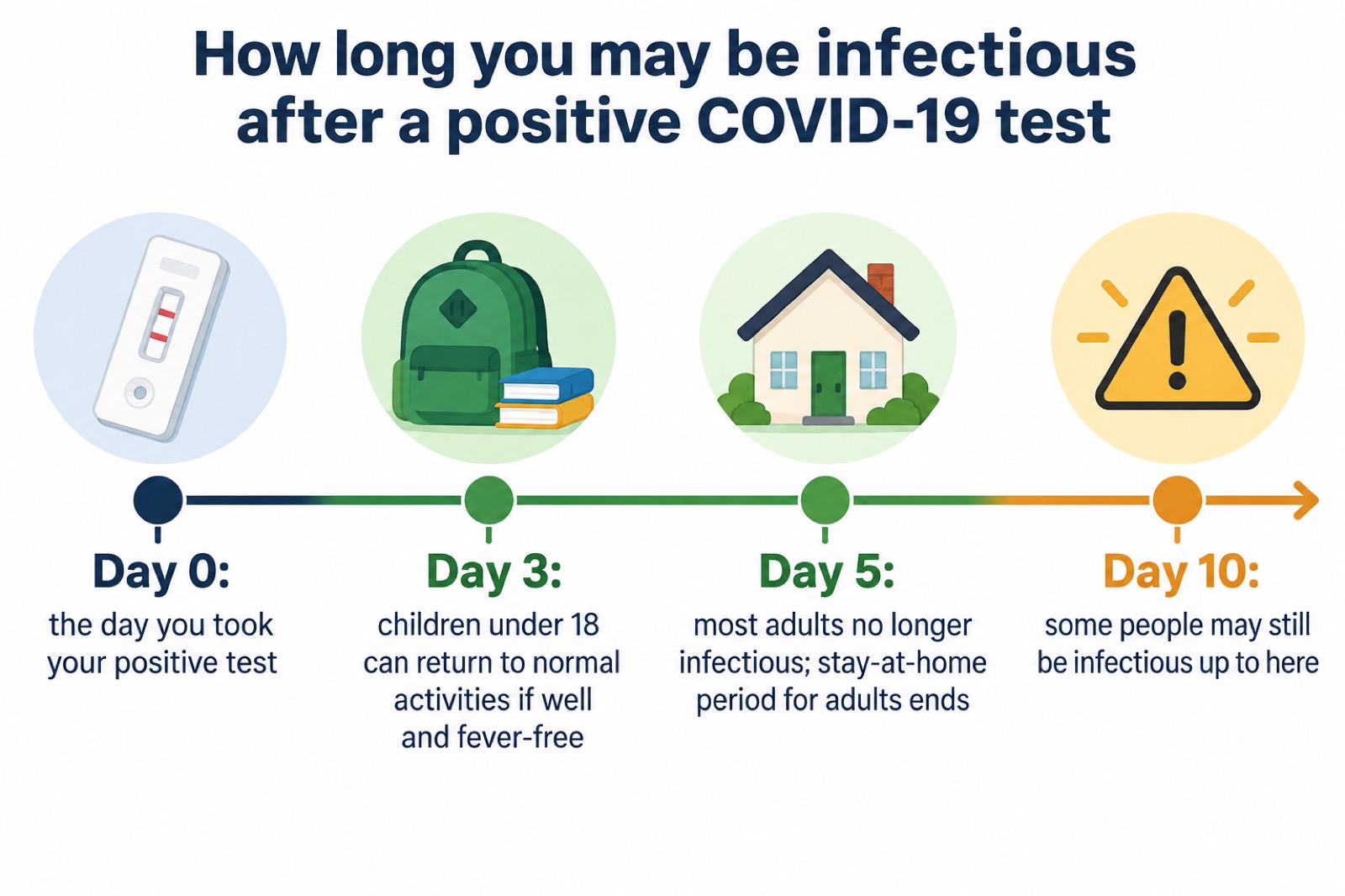
Two practical consequences follow. First, the NHS advises trying to wait 10 days after the day you took your test before meeting anyone who is more likely to get seriously ill from viruses5. Second, if you are a household or overnight contact of someone with a positive result, infection can take up to 10 days to develop, so the guidance is to avoid contact with people at higher risk, limit close contact with others outside the household, wear a well-fitting face covering, and wash your hands frequently during that window2.
Older local guidance from Suffolk adds a detail that still makes sense: if you are self-isolating because of a contact, the 10 days does not restart if a different person you live with gets symptoms while you are self-isolating23. And if a test result comes back unreadable and you tested because you had symptoms, you and anyone you live with should self-isolate until you get the result of a second test23.
Protecting people at higher risk in your household
Some people are more likely to become seriously ill from COVID-19: older adults, those with some long-term conditions, and those who are pregnant, especially after 28 weeks6. If you or your child are at increased risk of getting ill from COVID-19, try to avoid contact with people who have symptoms until they feel better22. NHS inform in Scotland also advises staying away from people at increased risk of becoming more unwell from respiratory infections if possible, and not visiting hospitals or care homes8. Our page on when to avoid visiting hospitals and care homes covers this, and our guide to people at higher risk in an outbreak goes into who counts and why.
If someone in your home has symptoms, Welsh government guidance sets out the practical steps for reducing spread within the household:
- Keep your distance from others where possible16.
- Open windows to improve ventilation for at least 10 minutes after leaving a room, where it is safe to do so16.
- Wash hands regularly and cover your mouth and nose when coughing or sneezing16.
- Clean frequently touched surfaces regularly16.
- Wear a well-fitted face mask if someone at home has a long-term condition or a weakened immune system16.
- Tell visitors if you have symptoms16.
The same habits matter when everyone seems well. You can still catch or spread COVID-19 if you do not have symptoms, are fully vaccinated, or have had the virus before22. You may be infected with a respiratory virus and not have any symptoms but still pass the infection on to others24. So the everyday measures advised by local public health teams apply all the time: wash your hands often with warm water and soap, use tissues to trap germs and bin them promptly, cough into your elbow, stay at home if unwell, clean regularly touched surfaces, wear a face covering in crowded places or close contact, let fresh air in when having visitors, and get vaccinated if eligible6. Practise good hand hygiene and wash your hands regularly, especially if you have a cough or cold24. Our page on stopping infections spreading at home works through these in detail.
When to call NHS 111 or your GP
Ask for an urgent GP appointment or get help from NHS 111 if you are worried about your symptoms, if they are getting worse or not getting better, if you notice other signs of illness such as a rash, loss of appetite or feeling weak, or if you have a high temperature lasting 5 days or more, or one that is not coming down with paracetamol1.
NHS guidance on flu, which applies to the same symptoms, widens the list. Ask for an urgent GP appointment or help from NHS 111 if you or your child have symptoms and any of these apply: you are worried about your baby's or child's symptoms, you are 65 or over, you are pregnant or have recently given birth, you have a long-term medical condition such as diabetes or one affecting your heart, lungs, liver, kidneys, brain or nerves, you have a weakened immune system, for example because of chemotherapy or HIV, you feel very unwell, you feel short of breath, or your symptoms do not improve after 7 days18.
NHS 111 is for urgent health advice, help with symptoms, or access to out-of-hours GP services: call 111 or visit the NHS 111 online service25. Our page on NHS 111 explains what it can and cannot help with, and what to do when your GP is closed covers the out-of-hours routes.
For children specifically, a winter health guide for Scotland advises contacting your GP if your child has a high temperature that has lasted 5 days or more, or persistent vomiting26. A child's temperature can also be raised after vaccinations, or if they overheat because of too much bedding or clothing, so check those before assuming illness26.
When to call 999 or go to A&E
Call 999 or go to A&E in an emergency, when someone is seriously ill or their life is at risk19. NHS guidance on COVID-19 lists the specific signs to act on immediately. Call 999 or go to A&E if you or a child:
- seems very unwell
- gets sudden chest pain
- is so breathless they are unable to say short sentences when resting
- starts coughing up blood
- collapses, faints, or has a seizure or fit for the first time
- has a rash that does not fade when you roll a glass over it1
NHS guidance on flu gives similar emergency signs: sudden chest pain, or severe difficulty breathing where you are gasping, choking or not able to get words out, or coughing up blood18. If you are unsure whether it is a 999 matter or a 111 matter, our page on when to call 111 and when to call 999 works through the difference, and our guide to urgent treatment centres, minor injury units and A&E explains which service to use when.
For babies and young children, the thresholds for getting help are lower. A high temperature in babies and children is 38C or more, against an average of about 36.4C27. Ask for an urgent GP appointment or get help from NHS 111 if a child under 3 months old has a temperature of 38C or higher, or if a child 3 to 6 months old has a temperature of 39C or higher1. Our page on thermometers for checking a fever at home covers the kit if you want to measure rather than judge by touch.
Sources (27)
- COVID-19 symptoms and what to do, NHS, 2026
- People with symptoms of a respiratory infection including COVID-19, UK Health Security Agency, 2022-04-01
- Coronavirus (COVID-19), UK Government, 2026-10-29
- Seasonal advice: flu, Met Office, 2026-10-28
- COVID-19 rapid lateral flow test, NHS, 2025-03-03
- Coronavirus (COVID-19), Derbyshire County Council, 2026-10-29
- COVID-19 information for the public, Public Health Agency Northern Ireland, 2025-04-30
- Coronavirus (COVID-19), NHS inform Scotland, 2026-10-20
- COVID-19 and drinking water, Drinking Water Inspectorate, 2024-12-17
- Coronavirus, Derbyshire County Council, 2026-10-29
- Living safely with respiratory infections including COVID-19, UK Health Security Agency, 2022-04-01
- Seasonal winter safety advice, Suffolk Fire and Rescue Service, 2026-10-29
- Advice sheet for home isolation, Public Health England, 2020
- Coronavirus first aid advice, North West Ambulance Service, 2025-03-13
- COVID-19 latest information, Suffolk County Council, 2022-04-13
- Guidance for people with symptoms of a respiratory infection including COVID-19, Welsh Government, 2020-03-19
- Health protection: healthy adults, Devon County Council, 2026-10-29
- Flu, NHS, 2026-02-03
- Stay Well This Winter 2025, NHS England, 2025
- COVID-19 testing in Suffolk, Suffolk County Council, 2026-10-29
- COVID-19 testing, Public Health Agency Northern Ireland, 2024-11-29
- How to avoid catching and spreading COVID-19, NHS, 2023-03-21
- COVID-19 testing in Suffolk, Suffolk County Council, 2022-01-25
- Living with Covid, Nottinghamshire County Council, 2026-10-29
- Wellbeing and safety, Surrey County Council, 2026-10-28
- Your Health Guide Winter 2025, Winter and Health Incidents Board Scotland, 2025-12
- What to keep in your medicine cabinet, Healthier Together (NHS), 2026-10-28
 Medicine Cabinet Checklist
 Sick at Home Supplies Kit
 Caring for Someone Ill at Home
 Pandemics and UK Household Plans
 Outbreaks Near You
 UK Health Security Agency
 Staying Home When Ill
 Stopping Infections at Home
 Caring for a Sick Person at Home
 Keeping Prescription Medicine
 Medicine Shortages Explained
 Storing Medicines Safely
 Urgent Care and A&E
 Vaccines Against Outbreaks
 Flu Symptoms and Getting Help