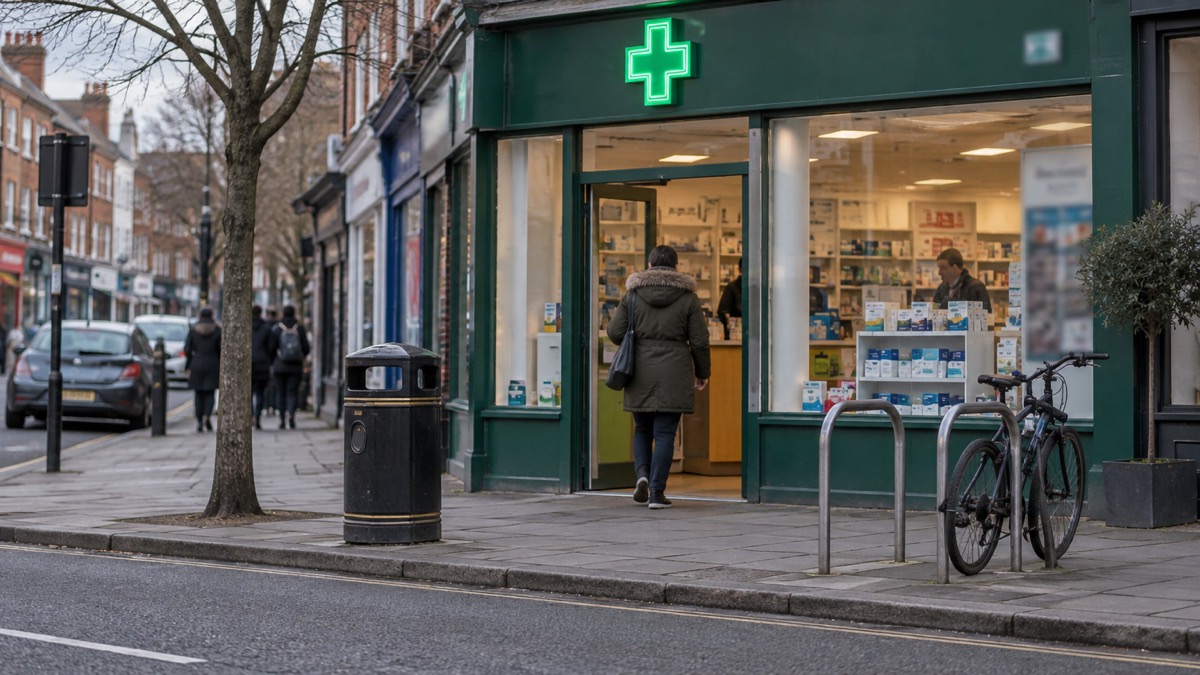
A COVID-19 rapid lateral flow test is a test you do yourself at home to check whether you have COVID-191. You swab your throat and nose, mix the sample with the liquid supplied, and read the result within the waiting time stated in the kit's instructions. Free NHS tests are now limited to people eligible for COVID-19 treatments, aged 12 or over, and to certain healthcare and care settings; everyone else who wants to test has to pay for a kit themselves1.
Most people with symptoms no longer need to test at all2. The test matters most for one group: people who are eligible for COVID-19 treatments, because those treatments work best when started early. NHS winter advice for that group is to keep rapid lateral flow tests at home and test as soon as symptoms develop, even if the symptoms are mild3. If the test is positive, the next step is a phone call to your GP surgery, NHS 111 or your hospital specialist, as soon as possible1.
This page covers who can still get free tests, how to buy one, how to do the swab and read the result, and what to do after a positive result. It sits alongside our wider guides on COVID-19 now and staying at home when ill.
Who can still get free lateral flow tests on the NHS
Free rapid lateral flow tests are available on the NHS to people who are eligible for COVID-19 treatment1. You may be able to get them free if you are aged 12 or over and you are eligible for treatment because you are at highest risk of getting seriously ill from COVID-191. Carers UK puts it plainly: lateral flow tests are no longer free for the vast majority, but some individuals, such as those who are most clinically vulnerable, can still order them free of charge5.
Beyond that group, free symptomatic testing continues in several defined settings, set out by Suffolk County Council's testing guidance4:
| Who | How they get tests |
|---|---|
| People eligible for COVID-19 antiviral and other treatments | Sent a pack of tests; can request replacements if needed4 |
| NHS staff and staff in NHS-funded independent healthcare provision | Order their own tests via the current lateral flow test ordering portal4 |
| NHS patients in hospital | Tested via the established NHS testing programme4 |
| Adult social care staff and residents in care homes, homecare, extra care, supported living and adult day care centres | Order via the established organisation ordering portal4 |
| Staff and patients in hospices | Supplied by the hospice4 |
| Staff and detainees in prisons and places of detention | Supplied by the detention premises4 |
If you work in certain healthcare settings, you may be able to get free tests, and this will depend on your job role and your symptoms1. If you are unsure whether you qualify for COVID-19 treatments, your GP surgery or hospital specialist is the place to ask; they are also the route to being added to the group that is sent test packs. Our page on people at higher risk in an outbreak explains who tends to fall into these groups and how to protect vulnerable relatives.
Buying tests when you are not eligible
If you want to get tested but you are not eligible for COVID-19 treatment, you will need to pay for the test yourself1. Lateral flow tests are available to purchase in most pharmacies and some other stores, and Suffolk County Council confirms they will continue to be available to buy from pharmacies and supermarkets, including online4. Derbyshire County Council's advice is the same: if you are not eligible for a free test, you should be able to buy a test at your local pharmacy6.
A few practical points when buying:
- Buy from a pharmacy, supermarket or a retailer you know.
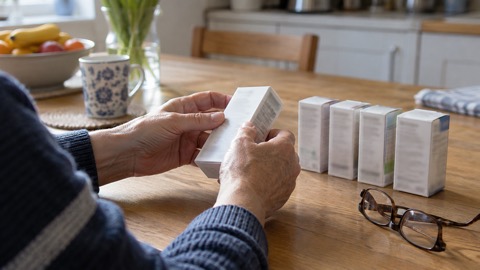
- Check the expiry date on the box before you use it, and do not use out-of-date tests7.
- Follow the instructions that come with your specific kit when you use it.
- If you have no symptoms and cannot get tests from your work, school, college or university, Carers UK notes you can order a rapid lateral flow test yourself5.
Bear in mind why you are testing. Most people do not need to take a COVID-19 rapid lateral flow test if they have symptoms2. The main reasons households still buy them are to protect someone vulnerable, to check before visiting a high-risk setting such as a care home or hospital, or because a doctor has advised testing. If you are simply unwell, the more useful steps are to stay at home and avoid contact with other people, which our staying at home when ill page covers in full.
Getting free tests from a pharmacy: what to tell them
If you are eligible for COVID-19 treatment, you collect your free tests from a pharmacy. To register for them, the NHS says you will need to tell the pharmacy your name, address, date of birth and medical condition1. The medical condition is what confirms your eligibility, so it is worth knowing what your GP has recorded you as being at higher risk for, whether that is a lung condition, a weakened immune system or another qualifying condition.
The process in outline:
- Confirm with your GP surgery or hospital specialist that you are eligible for COVID-19 treatments1.
- Go to a pharmacy that supplies the tests and give your name, address, date of birth and medical condition1.
- Take the pack home and store it following the instructions, checking expiry dates before each use7.
- If you run out, request replacements: those eligible for treatments are sent a pack and can request more when they need them4.
One thing worth being clear about, because it catches people out at exactly the wrong moment: registering a positive COVID-19 lateral flow test result will not result in the prescribing of a COVID-19 treatment7. The registration system and the treatment route are separate. If your test is positive and you are eligible for treatment, you must make the call yourself, to your GP surgery, NHS 111 or your hospital specialist1. Do not assume that reporting the result sets anything in motion.
How to do a throat and nose swab test
Most COVID-19 rapid lateral flow tests in the UK use a combined throat and nose swab. The NHS instruction is to open your mouth wide and rub the swab over both tonsils at the back of the throat, or where they would have been if you have had them removed, 4 times on each side, then wipe the inside of your nose1. The swab then goes into the tube of liquid supplied with the kit, and drops of the mixture go onto the test strip.
A numbered walkthrough:
- Rub the swab over both tonsils at the back of your throat 4 times on each side1.
- Wipe the inside of your nose with the same swab, as directed in your kit's instructions1.
- Set a timer for the waiting time stated in your kit's instructions and read the result within that time.
Not every kit is the same. The government's self-test help notes that the Getein Biotech test, for example, has a teal and white pack and is a nose-only test7. That is why the instruction to follow your own kit's leaflet matters: a nose-only kit does not need the throat swab, and using the wrong method can affect the result. The PCR test, by contrast, involves taking a swab of the inside of your nose and the back of the throat using a long cotton bud, and is a different, laboratory-based process8.
Reading the result: respect the waiting time and the expiry date
Read the result within the waiting time given in your kit's instructions. The NHS warning on this is explicit:
"Do not leave the test longer than the waiting time given in the test kit instructions, as this can affect the result."
A line that appears after the waiting time has passed is not a reliable result. If you miss the window, do not try to interpret the strip late: use a fresh test if you have one, or treat yourself as if you have symptoms and follow the stay-at-home advice.
Storage goes hand in hand with expiry. Keep tests at home in the conditions printed on the box, and keep them out of reach of children, the same principle that applies to storing medicines safely. If you are eligible for COVID-19 treatments, NHS winter advice is to keep rapid lateral flow tests at home ready, and to test as soon as you develop symptoms, even if they are mild3. That stock is only useful if it is in date, so check the boxes when you do your periodic check of the medicine cabinet.
A positive result means you very likely have COVID-19
The NHS is clear about what a positive result means:
"If you get a positive COVID-19 rapid lateral flow test result, it means it's very likely you have COVID-19."
After a positive test, if you are aged 18 or over, stay home and avoid meeting people for 5 days after the day you took the test1. Suffolk Fire and Rescue Service's winter advice states the same rule: try to stay at home and avoid contact with other people for 5 days after the day you took your positive test, even if you have no symptoms9. Our page on how long to stay at home after a positive COVID test goes into the detail, including what to do about work and school.
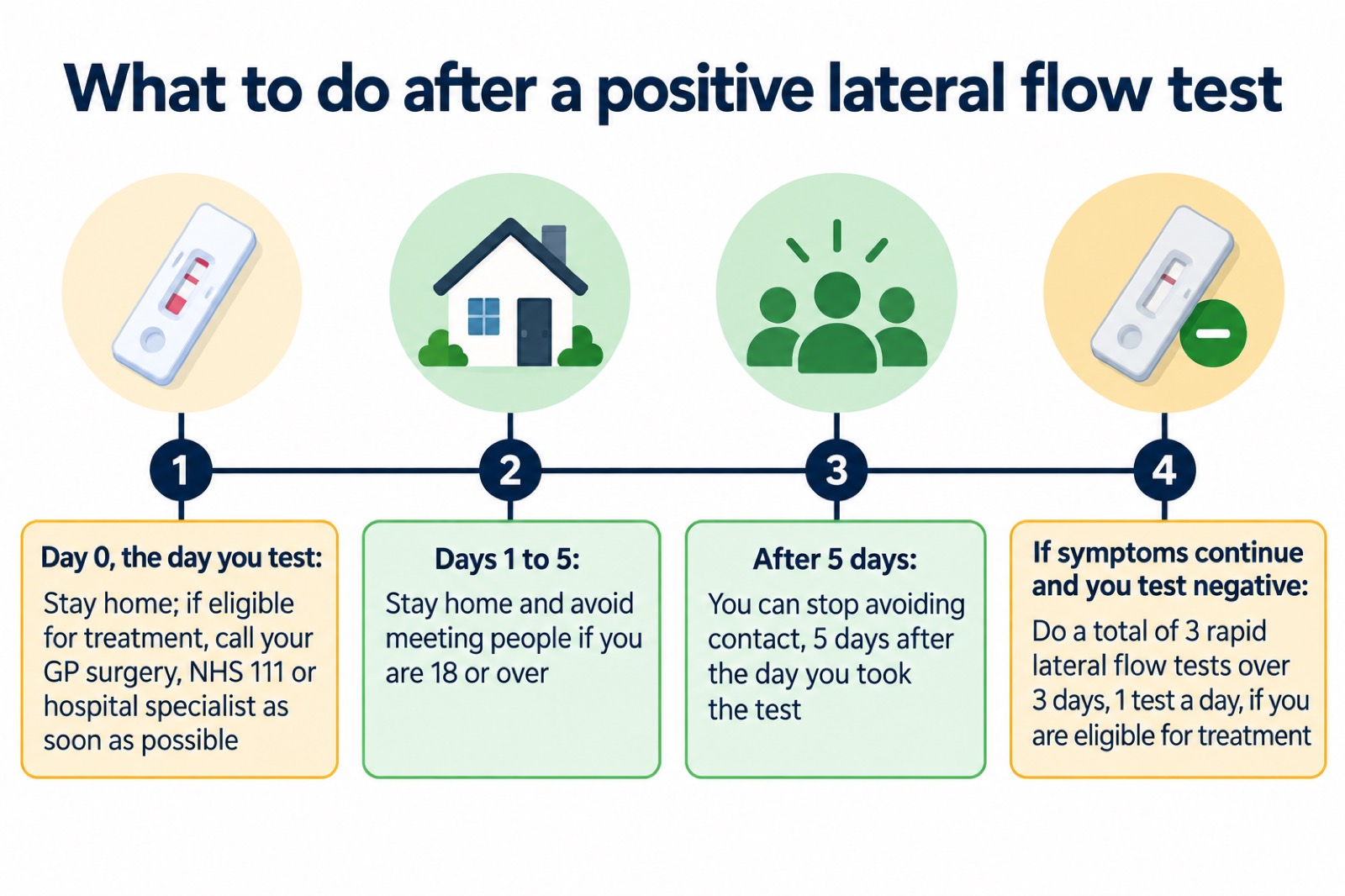
Two further points on staying home. If you have diarrhoea or you are being sick, stay at home until 48 hours after those symptoms have stopped8. And children and young people aged 18 and under should continue to attend their education setting even if the person they live with has a positive test result10.
On reporting: if you live in England, you do not need to report the result from a COVID-19 rapid lateral flow test, whatever the result1. In Northern Ireland the position has been different: the Public Health Agency has asked people who test positive using a lateral flow test to report the result on the government website, or ring 119 for assistance11. Carers UK advises carers to self-isolate immediately on a positive rapid lateral flow test and to report results, whether positive or negative5. Check the current position for your nation before assuming either way.
Testing positive when you are eligible for treatment
This is the situation where speed matters. If you test positive for COVID-19 and you are eligible for COVID-19 treatments, call your GP surgery, NHS 111 or hospital specialist as soon as possible1. NHS winter advice repeats it: if your test is positive, call your GP practice, hospital specialist or NHS 111 as soon as possible3. Treatments for COVID-19 are time-limited, which is why the NHS tells eligible people to test at the first sign of symptoms, even mild ones, rather than waiting to see whether they get worse3.
If you test negative but you are eligible for treatments and your symptoms continue, the NHS advises doing a total of 3 rapid lateral flow tests over 3 days, 1 test a day1. A single negative test does not rule COVID-19 out early in an illness.
NHS 111 is the route when your GP surgery is closed or you cannot get through. You can use 111 online, call 111, or use the NHS App to get started12. Depending on what you need, NHS 111 online might advise you to call 999 or go to A&E in an emergency, go to an urgent treatment centre, see an out-of-hours GP, book a callback from a nurse, get urgent specialist support for dental or mental health problems, contact your own GP surgery, see a pharmacist, or look after yourself safely at home13. When you call 111, your call may be referred to a trained nurse or paramedic for further assessment of your condition or for medical advice14. Our NHS 111 guide explains the service in full, and when to call 111 and when to call 999 covers the emergencies.
Always phone 999 in an emergency15. The London Ambulance Service's guidance is to use 111 when you require health advice or reassurance about what to do next16, and to call 999 in an emergency12. If you are worried about an infection, call 111 or contact your GP; the NHS sepsis guidance is explicit on this, because infections can occasionally worsen quickly17. Phone 111 or speak to your GP practice if you have any new or worsening symptoms15.
A word on medication while you wait: do not take someone else's prescription medicine. If someone has taken another person's medicine and is conscious and stable, contact NHS 111 or visit 111.nhs.uk for guidance18. This matters during a COVID-19 illness in particular, because people are sometimes tempted by antivirals or antibiotics held by a family member. Our page on taking a family member's prescription medicine covers the risks.
Keeping tests ready: a household checklist
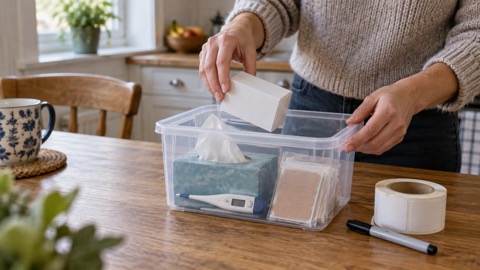
For a household that includes someone eligible for COVID-19 treatments, the test kit is part of the sick-at-home supplies, alongside the items on our staying at home when ill supplies checklist. What to have ready:
- A pack of rapid lateral flow tests, in date, stored as the box directs3
- The kit instructions kept with the tests, so the waiting time and swab method are to hand7
- A timer or phone for timing the waiting period1
- Your GP surgery, NHS 111 and hospital specialist contact details written down, so a positive result on a weekend evening does not leave you hunting for numbers1
- Paracetamol and other basics from the medicine cabinet checklist, since most COVID-19 illness is managed at home with rest and fluids2
If you are not eligible for treatments, you can still buy a kit or two to keep at home if you want the option to test before visiting someone vulnerable4. Just remember the expiry problem: a kit bought and forgotten is often an expired kit when you finally want it, so check the date each time7.
Where the four nations differ
The core NHS advice on using the test, reading it within the waiting time, and calling your GP surgery, NHS 111 or hospital specialist after a positive result applies UK-wide1. The differences are at the edges:
- England: you do not need to report a lateral flow result, whatever it is1.
- Northern Ireland: the Public Health Agency has asked people to report a positive lateral flow result on the government website or ring 119 for assistance, and its guidance has allowed self-isolation to end after five full days, with release on day six, provided two consecutive negative lateral flow results taken 24 hours apart, the first no earlier than day five, and no high temperature11.
- Scotland: NHS inform's coronavirus guidance covers symptoms and what to do, and Carers UK's Scottish guidance notes carers can order rapid lateral flow tests if they cannot get them from work or education5.
- Wales: NHS 111 Wales covers out-of-hours advice, and notes that supermarkets, newsagents and petrol stations may stock a basic range of over-the-counter medicines with longer opening hours than high-street pharmacies when no pharmacy is open, which is worth knowing when you need supplies such as paracetamol alongside a test19.
If you are unsure which rule applies to you, follow the stay-at-home advice and make the treatment call if you are eligible; both are safe in every nation.
Where to get help
- Eligible for COVID-19 treatments and positive: call your GP surgery, NHS 111 or your hospital specialist as soon as possible1.
- Unwell and unsure what to do: use 111 online, call 111, or use the NHS App12; 111 is for health advice or reassurance about what to do next16.
- Emergency: always phone 99915.
- Worried about an infection: call 111 or contact your GP17.
- New or worsening symptoms: phone 111 or speak to your GP practice15.
- Not eligible for a free test: buy from a pharmacy, supermarket or online4.
For the wider picture of symptoms, testing and what to do, see COVID-19 now, and for telling illnesses apart, is it a cold, flu or COVID-19?. If someone in the house does become ill, our guides on looking after someone ill at home and stopping infections spreading at home take you through the practical steps.
Sources (19)
- COVID-19 rapid lateral flow tests, NHS, 2025
- COVID-19 symptoms and what to do, NHS, 2026
- Stay Well This Winter 2025, NHS England, 2025
- Getting a test: COVID-19 testing eligibility, Suffolk County Council, 2026
- COVID-19 guide for carers, Carers UK Scotland, 2026
- Coronavirus: disease control advice, Derbyshire County Council, 2026
- COVID-19 self-test help, UK Government, 2024
- COVID-19 testing in Suffolk, Suffolk County Council, 2022
- Seasonal winter safety advice, Suffolk Fire and Rescue Service, 2026
- Coronavirus (COVID-19), NHS inform, 2026
- COVID-19 testing in Northern Ireland, Public Health Agency, 2024
- Calling 999, London Ambulance Service, 2026
- NHS 111 Online, NHS Digital, 2026
- NHS 111 service, Yorkshire Ambulance Service, 2026
- Outdoor air pollution and health, NHS inform, 2026
- When to use 111, London Ambulance Service, 2026
- Sepsis, Mid and South Essex NHS, 2026
- Medication safety campaign, NHS Lincolnshire, 2026
- Out of hours pharmacy advice, NHS 111 Wales, 2021
 Medicine Cabinet Checklist
 Sick at Home Supplies Kit
 Caring for Someone Ill at Home
 Pandemics and UK Household Plans
 Outbreaks Near You
 UK Health Security Agency
 Staying Home When Ill
 Stopping Infections at Home
 Caring for a Sick Person at Home
 Keeping Prescription Medicine
 Medicine Shortages Explained
 Storing Medicines Safely
 Urgent Care and A&E
 Vaccines Against Outbreaks
 Flu Symptoms and Getting Help