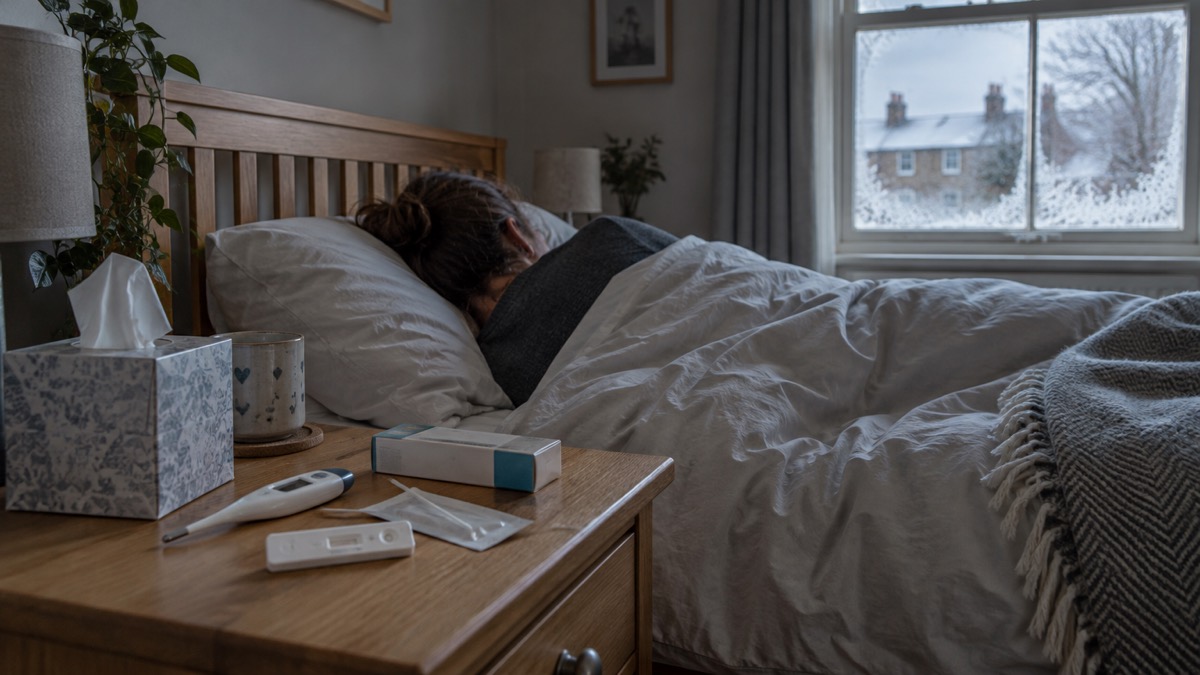
If you have woken up feeling rough, the speed of it tells you a lot. Flu appears quickly, within a few hours, and makes you feel exhausted and too unwell to carry on as normal. A cold appears gradually over 1 to 2 days, and although you feel unwell you are usually still well enough to do normal activities1. Most colds pass within a week2.
COVID-19 can present with a wide range of symptoms, from mild to severe3. Common symptoms include a persistent dry cough, a high temperature or shivering, and a loss or change to your sense of smell or taste4. If you think you or your child has COVID-19, follow NHS advice5.
For most healthy people, flu is shaken off within a week6, and many coughs, colds and minor illnesses in winter can be safely managed yourself, with advice from the NHS and your local pharmacist7. The important decisions are whether to stay at home, whether to test, and when to pick up the phone.
Flu comes on within hours, a cold over 1 to 2 days
The single most useful question is how fast it arrived. Flu symptoms hit you suddenly and sometimes severely9. They usually include fever, chills, headaches and aching muscles, and you can often get a cough and sore throat at the same time9. A cold builds gradually over 1 to 2 days, and although it makes you feel unwell, you still feel well enough to do normal activities1.
Flu tends to be more severe than a cold1. That difference in severity, not just the symptoms, is what should guide your decisions about work, school and contact with others.
| Cold | Flu | |
|---|---|---|
| How it starts | Gradually over 1 to 2 days1 | Quickly, within a few hours1 |
| How unwell you feel | Unwell but able to do normal activities1 | Exhausted and too unwell to carry on as normal1 |
| Typical symptoms | Cough, sore throat, runny nose | Fever, chills, headaches, aching muscles, often cough and sore throat together9 |
| How long it lasts | Most pass within a week2 | Healthy people usually shake it off within a week6 |
Children get the same pattern but can add symptoms of their own: pain in their ear, sore eyes, swollen glands and appearing less active1. If a child is unusually quiet and floppy alongside a fever, that is worth acting on.
COVID-19 symptoms: from mild to severe
COVID-19 is the one that does not fit neatly into the cold or flu pattern. It can present with a wide range of symptoms, from mild to severe3. The commonly reported core symptoms are a persistent dry cough, a high temperature or shivering, and a loss or change to your sense of smell or taste4. Other symptoms people have reported include a headache, a sore throat, feeling tired or exhausted, an aching body, stomach discomfort and diarrhoea, feeling or being sick, a loss of appetite, feeling breathless, and a blocked or runny nose4.
That breadth is why you cannot reliably rule COVID-19 out by comparing symptoms alone. If you think you or your child has it, follow NHS advice5.
Some people go on to have long COVID. The most common symptoms are feeling short of breath, extreme tiredness, loss of smell or taste, and muscle aches4. If symptoms are not settling, that is a reason to speak to your GP rather than wait it out.
Looking after yourself or a child at home
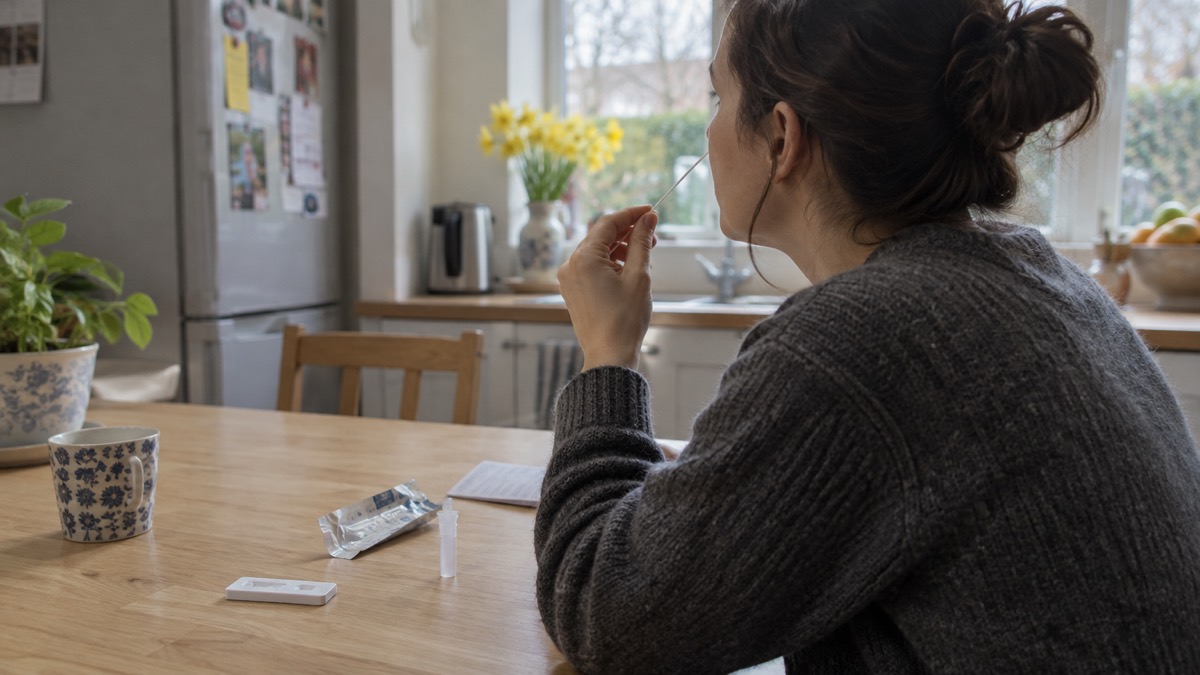
Most winter illness is managed at home. If you are normally healthy, many of the coughs, colds and minor illnesses that seem to happen more frequently during winter can be safely managed yourself, with advice from the NHS and your local pharmacist7. Take care of minor ailments like colds and sore throats at home with a first aid kit and a well-stocked medicine cabinet11.
What actually helps:
- Rest and fluids. Stay at home if you are not well12.
- Eat and drink warm. Eating hot meals and hot drinks helps in cold weather, along with wearing lots of thin layers13.
- Keep active indoors if you can14.
- Ease a cough with honey. Try a teaspoon of honey if you have a cough8. Do not give honey to babies under 12 months8.
- Ask your pharmacist what medicines, including paracetamol and ibuprofen, should be in your cabinet to relieve symptoms of common winter illnesses such as colds, sinusitis or ear infections15.
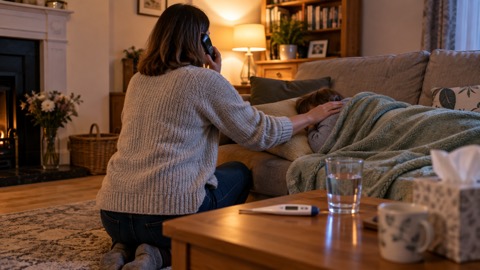
For a child, the same principles apply: keep them warm, offer fluids, and watch how they seem in themselves rather than only what the thermometer says. If you are worried about a child's symptoms, or they are getting worse rather than better, seek advice.
Staying at home and stopping it spreading
If you have flu symptoms, stay at home if you can to help avoid spreading germs to others16. More specifically, try to stay at home and avoid contact with other people if you have a high temperature, feel hot, cold or shivery, or do not feel well enough to do your normal activities1.
Flu is spread through coughing and sneezing, and can live on hands and surfaces for 24 hours16. That figure is the reason handwashing and surface cleaning matter so much when someone in the house is ill.
- Wash your hands regularly, especially if you have a cough or cold17.
- Practise good hand and respiratory hygiene. This helps prevent the spread of viruses like flu and COVID-19 as well as the winter vomiting bug18.
- Tell visitors. Let people who need to come into your home know that you have symptoms19.
- Keep your distance from people who are vulnerable while you are unwell.

For children, the balance is different. If your child has mild symptoms such as a runny nose, sore throat or mild cough, and they feel well enough, they can go to school or childcare8. Children and young people aged 18 and under with mild symptoms can continue to attend their education setting20. Keep them home if they have a high temperature or feel too unwell for normal activities1.
There is more detail on household measures in staying at home when ill and on handwashing and cleaning in stopping infections spreading at home.
Who is at higher risk from flu and COVID-19
Some people are more likely to become seriously ill. Official guidance names older adults, those with some long-term conditions, and those who are pregnant, especially after 28 weeks, as higher risk from COVID-193. People with Chronic Obstructive Pulmonary Disease are also more at risk of ill-health and hospitalisation during periods of cold weather, and are more susceptible to illness from high levels of circulating respiratory infections, including flu9.
If you get flu and COVID-19 infection at the same time, you are more likely to become seriously ill14. That is the argument for vaccination and for taking symptoms seriously if you are in a higher-risk group.
Vaccination is the main preventive measure. Healthcare professionals are advised to offer COVID-19 and/or flu vaccinations to all those who are eligible, as a preventive measure to reduce the risk of respiratory infections during winter21. Children aged 2 to 17 years with long-term health conditions are offered the nasal spray flu vaccine22.
In Wales, official guidance frames the same point plainly: respiratory viruses like COVID-19 and flu can put the most vulnerable people in our communities at risk of serious illness23. Arrangements for vaccination and for support differ between England, Scotland, Wales and Northern Ireland, so check with your GP or pharmacist where you live.
If you are supporting a vulnerable relative, see people at higher risk in an outbreak and extra help in an emergency.
When to call 111, and when to call 999
Most people do not need to call anyone. But there are clear lines.
Call 999 or go to A&E if you or a child seems very unwell, gets sudden chest pain, is so breathless you are unable to say short sentences when resting, starts coughing up blood, collapses, faints, or has a seizure or fit for the first time, or has a rash that does not fade when you roll a glass over it8. Ambulance services put it simply: call 999 if someone is seriously ill or injured, unconscious, having difficulty breathing, or has symptoms of heat stroke24.
Ask for an urgent GP appointment or get help from NHS 111 if you are worried about symptoms, symptoms are getting worse or not getting better, there are other signs of illness such as a rash, loss of appetite or feeling weak, or a high temperature lasting 5 days or more or not coming down with paracetamol8.
For less urgent worries, contact your local pharmacist, NHS 111 or your GP, who will all be able to offer advice and support25. In an emergency, dial 99926.
There is more on choosing between services in NHS 111, urgent treatment centres and A&E and when to call 111 and when to call 999.
Sources (27)
- Flu, NHS, 2026-02-03
- Self-care at home advice, South Western Ambulance Service NHS Foundation Trust, 2026-10-29
- Coronavirus (COVID-19), Derbyshire County Council, 2026-10-29
- Coronavirus guidance, Age UK, 2025-12-10
- Coronavirus, Derbyshire County Council, 2026-10-29
- 10 things you should do now to prepare for winter, Met Office, 2026-10-25
- Stay well in winter, Met Office, 2026-10-28
- COVID-19 symptoms and what to do, NHS, 2026
- Flu, Met Office, 2026-10-28
- COVID-19 testing - NHS, NHS
- Using 999, East of England Ambulance Service NHS Trust, 2026-10-28
- Staying well in winter, Derbyshire County Council, 2026-10-29
- Cold weather, Derbyshire Fire and Rescue Service, 2026-10-29
- Staying well in winter, Derbyshire County Council, 2026-10-29
- When you need urgent healthcare, NHS Cheshire and Merseyside, 2026-08-11
- Flu, Derbyshire County Council, 2026-10-29
- Living with COVID, Nottinghamshire County Council, 2026-10-29
- Your Health Guide Winter 2025-6, NHS Western Isles, 2025-12
- Managing minor winter ailments, Royal Voluntary Service, 2026-10-29
- Coronavirus (COVID-19), NHS inform, 2026-10-20
- Supporting vulnerable people before and during cold weather for healthcare professionals, GOV.UK, 2025-09-24
- Seasonal winter, Suffolk County Council, 2026-10-29
- Together we'll keep Wales safe, Welsh Government, 2026
- Summer safety advice, North East Ambulance Service NHS Foundation Trust, 2026-10-29
- Top tips for keeping warm and well this winter, GOV.UK, 2026-04-28
- Cold weather advice, South Western Ambulance Service NHS Foundation Trust, 2026-10-29
- Outdoor air pollution, NHS inform, 2026-10-14
 Medicine Cabinet Checklist
 Sick at Home Supplies Kit
 Caring for Someone Ill at Home
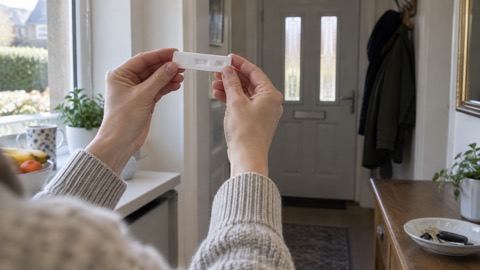 How Long to Stay Home With COVID
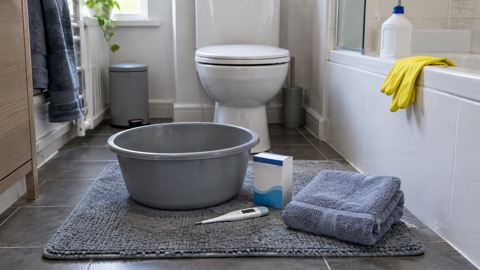 Time Off After Sickness
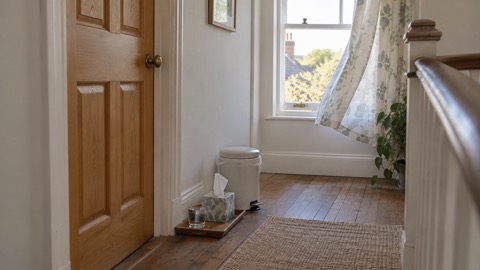 Stopping Flu Spreading at Home
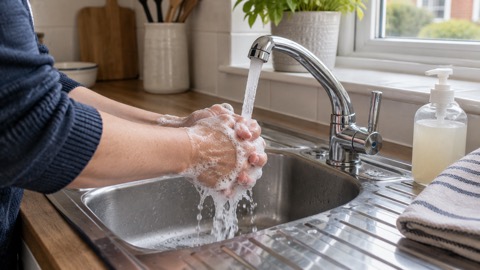 How Long to Wash Your Hands
 When to Call 111 or 999
 When Your GP Is Closed
 Disposing of Unused Medicines
 Medicines in a Heatwave
 Taking Someone Else's Medicine
 Ordering Repeat Prescriptions
 Treating Dehydration at Home
 Cold-Health Alerts Explained