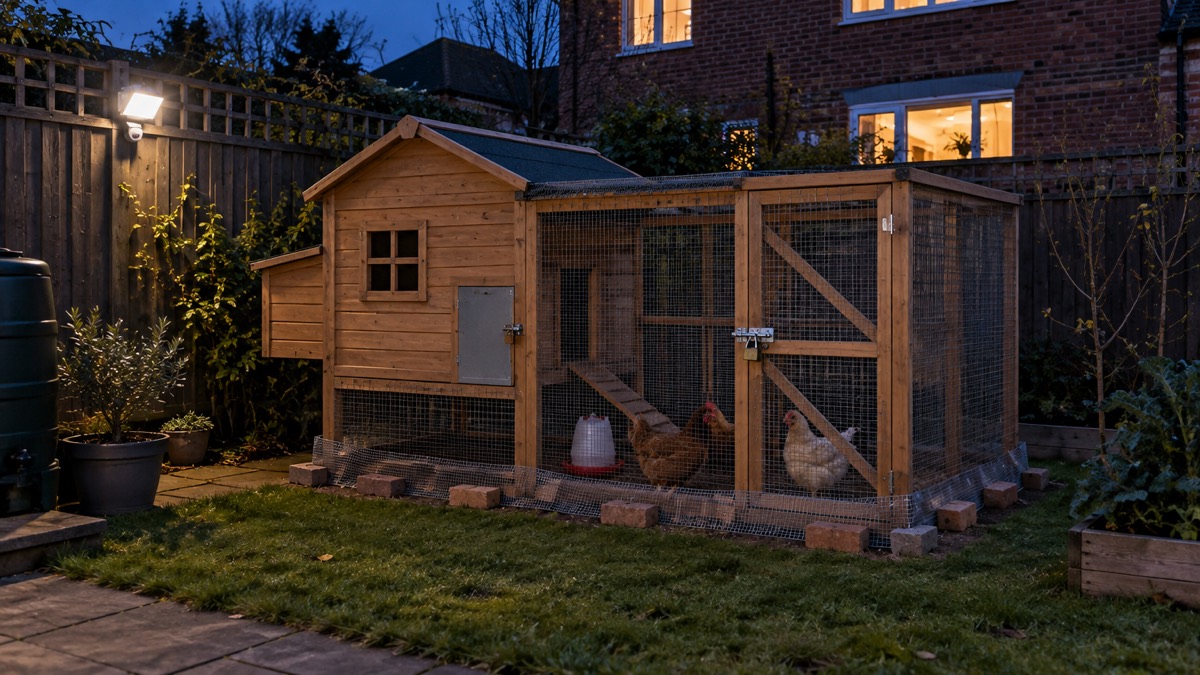
Foxes are the biggest threat to a backyard flock, and the RSPCA's advice is blunt: build the coop with strong, meshed fencing at least 6ft tall, sloping outwards, to stop foxes climbing over it1. Chicken wire is not enough, because foxes can chew through it. Stop them digging under by running the fence a foot into the ground, or by laying a mesh skirt 40cm wide flat on the ground with bricks or large stones on top1. And lock the birds in the coop at night, because foxes are nocturnal1.
That is the core of it. The rest is routine: check the fence and the hen house regularly, keep feed stored away from rats and mice, and remember that hungry foxes are more daring and determined in winter2. A coop that is secure on the night you build it can be undermined by a loose panel, a gap under a gate or a latch a fox can nudge open within weeks.
This page covers the two places your flock has to be safe, the coop and the run, how to manage hens that spend more time shut in, and what to do about sick or dead birds while the UK's bird flu prevention zone is in force. For the wider picture of housing, feeding and the law, see Keeping Chickens: Housing, Feeding and the Law.
Start with a healthy flock: watch the birds before you buy
A fox-proof coop protects birds that are worth protecting, so begin with healthy stock. Before you pick individual hens, watch the whole flock for a few minutes: a flock that has a couple of sickly birds is likely to have a disease or parasite problem5. Buying from a source with an obvious problem simply imports it into your garden.
Once birds are home, monitor the flock for signs of illness and isolate any sick bird immediately6. Isolation protects the rest and lets you watch the poorly bird closely. Keep the coop clean, because red mites are found under the wings or living in coops, particularly wooden ones, and are more commonly seen in summer; a plastic coop is worth considering because red mites struggle to settle in plastic4. Chickens kept on the same outdoor ground for more than a month need regular worming, and birds with worms should be moved to fresh grazing to avoid reinfection from infested droppings4.
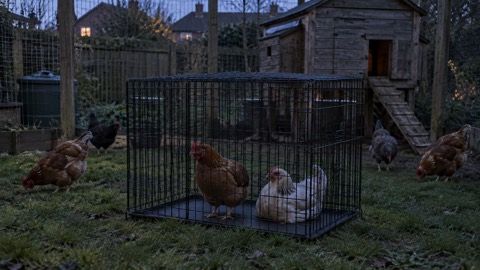
If you are adding to an existing flock, introductions need care. Start with a "see but no touch" arrangement, which also acts as quarantine, and let the birds share the same space for short periods over a few days at dusk before merging them fully. Separate them if bullying breaks the skin4. In summer, covering the coop windows with black plastic stops bullying starting before you are up4. There is more detail in How to Introduce New Hens to an Existing Flock.
A healthy flock is also easier to keep secure, because birds that feel safe roost early and settle. Perches should be around 3 to 5cm wide with rounded edges, with 15cm of roosting space per chicken, and a height of 40cm lets chickens feel safe and helps prevent pecking4. Enough perch space for every bird means none is left on the floor, where a fox that gets in will find it first.
The coop and the run: the two places your flock needs to be secure
Think of security in two layers. The coop is the night box, and the run is the daytime exercise yard. A fox that cannot get into either cannot take a bird, but a weakness in either one is enough.
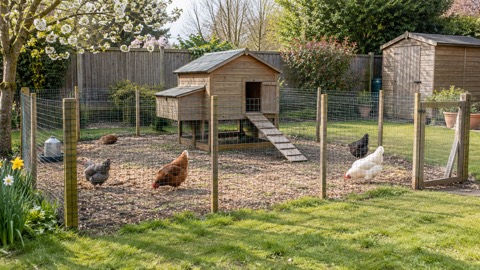
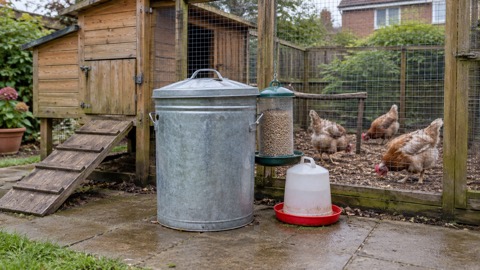
For the run, the RSPCA's specification is the one to build to: strong, meshed fencing at least 6ft tall, sloping outwards, to stop foxes climbing over it1. Chicken wire will not always keep predators and rodents out of runs, and welded mesh is a better alternative1. To stop digging, install the fencing a foot into the ground, or place a mesh-skirt around the base of the coop, flat on the ground at a width of 40cm, with bricks or large stones on top1.
For the coop itself, the house must provide protection from vermin such as foxes, rats and mice, and you may need to be able to padlock it7. Keep the feed bin secure inside the hen house or a shed or garage to prevent access by wild birds and vermin, and control rodents, which can be a threat to hens8.
| Layer | What it does | What to check |
|---|---|---|
| Coop (night) | Locks birds away while foxes are active | Latches, panels, roof, padlock, no gaps7 |
| Run mesh | Stops foxes climbing or chewing in | Welded mesh, not chicken wire; 6ft tall, sloping outwards1 |
| Ground defence | Stops foxes digging under | Fence a foot into the ground, or 40cm mesh skirt weighted down1 |
| Feed store | Removes the attraction | Secure bin inside hen house, shed or garage8 |
Be realistic about what a bought coop promises. The makers of the Dorset Chicken Coop say it is made with thicker, sturdier wood, wire and locks, but that they cannot absolutely guarantee foxes and other predators won't try and target them9. The Dorset Coop & Double Run is described in the same terms, with fox safety not absolutely guaranteed10. That is not a reason to avoid a well-made coop; it is a reason to check it yourself and to add the ground defence and the night lock.
Runs without grass: woodchip and bare ground
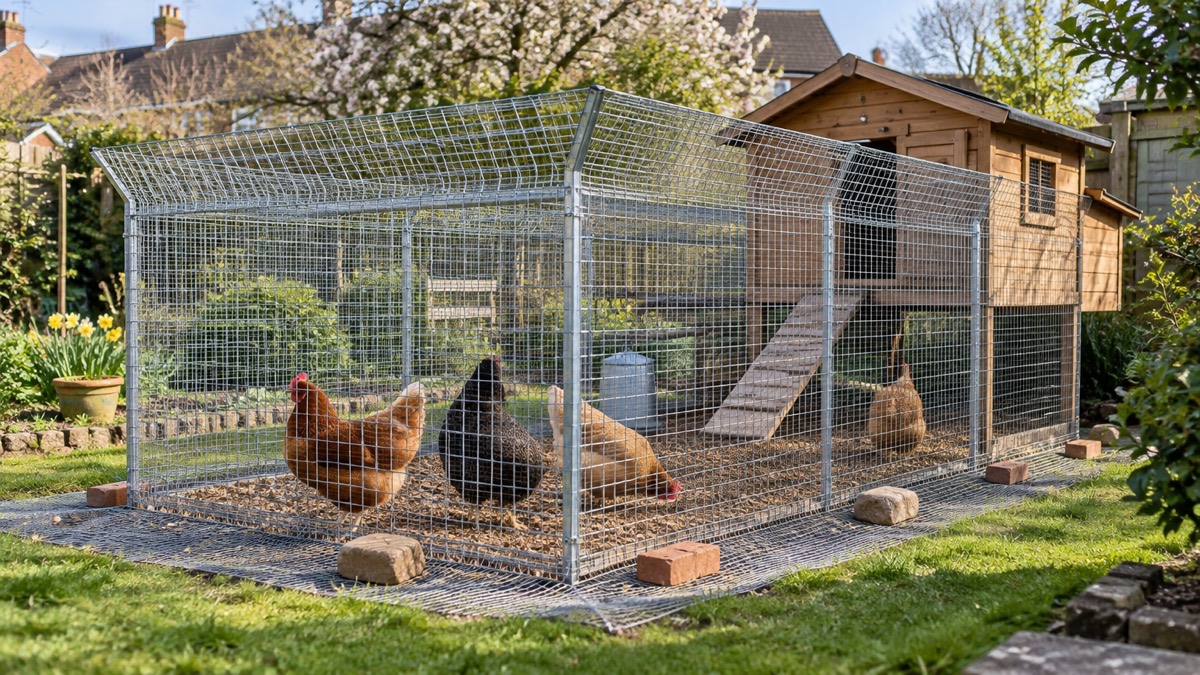
A secure run often ends up without grass, because hens scratch and eat it off. That is normal, but it changes what the run needs. Bare ground gets muddy and holds droppings, which raises the worm burden, so birds kept on the same outdoor area for more than a month need regular worming and a move to fresh ground to prevent reinfection4.
Woodchip gives the flock something to scratch in and keeps them off mud. Whatever the surface, the run has to be big enough. Some wooden coops come with a small run attached which are not suitable for chickens, as they need much more space11. A small attached run is fine as a shelter or a temporary pen, not as the birds' only outdoor space. For how much room to allow, see How Much Coop and Run Space Do Hens Need?.
If you buy a wooden coop or run, note that it is supplied with a base coat of preservative, which provides initial protection against rot and insect attack12. That is a starting point, not a permanent finish: re-treat it as the maker advises, and check the timber for soft spots, because rot opens gaps that a fox will find.
A covered section of run pays for itself in a wet winter. It keeps the ground drier, gives the birds somewhere to shelter, and means the run is usable when the weather is poor. Keep the surface turned over and topped up, and clear droppings regularly.
Feeding a shut-in flock safely: grit, winter rations and no kitchen scraps
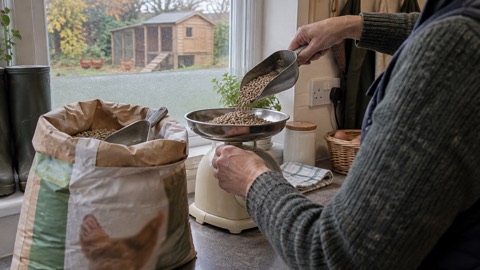
Hens that spend more time in the run depend on you for everything. Choose a complete food rather than a mixed one, so the feed contains all the necessary nutrients, and store it in a cool, secure and dry place to prevent it going off or spoiling4. A secure bin also keeps rats and mice out, which matters more in winter when rodents look for easy food.
Grit is not optional. Chickens have no teeth, so they need insoluble grit such as hard flint grit to grind and digest food. Oyster shell is a soluble grit that provides extra calcium, particularly important for laying hens for stronger eggshells4. Offer both separately and let the birds help themselves.
Winter changes the ration. Chickens eat more in colder months to generate body heat4, so keep feed available and watch that the flock is getting its share rather than being bullied off the feeder. They also sleep more in winter to conserve energy and are generally less active during the day4, which means less scratching and more dependence on what you provide.
Cold weather brings a second fox risk. Store food safely away from rats and mice, especially at night, and regularly check fences and hen house security, as hungry foxes are more daring and determined in winter2. The same pattern shows in advice for other outdoor pets: in winter foxes and badgers get hungrier and bolder, so hutches need to be sturdy enough to survive the attention of a determined predator13. Treat the darker months as the time to walk the fence line weekly.
Sick or dead birds: don't handle them while the bird flu prevention zone is in place
An Avian Influenza Prevention Zone is currently in place across the UK, and the RSPCA's advice is clear: don't touch or handle sick or dead birds. If you have to, thoroughly wash your hands immediately afterwards, keeping them away from your face or food4.
The prevention zone also sets out precautions for all poultry keepers, including pet hen keepers: cleansing and disinfecting equipment, vehicles and footwear; storing feed, water and bedding undercover; effective vermin control; keeping birds in a fenced-off area so they cannot access standing water; regularly disinfecting the coop and run; and discouraging wild birds from entering the area14. These are practical jobs, and most of them also help against foxes, because a tidy, fenced, vermin-controlled run is harder for any predator to exploit.
If avian influenza is confirmed in poultry or other captive birds, official control zones follow: a 3km protection zone and a 10km surveillance zone, or a 3km captive bird (monitoring) controlled zone15. In all disease control zones you must follow biosecurity rules, keep a record of anyone who transports or markets poultry or poultry eggs (with exemptions for table eggs), follow the rules for fresh meat, comply with biosecurity rules imposed by a veterinary inspector, not organise or attend bird gatherings, and not release game birds15.
For dead wild birds, arrangements differ by nation. In Northern Ireland, report dead wild birds, including swans, geese, ducks and gulls, using the DAERA Dead Wild Bird online reporting tool16. The same reporting route is set out in Northern Ireland public health guidance17. Do not handle the carcass while reporting it.
Heatstroke in an enclosed run and when to call a vet
A secure run can become too hot. Hens cannot sweat, and a covered, enclosed run with little shade traps heat in summer. Watch for the signs: open mouth breathing, wings and legs outstretched, reduced appetite and egg production, and staggering or falling over18. These symptoms can also indicate other health issues, so if heatstroke is suspected, call a poultry-friendly vet immediately for advice18.
While you wait, do what you can to cool the bird and the run: shade, ventilation and cool water. The principle vets apply to other animals is the same one to hold in mind: cool first, transport second19. For rabbits and rodents the RSPCA advises moving the animal to a cool, shaded place, wrapping it in a cool, damp towel and phoning the vet immediately20. Never plunge an overheated animal into cold water.
Prevention is simpler than treatment. Site the run so it has shade for part of the day, keep water fresh and available, and avoid shutting birds into a small, unventilated space in a heatwave. The Met Office's weather-ready advice is a useful prompt to plan ahead for extreme heat and cold rather than react21.
For general hen health, including mites, lice and worms, see Chicken Health: Mites, Lice, Worms and Common Illnesses. If you are bringing home rescue birds, the arrival checklist at Checklist for Bringing Home Rescue Hens sets out what to have ready before they arrive.
Sources (21)
- Chicken environment and enrichment, RSPCA, 2026
- Cold weather tips for hens, British Hen Welfare Trust, 2022
- Hen keeping starter guide, British Hen Welfare Trust, 2026
- Chicken health and welfare, RSPCA, 2026
- Choosing your chickens, Omlet, 2026
- Biosecurity for free range poultry, Poultry Club of Great Britain, 2026
- Housing, equipment and feed, Poultry Club of Great Britain, 2026
- Hen husbandry, British Hen Welfare Trust, 2026
- Dorset Chicken Coop, Chicken Coops Direct, 2026
- Dorset Coop & Double Run, Chicken Coops Direct, 2026
- Hen setup, British Hen Welfare Trust, 2025
- Caring for your coop, Chicken Coops Direct, 2026
- WeatherReady weather hacks, Met Office, 2026
- Avian influenza (bird flu), British Hen Welfare Trust, 2025
- Avian influenza, Public Health Agency Northern Ireland, 2026
- Caring for small pets in hot weather, Woodgreen, 2026
- Avian flu, Belfast City Council, 2026
- Summer care for rabbits and rodents, RSPCA, 2026
- Dogs die in hot cars, Scottish SPCA, 2026
- Dog first aid, RSPCA, 2026
- Winter care for birds, RSPCA, 2026
 Beekeeping Starter Equipment
 Pet Hens Starter Kit
 Bringing Home Rescue Hens
 Hay Bale Fires
 Livestock in a Heatwave
 Livestock Water Outage
 Sky Lanterns
 BeeBase Registration
 Broody Hen Hatching
 Cleaning a Chicken Coop
 Coop and Run Space for Hens
 Care for Ex-Battery Hens
 Reporting Foulbrood
 Daily Hen Feed Amounts
 Introducing New Hens