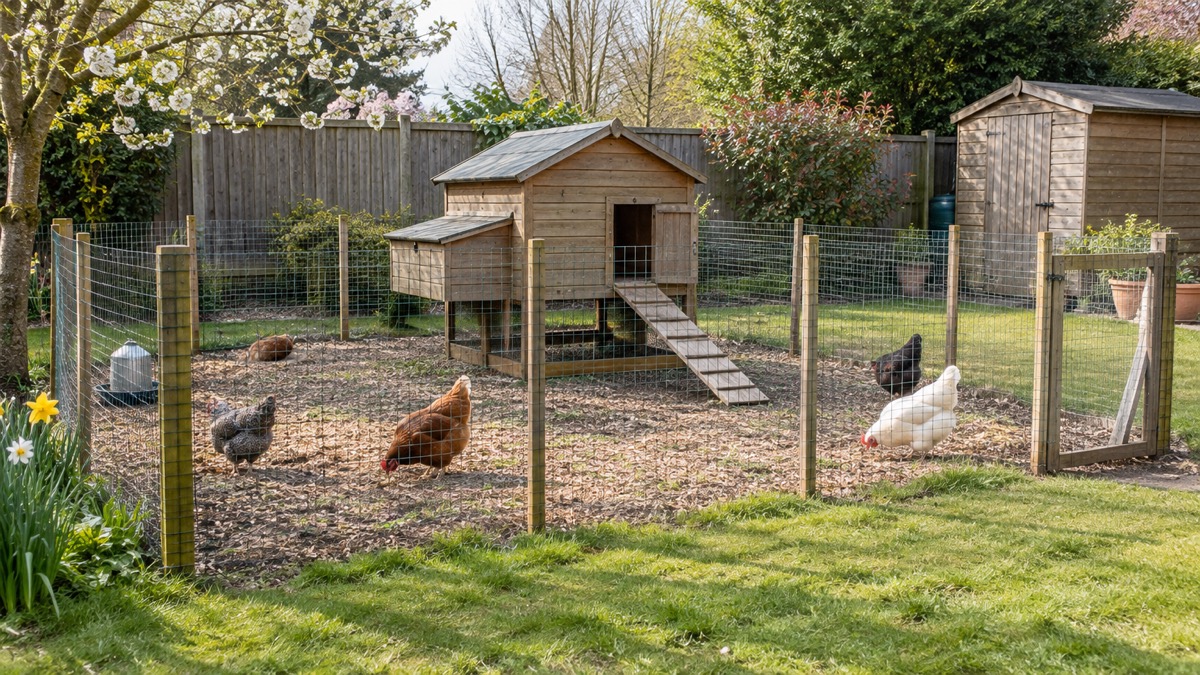
The short answer is that a hen needs two different amounts of room: one for the house at night and one for the run by day. Inside the hen house, the British Hen Welfare Trust asks for a minimum of 30 sq cm of floor space per hen1. During the day, the charity's rehoming rules ask for a minimum of 1 square metre of clear floor space per bird for ex-caged hens, and 2 square metres per bird for hens from other farming systems1.
Those are minimums, not targets. The same guidance says the more space you can offer, the better, and that clear floor space does not include the space under the coop or where drinkers and feeders will be placed, because that is not usable floor1. If you are setting up for the first time, the practical move is to buy a house and run sized for more birds than you plan to keep.
Hen house floor space: 30 sq cm per hen at night
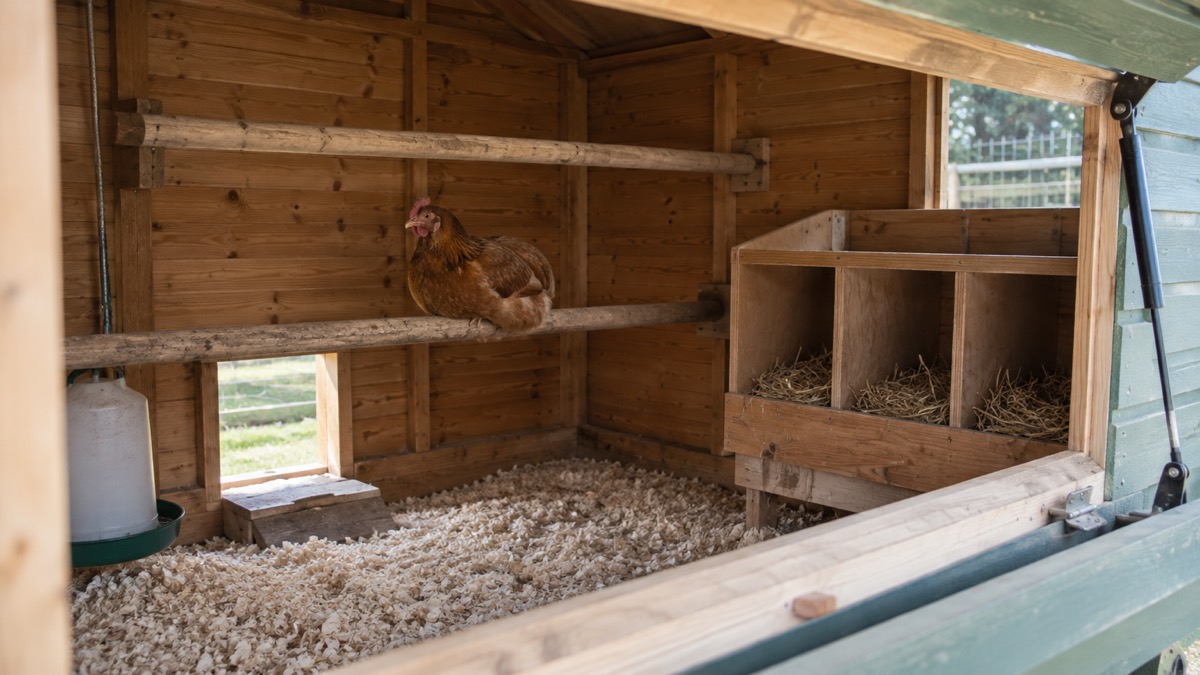
The 30 sq cm figure is the floor area each bird needs to settle and roost. Hens want to get up off the floor at night, and a crowded house leads to squabbling and to birds sleeping in the litter. The British Hen Welfare Trust repeats the 30cm squared per bird minimum in its adoption guidance, so it is the figure to design to6.
Clear floor space is the operative phrase. Space taken up by the coop's own structure underneath, or by drinkers and feeders, does not count towards it1. That means a house described as suitable for a certain number of birds may offer less usable room than the label suggests once you put a drinker in the corner.
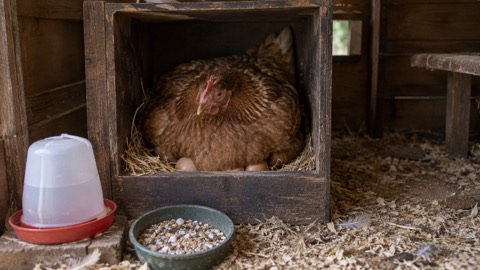
Nest boxes are a separate allowance. The RSPCA advises at least one box per five hens, with a minimum of two whatever the size of the group, and each individual box should be at least 30x30x30cm, draught-free and lined with clean, dry nesting material4. The Poultry Club adds that boxes belong in the lowest, darkest part of the house, because hens like to lay in secret places, and that communal boxes with no partitions are useful7.
The house itself should be ventilated, warm and dry, with a litter-covered floor, plenty of space, food and water, places to perch and nest boxes for laying8. Get those right and the house does its job: shelter at night, a dry place to lay, and somewhere to retreat from weather.
Keep at least two hens and size the coop and run for the flock
Hens are social animals, and the British Hen Welfare Trust recommends a minimum of three hens in a flock3. Keeping a single bird is not kind to the bird and makes the pecking order harder to settle. But the number you keep should not be the number you buy for.
The charity's advice is to buy a house that can accommodate more birds than you intend to get: if you want three hens, buy a house that can accommodate at least four5. Its adoption guidance goes further, suggesting that if you want four hens you buy a house for six, so you can be sure there is sufficient room6. For a coop marketed as housing 3 to 5 hens, the charity would recommend it as suitable for 3 ex-commercial hens1.
That gap between the label and the reality is the single most common sizing mistake. Crowding shows up as bullying, feather loss and stress, and the fix is more space rather than more nest boxes. If squabbles do break out, the charity's guidance is to give the hens more space and, where the ground is fenced and safe from predators, to let them free-range for distraction and stimulation so the pecking order settles more quickly6. With enough space, feed and water, those squabbles should stop after a couple of days or a few weeks at most6.
| What you are sizing | Minimum | Source |
|---|---|---|
| Floor space in the house | 30 sq cm per hen | British Hen Welfare Trust1 |
| Run space, ex-caged hens | 1 sq m clear floor per bird | British Hen Welfare Trust1 |
| Run space, other farm systems | 2 sq m per bird | British Hen Welfare Trust1 |
| Nest boxes | 1 per 5 hens, minimum 2 | RSPCA4 |
| Flock size | 3 hens recommended | British Hen Welfare Trust3 |
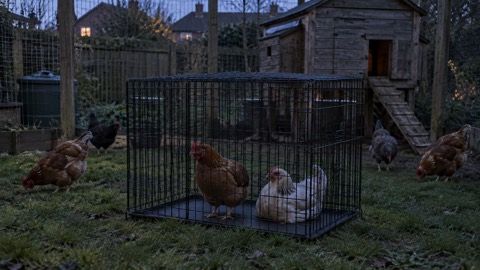
If you are bringing home rescue birds, there is a further condition: even if the hens will free-range most of the time, the charity asks that there is some kind of enclosure around the coop when they first arrive, so they become "homed" and learn where to eat, drink and go to bed1. Meeting the minimum spacing from the start reduces stress and bullying while the flock finds its feet.
Runs without grass: woodchip, grit and ground cover
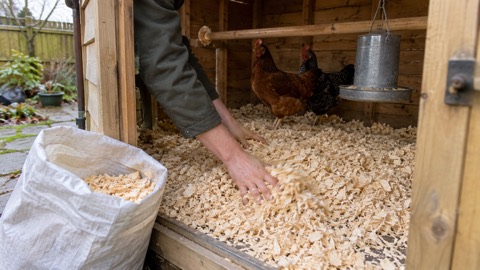
A run does not need a lawn, but it does need a surface that lets hens behave like hens. The RSPCA advises covering the flooring with dry material such as wood shavings or straw, which allows foraging, comfortable resting and dustbathing, and topping up or replacing it when needed9. Coops need regular cleaning and disinfection to remove parasites9.
Grit is part of the ground plan, not an optional extra. Chickens have no teeth, so they need insoluble grit, such as hard flint grit, to grind and digest food. Oyster shell is a soluble grit that provides extra calcium, particularly important for laying hens and stronger eggshells4. Oyster shell or limestone grit should be provided from four weeks before laying commences to help eggshell formation10.
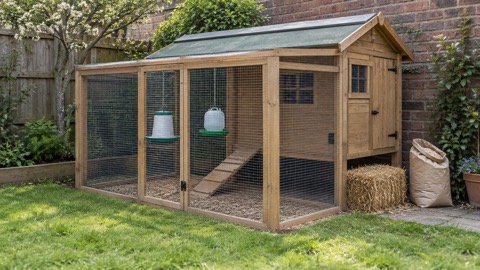
Be realistic about ready-made runs. The British Hen Welfare Trust warns that some wooden coops come with a small run attached which are not suitable for chickens, as they need much more space1. Product listings bear this out: one large run add-on is described as offering over 11 square feet of space, and another as an 11 square feet add-on run11. Eleven square feet is roughly one square metre, which is the daytime minimum for a single ex-caged hen under the charity's rules1. A run of that size is a shelter or a temporary pen, not the day-to-day living space for a small flock.
Worm control belongs with ground management. The charity advises a routine hen health plan with regular preventative worming, a ground sanitizer, picking up droppings regularly, changing bedding when soiled, and preventing chickens from accessing intermediate hosts13. Gapeworms illustrate why: female worms lay eggs in the trachea, which hatch and are either coughed up or swallowed before passing out in droppings, and the larvae are then eaten by earthworms and slugs which are in turn eaten by other hens13. Keeping the ground clean and the run from becoming a swamp interrupts that cycle.
Hot weather in a crowded run: heatstroke signs to watch for
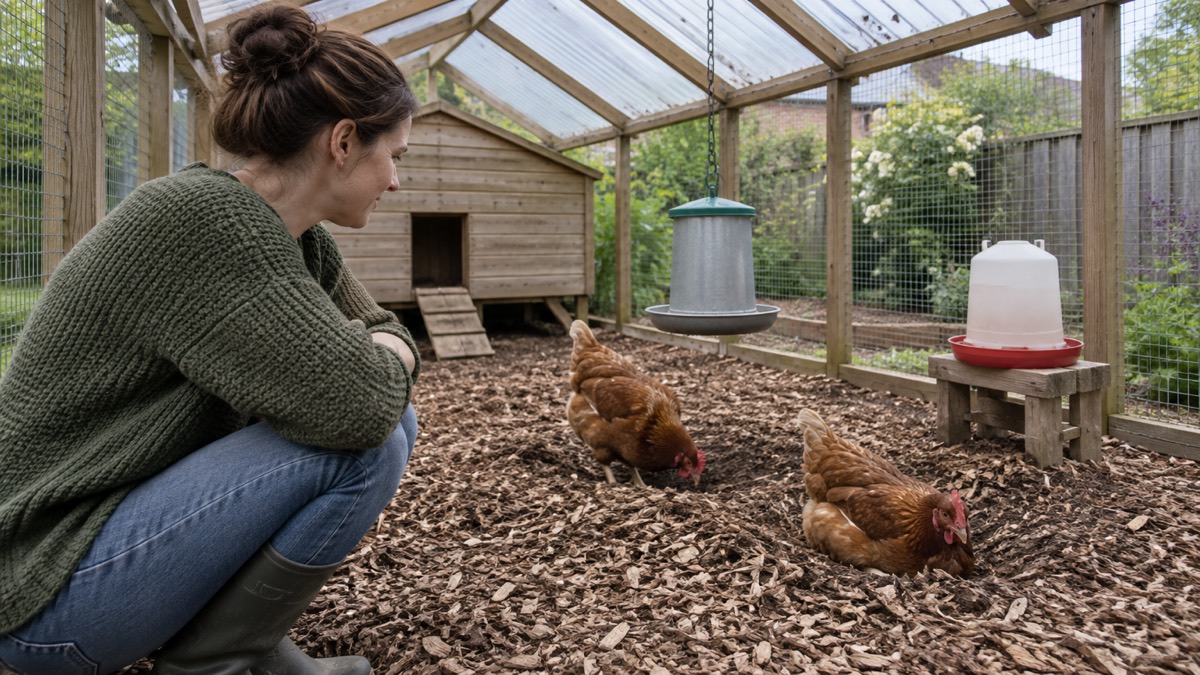
Crowding matters most in a heatwave. A run with too little shade and too many birds in it is where heat problems appear first, and hens show distress in ways you can learn to read.
Watch for open mouth breathing, wings and legs outstretched, reduced appetite and egg production, and staggering or falling over14. These are the poultry-specific signs. General signs of heatstroke in animals include heavy panting, restlessness and lack of coordination, and a fast heartbeat15. In people, heatstroke brings a high temperature at or above 40°C, confusion, lack of coordination, not sweating despite the heat, rapid breathing and loss of consciousness18. The same principle applies across species: avoid too much exertion when it is very hot, and treat fatigue as an early warning of heat stress19.
The practical response is shade, ventilation and space. A house that is ventilated, warm and dry in winter should not become an oven in July, so check that air moves through it and that the run has somewhere out of direct sun. Reduce crowding before the hot spell rather than during it, because moving birds around in high heat adds stress. Fresh water matters more than anything: the RSPCA notes that heated environments and dry air can lead to dehydration, so make sure animals always have access to fresh drinking water20.
If a bird is gasping, bring her into shade and cool air and ring the vet. Do not plunge a hot hen into cold water. Heat stress is easier to prevent than to treat, and the space allowance is the first line of defence.
Winter: hens sleep more and spend longer in the house
Hens do not shut down for winter, but they slow. Chickens sleep more in winter to conserve energy and are generally less active during the day8. The RSPCA describes the same pattern in pet birds: more time resting and napping, seeking out warmer areas, fluffing feathers and lower activity is normal as birds conserve energy and stay warm21.
That changes how the house is used. Birds spend longer inside, so the floor space allowance matters more, not less. The house needs to be ventilated, warm and dry, with a litter-covered floor, plenty of space, food and water, perches and nest boxes8. Damp and draughts are the enemies; sealed and stuffy is not the answer either.
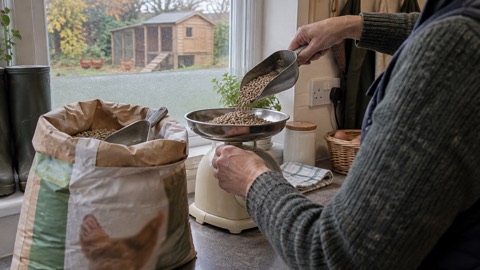
Feeding changes with the cold. Chickens eat more in colder months to generate body heat8. An average-sized adult hen needs 100 to 120g of feed per day5, so check that the ration keeps pace with appetite as the temperature drops. The RSPCA's general winter guidance for pets notes that some animals may want to eat more to bulk up and preserve body temperature and may drink less, but that dry indoor air and heated environments can lead to dehydration, so fresh drinking water should always be available20.
Egg production follows the season. Laying is higher in spring and summer, and slows in autumn as birds prepare for colder weather, unless they are selectively bred laying hens kept indoors with artificial lighting8. Expect fewer eggs through the dark months and do not read it as illness.
Sick or dead birds: what not to touch and who to call
An Avian Influenza Prevention Zone is currently in place across the UK, and the advice that follows from it is blunt. Do not touch or handle sick or dead birds. If you have to, thoroughly wash your hands immediately afterwards, keeping them away from your face or food9. The same warning is repeated for pet ducks and geese while the zone is in place24.
That is the first rule, and it applies before any other consideration. Report concerns through the official routes rather than handling a casualty yourself.
Spotting illness early is the other half of the job, and hens make it hard. To maintain her place in the pecking order, a hen will disguise the fact that she is not feeling well, and feathers disguise thinness, so regular handling is the only way to tell if a bird has lost weight25. Pick each bird up now and then, feel the breast muscle and check the crop. The crop sits at the bottom of the neck, should fill up when she eats and slowly deflate as food passes through26. First thing in the morning it should be empty, then gradually increase in size as she eats, with feed passing into the gizzard overnight where it mixes with grit and is ground down27.
A few conditions are worth knowing by name. A soft shell egg can get stuck within the hen, who may show signs of distress by staying in the nest box for a prolonged period but failing to lay28. A prolapse needs prompt attention, and the charity's advice to encourage a hen to stop laying and give the vent time to recover is to remove all pellets and crumble and feed a mixed corn diet only29. Neither is a do-it-yourself diagnosis: ring a poultry-friendly vet.
For a low-ranking hen being bullied with no space to separate her, the charity suggests taking her out three or four times a day to eat and drink on her own for about 15 minutes, using Vaseline on her comb and replenishing it regularly, and progressing the merge by encouraging her to feed with the others while staying close6.
If you keep a flock, the wider routine is covered in Chicken Health: Mites, Lice, Worms and Common Illnesses and Keeping Chickens: Housing, Feeding and the Law. For the kit itself, see What You Need to Keep Pet Hens, and for birds straight from a rescue, Looking After Newly Adopted Ex-Battery Hens.
Sources (29)
- Hen setup and space requirements, British Hen Welfare Trust, 2025
- Hen keeping starter guide, British Hen Welfare Trust, 2026
- Hen keeping starter guide, part 2, British Hen Welfare Trust, 2026
- Chickens: environment, RSPCA, 2026
- Hen adoption FAQs, British Hen Welfare Trust, 2026
- The pecking order, British Hen Welfare Trust, 2026
- Housing, equipment and feed, The Poultry Club of Great Britain, 2026
- Chickens, RSPCA, 2026
- Chickens: health, RSPCA, 2026
- Hatching, rearing and care of young poultry, The Poultry Club of Great Britain, 2026
- Kent chicken coop with run, Chicken Coops Direct, 2026
- Devon hen house with run, Chicken Coops Direct, 2026
- Worms, British Hen Welfare Trust, 2026
- How to care for small pets in the hot weather, Woodgreen Pets Charity, 2026
- Hot weather and its impacts, Met Office, 2026
- Tips for keeping older people cool, Met Office, 2026
- Staying well in hot weather, Berkshire Healthcare NHS Foundation Trust, 2026
- Red heat health alert briefing for care settings, Somerset Council, 2026
- Hot weather and its impacts, Met Office, 2026
- Pets in winter, RSPCA, 2026
- Birds in winter, RSPCA, 2026
- Hen husbandry, British Hen Welfare Trust, 2026
- Avian influenza (bird flu), British Hen Welfare Trust, 2025
- Ducks and geese, RSPCA, 2026
- Handling and welfare guidelines, The Poultry Club of Great Britain, 2026
- Hen examination guidelines, British Hen Welfare Trust, 2025
- Pendulous crop, British Hen Welfare Trust, 2026
- Soft shell eggs, British Hen Welfare Trust, 2026
- Prolapse, British Hen Welfare Trust, 2026
 Beekeeping Starter Equipment
 Pet Hens Starter Kit
 Bringing Home Rescue Hens
 Hay Bale Fires
 Livestock in a Heatwave
 Livestock Water Outage
 Sky Lanterns
 BeeBase Registration
 Broody Hen Hatching
 Cleaning a Chicken Coop
 Care for Ex-Battery Hens
 Reporting Foulbrood
 Fox-Proofing a Chicken Coop
 Daily Hen Feed Amounts
 Introducing New Hens