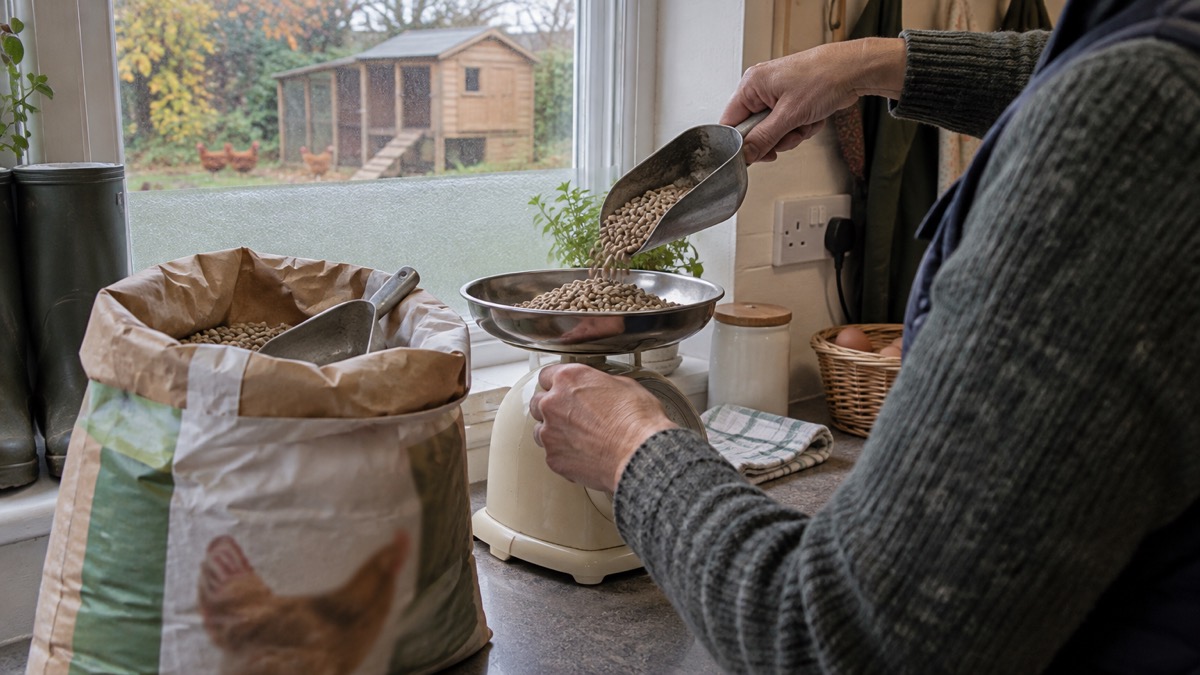
An adult hen eats about 100 to 120g of layers feed a day, according to the British Hen Welfare Trust1. The RSPCA puts the figure at around 120g a day for an adult chicken, rising to as much as 180g in winter, when birds eat more to generate body heat2. For a small flock, that is the number to plan around: a bag of feed, a scoop, and a rough idea of how much your birds actually clear each day.
The amount is not fixed. It depends on the size of the bird, the time of year, whether she is laying, and what else she has access to. Large fowl, the bigger pure breeds, will eat about 4 to 6oz (110g to 170g) a day according to their size, the Poultry Club states3. A bantam eats less. A hen in full lay eats more than one that has stopped for the winter.
This page sets out how much to feed, how to store enough for a flock, what grit and oyster shell do, what hens must never be given, and what to do when a hen goes off her food. It is written for someone keeping a few hens in the garden, not a commercial flock.
How much feed an adult hen needs each day
The working figure for an average adult hen is 100 to 120g of feed a day, and the British Hen Welfare Trust gives it in both its starter guide and its husbandry guidance1. The RSPCA's figure is a little higher, around 120g a day of layers pellets for an adult chicken, and it is the one to use if you want a round number to scoop by2.
That daily ration should be a complete layers feed, not scraps and corn. A hen filling up on treats will eat less of the pellets that carry her protein, vitamins and minerals, and laying suffers. The RSPCA notes that commercial laying hens are fed a grain based diet with no animal proteins or hormones allowed, plus minerals and vitamins and a formulated diet to meet their needs and age8. A bag of layers pellets or crumble does that job for a backyard flock.
How much you actually put in the feeder depends on the bird. A heavy pure breed at the top of the range will clear 170g; a bantam will eat well under 100g. Watch what is left in the feeder rather than following the bag. If feed is being scattered and wasted, the ration is too generous or the feeder is the wrong sort.
| Bird | Feed a day | Source |
|---|---|---|
| Average adult hen | 100 to 120g | British Hen Welfare Trust1 |
| Adult chicken (RSPCA figure) | around 120g, up to 180g in winter | RSPCA2 |
| Large fowl | about 110g to 170g, by size | Poultry Club3 |
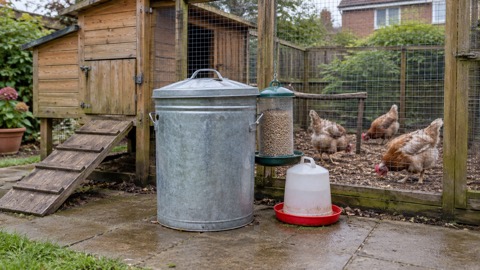
For a flock, multiply by the number of birds. Three average hens need roughly 300 to 360g a day between them, which is the sort of sum worth doing before you buy a bag, so you know how long it will last and how much to keep in store. Store feed in a secure bin inside the hen house or a shed or garage, the British Hen Welfare Trust advises, to prevent access by wild birds and vermin, and control rodents because they can be a threat to hens7.
Hens eat more in winter to keep warm
Chickens eat more in the colder months to generate body heat, the RSPCA states, and that is why the winter figure rises to as much as 180g a day2. The extra food is fuel for keeping warm, not greed. A hen that is burning energy to stay warm in an unheated coop will get through more pellets than the same bird in July.
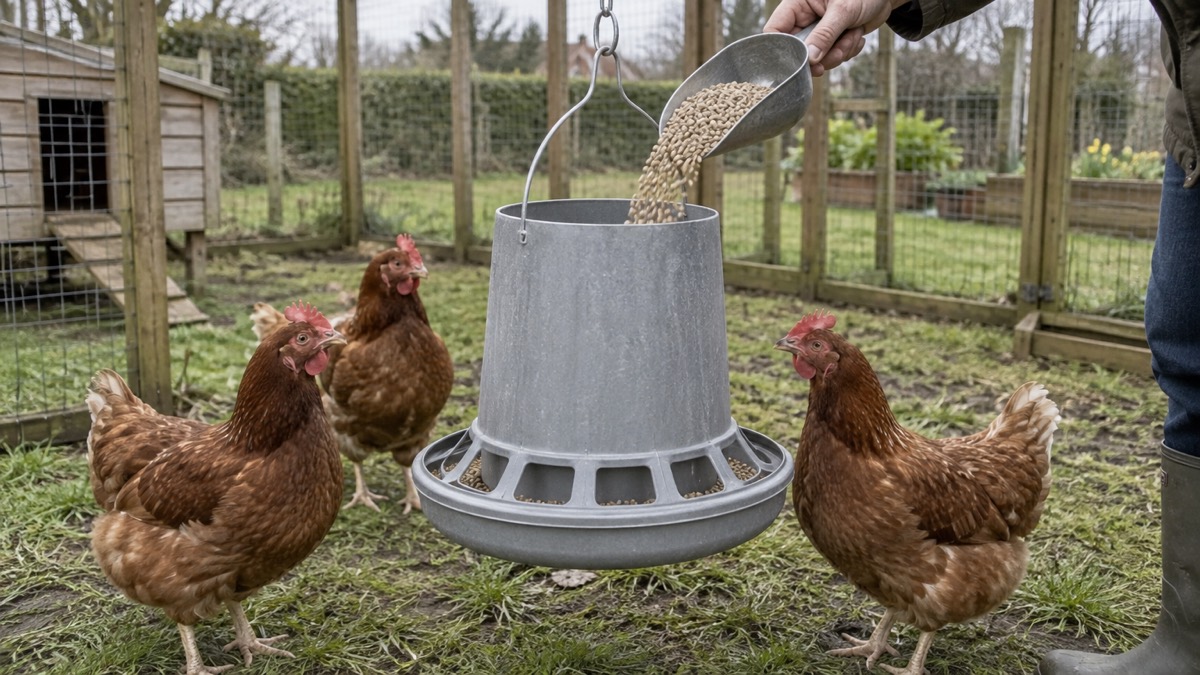
Winter changes behaviour as well as appetite. Chickens sleep more in winter to conserve energy and are generally less active during the day8. A less active bird may look as though she is eating less, but the cold is doing the work. Keep the feeder topped up and do not ration a hen in cold weather on the assumption she is being greedy.
The same principle applies to people, and the public health advice for householders in cold weather is a useful reminder of why warm food matters: official guidance for keeping warm in winter recommends at least one hot meal a day and regular hot drinks, because eating regularly helps keep energy levels up9. For hens, the equivalent is a reliable supply of a complete feed through the cold months, with the ration adjusted upward as the temperature drops.
A few practical points for the winter feeder:
- Expect the bag to go down faster between November and February, and buy ahead rather than being caught short.
- Keep the feed dry and the bin sealed, because damp feed spoils and vermin find it.
- Do not cut the ration to save money in winter; the hen will lose condition and laying will stop.
- Watch water as closely as feed, because a hen eating dry pellets needs water to digest them.
If you are building up a store of feed for a flock, the winter figure is the one to plan against. A hen eating up to 180g a day through the coldest weeks will get through more than a kilo a week on her own, so a small flock can use a sack quickly. Rotate the store so older feed is used first, and keep it somewhere dry and cool.
Grit and oyster shell: what each one does
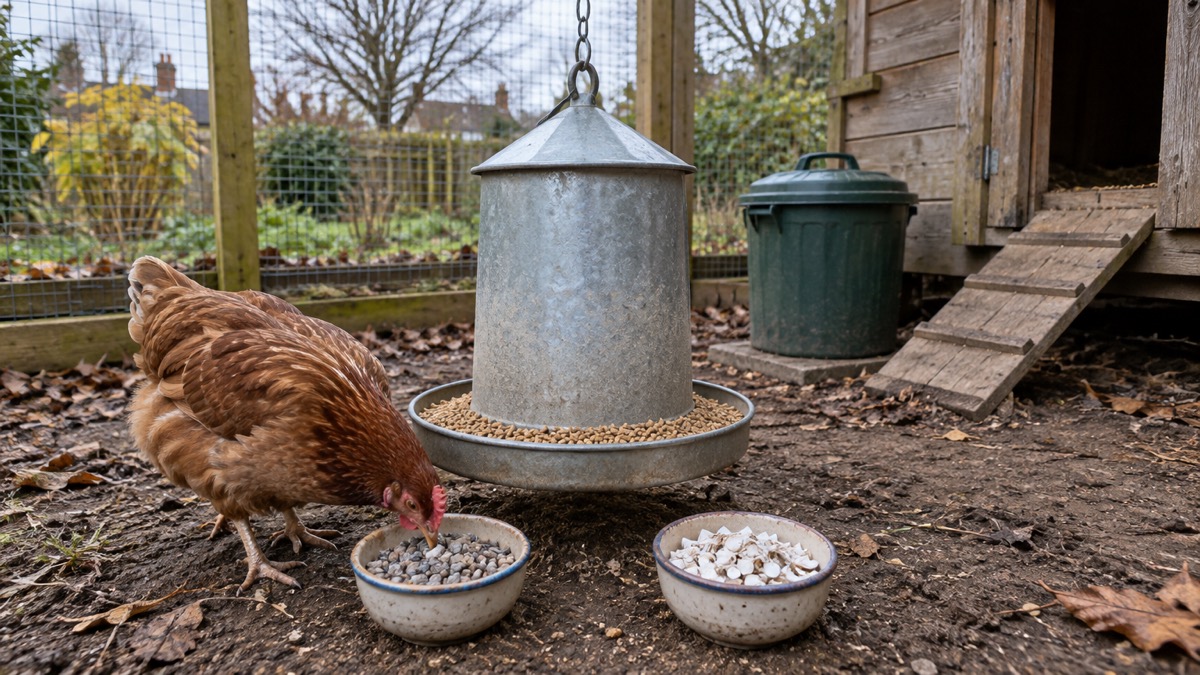
Hens have no teeth, so they need help grinding their food. The RSPCA explains that chickens need insoluble grit, such as hard flint grit, to grind and digest food, and oyster shell as a soluble grit providing extra calcium, particularly important for laying hens for stronger eggshells4. The two do different jobs and a flock needs both.
Insoluble grit, the flint, stays in the gizzard and grinds food down. The Poultry Club advises that water and flint grit should be available at all times from hatching onward, because flint grit assists the gizzard in grinding up food, especially hard grain3. Oyster shell is the calcium source. The Poultry Club states that from four weeks before laying commences, oyster shell or limestone grit should be provided ad lib to help with egg shell formation3.
| Product | What it does | When to provide |
|---|---|---|
| Insoluble flint grit | Grinds and digests food in the gizzard | At all times, from hatching3 |
| Oyster shell or limestone grit | Soluble calcium for strong eggshells | From four weeks before laying, ad lib3 |
Soft shelled eggs are the clearest sign that calcium is short. The British Hen Welfare Trust's advice for soft shell eggs is to provide oyster shell and or mixed grit, soluble and non-soluble11. If a hen is laying thin or shell-less eggs, check that both are on offer before assuming something more serious is wrong.
Offer each in its own small bowl rather than mixing them into the feed, so birds can take what they need. A hen will regulate her own intake if the bowls are kept topped up. Neither is a substitute for a complete layers feed, which already carries some calcium; they are a top-up for the birds that need more.
What chickens must never be fed
Some foods are illegal to give, and some are simply harmful. The RSPCA is clear that it is illegal to feed kitchen scraps to chickens because of the risk of disease4. That rule catches many new keepers by surprise, because scraps feel like the natural thing to do with a few hens in the garden. They are not.
The British Hen Welfare Trust adds that hens are not waste disposal units and should not be fed bread, which can ferment in the crop causing sour crop, nor potato peelings5. The maker Omlet lists foods to avoid entirely: avocado, chocolate, onions, garlic, raw beans, nightshade plants such as potato and tomato leaves, and mouldy or spoiled foods6.
A hen that has eaten something she should not have may show it in her crop. The crop sits at the bottom of the neck, should fill up when she eats and slowly deflate as food passes through to the stomach12. First thing in the morning the crop should be empty, and will gradually increase in size as the hen eats; feed passes out of the crop into the gizzard overnight where it mixes with grit and is ground down13. Hens are not waste disposal units, and should not be fed bread, which can ferment in the crop causing sour crop, nor potato peelings3.
Keep the feed itself clean and dry, and store it where wild birds and rodents cannot get to it7. A secure bin is part of the same job as keeping scraps out of the run.
When a hen goes off her food
A hen that stops eating is telling you something. Hens hide illness well: in order to maintain her place in the pecking order, a hen will disguise the fact that she is not feeling well, and feathers disguise thinness, so regular handling is the only way to tell if a bird has lost weight, the Poultry Club warns14. By the time a hen looks unwell, she may have been off her food for days.
Start by checking the crop. In a healthy hen the crop will be roughly the size of a small tangerine when full, and it should be empty first thing in the morning15. If it is not, the problem may be an impacted crop, and the advice is to isolate her from food sources15. A pendulous crop, where the crop hangs and does not empty properly, is another possibility worth knowing about13.
Other causes of a lost appetite include parasites and illness. Severe northern fowl mite infestations can remove as much as 6% of the blood volume of a hen per day, which will leave her weak and off her feed10. Worms are another drain on condition, and the British Hen Welfare Trust advises a routine health plan with regular preventative worming, a ground sanitiser, picking up droppings regularly, changing bedding when soiled, and preventing chickens from accessing intermediate hosts16. There is only one licensed wormer, usually advised to be given three to four times per year either as a powder mixed in normal feed or as a pre-medicated feed17.
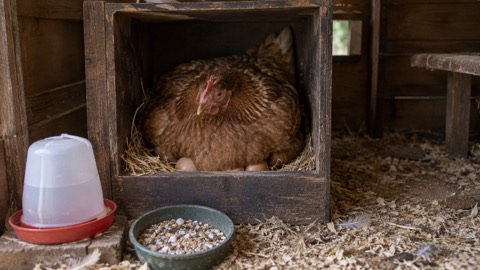
A broody hen is a special case. She will sit tight and may only leave the nest for short periods, about 20 minutes, to get feed, drink and have a run around18. If you are letting her sit, remove her from the nest box for a few hours every day to make sure she has something to eat and drink19. A hen that is broody but not eating at all is not normal, and worth a closer look.
If a hen is off her food and you cannot find a simple cause, handle her, check her crop and weight, look for mites and worms, and take advice from a vet who sees poultry. A hen that has stopped eating will go downhill quickly, so do not wait a week to see if she picks up.
Bird flu and sick birds: what to do
Bird flu, or avian influenza, is the illness to know about if you keep poultry. The symptoms in chickens include loss of appetite, lethargy, coughing, sneezing or gurgling sounds, nasal or eye discharge, a swollen head, discolouration of the wattles and comb often turning blue, reduced egg production, loss of coordination, tremors or twisting of the head and neck, and sudden death sometimes with no prior symptoms21.
If you have any concerns about the health of your birds and think they could have bird flu, contact the Animal and Plant Health Agency on 03000 600 704, Scottish Borders Council advises22. Do not handle sick or dead birds. Due to the Avian Influenza Prevention Zone currently in place across the UK, do not touch or handle sick or dead birds; if you have to, thoroughly wash your hands immediately afterwards, keeping them away from your face or food4.
Good biosecurity starts with the feed store. Keep the feed bin secure inside the hen house or a shed or garage to prevent access by wild birds and vermin, and control rodents because they can be a threat to hens7. Wild birds are the main route by which bird flu reaches a backyard flock, so keeping them off the feed and out of the run matters.
Buying healthy hens and keeping a flock
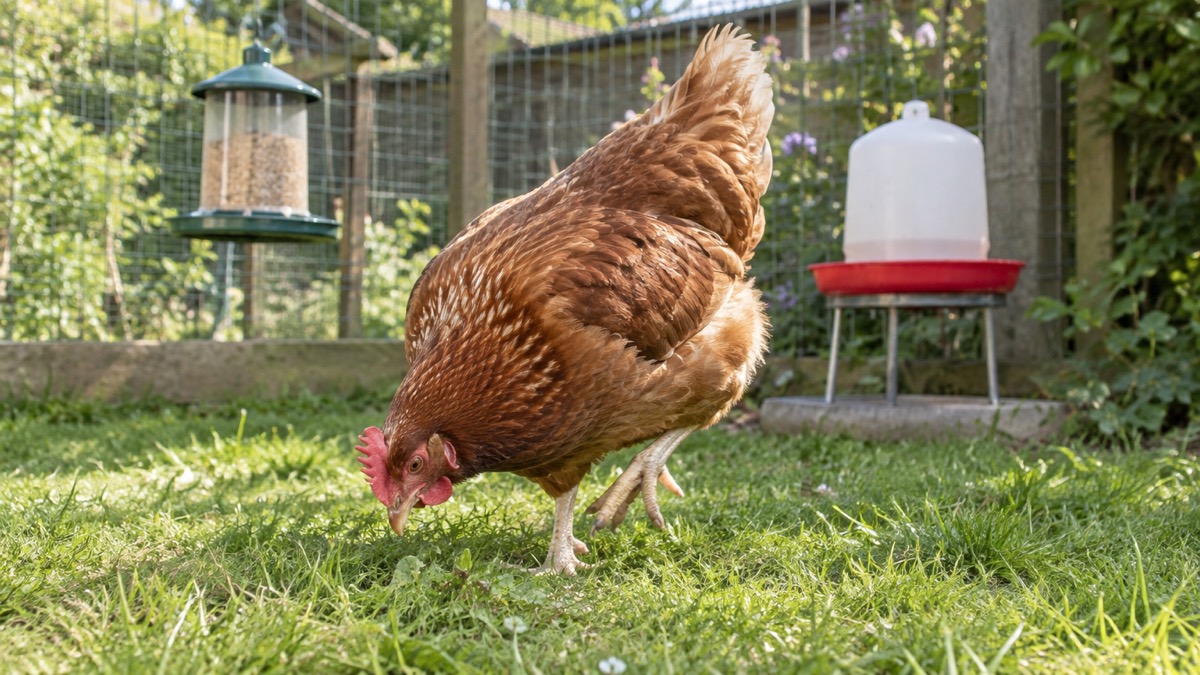
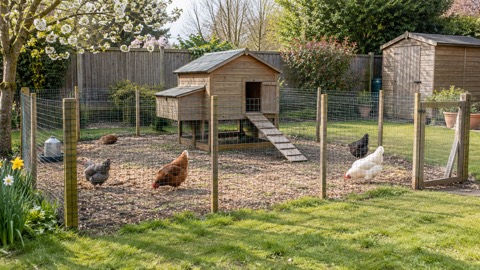
Before you bring birds home, decide how many. Chickens are social creatures, and the British Hen Welfare Trust recommends a minimum of three hens in a flock23. One maker advises being prepared to get at least two chickens24. Either way, a single hen on her own is not kind. Space matters as much as numbers: hens from most farming systems need a minimum of 2 square metres per bird by day, plus ideally the opportunity to free range25.
When you go to buy, watch the whole flock for a few minutes before picking individuals, because a flock with a couple of sickly birds is likely to have a disease or parasite problem24. A healthy hen should be busy and active, scratching the ground, feeding and drinking well though not excessively, and preening12. Check the crop: it should be empty first thing in the morning and fill as she eats15.
If you are adding to an existing flock, keep new hens separate but within sight and sound of the existing birds for a week to ten days, the British Hen Welfare Trust advises7. That gives them time to settle and lets you watch for illness before they mix.
Egg laying follows the seasons. It is higher in spring and summer, and slows in autumn as chickens prepare for colder weather, unless they are selectively bred laying hens kept indoors with artificial lighting8. A hen that stops laying in October is behaving normally, not failing. Laying hens have a working life of around 20 months, and commercial egg laying hens reach an average of 18 months to two years of age before their egg production slows8.
For more on housing, feeding and the law, see keeping chickens, and for illness and parasites see chicken health. If you are bringing home rescue birds, the checklist for bringing home rescue hens and the guide to looking after newly adopted ex-battery hens set out what to do in the first days. Space and housing are covered in how much coop and run space hens need, and a full kit list is in what you need to keep pet hens.
Sources (25)
- Hen Keeping Starter Guide, British Hen Welfare Trust, 2026-06-01
- Chicken Health, RSPCA, 2026-11-04
- Hatching, Rearing and Care of Young Poultry, Poultry Club, 2026-11-04
- Chicken Environment, RSPCA, 2026-10-29
- Feeding Your Hens, British Hen Welfare Trust, 2024-11-18
- Feeding Chickens, Omlet, 2026-11-04
- Hen Husbandry, British Hen Welfare Trust, 2026-06-01
- Chickens, RSPCA, 2026-11-04
- Keeping Warm in Winter, Derbyshire County Council, 2026-10-29
- Northern Fowl Mite, British Hen Welfare Trust, 2026-11-04
- Soft Shell Eggs, British Hen Welfare Trust, 2026-11-04
- Hen Examination Guidelines, British Hen Welfare Trust, 2025-10-30
- Pendulous Crop, British Hen Welfare Trust, 2026-11-04
- Handling and Welfare Guidelines, Poultry Club, 2026-11-04
- Impacted Crop, British Hen Welfare Trust, 2026-11-04
- Worms, British Hen Welfare Trust, 2026-11-04
- Hen Health FAQs, British Hen Welfare Trust, 2025-03-31
- Natural Incubation, Omlet, 2026-11-04
- Common Chicken Problems, Omlet, 2026-11-04
- How to Care for Small Pets in the Hot Weather, Woodgreen, 2026-09-02
- Bird Flu: All You Need to Know, Woodgreen, 2026-05-15
- Avian Influenza, Scottish Borders Council, 2026-10-29
- Hen Keeping Starter Guide, British Hen Welfare Trust, 2026-10-22
- Choosing Your Chickens, Omlet, 2026-11-04
- Hen Setup, British Hen Welfare Trust, 2025-10-30
 Beekeeping Starter Equipment
 Pet Hens Starter Kit
 Bringing Home Rescue Hens
 Hay Bale Fires
 Livestock in a Heatwave
 Livestock Water Outage
 Sky Lanterns
 BeeBase Registration
 Broody Hen Hatching
 Cleaning a Chicken Coop
 Coop and Run Space for Hens
 Care for Ex-Battery Hens
 Reporting Foulbrood
 Fox-Proofing a Chicken Coop
 Introducing New Hens