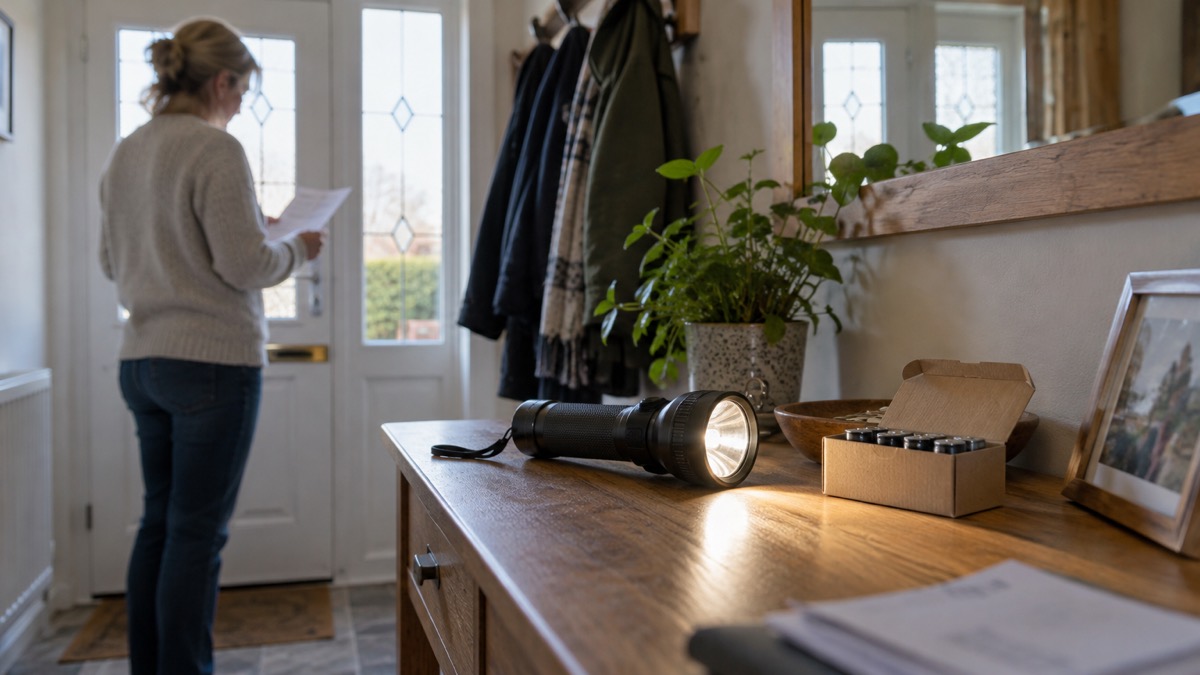
A bright torch beam is uncomfortable to look at, and torch makers tell you not to shine it into anyone's eyes. If a beam catches your own eye, look away immediately. That is the whole of the eye advice: no official source in this guide says a torch beam causes lasting harm, and none gives a safe distance to keep. What the guidance does say, repeatedly, is that a torch is the safest light to rely on in a power cut, and that the real hazards around torches are the batteries inside them and the candles people use instead.
So the practical answer for a household is this. Keep a battery or wind-up torch somewhere you can reach in the dark, with spare batteries beside it, and make sure everyone in the home knows where it lives1. Point the beam at the floor or a wall rather than at faces. Teach children the same, and keep small batteries away from them. Keep a torch handy for emergencies, and never use lighted candles3.
Don't look straight into a bright torch beam
The instruction from the makers is blunt. NEBO, in the safety warnings on its product pages, states: "Do not shine the light directly in someone's eyes." The same warning adds that if the beam shines directly in your eye, you should look away immediately, and that you should not use magnifying instruments that could concentrate the beam4. That is a maker's instruction for its own products, and it is the closest thing to a formal rule on torch beams in this guide.
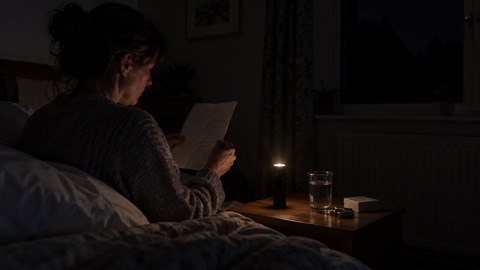
Why does it matter, if no lasting harm is recorded? Because a dazzled person is a person who cannot see their footing. In a power cut the household is moving through a dark house, often on stairs, often carrying something, sometimes helping an older relative. A beam in the face at that moment is a trip or a fall waiting to happen. Point the light down and to one side, and sweep the floor ahead of the person rather than their face.
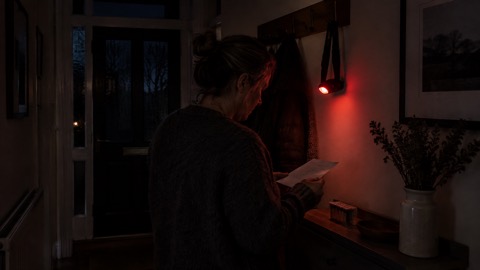
There is a second reason to keep the beam low, and it comes from fire safety. The Northern Ireland Fire and Rescue Service advises reading instructions carefully using a torch, and never using a naked flame to see by11. A torch held close to what you are reading, angled away from your eyes, does that job without bringing a flame into a dark room.
Where to keep a torch in an emergency
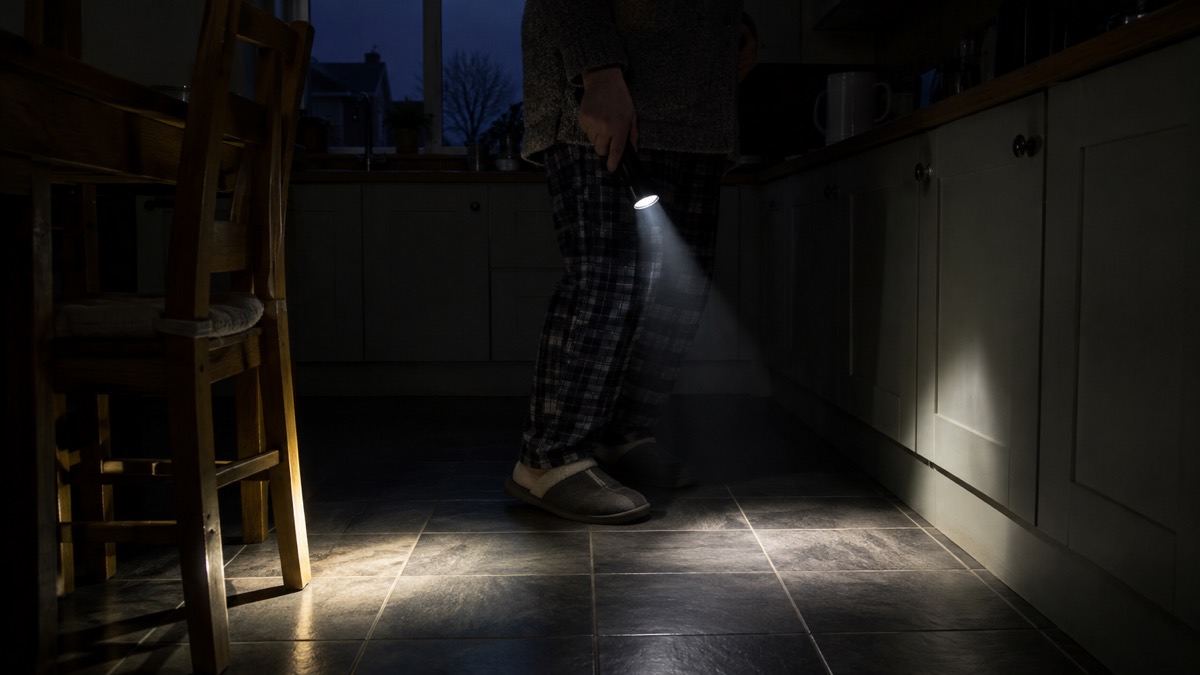
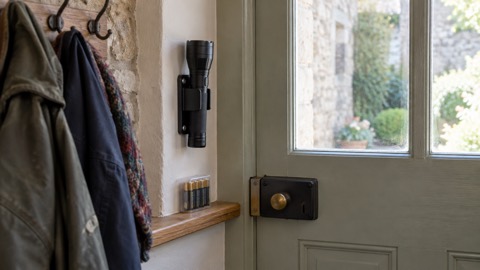
The single most useful thing you can do is decide now where the torch lives, and tell everyone. The Isle of Anglesey guidance is to store a battery or wind-up torch somewhere you can access easily, so you can use it to check on the fuse box and make your way around the house safely5. Wiltshire and Swindon's preparedness advice puts it the same way: keep a torch to hand, know where it is in your home, and know how you would put your hands on it12.
The Horsted Keynes parish power cut guidance adds the household detail that makes the difference: make sure everyone in your home knows where the torches are kept, so the nearest person can retrieve them and then safely help others13. That is the test. If the power went now, would the person nearest the kitchen know where to look?
A few placements work well for most homes:
- Beside the bed, so you are not feeling for a light switch in an unfamiliar dark.
- In the hall or by the front door, on the route you would use to leave.
- Near the fuse box, so you can see what you are doing if a circuit trips.
- On every floor of the house, in an accessible place, with extra batteries if required14.
Battery-powered or wind-up: the safest torch to rely on
Northern Power Grid's power cut guidance is direct: "a battery-powered or wind-up torch is the safest option"1. The UK government's preparedness campaign says the same in its power cut advice: keep a battery or wind-up torch and spare batteries at home, because torches are safer than candles2. Electricity North West adds the practical note to keep a battery-operated or wind-up torch somewhere easy to find16.
The two types suit different households, and the choice is about circumstance rather than brand.
| Type | What it does for you | Who it suits |
|---|---|---|
| Battery torch | Works instantly, brightness and run time set by the batteries you keep12 | Most homes, provided you store spares with it |
| Wind-up torch | No batteries to run flat; you wind it when you need light1 | Homes that would forget to check batteries, or as a second light |
| Battery-powered candle or LED light | Almost no fire risk, and reusable17 | Rooms where you want a steady glow rather than a beam |
The Anglesey guidance makes the case for battery-powered candles plainly: the safest way to use candles is to buy battery-powered versions, which have almost no fire risk, last longer and are better for the environment because you can replace, recycle or recharge the battery and reuse the candle17. If what you want is atmosphere rather than a beam, that is the safer route.
For a household deciding between a hand torch, a head torch and a lantern, the differences are about hands and rooms rather than safety. A head torch leaves both hands free for the fuse box; a lantern lights a room rather than a spot. Our guide to torches and how to choose one sets the types out side by side.
Spare batteries: keep them with the torch
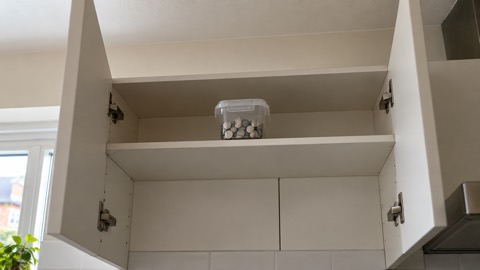
Every set of official instructions in this guide pairs the torch with spare batteries. Northern Power Grid says to keep a torch with spare batteries in an accessible location7. National Grid's planned interruption advice says to keep a torch handy and make sure you check its batteries18. Surrey County Council says to use torches and make sure that you have spare batteries8. NIE Networks, for Northern Ireland, says to keep a torch and spare batteries in an easily accessible place8.
The point is not stockpiling. It is that a torch with a flat battery is a dark house. Check the batteries when you check the torch, and keep the spares in the same place so nobody has to hunt for them.
Lithium batteries need a little more care. The London Fire Brigade's fire safety booklet advises keeping an eye out for warning signs that a battery might be failing and becoming a fire risk19. Fire Scotland's guidance on lithium-ion batteries says that when storing products that use them, such as e-bikes or e-scooters, you should avoid keeping them in escape routes or communal areas, because in a fire they could block people from leaving the building safely20. The same principle applies to any spare lithium cells you keep for a torch: store them sensibly, not on the stairs.
Our guides to torch batteries and charging and storing rechargeable torches safely go further into types and care.
Using a torch safely around children and others
A torch is one of the few pieces of emergency kit a child can hold safely, and fire services use that. The Northern Ireland Fire and Rescue Service advises that children are kept visible by carrying glow sticks or torches11. That is a positive use: a child with a torch is a child who can be seen and can see.
The teaching that goes with it is the same teaching fire services give about matches, adapted to light. The Northern Ireland Fire and Rescue Service tells children to tell a grown up if they see matches or lighters lying around21. Wiltshire and Swindon's advice for children includes keeping matches and lighters well out of reach where there are children around22. A torch sits on the safe side of that line, but the habit of asking a grown-up before using equipment is worth keeping.
For the adults, the rules that matter are simple:
- Do not shine the beam in faces, including a child's, and teach them the same4.
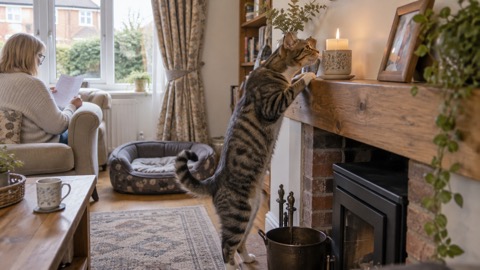
- Keep lit candles out of reach of children who may want to play with them, and out of reach of animals who may knock them over23. Better still, do not light them.
- Never leave children alone with lit candles24.
- Supervise children and pets around anything burning, and use fire guards25.
"Do not shine the light directly in someone's eyes."
A head torch deserves its own note, because it points wherever the wearer looks. The maker's instruction is the same: do not shine the light directly into anyone's eyes, and look away immediately if the beam catches your own26. When you are talking to someone, tilt the lamp down to the floor. Our guide to torches, candles and children covers the household routines in more detail.
Torch or candle: why the guidance keeps repeating itself
The reason official advice returns to torches so often is that the alternative is a fire risk in the dark. Dorset and Wiltshire Fire and Rescue Service says it is safest to avoid using candles at all and choose safer alternatives such as battery-powered lights9. Mersey Fire advises that the safest way to enjoy candles is to use LED battery-operated ones instead, making sure the batteries cannot be accessed by children or pets27. The Northern Ireland Direct guidance for storms and heavy rain says to preferably use a torch, oil or gas lamp as a source of light rather than candles28.
Wiltshire and Swindon's electricity guidance sums up the trade-off: candles can be used, but they present a fire hazard, so it is best to stick with torches12. North Yorkshire Fire and Rescue Service, writing for caravans and camping, goes further: always keep a torch handy for emergencies and never use lighted candles29.
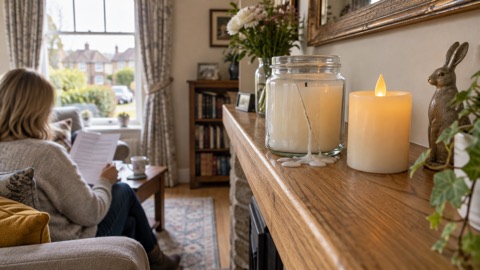
If you do keep candles for a power cut, the fire service rules are not optional. Place candles in sturdy holders, keep them away from flammable materials, and never leave them unattended30. Do not lean across candles, because you could set fire to your clothes22. Our candle fire safety guide and the candle safety checklist set these out in full.
Where to get help and what to check before winter
A torch is cheap insurance, and the checks take minutes. Before winter, walk the house and confirm each torch is where you think it is, that it switches on, and that the spare batteries are with it. The government's Be Ready campaign lists torches as safer than candles in its emergency checklist31, and the Scottish Government's Ready Scotland emergency kit advice includes a torch and spare batteries14. The same pairing appears in the UK government's power cut guidance for England, Scotland, Wales and Northern Ireland2.
If you have older relatives, the Wiltshire and Swindon advice is to check they know where they could find their torch or wind-up lantern so they can move around safely12. Our guide to lights for older and disabled people covers the wider arrangements, including the Priority Services Register that network operators keep for households that need extra help in a power cut.
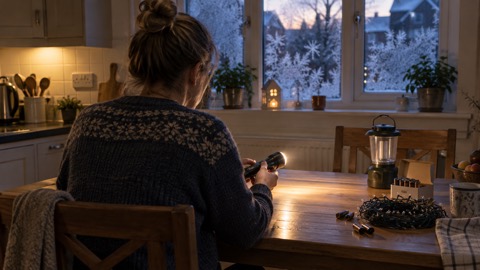
For a full household plan, start with Emergency Lighting at Home and the power cut checklist. If you are choosing kit, the torch or head torch comparison and the guide to rechargeable or battery torches will help you decide what suits your home.
Sources (30)
- What to do in a power cut, Northern Power Grid, 2026
- Power cuts, UK Government Prepare campaign, 2026
- Power cuts, UK Government Be Ready campaign, 2026
- Einstein 1500 Flex, NEBO, 2026
- Winter ready, Isle of Anglesey County Council, 2026
- Power, gas and water: what if they fail, Surrey County Council, 2026
- Be prepared, Northern Power Grid, 2026
- Get storm ready, NIE Networks, 2025
- Top ways to reduce your risk of having a fire at home, Dorset and Wiltshire Fire and Rescue Service, 2026
- Triple light kit, NEBO, 2026
- Don't let flames play tricks on your treats this Halloween, Northern Ireland Fire and Rescue Service, 2025
- How to prepare for the loss of electricity, Wiltshire and Swindon Prepared, 2026
- 12 tips to prepare for a power cut, Horsted Keynes Parish Council, 2026
- Home fire safety, Northern Ireland Fire and Rescue Service, 2026
- Strong winds | Northern Powergrid, Northern Powergrid
- Equipment services: what to do in a power cut, Mersey Care NHS Foundation Trust, 2026
- Stay warm safely this winter | Devon and Somerset Fire and Rescue Service, Devon and Somerset Fire and Rescue Service
- Planned interruptions, National Grid, 2026
- Digital easy read fire safety booklet, London Fire Brigade, 2026
- Lithium-ion batteries, Scottish Fire and Rescue Service, 2026
- What children should know about fires, Wiltshire and Swindon Prepared, 2026
- Candle safety, Carmarthenshire County Council, 2026
- Halloween and bonfire, South Wales Fire and Rescue Service, 2026
- Keeping kids safe: fires, RoSPA, 2026
- Portable heaters, gas fires and open fires, London Fire Brigade, 2026
- Candles, Mersey Fire and Rescue Service, 2026
- Strong winds and heavy rain warning: information and advice, Northern Ireland Direct, 2026
- Caravans and camping, North Yorkshire Fire and Rescue Service, 2026
- Burns prevention and tips, Mid and South Essex NHS Foundation Trust, 2026
- Emergency kit, Ready Scotland, 2026
 Spare Batteries for Lights
 Candle Safety Checklist
 Lighting Checks Before Winter
 Can Jar Candles Shatter
 Battery Tea Lights in a Pumpkin
 Keeping Pets Away from Candles
 Finding Torches in the Dark
 Red Light Mode on a Head Torch
 SOS and Strobe Modes
 IPX Ratings for Torches
 Torch Battery Runtime
 Camping Lantern Run Time
 Using a Torch While Charging
 Storing Spare Coin Cells
 Flat Button Battery Dangers