
NEBO is a maker of torches, head torches, area lighting and portable power, and its products are sold direct to UK households through its own UK site, with items such as the 1500 Lumen Rechargeable Torch 2-Pack and the 150 Headlamp listed as in stock and ready to ship1. For a household preparing for a power cut, its range covers the three things official UK guidance asks for: a torch you can find in the dark, spare batteries or a way to recharge, and a safer alternative to candles3.
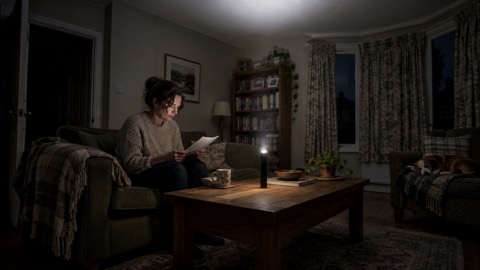
The most useful place to start is the torch itself. The Scottish Fire and Rescue Service advises that during a power cut you should "use battery-operated lights or torches as an alternative light source"3, and the UK government's power cut guidance puts it plainly: "Keep a battery or wind-up torch (and spare batteries) at home. Torches are safer than candles"4. NEBO's range is built around exactly that job, from pocket torches to a light bulb that keeps working when the power fails.
What NEBO makes for UK households
NEBO's UK range falls into three groups that match the three sections of this site: lighting, backup power and the emergency kit. Within lighting it makes hand torches, head torches, work lights and flood lights, and one unusual item, a light bulb with its own battery that keeps working during a power cut. Within backup power it makes powerbanks and a jump starter. Its torches and lights are the pieces most households will buy first, because official guidance across the UK puts a torch at the top of the emergency kit list: the Met Office WeatherReady winter checklist says "Torch and spare batteries"7, Neath Port Talbot Council's emergency kit checklist includes a battery or wind-up torch8, and Dumfries and Galloway Council's household emergency pack asks for "a wind-up torch or a battery powered torch"9.
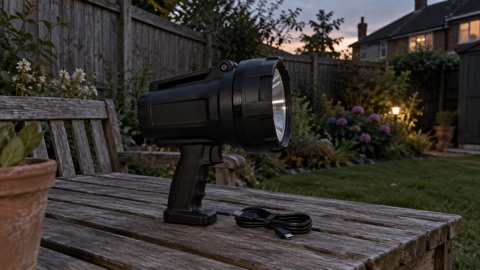
The hand torch range includes the NEBO Newton family (500 through 3000 lumens), the NEBO Davinci 800L and 3500, the NEBO Torchy 2K and Torchy 600 Flex, the NEBO Tac Slyde and Slyde King 4K, the NEBO Mycro 900+, Edge 800, Einstein 250, Leo 800 Flex, Curvbeam 600 Flex, Poppy Puck and Transport 400. For lighting a whole room rather than a beam, there are the NEBO Galileo lantern family, the 8K and 5K flood lights, the Master Series SL25 and the Luxtreme range. For hands-free light there is the NEBO 150 Headlamp and its stablemates.
In backup power, NEBO makes the 10K Powerbank, the 5K Powerbank and the INTREPID 1000, plus the Assist Air Jump Starter for the car. The one product that sits across categories is the NEBO Blackout Backup Emergency LED Bulb: it screws into a normal light fitting and switches to its own internal battery when the mains fails. To see how each type fits into a full household plan, read the guides to emergency lighting, backup power and the emergency kit.
NEBO torches: hand-held light for a power cut
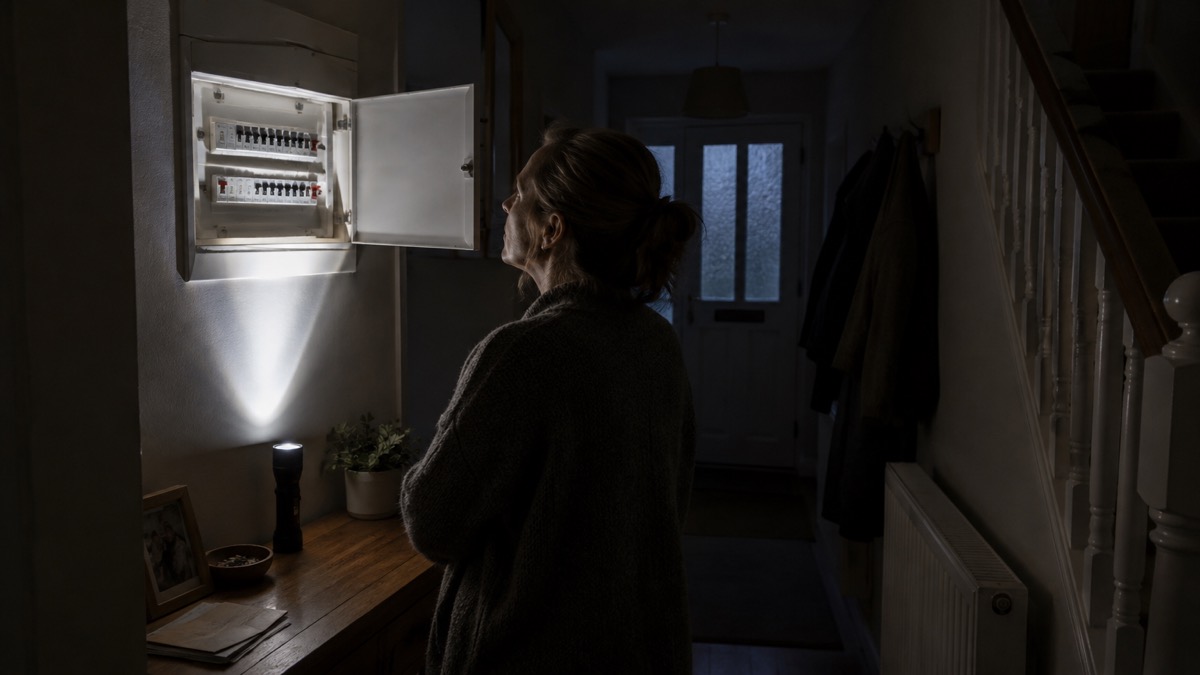
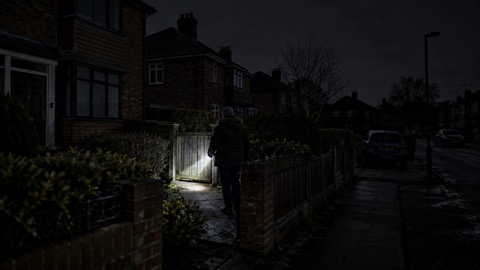
A hand torch is the first thing official guidance reaches for. The Scottish Fire and Rescue Service's power cut advice is to use battery-operated lights or torches as your alternative light source3, and a parish council power cut guide adds the practical detail: keep torches and spare batteries to hand in case the cut happens when it is dark outside, and make sure everyone in your home knows where they are kept10.
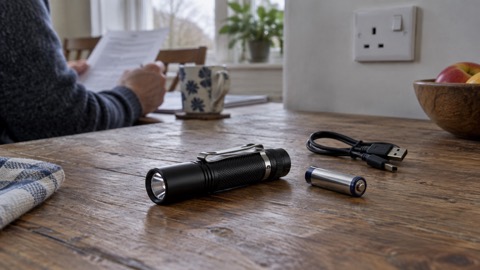
The NEBO 1500 Lumen Rechargeable Torch 2-Pack is a good example of what the maker's hand torches do. It is a pair of torches, so one can live by the bed and one by the fuse box, or an adult and a child can each carry one during a cut. Each torch is built from aircraft-grade aluminium, is impact-resistant and carries an IPX7 waterproof rating, which the maker says ensures reliable performance in harsh conditions1. It is a compact size at 13.7cm long and 3.3cm wide1, so it fits in a drawer, a pocket or a grab bag.
| Specification | NEBO 1500 Lumen Rechargeable Torch 2-Pack |
|---|---|
| Pack size | 2 torches1 |
| Body | Aircraft-grade aluminium, impact-resistant1 |
| Waterproof rating | IPX71 |
| Dimensions | 13.7cm long x 3.3cm wide1 |
| Battery | 2200 mAh (3.7V) lithium-ion, built in1 |
| Charging | USB-C1 |
| Light modes | High, Medium, Low, Strobe (4 modes)1 |
| Low mode | 100 lumens, up to 14 hours, 60 metre beam1 |
| Other features | 3X zoom, Smart Temperature Control, PowerSave Lockout Mode, Direct-to-Low startup1 |
Operation is simple, which matters in the dark: press the power button repeatedly to cycle through the modes, High, then Medium, then Low, then Off1. The Direct-to-Low startup means the torch always comes on in its lowest mode first, which the maker says maximises battery life1, and the PowerSave Lockout Mode stops it switching on by accident in a drawer or bag1.
NEBO head torches: light with both hands free
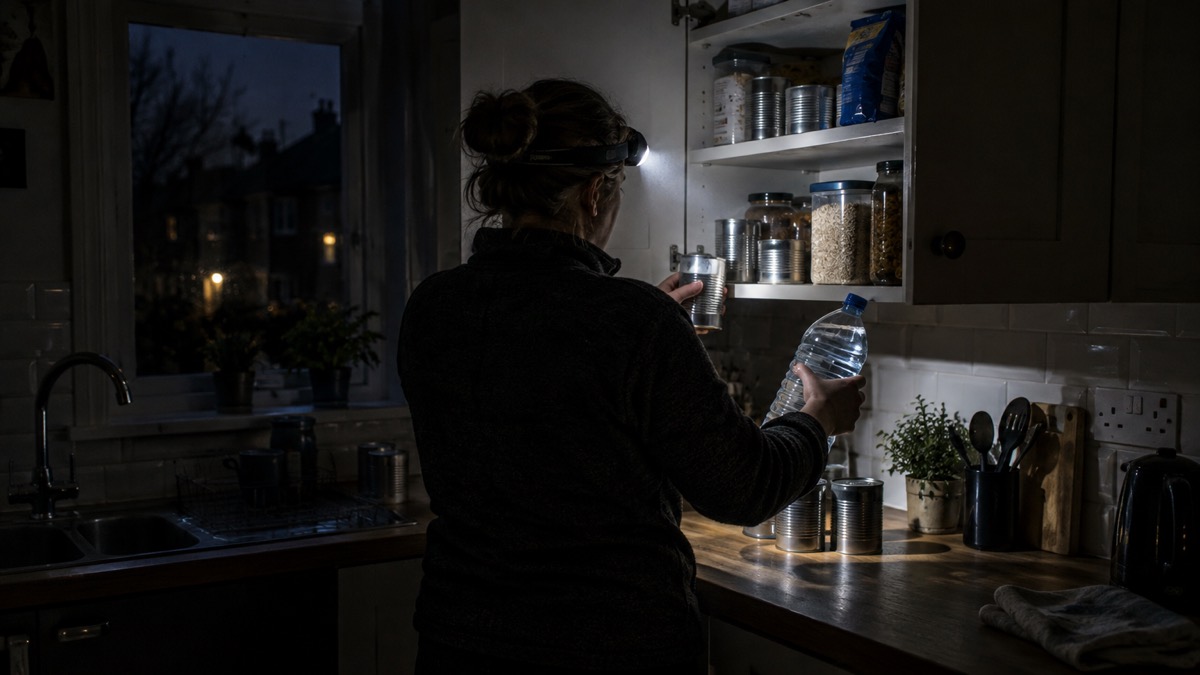
A head torch does a different job from a hand torch. When the power is off you may be carrying a child, holding a phone, feeling for the trip switch or cooking on a camping stove, and a hand torch needs a hand you may not have spare. NEBO's head torches strap to your head and point where you look.
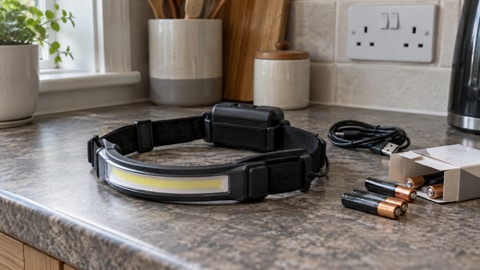
The NEBO 150 Headlamp is the maker's entry head torch. It uses a COB LED, a type of LED that gives an even spread of light rather than a narrow spot, and it is built from ABS, a tough plastic construction2. It runs on 3x AAA alkaline batteries, which are included, so it works straight out of the box and takes the most common household battery size2. It is listed as in stock and ready to ship on the maker's UK site2.
Two design features from the maker's own lighting technology pages matter for emergency use. First, comfort: the head torches feature "wide elasticated straps, balanced weight distribution, and intuitive control placement" so they can be worn for extended periods without fatigue11, which matters if a power cut runs through the night. Second, hands-free control: on models with the wave sensor, you "simply wave in front of the sensor to turn the light on or off"11, so you can switch it off without hunting for a button in the dark. NEBO's lights are also dimmable, which the maker says lets you adjust brightness to suit the situation, conserving battery life and reducing glare11. Some NEBO lights are also tripod mountable, with standard threading for secure attachment to any tripod to create hands-free lighting11, useful if you want to stand a light up to light a room.
Smart Power Control: how the light adjusts as the battery runs down
NEBO fits many of its torches and head torches with a feature it calls Smart Power Control, or SPC. The maker describes what it does plainly: "As the battery depletes, SPC gradually reduces brightness to extend runtime"11. Rather than holding full brightness until the battery suddenly dies, the torch eases its output down as the charge falls, so you get light for longer and you get a warning, in the form of dimming light, that it is time to recharge or swap batteries.
For a household in a power cut this changes how you use the torch. You do not need to ration it anxiously in the first hour, because the torch is managing its own output. On the 1500 Lumen torch, the maker's figures show the trade you are making at each press of the button: Low mode gives 100 lumens for up to 14 hours and throws a beam 60 metres1, which is plenty for moving around a house and checking a fuse box, while the higher modes give more light for shorter. Starting on Low, which the Direct-to-Low startup does automatically1, is the way to make a charge last through a long evening.
The same principle sits behind the maker's other battery features. Smart Temperature Control on the 1500 Lumen torch manages heat during use1, and the dimmable output across the range lets you turn brightness down deliberately to save charge11. If you want to see how this fits into a wider plan for keeping lights on through an outage, read the power cuts guide and the emergency lighting guide.
Getting ready: keeping a NEBO torch where you can find it
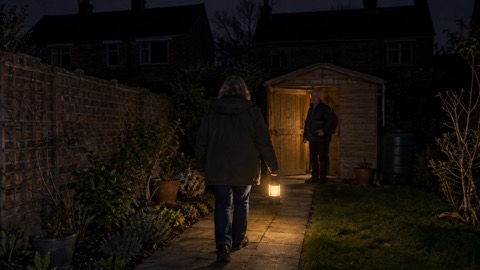
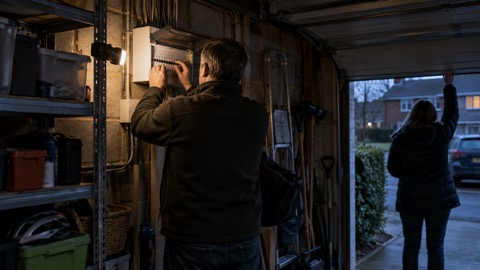
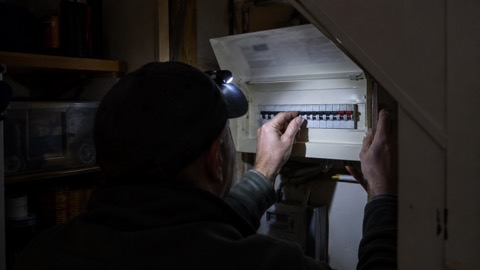
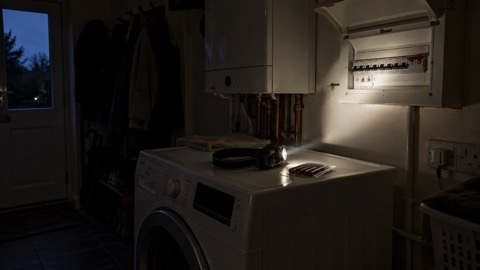
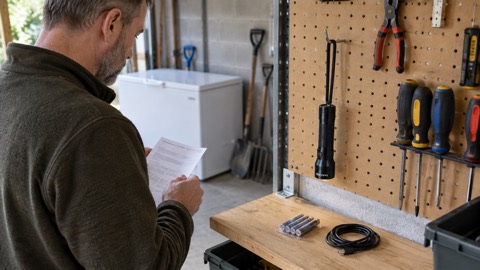
The most common failure in a power cut is not a dead battery, it is a torch nobody can find. Every piece of official guidance on this point says the same thing in slightly different words. Wiltshire and Swindon Prepared advises: "Keep a torch to hand, know where it's located in your home and how you could easily put your hands on it"12. Anglesey Council's winter readiness advice says to store a battery or wind-up torch somewhere you can access easily, so you can use it to check the fuse box and make your way around the house safely13. The same advice, in the same words, comes from SP Energy Networks: store a battery or wind-up torch somewhere easy to access so you can check the fuse box and move around the house safely13.
A practical arrangement for a NEBO household:
- Keep a torch to hand, and know where it is located in your home and how you could easily put your hands on it in the dark12.
- Leave the torch somewhere you can access easily, so you can use it to check the fuse box and make your way around the house safely during a power cut13.
- A battery or wind-up torch stored in an easy-to-reach spot serves both jobs: finding the fuse box and moving around the house13.
- Make sure everyone in the household knows where the torch is kept, so whoever is nearest can reach it first12.
The Be Ready checklist groups the torch with the rest of the light and warmth kit: "Torch (and spare batteries). Blankets, sleeping bags and warm clothing"14. If you are building the whole kit, the emergency kit guide and getting started guide walk through it item by item.
Charging and batteries: keeping a torch ready to use
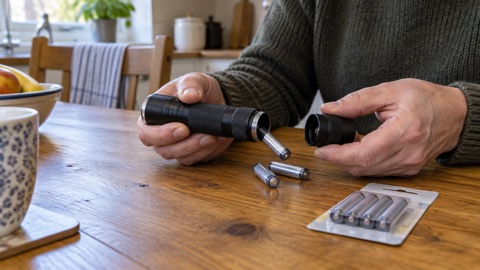
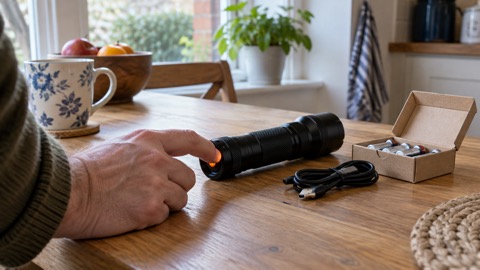
NEBO's products take two approaches to power, and a sensible household plan uses both. The rechargeable models, such as the 1500 Lumen torch, have a built-in 2200 mAh (3.7V) lithium-ion battery and charge over USB-C1. When plugged in, the power button serves as the charging status indicator, so you can see at a glance whether charging is finished1. The battery-operated models, such as the 150 Headlamp, take 3x AAA alkaline batteries2, which is why official guidance keeps saying to hold spares: "Make sure you have spare batteries if the torch is battery operated"12.
For the rechargeable side, the NEBO 10K Powerbank is the maker's companion piece. Its built-in digital display provides real-time information on the remaining battery capacity and shows the charge percentage while charging6, which removes the guesswork from whether your backup power is actually ready. It recharges in 3 to 4 hours, has a maximum output of 22.5W, and offers a USB-A port at 5V 3A, 9V 2A, 12V 1.5A max and a USB-C port at 5V 3A, 9V 2.22A, 12V 1.67A, with a combined total output of 5V 3A when both ports are in use6.
| Power source | What it is | How to keep it ready |
|---|---|---|
| 1500 Lumen torch | Built-in 2200 mAh lithium-ion, USB-C charging1 | Top up before storms; charge from a powerbank during a long cut |
| 150 Headlamp | 3x AAA alkaline batteries, included2 | Keep spare AAAs beside it12 |
| 10K Powerbank | Recharges in 3 to 4 hours, digital charge display6 | Keep it charged and check the display regularly |
| Blackout Backup bulb | Built-in 18650 lithium-ion cell, 2000 mAh, 7.4Wh5 | Leave the bulb on for 12 hours to fully charge on first use, or after a power outage5 |
The Blackout Backup Emergency LED Bulb deserves its own note. It contains a lithium-ion 18650 cell, 3.7V, 2000 mAh, 7.4Wh, which the maker states is not user serviceable5. After a power outage it needs a full 12 hours switched on to recharge completely5. Its backup modes give 6 hours of light on Backup Medium and 12 hours on Backup Low5, so a lamp fitted with it becomes a light that comes on by itself when the mains fails.
Lithium-ion batteries are the same chemistry used in mobile phones, vaping devices, e-bikes and scooters, vacuum cleaners, tablets and ear pods, as South Wales Fire and Rescue Service notes15, so the same care applies to a rechargeable torch or powerbank as to a phone: charge it with the maker's intended method, do not leave it charging unattended for long periods, and follow the maker's instructions. For the wider picture on keeping devices alive through an outage, see the backup power guide.
Using a torch safely during an emergency
The core safety message from fire and rescue services across the UK is consistent: torches are safer than candles. Cheshire Fire and Rescue Service's emergency readiness advice lists "a torch (battery or wind-up), this is safer than candles"16, and the UK government's power cut guidance says the same4. Humberside Fire and Rescue Service extends the advice to caravans, motor homes and campervans: keep a working torch or battery-operated lamp easily accessible to avoid using candles during power outages17. So the first rule of using a NEBO torch in an emergency is simply to reach for it instead of a flame.
The maker's own safety warning for its torches is direct: "Do not shine the light directly in someone's eyes"1. That applies doubly with children, and with the higher-output models in the range. Teach it as a house rule, in the same way official guidance teaches children fire safety habits.
There are situations where a torch is not just the convenient choice but the instructed one. Dorset and Wiltshire Fire and Rescue Service, advising households entering a flood-damaged home, says: "Make sure the property is safe before you enter. Use a torch, don't try to switch on the lights"18, because the wiring may have been in water. And when fireworks are part of the occasion, both the Northern Ireland Fire and Rescue Service and London Fire Brigade say to read the instructions using a torch, never a naked flame, match or candle19.
For the wider risks that come with emergencies, including carbon monoxide from equipment brought indoors, read the home emergencies guide. London Fire Brigade warns never to take portable or disposable BBQs, grills or charcoal fuel burners into your home or any confined space such as a tent, houseboat or caravan, because an extinguished BBQ can continue to produce carbon monoxide for many hours and CO can travel through walls22.
Support, warranty and safety notices
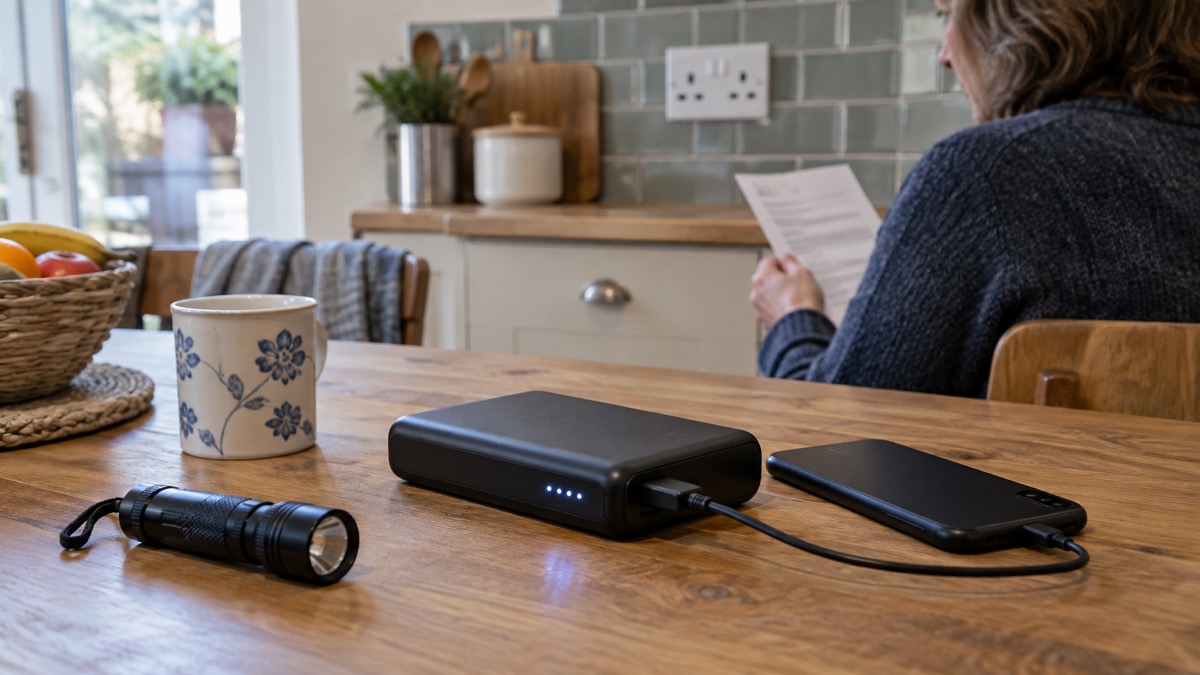
NEBO publishes its product information, manuals and technology explanations on its own UK site, and the product pages and technology pages cited here are the maker's own words1. For support, start with the product page for your item, which carries the specifications and operating instructions, and the retailer you bought it from.
Two safety notices from the maker are worth recording. For the 10K Powerbank, the maker states: "The product may become warm under extended high power operation. Do not cover, wrap, or otherwise, restrict during operation"6. Give it airflow when it is charging your devices. For all its torches, the GPSR warning applies: do not shine the light directly in someone's eyes1.
When a recall does happen, point-of-sale notices are displayed in all retail stores selling the product and on their websites, as the Food Standards Scotland recall notice for an A.Vogel Ltd product in August 2026 shows in practice23. No NEBO recall appears in the material here, but the checking habit is worth keeping. For questions about safety, warranty or exchanges on a NEBO product, the maker's own instructions give a contact route: "FOR ALL QUESTIONS RELATED TO SAFETY, WARRANTY OR EXCHANGE REQUESTS, PLEASE CONTACT US: INFOACGI@ACGBRANDS.COM"3.
Where this fits in your household plan
A torch or head torch is one line of a wider household kit. Around it sit the rest of the basics: water, food, warmth, a way to stay informed, and a plan for the people and pets in your home. The section guides on this site cover each of those, and the getting started guide puts them in order. If someone in your household depends on mains-powered medical equipment or needs extra help, read the extra help guide alongside this page, and register with your supplier's Priority Services Register.
Sources (23)
- NEBO 1500 Lumen Rechargeable Torch 2-Pack product page, NEBO Tools UK, 2026
- NEBO 150 Headlamp product page, NEBO Tools UK, 2026
- Power cuts: safety advice, Scottish Fire and Rescue Service
- Power cuts: be informed about hazards, UK Government Prepare campaign, 2026
- NEBO Blackout Backup Emergency LED Bulb manual, NEBO Tools UK, 2026
- NEBO 10K Powerbank product page, NEBO Tools UK, 2026
- WeatherReady winter poster, Met Office, 2026
- NPT Prepared emergency kit checklist, Neath Port Talbot Council, 2026
- Prepare for emergencies, Dumfries and Galloway Council, 2026
- 12 tips to prepare for a power cut, Horsted Keynes Parish Council, 2026
- NEBO lighting technology pages, NEBO Tools UK, 2026
- How to prepare for the loss of electricity, Wiltshire and Swindon Prepared
- Winter ready, Isle of Anglesey County Council
- Be Ready Checklist, UK Government Be Ready campaign, 2026
- Lithium-ion batteries guidance, South Wales Fire and Rescue Service, 2026
- Be ready for emergencies, Cheshire Fire and Rescue Service, 2026
- Caravan, motor home and campervan safety, Humberside Fire and Rescue Service, 2026
- Flooding safety advice, Dorset and Wiltshire Fire and Rescue Service, 2023
- Halloween safety: don't let flames play tricks, Northern Ireland Fire and Rescue Service, 2025
- Fireworks safety, London Fire Brigade, 2026
- Burn first aid guidance, London and South East Burns Network, 2026
- Carbon monoxide safety, London Fire Brigade, 2026
- A.Vogel Ltd recalls sprouting seeds because of E. coli contamination, Food Standards Scotland, 2026
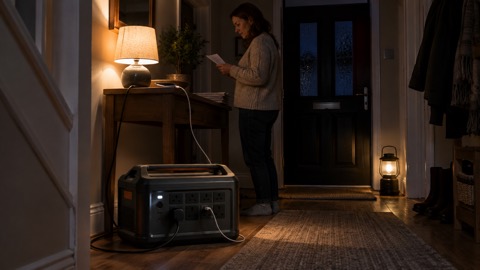 NEBO INTREPID 1000
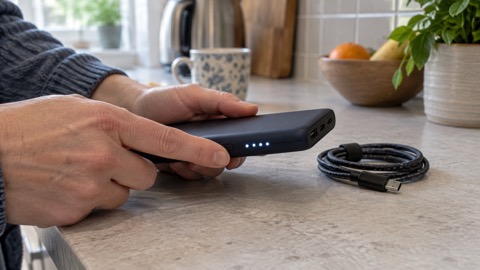 NEBO 5K Powerbank
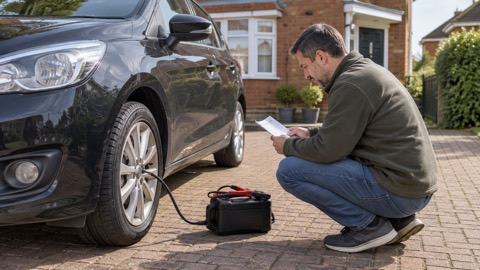 NEBO Assist Air Jump Starter
 NEBO Galileo
 NEBO Newton
 NEBO Davinci
 NEBO Luxtreme
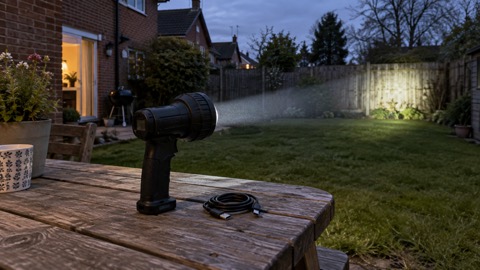 NEBO Master Series SL25
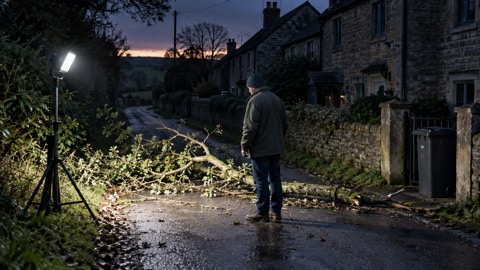 NEBO 8K Flood Light
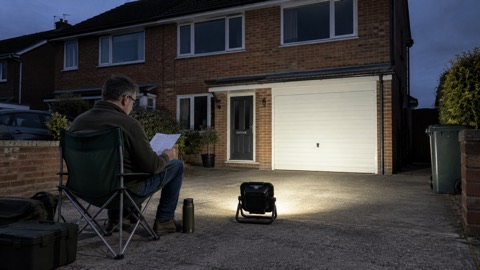 NEBO 5K Floodlight
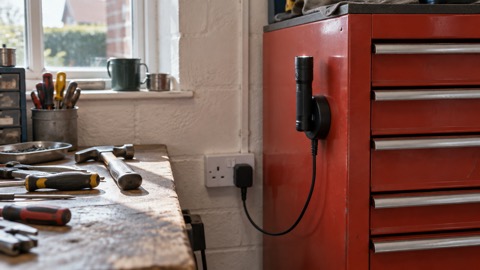 NEBO Torchy 2K
 NEBO Torchy 600 Flex
 NEBO Tac Slyde
 NEBO Slyde King 4K
 NEBO Mycro 900+
 NEBO Edge 800
 NEBO Einstein 250
 NEBO Leo 800 Flex
 NEBO Curvbeam 600 Flex
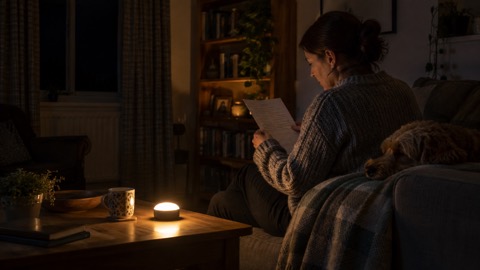 NEBO Poppy Puck
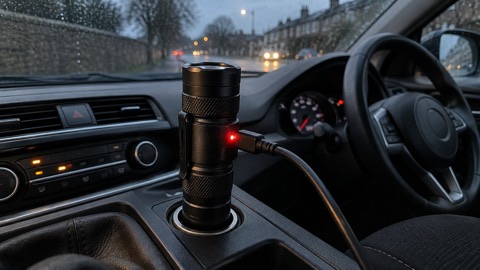 NEBO Transport 400
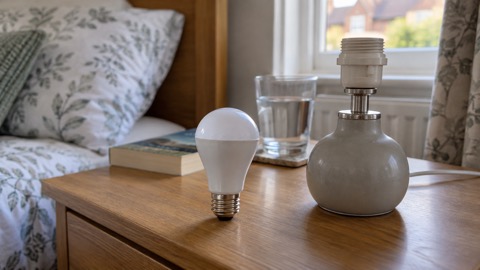 NEBO Blackout Backup Emergency LED Bulb