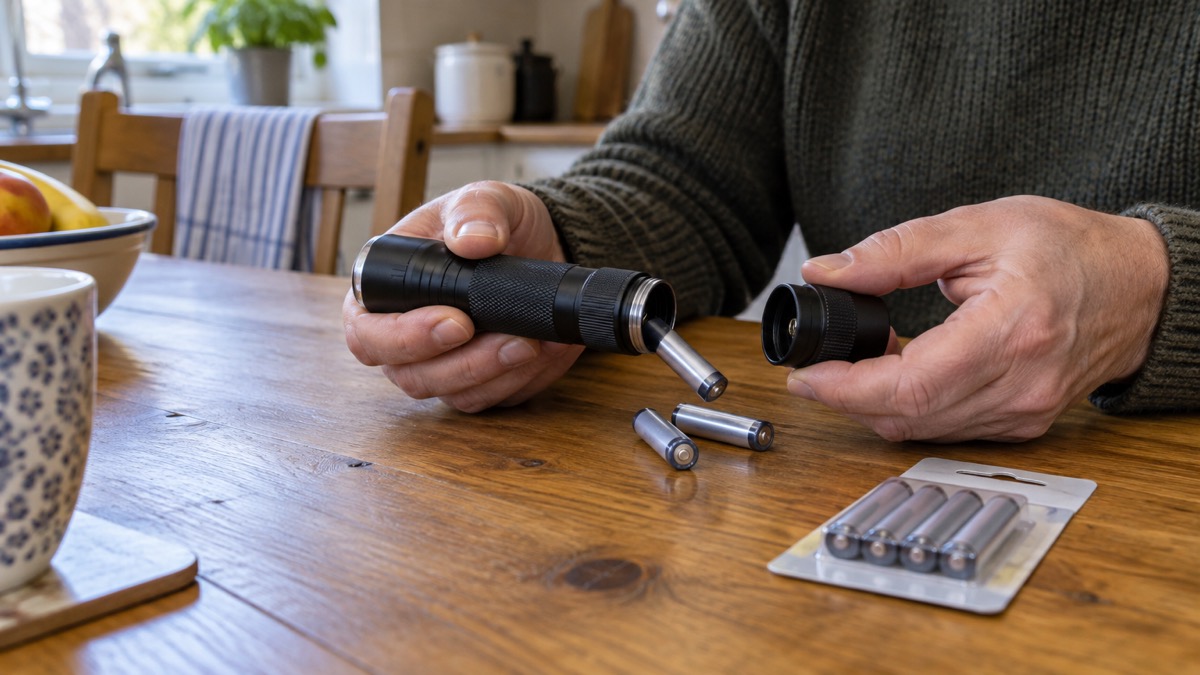
The NEBO Newton 500 is a small aluminium torch that runs on three AAA batteries and puts out 500 lumens on its brightest setting. The maker gives it a beam of 75 metres on High, with a run time of 2 hours, and 10 hours on Low at 30 lumens1. It has a 4x zoom, a magnetic base and a rear tail switch, and it is rated for temporary immersion in water. The maker describes it as crafted from aircraft-grade aluminium, IP67 waterproof and impact-resistant, with a magnetic base for hands-free use1.
The range runs from 500 to 3,000 lumens, and the bigger models take more batteries and weigh more. The Newton 500 is the smallest of the six, at 500 lumens, and the maker lists a beam distance of 46 metres on High1. If you are choosing between them, the question is not which is brightest but how much light you need, how long you need it for, and how much weight you are willing to carry or store.
This page sets out what the Newton 500 does, how long it runs on each setting, how to work the switch, how to change the batteries without damaging the torch, and where it should and should not be used. It also covers the rest of the range briefly, so you can see where the 500 sits.
The Newton range: six torches from 500 to 3,000 lumens
The Newton family is a set of handheld LED torches built to the same pattern: aluminium body, tail switch, zoom, magnetic base and a water-resistance rating. What changes across the range is brightness, battery count, weight and run time. The maker describes each as combining "power, durability, and convenience" and being "built to perform in any situation"4.
| Model | Brightest setting | Batteries | Weight | Longest run time listed |
|---|---|---|---|---|
| Newton 500 | 500 lumens1 | 3x AAA1 | 154g1 | 10 hours on Low1 |
| Newton 1000 | 1,000 lumens6 | 4x AA7 | 299g4 | 20 hours on Low6 |
| Newton 1500 | 1,500 lumens8 | 6x AA9 | not listed | 2 hours on High10 |
| Newton 2000 | not listed | 9x AA11 | not listed | 20 hours on Low11 |
| Newton 2500 | 2,500 lumens5 | 9x AA12 | 482g5 | 2 hours on High5 |
| Newton 3000 | 3,000 lumens13 | 12x AA14 | 554g13 | 16 hours13 |
Two things stand out from that table. First, the battery count climbs steeply: the 3000 takes twelve AA cells, which is a lot to keep in stock for one torch. Second, the brightest settings are short lived. The 2500 gives 2 hours on High, and the 1500 gives 2 hours on High at 1,500 lumens10. A torch that is very bright for two hours is useful for a burst of light, not for lighting a room all evening.
The Newton 500 is the odd one out in a useful way. It is the only model in the range listed with AAA batteries, the smallest and lightest, and the one with the longest run time on its lowest setting relative to its size. If you want a torch to keep in a kitchen drawer, a glovebox or a coat pocket, that combination matters more than peak brightness. If you want to light a garden or a large room from one point, the bigger models have more to give, at the cost of weight and batteries. For a wider look at how torch types compare for household use, see Torches: Types and How to Choose One for Home.
Newton 500: 500 lumens, 75 metres and 10 hours on Low
The Newton 500 has four settings: High, Medium, Low and Strobe. The maker's figures for each are set out below. Where two maker pages give different numbers, both are shown, because the maker's own pages disagree and there is no ruling between them.
| Mode | Brightness | Run time | Beam distance |
|---|---|---|---|
| High | 500 lumens | 2 hours | 75 metres1 |
| Medium | 200 lumens | 4 hours | 55 metres1 |
| Low | 30 lumens | 10 hours | 24 metres1 |
| Strobe | 500 lumens | 2 hours | 46 metres2 |
A second maker page gives different figures for the same torch: High at 500 lumens for 2 hours at 46 metres, Medium at 300 lumens for 5 hours at 37 metres, and Low at 30 lumens for 20 hours at 14 metres2. The two sets of numbers cannot both be right, and the maker has not said which applies. Treat the shorter run times as the safer planning figure: if you expect 10 hours on Low and get 20, you have spare capacity; if you plan for 20 and get 10, you do not.
What the numbers mean in practice is straightforward. On High, the torch throws a beam far enough to pick out a path, a fence line or a gate at the end of a garden, but it will flatten its batteries in an evening. On Low, it gives enough light to move around a dark house, read by or check a fuse box, and it will last through a long power cut. Medium is the compromise: bright enough to see detail at close range, and long enough for a few hours of use.
The zoom changes the shape of the beam rather than its brightness. Twist the head to go from a wide flood, which lights a room or a path close to you, to a narrow spot, which reaches further but covers less. The Newton 500 has a 4x adjustable zoom2. The larger models use a 3x zoom, adjusted the same way6. For a fuller explanation of how lumens and beam distance relate, see Lumens, Beam Distance and Run Time Explained.
Run time on three AAA batteries: 2 hours on High, 10 on Low
The Newton 500 runs on three AAA alkaline batteries, and the maker lists them as included2. That is the whole power system: no built-in pack, no charging cable, no waiting. When the batteries run down, you swap them. For a household preparing for a power cut, that is an advantage, because spare AAA cells are cheap, widely sold and easy to store.
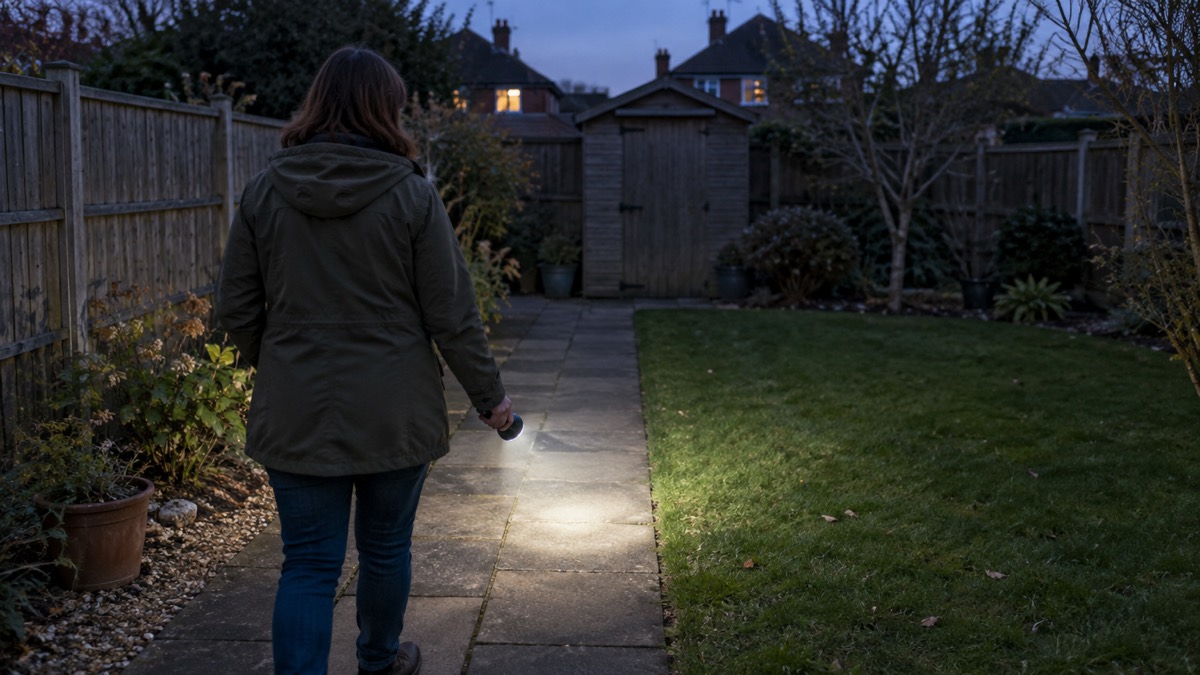
The trade-off is that AAA cells hold less energy than AA cells, which is why the bigger Newton models use AA. The Newton 1000 takes four AA and gives 20 hours on Low at 60 lumens6. The Newton 2000 takes nine AA and gives 20 hours on Low at 100 lumens11. If long run time matters more to you than size, those models are the ones to look at. If you want a torch that lives in a drawer and is always ready, the 500's AAA cells are simpler to keep in stock.
Battery type matters too. The maker specifies alkaline batteries for the range3. Alkaline cells are the ordinary household type. The maker's manuals warn against mixing alkaline, standard carbon-zinc and rechargeable cells in the same torch4. That is a general point about batteries: mixing types or mixing old and new cells reduces performance and can cause leakage or rupture15. Keep a set of spare AAA alkaline cells with the torch, and replace all three at once.
For advice on which spare batteries to keep and how to store them, see Torch Batteries: AA, AAA, 18650 and Built-In Packs and Spare Batteries to Keep for Your Lights.
Using the Easy Touch switch: full press, half press and the 8-second reset
The Newton 500 has a rear tail switch with two actions. A full press turns the light on and off and steps through the modes in order: High, Off, Medium, Off, Low, Off, Strobe3. A half press cycles through the modes without switching off in between1. The maker describes the switch as easy to find in the dark, which matters when the power has just gone and you are reaching for a torch by feel1.
The 8-second reset is the detail that catches people out. After the torch has been off for 8 seconds, the next press starts again at High3. That means you cannot leave it set on Low and expect it to come back on at Low the next time you use it. If you want Low for a long power cut, you will need to half press through the modes each time you switch on, or accept the brighter setting for a moment.
The maker's guidance on the switch is that the soft rubber button activates the light with a gentle press, suited to everyday use and emergency situations16. In practice, the half press is the one to learn: it lets you move from High to Medium to Low without the torch going dark between each step, which is what you want when you are checking a room or walking down a stairs.
The same switch arrangement appears across the range. The Newton 1000, 1500, 2000, 2500 and 3000 manuals all describe the Easy Touch button with full and half press actions7. If you learn it on the 500, you will know it on any of them.
Changing the batteries without mixing old and new
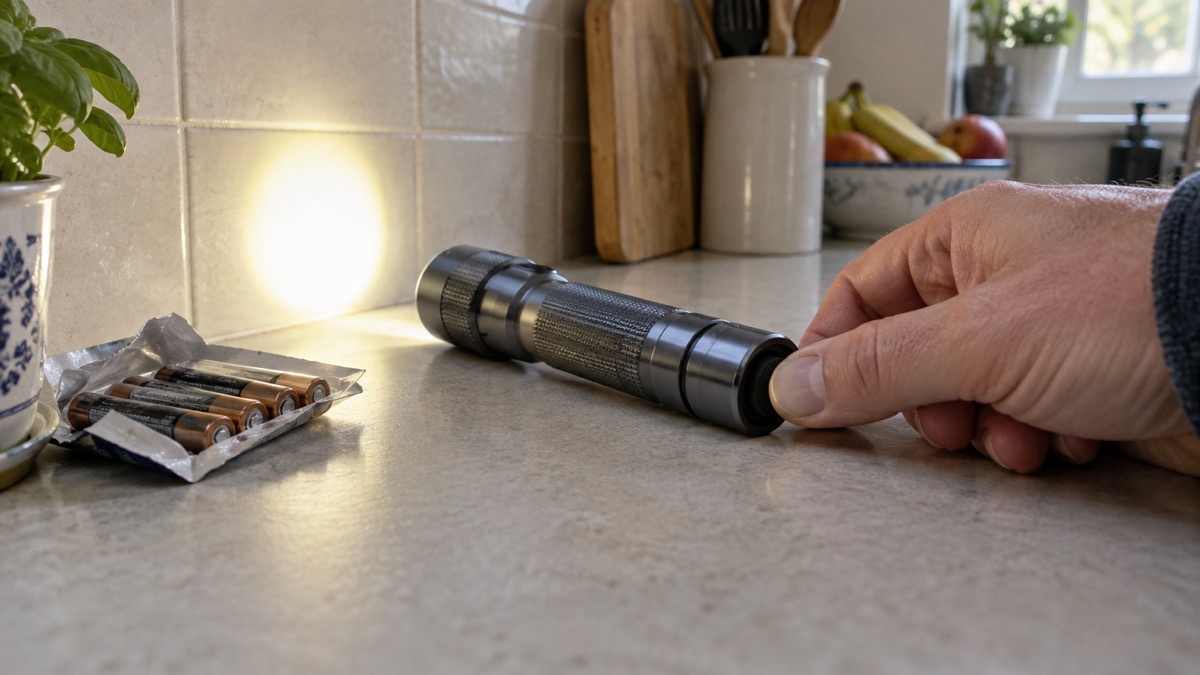
Changing the batteries on the Newton 500 is a two-step job. Unscrew the base, remove the battery cartridge, and swap the old batteries for new ones2. The manual gives the same procedure in more detail: unscrew the bottom cap, remove the battery adapter, remove the existing batteries, install three new AAA alkaline batteries, insert the adapter back into the torch and reinstall the bottom cap3.
The maker's warning is blunt: "DO NOT mix old and new batteries"3. The same warning appears in the manuals for the 1500, 2000, 2500 and 30009, and on the product pages for the 1000 and 3000, which add a second warning against mixing alkaline, carbon-zinc and rechargeable cells4. The reason is practical: mixing old and new cells reduces performance and may cause leakage or rupture15. A leaking battery can damage the torch and is unpleasant to clean up.
A few habits make battery changes safer and easier:
- Keep a spare set of three AAA alkaline cells with the torch, so you are never tempted to mix old and new.
- Change all three at once, even if only one seems flat.
- Check the battery orientation before refitting the adapter, and do not force the cap.
- Store the torch with the batteries fitted but the switch off, and check it every few months.
- If a battery has leaked, remove it carefully, clean the contacts and do not use the torch until it is clean and dry.
For more on storing and charging torches safely, see Charging and Storing Rechargeable Torches Safely. The Newton 500 is not rechargeable, so the charging advice applies mainly to other lights in a household kit.
Built for rough use: IP67, aluminium body and magnetic base
The Newton 500 is built to take knocks. The maker describes it as crafted from aircraft-grade aluminium, IP67 waterproof and impact-resistant1. The same materials and ratings appear across the range: the 1000, 2000, 2500 and 3000 are all listed with aircraft-grade aluminium bodies, and the 1000, 2500 and 3000 with IP67 or IPX7 ratings6.
The water rating needs a plain explanation. The maker says the IPX7 rating means the torch can survive accidental submersion in up to 1 metre of fresh water for 30 minutes2. It does not mean the torch is completely waterproof, and it does not cover high-pressure water jets or salt water2. So a drop into a puddle, a sink or a bucket is survivable; a wave over the side of a boat, a hose aimed at it or a dunk in the sea is not covered. If it has been in salt water, rinse it in fresh water and dry it before opening it.
The magnetic base is the feature that makes the torch useful hands-free. The maker lists a powerful magnetic base for hands-free use1. In a power cut, that means you can stick it to a fridge, a boiler casing or a metal shelf and have both hands free to check a fuse box or read a meter. The same feature appears on the 1000 and 15006.
Where not to shine it and where the magnetic base must not go
A 500-lumen torch is bright enough to hurt. The maker's warning is the same across the range: do not shine the light directly in someone's eyes, and if the beam does shine in your eye, look away immediately1. Do not use magnifying instruments that could concentrate the beam, and keep the torch away from heat, hot surfaces, sparks and open flames, and do not incinerate it1. The 2500 and 3000 pages add that the torch should only be used for its intended purpose5.
"Do not shine the light directly in someone's eyes."
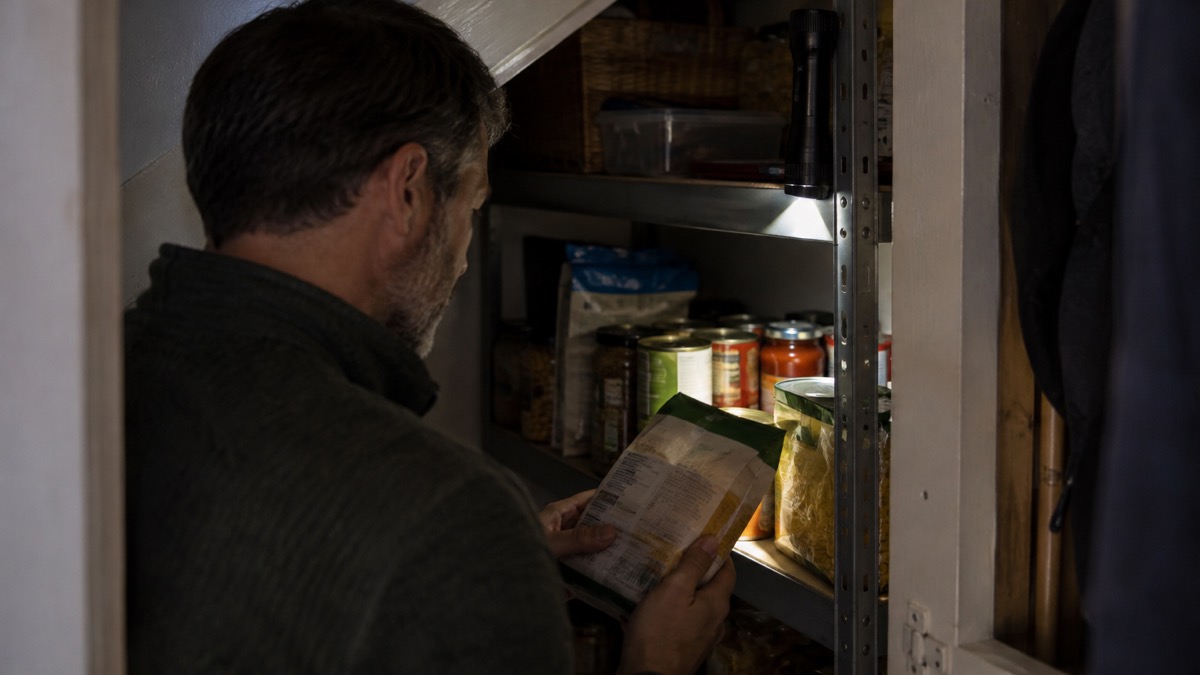
Those warnings matter most around children and pets. A torch left within reach can be switched on and pointed at a face in a second. Keep it out of reach of small children, and teach older children not to shine it at anyone. For more on this, see Torches, Candles and Children: Keeping Them Safe and Is It Safe to Look Into a Bright Torch?.
The magnetic base has its own limits. A strong magnet should not be placed near a pacemaker, an implanted defibrillator or other medical devices, and it should not be stuck to anything that a magnet could damage, such as a credit card, a watch or a phone. The maker does not list these warnings for the Newton 500, so treat them as general caution rather than a maker instruction. The safe approach is to use the magnet on plain steel surfaces, such as a fridge door or a metal shelf, and to keep it away from medical devices and electronics.
Strobe is the last mode in the cycle, and it is bright and flashing. It can help someone find you, but it is not a substitute for calling 999. Do not shine it at anyone's eyes, and do not use it near anyone who may be affected by flashing light. For more on signalling, see How to Use SOS and Strobe Modes on a Torch.
What the Newton 500 suits, and what it does not
The Newton 500 suits a household that wants one small, tough torch that is always ready and easy to keep supplied. It is light enough to carry, bright enough for a garden or a dark road, and its AAA batteries are the easiest kind to stock. Its magnetic base and zoom make it useful for jobs in the dark, and its aluminium body and water rating mean it will survive being dropped or rained on.
It does not suit someone who wants to light a room for a whole evening on one set of batteries. For that, a lantern or a torch with a longer run time on Low is a better fit. The maker's own range shows the trade-off: the Newton 1000 gives 20 hours on Low at 60 lumens, but it takes four AA batteries and weighs 299g6. The Newton 2000 gives 20 hours on Low at 100 lumens, but it takes nine AA batteries11. If you want a light to sit on a table and fill a room, see Battery and Rechargeable Lanterns for Lighting a Room and Lantern or Torch: Which Lights a Room Better?.
For a power cut, the sensible household approach is to have more than one light. A torch like the Newton 500 for carrying and for jobs, a lantern for the room, and a head torch for hands-free work cover most situations. For a checklist, see Torches, Lanterns and Candles: Power Cut Checklist and Lighting Your Home Safely When the Power Goes Off.
Where to get help and what to do if something goes wrong
If a torch or its batteries fail, the first step is to check the maker's instructions and the retailer's returns policy. The Newton 500 is sold through the maker's UK site, which states that it is in stock and ready to ship, and that orders cannot be shipped internationally1. Keep the packaging and the receipt in case you need to return it.
If you suspect a fault that could make the torch unsafe, stop using it and report it. In the UK, unsafe products can be reported to the Office for Product Safety and Standards through the Citizens Advice consumer service. For more on checking and reporting, see Recalled and Unsafe Torches and Chargers: Checking and Reporting.
If a battery has leaked, do not handle it with bare hands. Wear gloves, remove it carefully, clean the contacts and dispose of the battery at a household waste recycling centre. If the torch has been in the sea, rinse it in fresh water and dry it before opening it.
For fire safety advice at home, your local fire and rescue service offers free home fire safety visits. For more, see Free Home Fire Safety Visits From Your Fire Service. If someone is in difficulty in water, the official advice is to throw them something that floats rather than going in after them18.
Sources (17)
- NEBO Newton 500 product page, NEBO Tools, 2026-10-25
- NEBO Newton 500 product page (alternate), NEBO Tools, 2026-10-25
- NEBO Newton 500 manual, NEBO Tools, 2026-10-25
- NEBO Newton 1000 product page, NEBO Tools, 2026-10-25
- NEBO Newton 2500 product page, NEBO Tools, 2026-10-25
- NEBO Newton 1000 product page, NEBO Tools, 2026-10-25
- NEBO Newton 1000 manual, NEBO Tools, 2026-10-25
- NEBO Newton 1500 product page, NEBO Tools, 2026-10-25
- NEBO Newton 1500 manual, NEBO Tools, 2026-10-25
- NEBO Newton 1500 product page (alternate), NEBO Tools, 2026-10-25
- NEBO Newton 2000 product page, NEBO Tools, 2026-10-25
- NEBO Newton 2500 manual, NEBO Tools, 2026-10-25
- NEBO Newton 3000 product page, NEBO Tools, 2026-10-25
- NEBO Newton 3000 manual, NEBO Tools, 2026-10-25
- What is the difference between lithium and alkaline?, Duracell, 2026-10-26
- NEBO Newton 2000 manual, NEBO Tools, 2026-10-25
- Fire and summer safety advice, nidirect, 2026-07-03

 NEBO Davinci 800L
 NEBO Torchy 2K Torch
 NEBO Torchy 600 Flex
 NEBO Tac Slyde Torch
 NEBO Slyde King 4K
 NEBO Mycro 900+ Headlamp
 NEBO Edge 800
 NEBO Transport 400
 Fenix E04R Keyring Torch
 Fenix E05R Keychain Torch
 Fenix E06R Pro Pocket Torch
 Fenix E09R Torch