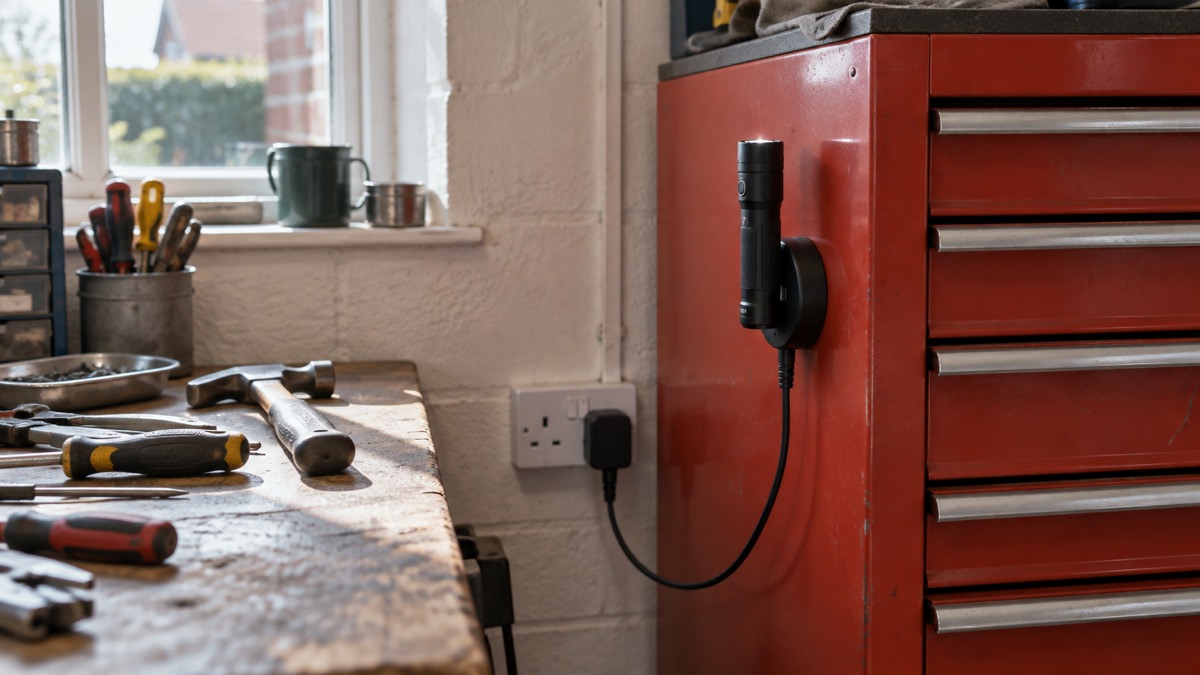
The NEBO Torchy 2K is a rechargeable pocket torch that the maker describes as packing "a big punch in a small package", with five light modes and a magnetic charging dock1. It is 110mm long, 28mm wide and 28mm high, and weighs 80g, so it fits in a coat pocket or a kitchen drawer2. Its headline figure is 2,000 lumens on Turbo, but that mode lasts 30 seconds at a time; the mode that matters in a long power cut is Low, at 35 lumens for 30 hours2.
For an ordinary household, that split is the whole story of the torch. Turbo is for a quick sweep of the garden or a look down a dark lane. Low and Medium are what you use to move around the house, find the fuse box or read by, and they are what the battery is sized for. The maker's own figures put High at 500 lumens for 3.5 hours and Medium at 200 lumens for 6 hours2.
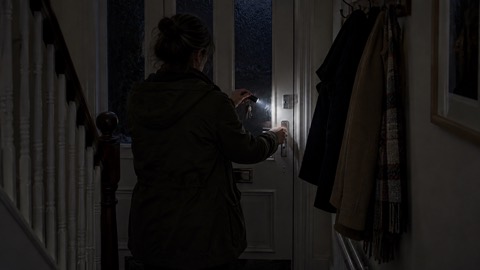
The official advice for a power cut is simple: keep a battery or wind-up torch and spare batteries at home, because torches are safer than candles3. A rechargeable torch like this one fits that advice as long as it is charged before you need it. The Red Cross suggests charged power banks, torches and batteries as part of a household emergency kit4, and Northern Powergrid's winter checklist puts torches and spare batteries in the grab bag5.
What the Torchy 2K is and who it suits
The Torchy 2K is a rechargeable pocket torch with a magnetic charging dock, built from aircraft grade aluminium1. The maker's manual calls it a 2,000 lumen light with five modes and a magnetic dock1. The body is anodised aircraft-grade aluminium and the maker describes it as water and impact resistant2.
There are several versions, and they differ mainly in how they charge. The standard Torchy 2K sits on a magnetic Magdock1. The USB-C version is recharged by cable, and the maker lists a magnetic base for attaching the torch to metal surfaces and a low-profile pocket clip for a pocket, belt or bag6. The Black Line is also USB-C rechargeable, water resistant to IPX6 and has five light modes7.
| Version | How it charges | Charging indicator | Notable features |
|---|---|---|---|
| Torchy 2K (standard) | USB cable into the Magdock, torch attaches magnetically1 | Red charging, blue dock plugged in, fully charged when docked1 | Magnetic dock1 |
| Torchy 2K USB-C | Battery removed, USB-C cable into the port on the battery6 | Red charging, green fully charged6 | Magnetic base, pocket clip6 |
| Torchy 2K Black Line | Battery removed, USB-C cable into the port on the battery7 | Red charging, green fully charged7 | Supplied with USB-A to USB-C lead7 |
Who it suits: a household that wants one small torch that lives in a drawer, charged and ready, and can be picked up without hunting for batteries. It is a personal light rather than a room light. If you want to light a whole room during a cut, a lantern does that better; our guide to battery and rechargeable lanterns sets out the difference, and lantern or torch compares the two directly.
Light modes and how the button works
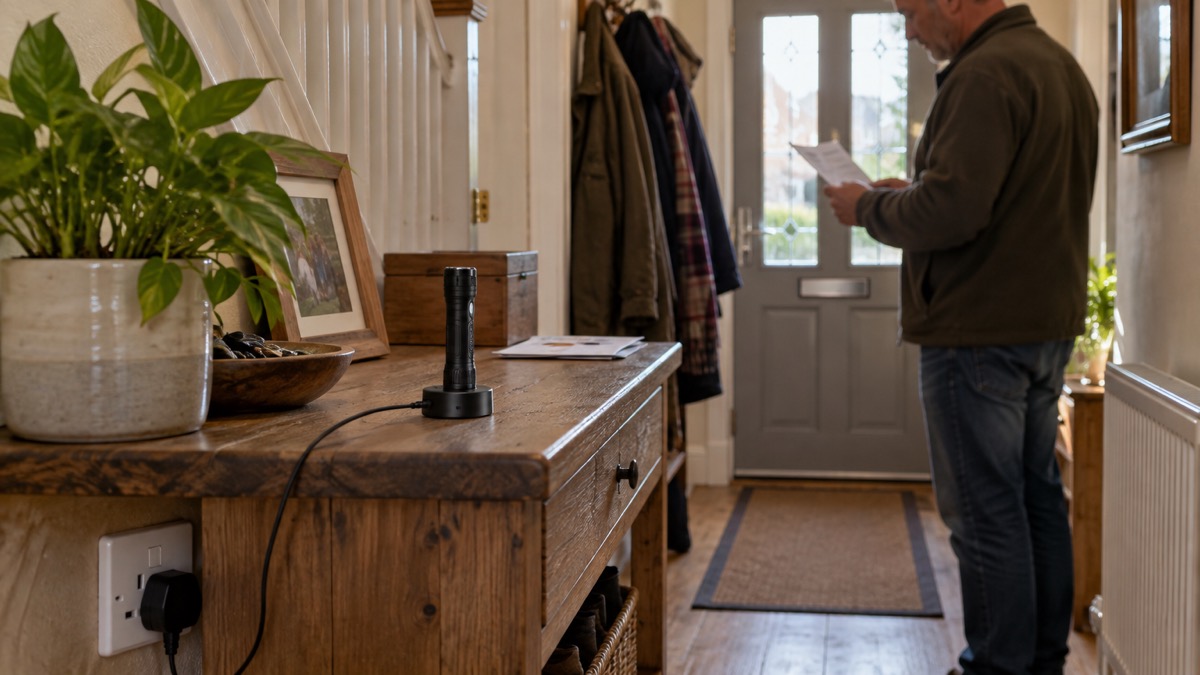
The torch has five modes: Turbo, High, Medium, Low and Strobe1. The maker's manual sets out the controls plainly. Pressing the power button cycles through High, Medium and Low. Double-tap for Strobe. When the torch is off, press and hold the power button to go straight to Low. When it is on, press and hold for Turbo1.
That last pair of shortcuts is the useful part for a household. Direct-To-Low means you can pick the torch up in the dark and get a sensible, long-lasting light without cycling through the bright modes and dazzling yourself. Press-and-hold for Turbo means the bright mode is there when you want it, without it being in the way the rest of the time.
The USB-C version has a soft rubber Easy Touch power button, which the maker says lets you activate the light with a gentle press6. The Black Line has a side-positioned on/off button with the charging indicator built in7.
- To turn on at a usable level: press and hold from off for Direct-To-Low1
- To step up: press the button to cycle High, Medium, Low1
- For a burst of maximum light: press and hold while on for Turbo1
- For signalling: double-tap for Strobe1
If you are choosing between this and a light you wear on your head for jobs in the dark, our page on head torches explains what a head torch does that a hand torch cannot. For the general principles behind lumens and beam distance, see lumens, beam distance and run time explained.
Run time: from 30 seconds on Turbo to 30 hours on Low
The maker's run time figures are the ones to plan around, and they vary enormously by mode. Turbo gives 2,000 lumens for 30 seconds at a time, with a 200 metre beam. High gives 500 lumens for 3.5 hours and a 90 metre beam. Medium gives 200 lumens for 6 hours and a 50 metre beam. Low gives 35 lumens for 30 hours and a 25 metre beam. Strobe gives 500 lumens for 2.5 hours and a 125 metre beam2.
| Mode | Brightness | Run time | Beam distance |
|---|---|---|---|
| Turbo | 2,000 lumens | 30 seconds2 | 200 metres2 |
| High | 500 lumens | 3.5 hours2 | 90 metres2 |
| Medium | 200 lumens | 6 hours2 | 50 metres2 |
| Low | 35 lumens | 30 hours2 | 25 metres2 |
| Strobe | 500 lumens | 2.5 hours2 | 125 metres2 |
Read that table as a set of choices rather than a ranking. A 30 hour run on Low is the figure that matters in a power cut that lasts a day or more: it means one charge can see a household through the dark hours of several evenings if the torch is used sensibly. The 30 second Turbo is not a fault. The maker explains that after 30 seconds the light returns to the previously used mode to prevent the light from overheating and protect the battery, and that Turbo can be reactivated at any time7.
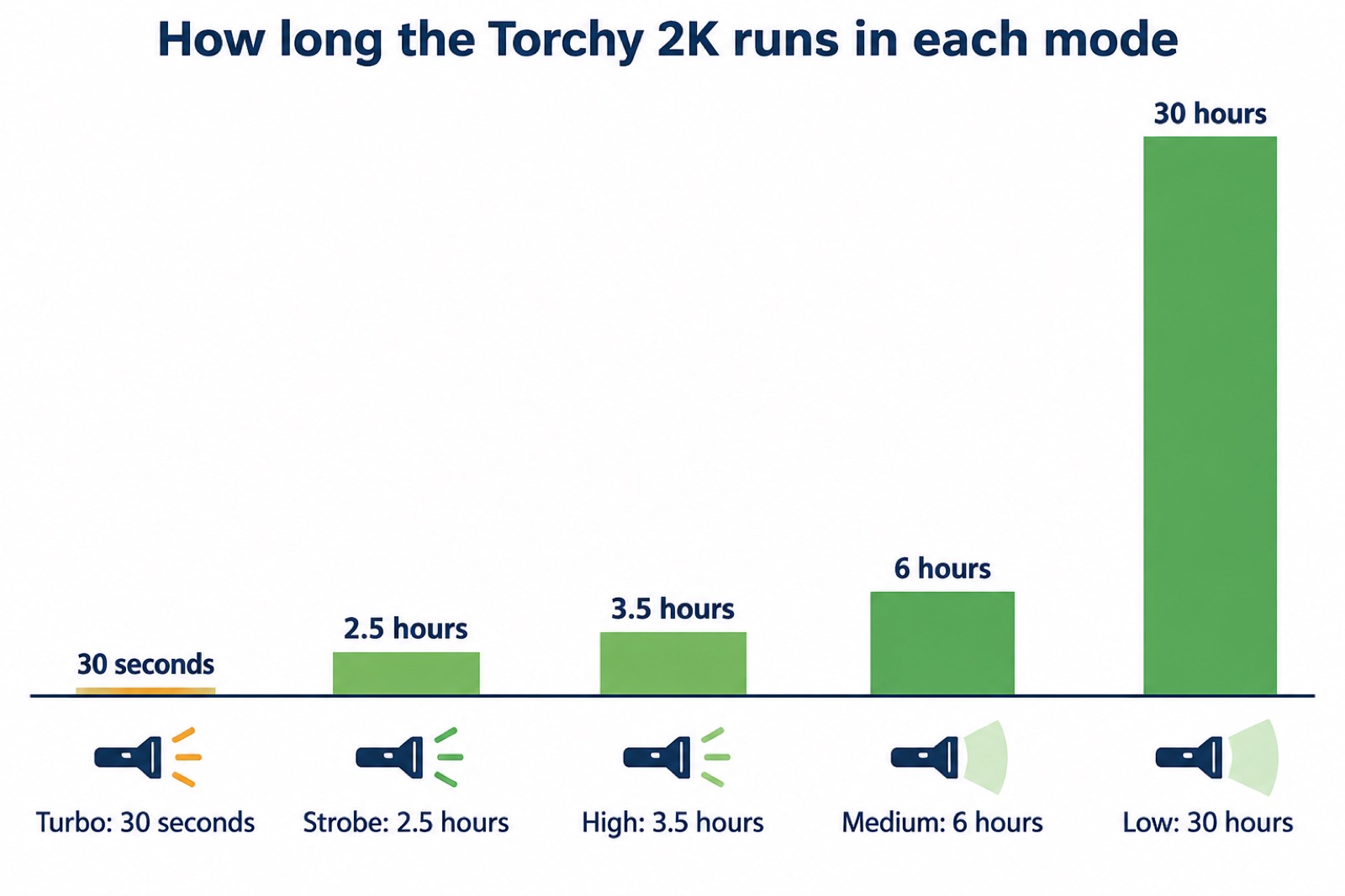
Turbo lasts 30 seconds, so keep Low for long power cuts
The single most useful thing to know about this torch is that its brightest setting is a burst, not a setting you leave on. Turbo is 2,000 lumens for 30 seconds, then the torch steps back to the mode you were using before, to stop it overheating and to protect the battery7. You can trigger it again whenever you need it7.
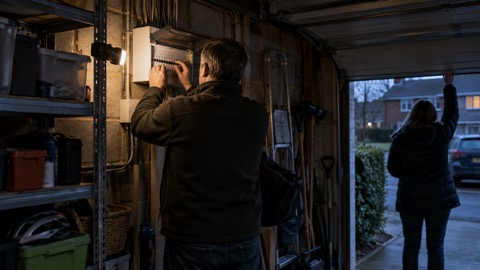
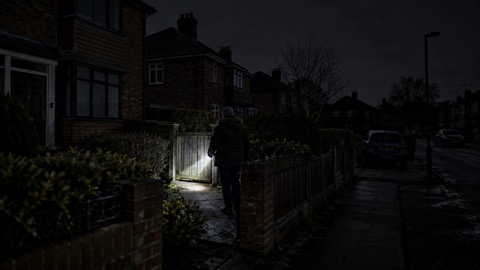
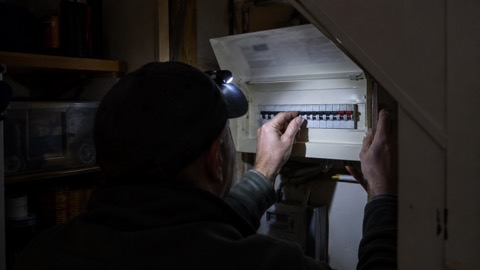
In a power cut, that changes how you use the torch. Reach for Turbo to check the garden, look at the consumer unit or see whether a road is clear. Then drop to Low or Medium for the ordinary business of moving around the house, finding things and getting ready for bed. Low at 35 lumens for 30 hours is a modest light, but it is enough to see by in a dark room once your eyes have adjusted, and it is the mode that will still be working in the morning.
The same logic applies to the other bright modes. High at 500 lumens for 3.5 hours is a good working light for a job, but it will empty the battery in an evening. Medium at 200 lumens for 6 hours is a reasonable compromise if you need more light than Low gives.
For more on how run times work in practice, see how long does a torch battery last on low. If you are weighing up whether a rechargeable torch is the right choice for an emergency kit at all, rechargeable or battery torches for emergencies sets out the trade-offs.
Charging on the Magdock and what the lights mean
Charging depends on which version you own, and the maker's instructions differ between them. On the standard Torchy 2K, plug in the USB and attach the Torchy 2K to the Magdock1. The dock's indicator tells you what is happening: red means the unit is charging, blue means the Magdock is plugged in, and if the Torchy 2K is docked and the light is blue, the unit is fully charged1.
On the USB-C versions, the maker's instruction is to remove the battery and insert the USB-C cable into the charging port on the battery6. The Black Line is supplied with a USB-A to USB-C charging lead7. On these versions the indicator shows red while charging and green when fully charged6.
- Standard model: leave the torch on the dock, plug the dock into a USB source, watch for red then blue1
- USB-C versions: take the battery out, plug the cable into the battery, watch for red then green6
- Before docking: check the charging contacts are dry, particularly after using the torch outdoors1
The maker's manual does not give a charging time, so plan on charging overnight rather than assuming a quick top-up will do. For general guidance on charging and storing rechargeable torches safely, including where to keep them and what to avoid, see charging and storing rechargeable torches safely. If you are unsure whether a particular USB charger is suitable, can the wrong USB charger damage a torch battery covers the question.
Reading the battery: orange above 25%
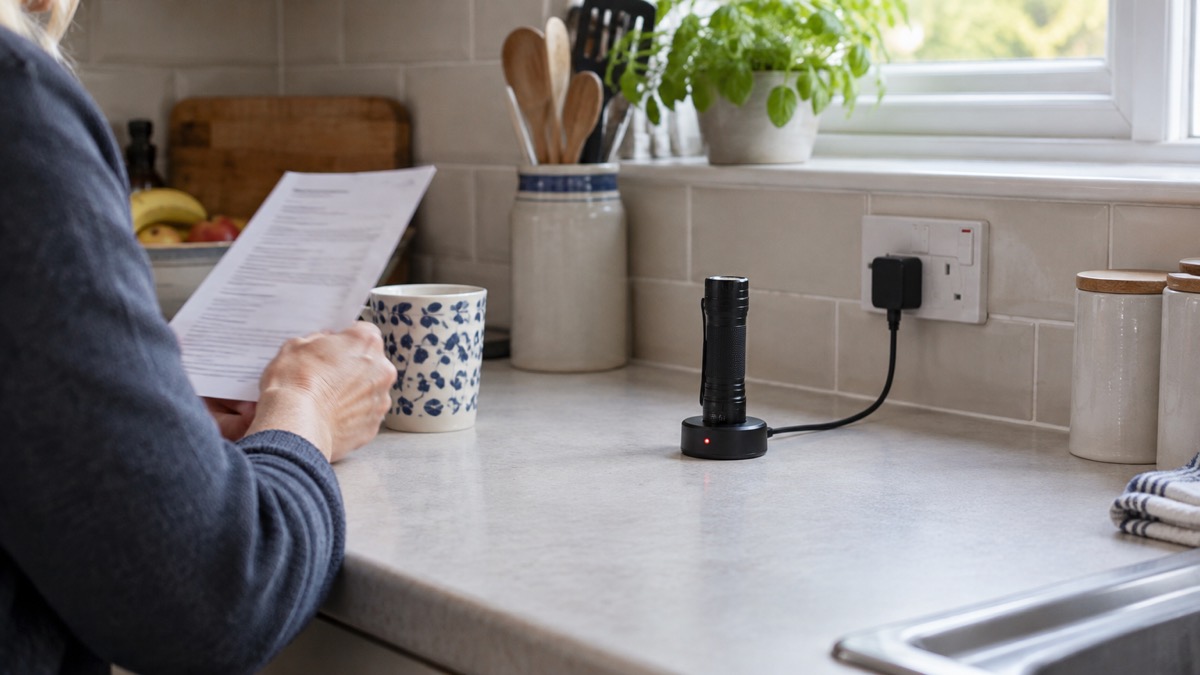
The torch tells you how much charge is left through the power button. When the battery is greater than 25%, the power button illuminates orange. When the battery level falls below 25%, the power button flashes continuously at 1 second intervals1. The same behaviour is listed for the USB-C and Black Line versions6.
That is a simple two-stage warning, and it is worth knowing before a power cut rather than during one. An orange button means you have charge to spare. A flashing button means you are into the last quarter and should be thinking about charging, or about switching to a lower mode to make what is left last.
The torch also manages its own output. The maker fits Smart Power Control, which automatically adjusts light output based on remaining battery charge and gradually reduces brightness to extend run time1. NEBO describes Smart Power Control as a feature across its torches and head torches that optimises performance and battery life8. So a torch that seems dimmer than it was is not necessarily failing: it is stretching the last of the charge.
The battery itself is a 2200 mAh Li-ion 18650 rechargeable cell2. That is a standard lithium-ion size, and our page on torch batteries explains what that means for spares and replacements. If you ever need to check a battery's condition, the Caravan Club's guidance on leisure batteries describes shining a torch into each cell to check the electrolyte level covers the plates, on batteries that are not sealed for life9. That is not a procedure for this sealed lithium-ion cell, but it shows the kind of inspection a torch is useful for.
Water and knocks: IPX6, not submersible
The maker rates the Torchy 2K IPX6. The manual explains what that means: robust water resistance, offering protection against powerful water jets from any direction, equivalent to 100 litres per minute, but not submersible1. The USB-C and Black Line versions carry the same rating6. The body is anodised aircraft-grade aluminium, described by the maker as water and impact resistant2.
In practice, that covers the situations a household torch meets: rain on the way to the shed, a spray from a leaking pipe, a drop onto a kitchen floor. It does not cover dropping the torch into a bucket, a drain, a pond or flood water. If it does get soaked, dry it before charging, particularly the contacts on the Magdock.
For a fuller explanation of what the IPX scale means and how it applies to torches and lanterns, see what IPX ratings mean for torches and lanterns. If you are using the torch outdoors in bad weather, the Met Office advises using dipped headlights if visibility is seriously reduced when travelling in storms, rain and strong wind10, and South Wales Fire and Rescue Service gives the same advice for driving in heavy rain and flooding11. North Yorkshire Fire and Rescue Service also advises using dipped headlights in heavy rain and flooding12. A torch is for when you are on foot, not a substitute for vehicle lights.
Using the beam safely around the house
The maker's safety instructions are short and worth following. Only use the device for its intended purpose. Do not shine the light directly in someone's eyes. If the beam shines in your eye, look away immediately. Do not use magnifying instruments that could concentrate the beam. Keep the torch away from heat, hot surfaces, sparks and open flames, and do not incinerate it2.
"Do not shine the light directly in someone's eyes."
The beam distances in the run time table matter here. Turbo reaches 200 metres2, which is far enough to dazzle someone across a street or a field. Low reaches 25 metres2, which is a comfortable indoor distance. In a house with children or pets, the sensible habit is to use Low indoors and keep the bright modes for outdoors. Our page on torches, candles and children covers keeping young ones safe around lights, and is it safe to look into a bright torch answers the question directly.
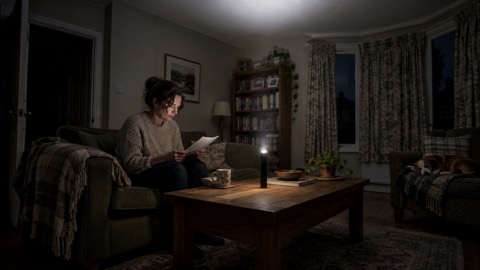
The official advice for power cuts is to use a torch rather than a candle3, and that is the strongest safety argument for having a light like this in the house. Candles are a fire risk; a torch is not. If you do keep candles as a backup, our candle fire safety at home page and the candle safety checklist set out the rules.
Where it fits in a household emergency kit
The official advice is to keep a battery or wind-up torch and spare batteries at home, because torches are safer than candles3. The Red Cross lists charged power banks, torches and batteries among the things to have ready4, and Northern Powergrid's winter checklist includes torches and spare batteries in the grab bag5. A rechargeable torch like the Torchy 2K meets that advice provided it is kept charged.
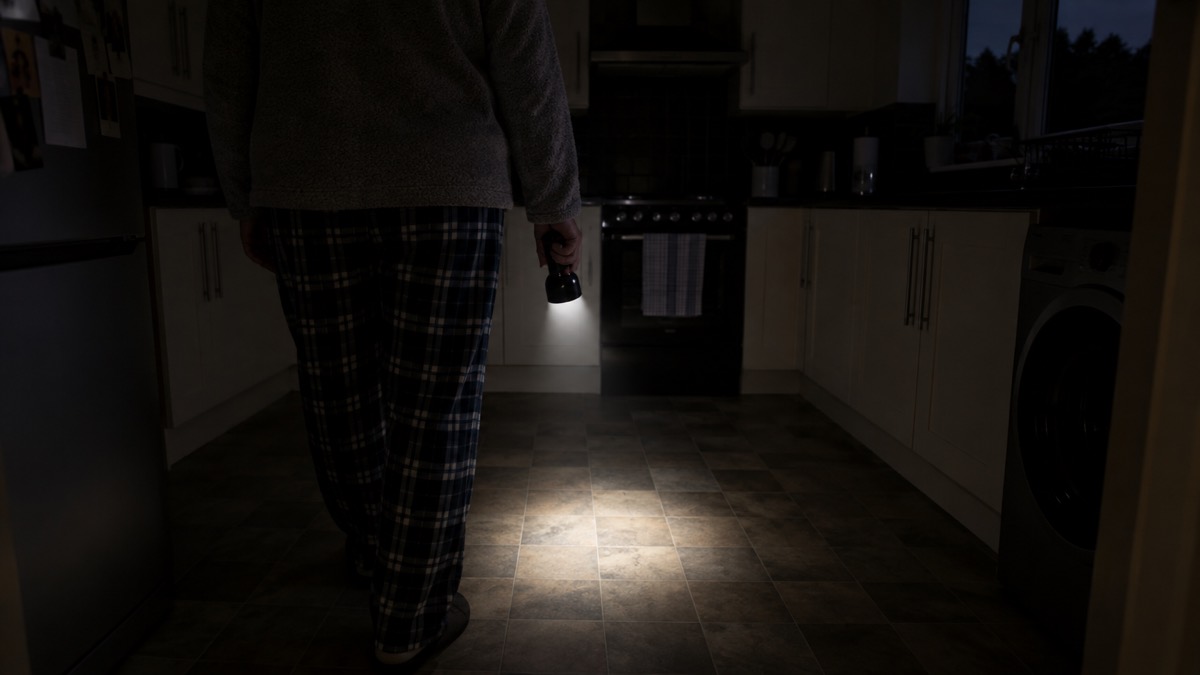
Where to keep it matters as much as what you keep. A torch in a drawer you cannot find in the dark is no use. Our page on where to keep torches so you can find them in the dark covers the practical options. For a full list of what to have ready before a cut, see the power cut checklist and lighting checks before winter.
The torch is also useful beyond the home. Northern Ireland Fire and Rescue Service advises keeping a torch handy13, and the farming safety guidance from SSEN advises using spotlights or a torch to check there are no overhead power lines within reach when working at night or in poor visibility14. That is a reminder that a torch is a safety tool as well as a convenience.
If you want to compare this torch with the rest of the NEBO range, the NEBO brand page lists the models, and our guide to torches: types and how to choose one for home sets out what to look for. For the wider picture of lighting a home in a cut, start with emergency lighting at home and lighting your home safely when the power goes off.
Sources (14)
- Torchy 2K manual, NEBO Tools, 2026-10-25
- Torchy 2K Rechargeable USB-C, NEBO Tools, 2026-10-25
- Power cuts, UK Government Prepare campaign, 2026-10-21
- Prepare an emergency kit, British Red Cross, 2026-10-25
- Are you ready for big coat weather, Northern Powergrid, 2024-11-08
- Torchy 2K USB-C, NEBO Tools, 2026-10-25
- Torchy 2K Blackline Rechargeable USB-C, NEBO Tools, 2026-10-25
- Galileo Tempest 350, NEBO Tools, 2026-10-25
- Batteries, The Caravan Club, 2026-10-25
- Travelling in storms, rain and strong wind, Met Office, 2026-10-26
- Adverse driving conditions, South Wales Fire and Rescue Service, 2026-08-28
- Keeping safe during high winds and heavy rain, North Yorkshire Fire and Rescue Service, 2024-01-22
- Simple steps to keep you safe this summer, Northern Ireland Fire and Rescue Service, 2022-06-24
- Look out, look up, SSEN Distribution, 2025-05-05

 NEBO Newton 500 Torch
 NEBO Davinci 800L
 NEBO Torchy 600 Flex
 NEBO Tac Slyde Torch
 NEBO Slyde King 4K
 NEBO Mycro 900+ Headlamp
 NEBO Edge 800
 NEBO Transport 400
 Fenix E04R Keyring Torch
 Fenix E05R Keychain Torch
 Fenix E06R Pro Pocket Torch
 Fenix E09R Torch