The NEBO Slyde King 4K is a rechargeable handheld torch that doubles as a work light. The maker describes it as a 4,000 lumen torch with 4x zoom and a 1,000 lumen C•O•B work light, with seven light modes in all1. For a household preparing for a power cut, the useful numbers are these: the torch runs for 1 hour on its highest setting, the work light runs for up to 24 hours on its high setting, and a full charge takes 4 to 8 hours depending on the output of the USB supply you use2.
That combination matters because a power cut asks two different things of a light. You want a bright beam to check something outside, find the fuse box or signal for help, and you want a softer, long-lasting light to sit a room in for an evening. The Slyde King 4K is built to do both, with a sliding body that turns the work light on as it opens and off as it closes1.
This page sets out what the maker says the torch can do, how to charge it and read its battery indicator, how to switch between its modes, and how to use it safely when the lights go out. It does not compare it with other torches; it gives you the maker's own figures so you can judge whether it suits your household. The maker describes the Slyde King 4K as a rechargeable torch and C.O.B work light, rated IPX7, which the maker says will withstand temporary immersion in up to 1 metre of fresh water for 30 minutes1.
Brightness and run time: from 4000 lumens for 1 hour to 24 hours on the work light
The headline figure is 4000 lumens, and it comes with a catch that every household should understand before relying on it. The maker lists Flashlight High at 4000 lumens for 1 hour, with a beam distance of 350 metres1. One hour is enough to search a garden, check a fence or light a path for someone arriving home, but it is not an all-evening light. If you leave it on high, it will be flat before bedtime.
The work light is the setting for sitting out a long outage. The maker lists Worklight High at 24 hours of run time, and Worklight Low at 1000 lumens for 4 hours1. The pattern is the one you would expect from any torch: the brighter the setting, the shorter the run. Choosing the lowest setting that does the job is how you make a single charge last through an evening and into the next morning.
| Mode | Brightness | Run time | Beam distance |
|---|---|---|---|
| Flashlight High | 4000 lumens | 1 hour | 350 metres1 |
| Flashlight Low | 400 lumens | 6 hours | 100 metres1 |
| Worklight High | not listed | 24 hours | not listed1 |
| Worklight Low | 1000 lumens | 4 hours | 35 metres1 |
| Red High | not listed | 10 hours | not listed1 |
| Red Low | not listed | 35 hours | not listed2 |
| Red Flashing | not listed | 12 hours | not listed1 |
The maker's own product information gives some figures in more than one place and they do not always match. One maker page lists Flashlight High at 4000 lumens with a 1 hour run time and a 350 metre beam, while another lists a 400 lumen figure for the same mode1. Where the maker's documents disagree, treat the figures as the maker's stated ranges rather than precise guarantees, and expect real run times to vary with the battery's age and the temperature. For a plain explanation of what lumens and beam distance actually mean for a household, see Lumens, Beam Distance and Run Time Explained.
Seven light modes and how to switch between them
The maker lists seven light modes: Flashlight High, Flashlight Low, C.O.B Work Light High, C.O.B Work Light Low, Red High, Red Low and Red C.O.B Flash2. They are split between two parts of the torch. The torch beam is the forward-facing light with a 4x adjustable zoom, which the maker says twists to give either a spot light or a flood light2. The work light is the panel that is revealed when you slide the body open.
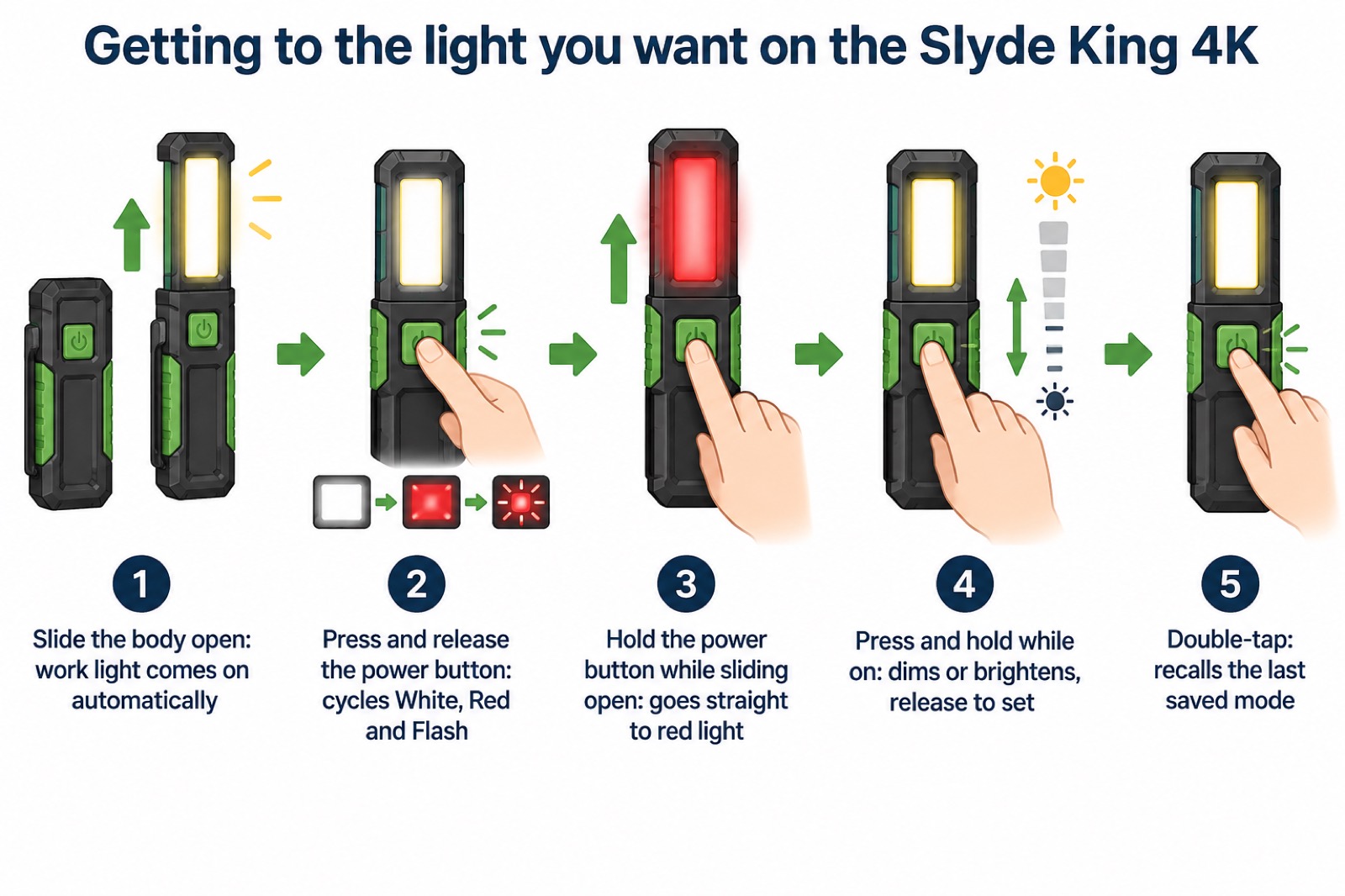
Switching between them works like this. The maker says the C•O•B work light automatically turns on when the body is opened and off when it is closed1. With the work light open, press and release the power button to cycle between White, Red and Flash modes1. The torch beam is operated by the backlit on/off button, pressing it to cycle through modes2.
There is also a dimming function. The maker states that all three lights have continuous dimming and brightening cycling with memory: when the light is on, press and hold the power button to activate dimming, release it to set the brightness you want, and double-tap to recall the last saved mode1. In practice that means you can dial the work light down to a low glow for a child's bedroom and have it come back at that level next time.
Direct-to-Red is the feature worth learning before you need it. The maker's instruction is to hold the power button while sliding the work light open, which takes you straight to red light without cycling through the white modes1. Red light is easier on night vision and less likely to wake someone, which is why it is useful for night-time checks. For more on when red light helps, see What Is Red Light Mode For?.
Charging by USB-C in 4 to 8 hours
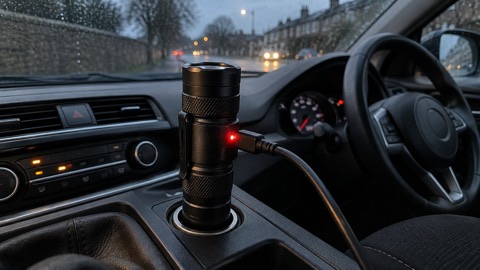
The torch charges through a USB-C port, and the maker gives a recharge time of 4 to 8 hours depending on the output of the USB supply2. That range is wide because a weak charger, such as an old computer port, will sit at the slow end, while a modern USB charger will be quicker. The maker does not state a required charger rating, so use a reputable USB charger you already own and follow the maker's instruction manual.
The box contains a USB-A to USB-C charging cable, a lanyard and an instruction manual2. There is no mains plug in that list, so plan for the charger separately. Charge the torch before an expected storm rather than during one: a power cut takes away the socket you would otherwise use, and a torch that is flat when the lights go out is no help at all.
Charging a lithium-ion torch safely is mostly about the charger and the socket. The maker's safety instructions say to keep the device away from heat, hot surfaces, sparks and open flames, and not to incinerate it2. Charge it on a hard, non-flammable surface rather than on a bed or a pile of papers, and unplug the cable when the indicator shows a full charge. For the wider rules on charging and storing rechargeable torches, see Charging and Storing Rechargeable Torches Safely.
Reading the battery and charging indicator
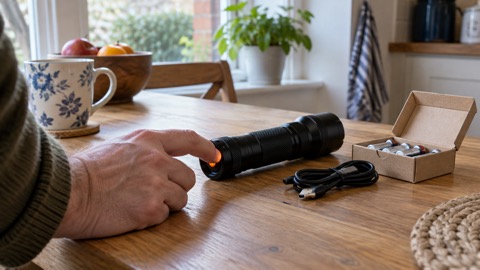
The power button does double duty. The maker says it serves as a battery indicator when the light is on and as a charging indicator when the torch is plugged in1. The colours are simple to learn and worth knowing before an outage, because they tell you whether you have an evening's light or a few minutes.
| Indicator | What it means |
|---|---|
| Orange | 25% or more charge1 |
| Orange flash | less than 25% charge1 |
| Green pulse | charging1 |
| Green | fully charged1 |
The practical rule is to charge whenever you see an orange flash. A torch sitting at less than 25% will not last a long outage on the work light, and the maker's 24 hour figure assumes a full battery1. Check the indicator as part of a seasonal routine, alongside the other lighting checks you do before winter. The Lighting Checks Before Winter checklist sets out what else to test.
The maker also lists a power memory setting, which means the torch returns to the brightness you last used when you double-tap1. That is convenient, but it also means a torch left on its highest setting will come back on high. If you share the torch with children, set it low before you put it away. For more on torch batteries generally, including the difference between built-in packs and standard cells, see Torch Batteries: AA, AAA, 18650 and Built-In Packs.
Using it safely in a power cut
The first safety rule is the maker's own. The maker's warning states: "Do not shine the light directly in someone's eyes." It adds that if the beam shines directly in your own eye, you should look away immediately, and that you should not use magnifying instruments that could concentrate the beam2. At 4000 lumens the torch is bright enough to dazzle, so point it at the floor or the wall when you are talking to someone, and never let a child shine it at a face. For more on this, see Is It Safe to Look Into a Bright Torch?.
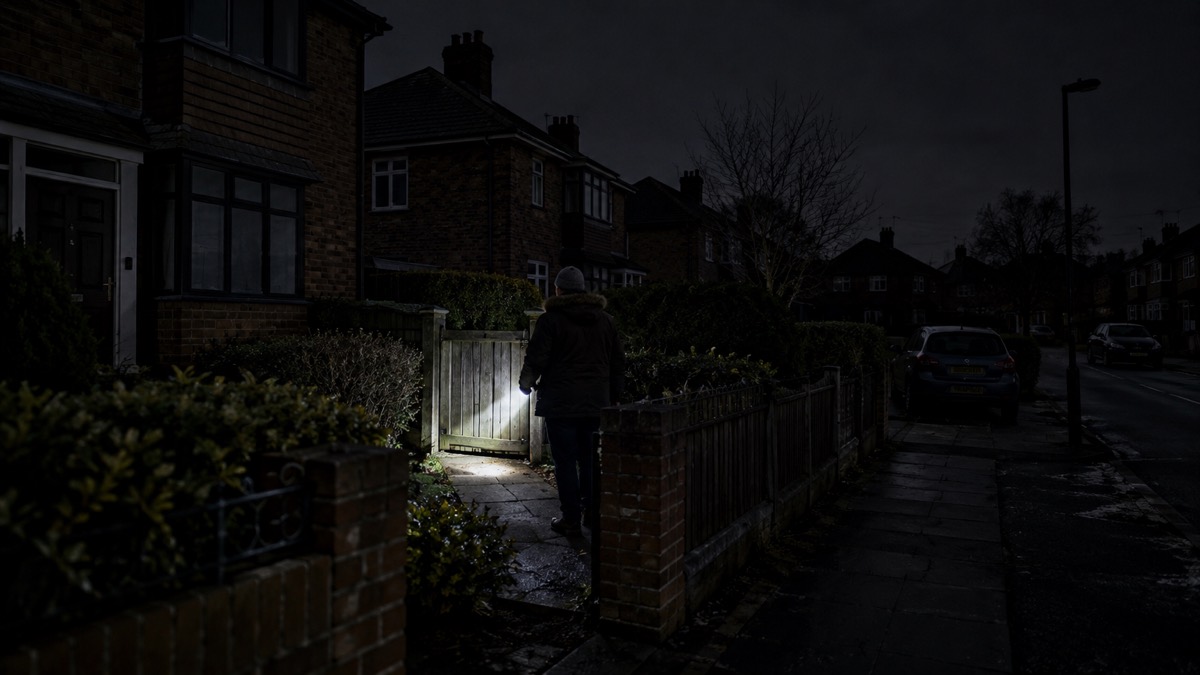
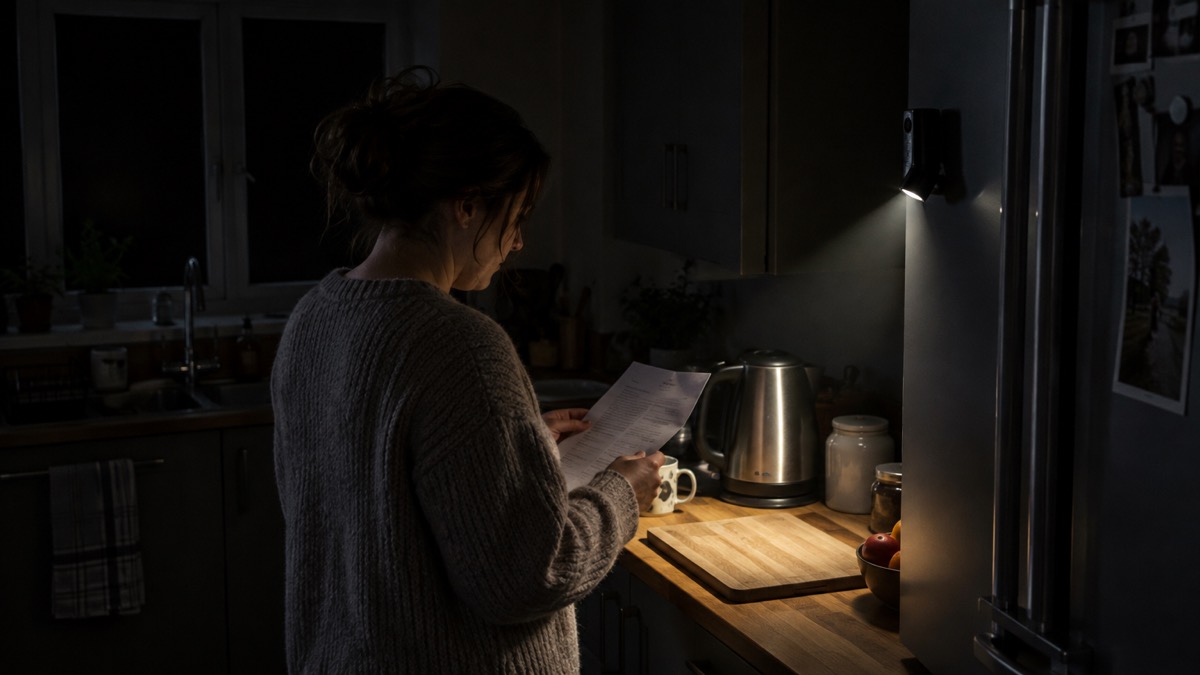
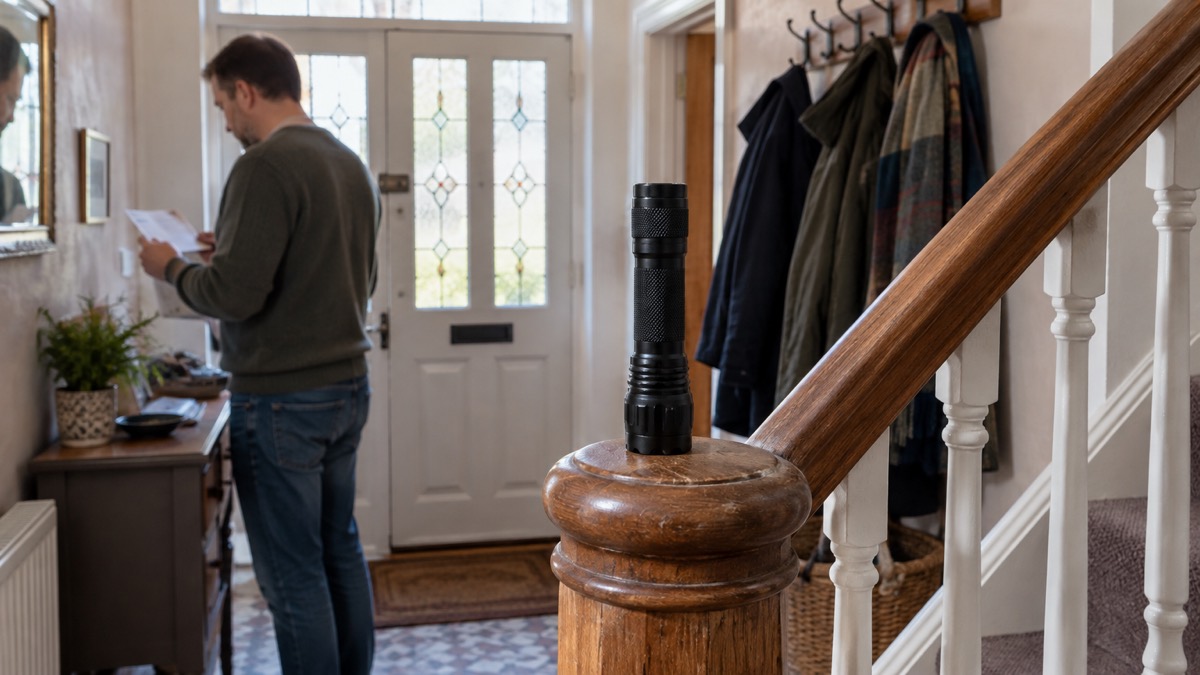
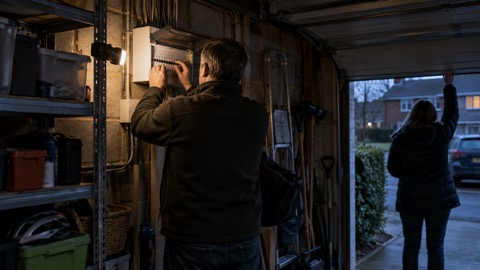
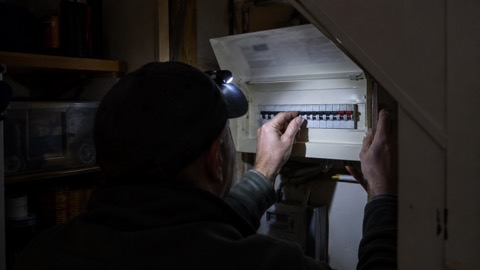
The second rule is about movement in the dark. The fire and rescue service and network operators both advise avoiding moving around in the dark where possible3. A torch helps, but the safest approach in an outage is to stay put in one room with a light, rather than to walk a dark house. Keep the torch where you can find it without a light: a bedside table, a hallway shelf or a kitchen drawer you know by touch. The Power Cut Checklist covers where to keep lights and what else to have ready.
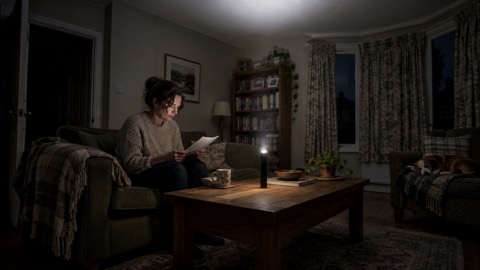
The third rule is about flames. Official guidance from National Grid and Northern Powergrid is to keep a torch handy and avoid using candles or paraffin heaters3. Where candles are used at all, the fire service says to secure them in a proper holder and keep them away from materials that may catch fire, such as curtains, and never to leave a lit candle alone6. A rechargeable torch removes that risk entirely, which is the main reason to have one charged and ready.
There are other power cut habits worth pairing with the torch. Turn off electrical appliances at the socket, particularly heating and cooking appliances, because power could be restored at any time and cause a safety hazard7. Unplug your TV and PC, as they can be damaged by a surge when power returns9. Stay well clear of fallen power lines or damaged equipment and report them rather than approaching10. And if you are using any tool by torchlight, be aware of the power lead so you do not cut through it or trip over it11.
What it is, what it suits and how it is built
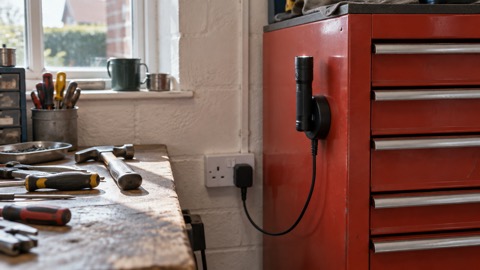
The Slyde King 4K is a rechargeable torch and C.O.B work light in one body1. The maker describes anodised aircraft-grade aluminium construction with a rubberised body and grip, a powerful magnetic base that attaches to any metal surface, and a 4x adjustable zoom1. The magnetic base is the feature that changes how you use it: stick it to a boiler, a fridge or a metal shelf and it lights the job while both hands are free1.
The maker rates it IPX7 waterproof, and states that this means it can survive accidental submersion in up to 1 metre of fresh water for 30 minutes, but that the rating does not cover high-pressure water jets or saltwater exposure2. That is useful for a torch kept in a garage or taken outside in rain, but it is not a diving light. For what these ratings mean in plain terms, see What IPX Ratings Mean for Torches and Lanterns.
| Specification | Maker's figure |
|---|---|
| Product type | Rechargeable torch and C.O.B work light1 |
| Brightness | 4000 lumens torch high, 1000 lumens work light low1 |
| Beam distance | 350 metres torch high, 100 metres torch low, 35 metres work light low1 |
| Run time | 1 hour torch high to 24 hours work light high1 |
| Battery | 1x 2600mAh Li-ion 20650 3.7v2 |
| Charging | USB-C, 4 to 8 hours depending on USB output2 |
| Weight | 527g2 |
| Dimensions | 47mm x 47mm x 210mm, 230mm extended2 |
| Water resistance | IPX72 |
| Body | Anodised aircraft-grade aluminium, rubberised grip, magnetic base1 |
By circumstance, it suits a household that wants one light for both a bright search and a long evening in a dark room, and that is willing to keep it charged. It is less suited to a coat pocket or a child's bedside, given the 527g weight and the 210mm length2. If you want a light that lives on a head or in a hand for close work, a head torch is a different tool; see Torch or Head Torch for a Power Cut?. If you want a light that sits on a table and fills a room, a lantern may suit better; see Lantern or Torch: Which Lights a Room Better?.
Where to get help and what to do next
A torch is one part of a power cut plan. The other parts are knowing who to call and having the right numbers to hand. Keep important documents safe and handy, as official guidance advises, and note your network operator's emergency number so you can report a cut and get updates3. If anyone in the household depends on electricity for medical equipment or has mobility needs, ask the operator about its priority services; the Lights for Older and Disabled People in a Power Cut page explains what help is available.
For the wider picture, the Emergency Lighting at Home section covers torches, lanterns and candles side by side, and Lighting Your Home Safely When the Power Goes Off walks through the first hour of an outage. If you are choosing between rechargeable and battery torches for a household kit, Rechargeable or Battery Torches for Emergencies sets out the trade-offs.
The maker, NEBO, publishes its product information and instructions on its own site, and the instruction manual in the box is the place to check for the charging routine and the safety warnings for this model1. Keep the manual with the torch, and check the torch's indicator as part of your seasonal lighting checks so it is charged when you need it.
Sources (11)
- NEBO Slyde King 4K product page, NEBO, 2026-10-25
- NEBO Slyde King 4K rechargeable torch, NEBO, 2026-10-26
- Preparing for a power cut (easy read), National Grid, 2026
- Strong winds weather warning information and advice, nidirect, 2026-10-24
- Power cuts, Northern Powergrid, 2022-09
- Stay safe this winter, North Wales Fire and Rescue Service, 2016
- We're prepared to support customers during Storm Bert, Northern Powergrid, 2024-11-22
- Repeat power cuts, SSEN, 2026-10-25
- Be informed about hazards: power cuts, UK Government, 2026-10-21
- Power cuts at home, Scottish Fire and Rescue Service, 2026-10-25
- DIY and garden safety, Electrical Safety First, 2026-10-25

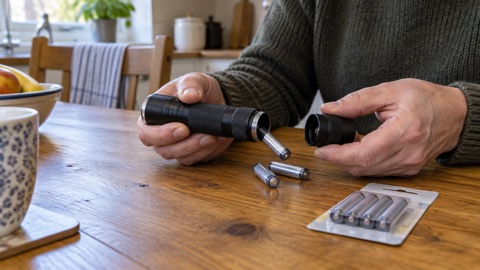 NEBO Newton 500 Torch
 NEBO Davinci 800L
 NEBO Torchy 2K Torch
 NEBO Torchy 600 Flex
 NEBO Tac Slyde Torch
 NEBO Mycro 900+ Headlamp
 NEBO Edge 800
 NEBO Transport 400
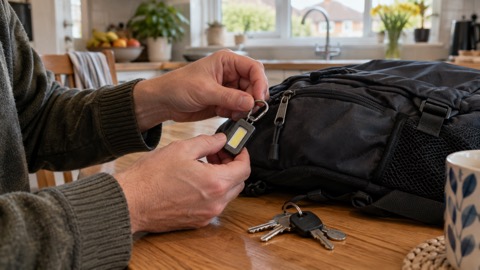 Fenix E04R Keyring Torch
 Fenix E05R Keychain Torch
 Fenix E06R Pro Pocket Torch
 Fenix E09R Torch