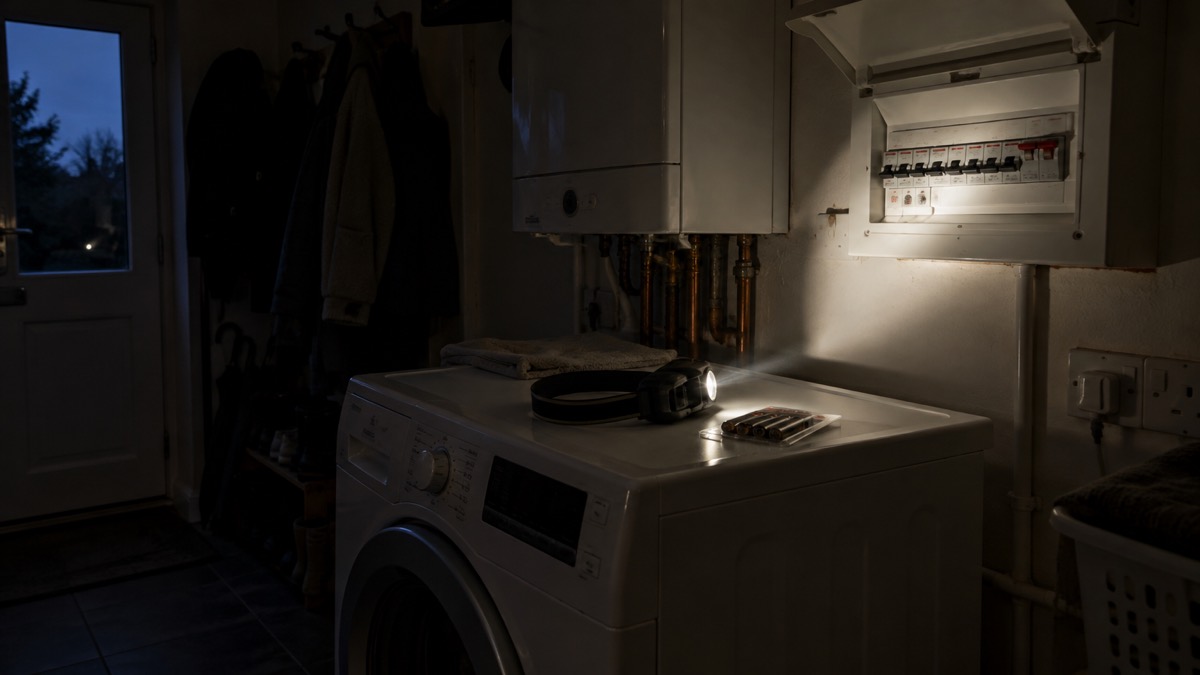
The NEBO Einstein 250 is a compact head torch: a small lamp on a strap that sits on your forehead and leaves both hands free. The maker describes it as offering adjustable, portable lighting so you can keep your hands free, and gives its weight as 76g including the strap1. For a household preparing for power cuts, that is the point of it. You can hold a torch in one hand, but you cannot hold a torch and carry a child, read a meter or change a fuse at the same time.
On its brightest setting the maker lists 250 lumens with a beam that reaches 106 metres, running for 3.5 hours2. On its lowest spot setting it gives 30 lumens and 42 metres for 24 hours1. It runs on three alkaline AAA batteries, which you change by lifting the clasp on the top side of the head lamp and removing the battery compartment cover2. It has seven light modes, including white spot and flood beams and red light, and the maker lists a red strobe at 600 lumens with a run time of 42 hours2.
This page sets out what the torch can do, how long each mode lasts, how to change the batteries, and how to use it safely around other people. It does not compare it with other torches, and it gives no prices.
What the Einstein 250 is and who it suits
The Einstein 250 is a head torch rather than a hand torch or a lantern, and that shapes what it is good for. The maker calls it a compact, 250 lumen headlamp that offers adjustable, portable lighting so you can keep your hands free2. It measures 60mm long, 40mm wide and 45mm high, and weighs 76g with the strap1. That is light enough to forget you are wearing it, which matters if you are wearing it for an hour while you sort out a fuse box by torchlight.
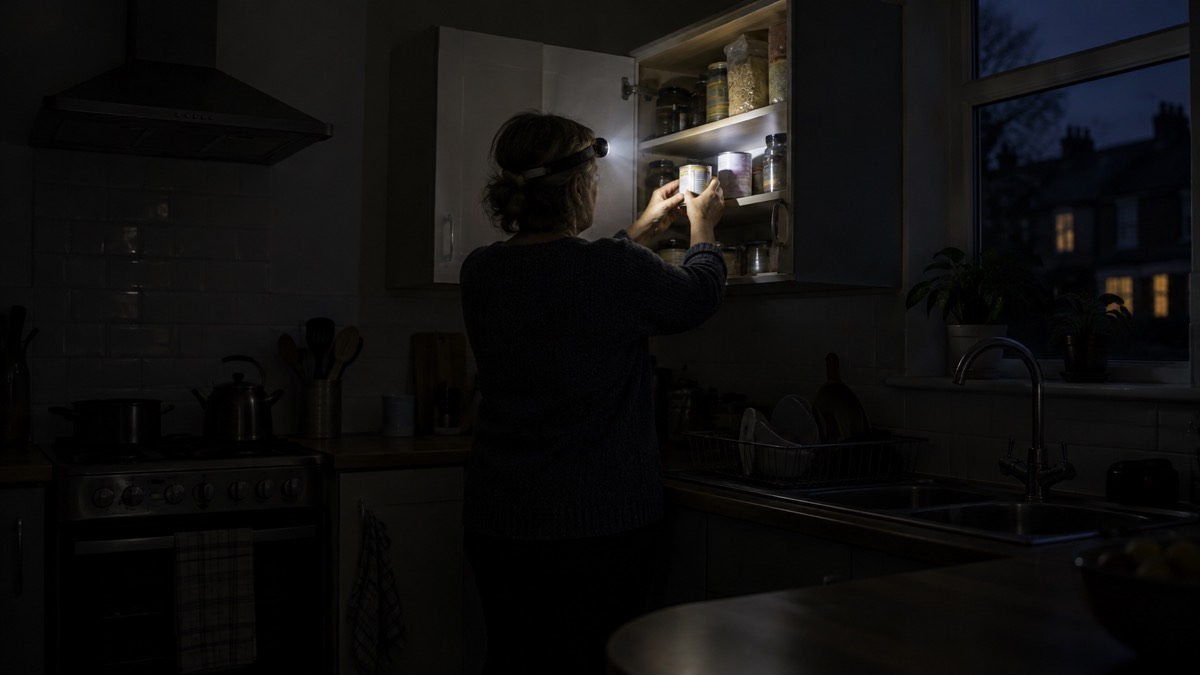
It suits the jobs where you need light exactly where you are looking and both hands free: reading a gas or electricity meter, checking a consumer unit, finding your way down a dark stair, or cooking on a camping stove during an outage. It is less suited to lighting a whole room, which is a job for a lantern; if that is what you need, the guide to battery and rechargeable lanterns sets out the options. If you are weighing up a head torch against a hand torch, the comparison of torch or head torch for a power cut covers the trade-offs.
The maker lists two light sources and two colour options, which it says provides multiple lighting solutions for a variety of tasks1. In practice that means a narrow spot beam for looking into the distance and a wider flood beam for close work, in white or red. The seven modes are spot high, spot low, flood white, flood low, red high, red low and red strobe2.
Specifications
The maker publishes a full set of figures for each mode. The table below sets them out side by side, so you can see what each setting costs you in run time.
| Mode | Brightness | Run time | Beam distance |
|---|---|---|---|
| Spot High | 250 lumens | 3.5 hours | 106 metres |
| Spot Low | 30 lumens | 24 hours | 42 metres |
| Flood High | 80 lumens | 9 hours | 13 metres |
| Flood Low | not given | 34 hours | 2 metres |
| Red High | 3 lumens | not given | 1 metre |
| Red Low | 1 lumen | 40 hours | 0.25 metre |
| Red Strobe | not given | 42 hours | not given |
The maker does not give a beam distance for the red strobe, a brightness figure for flood low, or a run time for red high.
Two things are worth noticing. First, the brightest setting is not the longest lasting: spot high gives you 250 lumens for 3.5 hours, while spot low gives you 30 lumens for 24 hours1. Second, the red strobe is listed at 600 lumens, which is brighter than any of the white modes, and it runs for 42 hours2. That is a signalling light, not a working light.
The torch is rated IP44, which the maker describes as water and dust resistant1. That is a rating for splashes and rain, not for being dropped in a puddle or a bath. If you want to understand what the numbers mean before you rely on a torch outdoors, the guide to what IPX ratings mean for torches and lanterns explains them.
Run time: up to 42 hours on three AAA batteries
The headline run time of 42 hours belongs to the red strobe mode2. If you are using the torch to see by, the figures that matter are lower. Spot low gives 24 hours at 30 lumens, and flood low gives 34 hours1. Those are the settings to use when you are sitting out a power cut and only need enough light to move around safely.
The maker's figures are for alkaline AAA batteries, which is what the unit is designed to run on2. Run time in practice depends on the batteries you fit and how cold they get. A torch left in a cold porch or a car over winter will not last as long as one kept indoors, so keep your emergency torch somewhere warm and dry rather than in a shed.
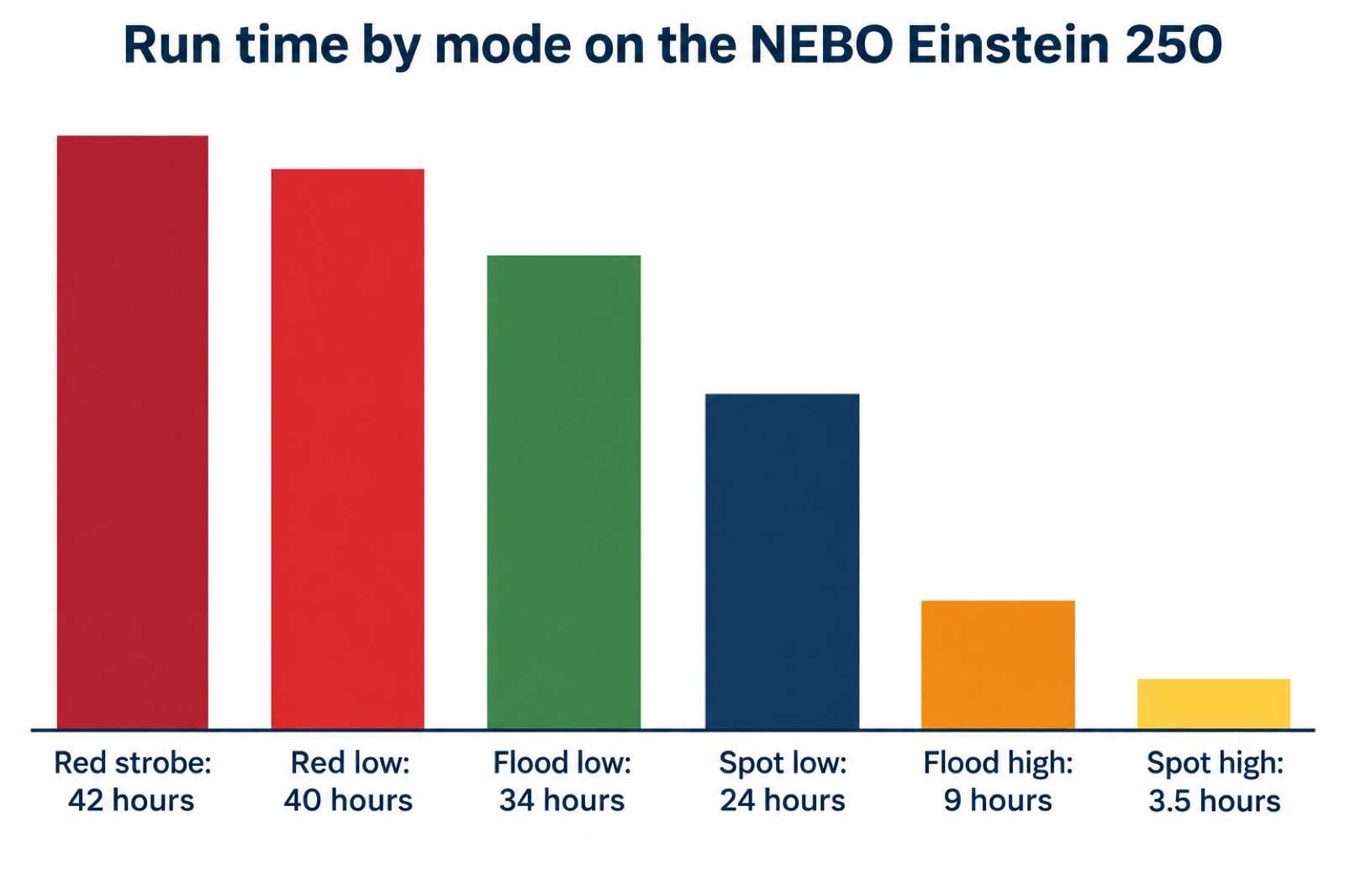
The pattern is simple: the dimmer the setting, the longer it lasts. That is why the lowest settings are the ones to plan around in a long outage, and why a head torch with a genuinely dim mode is more useful than one that only has a bright setting. If you want the general principle explained, the guide to lumens, beam distance and run time covers it, and how long a torch battery lasts on low goes into more detail.
Changing the batteries
The maker's instruction is straightforward. To change the batteries, remove the battery compartment cover by lifting the clasp on the top side of the head lamp2. The unit takes three alkaline AAA batteries2. Fit the new cells the right way round, replace the cover until the clasp clicks shut, and check the torch works before you put it away.
"To change the batteries, remove battery compartment cover by lifting the clasp on the top side of the head lamp."
Keep a spare set of AAA batteries with the torch, and keep them somewhere safe. The NHS advice for parents is to keep spare batteries in a locked cabinet or box, because small batteries are a serious hazard if a child swallows one3. That applies to AAA cells as much as to button cells. If you suspect a child has swallowed a battery, seek medical help immediately rather than waiting for symptoms.
The maker does not list rechargeable AAA cells as an option for this torch, so the safest approach is to fit the alkaline batteries it specifies. If you want to understand the difference between battery types before you buy spares, the guide to torch batteries: AA, AAA, 18650 and built-in packs explains it, and the checklist of spare batteries to keep for your lights helps you work out how many to store.
Using it safely around other people
The maker's safety instructions are clear and worth following exactly. Do not shine the light directly in someone's eyes. If the beam shines in your eye, look away immediately. Do not use magnifying instruments that could concentrate the beam. Keep the torch away from heat, hot surfaces, sparks and open flames, do not incinerate it, and only use it for its intended purpose1.
"Do not shine the light directly in someone's eyes."
That matters more than it sounds. A 250 lumen beam at close range is uncomfortable and can leave someone seeing spots for several minutes, which is dangerous on a dark staircase. When you are moving around a dark house with other people, point the beam at the floor or the wall rather than at faces, and switch to a low setting indoors. If you want to know more about the risk of looking into a bright beam, the guide to whether it is safe to look into a bright torch covers it.
There are practical points for households with children or older people. Keep the torch out of reach of small children when it is not in use, and show older children how to use it without shining it in anyone's eyes. If someone in the house uses a walking frame, crutches, a wheelchair or a walking stick, keep that equipment near to them, keep hallways, landings and stairs clear of anything that might block or slow down an escape, and keep door and window keys nearby so you can get out quickly4. A head torch helps here because it leaves your hands free to hold a handrail or a walking aid.
Red light, strobe and Smart Power Control
The red modes are the ones people ask about most. Red light preserves your night vision better than white light, and it is less conspicuous if you need to move around without being seen. The maker lists red high at 3 lumens for 10h 30m and red low at 1 lumen for 40 hours2. Those are long run times for very little light, which is exactly what you want for checking on a sleeping child or finding your way to the bathroom during an outage.
The red strobe is a different job. A flashing red light is easier to spot from a distance than a steady beam, so it can help you attract attention if you are lost or injured. Use it to signal, not to see by. The guide to how to use SOS and strobe modes on a torch explains when a flashing light helps and when it does not.
The maker also describes a Direct-to-Red feature: when the unit is off, press and hold the power button to access it2. That means you can go straight to red light without cycling through the bright white modes, which is useful at night when you do not want to blind yourself or anyone else. If you want to understand red light more generally, the guide to what red light mode is for covers it.
Wearing it over a hat, and what the casing is made of
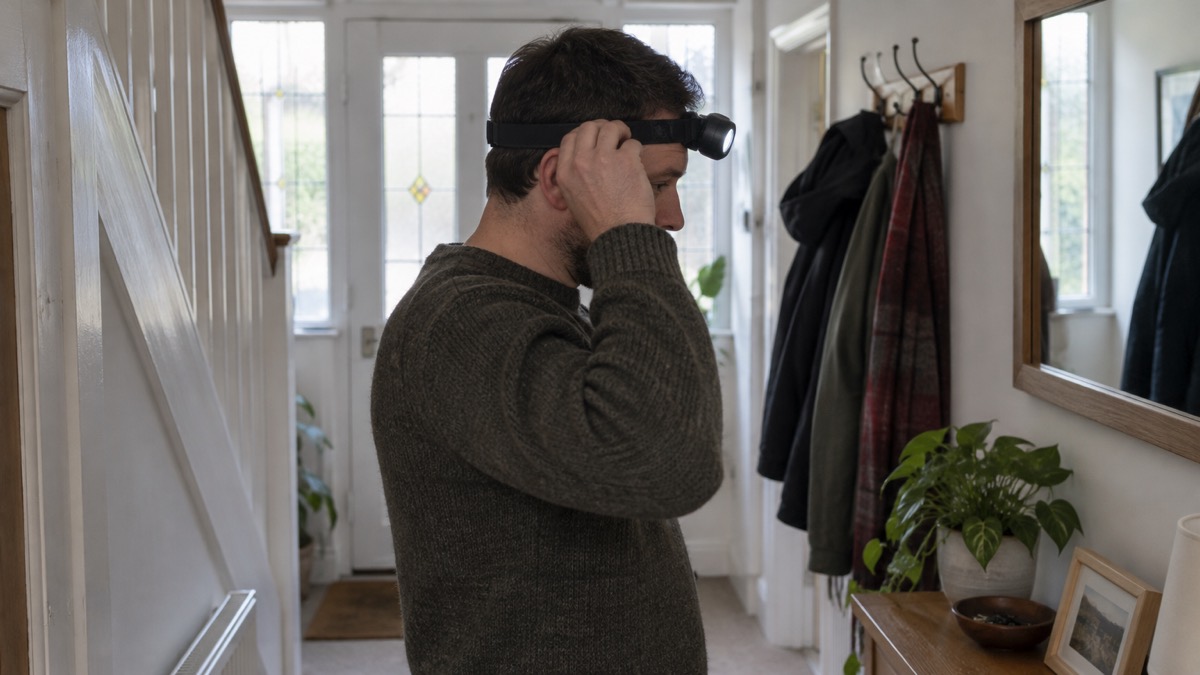
The maker gives the weight as 76g including the strap1, which is light enough to wear over a close-fitting hat or thin beanie in cold weather. A loose hat or a thick bobble may make the strap sit unevenly, so adjust it so the lamp sits steady on your forehead. The maker does not give a maximum head size, so try it on before you rely on it.
The casing is ABS, or Acrylonitrile Butadiene Styrene, which the maker describes as a robust thermoplastic polymer known for its strength and impact resistance2. That is a sensible material for a torch that will be dropped, knocked against a shelf or stuffed into a kit bag. It is not indestructible, so treat it as you would any small electrical item.
The IP44 rating means the torch is water and dust resistant1. That suits rain and splashes, but it is not a rating for being submerged. Do not take it swimming or leave it out in a downpour for hours.
Storing it in an emergency kit
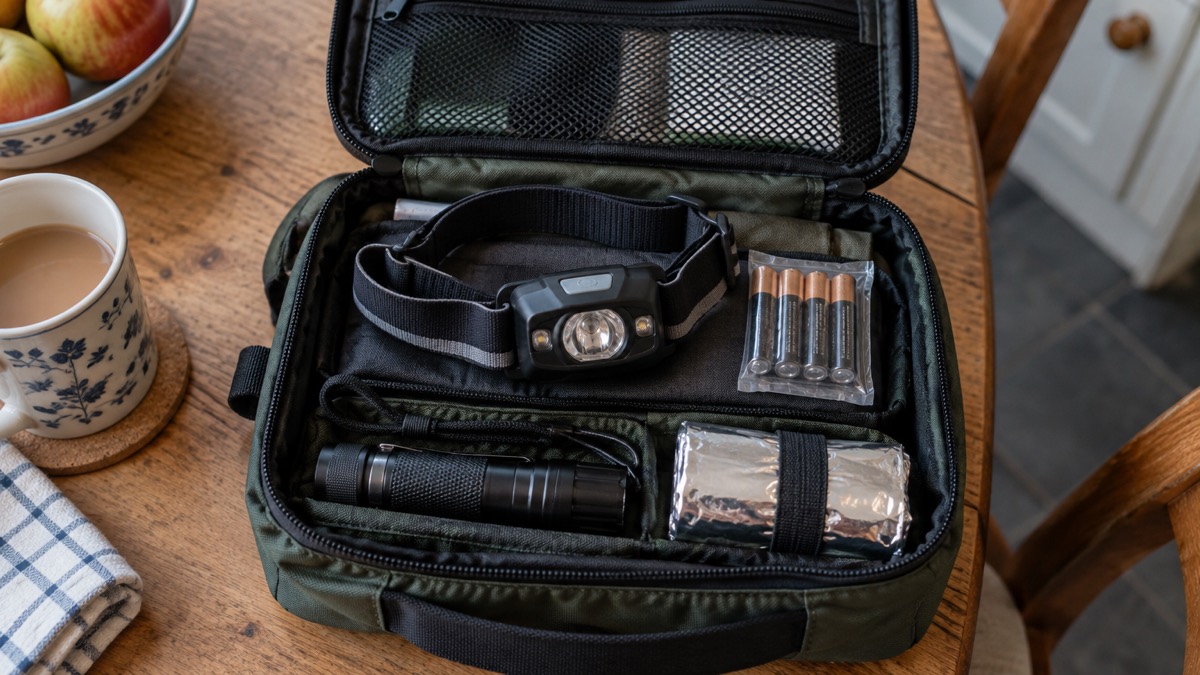
A head torch is only useful if you can find it when the power goes. Official emergency planning advice is to keep your kit in a safe place at home where you can reach it easily, in a waterproof bag5. The same advice applies to the torch: keep it with the rest of your kit, not in a drawer you have to hunt through in the dark.
The Scottish Government's emergency kit guidance suggests a three days' supply of bottled water and food that does not need cooking and will not go off, or that you rely on6. A torch belongs in the same kit, along with spare batteries. Keep a copy of your household emergency plan somewhere visible, such as near your fuse box, fridge or emergency kit7.
If you have pets, the same principle applies: keep a couple of days' supply of food, ideally tinned or long lasting, in their own kit8. A torch helps you find the pet food in a dark cupboard.
Where to get help and further reading
If you need advice on lighting your home safely during a power cut, the guide to lighting your home safely when the power goes off covers the options. If you are choosing between a head torch and a hand torch, the comparison of torch or head torch for a power cut sets out the trade-offs. For the wider picture on preparing for outages, the power cuts section covers what to expect and how to plan.
If you have a disability or care for someone who does, the Scottish Government's guidance for disabled people and carers suggests keeping essential mobility equipment within easy reach, including during the night9. A head torch helps here because it leaves your hands free to use a walking aid or to help someone else.
For fire safety advice, your local fire and rescue service can help. Many offer free home fire safety visits, and the guide to free home fire safety visits from your fire service explains how to arrange one. If you are buying any electrical item as a gift, make sure it has a British or European safety mark10.
The NEBO Einstein 250 is made by NEBO, and the maker's own product page is the place to check the latest specifications and instructions2.
Sources (10)
- NEBO Einstein 250 product listing, NEBO, 2026-10-25
- NEBO Einstein 250 product page, NEBO, 2026-10-25
- Swallowed something, Alder Hey Children's NHS Foundation Trust, 2025-09-25
- Fire safety booklet, London Fire Brigade, 2026
- Get prepared, Carmarthenshire County Council, 2026-10-25
- Emergency kit, Ready Scotland, 2026-10-22
- Power cut plan, Northern Powergrid, 2026-10-26
- Your pets, Wiltshire and Swindon Prepared, 2026-10-25
- Disabled people and carers, Ready Scotland, 2026-10-25
- Reminder not to cut corners with electrical safety this Christmas, Wiltshire and Swindon Prepared, 2026-10-25

 Fenix HP16R Head Torch
 Ledlenser KidBEAM4