

Fenix is a lighting brand, and for a UK household the useful part of its range is simple: handheld torches, head torches and lanterns that run on batteries and keep working when the mains does not. The fire and rescue service in Scotland tells households to keep torches and batteries in an easy to find place1, and the London Fire Brigade's winter guide says to keep a fully charged torch handy2. That is the job these lights do.
What you need to know before you buy or rely on one is how long it lasts, how it charges, and how to store it so it is ready. A Fenix LD02 V2.0 runs for 75 hours on its 1 lumen Low setting3, which is the kind of endurance that carries a household through a long outage. A CL09 Mini Lantern gives 2 hours 40 minutes at its brightest 200 lumen Turbo setting4, so brightness and duration trade off against each other.
This page sets out what each type of Fenix light is for in an emergency, how the batteries and chargers work, how to keep a light ready, and what the UK warranty and safety notices mean for owners. For the wider picture, see Emergency Lighting at Home: Torches, Lanterns and Candles and Power Cuts: A Household Guide.
What Fenix makes for UK households
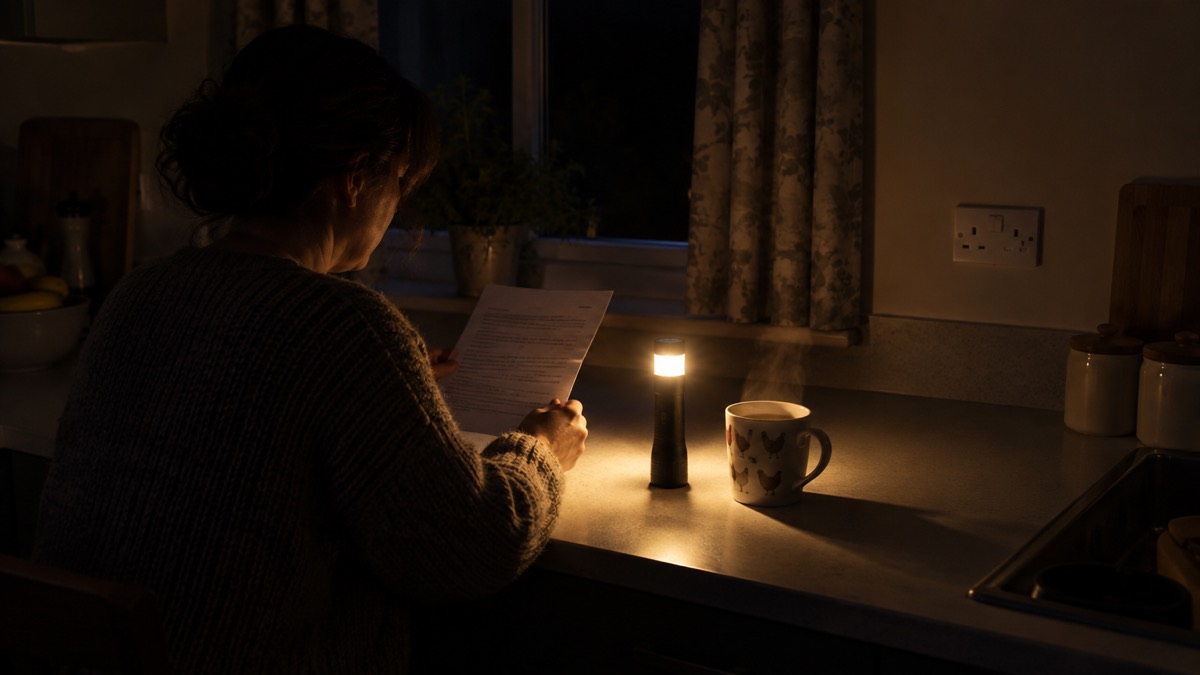
Fenix's UK range is built around portable light: small everyday torches, larger handheld torches, head torches and lanterns, plus the batteries and chargers that feed them. For emergency planning the relevant question is not what a light does on a camping trip but what it does in a power cut, after a storm, or when you have to switch the power off at the mains.
Official guidance across the UK is consistent on this. The London Fire Brigade's extreme weather guide says to keep a fully charged torch handy2. Cornwall Council's snow and ice advice says to keep torches, and any batteries, to hand in case lighting fails or you need to switch off power8. North Devon Council lists a torch as part of being prepared for emergencies9, and the emergency kit checklist from Newport City Council specifies a torch, battery or wind-up10.
That last point matters when you are choosing between Fenix models. A battery torch depends on having the right cells and a charged battery; a wind-up torch does not. Fenix makes battery lights, so the household job is to keep the batteries charged and spares to hand. The rest of this page takes each type of light in turn and says what it is for.
Handheld torches for power cuts
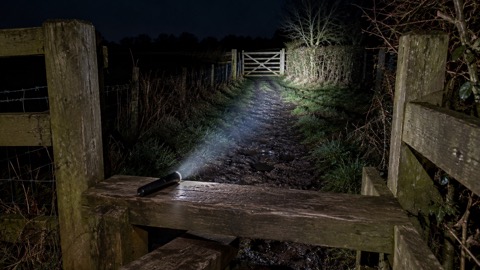
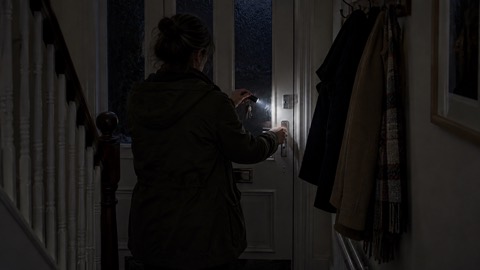
A handheld torch is the first light most households reach for, and the official advice is to have one ready rather than to search for one. Keep a torch handy, as the adverse weather guidance for Llangattock community council puts it11, and keep torches and batteries in an easy to find place1.
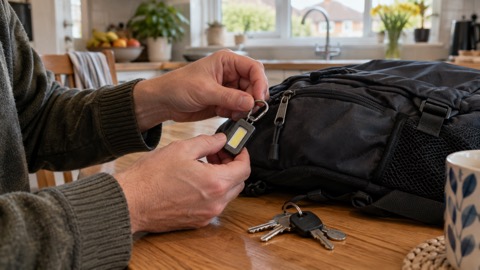
Fenix's handheld models differ mainly in size, output and how they charge. The LD02 V2.0 is a pen-sized light that takes an alkaline AAA 1.5V battery, so it can be fed from ordinary shop-bought cells3. The PD35 V2.0 is a larger torch with 5 brightness levels plus strobe6. The LD30 is a mid-size light supplied with a Fenix 3400mAh USB battery that has a built-in Micro USB charge socket, charged from a mobile phone charger or a portable outdoor charger7.
For a household plan, the differences that matter are these:
- Battery type: a light that takes standard AAA cells is easy to keep fed; a light with a rechargeable 18650 cell needs charging arrangements that survive a power cut.
- Run time on low: the LD02 V2.0's 75 hours at 1 lumen3 is the figure to weigh against brighter settings.
- Water resistance: the LD02 V2.0, PD35 V2.0 and LD30 are all rated to 2 metres depth3, which covers rain and splashes.
- Spares in the box: the PD35 V2.0 includes a holster, lanyard, 2 spare O-rings and a spare rubber switch boot6; the LD02 V2.0 includes a spare O-ring3.
If you are building a kit from scratch, the Emergency Kit guide sets out what else belongs alongside a torch. If you want the full range of handheld options, the Fenix LD35R and Fenix LR60R pages cover the larger models.
Head torches: light with both hands free
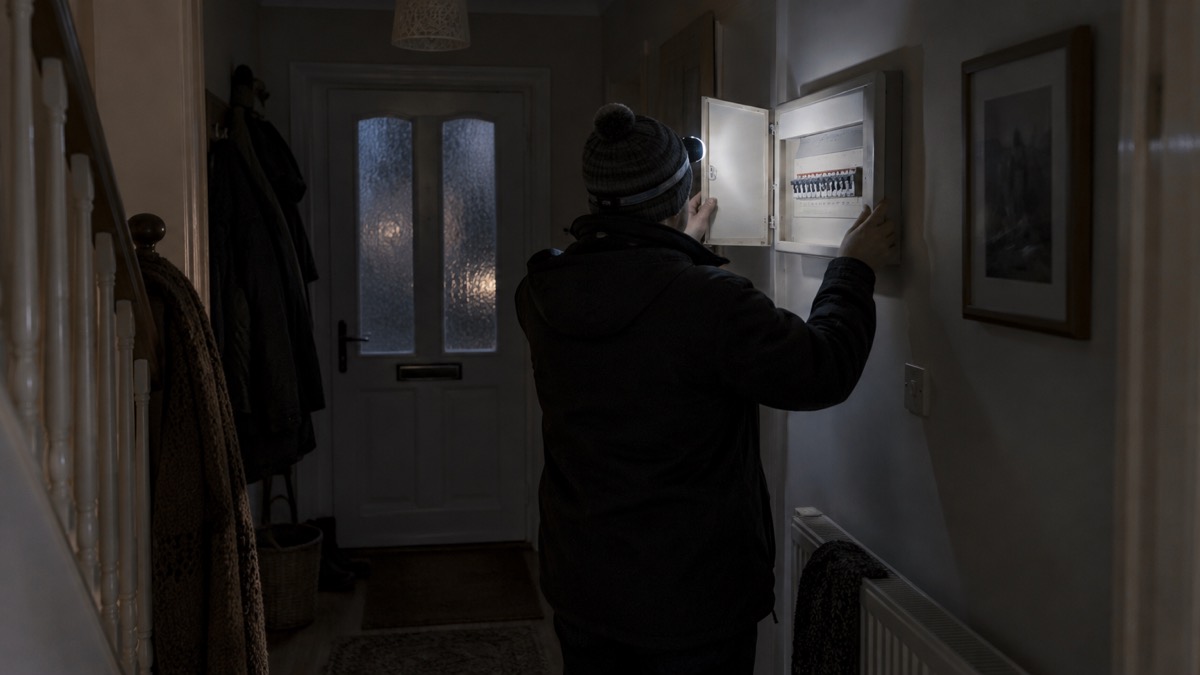
A head torch is the option to consider for hands-free lighting, and the guidance is to look for models with adjustable brightness and multiple beam settings12. That advice matters in an emergency because the jobs you do in the dark usually need both hands: finding the fuse box, checking on a neighbour, reading a meter, or working through an emergency kit.
The Fenix HL45R is intended for industrial and work use, fishing, camping and around the home5. It has On/Off gesture control via a wave of the hand in front of the headlamp, and this function can be disabled by the user5. In a power cut, gesture control is useful when your hands are full; being able to switch it off matters if you are wearing the lamp near others or want to avoid accidental activation in a bag.
The HL45R carries a 5 year UK warranty, with a 1 year battery warranty5. It is listed as in stock by the UK distributor5, which is the practical sign that you are buying through the official channel.
For a household, a head torch earns its place alongside a handheld torch rather than instead of one. A head torch lights what you are looking at; a handheld torch lights the way ahead. The Fenix HP16R page covers another head torch option in the range.
Lanterns for lighting a room
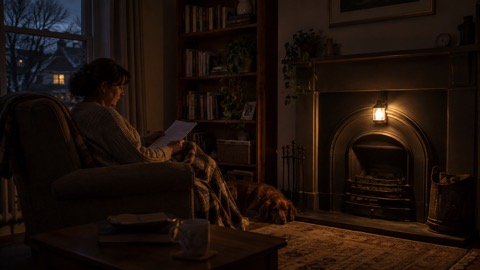
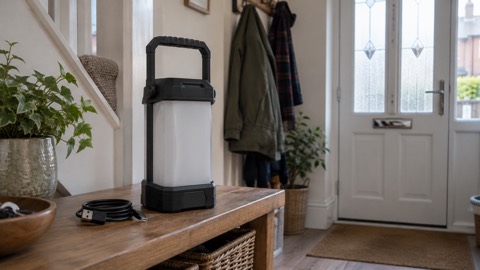
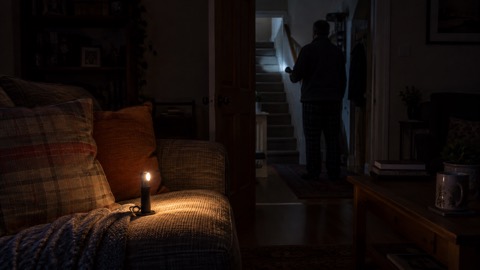
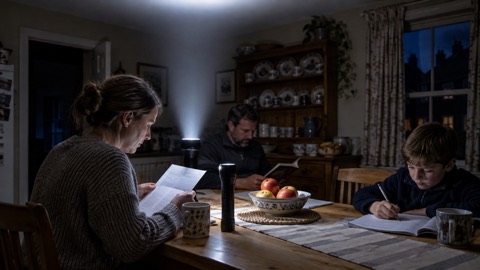
A torch lights a spot; a lantern lights a room. When the power goes in the evening, a lantern placed on a table gives a household somewhere to sit, eat and read without pointing a beam at the ceiling.
The Fenix CL09 Mini Lantern has a 200 lumen maximum output and a choice of 4 Neutral-White light outputs from 1 to 200 lumens, plus red, red flashing and green outputs4. It runs on 1 x CR123 battery4. Its Turbo setting of 200 lumens lasts 2 hours 40 minutes4. The distributor also lists a High setting of 80 lumens for 5 hrs 40 mins; the two figures describe different settings rather than contradicting each other, and the lower setting is the one to use when you want the light to last through an evening.
The lantern also offers a red flashing mode4. Keep the lantern on its lowest usable setting for general room light and save the higher outputs for when you need them.
The wider Fenix lantern range is covered on its own pages: Fenix CL20R V2.0, Fenix CL26R Pro, Fenix CL28R and Fenix CL30R. For how lanterns, torches and candles compare for lighting a home in an outage, see Emergency Lighting at Home.
| Light type | What it does in an outage | Fenix examples |
|---|---|---|
| Handheld torch | Lights the way, checks on things, carried room to room | LD02 V2.0, PD35 V2.0, LD303 |
| Head torch | Hands-free light for tasks and checks | HL45R5 |
| Lantern | Lights a room from a table or shelf | CL09 Mini Lantern4 |
Batteries and chargers for Fenix lights
How a Fenix light is powered decides whether it still works on day three of a power cut. There are two approaches in the range, and they suit different households.
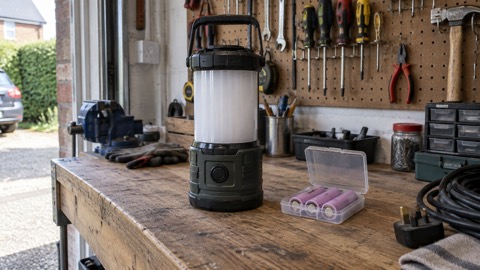
The first is standard cells. The LD02 V2.0 accepts an alkaline AAA 1.5V battery3, and the CL09 Mini Lantern runs on a CR123 cell4. A household that keeps a stock of the right cells can keep these lights running without mains power at all.
The second is rechargeable lithium cells. The LD30 is supplied with a Fenix high capacity 3400mAh USB battery that has a built-in Micro USB charge socket, charged using a mobile phone charger or a portable outdoor charger, with the charge cable supplied7. The battery type is 18650, supplied as the ARB-L18-3500U USB Li-ion battery7. The ARB-L18 is the spare cell to keep for a light of this kind: a charged second battery means you can swap rather than wait.
For a household, the choice comes down to circumstance. If you want lights that need no charging arrangements at all, standard-cell models are simpler. If you want higher output and are willing to plan charging, the rechargeable models give more light per gram. Either way, keep the right spares with the light.
Charging and storing lights safely
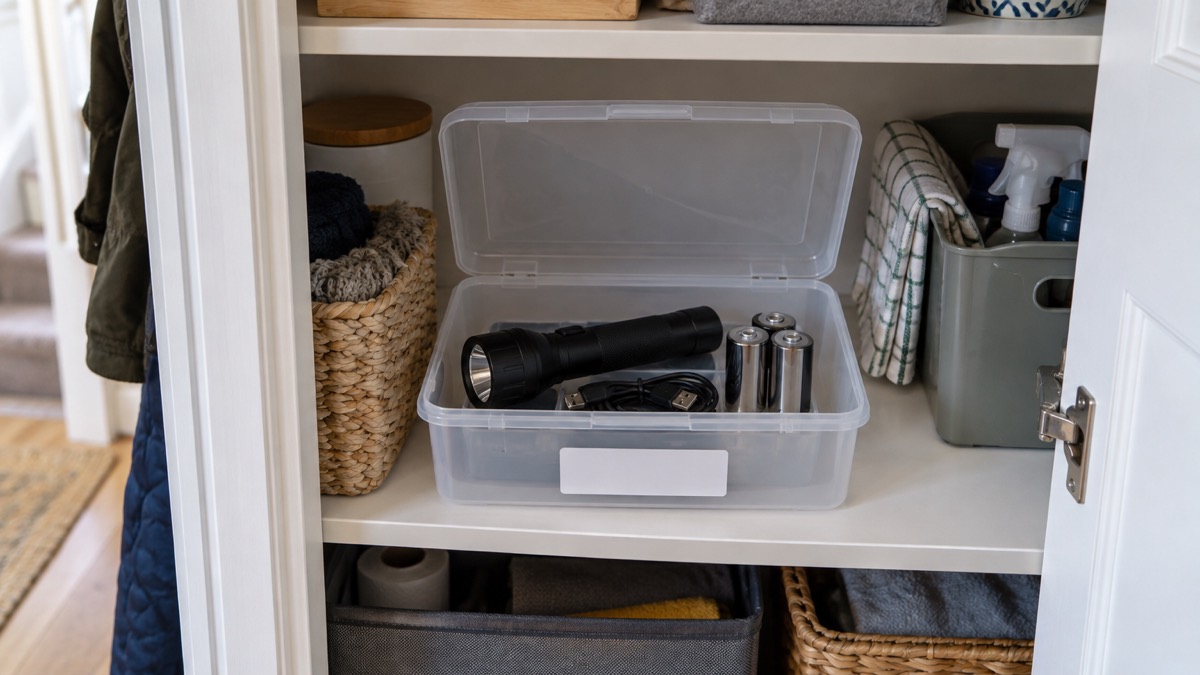
Charging and storage are where a good light becomes an unreliable one. The independent safety guidance on electrical lighting is to read and follow the manufacturer's instructions and keep them for future reference, and to keep the packaging for safe storage after use13. That applies to a torch as much as to a string of lights: the maker's instructions tell you which charger and which battery the light is built for.
For a Fenix light with a USB battery, charge it with the cable supplied with the light7. Do not improvise a charger for a lithium cell. Store the light somewhere cool and dry, in its packaging where you have kept it13, and somewhere you can reach in the dark: official guidance is to keep useful items in one easy-to-find place, ideally somewhere accessible if the lights are not working9.
A simple routine keeps a light ready: charge it, use it briefly to confirm it works, store it where you will find it, and check it again at the start of winter. The London Fire Brigade's winter guide is explicit that the torch you rely on should be fully charged2.
Keeping a Fenix light ready for an emergency
A light is only part of a plan. Official guidance is to keep a torch at home in the event of an emergency10, and to keep useful items in one easy-to-find place, ideally somewhere accessible if the lights are not working9. The point of both is the same: in the dark, you should not have to search.
There are moments when a light does more than light a room. The North West Ambulance Service asks households expecting an ambulance to switch on external and internal lights if it is dark, so the home is easy for crews to find14. A torch or lantern by the door, and a light you can put in a window, helps with that. Falls prevention guidance also suggests a lamp, night light or torch by the bed in case you need to get up during the night15, so a light kept within reach means you can find your way without stumbling.
A workable routine for a household:
- Keep a torch and spare batteries in one known place1.
- Keep a fully charged torch handy, especially before winter weather2.
- Keep torches and batteries to hand in case lighting fails or you need to switch off power8.
- Check the light works and the battery is charged at the start of each winter.
- Keep a light where you can reach it from bed, and a phone or alert device nearby15.
For households with older or disabled members, or anyone who depends on power for medical equipment, the Extra Help in an Emergency guide covers the Priority Services Register and other support. The Getting Started guide sets out how lighting fits the wider household plan.
Warranty and support for UK owners
Fenix lights sold through the UK distributor carry a 5 year UK warranty. The LD02 V2.0 is listed with a 5 year UK warranty3, and the HL45R with a 5 year UK warranty and a 1 year battery warranty5. The battery warranty being shorter than the light warranty is worth knowing: the cell is the part most likely to need replacing first.
Support starts with the seller. Buy from a seller who states the UK warranty and shows the model as in stock, as the distributor's HL45R page does5, and keep your proof of purchase. Register the product with the manufacturer: the fire and rescue service advises registering electrical items so you are informed of any safety recalls16, and the same advice appears in guidance on e-bikes and e-scooters, to register your product with the manufacturer for safety updates, recalls and warranties17.
Spares are part of support. The PD35 V2.0 ships with a holster, lanyard, 2 spare O-rings and a spare rubber switch boot6, and the LD02 V2.0 ships with a spare O-ring3. O-rings are the seals behind a light's water resistance rating, so a worn seal is the first thing to replace if a light has been used hard. Keep the spares with the light.
If a light fails within warranty, contact the UK seller you bought it from with your receipt. The Emergency Kit guide explains how to keep a kit maintained so that a failed item is replaced before you need it.
Safety notices and recalls
No Fenix product recall appears in the official notices reviewed for this page. The recalls published by the Office for Product Safety and Standards are listed on its website18, and the government's product safety alerts, reports and recalls list is the place to search for a specific product19. A recent example of the kind of notice that appears there is the recall of Bull and Cygnus Fire Alarm Detection Systems20; it is not a Fenix product, but it shows the form a recall takes and why checking matters.
The practical steps for a Fenix owner are the same as for any electrical item:
- Register the light with the manufacturer so you are told about any recall16.
- Check the Electrical Safety First website for recalls or safety notices21.
- Search the government's list of product safety alerts, reports and recalls19.
- Keep the maker's instructions and the packaging for safe storage13.
For fire safety at home more generally, see Home Emergencies: Fire, Carbon Monoxide, Gas Leaks and Burst Pipes. For the lighting choices across all makers and types, the Emergency Lighting at Home guide is the place to start.
Sources (21)
- Power cuts, Scottish Fire and Rescue Service
- Extreme weather winter guide, London Fire Brigade, 2025-01
- Fenix LD02 V2.0, Fenixlight UK, 2026-10-26
- Fenix CL09 Mini Lantern, Fenixlight UK, 2026-10-25
- Fenix HL45R Focusing Headlamp, Fenixlight UK, 2026-10-26
- Fenix PD35 V2.0, Fenixlight UK, 2026-10-25
- Fenix LD30, Fenixlight UK, 2026-10-26
- Snow and ice in Cornwall, Cornwall Council, 2025-10-01
- Be prepared for emergencies, North Devon Council
- Emergency kit checklist, Newport City Council, 2026-10-29
- Adverse weather events, Llangattock Community Council, 2026-10-25
- Lighting guide for hiking and camping, Lifesystems, 2025-10-08
- Christmas lights safety, Electrical Safety First, 2026-10-25
- Preparing for an ambulance arrival, North West Ambulance Service, 2026-04-20
- Falls prevention, Staffordshire County Council
- Electrical fire safety, Greater Manchester Fire and Rescue Service, 2026-10-29
- E-bikes and e-scooters, Cheshire Fire and Rescue Service, 2026-09-30
- Electrical fire safety leaflet, Greater Manchester Fire and Rescue Service
- Fire safety prevention, Fire Kills, 2026-03-25
- Product recall: Bull and Cygnus Fire Alarm Detection System, Office for Product Safety and Standards, 2026-08-12
- Electrical items, London Fire Brigade, 2026-05-20
 Fenix CL20R V2.0
 Fenix CL26R Pro
 Fenix CL28R
 Fenix CL30R
 Fenix E04R
 Fenix E05R
 Fenix E06R Pro
 Fenix E09R
 Fenix LD35R
 Fenix LR60R
 Fenix HP16R