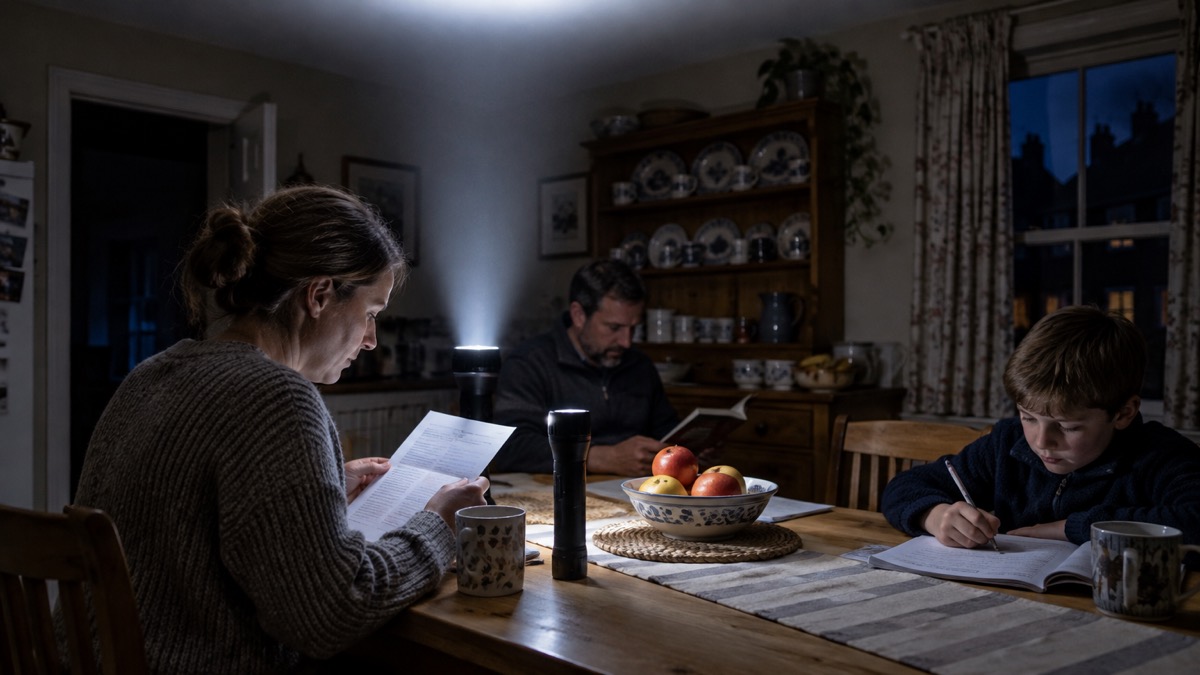
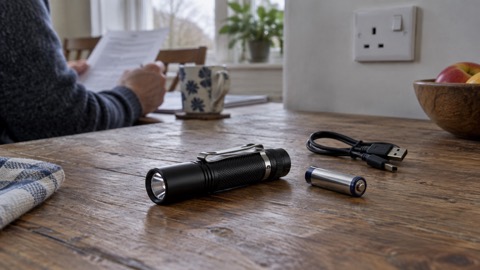
The Fenix LD35R is a rechargeable hand torch with a main beam of up to 1800 lumens and a reach of 337m, plus a set of side lights in white, red and blue for lighting a room or signalling. It runs on an 18650 cell, charges over USB-C in about 3 hours, and is rated IP68 waterproof and 1.5m drop tested1. For a household preparing for power cuts, its most useful feature is not the headline brightness but the low settings: 20 lumens for 101 hours 54 minutes on the main beam, or 5 lumens for 86 hours 35 minutes from the white side panel1.
That matters because a power cut is usually a test of endurance rather than reach. Official guidance for households is to keep a torch handy and to leave a light on so you know when power is restored2. A torch that can run for days on its lowest setting, stand on its tail to light a ceiling, and switch to a red signal that lasts 51 hours 7 minutes is doing the job a household actually needs1.
This page sets out what the LD35R can do, how long each mode lasts, which batteries it accepts and which it must not, how to charge it, and the safety features that protect it and you. It also covers how to use it in a power cut, and where to get help when the lights go out.
What the Fenix LD35R is and who it suits
Fenix describes the LD35R as suitable for camping, industrial maintenance, domestic tasks, car maintenance, emergency use and search and rescue1. That list is broad, and it tells you what kind of torch this is: a general purpose hand torch that is built to be carried and used rather than a specialist searchlight or a tiny keyring light.
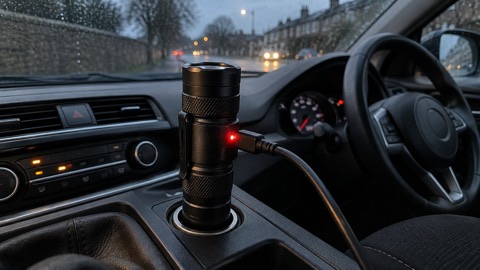
The body is made from A6061-T6 aircraft grade aluminium, measures 136.4mm long with a 34mm head and 25.4mm body, and weighs 185 grams including the battery1. It has a pocket clip, so it can be carried on a pocket or a belt, and it comes with a holster and lanyard in the box1. For a household, that means it can live in a kitchen drawer, a hallway cupboard or a car glovebox and still be to hand when the power goes.
The light comes from a Luminus SST40 Gen2 LED for the main beam and a COB light strip for the side panel1. The main beam has a colour temperature of 6500K and the white panel 8000K, so both are cool white rather than warm1. The front has a smooth aluminium reflector and a glass optical lens with flood diffusers, which is what shapes the beam and spreads the side light1.
It is controlled by a dual side switch: a toggle to choose between the torch beam, the white side light and the coloured side light modes, and an electronic push button for on, off, lock, output level and strobe1. The torch beam also has an intelligent memory that remembers the last output you used, so it comes back on at the level you left it1.
If you are weighing up whether a hand torch or a head torch is the better fit for your household, the torch or head torch comparison sets out the trade-offs. The LD35R sits firmly in the hand torch camp, but its tail stand and side lights let it act a little like a lantern when you need one.
Specifications: 1800 lumens, 337m beam and an IP68 body
The headline figures are a maximum output of 1800 lumens and a maximum beam distance of 337m, both on Turbo1. Those are the numbers to quote if someone asks how powerful it is, but they are not the numbers that decide how useful it is in a power cut. The table below sets out the physical specification as Fenix lists it.
| Specification | Fenix LD35R |
|---|---|
| Maximum output | 1800 lumens1 |
| Maximum beam distance | 337m1 |
| LED | 1 x Luminus SST40 Gen2, 1 x COB light strip1 |
| Battery | 18650, or 2 x CR123A non-rechargeable1 |
| Charging | USB-C, inner waterproof port with rubber cover1 |
| Waterproof rating | IP681 |
| Drop rating | 1.5m drop tested1 |
| Body material | A6061-T6 aircraft grade aluminium1 |
| Dimensions | 136.4mm long x 34mm head x 25.4mm body1 |
| Weight | 185 grams including battery1 |
| Bezel | Stainless steel with ceramic glass breaker inserts1 |
| Tail | Magnetic tail cap, tail stand1 |
| Warranty | 5 year UK warranty, 1 year battery warranty1 |
The IP68 rating is the one to understand if you are keeping the torch for emergencies. It means the torch is protected against dust and against water, so rain, a splash or a drop into a puddle should not stop it working1. It does not mean it is designed to be used underwater. If you want to understand how these ratings work more generally, the guide to what IPX ratings mean for torches and lanterns explains the scale.
A torch that has been dropped should be checked for cracks in the lens, a loose tail cap and a seated rubber cover before you rely on it again. The maker's own figures for the LD35R are set out in the specifications table above, and the 5 year UK warranty covers the torch, with 1 year on the battery1.
Brightness and run time on every mode
The LD35R has two families of light: the main torch beam and the side lights. Each has its own set of modes and its own run times, and the difference between them is what makes the torch useful for more than one job.
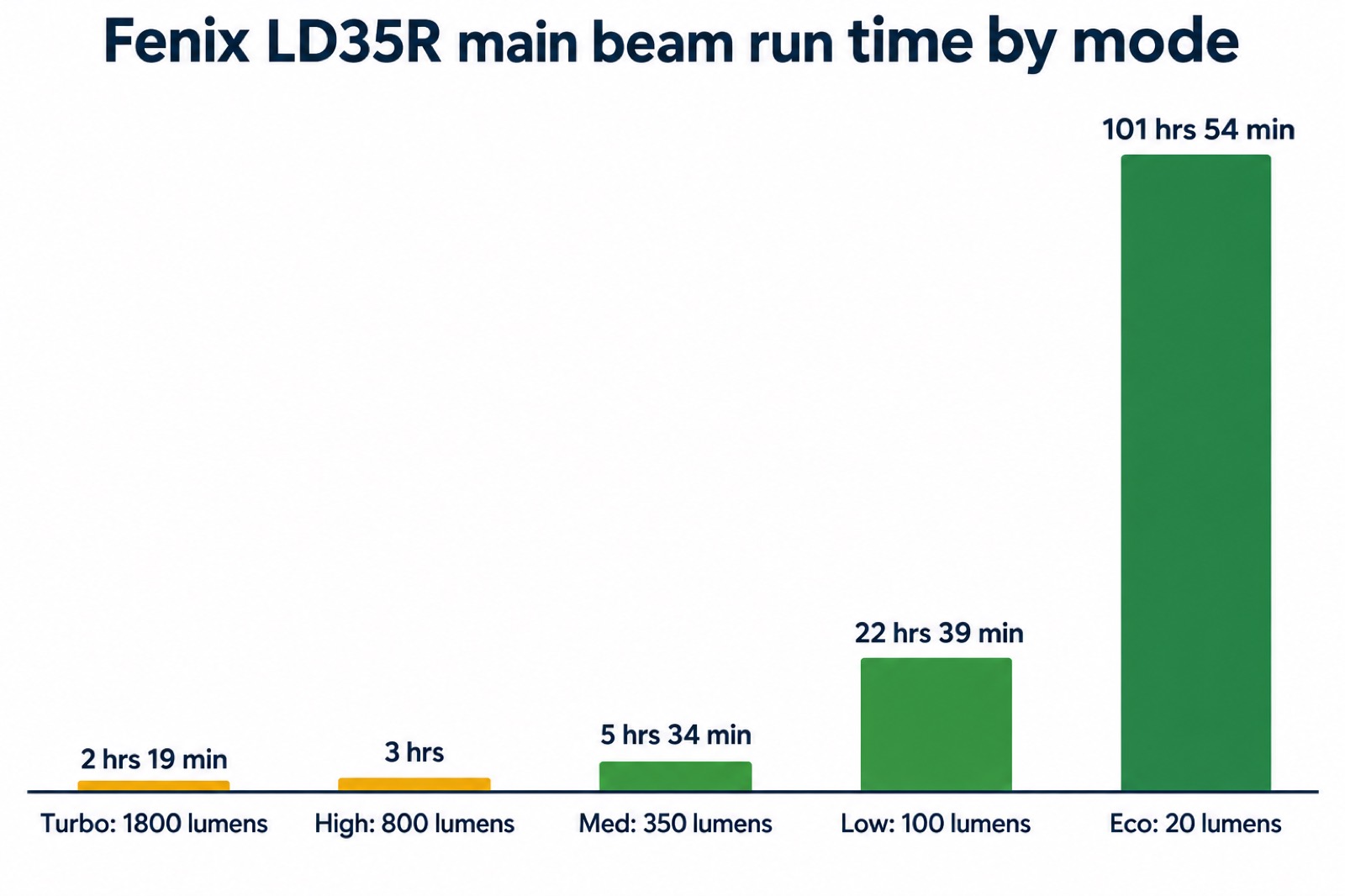
The main beam runs from a 20 lumen Eco setting that lasts for days up to a 1800 lumen Turbo that lasts a little over two hours in total1. The middle settings are the ones most households will use: 100 lumens for 22 hours 39 minutes, 350 lumens for 5 hours 34 minutes, and 800 lumens for 3 hours1. The table below sets out every main beam mode as Fenix lists it.
| Main beam mode | Output | Run time | Beam distance |
|---|---|---|---|
| Turbo | 1800 lumens | 2 hrs 19 min total | 337m1 |
| High | 800 lumens | 3 hrs total | 217m1 |
| Med | 350 lumens | 5 hrs 34 min | 143m1 |
| Low | 100 lumens | 22 hrs 39 min | 78m1 |
| Eco | 20 lumens | 101 hrs 54 min | 34m1 |
| Strobe | 1800 lumens | Not stated | Not stated1 |
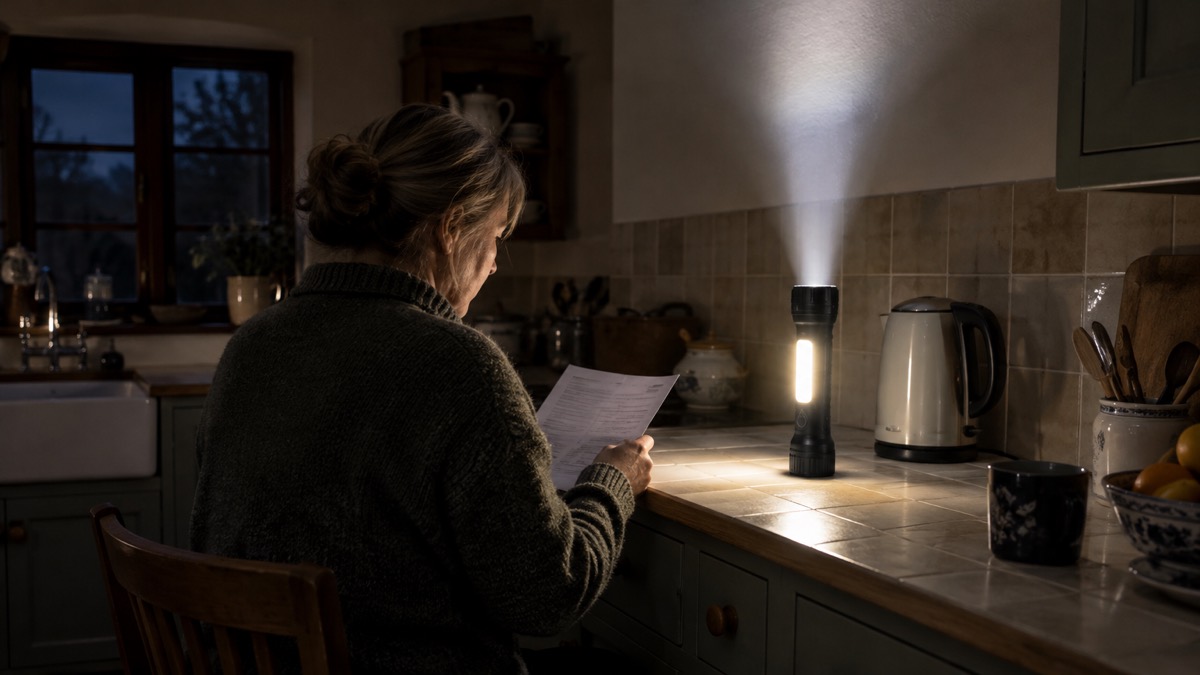
The side lights are a separate system. The white panel can run as a single panel at 5 lumens for 86 hours 35 minutes or 30 lumens for 15 hours 44 minutes, or with both panels at 80 lumens for 6 hours 13 minutes or 150 lumens for 6 hours 2 minutes1. The coloured side lights add a red constant at 5 lumens for 60 hours 37 minutes, a red flash at 15 lumens for 55 hours 13 minutes, a blue flash at 15 lumens for 30 hours 26 minutes, a red and blue flash at 15 lumens for 31 hours 28 minutes, and a red SOS at 15 lumens for 51 hours 7 minutes1.
| Side light mode | Output | Run time |
|---|---|---|
| White, single panel, low | 5 lumens | 86 hrs 35 min1 |
| White, single panel, high | 30 lumens | 15 hrs 44 min1 |
| White, both panels, low | 80 lumens | 6 hrs 13 min1 |
| White, both panels, high | 150 lumens | 6 hrs 2 min1 |
| Red constant | 5 lumens | 60 hrs 37 min1 |
| Red flash | 15 lumens | 55 hrs 13 min1 |
| Blue flash | 15 lumens | 30 hrs 26 min1 |
| Red and blue flash | 15 lumens | 31 hrs 28 min1 |
| Red SOS | 15 lumens | 51 hrs 7 min1 |
The practical lesson is that the brightest setting is rarely the right one for a long power cut. A 20 lumen Eco beam is enough to move around a house, find a fuse box or read by, and it will run for four days and more on a single charge1. Save Turbo for checking something at a distance or lighting up a garden. The guide to lumens, beam distance and run time explains why the two figures pull against each other.
Batteries: an 18650 rechargeable or two CR123A cells
The LD35R is designed around a single 18650 rechargeable cell. Fenix recommends its own ARB-L18 Series 18650 3.6 V battery, and one is included in the box along with a USB-C charger lead, holster, lanyard and spare O-ring1. The torch will also run on two CR123A non-rechargeable cells, which is useful if you want a set of batteries that will sit in a drawer for years without needing a charger1.
Fenix sets out a compatibility list, and it is worth reading carefully because not every cell that fits will be safe. The ARB-L18 Series 18650 3.6 V is recommended. A non-rechargeable CR123A 3.0 V is usable but cannot be charged in the torch. A generic rechargeable 18650 3.6 V is marked as a caution. A rechargeable 16340 3.6 V is banned, and a rechargeable LiFePO4 18650 3.2 V is also banned1.
| Battery type | Fenix's rating |
|---|---|
| Fenix ARB-L18 Series 18650 3.6 V | Recommended1 |
| CR123A 3.0 V non-rechargeable | Usable, no charging1 |
| Generic 18650 3.6 V rechargeable | Caution1 |
| 16340 3.6 V rechargeable | Banned1 |
| LiFePO4 18650 3.2 V rechargeable | Banned1 |
There is a performance catch with the CR123A option. Fenix states that Turbo mode cannot be operated, and that the Strobe mode delivers a brightness level of 800 lumens, when the torch is running on two CR123A batteries1. So the alternative battery keeps the torch working but takes away its brightest setting. If you keep CR123A cells as a backup, know that before you need them.
To fit the battery, Fenix instructs you to unscrew the tail cap and insert the cell with the anode side (+) towards the light head, then screw the tail cap back on1. Getting the polarity wrong is the most common way to damage a torch, so check the marking on the cell before you close it up. The guide to torch batteries: AA, AAA, 18650 and built-in packs explains how the 18650 compares with more familiar cells.
Charging over USB-C and reading the battery indicator
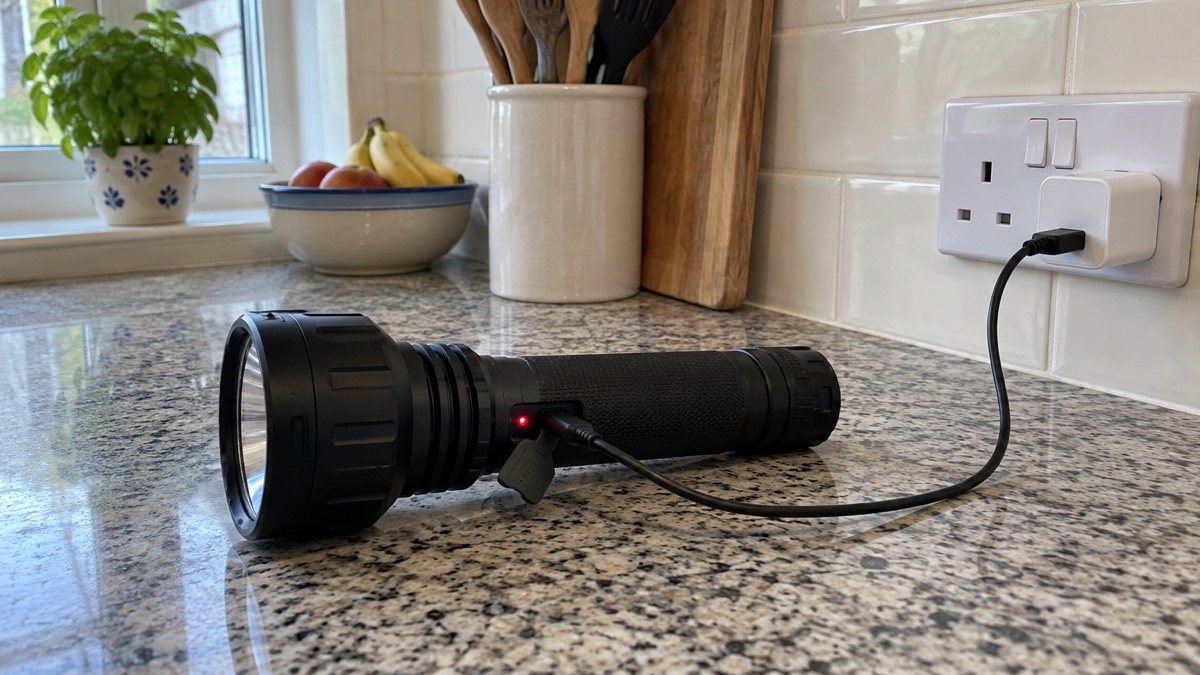
The LD35R charges through an inner waterproof USB-C port under a rubber cover1. Fenix gives a charge time of approximately 3 hours from depletion to fully charged with a 5 V/2 A charging adapter, for the included ARB-L18-3400 battery1. A built-in charging LED shows red while charging and green when charged1.
The battery level indicator is the feature to learn before an emergency, because it tells you whether the torch will last the night. With the light turned off, a single click of the electronic switch checks the battery status, and the indicator lasts for 3 seconds1. The readings are:
- Green light on: saturated, 100% to 85%1
- Green light flashes: sufficient, 85% to 50%1
- Red light on: poor, 50% to 25%1
- Red light flashes: critical, 25% to 1%1
There is an important limitation. Fenix states that the battery level indicator only works with a Fenix ARB-L18 Series battery1. If you fit a CR123A cell or a generic 18650, the torch will still light but the indicator will not tell you the state of charge. That is a good reason to keep a Fenix ARB-L18 cell as the main battery and treat other cells as a fallback.
Charging safely is mostly about the adapter and the port. The LD35R has an inner waterproof USB-C charging port with a rubber cover, and a built-in charging LED that shows red while charging and green when charged1. If you want to understand how the wrong charger can affect a torch battery, the guide to whether the wrong USB charger can damage a torch battery covers it. For the wider picture on storing and charging rechargeable lights, see charging and storing rechargeable torches safely.
Safety features: lockout, overheat step-down and low voltage warning
The LD35R has three safety systems that matter to a household, and each one is worth knowing before you rely on the torch in the dark.
The first is the electronic lockout. Fenix states that a double click locks or unlocks the torch1. That stops it switching on in a bag or a drawer and draining the battery, which is exactly the kind of quiet failure that leaves you without light when you need it. Lock it before you store it, and remember the double click when you pick it up again.
The second is intelligent overheat protection. Fenix states that when the torch reaches 60°C or above, it automatically steps down a few lumens to reduce the temperature, and when it drops below 60°C it gradually recalls the preset output level1. This is why a torch on Turbo will not stay at 1800 lumens indefinitely. It is a protection, not a fault, and it is one reason the maker's run times are given as totals rather than a single steady output.
The third is the low voltage warning. Fenix states that when the voltage drops below a preset level, the torch is programmed to downshift to a lower brightness level until Eco output is reached, and that when this happens in Eco the battery level indicator blinks red to remind you to replace or recharge the battery1. In plain terms, the torch dims itself rather than cutting out, and then tells you when it is nearly done.
There is also a rapid action strobe on the main beam at 1800 lumens1. A strobe is disorienting and should not be pointed at people or drivers. The guide to how to use SOS and strobe modes on a torch explains when a flashing light helps and when it does not.
Using it in a power cut or emergency
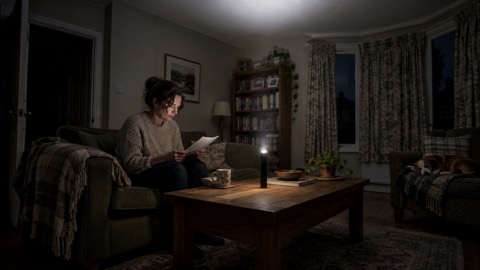
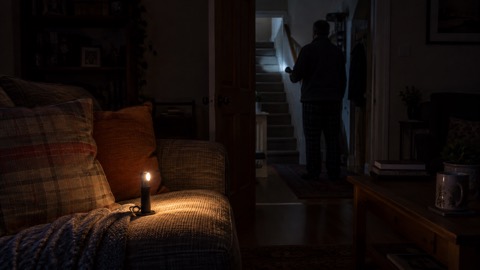
A power cut is the situation most households will actually face, and the LD35R is well suited to it. Official guidance is to keep a torch handy, and to leave a light on so you know when power is restored2. The LD35R can do both jobs: leave it on a low setting as a room light, and use a second light or a mains lamp as the signal that the power is back.
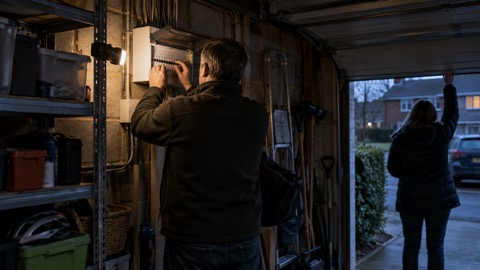
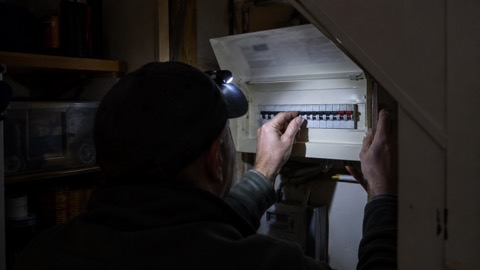
The first thing to do in a power cut is to check whether it is your home or the street. National Grid's homeowner guidance says to check that the trip switch in your fuse box is in the on position, and if it has operated, to switch off all your appliances and attempt to reset it; if it has not operated, call the contact centre to report the issue4. If you spot damaged or dangerous electrical equipment, report the problem, but call 999 in an emergency5.
To report a power cut, call 105. The number is given as the power cut line in guidance from Surrey County Council, Llangattock Community Council, the Scottish Government's Ready Scotland campaign and National Grid's homeowner guidance5. It is free and it works across the country. Keep it somewhere you can find in the dark, and put it in your phone now rather than later.
The side lights are what make the LD35R more than a torch in a power cut. Standing it on its tail with the white panel on gives a soft room light that runs for hours, and the red constant setting is easier on the eyes at night1. The red SOS and the flashing modes are for signalling, not for lighting a room, and should be used sparingly to save the battery.
If you have a flood rather than a power cut, the advice changes. Electrical Safety First says to switch off the electricity supply at the consumer unit or fusebox, only if it is safe to do so9. A torch is essential for doing that safely, and the LD35R's IP68 rating means a wet hand or a damp cupboard is not a problem1. The guide to electrical safety after a flood covers the wider steps.
Support, warranty and where to get help
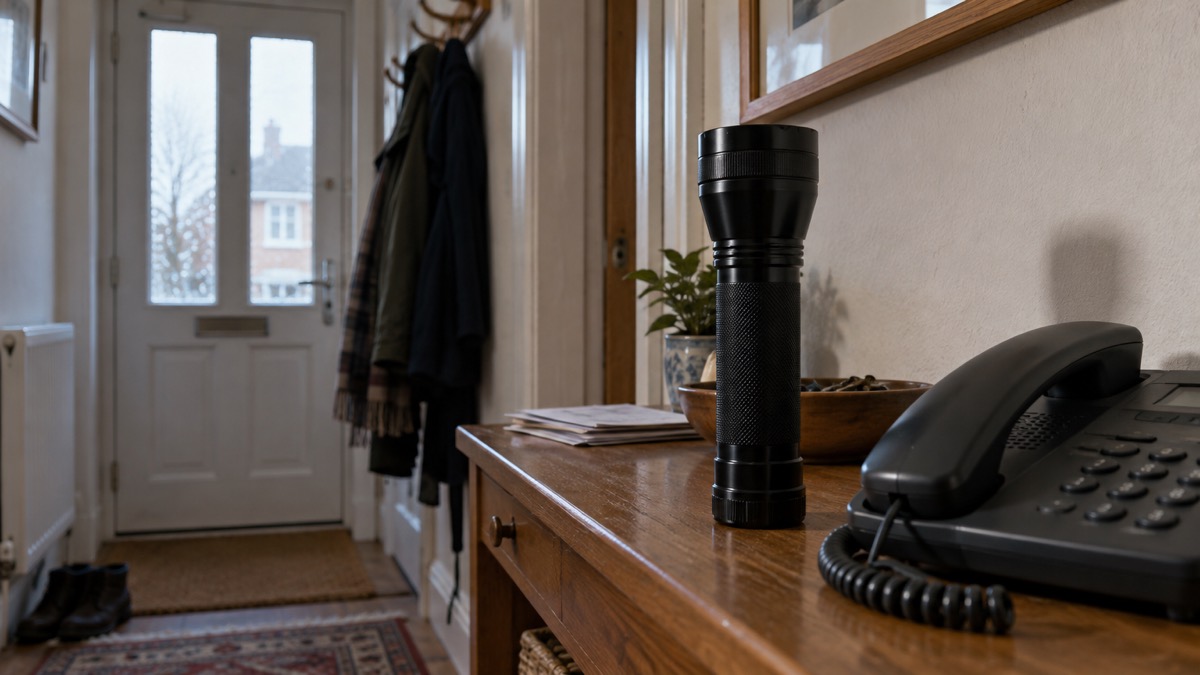
Fenix offers a 5 year UK warranty on the LD35R, with a 1 year warranty on the battery1. Keep the packaging and the receipt, because a warranty claim will usually ask for proof of purchase. The torch is listed as in stock by the UK distributor1.
If something goes wrong with the torch, work through the obvious causes first. Check that the tail cap is fully screwed on, that the battery is the right way round, and that the battery has charge1. If the torch has been dropped or got wet, check the lens and the rubber cover over the USB-C port1. If it still will not work, contact the retailer or the UK distributor rather than opening the torch yourself.
For help in a power cut, call 105 to report it and to get information about restoration5. For a fire, a smell of burning or damaged electrical equipment that is dangerous, call 9999. If you are older, disabled or rely on medical equipment, ask your electricity network operator about its priority services register, which is there to help households that need extra support during a power cut. The guide to lights for older and disabled people in a power cut explains what to ask for.
The LD35R is one option among many. If you want to compare it with lanterns, head torches and simpler battery lights, start with the emergency lighting at home section, which sets out the types side by side by what they do rather than by brand. The torches guide explains what to look for in a household torch, and the power cut checklist is a printable list of what to have ready before the lights go out.
Sources (9)
- Fenix LD35R product page, Fenix Light UK, 2026-10-26
- Power cut plan.pdf, Northern Powergrid
- Emergency power cut rota, Scottish and Southern Electricity Networks, 2026-10-25
- Preparing for a power cut: homeowner guidance, National Grid, 2022-09
- Power, gas and water: what if they fail, Surrey County Council, 2025-12-29
- Adverse weather events: power outages and emergency contact numbers, Llangattock Community Council, 2026-10-25
- Emergency plan, Ready Scotland, 2026-03-24
- Strong winds: weather warning information and advice, Northern Ireland Direct, 2026-10-24
- Electrical safety after a flood, Electrical Safety First, 2026-10-25
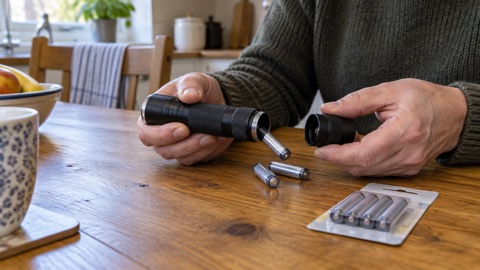 NEBO Newton 500 Torch
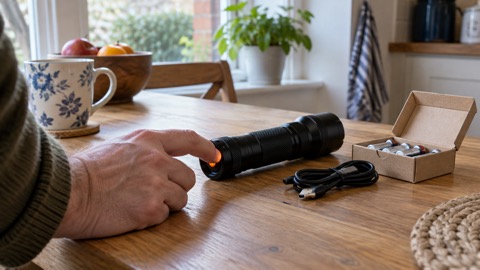 NEBO Davinci 800L
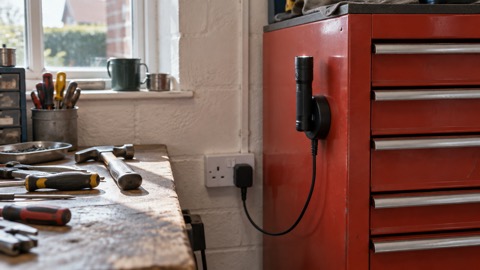 NEBO Torchy 2K Torch
 NEBO Torchy 600 Flex
 NEBO Tac Slyde Torch
 NEBO Slyde King 4K
 NEBO Mycro 900+ Headlamp
 NEBO Edge 800
 NEBO Transport 400
 Fenix E04R Keyring Torch
 Fenix E05R Keychain Torch
 Fenix E06R Pro Pocket Torch