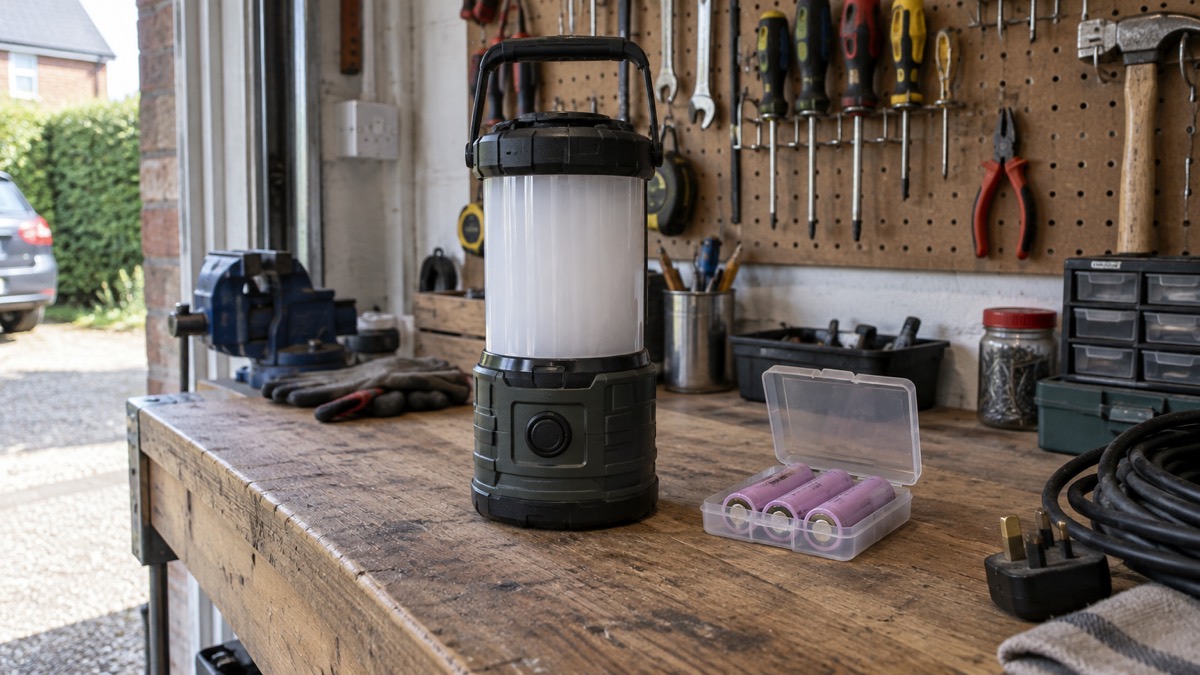
The Fenix CL30R is a rechargeable camping lantern that doubles as a small power bank, and it is the sort of light a household buys once and keeps for power cuts, camping and jobs in the loft. It runs on three 18650 lithium-ion cells, gives a maximum of 650 lumens, and on its lowest setting it will run for 300 hours on the batteries supplied1. It is rated IPX-7, which means it is waterproof and floats, and it weighs 412 grams without batteries1.
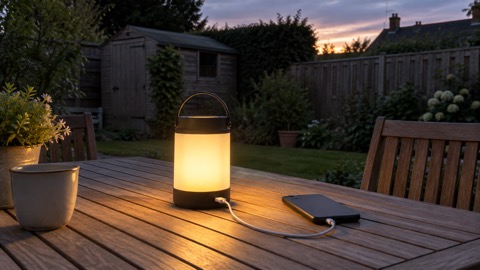
For an emergency kit, the useful numbers are these. On the three 2600 mAh cells in the box, the Eco setting of 10 lumens runs for 300 hours1. Fit higher capacity 3500 mAh cells and the maker quotes 400 hours on Eco, 93 hours on Low, 51 hours on Mid, 12 hours on High and 6 hours on Turbo1. The lantern charges over Micro USB using the cable supplied and any existing phone charger, and it can pass power out to a phone through its USB port, though only slowly1.
This page sets out what the lantern is, what it can and cannot do, and how to charge, use and store it safely, using the maker's and UK distributor's own figures. It does not compare it with other lanterns or rank it against them; what suits you depends on what you already own and what you need it to do.
What the Fenix CL30R is and who it suits
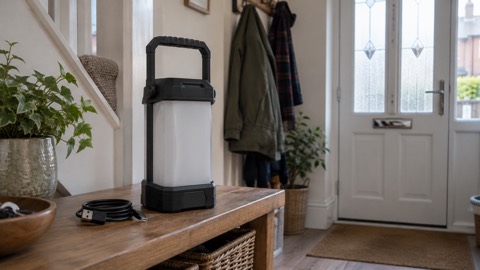
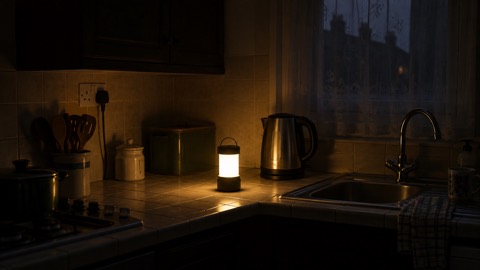
The CL30R is a cylindrical lantern with a side switch, a flat base so it stands on a table, a hanging loop and a tripod mount1. It is built from quality plastics and measures 136 mm long by 93 mm across, weighing 412 grams without batteries1. That is light enough to carry in one hand and stable enough to stand on a kitchen worktop while you make tea in a power cut.
It suits a household that wants one light to do several jobs: lighting a room during an outage, lighting a tent or awning, and topping up a phone in an emergency. It is not a torch. It throws light in all directions rather than a beam you can point, so for checking a fuse box or walking to the meter cupboard a hand torch or head torch is the better tool; our page on torches for the home explains the difference, and lantern or torch sets the two side by side.
The IPX-7 rating is worth understanding. It means the lantern is waterproof and floats, so a knock into a bucket or a wet garden does not end it1. Our guide to what IPX ratings mean explains the scale. It is not a diving light and the rating says nothing about dropping it, so treat it as a household light that tolerates weather rather than a rugged work light.
Specifications: size, weight, waterproofing and build
The table below sets out the maker's and distributor's figures for the lantern as sold in the UK. Where a figure comes from the distributor's product page, that is the source; the lantern is also listed in a Fenix searchlight specification sheet, which confirms the three 18650 cells2.
| Specification | Figure |
|---|---|
| Maximum output | 650 lumens1 |
| Beam distance | 35 m diameter on Turbo1 |
| LED type | Ultra Bright LEDs1 |
| Modes | Eco, Low, Mid, High, Turbo, Flash1 |
| Battery | 3 x 18650 Li-ion, 2600 mAh supplied1 |
| Construction | Quality plastics1 |
| Waterproofing | IPX-7, waterproof and floats1 |
| Dimensions | 136 mm length x 93 mm diameter1 |
| Weight | 412 grams excluding batteries1 |
| Switch | Side on-off-mode switch1 |
| Tail stand | Yes1 |
| Pocket clip | No1 |
| Warranty | 5 year UK, 1 year battery1 |
The lantern is in stock with the UK distributor and with at least one UK retailer1. Stock status changes, so check with the retailer before you rely on a delivery arriving before a forecast storm.
Brightness modes and how to switch between them
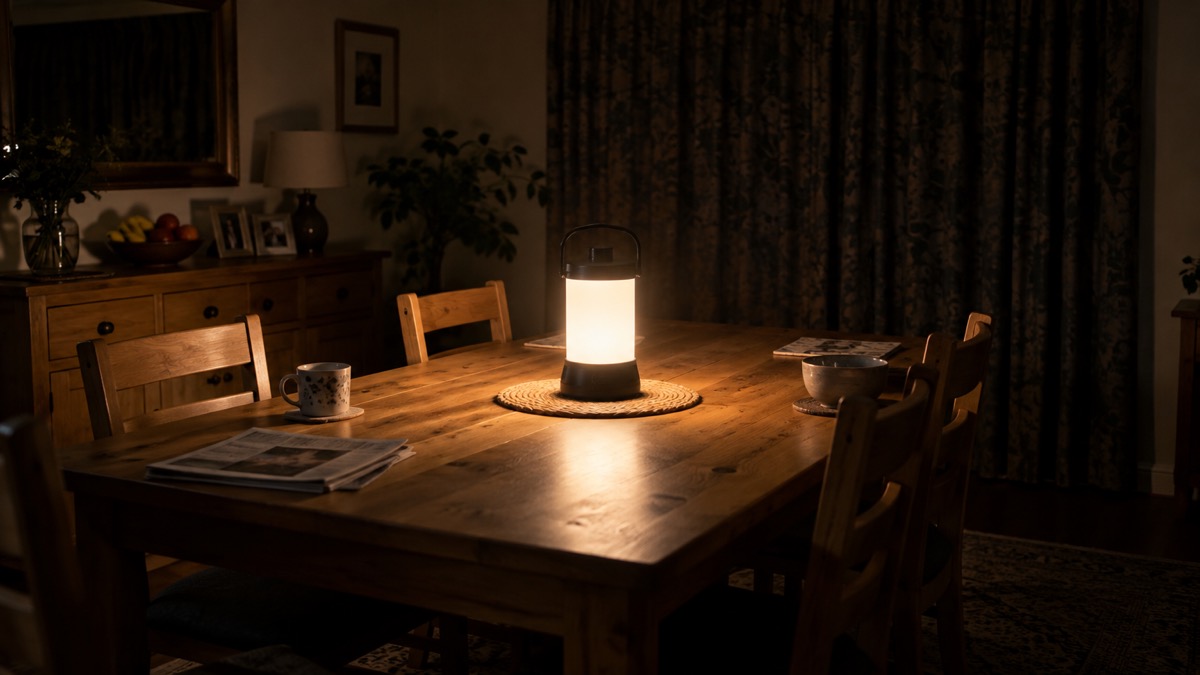
The CL30R has six modes: Eco, Low, Mid, High, Turbo and Flash1. A single click of the side switch cycles through Eco, Low, Mid, High and then Turbo1. The lantern remembers the last brightness level you used in General Mode, so it comes back on at the setting you left it at rather than always starting at the brightest1.
That memory matters in an emergency. If you leave it on Low, a power cut at 2am gives you a gentle light rather than a 650 lumen glare that wakes the house. Set it to the level you want before you store it.
The run times depend on which batteries are fitted. With the supplied 2600 mAh cells, the maker quotes 300 hours on Eco at 10 lumens1. With 3500 mAh cells, the maker quotes the following:
| Mode | Output | Run time (3500 mAh cells) |
|---|---|---|
| Turbo | 650 lumens | 6 hours1 |
| High | 350 lumens | 12 hours1 |
| Mid | 100 lumens | 51 hours1 |
| Low | 50 lumens | 93 hours1 |
| Eco | 10 lumens | 400 hours1 |
| Flash | 100 lumens | 93 hours1 |
Our explainer on lumens, beam distance and run time sets out why output and duration pull against each other.
Charging the lantern by Micro USB
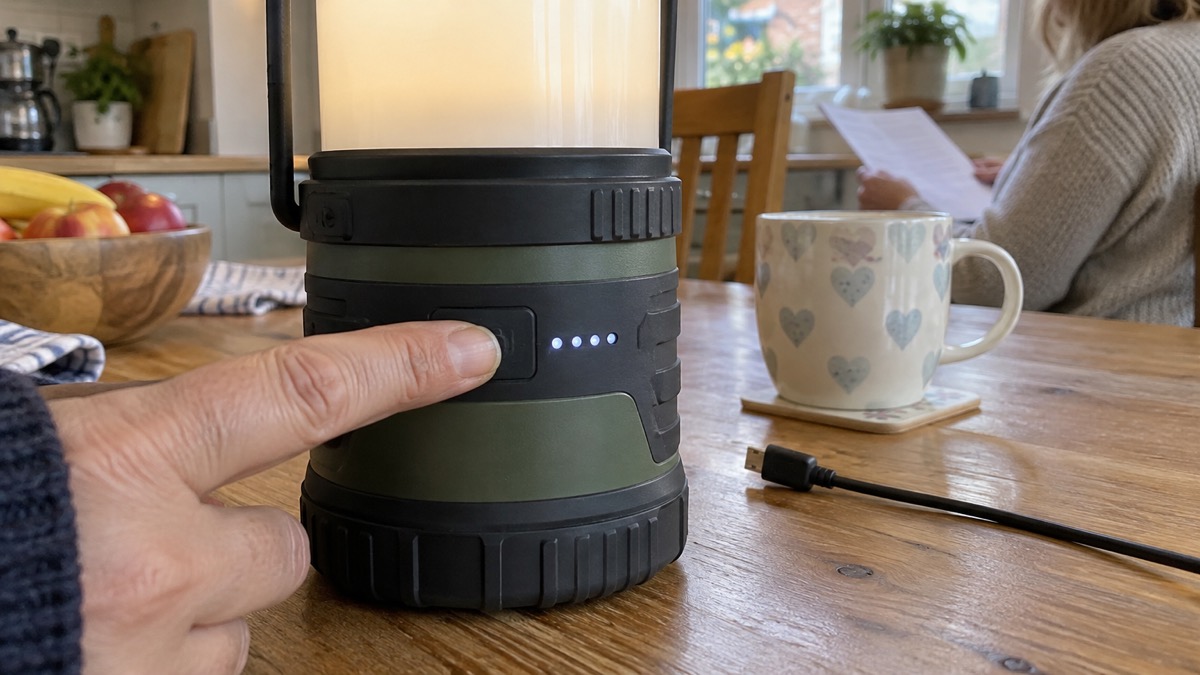
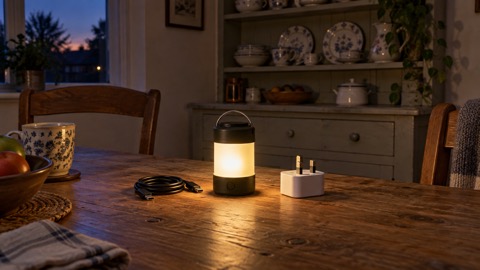
The CL30R charges over Micro USB, using the cable supplied in the box and your existing charger, such as a phone charger1. Plug the cable into the lantern and the charger, and leave it until the indicator lights show a full charge. The lantern only lights up at Mid output while it is being charged, so do not expect to run it on Turbo with the cable attached1.
The box contains the lantern, three ARB-L18 18650 batteries, a Micro USB cable, a spare o-ring and an instruction manual1. You supply the wall charger. Use a charger you already trust for your phone rather than an unknown one from a drawer; our page on whether the wrong USB charger can damage a torch battery explains what to look for, and charging and storing rechargeable torches safely covers the general routine.
The power bank function has a capacity of 7800 mAh using the supplied batteries1. That is enough for a slow top-up, not a full fast charge of a modern phone. If a charged phone matters to you in an outage, keep a separate power bank charged as well; official guidance for phone and broadband outages recommends a wind-up or battery FM radio for updates, and a charged phone for emergencies4.
Batteries: three 18650 cells you can replace
The lantern runs on one, two or three 18650 lithium-ion batteries, and three Fenix ARB-L18 2600 mAh cells come in the box1. Being able to replace them is the point: when the cells eventually wear out, you fit new ones rather than replacing the whole lantern. The supplied 2600 mAh cells can be replaced with higher capacity cells up to 3500 mAh1.
Fitting 3500 mAh cells is the single change that most extends the lantern's usefulness, because it lifts every run time in the table above1. Buy cells from a reputable source and match them as a set; our guide to torch batteries, including 18650 cells, explains the sizes and what to look for.
The lantern has a cold resistant battery compartment for all weather use1. Cold still reduces what a lithium-ion cell can deliver, so in a winter power cut keep the lantern and any spares indoors rather than in a cold shed or car boot, and bring it out when you need it. Our page on how long a camping lantern runs in a power cut puts these figures in context.
Storing it ready for an emergency
Official UK guidance is consistent on where emergency lighting belongs: somewhere you can reach it easily in the dark. A battery or wind-up torch should be left somewhere you can access easily so you can check the fuse box and make your way around the house safely5. The same logic applies to a lantern: keep it charged, in a known place, and check it before winter.
The Northern Powergrid power cut plan advises keeping an emergency kit in an easy-to-reach place and checking it is filled with the essentials6. The Northern Ireland household emergency kit guidance suggests gathering essential items before you leave your property and keeping them in the same place within the home7. The Scottish emergency kit guidance includes a phone charger in the kit8, and the UK travel advice includes a torch and in-car phone chargers or a power bank in a vehicle kit9.
A practical routine for the CL30R:
- Charge it fully and check the indicator lights show four lights (over 85 per cent) before you put it away1.
- Store it with the three cells fitted, in a dry place you can reach in the dark, alongside a torch5.
- Check it before winter and before any forecast storm, topping up the charge if needed6.
- Keep the Micro USB cable with it, so you can charge from a phone charger or a car USB socket1.
- If you take it in the car, keep it with the rest of the vehicle kit: torch, warm clothes, food and water9.
What it can and cannot do in a power cut
In a power cut the CL30R does three things well. It lights a room from a table or a hanging point, it runs for days on its lowest setting, and it can top up a phone slowly. It does not replace a hand torch for close work, a head torch for jobs where you need both hands, or a proper power bank for fast charging.
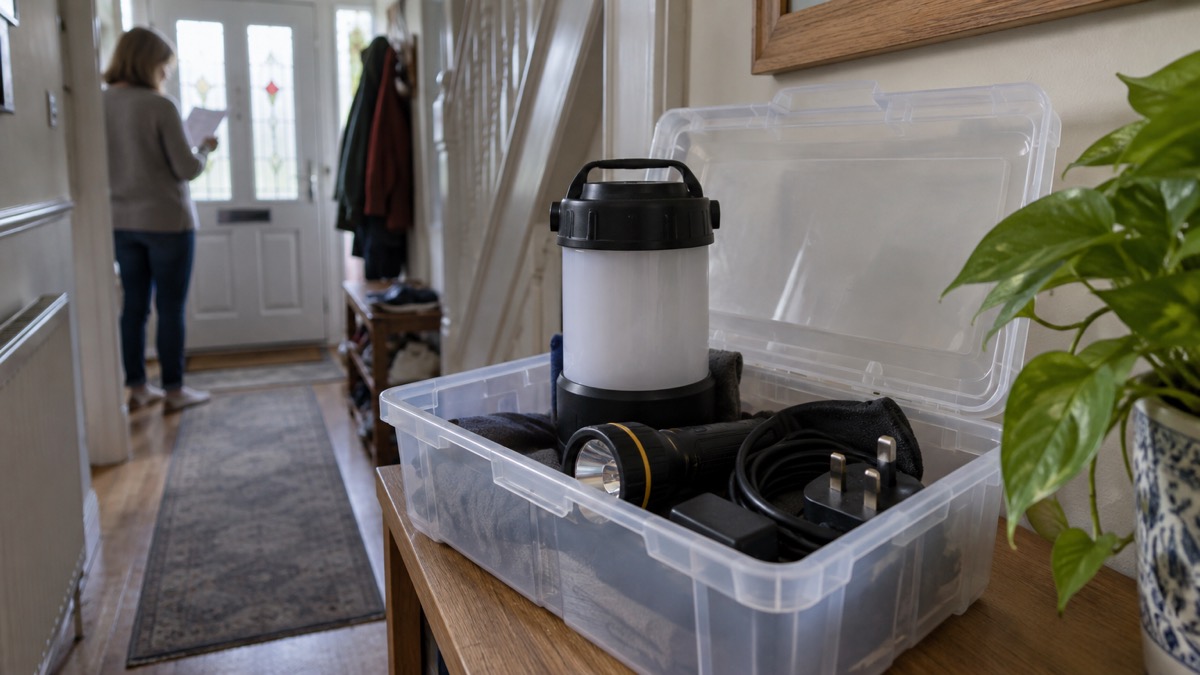
The official advice for a power cut is to have a battery or wind-up torch stored where you can reach it, so you can check the fuse box and move around safely5. A lantern complements that: it lights the room while the torch checks the fuse box. Our guide to lighting your home safely when the power goes off covers the whole routine, and the power cut checklist is a printable list.
For households with older or disabled residents, a lantern that stands on a table and switches on with one press is easier than a torch that has to be held and aimed; our page on lights for older and disabled people in a power cut explains the options. For children, keep the lantern out of reach of very young children and explain the switch; our page on torches, candles and children covers the safety points.
Support and warranty
The UK distributor lists a 5 year UK warranty on the lantern and a 1 year warranty on the battery1. Keep your proof of purchase and the instruction manual. If something goes wrong, contact the retailer you bought from first; they are responsible for the sale under UK consumer law, and the distributor's warranty sits alongside that.
The lantern is sold by Fenix's UK distributor and by UK retailers including Torch Direct, which lists it as in stock1. Fenix also publishes other products in the same range, such as the Fenix LR80R searchlight, if you are looking at the wider range; our lighting section explains how lanterns, torches and head torches fit together in a household kit.
Sources (9)
- Fenix CL30R Power Lantern, Fenix Light UK, 2026-10-26
- Fenix LR80R Searchlight specification sheet, Fenix Light UK, 2026-10-26
- Fenix HP25R V2.0 Rechargeable LED Head Torch, Torch Direct, 2026-10-25
- Phone and broadband outages, UK Government Prepare campaign, 2026-10-12
- Power cut safety advice during Storm Dudley and Storm Eunice, SP Energy Networks, 2022-02-16
- Power cut plan, Northern Powergrid, 2026-10-26
- Household emergency kit, nidirect, 2026-07-06
- Emergency kit, Ready Scotland, 2026-10-22
- Travel advice, UK Government Prepare campaign, 2026-10-06
 NEBO Galileo Tempest 350
 NEBO Leo 800 Flex
 NEBO Poppy Puck Light
 Fenix CL20R V2.0 Lantern
 Fenix CL26R Pro Lantern
 Fenix CL28R Lantern
 Ledlenser ML4
 Ledlenser ML6
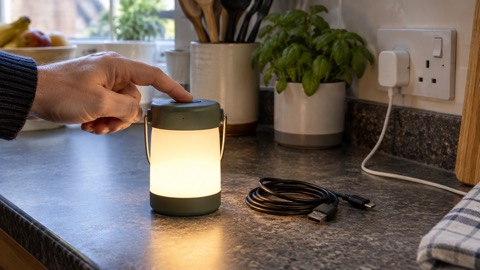 BioLite AlpenGlow Mini
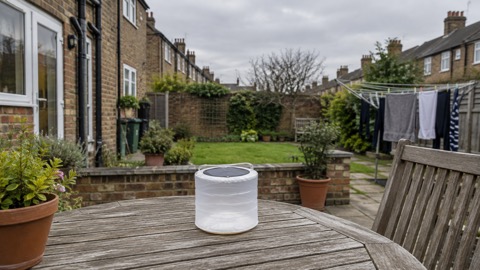 MPOWERD Luci Emergency
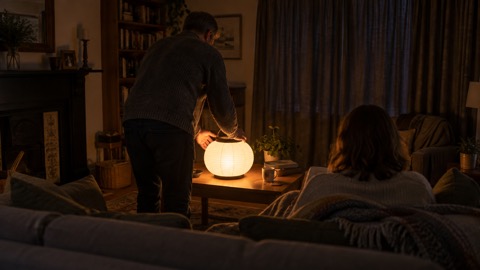 MPOWERD Luci Original
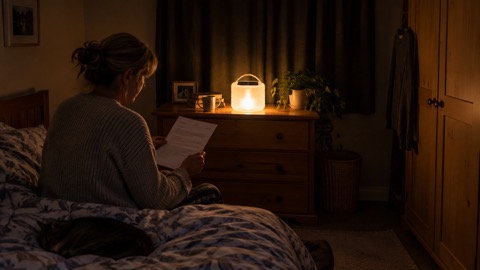 MPOWERD Luci Charge 360