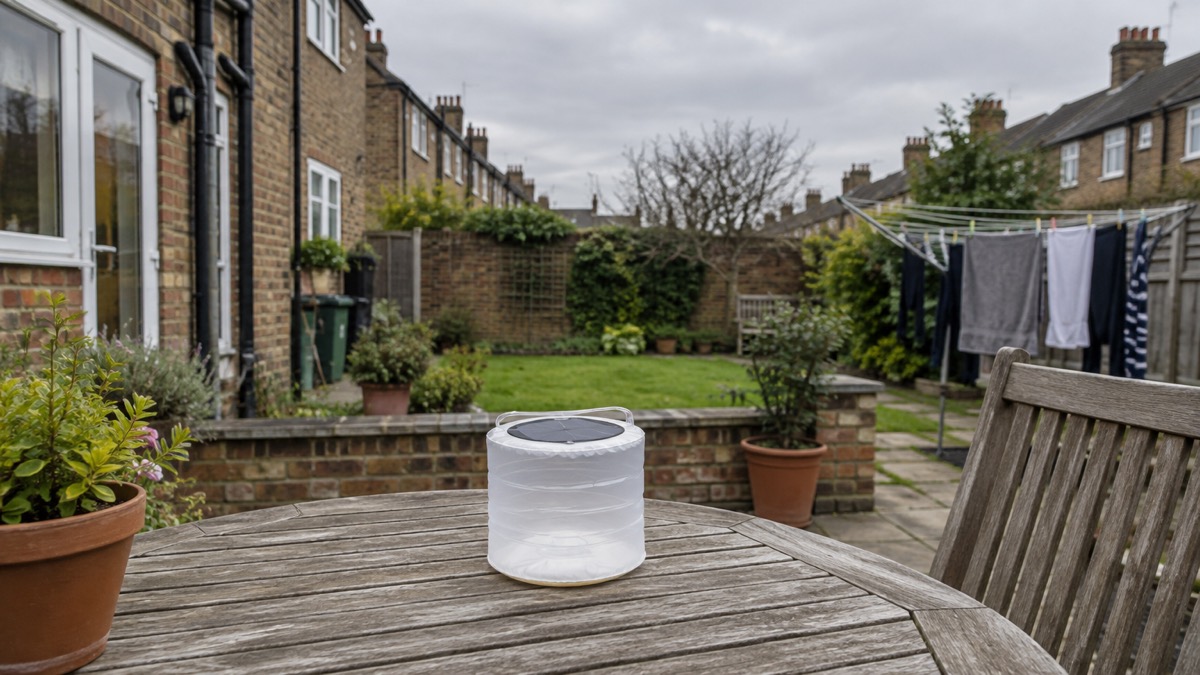
The MPOWERD Luci Emergency is an inflatable solar lantern with a built-in rechargeable battery and an SOS beacon. It gives 25 lumens, runs on a 600 mAh (3.2 Wh) LiFePO4 battery, and is rated IP67 for water and dust. It charges by USB-C in 2 to 3 hours or by sunlight in about 8 hours, and it collapses to 1.25 inches and 2.8 oz (79 g) when deflated1.
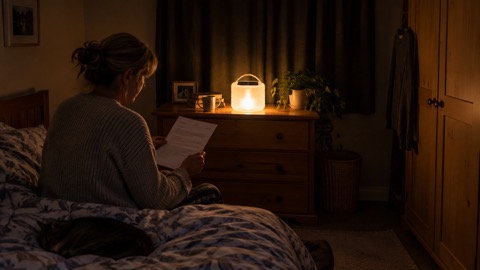
For a household, that makes it a light you can leave in a drawer for months and still expect to work: no batteries to buy, no bulb to change, and nothing to plug in when the power goes. It is not a room-filling light. At 25 lumens it is a personal or small-area light, suited to finding your way, reading, or lighting a table, and its value in an emergency is that it is always there and always charged if you keep it in the sun1.
This page sets out what the maker says it can do, how to charge it properly, how to use it safely and how to store it so it is ready when you need it. Where the maker's own product pages give different figures for the same specification, both are given and the disagreement is noted.
What the Luci Emergency is and what it suits
The Luci Emergency is one of the Luci range of inflatable solar lanterns. You pinch the valve and blow to inflate it, secure the valve, and then push the power button to turn it on and cycle through the modes; hold the button to turn it off1. The body has matte sides and a clear top, and a fixed base strap so it can be hung or stood on a surface2. The light comes from three white LEDs and one red LED2.
The modes are Low, High, Flashing, S.O.S. and Steady Red1. The S.O.S. setting is the reason the model carries the Emergency name: it is a signal mode for attracting attention, not a general-purpose light. The steady red mode is a low-level light that preserves your night vision and is easier on a room than a white beam. If you want to understand when a signal mode is useful and when it is a nuisance, the guide to SOS and strobe modes on a torch explains it.
What it suits is the household that wants a light which looks after itself. It has no batteries to store, no bulb to replace, and it charges from the sun. What it does not suit is lighting a whole room for a family, or a long power cut where you need hours of bright light from one unit: at 25 lumens it is a small light, and the maker's own run-time figures are modest. For a room, a larger battery or rechargeable lantern will do more; for carrying in a bag or keeping by the bed, the Luci is the lighter answer.
Specifications
The maker's product pages give the following figures. Where the two pages disagree, both are shown.
| Specification | Figure | Notes |
|---|---|---|
| Light output | 25 lumens | Small-area light, not room lighting1 |
| LEDs | 3 white + 1 red | Maker states they never need replacing unless damaged1 |
| Light modes | Low, High, Flashing, S.O.S., Steady Red | Push to cycle, hold for off1 |
| Battery | 600 mAh (3.2 Wh) LiFePO4 | Maker's figure for the built-in battery1 |
| Charging inputs | USB-C, solar panel | Panel is high efficiency mono-crystalline1 |
| Charge time | 2 to 3 hours via USB-C; 8 hours via solar | USB-C is about 6 times faster than solar1 |
| Water resistance | IP67 | Maker states it is completely waterproof1 |
| Pressure | Up to 150 lbs | Maker's figure for the inflatable body1 |
| Collapsed height | 1.25 inches | Deflated1 |
| Weight | 2.8 oz (79 g) | 1 |
| Finish | Matte sides with clear top | 2 |
| Straps | Fixed base strap | 2 |
| In the box | Luci Emergency Lantern, USB-USB cable | No plug, no separate panel2 |
Two of these need a word of caution. The maker's pages give the run time two ways: up to 7 hours on one page, and 10 hours on Low and 6 hours on High on another1. Treat the shorter figures as the safe planning assumption. If you want to compare lumens and run times across lights generally, see lumens, beam distance and run time explained.
Charging: USB-C in 2 to 3 hours, or sunlight in about 8
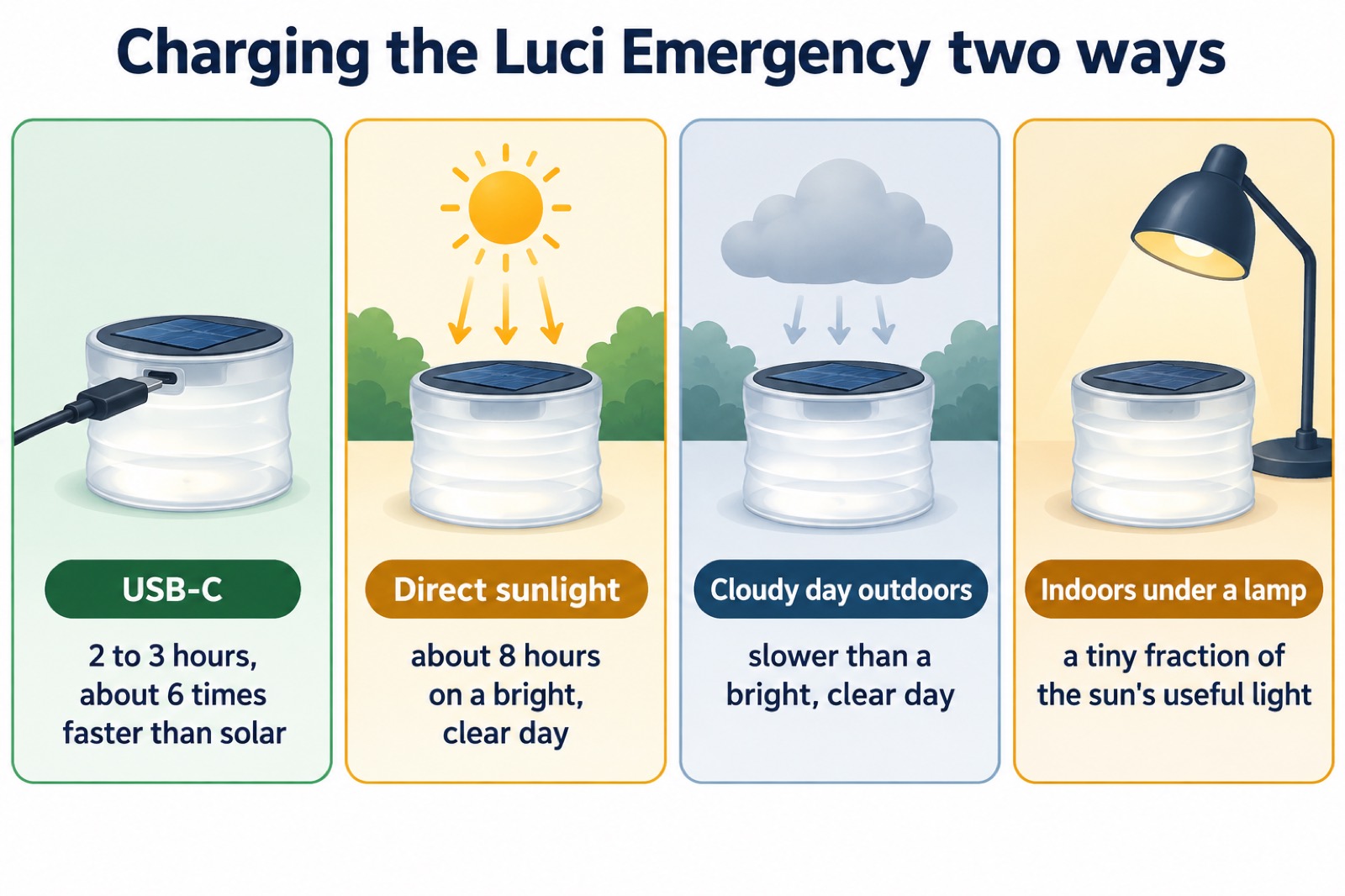
The maker gives two ways to charge it: place it in direct sunlight with the solar panel side up, or charge it via USB-C1. By cable it takes 2 to 3 hours; by sunlight it takes about 8 hours, and the maker states that USB-C charging is about 6 times faster than solar because of the input power1.
That difference matters in an emergency. If you have a power bank or a USB charger with charge in it, a flat Luci is usable again in an afternoon. If you are relying on the sun, you need a full day of good light, and you need to have thought about it before the power goes rather than during. The practical routine is to top it up by cable whenever you think of it, and leave it in the sun as a background trickle.
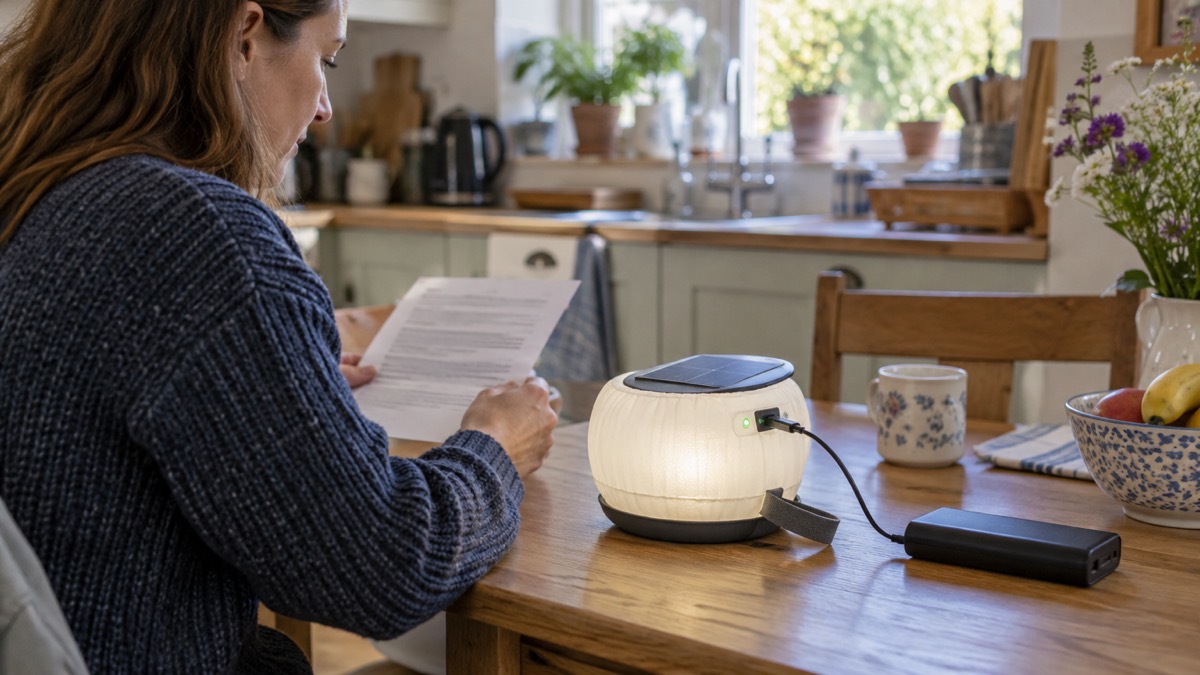
The USB-USB cable in the box has no plug on the other end, so you need your own USB power source2. Any USB charger you already own will do the job; the maker does not specify a particular one. If you are unsure whether a charger is suitable for a small built-in battery, the guide to whether the wrong USB charger can damage a torch battery covers the general principles.
Getting a good solar charge on cloudy days and indoors
The maker is straightforward about this: the lantern charges via the red and violet frequencies of visible light, so charge times vary with the UV index, and the higher the UV index the faster the charge1. On a cloudy day it will still charge, but at a slower rate than on a bright, clear day1.
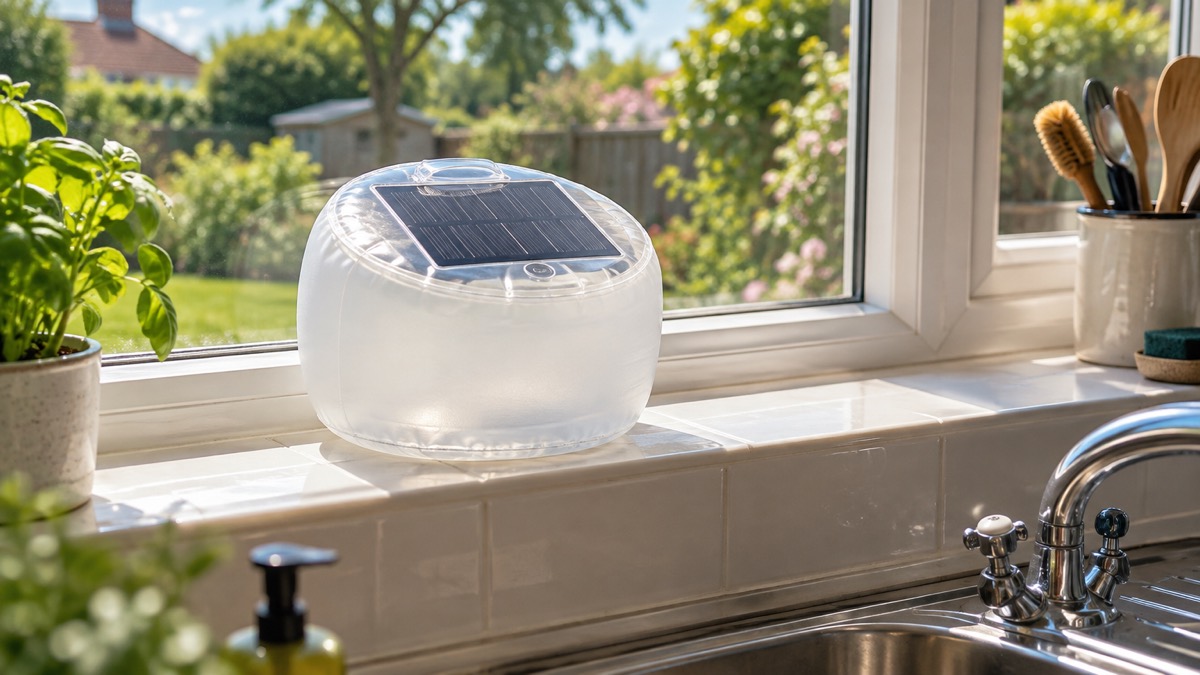
Indoors, the maker's advice is to put it directly in the sunlight from a windowsill, or for the best results outside, because ordinary indoor lights emit only a tiny fraction of the sun's red and violet frequencies2. A lamp on a desk will not meaningfully charge it. A south-facing windowsill will, slowly.
If you want a second line of solar charging that does not depend on the Luci's own panel, the maker's Go Bag Power Light range is a separate product with its own panel and crank, and the general guide to solar and wind-up lamps that need no batteries sets out the trade-offs. A solar garden light brought indoors is another quick source of light in a power cut: the independent guidance from Electricity North West is to cover the panel with your hand or a cloth and the light switches on instantly3. That is a stopgap, not a substitute for a charged lantern.
Using it safely: water, weather and the dark
The maker states the Luci is durable and completely waterproof, so you do not need to go running to bring it in when it rains1. The IP67 rating supports that: it is protected against dust and against temporary immersion. That covers the lantern, not the cable or the socket you charge it from, so charge indoors and keep the port sealed.
In a thunderstorm, the Met Office advises staying away from objects that conduct electricity, and if you hear thunder while outside, finding a safe, enclosed shelter such as your car5. A small plastic lantern is not a lightning conductor, but the advice about shelter still applies to you. Before a storm, the Met Office suggests unplugging non-essential appliances if they are not already on a surge protector, because lightning can cause power surges6.
The bigger safety point is what the Luci replaces. Fire and rescue services across the UK are consistent: use a torch or lantern rather than a candle in a power cut. North Yorkshire Fire and Rescue Service says to always keep a torch handy for emergencies and never use lighted candles7. National Grid's preparedness advice is to have a portable light such as a lantern or torch ready, and that it is best not to use candles or paraffin lights8. The Luci is exactly the kind of light those services have in mind.
Storing it ready for an emergency
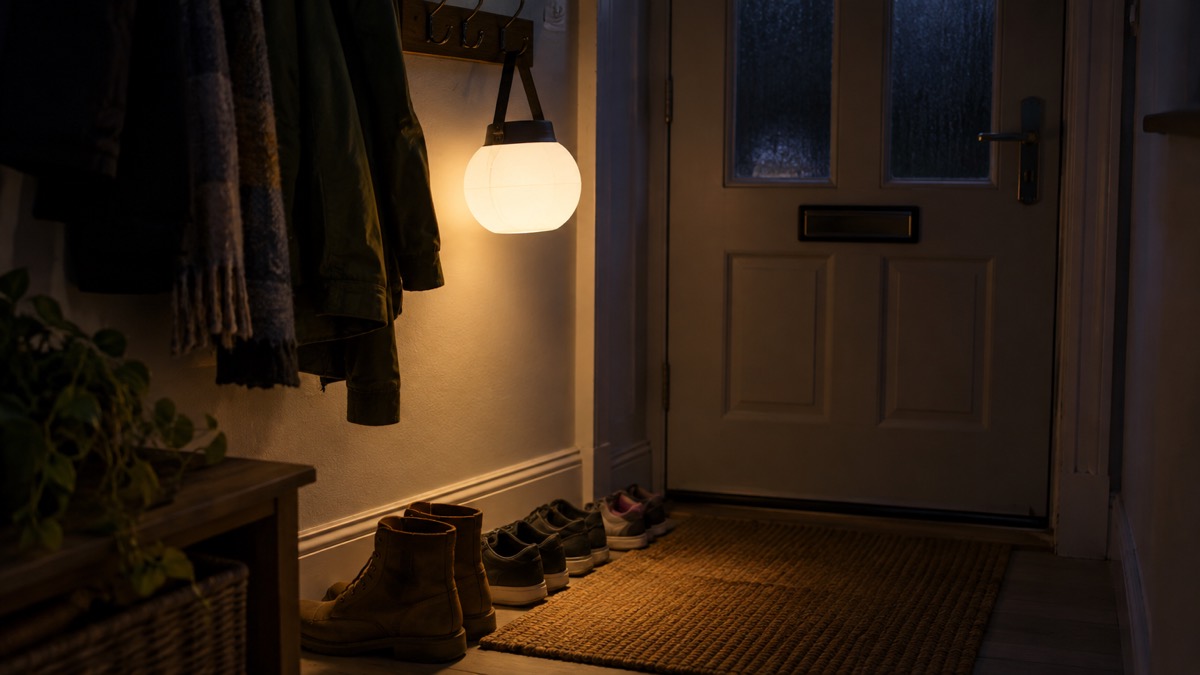
The value of a light like this is that it is where you need it when the power goes. The consistent official advice is to keep a torch or lantern somewhere you can reach easily, so you can check the fuse box and move around the house safely9. Anglesey Council's winter-ready advice is to store a battery or wind-up torch somewhere you can access easily9. The Luci fits that pattern: keep it charged, keep it accessible, and know how to turn it on in the dark.
A short checklist for keeping it ready:
- Charge it by cable before winter. A 2 to 3 hour USB-C charge tops it up without waiting for the sun1.
- Leave it in a sunny spot when you can. A windowsill or outside, panel side up, gives it a slow background charge1.
- Keep it somewhere you can find in the dark. The same principle as the official advice to store a torch where you can reach it9.
- Check it works. Push the button and cycle the modes before you put it away, so you know the charge is there.
- Tell other people in the house where it is. Wiltshire and Swindon's preparedness advice is to check that elderly relatives know where they could find their torch or wind-up lantern so they can move around safely10.
For a wider view of what to keep ready, the power cut checklist and the guide to charging and storing rechargeable torches safely cover the rest of the kit. If you have older or disabled people in the household, the guide to lights for older and disabled people in a power cut is the place to start.
Support, faults and what to do if something goes wrong
The maker's pages do not set out a warranty period or a repair service for this model, so the practical route if something fails is the retailer you bought it from, then the maker. The maker does state that the LEDs never need replacing unless they are somehow damaged1, which means a failed light is a fault rather than a maintenance job. Do not open the unit: that would break the waterproof seal and the IP67 rating.
If you suspect a product is unsafe rather than simply faulty, the general guide to recalled and unsafe torches and chargers explains how to check and report. For fire safety advice in the home, your local fire and rescue service offers a free home fire safety visit, and the general guide to lighting your home safely when the power goes off covers the wider picture.
Sources (10)
- Luci Emergency product page, BioLite Energy, 2026-10-25
- Luci Emergency specifications, BioLite Energy, 2026-10-25
- Tips to help you during a power cut, Electricity North West, 2026-10-25
- Outdoor lighting safety, Electrical Safety First, 2026-10-25
- Stay safe in lightning, Met Office, 2026-10-25
- Stay safe in thunder and lightning - Met Office, Met Office
- Caravans and camping safety, North Yorkshire Fire and Rescue Service, 2026-05-13
- Being prepared, National Grid, 2026
- Winter ready, Isle of Anglesey County Council, 2026-10-25
- How to prepare for the loss of electricity, Wiltshire and Swindon Prepared, 2026-10-25
 NEBO Galileo Tempest 350
 NEBO Leo 800 Flex
 NEBO Poppy Puck Light
 Fenix CL20R V2.0 Lantern
 Fenix CL26R Pro Lantern
 Fenix CL28R Lantern
 Fenix CL30R Power Lantern
 Ledlenser ML4
 Ledlenser ML6
 BioLite AlpenGlow Mini
 MPOWERD Luci Original
 MPOWERD Luci Charge 360