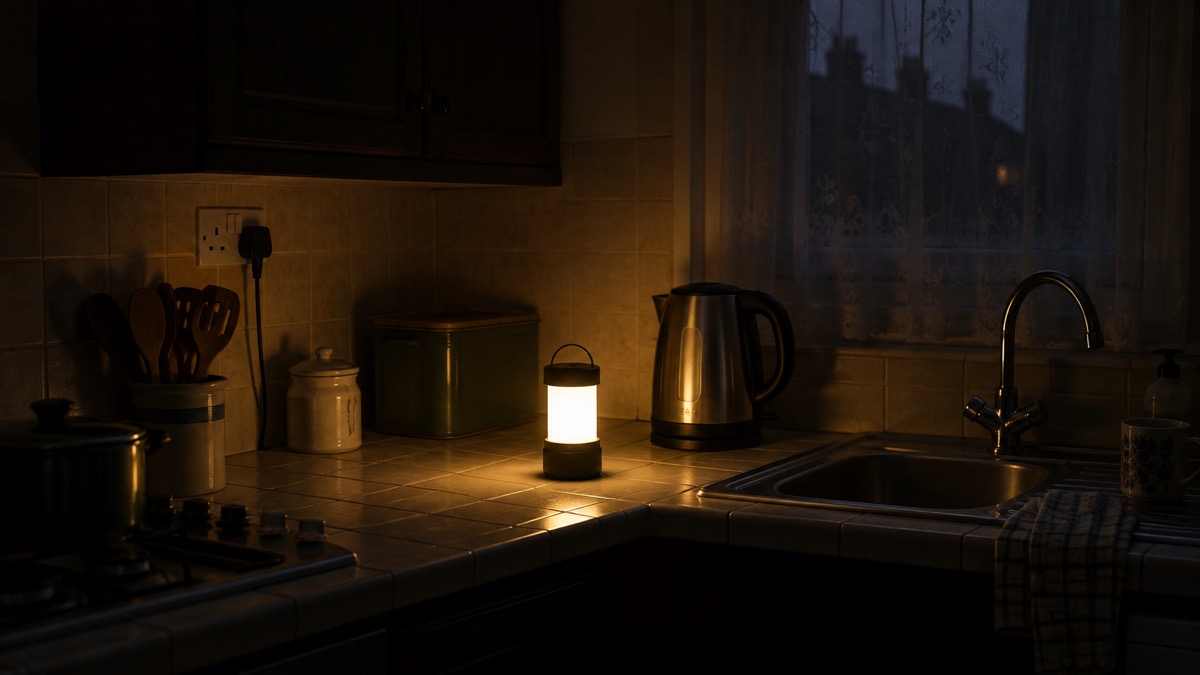
The Ledlenser ML4 is a rechargeable mini lantern that puts out up to 300 lumens and is small enough to live in a kitchen drawer or an emergency kit. It has five white light modes plus a red light mode, runs for 2.5 hours at full Boost on the Cool White version, and charges through a magnetic contact cable without the battery coming out1. If the built-in battery is flat, it will also run on an ordinary AA alkaline battery, which makes it one of the more forgiving lights to keep for a power cut1.
For a household, that combination is the point. A power cut rarely arrives when you have just charged everything, and the ML4 gives you two ways to have light: the rechargeable cell for normal use, and a spare AA as the fallback. It weighs 71g with the battery in, is drop tested to 2 metres and carries an IP66 rating the maker describes as water jet resistant, so it copes with the knocks and rain of ordinary life1.
This page sets out what the ML4 does, how long each mode lasts, how to charge it and run it on AA cells, and how to keep it ready so that it works on the night you need it. It is a description of one product, not a comparison with others; for the wider picture, see Emergency Lighting at Home.
What the ML4 is and who it suits
Ledlenser describes the ML4 as the most compact lantern in its range1. It is a cylinder 97mm long with a 34.5mm head and a 29mm tube, built around nine LEDs, and it weighs 71g with the battery fitted1. That is small enough to sit on a windowsill, hang in a tent or drop into a bag without being noticed, which is exactly the size that tends to survive in a household emergency kit.
It comes in two versions, White Light and Warm White Light2. The difference is the colour of the beam rather than the brightness: the Warm White version has a colour temperature of 2,500K to 3,000K and a colour rendering index of 80, while the Cool White runs at 3,700K to 4,200K1. In practice the warm version gives a softer, more domestic light for a room in the evening, and the cool version looks whiter and crisper. Neither is better in the abstract; it depends on where you will use it.
The ML4 suits a household that wants a small, rechargeable light for a power cut, a loft, a cupboard under the stairs or a tent, and that values having a battery fallback over having the brightest possible output. It is a lantern rather than a torch: it is designed to light a space around it rather than throw a beam down a garden. If you are choosing between the two shapes, Lantern or Torch: Which Lights a Room Better? sets out the trade-off, and Battery and Rechargeable Lanterns for Lighting a Room covers the wider choice.
Light modes and run time, from Boost to red light
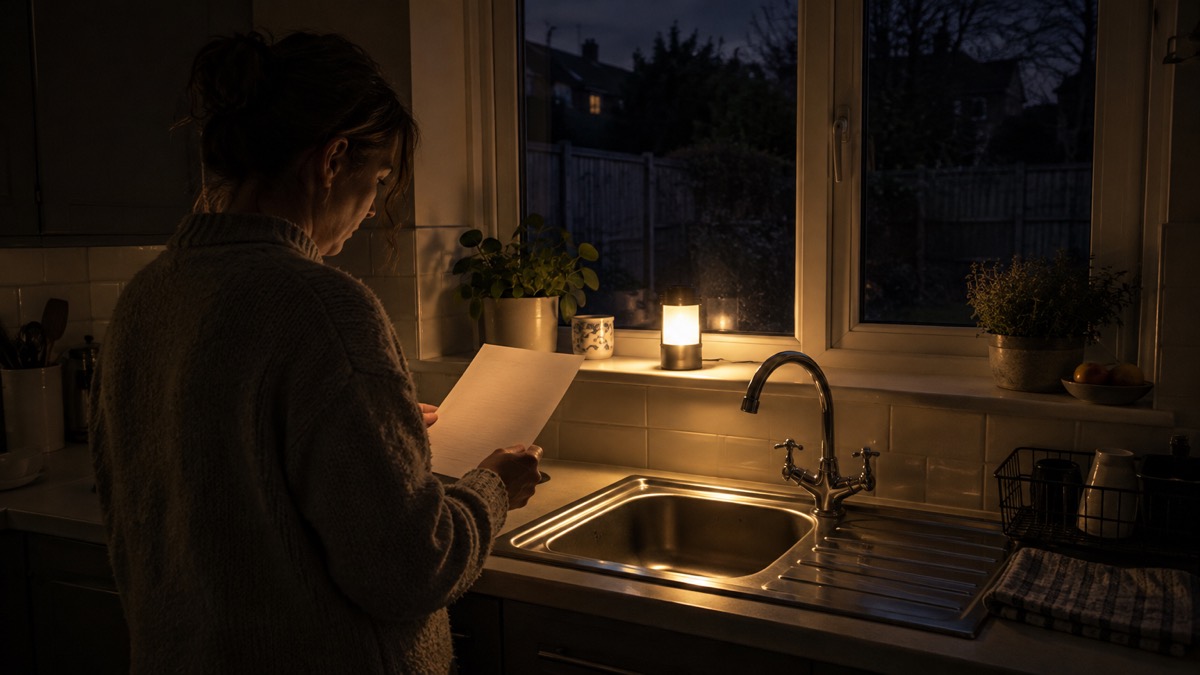
The ML4 has five white modes, Boost, Power, Mid Power, Low Power and Blink, plus a red light mode with Low, Mid and Blink settings1. Boost is the full 300 lumens and is the mode you use briefly, to check a fuse box or find the way down a dark hallway. The lower white modes are what you will actually leave on for an evening, because they draw less and last longer.
Run time depends on the version and the mode. At Boost, the Cool White version runs for 2.5 hours and the Warm White for 2.2 hours1. Ledlenser also lists a runtime at Power, which is 150 lumens1. Those two figures describe different modes rather than contradicting each other, but they show how much the choice of setting changes what you get: the brightest setting is measured in a couple of hours, the middle setting in much longer. For the general relationship between brightness and duration, see Lumens, Beam Distance and Run Time Explained and How Long Does a Camping Lantern Run in a Power Cut?.
| Mode | Output | Run time | What it is for |
|---|---|---|---|
| Boost | 300 lumens | 2.5 hours (Cool White), 2.2 hours (Warm White)1 | Short bursts: finding the fuse box, checking a room |
| Power | 150 lumens | Not stated | An evening with the family in one room |
| Mid Power, Low Power | Lower than Power | Longer than Power | Background light, overnight, moving around the house |
| Blink (white) | Flashing | Not stated | Being seen, marking a position |
| Red light (Low, Mid, Blink) | Red | Not stated | Preserving night vision; the blink setting works as a position signal for safety use1 |
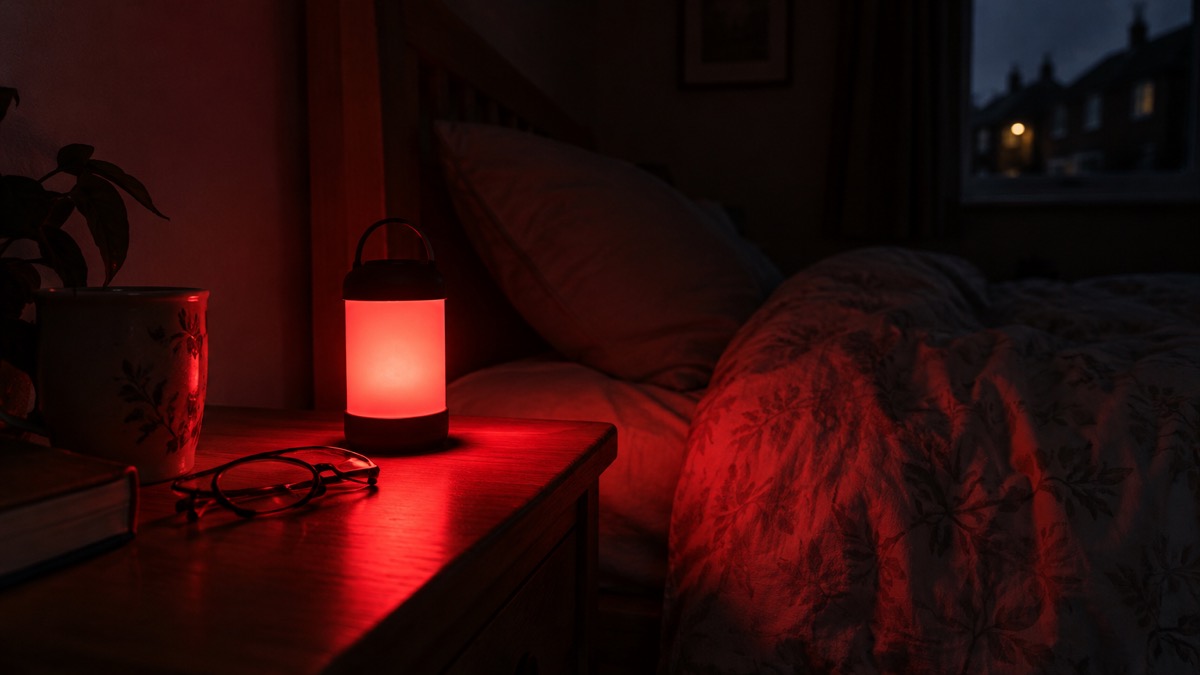
The red mode is worth knowing about even if you never use it in a power cut. Ledlenser says the red light preserves night vision and that the blink setting on red functions as a position signal for safety use1. That makes it useful for checking on a sleeping child, or for marking where you are if you are outside in the dark. What Is Red Light Mode For? explains the principle, and How to Use SOS and Strobe Modes on a Torch covers signalling more broadly.
Charging the ML4 and running it on AA batteries
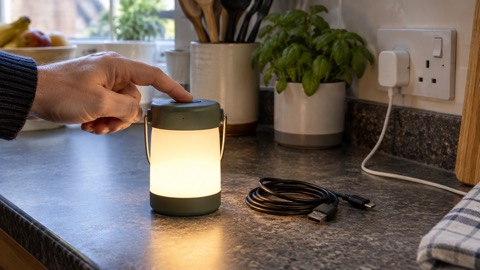
The ML4 ships with a 14500 Li-ion battery rated at 750mAh and 3.7V, and it is AA alkaline compatible1. Charging is through the included magnetic contact charging system, and the battery charges without needing to be removed from the housing1. A full charge takes 150 minutes1. The magnetic cable is the part to look after: keep it with the lantern rather than in a drawer of mixed cables, because a lost charging cable turns a rechargeable lantern into a battery-only one.
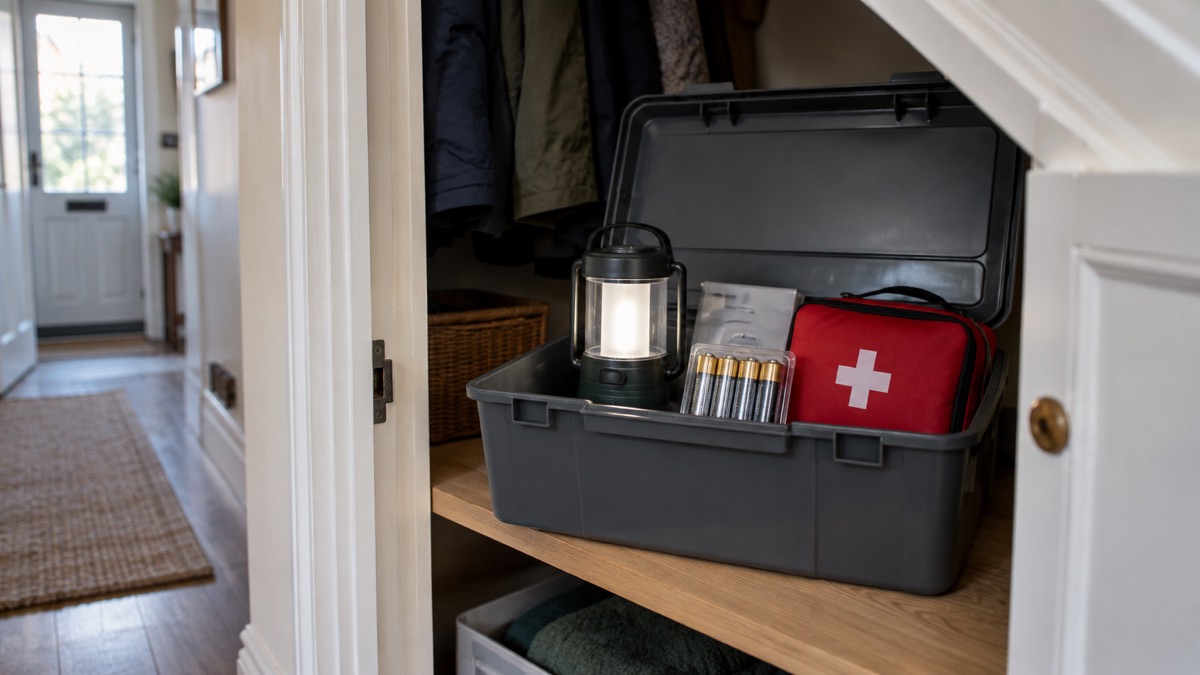
The AA fallback is the feature that matters most in an emergency. A standard AA alkaline battery is a direct drop-in alternative to the rechargeable cell1, so a flat ML4 is not a dead ML4. Keep a small pack of AA cells with the lantern and you have light even if the power has been off for days and you cannot charge anything. Torch Batteries: AA, AAA, 18650 and Built-In Packs explains the battery types, and Spare Batteries to Keep for Your Lights is a checklist for what to store.
Charging and storing rechargeable lights safely is a subject in its own right. Follow the maker's instructions for the ML4, keep the magnetic contacts clean and dry, and do not charge a light that has been soaked or dropped in water until it has dried and you have checked it. Charging and Storing Rechargeable Torches Safely covers the general rules, and Can You Use a Torch While It Is Charging? answers the question people ask most often about rechargeable lights.
Keeping it ready in an emergency kit
A lantern is only useful if you can find it, and official guidance is clear that emergency items should live in one known place. The Northern Ireland executive's household emergency kit advice says that if you are at home when an emergency happens, you should try to gather essential items before you leave, and that keeping such items in the same place within the home makes that possible3. Northern Powergrid's power cut plan adds that the kit should be kept in an easy-to-reach place and checked to make sure it is filled with the essentials4.
The ML4 fits that advice well because of two small features. The transport lock prevents accidental activation during storage and carry, so it will not be flat from being knocked on inside a bag1. And the maker fits fluorescent elements on the switch and strip so the lantern is visible in the dark1, which means you can find it without first finding a torch. Where to Keep Torches So You Can Find Them in the Dark goes further on placement.
What else belongs alongside it depends on the household. The Scottish Government's emergency kit guidance suggests spare glasses or contact lenses and a phone charger5, and the UK Government's prepare campaign lists a first aid kit with waterproof plasters, bandages, a thermometer, antiseptic, eyewash solution, sterile dressings and gloves, medical tape and tweezers6. The NHS advises keeping a first aid kit up to date so you can respond quickly and confidently7. Which? suggests spare glasses and contact lenses for a storm kit8, and NHS Lanarkshire suggests a car kit with jump leads, a blanket and a first aid kit9. If you have pets, the London Resilience Partnership advises an emergency kit with food, water, medication and familiar toys10.
- Keep it in one place: the same spot every time, easy to reach3
- Store AA cells with it: the fallback if the rechargeable cell is empty1
- Check it each season: a lighting check before winter is the natural moment
Cold weather, rain and the transport lock
The ML4 is rated to operate between -20°C and +40°C1, so a cold porch, an unheated garage or a car in a hard frost is within its limits. Cold still reduces what a battery can deliver, so a lantern kept indoors will generally run longer than one left in a shed, and it is worth bringing it inside before a forecast cold snap. Lighting Checks Before Winter is a seasonal checklist.
The IP66 rating means the lantern is protected against water jets1. That covers rain and splashes, which is what a light carried between the house and a shed, or used in a room with a leaking roof, will meet. It does not mean the lantern can be submerged. What IPX Ratings Mean for Torches and Lanterns explains the rating system.
The transport lock is a small feature with a real job. Ledlenser says it prevents accidental activation during storage and carry1. Before you put the ML4 away, lock it; before you rely on it, check it is unlocked and working. That single habit is the difference between a charged lantern and a flat one.
Support, warranty and returns
Ledlenser says its lights are engineered in Germany and that its UK team offers friendly, knowledgeable support whenever you need assistance11. The ML4 carries a 7 year warranty with registration1. The maker's wider terms describe a standard warranty period of 2 years, extendable by a further 5 years with online registration, up to 7 years, covering defects in manufacturing12. Those two statements describe the same scheme from different pages, so register the light to secure the longer cover, and keep the registration confirmation with your household paperwork.
On returns, Ledlenser's UK site advertises fast delivery and free UK returns11. If you buy from another retailer, that retailer's terms apply instead. For the brand more widely, see Ledlenser.
Sources (12)
- Ledlenser ML4 product page, Ledlenser, 2026-10-25
- Ledlenser KidCamp6 battery operated children's lantern, Ledlenser, 2026-10-25
- Household emergency kit, nidirect, 2026-07-06
- Power cut plan, Northern Powergrid, 2026-10-26
- Emergency kit, Ready Scotland, 2026-10-22
- Get prepared for emergencies, UK Government, 2026-10-21
- What should I keep in my first aid kit?, NHS, 2026-10-25
- Storm damage: how to protect your home from a thunderstorm, Which?, 2026-10-21
- Winter preparedness, NHS Lanarkshire, 2023-11-23
- Boost your resilience: 30 ways, London Resilience Partnership, 2016
- Ledlenser HF Series, Ledlenser, 2026-10-25
- Ledlenser H7R Core and K4R bundle, Ledlenser, 2026-10-25

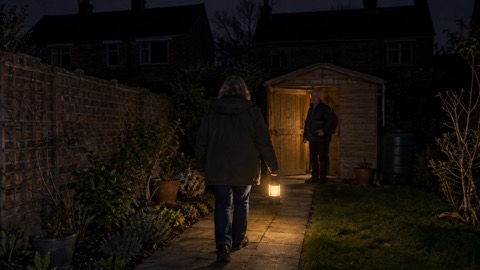 NEBO Galileo Tempest 350
 NEBO Leo 800 Flex
 NEBO Poppy Puck Light
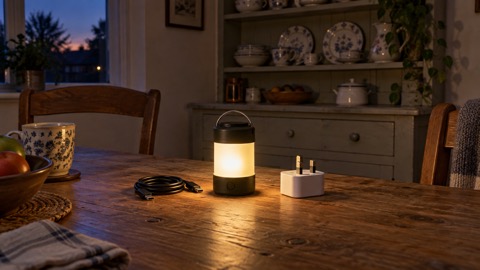 Fenix CL20R V2.0 Lantern
 Fenix CL26R Pro Lantern
 Fenix CL28R Lantern
 Fenix CL30R Power Lantern
 Ledlenser ML6
 BioLite AlpenGlow Mini
 MPOWERD Luci Emergency
 MPOWERD Luci Original
 MPOWERD Luci Charge 360