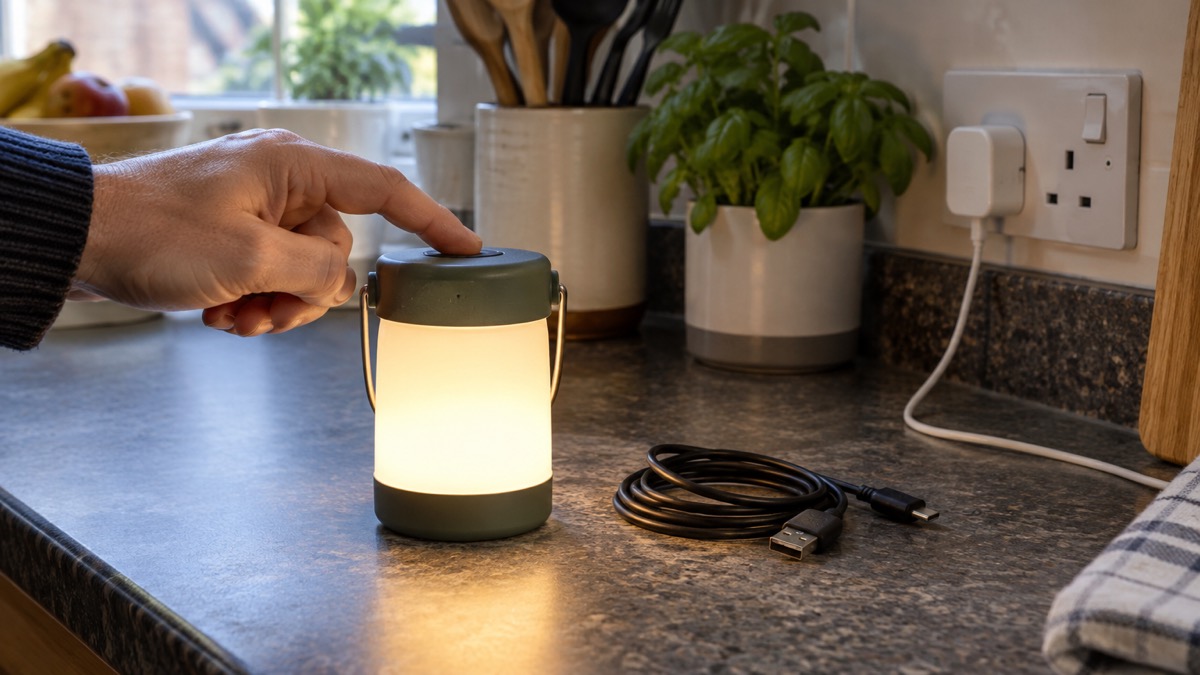
The BioLite AlpenGlow Mini is a small rechargeable lantern: the maker calls it a 150 lumen USB camping lantern, with a 1,000 mAh lithium-ion battery, a weight of 98g and an IPX4 weather rating1. It charges over USB-C, runs for up to 40 hours on its lowest setting, and has a built-in bungee cord for hanging2. For a household, that makes it a light you can leave charged on a shelf and pick up when the power goes, rather than a torch you have to hunt for.
It is not a room-filling light and it is not built for the outdoors in bad weather. The maker does not recommend submerging it in water or extended use in a downpour, and recommends bringing it inside during freezing temperatures for the best care of the internal battery2. Used within those limits, it does the one job most homes need in a cut: a steady, safe light that does not involve a flame.
This page sets out what the lantern is, what it can and cannot do, how to charge, hang and store it, and where it must not go. It uses the maker's own published figures throughout, and official fire and safety guidance for the parts that concern your household rather than the product.
What the AlpenGlow Mini is and who it suits
The maker describes the AlpenGlow Mini as a 150 lumen USB camping lantern1. In the home it is best understood as a personal or small-area light: something to carry from room to room, hang over a table, or stand on a bedside cabinet so you can find your way in the dark without lighting a candle. At 98g and 75mm by 51mm it is small enough to live in a kitchen drawer or on a shelf and be forgotten until it is needed2.
Its light is not just white. The maker states the lantern uses ChromaReal LED technology, which emits broad spectrum lighting that renders colours more accurately than typical bright white LEDs2. It offers four modes: warm white with dimming, single colour, one-colour cycling and horizon2. For a household, the warm white and dimming mode is the practical one for an evening without power; the colour modes are a matter of taste.
It suits a household that wants a rechargeable light with a known run time and a low setting that lasts. It does not suit someone who needs to light a whole room brightly for hours, or who wants a light that can be left out in the rain. If you are choosing between a lantern and a torch, or between rechargeable and battery lights, the wider guides on battery and rechargeable lanterns and rechargeable or battery torches set out the trade-offs. The AlpenGlow Mini sits at the small, light, rechargeable end of that range.
Specifications
The maker publishes a full specification for the lantern. The table below gives the figures as the maker states them.
| Specification | Maker's figure |
|---|---|
| Product type | 150 lumen USB camping lantern1 |
| Battery | 1,000 mAh Li-ion (3.7 Wh)2 |
| Recharge time | 3 hrs1 |
| Run time | 40h on LOW, 5h on HI2 |
| Lighting reserve | 2h on LOW1 |
| Charging input | USB-C2 |
| Weight | 98g2 |
| Dimensions | 75mm x 51mm2 |
| Weather resistance | IPX42 |
| Light modes | Warm White + Dimming, Single Color, 1-Color Cycling, Horizon2 |
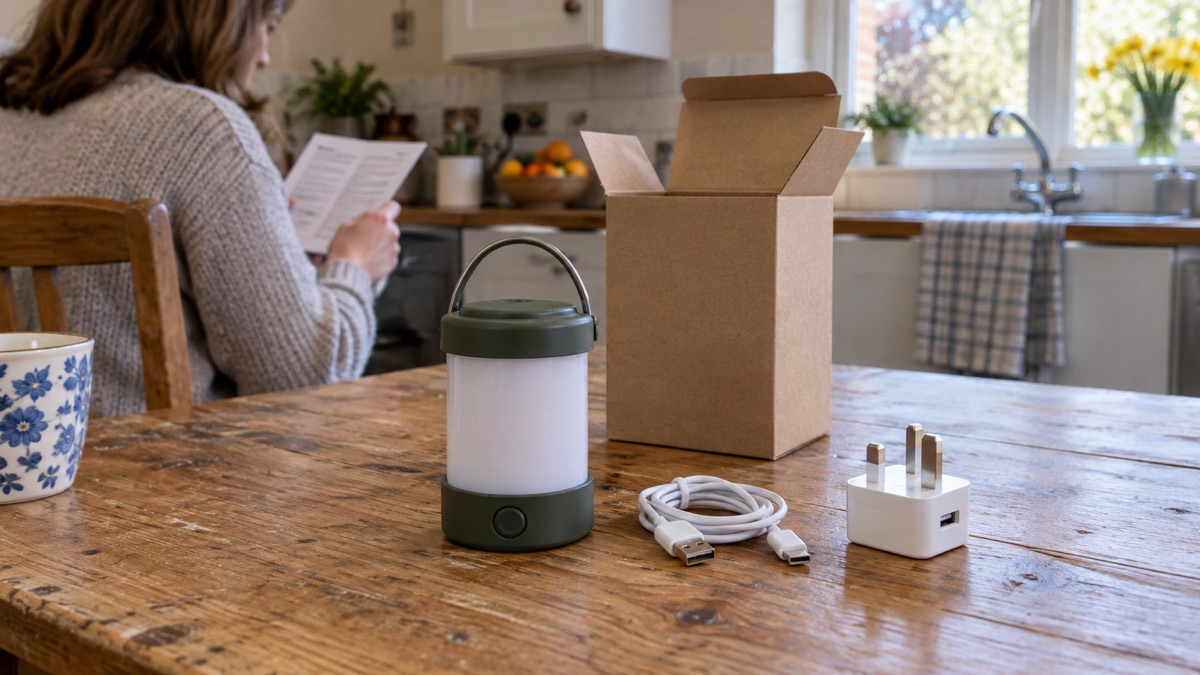
| In the box | AlpenGlow Mini, USB-A to USB-C charging cable, instruction manual1 |
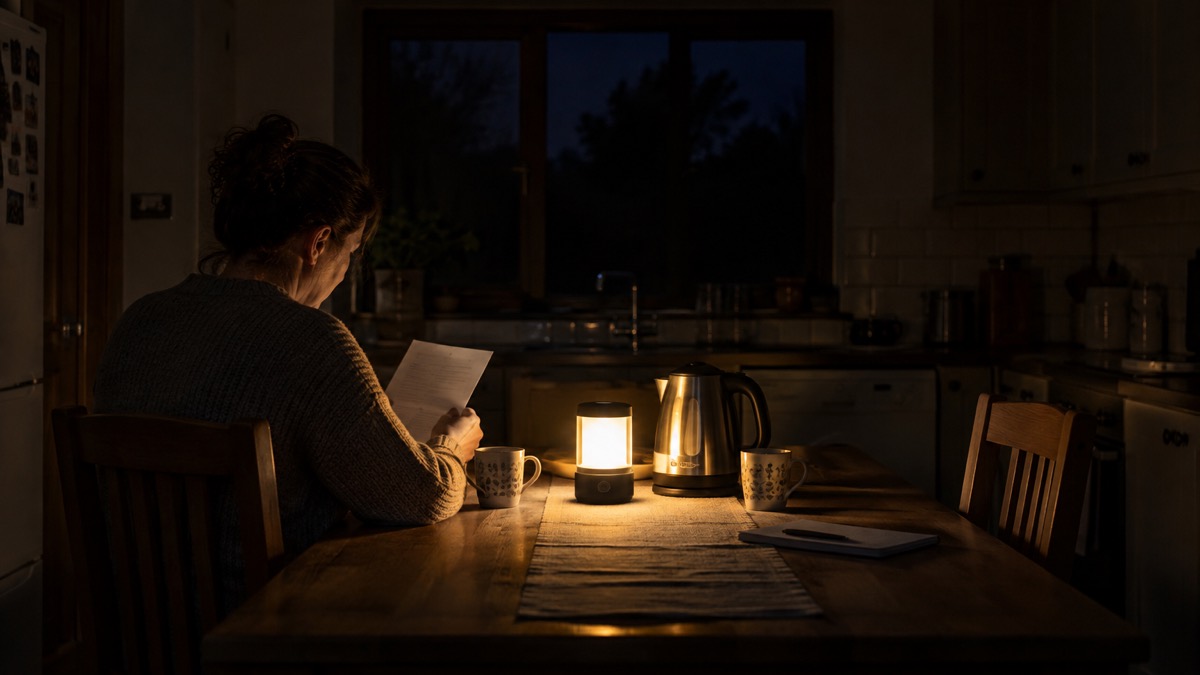
Two points are worth reading carefully. First, the 40 hour figure is on LOW; on HI, at 150 lumens, the maker gives a shorter run time2. The difference between those two settings is the whole story of how you will use it in a cut. Second, the IPX4 rating is a splash rating, not a waterproof one, and it depends on the port covers being shut2. What IPX numbers mean in practice is explained in the guide to IPX ratings for torches and lanterns.
Run time: 40 hours on low
The maker gives a run time of 40 hours on LOW2, and describes the lantern for emergency use as running for up to 40 hours and being safer than candles1. Those two figures describe very different lights. On LOW the lantern gives a low, dim light, enough to see your way around a room, find things and avoid tripping, and it will last through more than a day and a half of continuous use. On HI it gives 150 lumens, enough to light a table or a small room properly, but for far less time.
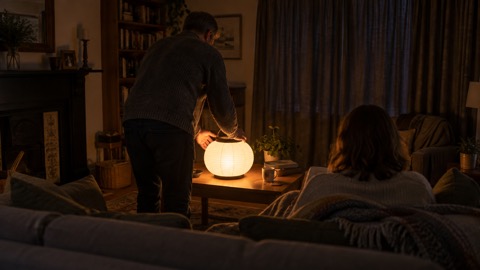
That shapes how a household should plan. If a power cut is expected, charge the lantern fully beforehand and use it on LOW for the routine hours, saving HI for cooking, reading or a task that needs proper light. A single charge on LOW covers a long outage; the same charge on HI covers an evening. The general guide to how long a camping lantern runs in a power cut explains how to work out what a given battery will do.
There is also a reserve. The maker lists a lighting reserve of 2 hours on LOW1. When the main charge is nearly gone, the lantern keeps a small amount of light going rather than going dark without warning. Treat those two hours as a signal to switch to another light or to recharge, not as a plan for the evening.
A safer light than candles in a power cut
Every fire service and safety body in the UK says the same thing about lighting in a power cut: use a torch or a battery light, not a candle. Northern Powergrid's advice is to keep a battery or wind-up torch handy because they are much safer than candles3. The government's power cut guidance says to keep a battery or wind-up torch and spare batteries at home, and that torches are safer than candles4. The National Fire Chiefs Council lists LED candles and lights, battery or wind-up torches among the products that are safer to light your home5.
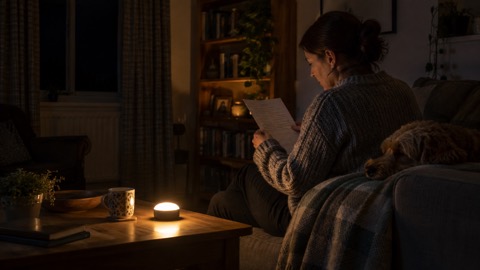
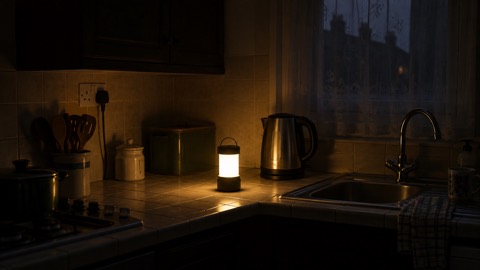
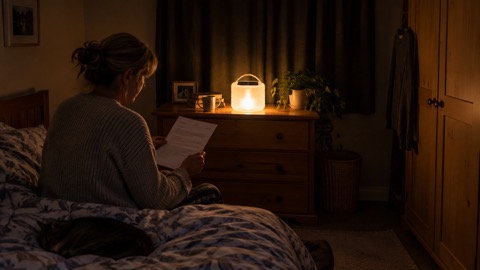
The AlpenGlow Mini is exactly the kind of light those bodies mean. It has no flame, no hot wax and no open fuel, and the maker itself describes it for emergency use as safer than candles1. That matters most in the situations where candles go wrong: a light knocked over in the dark, a child or pet moving through a room, a light left burning while people sleep. The London Fire Brigade's home fire safety guide for flats and maisonettes is blunt that flameless LED lights are a safer option than candles, incense, tea lights and oil burners6.
"Keep a battery or wind-up torch (and spare batteries) at home. Torches are safer than candles."
If you do keep candles for a cut, the fire services' rules still apply: keep lit candles in candle holders7, and put them out with a snuffer or a spoon rather than blowing them out, because sparks and hot wax can fly8. The candle safety checklist sets out the full list, and LED candles or real candles compares the two directly. A rechargeable lantern removes the question entirely.
Charging it safely
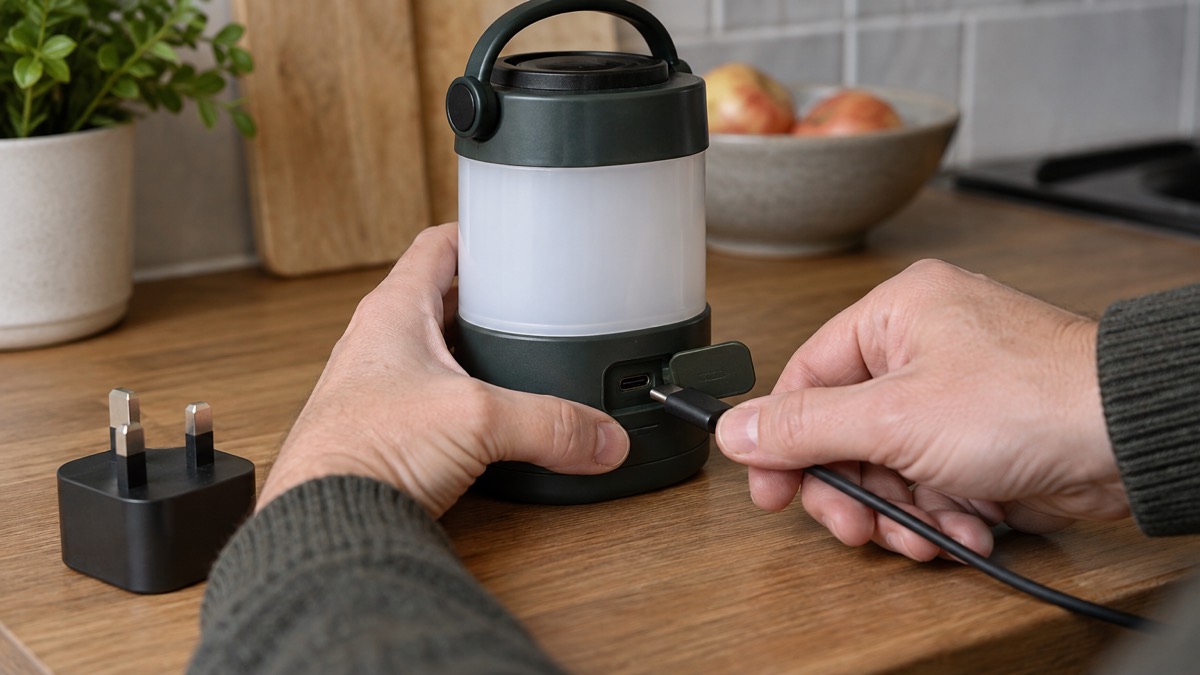
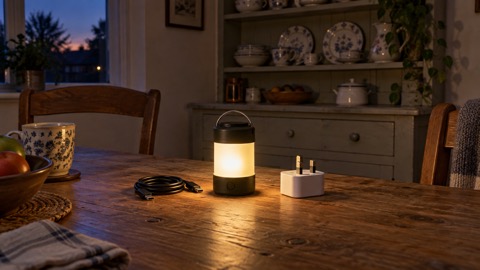
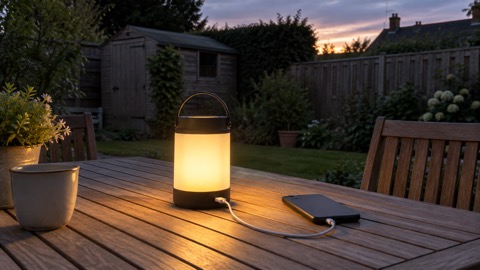
The lantern charges over USB-C, and the maker gives a recharge time of 3 hrs1. The box contains a USB-A to USB-C charging cable but no mains plug, so you will need a USB charger you already own1. Charge it indoors, from a socket or a USB power bank, and keep the rubber doors over the ports closed at all other times.
The maker's instruction on the ports is specific: for best protection against the elements, keep the ports securely closed with the rubber doors2. That is what preserves the IPX4 splash rating. An open port is an open route for water, and the rating does not apply once the door is open.
A few habits make the lantern reliable:
- Charge it fully before winter and check it every few months, so it is not flat when you need it.
- Charge indoors and in the dry, with the port door open only while the cable is plugged in.
- Close the port door firmly as soon as you unplug it2.
- Store it somewhere you will remember, not at the back of a cupboard.
If you are charging several lights and power banks, the guide to charging and storing rechargeable torches safely covers the general points, and can the wrong USB charger damage a torch battery answers the question most households ask about using whatever charger is to hand.
Hanging it with the bungee
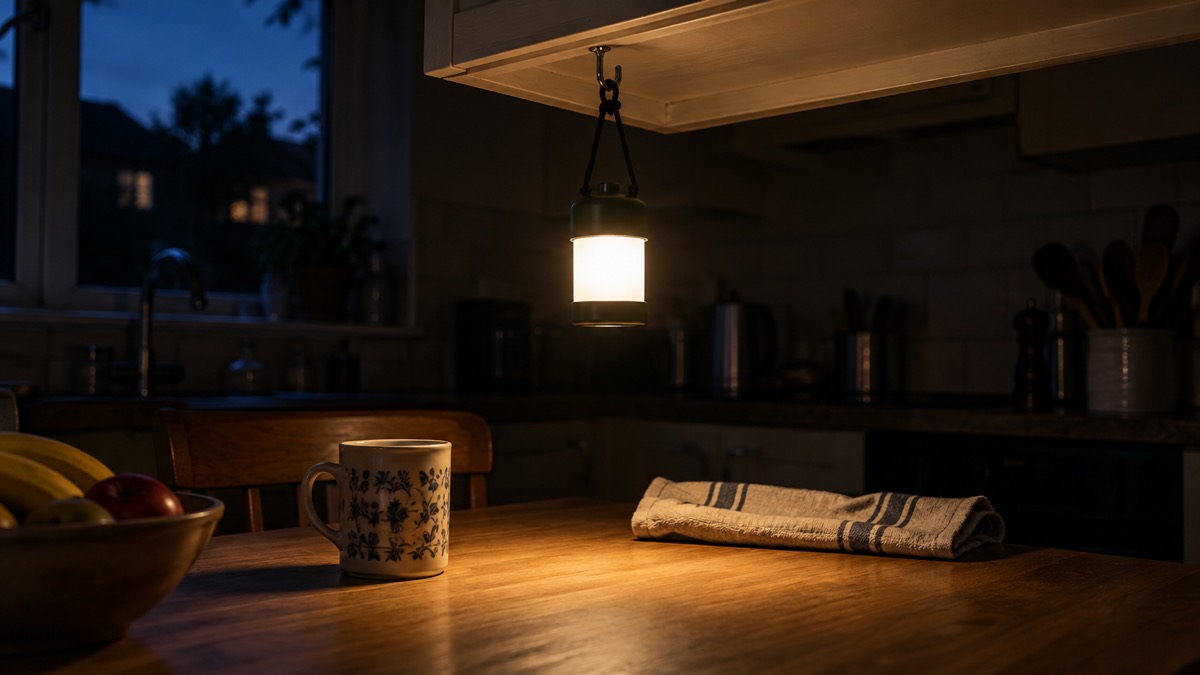
The lantern has a built-in bungee cord for hanging. The maker recommends a maximum diameter of 0.75 inches for whatever you hang it from2, so a hook, a rail, a tent pole or a branch no thicker than that. The maker also states the cord was stretch tested over 5,000 times to ensure elasticity stays functional1, which is a reasonable sign it will survive being hung and taken down repeatedly.
Hanging the lantern is often better than standing it on a surface. It lifts the light above eye level so it spreads across a room rather than glaring at one spot, it keeps it out of reach of children and pets, and it stops it being knocked over in the dark. Loop the bungee over something secure and check it holds before you let go.
Where it must not go: water, downpours and frost
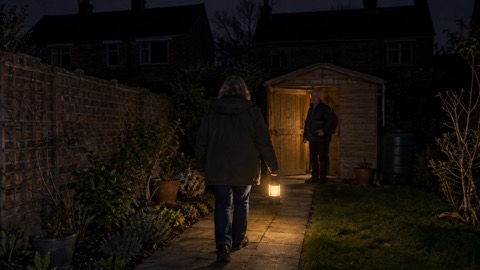
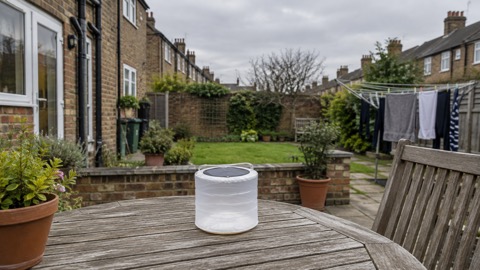
The maker is clear about the limits. It does not recommend submerging the lantern in water or extended use in a downpour2. The IPX4 rating means resistance to water splashes from any direction2, not immersion and not heavy rain. A splash by the sink or a light shower on the way to a shed is within its design; a puddle, a pond or a night out in steady rain is not.
Cold is the other limit. The maker recommends bringing the lantern inside during freezing temperatures for the best care of the internal battery2. It will run in cold conditions, but leaving it out in the frost is not good for the battery. Bring it in after use and store it dry and above freezing.
Water safety around the home matters more than the lantern itself. If a cut or a storm coincides with flooding, do not go into flood water to retrieve anything, including a light. The government's flooding guidance says never to walk through flood water, which may contain sewage and hide rubbish, wreckage, uneven roads and broken drain covers9. The London Fire Brigade warns not to touch an electrical switch while standing in water10, and the fire services warn that submerging a battery in water or exposing it to heavy flooding can be particularly dangerous11. If a light has been in flood water, leave it and replace it rather than drying it out and recharging it.
In winter, the same caution applies to frozen water. Fire and rescue services say never to go onto any type of frozen water, and to keep away from the edge and keep dogs on a lead when walking nearby12. If someone else or a pet gets into difficulty on ice, the advice is not to go onto the ice or into the water, and to wait for the emergency services12. No light is worth that risk.
What comes in the box, and the four-pack
The maker lists three items in the box: the AlpenGlow Mini, a USB-A to USB-C charging cable and an instruction manual1. There is no mains plug and no carry case. Read the manual before first use, particularly the parts on charging and the port doors.
A separate limited-edition four-pack is also sold, consisting of Charcoal, Teal, Red and Gray Minis2. That suits a household that wants one light per room or one per person, or a family that wants to give each child a light of their own.
Support, warranty and the maker's wider work
BioLite is the maker, and its own product pages are the place to check the current specification, the manual and any warranty terms before you rely on the lantern1. Keep the instruction manual with the lantern, and note the serial or order details if the maker asks for them in a support request. If a product is recalled, stop using it and follow the maker's instructions; the guide to recalled and unsafe torches and chargers explains how recalls are published and reported.
The maker also states that to date it has impacted the lives of 14.6 million people with access to safe lighting and charging, describing this as work for people living in energy poverty1. That is the company's own figure and is background on the business, not a claim about the lantern's performance in your home.
For the wider picture, the BioLite brand page collects the maker's products, and the emergency lighting section sets the AlpenGlow Mini alongside torches, head torches, emergency bulbs and wind-up lamps. If you are building a lighting plan for a cut, the power cut lighting guide and the power cut checklist put the lantern in the order you would actually use it.
Sources (13)
- AlpenGlow Mini, BioLite, 2026
- AlpenGlow Mini Variety Pack, BioLite, 2026
- What to do in a power cut, Northern Powergrid, 2026
- Power cuts, UK Government Be Ready campaign, 2026
- Cost of living toolkit, National Fire Chiefs Council, 2023
- Home fire safety guide for purpose-built flats and maisonettes, London Fire Brigade, 2026
- Power cuts at home, Scottish Fire and Rescue Service, 2026
- Stay safe this winter, North Wales Fire and Rescue Service, 2016
- Flooding, UK Government Prepare campaign, 2026
- Flood water is coming into my home, London Fire Brigade, 2026
- Heat, cold and rain: how weather conditions affect e-bikes and e-scooters, London Fire Brigade, 2026
- Extreme weather winter guide, London Fire Brigade, 2025
- Ice safety, North Yorkshire Fire and Rescue Service, 2022

 NEBO Galileo Tempest 350
 NEBO Leo 800 Flex
 NEBO Poppy Puck Light
 Fenix CL20R V2.0 Lantern
 Fenix CL26R Pro Lantern
 Fenix CL28R Lantern
 Fenix CL30R Power Lantern
 Ledlenser ML4
 Ledlenser ML6
 MPOWERD Luci Emergency
 MPOWERD Luci Original
 MPOWERD Luci Charge 360