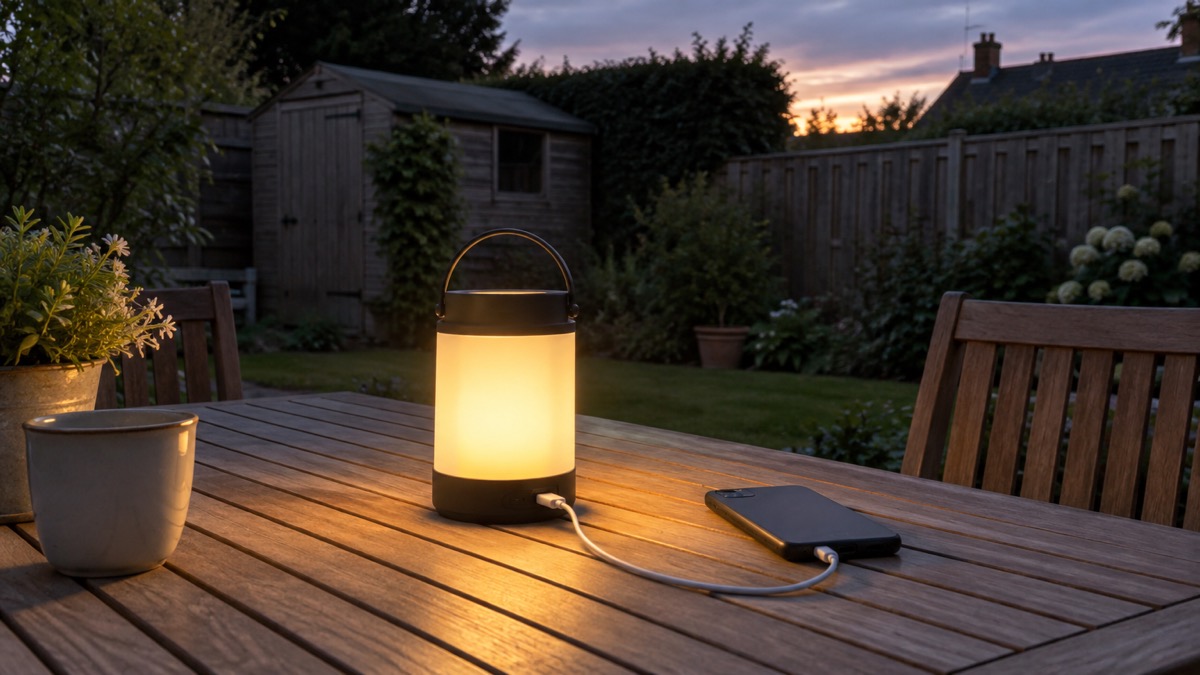
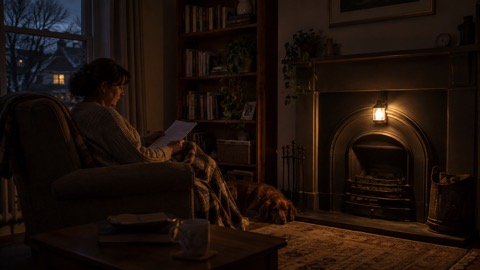
The Ledlenser ML6 is a rechargeable lantern that also works as a power bank: it has a USB output so you can charge a phone, a camera or another small device straight from its battery, and the maker states it can run as a lantern and charge a device at the same time1. For a household preparing for power cuts, that combination is the point. One charged object on the shelf gives you room light and a top-up for your phone.
Its headline figures are 750 lumens at maximum, 18 LEDs and a 18650 lithium-ion battery of 3,200mAh at 3.6V on the Cool White and Warm White versions1. Run time depends entirely on the setting: the maker quotes up to 70 hours at 20 lumens in low mode, and roughly 4 hours at 550 lumens at standard brightness1. It is drop tested to 1.5 metres and rated IP54, which means it shrugs off splashes and dust but must not be submerged1.
It comes in White, Warm White and a Warm White Bluetooth Connect version, and is sold in the UK through ledlenser.co.uk with free UK returns and a UK support team1. The standard warranty is 2 years, extended to 7 with online registration5.
What the ML6 is, and what it suits
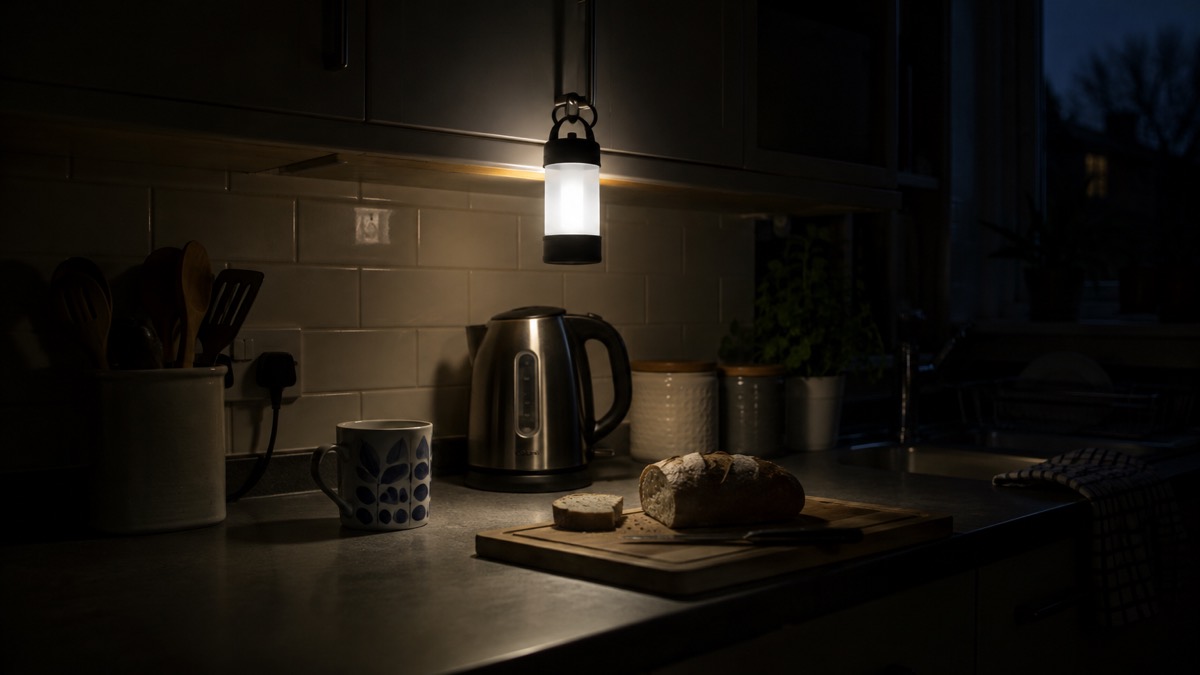
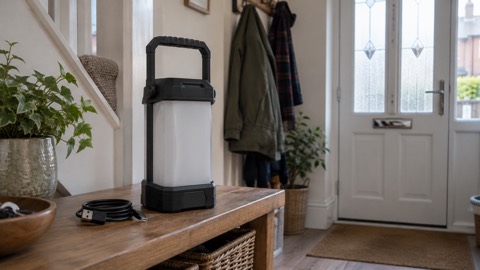
The ML6 is a cylindrical lantern 178mm long, 280g in weight, with a 42mm head and a 39mm tube on the standard versions3. It is not a torch you point: the maker describes Micro Prism Technology giving glare-free area illumination across the full LED array, which is what you want when the light needs to fill a room rather than pick out a path1. It has a rubber hook for hanging from tent loops and overhead fixings, an integrated magnet for any ferrous metal surface, and a removable stand with a metal hook built in1.
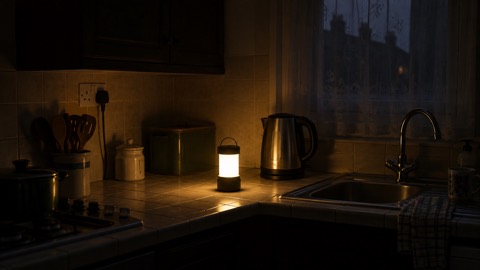
That range of mounting options is what makes it useful in a house rather than only a tent. Hang it from a cupboard handle while you cook, stick it to a fridge or a steel beam, or stand it on a table. The lantern also glows in the dark when switched off, so you can find it without a second light1.
It suits a household that wants one light to do several jobs: lighting a room in an outage, charging a phone from the same battery, and going in a bag for camping or a car. It is less suited to anyone who wants a light they can point down a garden or into a loft, which is a torch's job; our page on torches and how to choose one covers that side. If you are weighing a lantern against a torch for a room, see lantern or torch.
Specifications
The maker's figures for the standard Cool White and Warm White versions, with the Connect WL differences noted, are set out below1.
| Specification | ML6 Cool White / Warm White | ML6 Connect WL |
|---|---|---|
| Maximum output | 750 lumens (Boost) | 750 lumens (Boost) |
| LEDs | 18 | 18 |
| Battery | 18650 Li-ion, 3,200mAh, 3.6V | 18650 Li-ion, 3,000mAh, 3.6V |
| Length | 178mm | 178mm |
| Head diameter | 42mm | 45mm |
| Weight | 280g | Not stated |
| Colour temperature | 3,700K to 4,200K (White); 2,500K to 3,000K (Warm White) | 2,500K to 3,000K |
| Colour rendering (CRI) | 80 | 80 |
| IP rating | IP54 | IP54 |
| Drop tested | 1.5 metres | 1.5 metres |
| Bluetooth control | No | Yes, app plus wristband remote |
| Operating temperature | -20°C to +40°C | -20°C to +40°C |
The 18 LEDs are what give the even spread of light; a single high-power emitter would give a hotspot instead. The CRI of 80 means colours look reasonably natural under it, which matters little for finding your way around but helps if you are reading a map or a label1.
Run time: how long it actually lasts
The ML6's run time is a trade between brightness and hours, and the maker's figures show how wide that trade is1:
- Boost: 750 lumens, a 15 second burst of maximum output1
- Power: 550 lumens for 3.5 hours1
- Standard brightness: 550 lumens for approximately 4 hours1
- Low power: 5 lumens for 200 hours on Warm White and Connect WL, or 70 hours on Cool White1
- Low power at 20 lumens: up to 70 hours1
The two low-power figures are worth reading carefully. The maker's product page quotes both a 70-hour runtime at 20 lumens and a 5-lumen low mode with 200 hours on the warm versions and 70 hours on the cool version1. The bundle page lists low mode as 20 lumens for up to 70 hours2. For planning, treat 70 hours as the long-life figure you can rely on across versions, and note that the warm white and Connect WL versions go considerably further at their lowest setting.
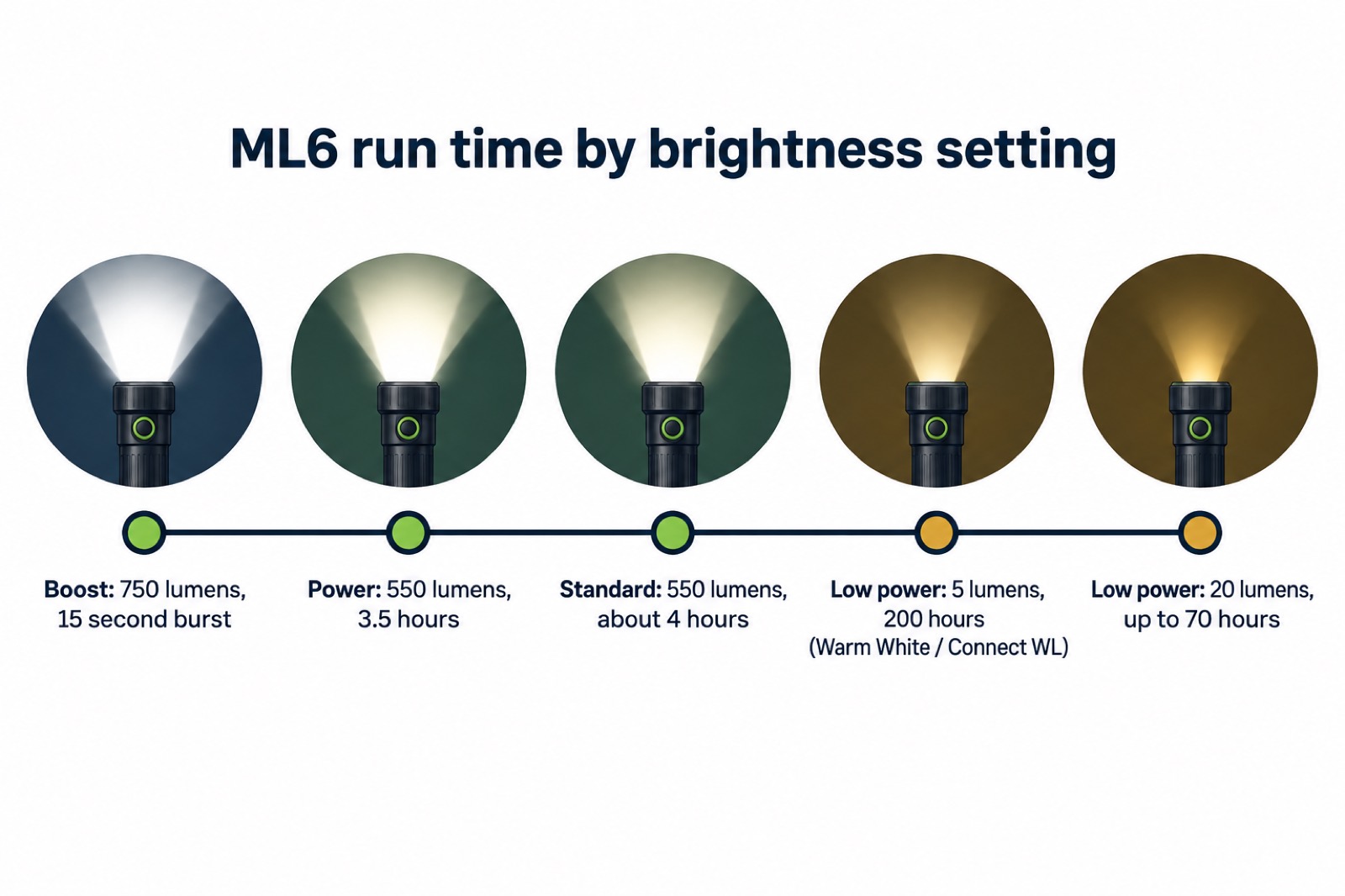
In a power cut, that spread is the whole game. A 550-lumen setting will light a room brightly but flatten the battery in an evening. Dropping to the lowest setting gives you days of gentle light for finding your way to the bathroom or keeping a hallway lit. Our page on how long a camping lantern runs in a power cut explains how to plan around these figures.
Light modes, red light and colour temperature
The ML6 offers Boost, Power, Mid Power, Low Power, Blink, Pulse, S.O.S. and Strobe, with a dimming function across the full output range1. The red light mode is there for night vision preservation and as a reading mode1. If you are unsure when to use red rather than white, our page on what red light mode is for covers it, and how to use SOS and strobe modes explains the signalling settings.
Colour temperature is the choice that affects how the lantern feels in a room. The maker states that white light at 3,700K to 4,200K produces a bright, neutral output suited to task-focused use such as cooking, reading maps and site work, while warm white at 2,500K to 3,000K gives a softer, amber-toned output better suited to relaxed evening use and social camping1. The Connect WL is warm white only1.
For a household, that is a straightforward decision. If the lantern will mostly be used for jobs, cooking and reading during an outage, the cooler white is the task light. If it will sit on a table in the evening and you want the room to feel less clinical, warm white does that. Neither is better; they are for different moments.
Charging a phone from the lantern
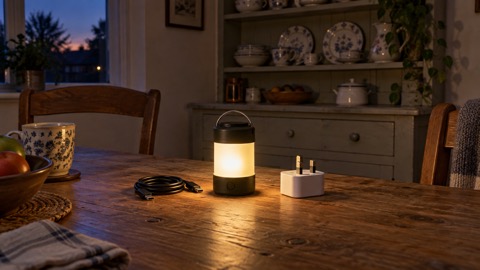
The ML6 has a USB output for charging smartphones, cameras and other devices directly from the lantern battery, and the maker states it can act as a lantern and power bank simultaneously1. That means you can leave it lit while a phone charges, rather than choosing between light and power.
What the maker does not give is a capacity figure in watt-hours or a stated number of phone charges, so no reliable claim can be made about how many times it will fill a phone. The battery is 3,200mAh at 3.6V on the standard versions and 3,000mAh on the Connect WL1. A phone battery is a different voltage and capacity, and charging loses energy along the way, so treat the lantern as a top-up for a phone rather than a full recharging station. For a household plan, that is still valuable: enough to make a call, check an update or send a message.
Charging the lantern itself takes about 300 minutes, roughly five hours, according to the maker's bundle listing2. Charge it fully before an expected storm or a winter spell, and keep it topped up rather than waiting for it to run flat. Our guide to charging and storing rechargeable torches safely covers the general principles, and can you use a torch while it is charging answers the question for lights that allow it.
IP54 means splash-proof, not waterproof
The ML6 is rated IP541. The maker explains what that means: protection against water spray from any direction and against dust ingress, suited to rain and splashes, but not submersion1. The maker also notes that IP66 would be protection against powerful water jets and heavy rain, and that no variant of the ML6 is rated for submersion1.
In practice, a lantern on a windowsill during a storm, or one that gets a splash while you are filling the kettle by hand, is within its rating. A lantern dropped into a flood, a bath or a bucket is not. Do not take it into flood water, and do not leave it out in a downpour where water can pool around the seals. Our page on what IP ratings mean for torches and lanterns explains the scale.
Using it in the cold, and storing it safely
The maker gives an operating temperature range of -20°C to +40°C, so the lantern is rated to work below freezing1. Cold still reduces what a lithium battery can deliver, so expect shorter run times in an unheated outbuilding or a car in winter than in a warm room. Bring it indoors to charge, and let it come back to room temperature before plugging it in.
For storage, the transport lock prevents accidental activation during storage and carry1. That is the single most useful habit with this lantern: lock it before it goes in a drawer or a bag, so it is not quietly draining itself against the side of a rucksack. The glow-in-the-dark body helps you find it, but only if it is somewhere sensible. Our page on where to keep torches so you can find them in the dark is worth reading alongside this.
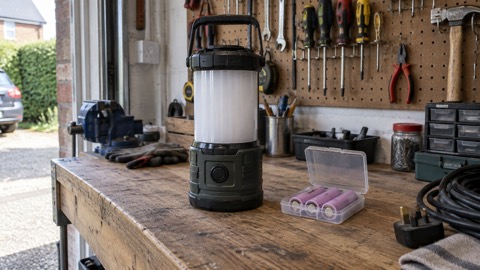
The maker states that the 18650 battery is user-replaceable on the Connect WL variant1. The standard versions are listed with a 18650 Li-ion cell1. If you are considering a replacement, ask Ledlenser's UK support team first, and use a cell of the same type and voltage. Our page on torch batteries, including 18650 cells, explains the format.
What comes in the box
The contents differ by version, according to the maker1:
- Cool White and Warm White: battery, USB cable, stand, pouch1
- Connect WL: battery, magnetic charging cable, wristband remote, stand1
- Bundle listing: 1x 18650 rechargeable battery, USB charging cable, transport bag, stand2
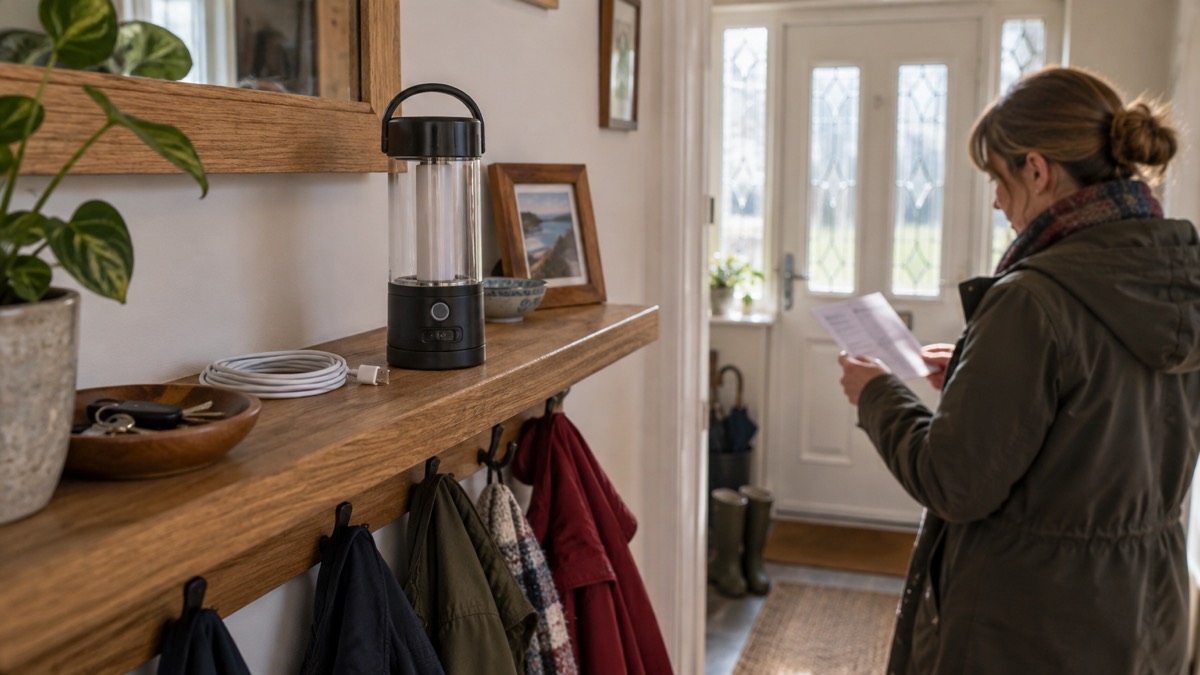
You supply your own USB power source for charging. There is no mention of a mains adaptor in the maker's lists, so plan on using a USB charger you already own. Our page on whether the wrong USB charger can damage a torch battery covers what to use.
Warranty, returns and UK support
Ledlenser's standard warranty is 2 years, extendable by a further 5 years with online registration, up to 7 years5. The maker describes the cover as applying to defects in manufacturing, and encourages owners to register their light for the extended period7. The ML6's own product page carries the 7 year warranty with registration1, and the bundle listing states the same 2 year standard with a further 5 years on registration, up to 7 years total2.
The documents do not fully agree on how the warranty is described: one maker page frames it as a standard 2 year period extendable to 7, while the ML6 page simply states 7 years with registration1. The practical action is the same either way: register the lantern after purchase and keep your proof of purchase, so you can claim the longer period if anything goes wrong.
Ledlenser advertises fast delivery and free UK returns, and a UK support team for assistance4. The ML6 is available to buy from ledlenser.co.uk1. For returns, use the process on the maker's site and keep the original packaging until you are sure the lantern is working as it should.
Sources (7)
- Ledlenser ML6 product page, Ledlenser, 2026-10-25
- MH11 head torch and ML power bank outdoor bundle, Ledlenser, 2026-10-25
- Ledlenser ML4 product page, Ledlenser, 2026-10-25
- Ledlenser HF Series, Ledlenser, 2026-10-25
- Ledlenser P4R Work, Ledlenser, 2026-10-25
- Ledlenser P4, Ledlenser, 2026-10-26
- Ledlenser H7R Core and K4R bundle, Ledlenser, 2026-10-25

 NEBO Galileo Tempest 350
 NEBO Leo 800 Flex
 NEBO Poppy Puck Light
 Fenix CL20R V2.0 Lantern
 Fenix CL26R Pro Lantern
 Fenix CL28R Lantern
 Fenix CL30R Power Lantern
 Ledlenser ML4
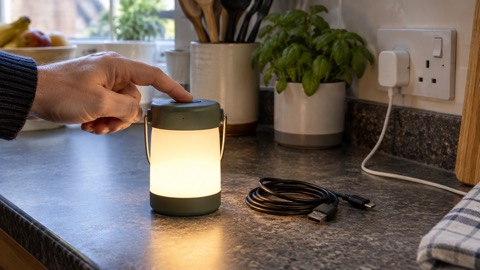 BioLite AlpenGlow Mini
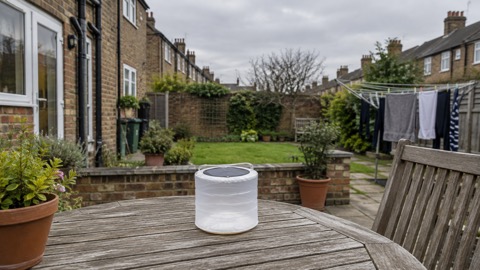 MPOWERD Luci Emergency
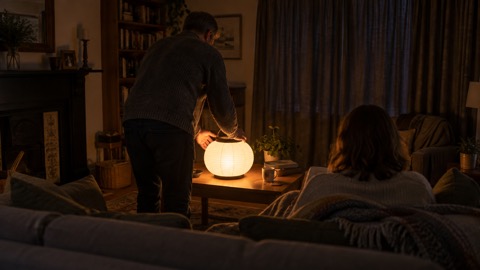 MPOWERD Luci Original
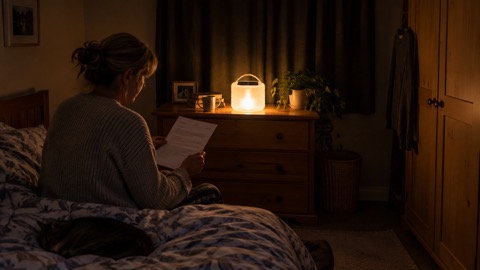 MPOWERD Luci Charge 360