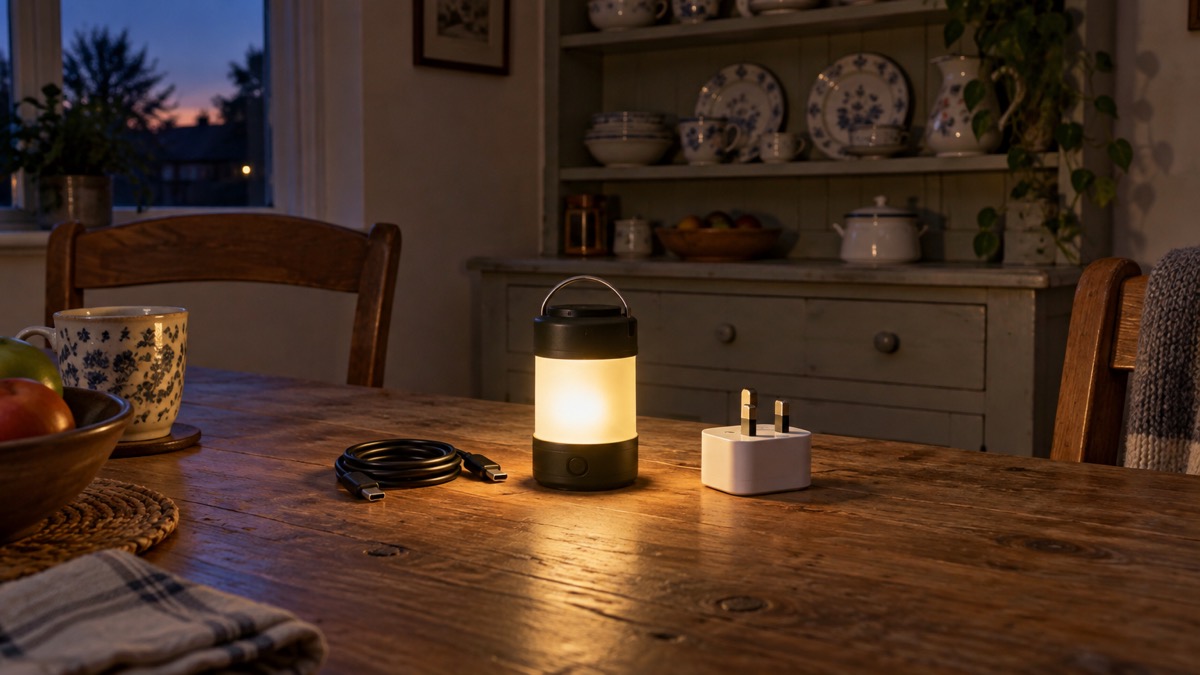
The Fenix CL20R V2.0 is a small rechargeable lantern for lighting a room when the power goes off. It puts out up to 300 lumens, runs for up to 320 hours on its lowest white setting, and charges by USB-C in about 2.5 hours from flat1. It runs on a removable Fenix ARB-LP1900 battery, or on three AAA cells if you have no way to charge1.
For a household preparing for a power cut, the figure that matters most is the run time on the lowest setting. Fenix lists 320 hours at 1 lumen, which the distributor describes as 13 days in an emergency1. That is long enough to cover a multi-day outage on a single charge, provided you are not using the brighter settings for hours at a time.
It is not a torch and does not pretend to be one. It is a lantern: it spreads light around a room rather than throwing a beam down a garden. If you want something to carry in a pocket or fix to your head, a torch or a head torch does that job better. This page covers what the CL20R V2.0 can do, how to run and charge it, and how to use it safely indoors.
What the CL20R V2.0 is and who it suits
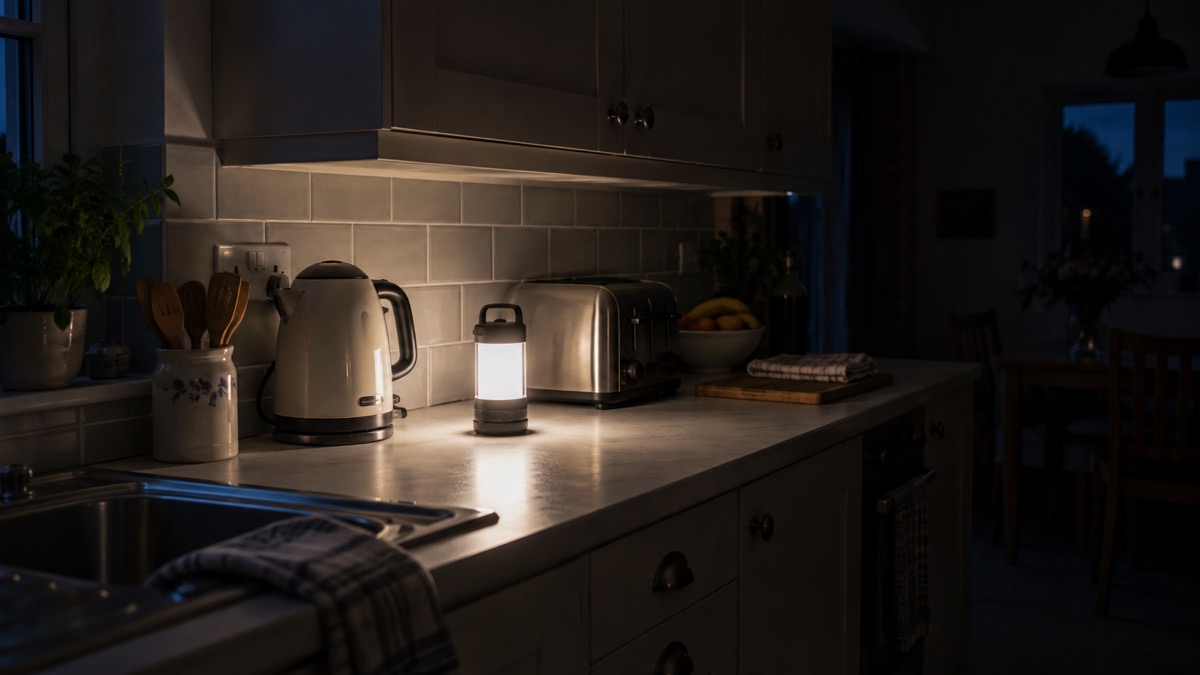
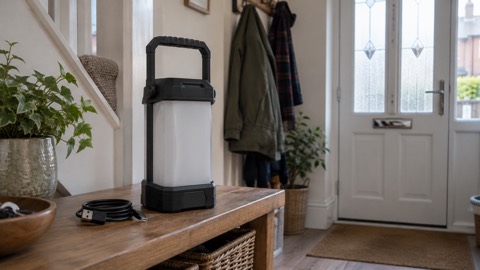
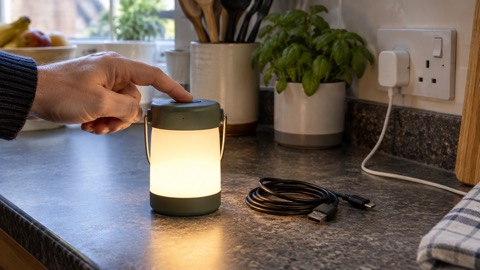
Fenix calls it "a small, go anywhere LED camping lantern"1. It measures 80 mm long, 48 mm wide and 54 mm high, and weighs 122 grams including the battery1. That is small enough to sit on a bedside table or a kitchen worktop without being in the way, and light enough to hang from a hook.
The light comes from 27 white LEDs and 24 RGB LEDs behind an optical quality PC plastic lens1. Fenix gives the white light a colour temperature of 3700 to 4200K, which is a neutral white rather than a harsh blue3. The maximum beam diameter is 12 metres3.
Two features decide where it is useful. The first is the magnetic base, which lets it stand on a flat surface or stick to anything steel, and the hanging loop, which lets it hang from a hook or a tent ridge2. The second is the battery arrangement: a removable pack you recharge by USB-C, with the option of three AAA cells when you cannot charge1.
That combination suits a household that wants one lantern to light a room through an evening, and a fallback that works when the mains is off for days. It is less suited to anyone who needs a narrow beam to inspect something at distance, or a light they can hold in one hand while working.
Run time: up to 320 hours on the lowest setting
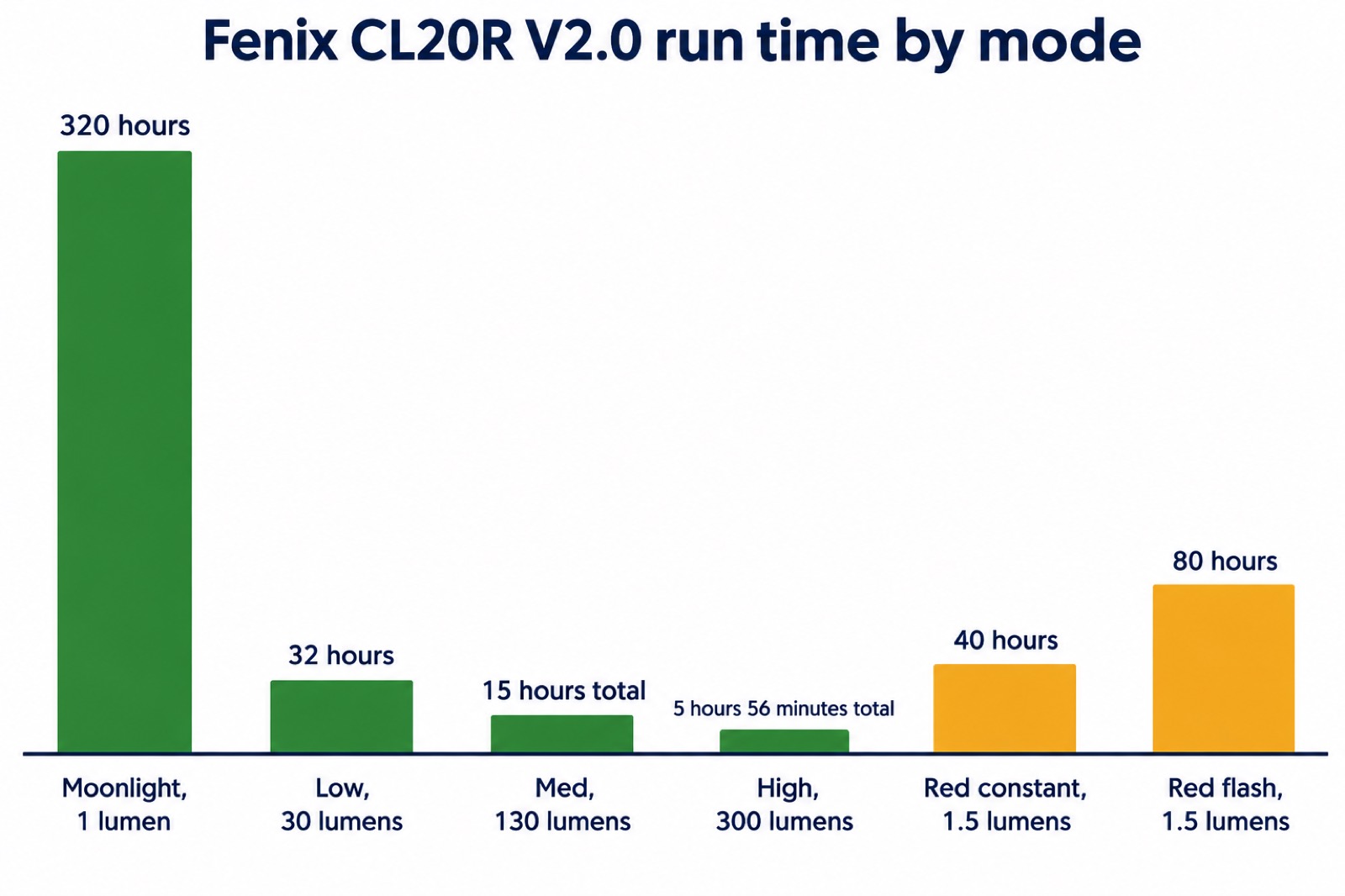
Fenix publishes a run time for each output, and the spread between them is wide. The table below sets out the white light levels and the red modes as the UK distributor lists them1.
| Mode | Output | Run time |
|---|---|---|
| Moonlight | 1 lumen | 320 hours |
| Low | 30 lumens | 32 hours |
| Med | 130 lumens | 15 hours total |
| High | 300 lumens | 5 hours 56 minutes total |
| Red constant | 1.5 lumens | 40 hours |
| Red flash | 1.5 lumens | 80 hours |
The practical lesson is that the setting you choose decides how long the lantern lasts. On High, at 300 lumens, you get under six hours: enough for one evening, not enough for a week. On Moonlight, at 1 lumen, you get 320 hours, which is where the "13 days" figure comes from1. For a power cut, start low and turn up only when you need to read, cook or move around.
The manual also lists the scene modes: RGB flow at 10 lumens, and stepless RGB at 25 lumens for 6 hours 41 minutes2. These are for atmosphere rather than emergency light, and they use the battery faster than the low white settings.
If you want to compare these figures with other lanterns, our guide to how long a camping lantern runs in a power cut sets out what to expect, and lumens, beam distance and run time explained covers why a brighter setting always means a shorter run.
Light modes and how to switch between them
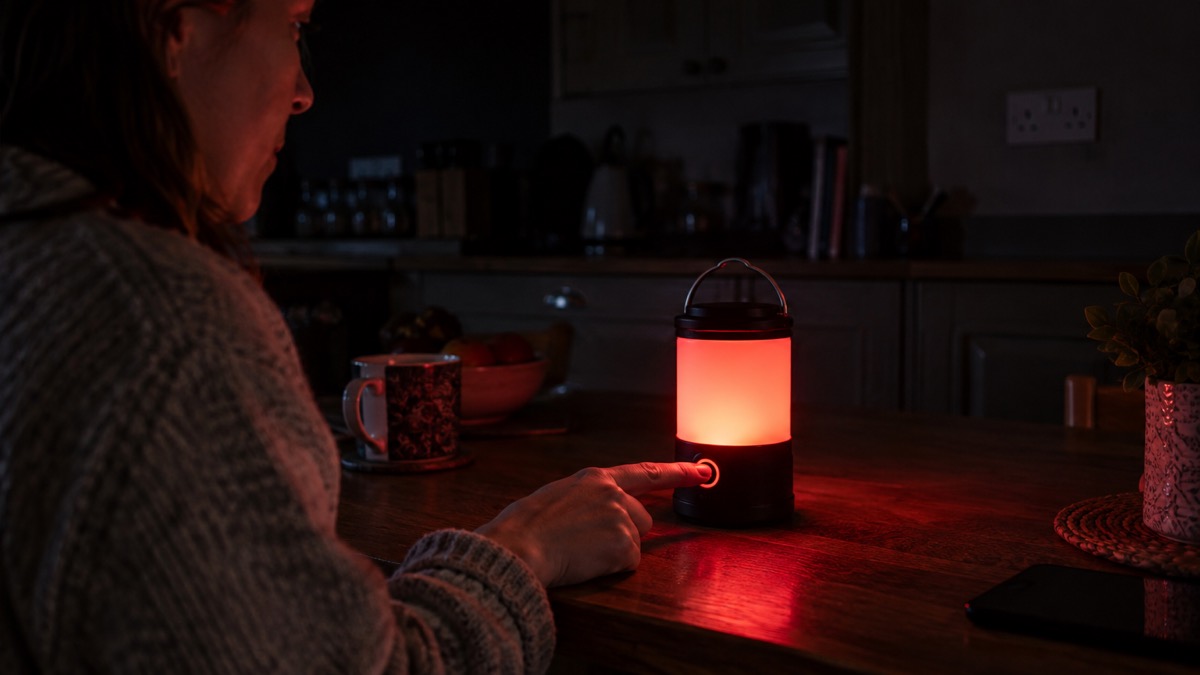
The V2.0 has four white light levels of 1, 30, 130 and 300 lumens, red and red flashing modes, and multi colour RGB chase, flow and stepless colour modes1. The switch is a side on-off-mode switch, and the light ring around it shows the battery level1.
The original CL20R's manual sets out the operating pattern, which is the clearest description of how these Fenix lanterns are driven: press and hold the switch for 0.5 seconds to turn the lantern on or off, and single click to cycle through the white outputs4. A double click switches to the red lantern, and a double click again returns to white4. The V2.0 manual adds a delay off function: a double click enables it, the switch ring shows purple, and the lantern then turns itself off after 20 minutes2.
Two behaviours are worth knowing before you rely on it in the dark. The lantern remembers the last white output you used, but if you switched it off in High it will come back on in Med2. And in white lighting mode there is a 20 minute auto shut-off feature1. If the room suddenly goes dark while you are reading, that is probably why: click the switch again.
Batteries: the ARB-LP1900 pack or three AAA cells
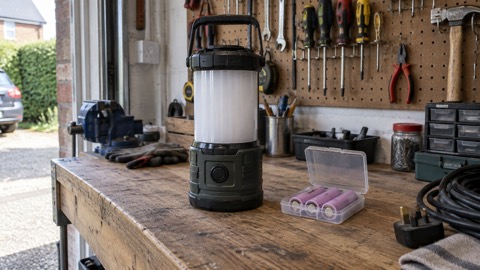
The lantern ships with a removable Fenix ARB-LP1900 lithium polymer battery, rated at 1900 mAh1. Fenix's compatibility list is specific, and it is worth following exactly1:
- Fenix ARB-LP1900, 3.8 V: recommended.
- Alkaline AAA, 1.5 V: usable.
- Ni-MH AAA, 1.2 V: usable.
- Rechargeable Li-ion 10440, 3.7 V: banned.
The working voltage is 3.0 V to 4.2 V3. The AAA option is the fallback that matters in a long outage: if the pack is flat and you cannot charge, three AAA cells keep the lantern going. Keep a set of alkaline AAAs with the lantern for that reason, and check their date before winter.
The battery level indicator works on the ARB-LP1900 pack only. A solid green light means 100% to 85%, a flashing green light 85% to 50%, a solid red light 50% to 25% and a flashing red light 25% to 1%1. When the charge gets critical, the switch ring blinks red six times every second to tell you to recharge or replace the battery1.
For more on the difference between built-in packs and standard cells, see torch batteries: AA, AAA, 18650 and built-in packs.
Charging by USB-C in about 2.5 hours
The V2.0 charges through a USB-C port with an inner waterproof design1. Fenix's manual gives the charging time as approximately 2.5 hours from depleted to fully charged, with the lantern turned off and the ARB-LP1900 battery fitted2. The UK distributor gives the same figure1.
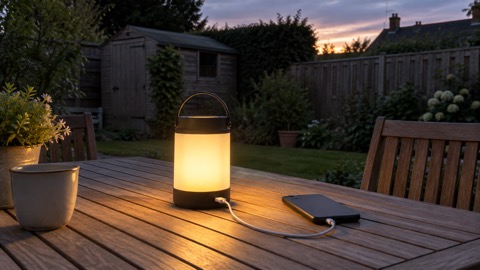
You can use the lantern while it charges: Fenix states that all outputs can be turned on while charging, and the delay off function can be used at the same time2. The 2.5 hour figure is measured with the lantern off, so a lantern in use will take longer.
The USB-C port's inner waterproofing means the lantern stays waterproof even if the anti-dust cover comes off3. That is a small but useful detail for a lantern that may sit on a wet windowsill or be carried in a damp bag.
For the wider question of keeping rechargeable lights ready, see charging and storing rechargeable torches safely and can you use a torch while it is charging.
Heat, auto shut-off and safe use indoors
A lantern left on a table is a heat source as well as a light. Fenix's manual is direct about this: "This lantern will accumulate a lot of heat while operating, resulting in a high temperature of the lantern outer case. Pay close attention to avoid burns."2
The lantern manages its own temperature. When it reaches 50°C or above, it automatically steps down a few lumens to reduce the temperature1. In white lighting mode there is also a 20 minute auto shut-off1. Treat both as normal behaviour rather than a fault.
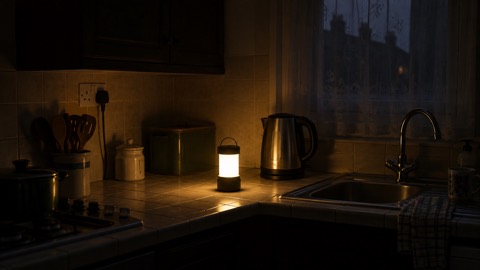
Indoors, the safest pattern is to stand the lantern on a hard, flat surface away from curtains and bedding, and to use the lowest setting that does the job. That keeps the case cooler and stretches the run time. If you are lighting a room for an older person or someone with limited sight, our guide to lights for older and disabled people in a power cut covers placement.
Weatherproofing, drops and looking after the lantern
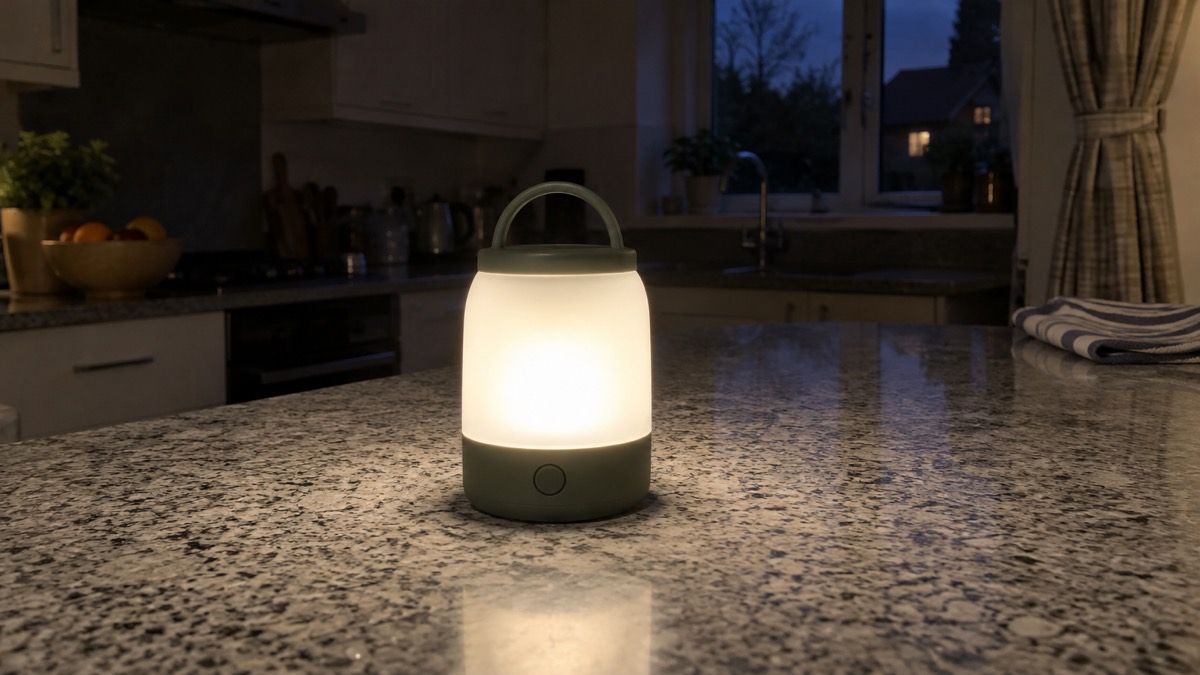
The V2.0 is rated IP65, which Fenix describes as rain and splash proof1. It is drop tested to 1.5 metres1. That is enough for a lantern that lives on a shelf and comes out in bad weather, but it is not a diving light and should not be left standing in water.
Looking after it is mostly about the battery contacts. Fenix lists dirty contact points, along with a poor battery level, as a cause of flickering, and gives the remedy: clean the contact points with a cotton swab soaked in rubbing alcohol3. Do that before assuming the lantern is failing.
The LEDs are not replaceable. Fenix states that the whole lantern will need to be replaced when any one of the LEDs reaches the end of its lifespan2, and rates each LED at 50,000 hours3. Do not open the sealed head: Fenix says disassembling it can cause damage and will void the warranty2.
For the wider question of what IP ratings mean, see what IPX ratings mean for torches and lanterns. For a seasonal routine, our lighting checks before winter checklist covers what to test and when.
How the V2.0 differs from the original CL20R
The original CL20R is listed by the UK distributor as discontinued and out of stock4. The V2.0 is the current model and is listed as in stock1. If you are buying new, the V2.0 is what you will find; if you already own the original, the differences below explain why the figures on this page do not match your lantern.
| Feature | Original CL20R | CL20R V2.0 |
|---|---|---|
| Battery | Built-in 1600 mAh Li-poly4 | Removable 1900 mAh ARB-LP1900, or 3 x AAA1 |
| Charging | Micro USB4 | USB-C1 |
| Charge time from empty | 1 hour 40 minutes4 | About 2.5 hours1 |
| Maximum output | 300 lumens4 | 300 lumens1 |
| Longest run time | 200 hours at 1 lumen4 | 320 hours at 1 lumen1 |
| Weatherproofing | IP664 | IP651 |
| Warranty | 2 years in the UK4 | 5 years in the UK, 1 year on the battery1 |
The pattern is a move from a sealed built-in battery and Micro USB to a removable pack, USB-C and a longer warranty, at the cost of a slower charge and a slightly lower IP rating. The original's thermal behaviour is documented in its own listing: after 30 minutes on Turbo it steps down from 300 to 120 lumens, and after an hour on High from 130 to 52 lumens4. The V2.0's step-down is tied to the 50°C threshold instead1.
Support, warranty and where to get help
The UK distributor lists a five year UK warranty on the CL20R V2.0, with one year on the battery1. The manual sets out the conditions: disassembling the sealed head voids the warranty, and adverse effects from low-quality batteries are not covered by any Fenix warranty or liability2. Keep your proof of purchase and the battery you were supplied with.
If the lantern flickers, check the battery level and clean the contacts before assuming a fault3. If it will not charge, try a different USB-C cable and charger, and check the port for dirt. If it still fails within the warranty period, go back to the retailer you bought it from.
For the wider picture of lighting a home through an outage, start with emergency lighting at home and lighting your home safely when the power goes off. If you are choosing between a lantern and a torch, lantern or torch: which lights a room better sets out the trade-off, and battery and rechargeable lanterns for lighting a room covers the alternatives. Fenix also makes the CL26R Pro, CL28R and CL30R lanterns, and the E05R keychain torch for carrying.
Sources (4)
- Fenix CL20R V2.0 Lantern, Fenixlight UK, 2026-10-26
- Fenix CL20R V2.0 manual, Fenix, 2025-09-15
- Fenix CL20R V2.0, Fenix, 2025-10-09
- Fenix CL20R Lantern (Discontinued), Fenixlight UK, 2026-10-25
 NEBO Galileo Tempest 350
 NEBO Leo 800 Flex
 NEBO Poppy Puck Light
 Fenix CL26R Pro Lantern
 Fenix CL28R Lantern
 Fenix CL30R Power Lantern
 Ledlenser ML4
 Ledlenser ML6
 BioLite AlpenGlow Mini
 MPOWERD Luci Emergency
 MPOWERD Luci Original
 MPOWERD Luci Charge 360