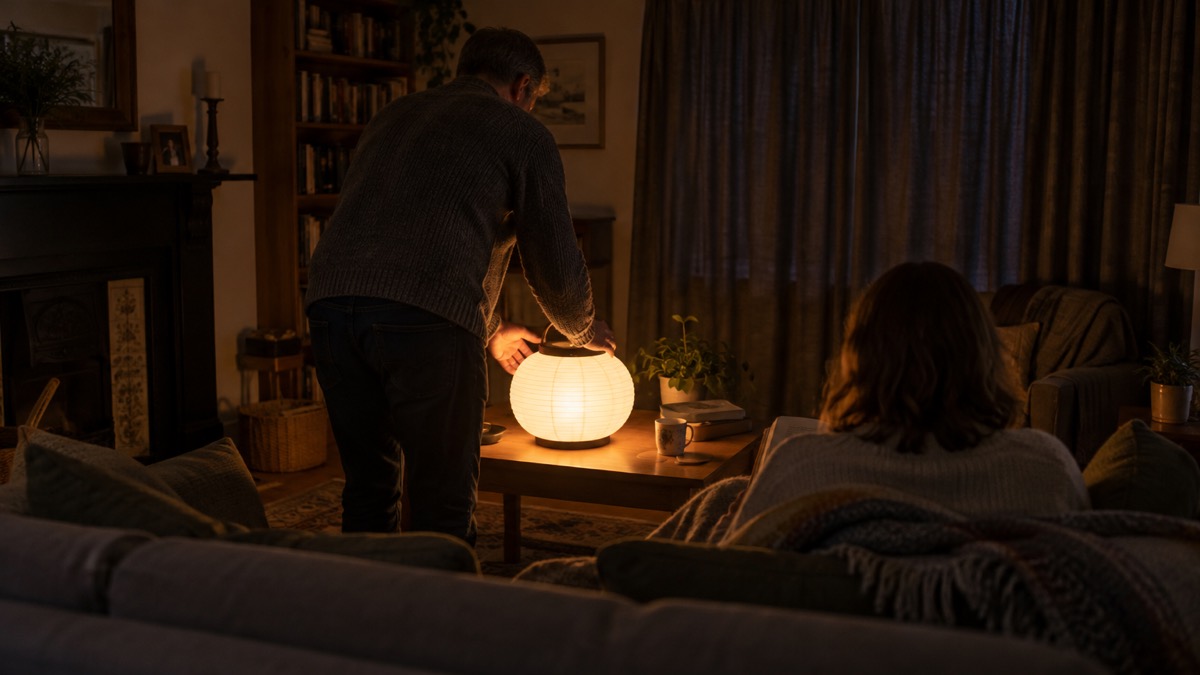
The Luci Original is a solar inflatable lantern made by MPOWERD and sold through BioLite. It is a soft, collapsible light that packs down to 1 inch, weighs 4.4 oz (125 g) and inflates in seconds, so it can live in a drawer or an emergency box and be ready when the power goes off1. It runs on a built-in 1,000 mAh lithium-ion battery that is charged by sunlight or, on some versions, by USB-C, and the maker says no disposable batteries are needed2.
For a household preparing for a power cut, the useful numbers are these. The Matte version gives up to 24 hours on the low setting and 6 hours on high, with a maximum brightness of up to 65 lumens1. It is rated IP67 for water resistance and the maker says it is durable enough to be kicked, thrown or stood on by someone weighing less than about 150 lbs3. It has a 2-second quick shut off: hold the power button for 2 seconds and it goes off1.
There are three finishes, and they are not identical. The Matte and Clear versions have 10 LEDs and four lighting modes, while the colour version has 10 RGB LEDs and colour modes, and the maker lists it as charging by solar only2. This page sets out what each version does, how to charge and store it, and how to use it safely, so you can decide whether it suits your home.
What the Luci Original is and who it suits
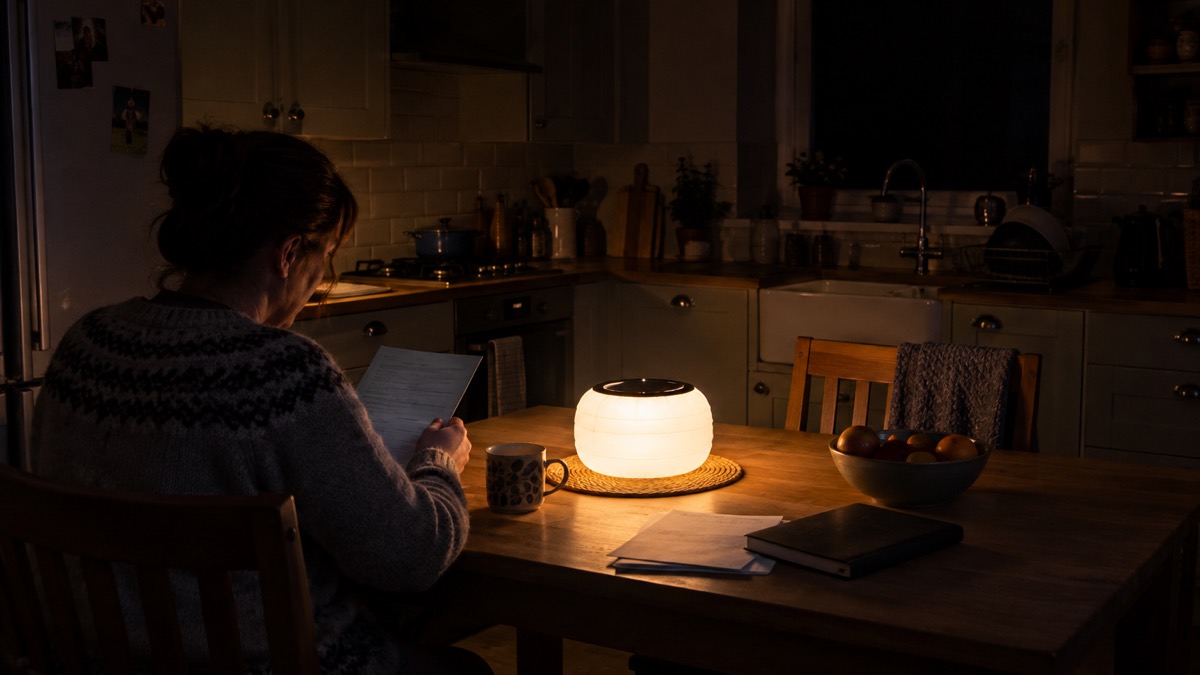
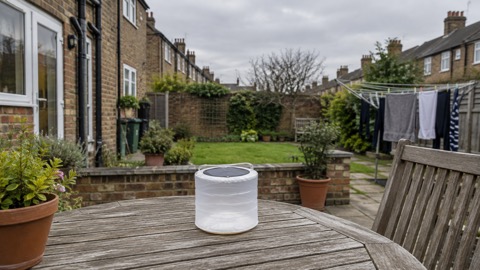
The Luci Original is a solar inflatable lantern: a soft, translucent body with a solar panel on one face and a ring of LEDs inside, which you blow up to use and flatten to store1. The maker describes the range as waterproof lanterns and detachable string lights, and says all of its products are solar powered and rechargeable, so no batteries are needed5. That matters in a power cut, because the thing you are most likely to have run out of is the disposable batteries your torch needs.
What it suits is the household that wants a light which looks after itself. Leave it on a windowsill and the solar panel tops it up; pick it up and it lights a room, a tent, a shed or a stairwell. Because it is soft and light, it is also a reasonable choice where a glass lantern or a candle would be a worry, and the maker's own durability claims are aimed at exactly that kind of handling3. It is not a torch: it has no beam and no focus, so for looking into a loft or walking a dark path you would want a torch or head torch alongside it. Our guide to lanterns for lighting a room sets out how a lantern differs from a torch, and the emergency lighting section covers the wider kit a household should hold.
The maker has said that new Luci products were expected in November 2024 and again in March 2025, so the range does change; check the maker's current product page for what is on sale now5.
Specifications: 10 LEDs, up to 65 lumens, 1,000 mAh battery
The three finishes share a battery and a body but differ in their LEDs, their modes and their charging inputs. The maker's own figures are set out below.
| Specification | Luci Original Matte | Luci Original Clear | Luci Original colour version |
|---|---|---|---|
| Type | Solar inflatable lantern | Solar inflatable lantern | Solar inflatable lantern |
| LEDs | 10 Warm White3 | 10 Cool White3 | 10 RGB2 |
| Brightness | Up to 65 lumens1 | Up to 75 lumens4 | Not listed |
| Battery | 1,000 mAh (3.7 Wh) Li-ion3 | 1,000 mAh (3.7 Wh) Li-ion4 | 1,000 (3.7 Wh) Li-ion2 |
| Lighting modes | Low, Medium, High, Flashing3 | Low, Medium, High, Flashing4 | Colour Cycle, Red, Green, Blue, Purple, Yellow, Cyan, Orange, White3 |
| Inputs | USB-C, Solar Panel3 | USB-C, Solar Panel4 | Solar Panel3 |
| Solar panel | High Efficiency Mono-Crystalline3 | High Efficiency Mono-Crystalline4 | High Efficiency Mono-Crystalline2 |
| Water resistance | IP671 | IP674 | IP672 |
| Weight | 4.4 oz (125 g)3 | 4.4 oz (125 g)4 | 4.4 oz (125 g)2 |
| Dimensions | 4.25 x 5 in (108 x 127 mm) diameter3 | Not listed | Not listed |
| Straps | Fixed Base Strap3 | Not listed | Fixed base strap2 |
| In the box | Lantern, USB-USB cable3 | Lantern3 | Lantern2 |
Two things in that table decide which version suits you. The first is the charging input: the colour version is listed with a solar panel only, so if you want the option of topping it up from a USB charger or power bank in a long outage, the Matte or Clear is the one to look at2. The second is the light itself: warm white LEDs on the Matte give a softer, more domestic light, cool white on the Clear is whiter, and the colour version is for colour rather than for reading by3.
The maker also sells the lanterns in multi-packs, including a three-pack and an emergency four-pack, which is worth knowing if you are lighting more than one room3.
Run time: 24 hours on low, 6 hours on high
The maker lists the Matte as running for 24 hours on the low setting and 6 hours on high1. That is the range you are working with: the brighter the setting, the shorter the run. For a power cut, low is usually enough to stop a room being pitch dark, and it is the setting that will get you through a night and into the next day on a single charge.
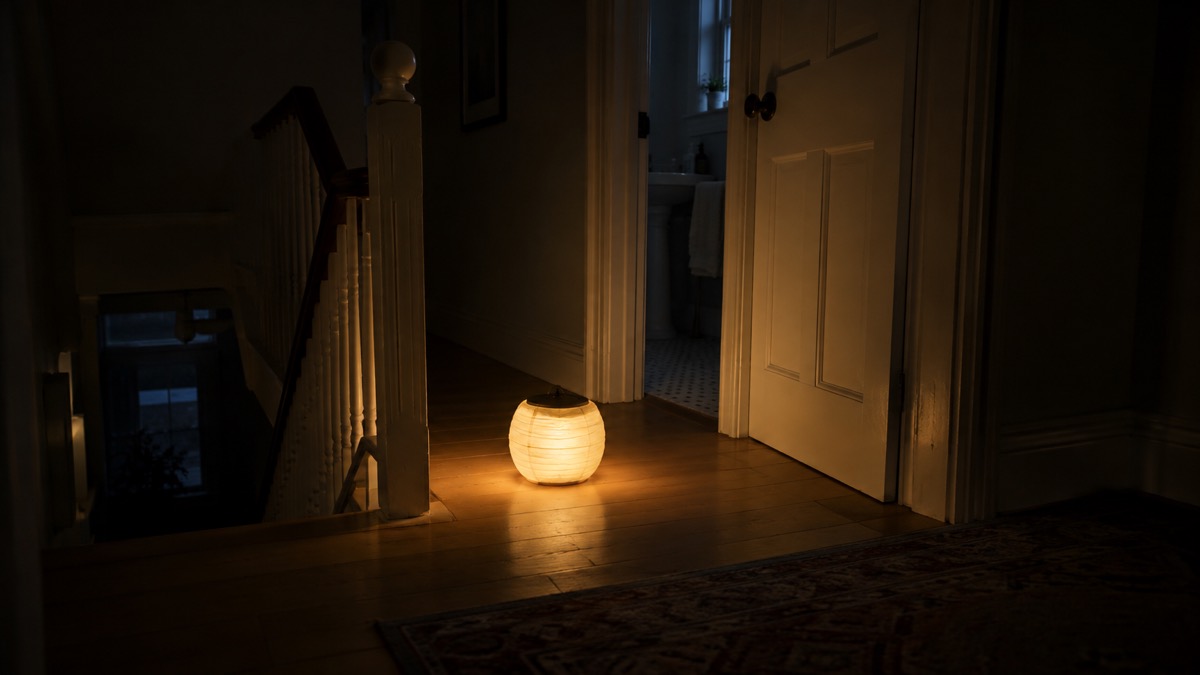
The colour version is listed differently, at 12 hours on low2. The maker does not give a high-mode figure for the colour version on the pages here, so do not assume it matches the Matte. If run time is the thing you care about most, the Matte's 24 hours on low is the figure to plan around.
How you use that run time is a matter of habit. Switch it to low when you are sitting in a room and only reach for high when you are doing something that needs it, such as finding a fuse box or reading a label. The 2-second quick shut off helps here: you do not have to cycle through the modes to turn it off, you just hold the button1. Our page on how long a camping lantern runs in a power cut explains how to think about run times across lantern types, and lumens, beam distance and run time explains what a lumen figure does and does not tell you.
Charging by sunlight or USB-C
The maker's charging instruction is the same across the range: place the lantern in direct sunlight with the solar panel side up, or charge it via USB-C1. The Matte and Clear versions list both a USB-C input and a solar panel; the colour version lists a solar panel only3.
The maker's own advice is to charge via solar for a natural source of power, but to use USB if you are in a pinch1. It also states that charging via USB is around 6 times faster than via solar because of the input power3. On charge times, the maker lists 3 hours via USB-C for the Matte and 7 hours via solar for the colour version1. These are figures for different versions rather than a like-for-like comparison, and the maker does not give a single USB charge time for every model, so treat them as a guide.
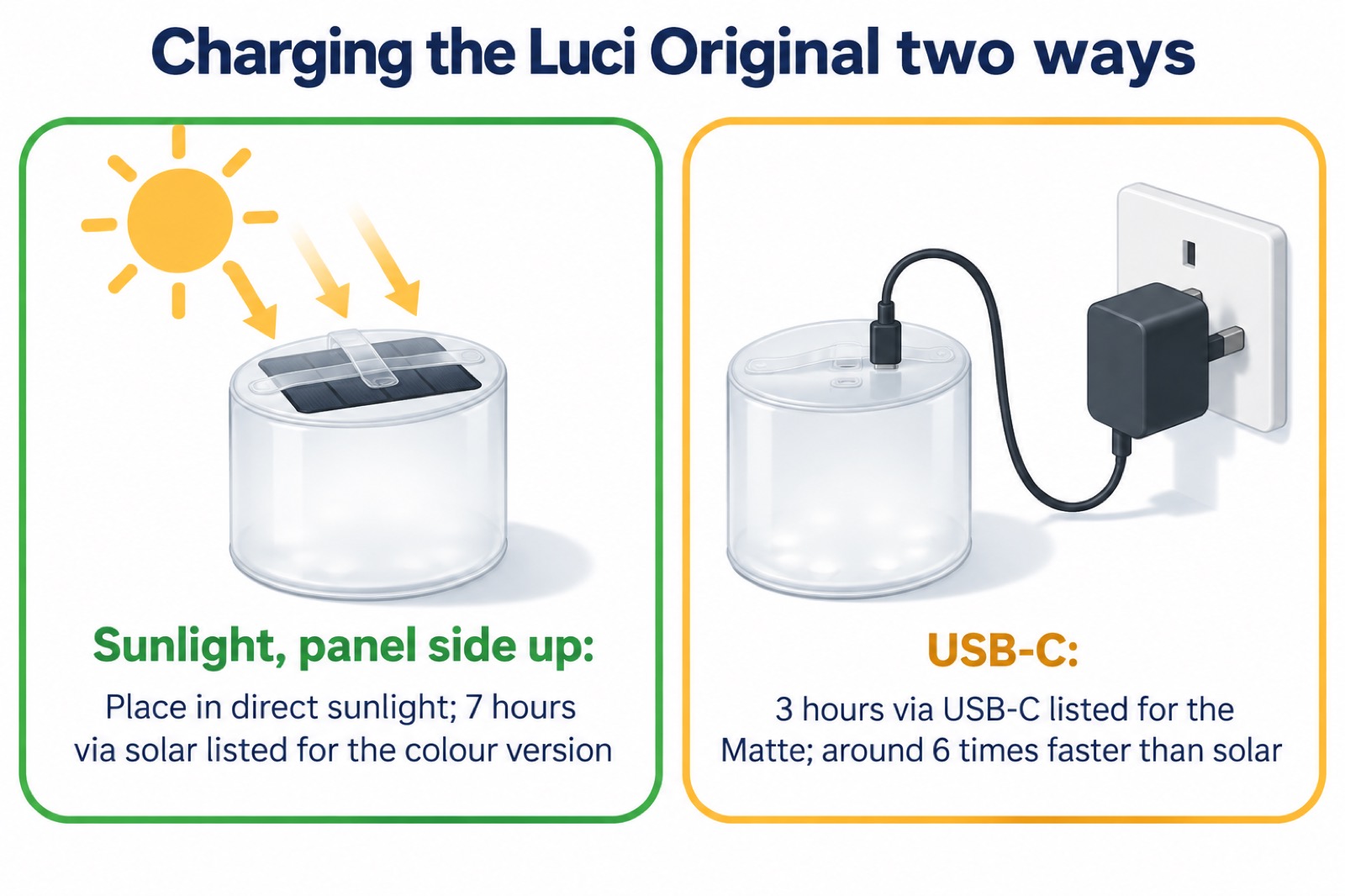
A few practical points follow from those facts. Solar charging depends on direct sun, so a windowsill in winter will be slower than a sunny garden in summer; the maker's instruction is direct sunlight, panel side up, not shade1. USB charging needs a USB-C lead and a source, and only the Matte is listed as coming with a USB-USB cable, so check the box for the version you buy3. If you are charging from a power bank or a mains charger, our page on whether the wrong USB charger can damage a torch battery covers what to look for, and charging and storing rechargeable torches safely covers the storage side.
Waterproof to IP67 and built to take knocks
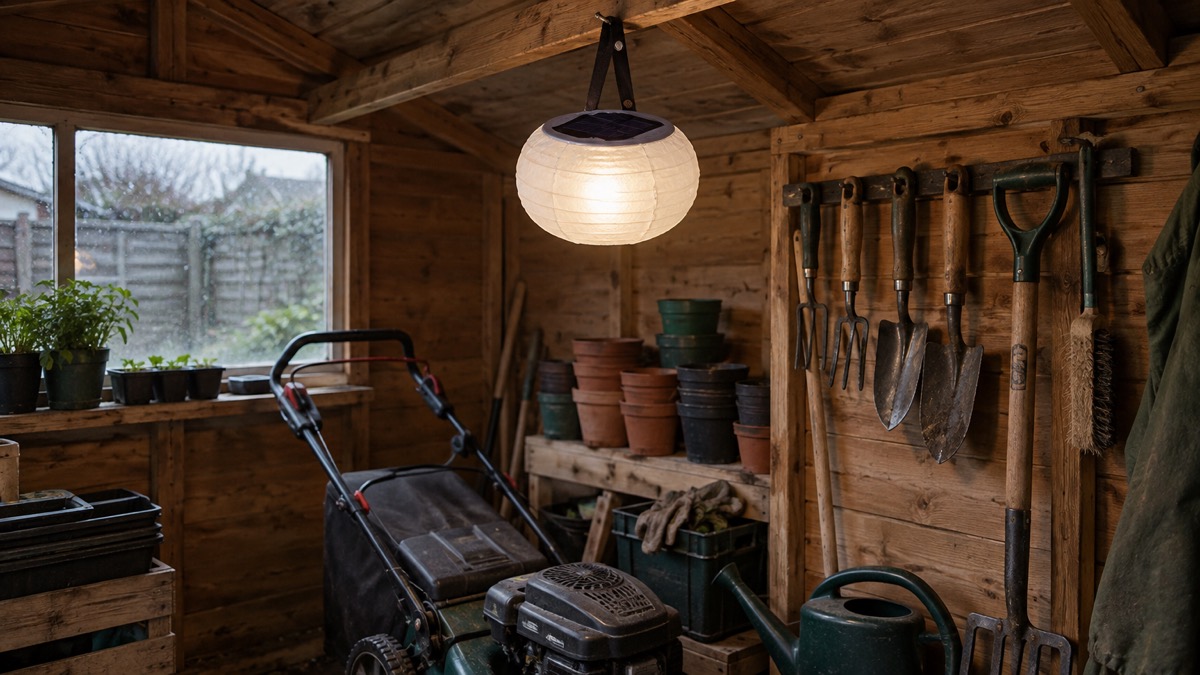
All three versions carry an IP67 water resistance rating1. The maker states that the Luci is durable and completely waterproof, and that you do not need to go running to bring them in when it rains1. It also says the lantern can withstand up to 150 lbs of pressure, and that you can hit it with a stick, kick it, throw it, even stand on it, provided you weigh less than about 150 lbs3.
That is the maker's own claim about its own product, and it is the kind of handling a lantern gets in a house with children or in a shed or garden. Independent safety guidance says to use only suitable weatherproof lighting outdoors, which the IP67 rating is there to meet7. What the rating does not cover is a charging cable left out in the rain, so bring the lead in and keep the connection dry.
The fixed base strap on the Matte and colour versions is what lets you hang the lantern from a hook rather than stand it on a floor3. If you are using it outdoors, hang it where it will not be knocked and where the cable, if any, is not trailing. Our page on what IPX ratings mean for torches and lanterns explains what the numbers after IP actually promise.
Storing it flat between emergencies
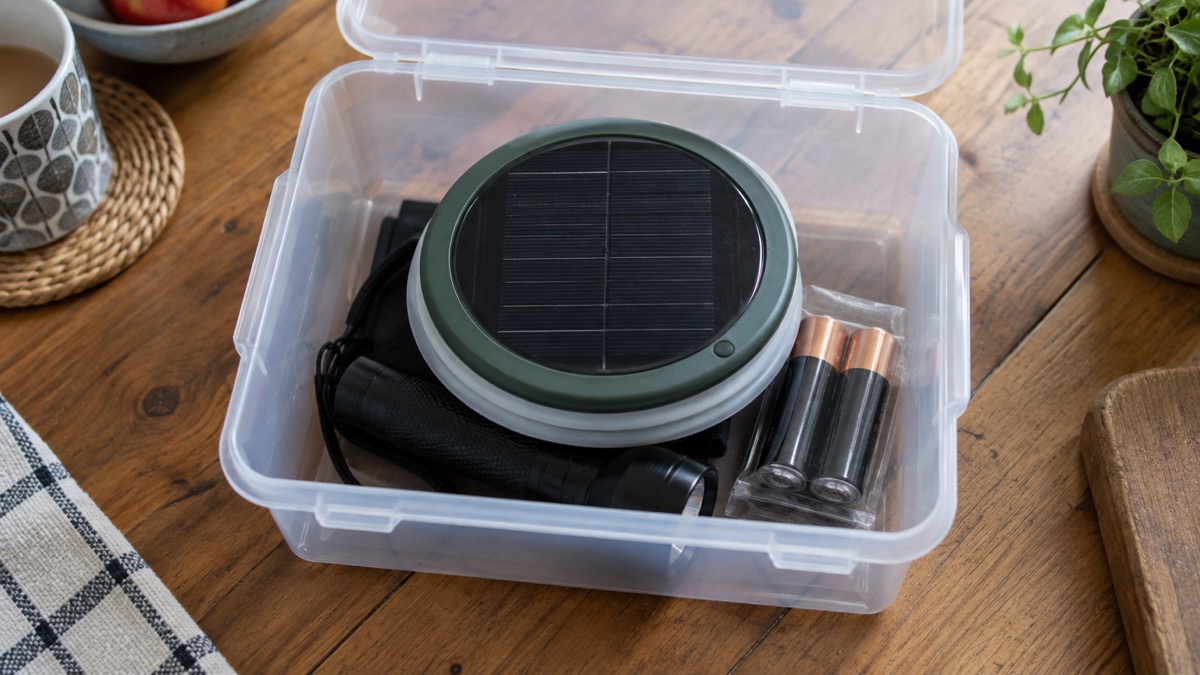
The point of an inflatable lantern is that it stores flat. The maker says the Luci Original lanterns collapse down to 1 inch and inflate in seconds3. Between emergencies, that means it can sit in a drawer, a cupboard, a glovebox or an emergency box without taking up the space a rigid lantern would.
A few storage habits are worth building. Keep it somewhere you can find in the dark, which is the same principle behind our page on where to keep torches so you can find them in the dark. Store it flat rather than under a pile of heavy items, in line with the general principle that you store flexible electrical items flat, rolled or loosely folded to avoid damaging internal wiring, as the London Fire Brigade advises for electric blankets8. And check it before winter: our lighting checks before winter checklist covers the seasonal once-over, and the power cut checklist covers what to have ready.
When you take it out, the maker's setup is in three steps: charge it by placing it in direct sunlight, solar panel side up, or via USB-C; inflate it by pinching the valve and blowing, then securing the valve; and shine it by pushing the power button to turn it on and cycle through the modes, holding the button to turn it off1.
Using it safely in a power cut
The Luci Original is a low-voltage, battery-powered lantern, so the fire risks that come with candles and mains lighting do not apply in the same way. The safety points that do matter are about placement and charging.
Independent guidance on lamps says to position your lamp on a flat, stable surface and keep the cable tidy so it is not a trip hazard9. That applies directly here: stand or hang the lantern where it will not be knocked over, and if you are charging it by USB, route the lead so nobody walks into it. The maker's 2-second quick shut off means you can kill the light immediately if you need to, without fumbling through modes1.
For a power cut specifically, our guide to lighting your home safely when the power goes off sets out the order to do things in, and lantern or torch helps you decide which to reach for first. If there are children in the house, torches, candles and children covers keeping them safe around lights, and for older or disabled household members, lights for older and disabled people in a power cut covers what to have within reach.
Support, spares and the rest of the range
The maker sells the Luci Original as part of a wider Luci range of waterproof lanterns and string lights, and has flagged new arrivals to the line in November 2024 and March 20255. If you are buying now, check the maker's current product page for what is available and what each version includes.
On support, the pages here do not set out a warranty period or a repair service, so if you need those details, ask the maker or the retailer you bought from before you rely on them. What the maker does state is that the products are solar powered and rechargeable with no batteries needed, which removes the most common failure point in an emergency light: a flat set of disposable cells5.
If you want to compare the Luci Original with other lights in the range, our pages on the MPOWERD Luci Emergency and the MPOWERD Luci Charge 360 cover those models, and solar and wind-up lamps that need no batteries covers the wider category. For the kit a household should hold overall, start with the emergency lighting section.
Sources (9)
- Luci Original Matte, BioLite, 2026-10-25
- Luci Original Color, BioLite, 2026-10-25
- Luci Original 3-Pack, BioLite, 2026-10-25
- Luci Original Clear, BioLite, 2026-10-25
- Luci Lights, BioLite, 2026-10-25
- Luci Emergency 4-Pack, BioLite, 2026-10-25
- Outdoor Lighting, Electrical Safety First, 2026-10-25
- Electric Blankets, London Fire Brigade, 2026-10-25
- Lamps, Electrical Safety First, 2026-10-25
 NEBO Galileo Tempest 350
 NEBO Leo 800 Flex
 NEBO Poppy Puck Light
 Fenix CL20R V2.0 Lantern
 Fenix CL26R Pro Lantern
 Fenix CL28R Lantern
 Fenix CL30R Power Lantern
 Ledlenser ML4
 Ledlenser ML6
 BioLite AlpenGlow Mini
 MPOWERD Luci Emergency
 MPOWERD Luci Charge 360