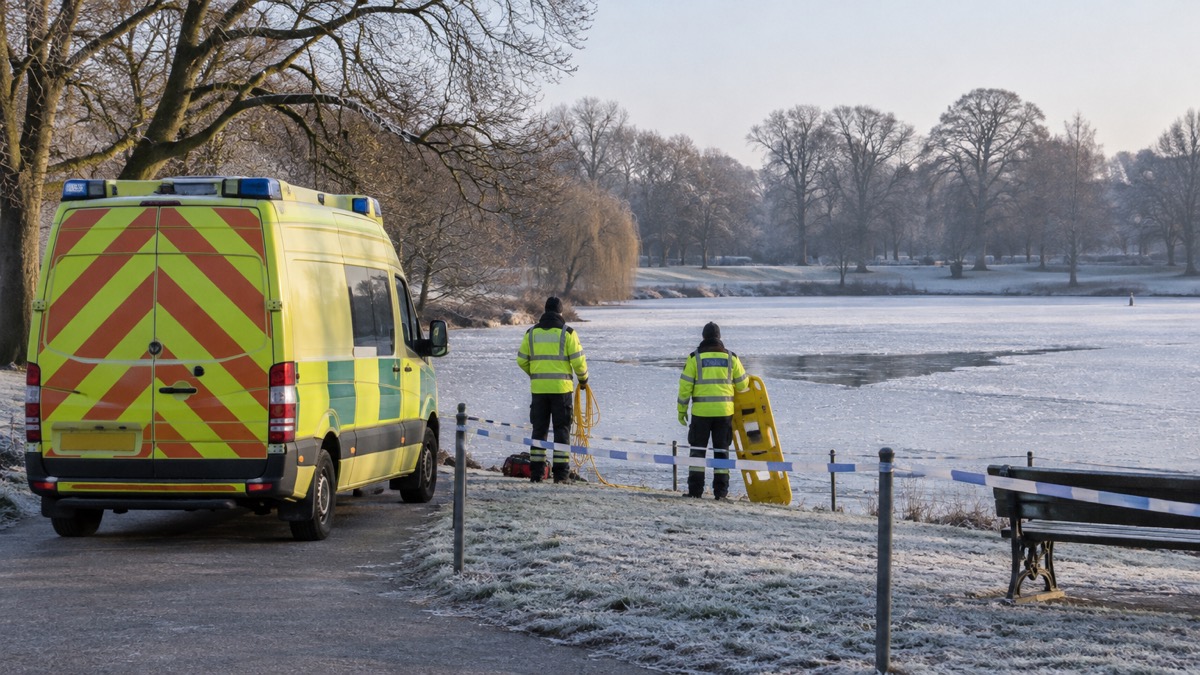
If someone falls through ice, the first thing to do is call 999 and stay on the bank. Do not go onto the ice, and do not go into the water, however close the person is. Shout to them to keep still and hold their head above the water, then reach or slide something that floats towards them from the bank while the fire and rescue service is on its way1.
The reason is stark. Over 50% of ice related drowning has involved an attempted rescue of another person or dog, according to Oxfordshire County Council's fire and community safety guidance3. The person who goes in to help is very often the second casualty. Fire and rescue services across the UK give the same instruction: stay off the ice, call for help, and let trained rescuers do the rest4.
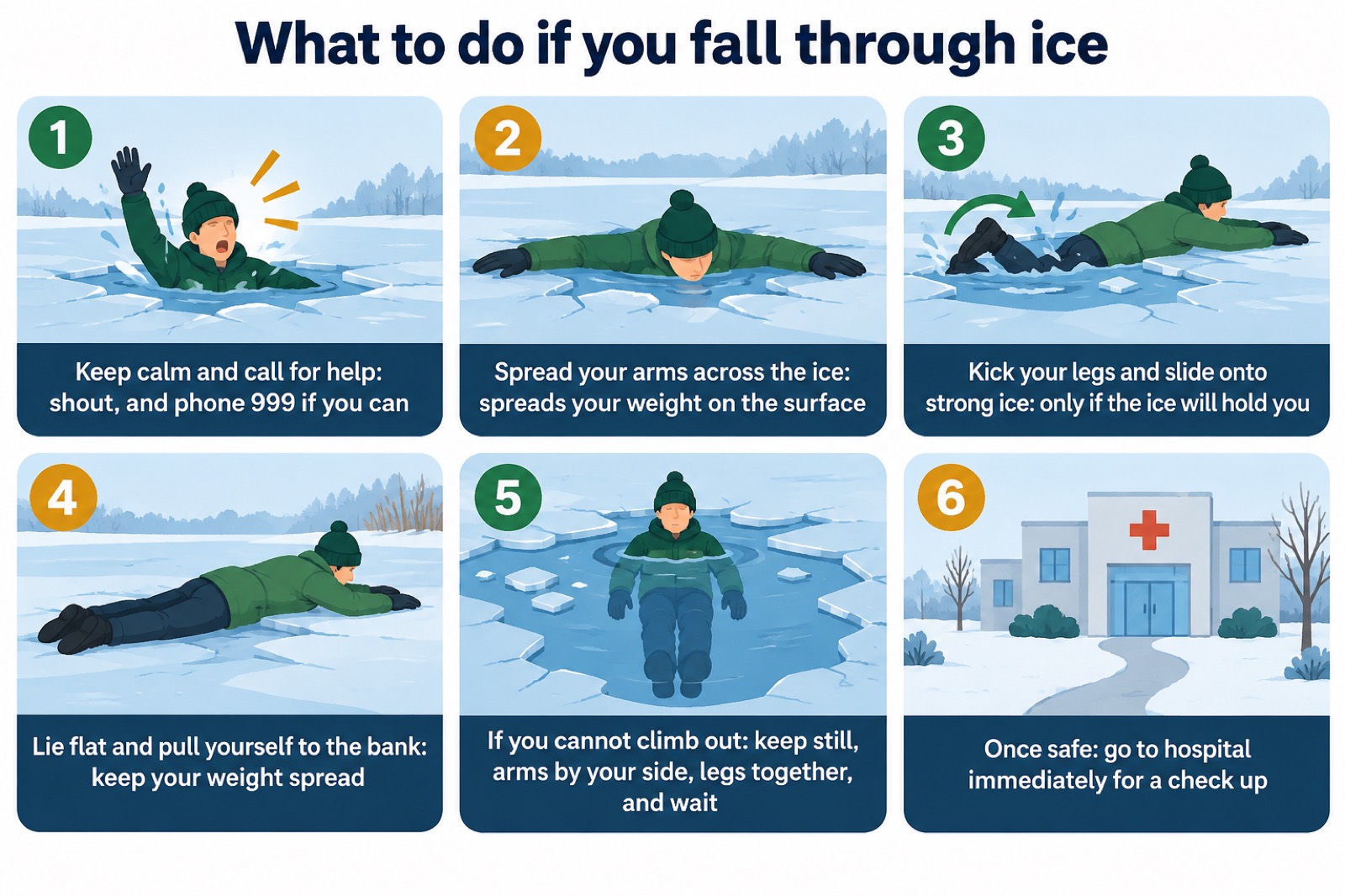
If you are the one who goes through, the advice is different but just as clear. Keep calm and call for help. If the ice is strong enough, spread your arms across the surface, kick your legs and slide onto it, then lie flat and pull yourself to the bank. If you cannot climb out, keep as still as possible with your arms by your side and your legs together, and wait for help. Once you are out, get medical help straight away1.
Call 999 and stay off the ice
The first action is to raise the alarm. Phone 999 and ask for the fire and rescue service if you are inland, or the coastguard if you are by the sea7. Give the exact location, because that is what rescuers need to find you5. Stay on the bank, shout for help and phone 9991.
Do not step onto the ice. The Met Office is blunt about why: there is no way of knowing whether the ice will take your weight, how thick it is, or how cold, deep and fast the water beneath is4. A frozen pond or canal that looks solid at the edge can be a thin skin over deep, near-freezing water a few metres out. If it gives way under you, you become a second person in the water and the rescuers now have two casualties to reach.
The same rule applies to animals. If a dog or other animal ventures onto the ice, or falls through it, do not go onto the ice to rescue it: you are likely to end up in the freezing water and unable to help the animal6. Keep dogs on a lead near frozen water, and never throw sticks or balls onto the ice for them8.
Shout to them to keep still and hold their head above the water
Once help is on its way, your job is to keep the person calm and stop them thrashing. The London Fire Brigade's extreme weather guide gives the words to use: stay on the bank and shout to the person to "Keep still, hold your head above the water"5. Keeping still slows the loss of heat and makes them easier to reach.
Encourage them to float on their back and breathe normally7. Tell them to stay calm and float on their back9. If the person can swim, shout "swim to me": the water can be disorientating, but this could help give them a focus, so keep instructions loud, clear and consistent10.
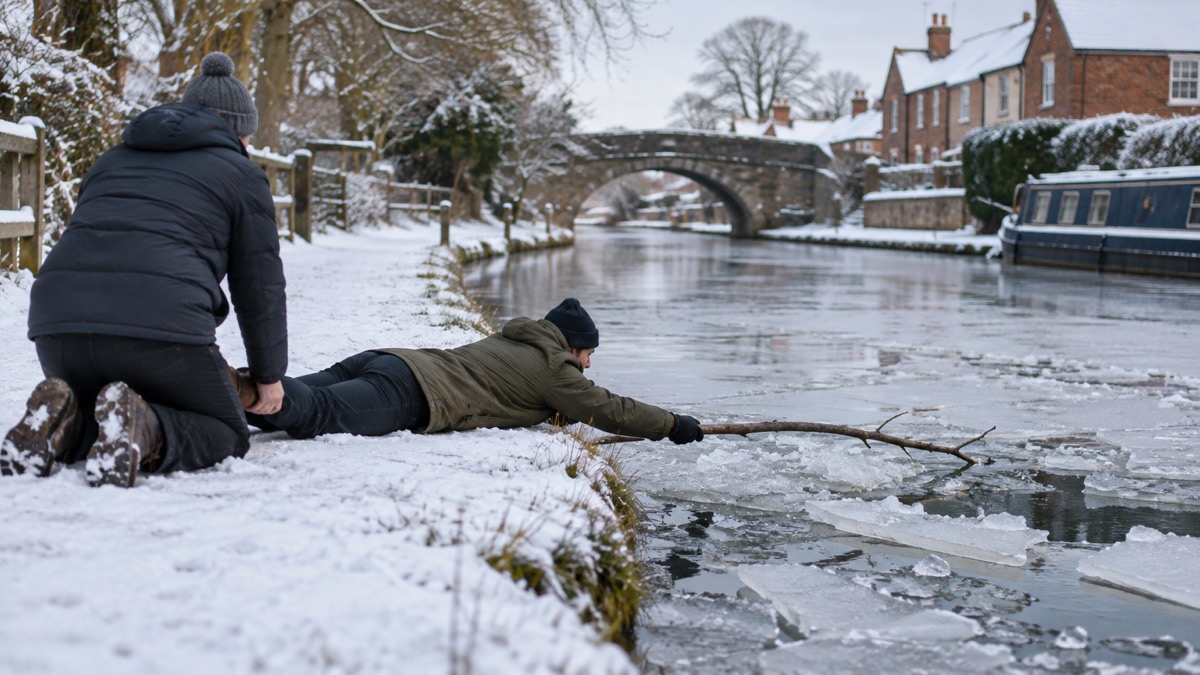
Then try to reach them from the bank. A rope, pole, tree branch or clothing tied together can extend your reach11. Lie down when you reach, so you are not pulled onto the ice yourself9. If you cannot reach, slide something that floats across the ice for them to hold onto while help is on the way1.
If you fall through: keep calm, spread your arms and kick onto strong ice
If you are the one in the water, the first seconds matter. Keep calm and call for help3. If no help is available, spread your arms across the surface of the ice to spread your weight3. If the ice is strong enough, kick your legs and slide onto it, then lie flat and pull yourself to the bank3.
If the ice is very thin, break it in front of you and make your way to the shore3. If you cannot climb out, wait for help keeping as still as possible, with your arms pressed by your side and your legs together3. That position conserves heat and keeps you afloat.
Cold water shock is the immediate danger. If you find yourself unexpectedly in the water, keep calm and call for help: extend your arms and legs out and float on your back until the effects of cold water shock pass12. Try to get hold of something that will help you float13. The cold shock response passes, and floating on your back buys the time to think.
Get medical help straight away once they are out
Getting out of the water is not the end of it. Once out, get medical help straight away1. The London Fire Brigade's guide says the same: once out, seek medical attention immediately5. Make sure you get medical care immediately14. Even someone who seems unharmed after a short time in freezing water needs checking.
Once the person is out, get medical help straight away15. Do not assume they are fine because they are back on dry land: the advice from the fire service is to seek medical attention immediately15.
The fire service advice for the person who fell in is to go to hospital immediately for a check up once they are safe3. Do not let them drive themselves, and do not leave them alone to warm up. If you are unsure, call 999 and describe what happened.
Why you should never walk onto frozen ice
The single most useful thing an ordinary household can know about frozen water is that you cannot judge it by looking. The Met Office says there is no way of knowing whether ice will take your weight, how thick it is, or how cold, deep and fast the water beneath is4. Check for safety signage and follow it4.
Fire and rescue services repeat the warning every winter because the same accidents happen every winter. Forestry and Land Scotland's guidance is typical: if you see a person or animal in distress on ice, or who has fallen through, call for help but do not go in after them8. The danger is not only the cold but the speed at which a rescuer becomes a casualty.
| Situation | What to do | What not to do |
|---|---|---|
| A person falls through ice | Call 999, stay on the bank, shout "keep still, hold your head above the water", reach or slide something that floats1 | Go onto the ice or into the water4 |
| A dog or other animal falls through | Stay on the bank and shout to the person to keep still, hold their head above the water6 | Go onto the ice to rescue it6 |
| You fall through | Tell them to stay calm and float on their back9 | Thrash about or try to climb out upright12 |
| Someone is out but cold and confused | Get medical help straight away15 | Assume they are fine because they are out1 |
What to throw, and how to reach safely
Anything that floats can help save a life. Fire and rescue services suggest a plastic bottle or a football1, a throwline if there is rescue equipment nearby16, or an inflatable12. Look for any nearby rescue equipment, a line or something that floats that they can hold on to, and throw it out to them4.
The technique matters as much as the object. Lie down when you reach, so you are not pulled onto the ice9. Tell them to float on their back and throw them something that floats16.
If you have nothing to hand, a rope, pole, tree branch or clothing tied together can extend your reach from the bank11. Keep your instructions loud, clear and consistent10. And keep talking to the person: calming and reassuring them while the emergency services are on their way is part of the rescue9.
Where to get help and how to prepare
The emergency number for a person in trouble in water is 999. Ask for the fire and rescue service if inland, or the coastguard if by the sea7. Drowning is one of the situations the Northern Ireland Ambulance Service lists as a reason to call 99917. In an emergency, go to A&E immediately or call 99918.
Prevention is the household's real job. Keep dogs on a lead near frozen water and never throw sticks or balls onto the ice8. Check for safety signage and follow it4. In cold weather, check in on people who need extra help, but only if it is safe to do so19. Check to see if they need any practical help and that they are well20.
For the wider picture on cold weather, see our guide to storms, snow and ice, the page on staying well in cold weather and the guide to walking on ice. If you are heading out in cold conditions, the Met Office weather warnings page explains what each colour means.
Sources (19)
- Winter water safety, London Fire Brigade, 2026
- Keeping warm in winter, Derbyshire County Council, 2026
- Stay safe this winter, Oxfordshire County Council, 2026
- Winter water safety, Met Office, 2026
- Extreme weather winter guide, London Fire Brigade, 2025
- Frozen water safety, Greater Manchester Fire and Rescue Service, 2026
- Water safety, Greater Manchester Fire and Rescue Service, 2026
- Water safety, Forestry and Land Scotland, 2026
- Stay safe, stay off frozen water, North Wales Fire and Rescue Service, 2026
- Top ways to stay cool safely this summer | Devon and Somerset Fire and Rescue Service, Devon and Somerset Fire and Rescue Service
- Warm weather safety, Suffolk County Council, 2026
- Survival and rescue, London Fire Brigade, 2026
- Fire and summer safety advice, nidirect, 2026
- Frostbite, NHS, 2025
- Water safety campaign, North Yorkshire Fire and Rescue Service, 2026
- When to call 999, Northern Ireland Ambulance Service, 2026
- Stay well this winter, NHS Cheshire and Merseyside, 2026
- Cold, snow and ice, Ready Scotland, 2026
- Stay safe in ice, Met Office, 2026
 Car Checks Before Winter
 Flood Warning Checklist
 First Steps After a Flood
 Bedroom Temperature at Night
 Hitting Black Ice
 Car Battery in Winter
 Car Stuck in Snow
 Clearing Snow and Ice Safely
 Clearing Snow from Pavements
 Using Fog Lights
 Signs of Frostbite
 De-Icing a Frozen Windscreen
 Request or Refill a Grit Bin
 Overtaking a Gritter
 Insulating a Loft Water Tank