
Coleman is a camping and outdoor brand whose kit, stoves, lanterns, cool boxes, sleeping bags and water carriers, overlaps closely with what a UK household needs when the power goes off or the heating fails. The most useful thing to understand before you buy or unpack any of it is the boundary: a camping stove is an outdoor cooking tool, and fire and rescue services are clear that fuel-burning equipment should never be used inside a tent, camper or other enclosed shelter because doing so can cause carbon monoxide poisoning1. Used outdoors, with the maker's instructions followed, it can heat water and cook food when the mains supply is down2.
For lighting, the advice is simpler and safer. Fire and rescue services recommend battery-operated lights or torches as the alternative light source during a power cut, and keeping a working torch or battery-operated lamp within reach so that candles are not needed3. A lantern such as the Coleman 360° Sound and Light Lantern fits that role, and the maker lists it with IPX4 water resistance and model number 20000338765.
This page sets out what Coleman makes that is relevant to a household, one kit type at a time, with the safety rules that decide how each is stored and used, and where to go for support, spares and recall checks.
What Coleman makes for UK households
Coleman's range covers the kit a household reaches for when normal services fail: gas stoves and cartridges for cooking outdoors, battery lanterns and torches for light, cool boxes for keeping food cold for a short time, sleeping bags and tents for warmth if the heating is lost, and water carriers for storage. Each has a clear job and a clear limit, and the limits matter as much as the jobs.
The wider context is that UK homes already carry risks that this kit can either ease or worsen. Evidence is accumulating of raised carbon monoxide levels within UK homes at levels above those recommended as safe, according to the NHS learning hub9. Anything that burns fuel adds to that risk if it is used in the wrong place, which is why the sections below put placement and ventilation first and convenience second.
Battery-powered kit carries its own housekeeping. Lithium-ion batteries, the rechargeable kind found in phones, tablets, e-bikes and similar devices, need sensible charging and disposal, and local recycling centres for household waste have dedicated bins for small electrical items and lithium-ion batteries10. A lantern kept for emergencies should be charged or have its batteries checked as part of the same routine.
If you are building a kit from scratch, the emergency kit guide sets out what a household should keep ready, and the lighting guide covers torches, lanterns and candles in more depth. The sections below take each Coleman kit type in turn.
Camping stoves: cooking when the power is out
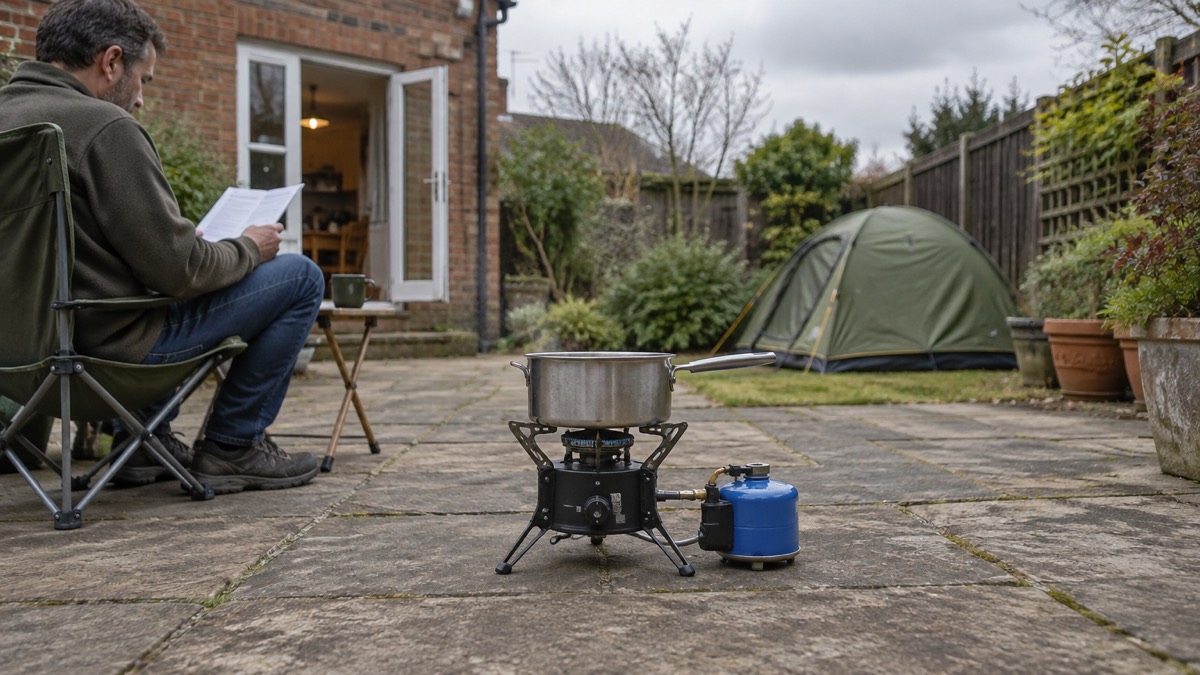
A camping stove is the Coleman product most likely to earn its place in a household, and the one that most needs handling with care. Official guidance confirms you can cook food and heat water using a camping stove, barbecue or bottled gas stove, checking the manufacturer's instructions for safe use2. That permission comes with a condition: cooking with these appliances can take longer than usual, so make sure food is steaming hot and cooked all the way through2.
Plan for the slower cooking. A stove that simmers a pan in ten minutes on a hob may take considerably longer outdoors in wind or cold, and undercooked food is a real hazard when the fridge is also off. If you cannot cook without electricity and have no safe outdoor space, official advice is to make sure you have food that is ready to eat instead11. That is the honest answer for a flat with no garden or balcony.
Two habits keep a stove safe. First, stability: make sure cooking appliances are stable and cannot be knocked over easily12. Second, attention: turn off cooking and electrical appliances when they are not being used13. A stove left burning unattended outdoors is still a fire risk, and wind can tip a pan.
The heating and cooking guide covers cooking without mains power in full, and the food guide covers what to store and how to keep it safe. For the stove itself, follow the maker's own instructions for that model, including which cartridge it takes and how the burner is lit.
Lanterns and torches: light during a power cut
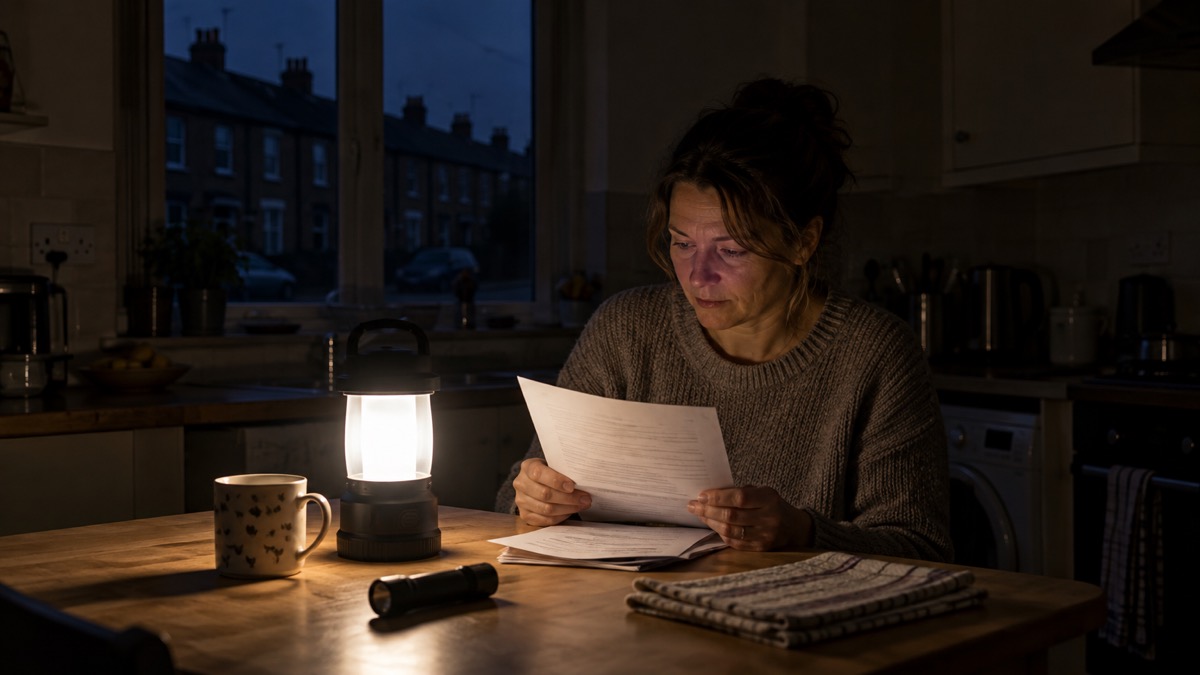
Light is the first thing a household misses in a power cut, and the safest answer is batteries. Fire and rescue services advise using battery-operated lights or torches as an alternative light source during a power cut3. Keep some torches and spare batteries to hand in case the power cut happens when it is dark outside, and make sure everyone in your home knows where they are kept14. Keep a torch handy as a matter of routine15.
The Coleman 360° Sound and Light Lantern is a battery lantern with a built-in speaker, listed by the maker with IPX4 water resistance and model number 20000338765. IPX4 means it is protected against splashing water, which suits a kitchen table or a damp shed, but it is not a diving light and should not be left out in heavy rain. The full specification is on the Coleman 360° Sound and Light Lantern page.
| Feature | What the maker states | What it means for a household |
|---|---|---|
| Power source | Battery lantern | No mains needed during a cut5 |
| Water resistance | IPX4 | Splash-resistant, not waterproof5 |
| Extra function | Sound and light | One unit for light and radio-style audio5 |
| Model number | 2000033876 | The number to quote for spares5 |
Candles appear in some official power-cut checklists, and some councils advise keeping a supply16. Fire and rescue services take the opposite view where a torch will do: keep a working torch or battery-operated lamp easily accessible to avoid using candles during power outages4. A battery lantern removes the flame risk entirely, which is why it is the better default for a household with children, pets or anyone unsteady on their feet.
Fuel and gas cartridges: safe storage at home
Gas cartridges are pressurised fuel, and where they live matters. Fire and rescue services advise looking for safe locations for firewood, fuel and gas cylinders as part of property preparation18. For caravans and mobile homes the guidance is specific: store cylinders six metres away from your home, even when empty7. Keep gas bottles outside in a secure, upright position, and turn them off when not in use4.
The cartridge itself is designed for safe handling between uses. Coleman states that all its cartridges feature a standard screw thread for easy attachment of Coleman stoves and lanterns, and that the C100 Xtreme cartridge has a double safety resealable valve, so it can be disconnected and reconnected without leakage6. It contains a butane/propane gas blend that the maker says provides a steady and consistent burn across a wide range of temperatures6. The C100 Xtreme is described as suitable for Coleman cartridge gas stoves6.
Empty cylinders should not pile up. Fire and rescue services advise ensuring empty cylinders are collected regularly20. Store them upright and outside until they go, and never puncture or crush one. For petrol and other fuels, make sure the container is tightly sealed21, and follow the safety guidance around storing diesel on the government website21.
Where a gas stove or heater must never go
The single most important rule on this page is about place. Fire and rescue services state that to avoid hazardous carbon monoxide exposures, fuel-burning equipment should never be used inside a tent, camper or other enclosed shelter, and that using these indoors can cause carbon monoxide poisoning1. The equipment named includes camping stoves, camping heaters, lanterns, charcoal grills and disposable barbecues1. Belfast City Council's flooding advice is blunt on the same point: do not use barbecues or camping stoves inside22.
Carbon monoxide is dangerous precisely because it gives no warning. The Health and Safety Executive states that carbon monoxide levels can quickly kill without warning23. The NHS advises that if you suspect carbon monoxide, go outside24. A carbon monoxide alarm is a sensible backstop in any home with a fuel-burning appliance, but it does not make indoor use of a camping stove safe.
The same logic applies to heating. Never run a gas, petrol or diesel-powered generator or a heater that is not designed for this purpose inside a caravan, motorhome, tent or awning4. Do not place heaters where they are likely to be knocked over19. If you are using a portable gas heater at home, follow the manufacturer's instructions and keep it clear of anything that could catch light.
"To avoid hazardous CO exposures, fuel-burning equipment should never be used inside a tent, camper, or other enclosed shelter."
The home emergencies guide covers carbon monoxide, gas leaks and fire together, and the heating and cooking guide sets out safe alternatives when the central heating fails.
Sleeping bags and tents: keeping warm if you lose heating
If the heating fails in cold weather, warmth becomes the priority. Councils advise households to have sufficient heating fuel and emergency heating equipment plus fuel for it in case electricity is cut off, such as a portable gas fire, a wood burning stove, a fireplace or a kerosene heater25. Remote households are advised to arrange alternative heating equipment plus fuel in case the electricity supply is cut off26. Sleeping bags and tents are a low-risk part of that plan: they keep people warm without a flame.
A sleeping bag rated for the season does the job of holding body heat when a room is cold, and a tent pitched indoors is not recommended, because a tent is an enclosed shelter and the rules above apply to anything that burns inside it. Use sleeping bags as bedding, not as a substitute for ventilation. If you use any heater, make sure it works properly7, and check that it is not subject to a product alert or recall before you rely on it8.
For households in remote areas, the same council advice about alternative heating and fuel is the starting point26. The storms, snow and ice guide covers cold-weather preparation in full, and the extra help guide covers households with older, disabled or medically dependent members who feel the cold most.
Cool boxes: keeping food cold for a short time
A cool box buys time, not refrigeration. When the power fails, the question is how long chilled and frozen food stays safe, and a cool box with ice packs extends that window for a short period. Official guidance allows a low-tech alternative in cold weather: you can safely store chilled foods outside if it is 8°C or lower, in a sealed container, out of direct sunlight, in clean dry conditions and protected from animals2.
Food safety rules do not relax because the power is off. Store raw meat in sealed containers at the bottom of the fridge, use different boards for raw and ready-to-eat foods, and keep raw and ready-to-eat foods apart27. Cool any leftover food quickly and then put it in the fridge within one and a half hours, but eat it within two days27. Cool cooked food as quickly as possible, within 2 hours, then place it in the fridge, and use chilled food within 2 days of cooking28. Always store frozen foods in airtight containers or freezer bags, because cold air causes food to dry out28.
| Situation | What official guidance says |
|---|---|
| Outdoor temperature 8°C or lower | Chilled food can be stored outside in a sealed container, out of sunlight, protected from animals2 |
| Leftovers | Cool quickly, fridge within one and a half hours, eat within two days27 |
| Cooked food for chilling | Cool within 2 hours, then refrigerate, use within 2 days28 |
| Frozen food | Keep in airtight containers or freezer bags28 |
The food guide sets out what to store and how to rotate it, and the power cuts guide covers what to do hour by hour when the supply fails.
Water carriers and storage
Water is the one supply a household cannot improvise for long, and official grab-bag lists include bottled water among their contents29. A water carrier earns its place by making storage and transport practical: filling containers before a forecast storm, moving water to an upstairs room, or carrying a supply if you have to leave. The water guide covers how much to store and how to keep it clean.
Store water away from fuel and gas cylinders, and keep containers clean and covered. The same property-preparation advice that asks you to find safe locations for fuel and gas cylinders applies to anything stored in quantity18. Rotate bottled water so it does not sit indefinitely, and check containers for damage before each season.
Safety notices and recalls on Coleman kit
Product safety is not a one-off check. The Office for Product Safety and Standards issues product recalls, and recent examples include recalls on 15 different types of climbing harnesses and on 21 different life vests due to serious safety concerns30. Those examples are not Coleman products, but they show how recalls work and why checking matters.
For any heater, fire and rescue services advise ensuring it is not subject to a product alert or recall by checking the Office for Product Safety and Standards website8. For electrical appliances, use Electrical Safety First's online product checker to see if any of your appliances have been recalled8. Keep the model number of your Coleman kit, such as 2000033876 for the 360° Sound and Light Lantern5, so a check is quick.
Batteries deserve their own check. Take devices to your local recycling centre for household waste, which has dedicated bins for small electrical items and lithium-ion batteries10. Never put a damaged or swollen battery in household waste.
Support, spare parts and warranty
The starting point for support is the maker's own product page for your item, which carries the model number you will be asked for. The 360° Sound and Light Lantern is listed under model number 20000338765, and the C100 Xtreme Gas Cartridge page sets out its fitting and valve features6. Quote the model number when you ask about spares, cartridges or servicing.
Keep your household kit findable. Official guidance says the household emergency kit should be kept somewhere in the house where everyone can get to it if needed31. A useful emergency kit includes a list of useful phone numbers, a battery or wind-up radio, a battery or wind-up torch, spare batteries, candles and matches, a first aid kit, spare keys to your home and car, a spare pair of glasses or contact lenses, a spare charger for your mobile phone, toiletries and sanitary supplies, and special equipment for children and people with special needs31. Keep spare keys to your home and car at home in the event of an emergency32.
Between emergencies, check the kit. Make sure torches and batteries work, that cartridges are stored outside and upright, and that everyone knows where the kit lives14. The getting started guide sets out how to build a household plan around this kit, and the staying informed guide covers radios and phone charging.
Sources (32)
- Barbecue safety, Humberside Fire and Rescue Service, 2026-10-29
- Power cuts, Food Standards Scotland, 2026-10-25
- Power cuts, Scottish Fire and Rescue Service, 2026-10-25
- Stay warm safely this winter, Greater Manchester Fire and Rescue Service, 2026-10-29
- Coleman 360° Sound and Light Lantern, Coleman UK, 2026-10-26
- C100 Xtreme Gas Cartridge, Coleman UK, 2026-10-25
- Caravans and mobile homes, Devon and Somerset Fire and Rescue Service, 2026
- Product safety campaigns, Peterborough City Council, 2026-10-29
- Carbon monoxide information, Wakefield Yorkshire Smokefree, 2026-10-26
- Vaping and e-cigarettes, London Fire Brigade, 2026-10-25
- Fire and summer safety advice, nidirect, 2026-07-03
- Adverse weather events, Llangattock Community Council, 2026-01-27
- Strong winds: weather warning information and advice, nidirect, 2026-10-24
- 12 tips to prepare for a power cut, Horsted Keynes Parish Council, 2026
- Strong winds and heavy rain: warning information and advice, nidirect, 2026-10-29
- Reduce the risk of wildfire damage to your property, Hampshire and Isle of Wight Fire and Rescue Service, 2026-07-29
- Preventing exposure to carbon monoxide, NHS Learning Hub, 2026-10-26
- Stay fire safe, Greater Manchester Fire and Rescue Service, 2026-10-29
- Emergency kit checklist, Neath Port Talbot Council, 2026-10-29
- Storing fuel, Devon and Somerset Fire and Rescue Service, 2026
- Wildfires, South Wales Fire and Rescue Service, 2026-07-29
- Flooding advice, Belfast City Council, 2026-10-29
- Carbon monoxide, Health and Safety Executive, 2026
- Lithium-ion batteries, South Wales Fire and Rescue Service, 2026-01-13
- Snow and ice, Ceredigion County Council, 2026-10-29
- Storm preparation, Cornwall Council, 2026-10-29
- Food poisoning and waterborne infections, Shropshire Council, 2026-10-29
- Preparing and cooking food safely, NHS inform, 2025-02-21
- Extreme weather, Flintshire County Council, 2026-10-29
- Portable heaters, Mid and West Wales Fire and Rescue Service, 2026-10-29
- Household emergency kit, nidirect, 2026-07-06
- Cooking fire safety devices, Greater Manchester Fire and Rescue Service, 2026-10-29
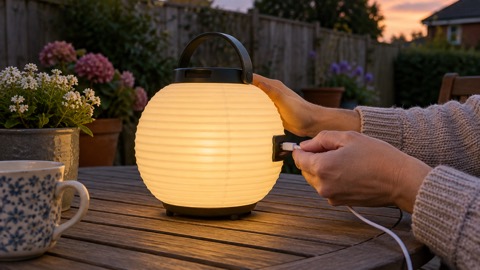 Coleman 360° Sound and Light Lantern