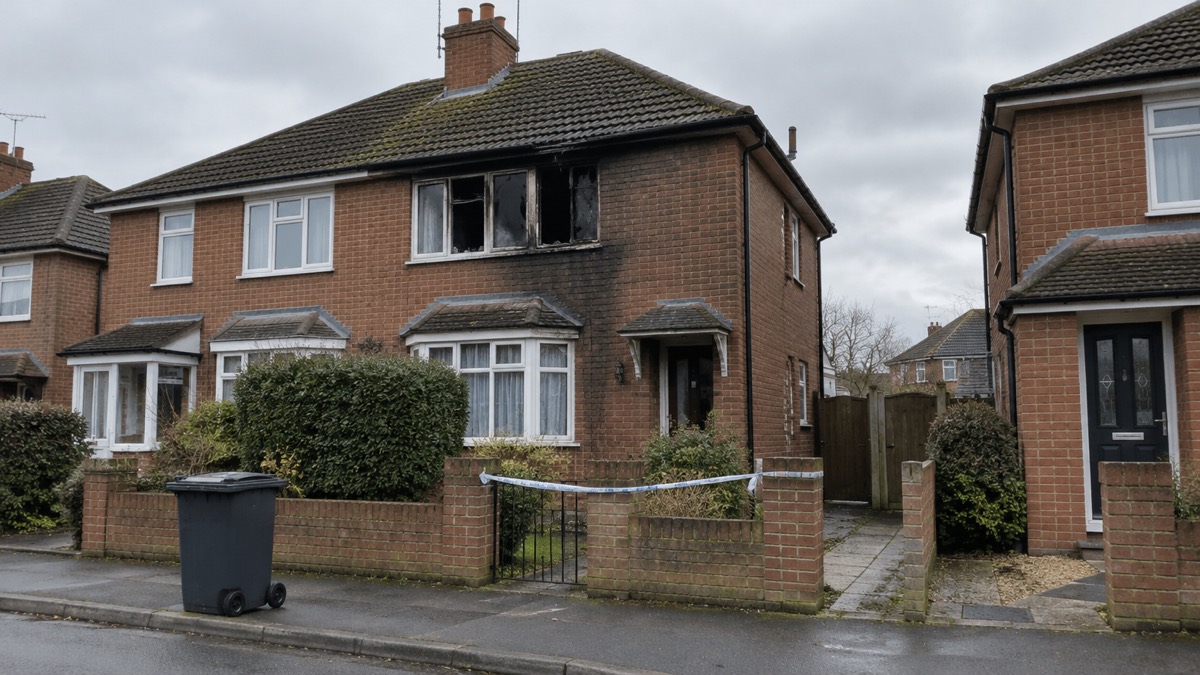
If a lithium battery starts to smoke or burn, the advice from every UK fire and rescue service is the same: get out, stay out and call 999. Do not try to put the fire out yourself. That applies whether the battery is in a phone, a laptop, a vape, a power bank, an e-bike or an e-scooter. The National Fire Chiefs Council puts it plainly: "Get Out, Stay Out and Call 999."1
A battery fire is not like a chip pan or a wastepaper basket. When a lithium-ion battery fails, it can release toxic fumes and ignite, causing intense fires that are hard to extinguish2. Fire services across England, Scotland, Wales and Northern Ireland all say the same thing: do not attempt to tackle it, leave the building and call the fire service3.
The good news is that these fires are rare and most are preventable. The same fire services say that batteries are safe during normal use, but present a fire risk when over-charged, short-circuited, submerged in water or damaged6. Charging while you are awake and nearby, checking for damage and knowing the warning signs are what stop most of them. This page covers what to do in the first minute, why you should not fight the fire, and how to reduce the risk in the first place.
Get out, raise the alarm and call 999
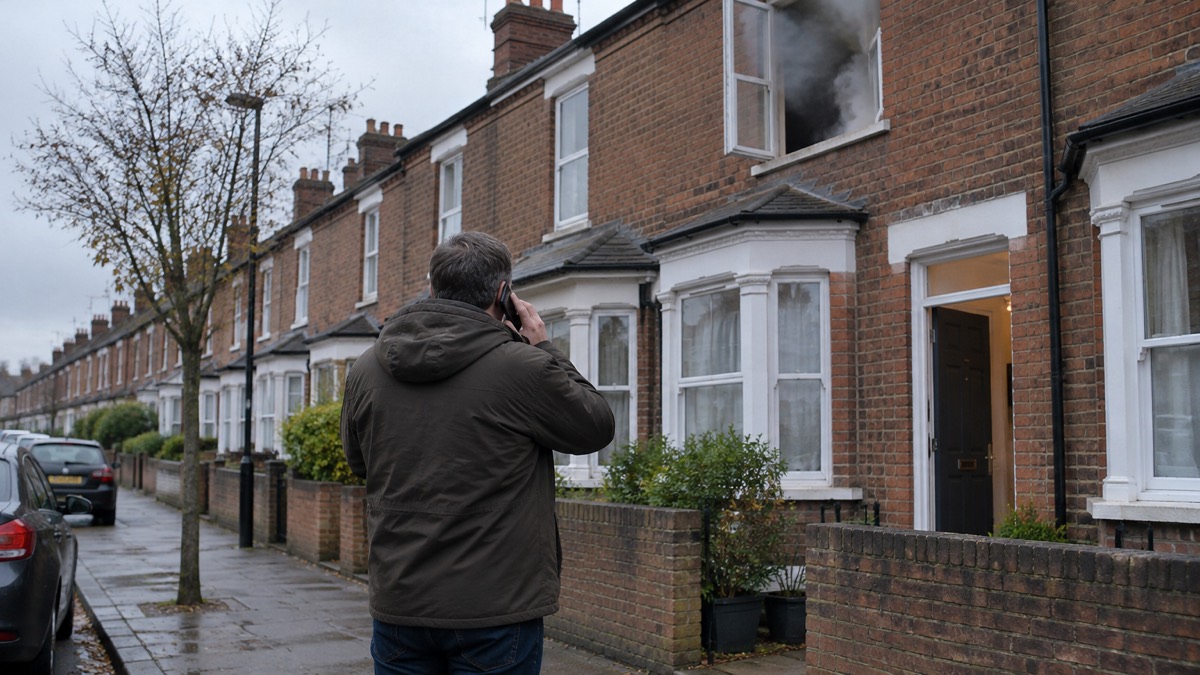
The first minute matters. If you see flames or smoke coming from a battery or device, a fire has already started4. Do not stop to investigate, unplug it or move it. Get everyone out of the property, closing doors behind you as you go, and call 999 from outside.
Fire services are consistent on the sequence. If a battery begins to smoke or catches fire, get out immediately, raise the alarm, call 999 and do not attempt to tackle the fire yourself10. As soon as you are safely outside, use your mobile phone to dial 999, ask for the fire brigade, give the address and do not go back inside7. If you are in a flat, alert everyone and get out immediately, use the stairs rather than a lift, and never assume someone else has called9.
A few practical points that follow from that guidance:
- Shout a warning as you leave, so anyone else in the building knows to get out10.
- Close doors behind you where you can do so without delay; this helps slow the spread of smoke and fire11.
- Use the stairs, not the lift, in a flat or shared building11.
- Call from outside, not from the room where the fire is7.
- Stay out. Once you are out, do not re-enter for belongings, pets or anything else7.
If you live in a high-rise or shared building, the advice for a fire inside your own flat is to leave your flat, close the door, use the stairs and call 99912. Your building's own fire safety arrangements matter too, so make sure you know what they are before anything happens. The same get out, stay out, call 999 message is the national one: the government's own preparedness advice for a home fire is "Get out, stay out, call 999".
Smoke or flames mean a fire has already started
Smoke or flames are not a warning that a fire might happen. They mean it has. Fire Scotland states it directly: "If you see flames or smoke coming from the battery or device, a fire has already started."4 At that point the only sensible action is to leave.
A failing lithium-ion battery can go from smoking to a serious fire very quickly. On occasions where batteries fail, they can explode and lead to a rapidly developing fire6. When overcharged or overheated, batteries rapidly overheat, release toxic fumes and ignite, causing intense fires that are hard to extinguish2. That is why the advice is to leave rather than to try to smother, cool or move the device.
Knowing the earlier warning signs gives you a chance to act before smoke appears. Fire services list the following for a battery that may be damaged4:
- producing smoke
- feeling extremely hot to touch
- looking swollen, or having any type of lump or leak
- making a hissing or cracking sound
- smelling unusual
- taking longer to charge, or not fully charging
If a battery becomes extremely hot to the touch, it may be defective and could start a fire10. If you notice any of these signs, stop using and charging the device, and do not use it again until it has been checked or replaced4. For more on spotting a problem early, see Warning Signs a Lithium Battery Is Dangerous and What to Do If a Battery Starts Swelling.
Why you should not try to put a battery fire out yourself
Every fire service in the UK gives the same instruction: do not attempt to extinguish a lithium-ion battery fire. The National Fire Chiefs Council says that in the event of an e-bike, e-scooter or lithium-ion battery fire you should not attempt to extinguish the fire, but get out, stay out and call 9995. Fire Scotland says the same: do not try to extinguish the fire yourself4. North Wales Fire and Rescue Service puts it as "don't try and tackle it yourself - leave and call 999"3.
There are good reasons for this. A battery fire can be intense and hard to extinguish, and it can release toxic fumes13. Trying to fight it keeps you in the room where it is burning, close to the fumes and the heat, at the moment the fire is most likely to develop quickly. A standard fire extinguisher is not designed for a failing battery, and fire services do not advise using one on it. Their instruction is to leave, not to fight.
"In the event of an e-bike, e-scooter or lithium-ion battery fire, do not attempt to extinguish the fire. Get out, stay out, call 999."
The same rule applies to smaller devices. If a vape or e-cigarette catches fire or explodes, do not try to tackle the fire yourself: get out of the property, away from the device, and call 99914. If a laptop or phone battery is involved, the advice is the same: do not try to extinguish the fire yourself4.
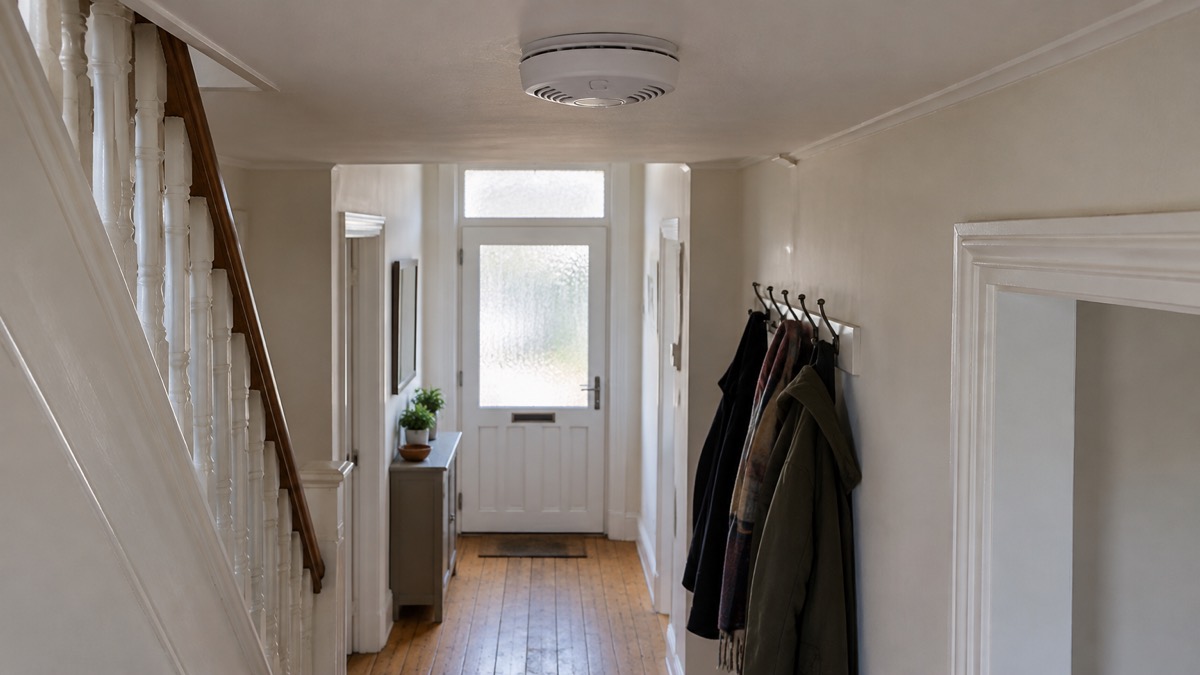
What you can do is prepare so that leaving is quick and obvious. Keep escape routes clear, fit working smoke alarms and make sure everyone in the household knows the plan. A battery or device fire is one more reason to have a bedtime routine that switches off and unplugs appliances not designed to stay on, avoids leaving chargers on overnight and closes doors11. For the wider picture on charging safely, see Lithium-Ion Battery Safety at Home and the Safe Battery Charging at Home Checklist.
E-bike and e-scooter batteries: the same rule applies
E-bike and e-scooter batteries hold more energy than other batteries, and they must be stored and charged properly to reduce the risk of fire6. When they are damaged, they can overheat, catch on fire and even lead to explosions15. The batteries that power them can pose a serious fire risk if they become damaged, faulty or are charged incorrectly16.
The emergency advice is identical to any other lithium battery: if the battery begins to smoke or catches fire, get out immediately, raise the alarm, call 999 and do not attempt to tackle the fire yourself10. London Fire Brigade's own page on what to do if there is a fire caused by an e-bike or e-scooter says the same: raise the alarm, get out and call 999, and do not attempt to tackle the fire yourself17.
Most e-bike and e-scooter fires are linked to charging and damage, so the prevention advice is worth knowing:
- Charge while you are awake and alert, so that if a fire should occur you can respond quickly15.
- Follow the manufacturer's charging instructions and check the battery and charger regularly for damage6.
- Do not use a damaged battery or charger. If you suspect damage, do not use it; replace it11.
- Keep batteries off escape routes and out of excessively hot or cold areas11.
- Do not charge or store an e-bike or e-scooter near combustible or flammable materials13.
- Protect batteries from extreme heat or cold18.
- Do not charge a battery that already feels very hot8.
Batteries can be damaged by dropping them or crashing an e-bike or e-scooter, and a damaged battery can overheat and catch fire without warning6. If your battery has been dropped or your bike or scooter has been in a crash, have it checked before charging it again. For more detail, see Lithium-Ion Battery Safety at Home and Are Portable Power Stations a Fire Risk?.
Stopping a battery fire before it starts
The fire services' prevention advice is consistent and simple, and it is the same whether you are charging a phone, a laptop, a vape, a power tool or an e-bike. Charge devices while you are awake and nearby, and avoid charging overnight or when you are out of the house9. London Fire Brigade's bedtime checks say not to leave phones, laptops or other devices with lithium batteries charging overnight11. It is never a good idea to charge an electrical product overnight, especially one containing a lithium-ion battery, because fires at night while people are sleeping are particularly dangerous as your reaction time is massively reduced6.
Overcharging is one of the recognised causes: if you charge too long or with too much voltage, it can cause overheating and fires6. Covering a charger, battery or device while charging can also cause overheating or even a fire, because it traps heat4. Do not cover batteries that are on charge14.
A few more habits reduce the risk:
- Use the charger that came with the device, or a reputable replacement, rather than a cheap unbranded one; charging with a dodgy charger poses risks19.
- Unplug when charging is finished and switch off and unplug appliances not designed to stay on11.
- Keep batteries away from water. Batteries can present a fire risk when submerged in water20.
- Never burn, crush or puncture batteries. Damaging a lithium-ion battery can cause fire, explosion or the release of hazardous substances1.
- Recycle properly. Do not put devices with lithium-ion batteries in general waste or normal recycling, because if they get crushed or damaged they can spark dangerous fires in recycling centres or bin lorries21.
If a battery is hot but not smoking, stop using it. Electrical Safety First says that if a laptop battery is too hot to handle, stop using it, unplug it from the charger and seek advice from the manufacturer22. For vapes, if the battery gets unusually hot, starts to bulge or starts hissing, stop using it immediately and leave it in a safe place until you can dispose of it properly14. For more, see Why Is My Power Bank Hot While Charging?, Is It Safe to Charge Overnight? and How to Dispose of a Damaged Lithium Battery.
A fire in a flat or shared building
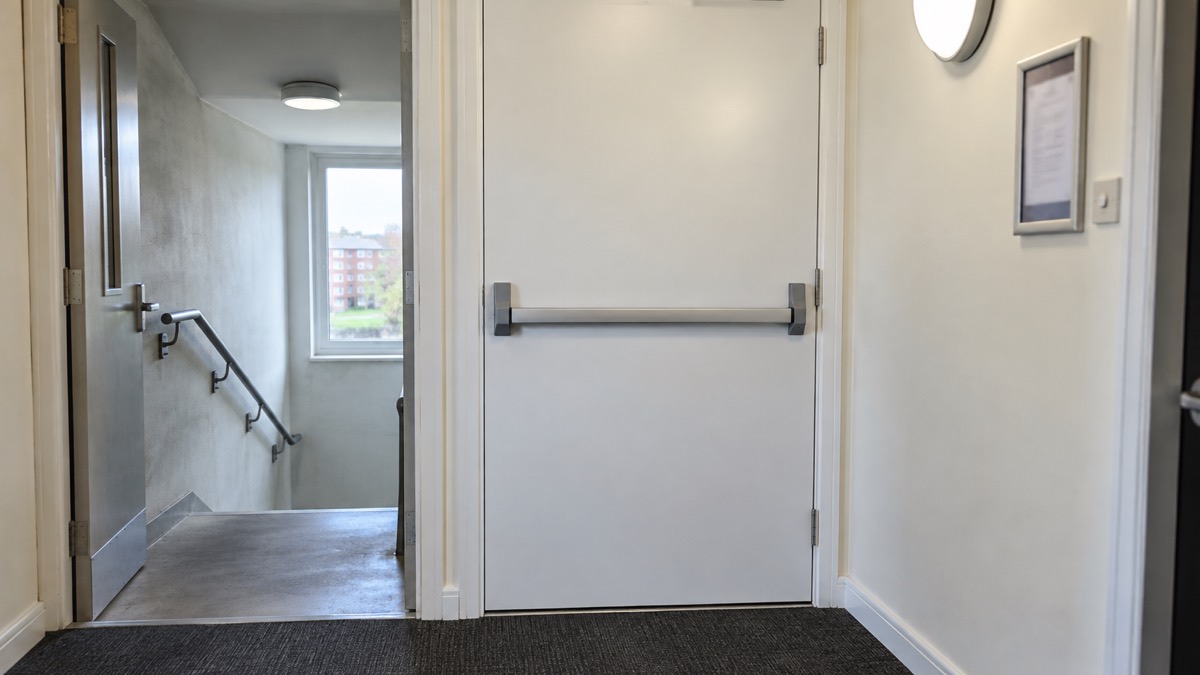
If a fire breaks out in your flat, the advice from the Northern Ireland Fire and Rescue Service is to alert everyone and get out immediately, do not try to extinguish the fire, close all doors behind you, always use the stairs rather than a lift, and call 999, never assuming someone else has9. North Wales Fire and Rescue Service gives the same sequence for a fire in your flat or a neighbour's flat: leave your flat and close the door, use the stairs and call 99912.
In a shared or high-rise building, the arrangements can differ from a house, so it is worth knowing your building's fire safety information before anything happens. The core actions stay the same: raise the alarm, get out, use the stairs and call 999. If a fire is inside your flat, the advice is to alert everyone and get out immediately, close all doors behind you, use the stairs rather than a lift and call 999, never assuming someone else has14.
If you have a disability or need help to evacuate, tell your building manager or landlord in advance so that arrangements can be made. The Priority Services Register, run by energy suppliers, can also flag that you need extra help in a power cut, which is worth doing if you rely on electrical equipment at home. For the wider picture on preparing for emergencies at home, see Power Cuts: A Household Guide and Backup Power at Home: A Household Guide.
Sources (22)
- Lithium-ion batteries, National Fire Chiefs Council
- Lithium battery fire safety, Mid and West Wales Fire and Rescue Service
- Lithium-ion batteries, North Wales Fire and Rescue Service
- Lithium-ion batteries, Scottish Fire and Rescue Service
- E-bikes and e-scooters fire safety guidance, National Fire Chiefs Council
- Battery fires, Devon and Somerset Fire and Rescue Service
- Digital easy read fire safety booklet, London Fire Brigade
- Heat, cold and rain: how weather conditions affect e-bikes and e-scooters, London Fire Brigade
- Home fire safety, Northern Ireland Fire and Rescue Service
- Spot the warning signs: could your e-bike or e-scooter start a fire?, London Fire Brigade
- Bedtime checks, London Fire Brigade
- High-rise living - At home - Keeping You Safe - North Wales Fire And Rescue Service, North Wales Fire and Rescue Service
- E-scooter, e-bike and mobility scooter fire safety advice, North Yorkshire Fire and Rescue Service
- Vaping and e-cigarettes, London Fire Brigade
- E-bikes and e-scooters, South Wales Fire and Rescue Service
- E-bikes and e-scooters, London Fire Brigade
- What to do if there's a fire caused by an e-bike or e-scooter, London Fire Brigade
- How to charge e-bikes and e-scooters safely, London Fire Brigade
- Domestic fire, UK Government Prepare campaign
- Batteries and chargers, London Fire Brigade
- Mobile phones and tablets, Electrical Safety First
- Laptops and notebooks, Electrical Safety First
 Power Cut Backup Power Checklist
 Backup Power Before Winter
 Safe Battery Charging at Home
 Running a Generator Indoors
 Carbon Monoxide from Generators
 Generator Sizing for a Power Cut
 Generator Run Time on a Tank
 Storing Petrol at Home
 Diesel Storage at Home
 Storing a Generator
 Generators in Cold Weather
 Generator Noise and Neighbours
 Power Station Capacity Sizing
 Power Station Run Time
 Power Station for a Gas Boiler