When the power goes off, the first minutes matter more than the kit. Switch off all electrical appliances that should not be left unattended, leave a light on so you know when power is restored, and check on neighbours1. Then call 105, free of charge, to report the problem and get updates on when your power will be restored2. Most power cuts do not last very long3, so in many cases the right move is torches on, one light left switched on, and a phone call, not a generator dragged out of the shed.
If the cut stretches on and you have backup kit, this page walks you through using it: where a generator must go and must never go, how a power station behaves differently, what each can run and for how long, how to ration charge or fuel, and what to switch back on when the mains returns. If you are still deciding what to buy, start with our guide to Backup Power at Home and the comparison of a portable power station or petrol generator.
Where a generator must never go: carbon monoxide, shock and fire
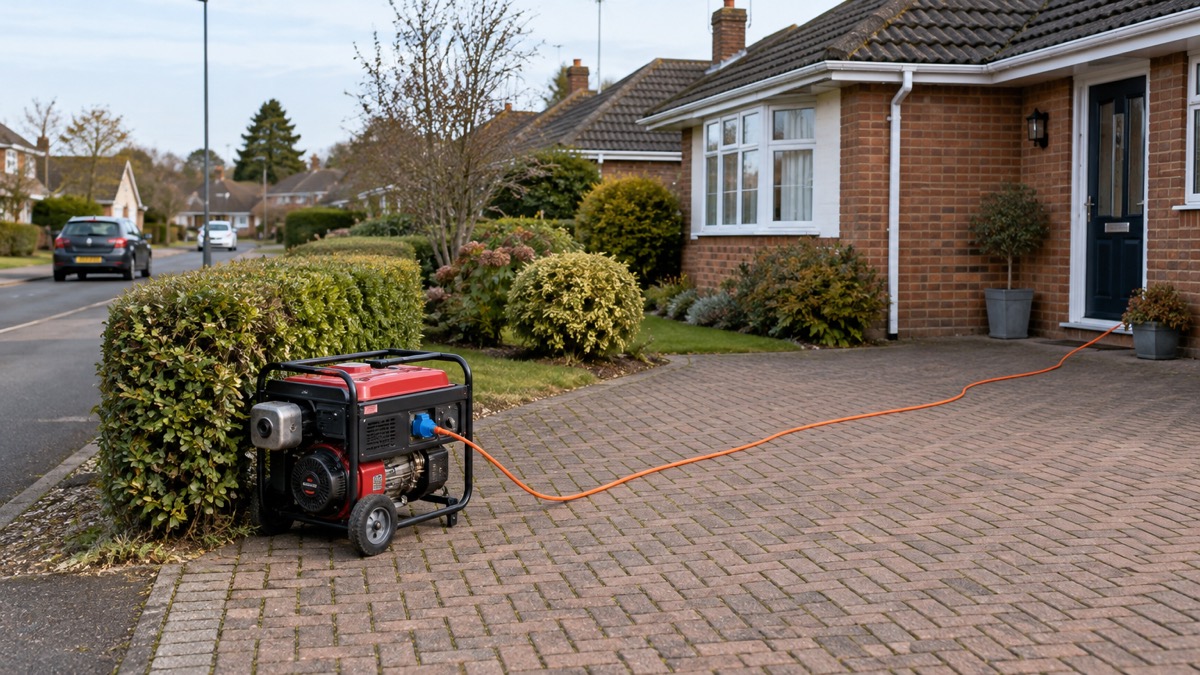
The single most important rule on this page comes from the fire and rescue services and from official flood guidance: never run a petrol or diesel-powered generator indoors, because it can produce fatal levels of carbon monoxide4. Carbon monoxide has no smell and no taste, and it kills people in their own homes during power cuts when they bring engines, heaters and barbecues inside. Wiltshire and Swindon Prepared states it plainly:
That rule covers garages, doorways and partially open spaces as well as living rooms. When clearing floodwater, official guidance is equally direct: make sure you put the generator outside to avoid carbon monoxide poisoning from the exhaust7. The same warning applies to anything else that burns fuel indoors during a cut. Scottish Fire and Rescue Service warns never to use any cooking items designed for outdoor usage like barbecues, as they can produce poisonous carbon monoxide8, and London Fire Brigade states it is never safe to use any type of outdoor cooking equipment like a BBQ or camping stove indoors, because of both fire and deadly carbon monoxide poisoning9. Never take portable or disposable BBQs, grills or charcoal fuel burners into your home or any confined space such as a tent, houseboat or caravan10. Northern Ireland's official storm warnings add kerosene heaters to the list of equipment that can cause carbon monoxide poisoning when used indoors during a power cut11.
Beyond carbon monoxide, a generator used at home needs thought about where it sits. It will need to be secure with good airflow, according to local resilience guidance3. That means a level surface out of the way, where the exhaust points away from any door, window or vent, and where the machine cannot be reached by children or tampered with. Fuel handling and refuelling carry their own risks, which we cover in full on Generator Safety: Carbon Monoxide, Fuel and Electric Shock. If you are ever unsure whether a generator is safe to run in a particular spot, the answer is to move it further from the house, not closer.
Power station or generator: how each one behaves in a power cut
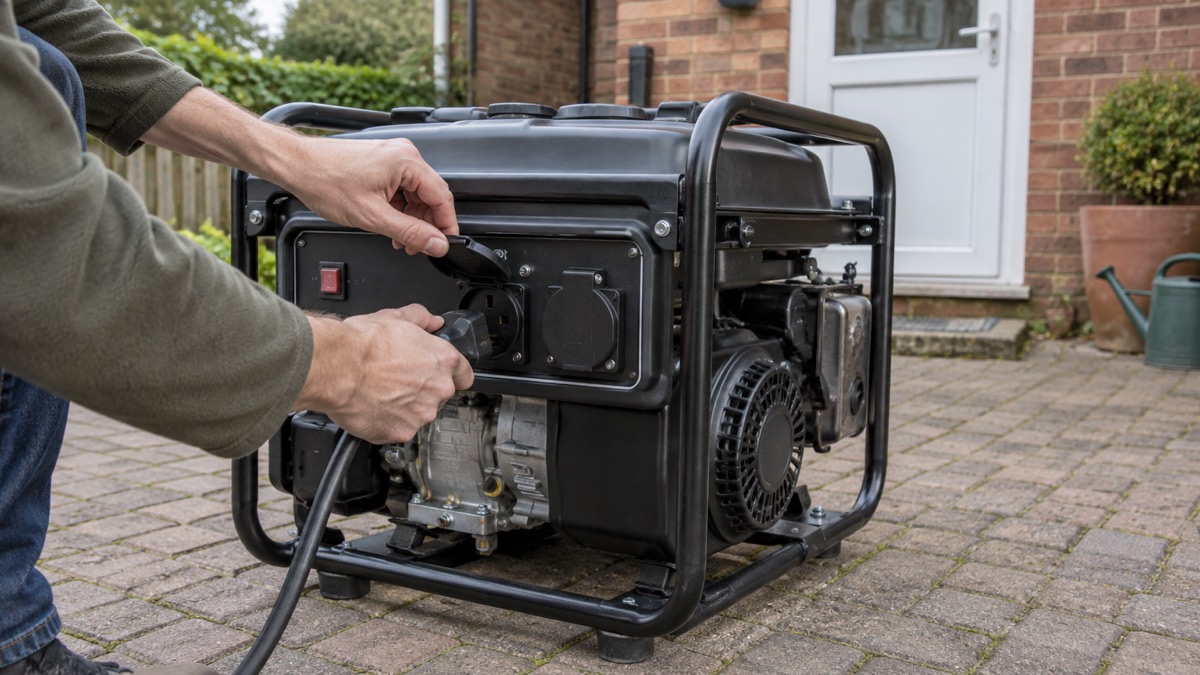
A portable power station is a big battery with sockets on it. A generator is a small engine that burns petrol, diesel or LPG to make electricity while it runs. The practical difference during a power cut is what each one asks of you.
A battery generator, as independent testing guidance from Which? puts it, is smaller and more portable than generators that use a fuel tank, but is only really useful if you have low power demand, and can sometimes be charged with solar panels12. You bring it indoors, plug into it, and it is silent and fume-free until its stored charge runs out. A fuel generator keeps going for as long as you keep feeding it fuel, but it must live outside, it makes noise, and it needs looking after while it runs. Smaller generator models may support selected items such as lighting, phone chargers, a refrigerator or freezer, while larger generators may run additional equipment within their rated capacity, according to maker guidance13.
There is a third category many households already own without realising it: fixed low-carbon equipment. During a power cut, systems like solar panels, heat pumps, EV chargers and batteries will automatically switch off to protect your home and engineers working on the network, network operator guidance explains14. Batteries will usually switch off unless they have a backup or "island mode" which can power parts of your home14. So if you have rooftop solar, do not expect it to keep your lights on: a parliamentary report notes householders might expect rooftop solar to provide electricity during a power cut, but this would not normally be possible without costly supplemental equipment such as batteries15. We cover this in detail on Do Home Solar Panels Work in a Power Cut? and Home Battery Storage: Does It Keep the Lights On?.
| Portable power station | Fuel generator | |
|---|---|---|
| Where it goes | Indoors, next to what it powers | Outdoors only, with good airflow3 |
| What it asks of you | Nothing while it runs; needs charging beforehand | Fuel, monitoring and refuelling |
| Noise and fumes | Silent, no fumes | Engine noise and exhaust |
| Best suited to | Phones, lights, router, low-demand kit12 | Higher loads and longer outages, within its rating13 |
| Charging between cuts | Mains, some by solar or car | Refill the fuel tank |
One behaviour worth knowing before a storm rather than during one: gas cookers are more likely to function during a power cut, but electric cookers will not work, as Food Standards Scotland advises16. If your cooking depends on electricity, plan for cold food or a safe outdoor option rather than improvising indoors.
What a portable power station is and what it can run
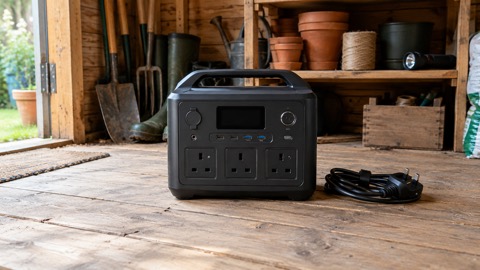
A portable power station is essentially a large rechargeable battery in a box, with mains-style sockets, USB ports and sometimes a 12V output. You charge it while the mains is on, and when the power fails you plug your priority devices straight into it. There is nothing to start, no fuel to store and no fumes, which is why official preparedness guidance describes having a power pack that is charged as very helpful in an emergency or power cut17.
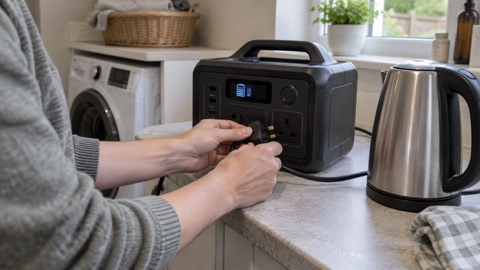
What it can run comes down to two numbers: how fast it can deliver power (its output, in watts) and how much energy it holds (its capacity, in watt-hours). Independent guidance notes that because portable generators and battery packs are small, they have a limited output capacity, and some models will not power all appliances12. In practice that means a small station will happily run phone chargers, battery chargers, a router, LED lighting and a laptop, but a kettle, a shower or a whole house is beyond it. Our guide to Portable Power Stations: What They Do and How to Choose sets out the categories in detail.
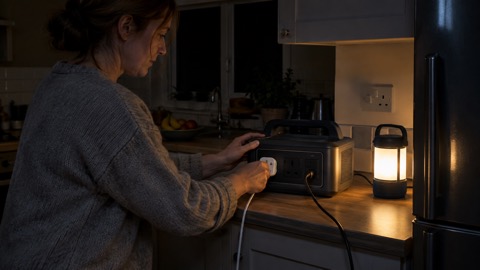
The mistake to avoid is assuming the box will run everything at once. Treat a power station as a lifeline for a short list of devices, chosen before the cut starts. Our page on Deciding What to Keep Running When the Mains Fails helps you make that list, and Watts, Watt-Hours and Surge Explained explains the arithmetic behind it.
Sizing and surge: why a fridge or motor needs more at start-up
Sizing starts with a list. Maker guidance advises: start by listing everything you expect to power and checking the wattage shown on each appliance, tool or item of equipment, considering whether they will be used together or one at a time13. That last part matters. A station that runs each of your devices individually may still trip out if you run them all at once, so decide in advance what runs together and what waits its turn.
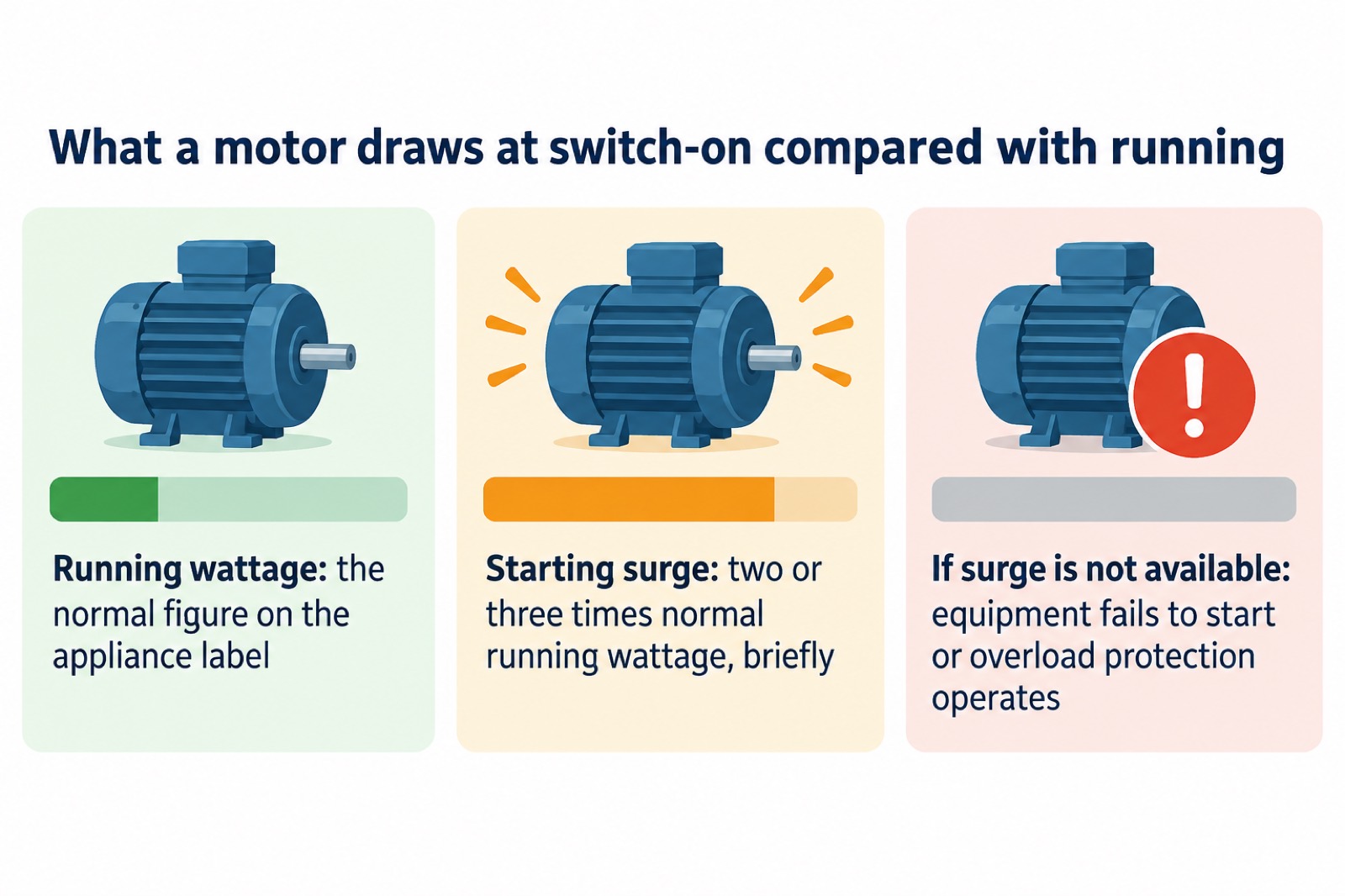
The second thing to check is surge. Equipment containing electric motors, including refrigerators, air compressors, pumps, saws, pressure washers and air conditioners, behaves differently at switch-on: a motor may briefly require two or three times its normal running wattage13. If the generator or station cannot provide this surge, the equipment may fail to start or the overload protection may operate, shutting everything down13. This is the classic power-cut failure: the fridge that ran fine on paper trips the station the moment you plug it in, because its compressor needed a burst of power the station could not deliver.
Generator output is usually shown in watts or kilowatts, with 1kW equal to 1,000W13. Makers commonly quote two figures, and the example Clarke gives is instructive: a generator rated at 2,000W continuous and 2,200W maximum should normally be used below 2,000W13. The continuous rating is the number to plan around; the maximum rating is a short burst allowance, not a target. The same logic explains why a generator trips when starting a power tool: the tool may require more starting power than the generator can provide, so check its starting wattage and the generator's surge capacity before you rely on it13.
Run time: how long your backup will actually last
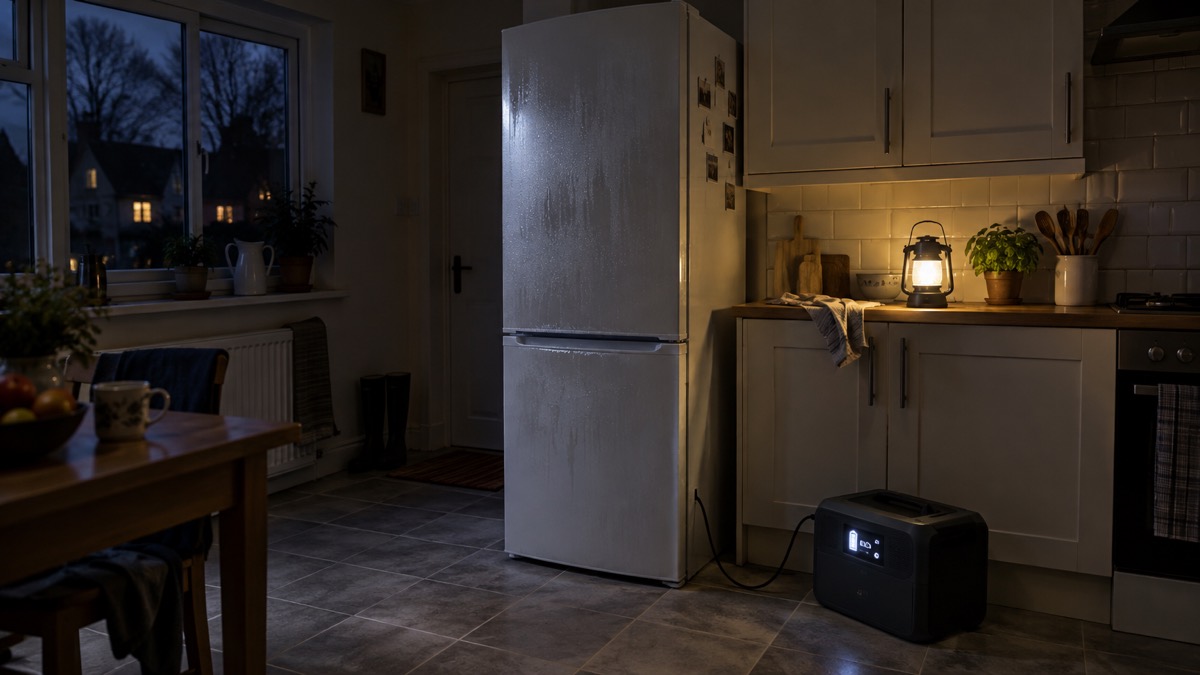
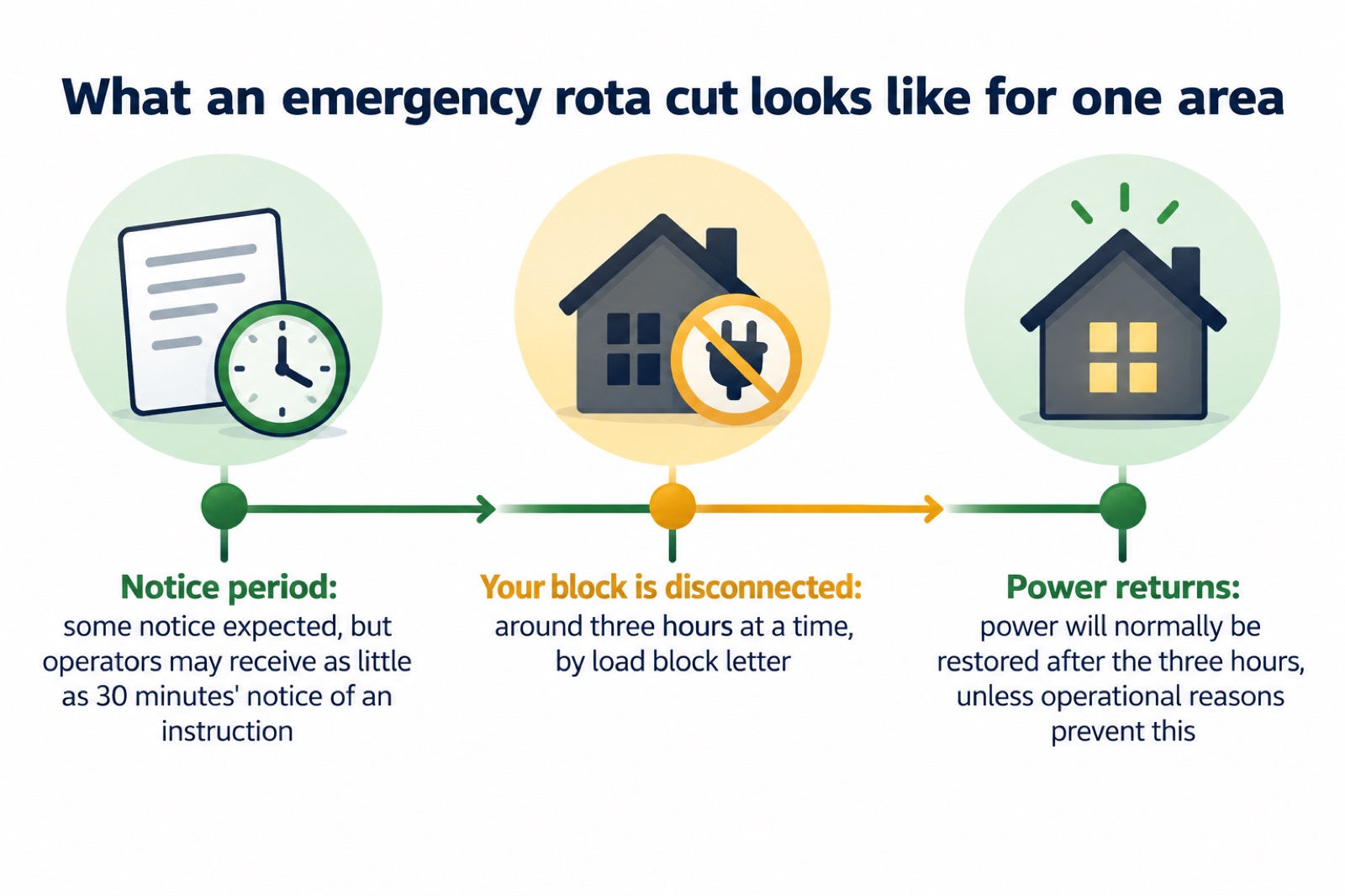
How long anything runs depends on what you ask of it. Official guidance on rota cuts gives one firm anchor: if there is an energy shortage, you could be switched off for around three hours18. That is the scale to plan around for a scheduled outage, and it is a useful test for your own kit: could your setup keep your priority devices going for around three hours?
Some official figures give a sense of what "enough" looks like in other contexts. Under the landline changes, vulnerable customers with an analogue landline must be given a free back-up battery unit that works for at least one hour in a power cut, and some providers have back-ups that last up to seven hours19. So an hour is the minimum official standard for keeping one essential device alive, and several hours is a comfortable margin. For context on the other end of the scale, rundown timers used with care equipment switch off the mains power to an appliance after a preset period, usually 30 minutes20, a reminder that even short bursts of power have real uses.
The honest answer for a heater or a small fridge is that run time is short and you should find out before the cut, not during it. Test your kit: run your priority devices from the station and time it. Local resilience guidance notes that most power cuts do not last very long3, so a station that covers a few hours of phone, light and router use handles the majority of real outages. For longer cuts, a fuel generator within its rated capacity is the usual answer13, and our page on How Long Will a Power Station Run a Fridge or Laptop? works through the arithmetic.
Charging a power station: mains, car and solar
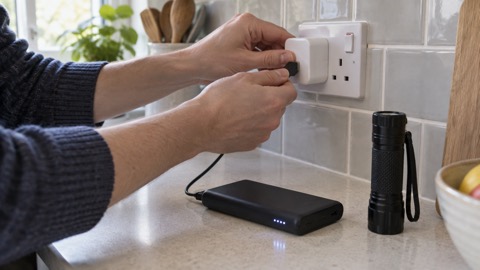
The time to charge your backup is before the cut, not after it. Official storm guidance is explicit: charge mobile phones, power banks and any back-up batteries for medical equipment in case there is a power cut6, and keep mobile phones, laptops or tablets fully charged so you have battery power for a short time at least11. Ready Scotland adds: charge mobile phones and power banks in case there's a power cut, and find your emergency plan and make sure it is up to date2. Consider a separate battery charger, and store key information such as the power cut helpline number (105) on your phone, as Met Office WeatherReady advice suggests21.
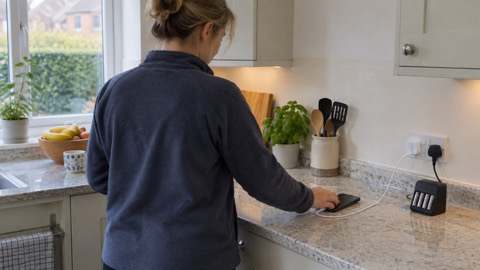
Once the station is charged, fire and rescue services have consistent advice on stopping there. Scottish Fire and Rescue Service says to unplug the charger once the battery is fully charged22. Mid and West Wales Fire and Rescue Service says to unplug devices once fully charged and avoid leaving them plugged in overnight23. Devon and Somerset Fire and Rescue Service says to unplug after charging and use manufacturer-approved chargers24. That applies to power stations, power banks and anything lithium-ion: charge fully, then unplug, and never leave backup kit charging unattended overnight. Our checklists on Safe Battery Charging at Home and Is It Safe to Charge Overnight? cover this in depth.
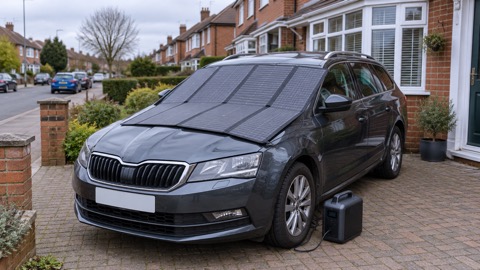
During a cut, your options narrow. Some power stations can be charged with solar panels12, which works if you have panels and daylight, though UK winter daylight makes this a slow top-up rather than a full recharge: see How Long Does Solar Charging Take in the UK?. Charging from a car is possible with some models, covered on Can You Charge a Power Station from Your Car?, but it means running the car engine, with its own exhaust and fuel considerations. If your outage letter says you will be connected to a temporary generator, turn off your solar panels before the planned outage and turn them back on once mains power has been restored, because solar panels left on may feed electricity into the generator and cause it to stop working14.
Generators in the rain: most are not waterproof
Power cuts in the UK often come with the weather that caused them, which creates an awkward problem: the generator must go outside, but outside is wet. Maker guidance is blunt: do not use it in rain or standing water13. A generator should not be exposed directly to rain or standing water, and any suitable protection must still provide proper ventilation and prevent heat or exhaust gases from building up13. That last clause is the trap. A tarp thrown over a running generator can trap heat and exhaust, and a generator boxed in to keep the rain off can become a carbon monoxide hazard even outdoors if fumes are directed back towards the house.
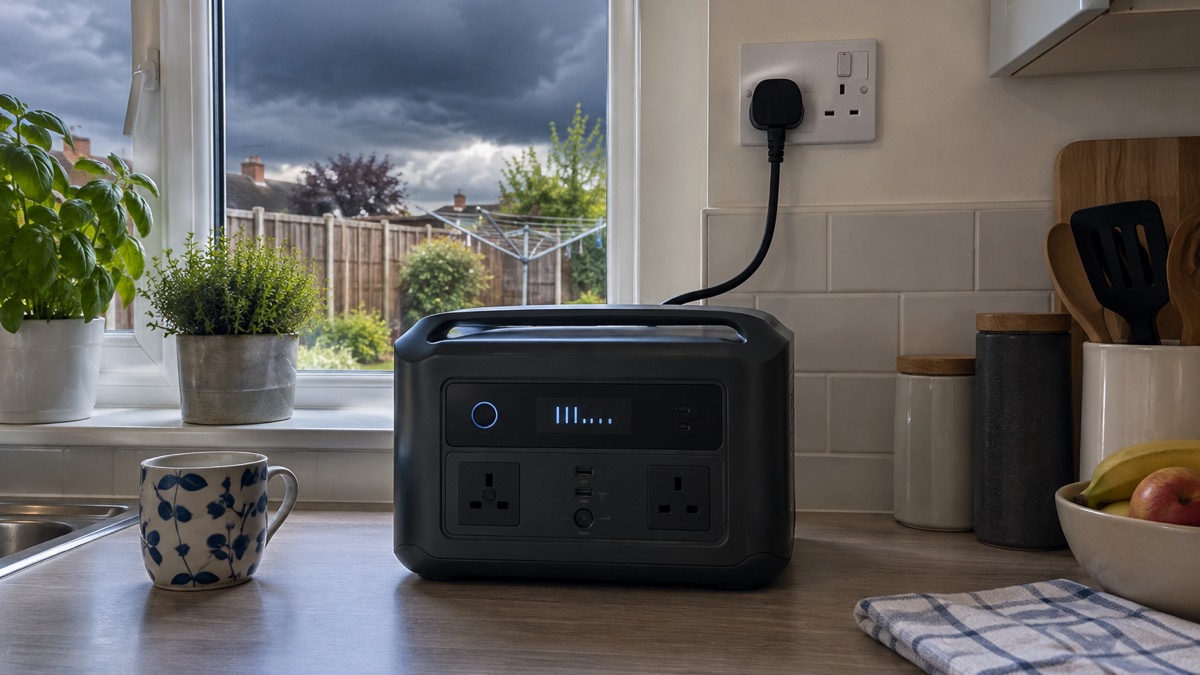
So the rule is: outside, dry, and still breathing. Keep the generator under cover that leaves the sides open, keep the exhaust pointing away from the house, and never bring it under a doorway or into a garage to dodge the rain. If you cannot achieve all three at once, official guidance is that most power cuts do not last very long3, and waiting out a short cut with torches is safer than running an engine in a bad position. Our page Can You Run a Generator in the Rain? covers the options, and How to Store a Generator After a Power Cut covers drying and storing it afterwards.
Two related points from official guidance are worth carrying. Farmers and rural households are advised to check and test backup generators and equipment before storm conditions arrive11, and that habit serves any household: a generator that has sat unrun since last winter may not start when you need it. And if flooding is involved, remember that power cuts are common during adverse weather events, and electrical items such as fridges, freezers and ovens may break down if they have come into contact with water25. After a flood, London Fire Brigade notes you may need a generator to power any pumps, humidifiers, dryers or heaters you decide to use while the electricity supply is unchecked4, and that generator goes outside, well away from flood water.
Emergency power cuts: three-hour blocks, with notice
The outages most households experience are unplanned: power cuts can happen if wires, cables and other equipment are faulty, are damaged for example during a storm, or need to be maintained or upgraded26. But there is a second kind worth knowing about. In the unlikely event of a national energy shortage, emergency power cuts could be scheduled on a rotating area-by-area basis, and each area in GB is assigned a "load block letter" and would be scheduled to disconnect from the electricity grid for around three hours at a time5. If there is an energy shortage, you could be switched off for around three hours18.
These rota cuts would come with warning. The documents differ on how much: one line of guidance suggests likely a number of days' notice, though it could be implemented sooner, and network operators may receive as little as 30 minutes' notice of an instruction; another describes up to 48 hours' notice for planned emergency power cuts through a power-sharing rota. The two positions are not reconciled, so treat "at least some notice, but possibly very little" as the working assumption. Separately, planned maintenance cuts by network operators come with their own notice periods, and the guidance there also differs, with one source saying 10 days' notice about a planned power cut and another saying at least 48 hours' notice. Check your own operator's letter for the exact timing that applies to you.
If you rely on power for medical or assistive equipment, plan ahead for these events. Some equipment may stop working during a power cut, for example ventilators, oxygen concentrators, electric wheelchairs, hoists, communication devices and feeding pumps, Ready Scotland warns27. Network operators only provide generators for customers who are medically dependent on electricity, not for businesses or personal use14, so if that is you, make sure your operator knows before any cut is announced. Our page on Powering CPAP, Oxygen and Other Medical Devices From a Battery covers the kit side.
What to switch back on when supply returns
The end of a power cut has its own routine. Before the power comes back, switch off all electrical appliances that should not be left unattended, ready for when the power comes back on29, and leave a light on so you know when the mains returns1. The reason is simple: when supply is restored, everything left switched on draws power at once, and a house full of appliances restarting together can trip your own breakers or stress the supply just as it returns.
When the light you left on comes back, restore things gradually rather than all at once. If you were running a generator, shut it down, let it cool, and disconnect everything before you return the house to mains. If you have low-carbon equipment, expect it to behave in specific ways: your EV charger will stop charging when the power goes off, and once power is restored most chargers will start working again as normal, though some models may need a quick check, reset or restart via an app14. Solar panels that you turned off before a planned outage with a temporary generator should be turned back on once mains power has been restored14. Batteries that switched off during the cut will usually come back with the mains unless they have an island mode14.
Then check on the neighbours, as official advice recommends1, especially anyone elderly, disabled or on the Priority Services Register. And if you used a power station, put it back on charge as soon as the mains is stable, then unplug it once full22, so it is ready for the next one. Our wider guide at Power Cuts: A Household Guide covers the full before, during and after sequence.
Getting help: 105, the Priority Services Register and compensation
Call 105, free of charge, to report the problem and get updates on when your power will be restored2. You can also report an unplanned power cut directly to your local network operator using their website26. Store the number on your phone now, while you have power and signal, as WeatherReady advice suggests21. If a storm has brought the network down, Ready Scotland's emergency plan guidance is the reference for what to have ready30.
If you, or someone you care for, needs extra support, sign up to your energy supplier's Priority Services Register to let them know that you need additional support during a power cut5. It is free, it tells the supplier and network operator who you are, and it changes what happens around you during an outage. Related help exists for phone users: if you have an analogue landline and are a vulnerable customer, your communication provider must provide a free back-up battery unit, meaning the landline would work for at least an hour in a power cut, and many batteries now last much longer31. This matters because phone and broadband outages often ride along with power cuts, as official guidance on phone and broadband outages explains31.
On compensation, know what is and is not covered. You will not be paid for blackouts caused by a national power shortage, damage to electrical equipment or appliances, or a low supply after a power cut26. For planned and unplanned power cuts, you can get £12026. You could get an extra £100 if your power has gone off more than 4 times between 1 April and 31 March the following year, each power cut lasting at least 3 hours26. Claims go through your network operator, and the detail is on Ofgem's page.
Sources (31)
- Met Office Weather Ready tips for snow and ice, Met Office, 2025-11-19
- Storms and high winds advice, Ready Scotland, 2026-03-24
- Generators: risks and guidance, Wiltshire and Swindon Prepared, 2026-10-25
- After a flood: safety advice, London Fire Brigade, 2026-10-25
- Power cuts: be prepared, Prepare Campaign, 2026-10-21
- Storms: what to do before and during, Prepare Campaign, 2026-10-19
- After a flood: clearing up, nidirect, 2026-05-06
- Power cuts: home safety advice, Scottish Fire and Rescue Service, 2026-10-25
- Cooking safety in the home, London Fire Brigade, 2026-10-25
- Carbon monoxide: the silent killer, Wiltshire and Swindon Prepared, 2026-10-25
- Strong winds and heavy rain warning: information and advice, nidirect, 2026-01-27
- How to buy the best generator, Which?, 2026-01-20
- Generators: buying and using guidance, Clarke International, 2026-10-25
- Planned power cuts and low carbon technology, SSEN, 2026-10-25
- Written evidence on resilience and power disruption, UK Parliament, 2022-01-13
- Food safety in the kitchen: power cuts, Food Standards Scotland, 2026-10-25
- Prepare yourself for emergencies, Wiltshire and Swindon Prepared, 2026-10-25
- What are electricity rota loads?, Wiltshire and Swindon Prepared, 2026-10-25
- Future of landline calls, Ofcom, 2026-08-26
- Carers: equipment safety, Devon and Somerset Fire and Rescue Service, 2026
- WeatherReady: top tips to be weather ready, Met Office, 2026-10-25
- Lithium-ion battery safety, Scottish Fire and Rescue Service, 2025-11-27
- Lithium battery fire safety, Mid and West Wales Fire and Rescue Service, 2026-10-26
- Battery fires: home safety, Devon and Somerset Fire and Rescue Service, 2026
- Food safety in the kitchen: flooding, Food Standards Scotland, 2026-10-25
- Check if you can get payment for a power cut, Ofgem, 2026
- Disabled people and carers: emergency planning, Ready Scotland, 2026-10-25
- Emergency planned power cuts FAQs, Electricity North West (SP Electricity North West)
- Stay safe in lightning, Met Office, 2026-10-25
- Emergency plan: household guidance, Ready Scotland, 2026-03-24
- Phone and broadband outages, Prepare Campaign, 2026-10-12
 Power Cut Backup Power Checklist
 Backup Power Before Winter
 Safe Battery Charging at Home
 What to Keep Running in a Cut
 Watts and Watt-Hours
 Portable Power Stations
 Portable Generator Types
 Generator Safety
 LPG Cylinders and Regulators
 Connecting to Your Home's Wiring
 Home Battery Storage
 Portable Solar Panels
 12V Inverters
 Leisure and LiFePO4 Batteries
 Power Banks for Phone Charging