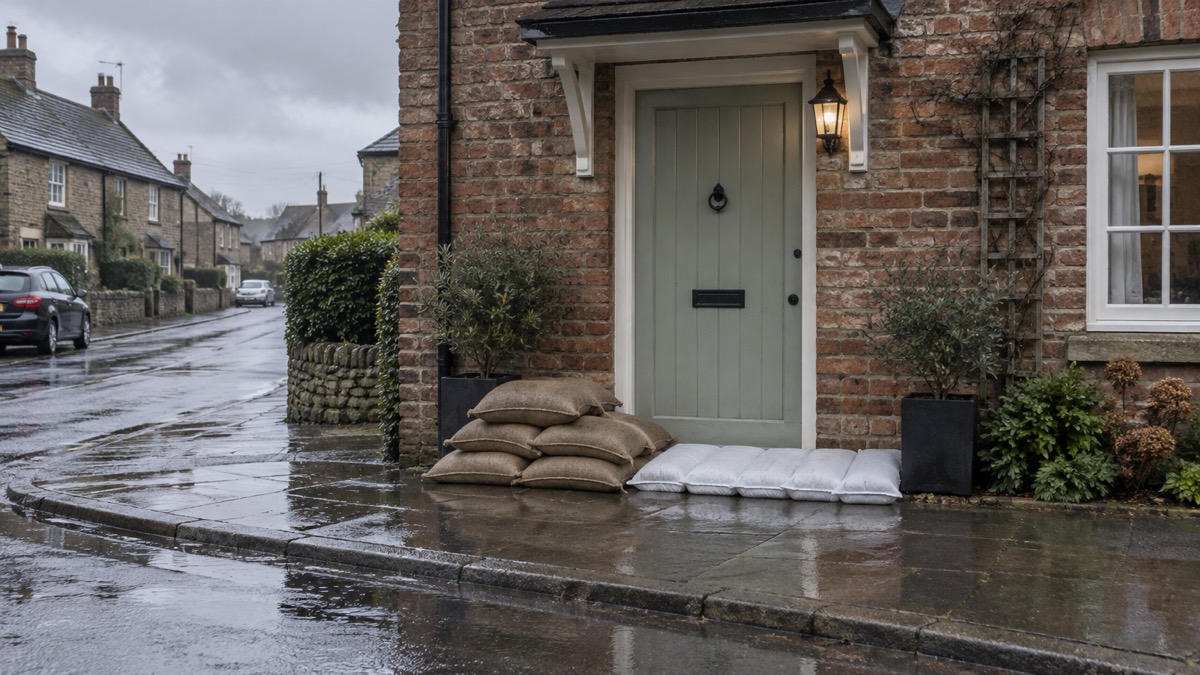
If you are weighing up absorbent flood bags against traditional sandbags for your doorway, the honest answer is that both are a stopgap, not a seal. Sandbags will stop a few inches of water for a while before water seeps through, and the deeper the water gets, the quicker it will seep through1. Absorbent bags, sometimes called sandless bags, are made of absorbent materials and swell when wet; Westminster City Council names Floodsax as an example of "self-inflating, sand-less sandbags made of absorbent materials"2. Neither will keep out a serious flood on its own.
What both do well is buy time and slow the water at a weak point. Official guidance is to block doors, with floodboards if you have them, and airvents with plastic sheeting and sandbags when a flood warning comes3. Purpose-made products, such as flood boards, air brick covers and non-return valves, will be more successful than sandbags for minimising floodwater entering a property4. So the sensible approach is to use bags as part of a wider plan, not as your only defence.
This page sets out how each type behaves, how to get bags ready before a warning, how to lay them across a doorway, what no bag can stop, and how to store and dispose of them safely. It also covers where to get sandbags and flood help locally, because in most of the UK that starts with your council.
| Sandbags | Absorbent (sandless) bags | |
|---|---|---|
| How they work | Weight and stacking hold back water1 | Absorbent material swells when wet2 |
| What they stop | A few inches of water for a while, seeping faster as water deepens1 | Not stated in the sources here |
| Storage | Store dry; bags not reached by floodwater can be kept for future use7 | Keep dry until needed so they still work |
| Weight when dry | Heavy to move and fill | Lighter and easier to store |
| Best use | Doorways, airbricks, bathroom doors and toilets3 | Doorways and gaps where a lighter bag suits |
Absorbent flood bags or sandbags: how each behaves at a doorway
The two types work in different ways, and that shapes where each is useful. A sandbag is a sack of sand or similar material that you place and stack by hand. It relies on weight and a snug fit to hold back water. An absorbent bag is lighter and dry to store, and swells into a barrier when it meets water. Westminster City Council lists Floodsax among the products households can use, describing them as "self-inflating, sand-less sandbags made of absorbent materials"2. Other councils list flood sacks among the options for protecting a property, alongside flood gates, specialist doors and seals for airbricks6.
Neither is a substitute for a proper barrier. The Environment Agency strongly encourages people to use purpose-made flood protection products, such as flood boards, non-return valves for plumbing and air brick covers4. Dover District Council's guidance is blunt: purpose-made flood boards for doors, windows and air bricks will be more successful than sandbags for minimising floodwater entering a property4. Treat bags as a first line that slows water while you move valuables and, if needed, leave.
Where bags earn their place is at the awkward openings. Flood water can come in through toilets, so be prepared to sandbag bathroom doors or block your toilet3. A sandbag placed in the toilet bowl, with the washing machine drain blocked by a cloth or towel, helps prevent backflow4. Absorbent bags suit doorways where you want something light to position quickly. For a fuller comparison of bags against rigid barriers, see Sandbags or Door Barriers: Which Protects a Home Better?.
Getting bags ready before a flood warning
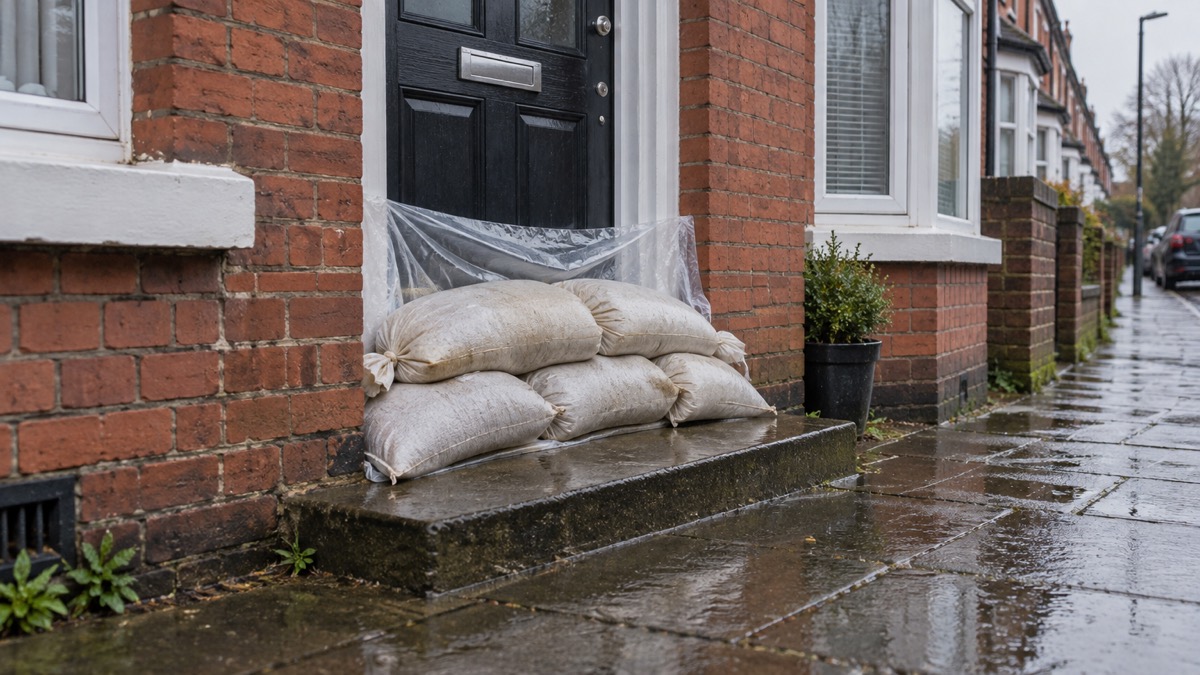
The time to think about bags is before any warning, not as water reaches the step. Official guidance for properties at risk of flooding is to have some sandbags, floodboards or plastic covers prepared to block doorways and airbricks9. That means buying or collecting them in advance and keeping them where you can reach them quickly.
When a flood alert is issued, the advice is to prepare: prepare a bag that includes medicines and insurance documents, and check flood warnings10. Two days before expected flooding, official guidance suggests monitoring flood warnings and forecasts, starting your grab bag, charging phones, power banks and torches, moving important items upstairs and checking on neighbours or vulnerable people2. Immediately before a flood, turn off electricity, water and gas supplies, lift curtains above expected water levels, use door guards or air brick covers, move important items to safety, lift rugs and smaller furniture upstairs or onto tables, get your flood kit together, move pets and vehicles away, and make sure phones are charged11.
A flood kit supports all of this. Make one up including a torch, blankets, waterproof clothing, wellingtons, a portable battery-powered radio, a first-aid kit, rubber gloves and key personal documents, and keep it upstairs if possible3. The Met Office advises preparing a flood kit in advance so your family's essential items are to hand and somewhere accessible12. For a full list, see our checklist for when a flood warning is issued.
- Sandbags, floodboards or plastic covers ready to block doorways and airbricks9
- A flood kit with torch, blankets, waterproofs, wellingtons, radio, first-aid kit, gloves and documents3
- Medicines and insurance documents in your grab bag10
- Phones, power banks and torches charged2
- Valuables and photographs moved upstairs in plastic bags or onto heavy furniture3
How to lay bags across a doorway
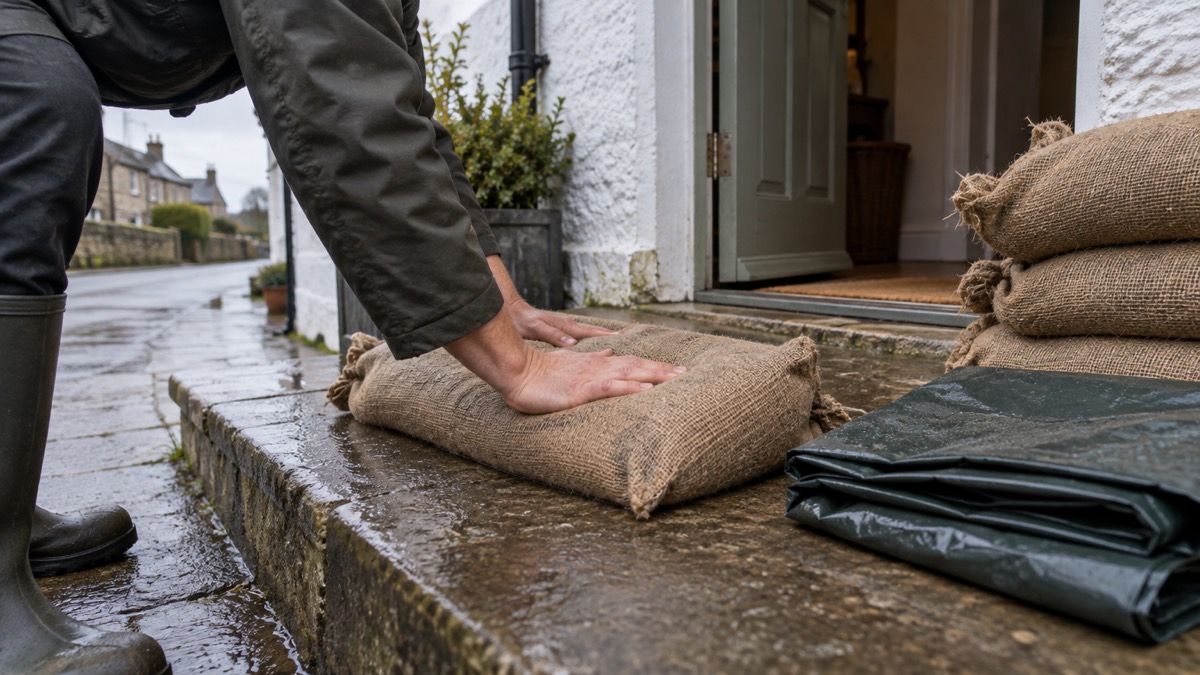
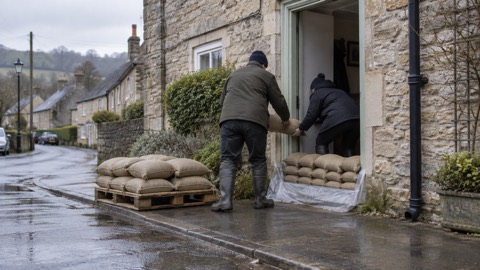
Laying bags well makes the difference between a barrier that slows water and one that leaks from the first minute. Clear any debris from the area first. If you can, put a large sheet of heavy-duty plastic between the sandbags and the wall of your house. Place bags lengthways, tucking the open end under the filled half, and point them into the direction of water flow4.
Lay sandbags with seams and bag mouths facing inwards, as this is where moisture enters the bags. Shape the bags into rectangles before laying them, use half-filled bags to stagger the joints, and have the neck of each bag facing the same direction4. Staggering the joints matters: a wall of bags with aligned seams gives water a straight path through.
For absorbent bags, follow the maker's instructions for that product, since the sources here do not give a laying method for them. The principles are the same: a snug fit, staggered joints and a plastic sheet behind where possible.
A few practical points:
- Clear debris from the doorway and threshold4.
- Lay a heavy-duty plastic sheet between the bags and the wall if you can4.
- Place bags lengthways, open end tucked under the filled half, pointing into the flow4.
- Face seams and mouths inwards and stagger the joints with half-filled bags4.
- Block other openings: airbricks with covers or short wooden boards, and bathroom doors or toilets with bags15.
For step-by-step filling and laying, see How to Fill and Lay Sandbags at a Door. If you have no sandbags, Using Pillowcases or Bin Bags as Sandbags covers temporary options.
What bags cannot stop: water through walls, floors and drains
This is the part that catches households out. Sandbags do not provide enough protection during a flood: water can get into properties through many routes, not just doorways16. Water can enter a property via doorways, windows, air bricks or as groundwater through floors17. In very severe flooding, water may enter through doors, windows, airbricks, vents, drains, walls and even through the ground floor4.
That means a perfectly laid doorway barrier can be bypassed by water rising under the floor, backing up a drain, or seeping through the brickwork. Sandbags can also become contaminated with sewage where sewer flooding occurs18. Plan for water arriving where you did not block.
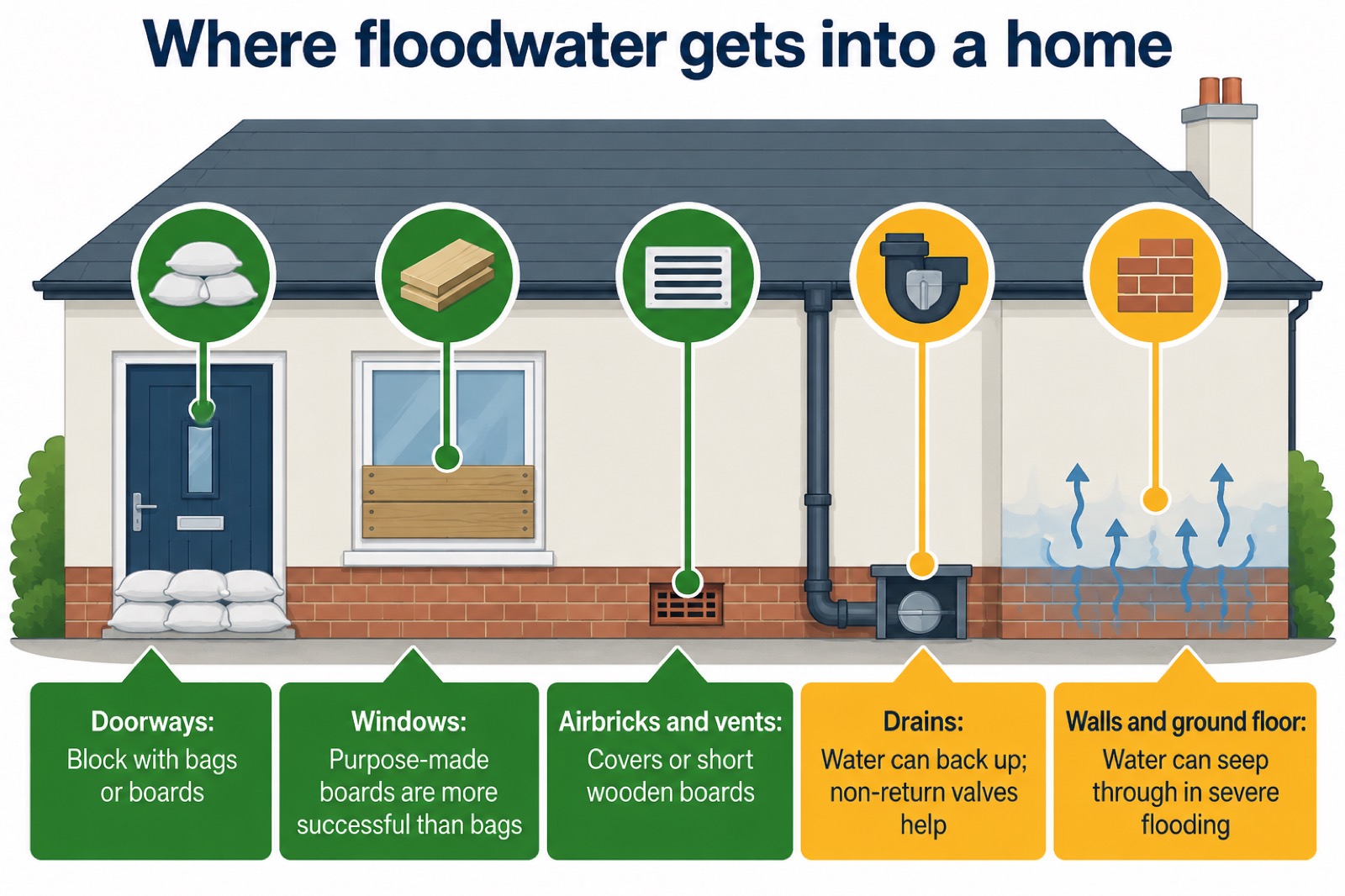
The practical response is layered defence and early action. Use flood protection products if you have them, for example flood barriers or air brick covers19. Move portable, prized possessions such as photographs and valuables upstairs in plastic bags or on top of heavy furniture3. Gather essentials and move valuable items above expected water levels20. And know when to stop defending and leave: during a flood, never walk or drive through flood water2.
For the wider picture of entry routes and what helps, see Protecting Your Home: Resistance and Resilience Measures and Airbrick Covers and Self-Closing Airbricks.
Storing absorbent bags so they still work
Absorbent bags work because they swell when wet, so they must stay dry until you need them. Store them in a dry place, off the floor, in a sealed bag or container, and check them regularly. The sources here do not give a specific shelf life for absorbent bags, so check the maker's instructions on the pack.
Sandbags are more forgiving. If the floodwater did not reach the sandbags, they can be stored for future use7. Keep them dry and off damp ground so the sacks do not rot. Filled bags are heavy, so store empty sacks and sand separately if you have space, and fill them when a warning comes.
A regular check keeps both types usable. Official guidance for a flood grab bag is to check it every 6 months2. Apply the same habit to your bags: check they are dry, intact and where you expect them, and replace any that are torn or damp. For a full routine, see Storing and Checking Flood Barriers: A Checklist.
- Keep absorbent bags dry and sealed until needed
- Store sandbags dry and off damp ground; bags not reached by floodwater can be kept7
- Check your bags and flood kit every 6 months2
- Replace torn or damp bags before the next flood season
Disposing of used bags after floodwater
Used bags are not ordinary rubbish. Sandbags may contain sewage and oils when they have come into contact with floodwater, so wear gloves and wash your hands thoroughly when handling them21. Discard floodwater-exposed sandbags as they may be contaminated, and dispose of used sandbags in the landfill containers at your nearest waste recycling centre7.
There are several accepted routes. You can take used sandbags to your local recycling site; or empty the sand and keep it for garden or other uses and place the bags in your normal waste bin; or empty the sand, take it to your local reuse and recycling centre and place the bags in your normal waste bin21. Belfast City Council adds that if sandbags met flood water, you should tell the staff when you take them to your local recycling centre15. Government guidance is firmer still: take contaminated sandbags to the local household waste recycling centre and inform staff of their contamination22.
Absorbent bags need their own handling. The gel used in the bags is harmless and fully biodegradable, according to Somerset Council23. Even so, a bag that met floodwater may carry sewage, so treat it as contaminated and check with your council about disposal. For questions about recovering from a flood, including disposing of used sandbags, contact your local authority24. Our guide to How to Dispose of Used Sandbags covers the options in more detail.
Where to get sandbags and flood help locally
Start with your council. If you need sandbags, contact your local authority, who may have some available during a flood; if they do not supply sandbags, you can buy your own from DIY stores and builder's merchants5. You can buy sandbags and other flood defence products for your own use from most DIY stores25.
What councils provide varies widely, so check in advance rather than during a flood. Derbyshire County Council provides a free starter pack of 10 empty sandbags and literature, at any time of the year, to householders at risk of flooding16. It also supplies empty sandbags to town and parish councils to distribute to residents at risk, and works with parish councils or local flood groups willing to store a supply close to vulnerable areas25. Oxfordshire County Council's policy is narrower: sandbags will only be provided in response to emergencies, where public highway flooding occurs25. Its advice is that property owners in flood-prone areas prepare in advance, purchase sandbags from local suppliers, and refer to the Environment Agency or National Flood Forum for advice25.
| Nation | Where warnings and help start |
|---|---|
| England | Environment Agency flood warnings on GOV.UK13; local council for sandbags5 |
| Wales | Natural Resources Wales flood warnings5; local council for sandbags5 |
| Scotland | Check with your local authority and the Scottish Environment Protection Agency |
| Northern Ireland | NI Direct flood advice9; Belfast City Council flooding advice15 |
Your local council may have some sandbags ready to deploy at times of flooding, but their priority is to protect the public at large, so check with your local authority in advance4. For the rules on what councils must provide, see Does the Council Have to Provide Sandbags?. For the wider picture of who does what, see Who Manages Flood Risk: Agencies, Councils and Water Companies.
Sources (25)
- Sandbags, Derbyshire County Council, 2026
- Plan and prepare for floods, Westminster City Council, 2026
- Preparing for a flood, London Fire Brigade, 2026
- Sandbags and how to use them properly for flood protection, Environment Agency, 2009
- Preparing for a flood, Natural Resources Wales, 2026
- Personal responsibility, Derbyshire County Council, 2026
- Clearing up after a flood, Oxford City Council, 2026
- Flooding advice, Suffolk County Council, 2026
- Preparing for a flood, NI Direct, 2025
- Flooding, West Yorkshire Prepared, 2026
- Personal flood plan, Environment Agency, 2023
- WeatherReady weather hacks, Met Office, 2026
- Keeping safe during high winds and heavy rain, North Yorkshire Fire and Rescue Service, 2024
- How to prepare for flash flooding, London Assembly, 2026
- Flooding advice, Belfast City Council, 2026
- Resilience and sandbags, Derbyshire County Council, 2026
- Personal flood resilience, Derbyshire County Council, 2026
- Before, during and after a flood, Suffolk County Council, 2021
- Help during a flood, GOV.UK, 2026
- During a flood, Nottinghamshire County Council, 2026
- After a flood: clearing up, NI Direct, 2026
- How to recover from flooding, GOV.UK, 2023
- Preparing for flooding, Somerset Council, 2026
- Flood health action card for the voluntary and community sector, GOV.UK, 2025
- Our policy on sandbags, Oxfordshire County Council, 2026
 Sandbags or Door Barriers
 Door Barriers or Flood Doors
 Submersible vs Suction Pumps