
FloodSax are lightweight bags that stay flat and dry on the shelf until you put them in water. Each one weighs just under 1lb (.37 kilos) before it comes into contact with water, and around 20kg once it has absorbed its full capacity of about 20 litres1. For a household getting ready for a flood, that means a box you can carry with one hand becomes a stack of heavy, mouldable bags you can build into a barrier at a door, or drop down a toilet to stop sewer water coming back up.
The maker says a FloodSax expands in about five minutes when immersed in water in a bath, sink, bucket or even the floodwater itself1. Each row of bags keeps around 18cms (7ins) of water out, so the number of rows you need depends on how deep water could get at your door1. They are single use once activated, and the maker gives specific disposal instructions for after a flood.
This page covers what FloodSax are, how to activate and place them, how to store them so they are ready, and how to dispose of them safely. It is written for a household building a flood plan, alongside the wider Flooding: A Household Guide.
What FloodSax are and how they work
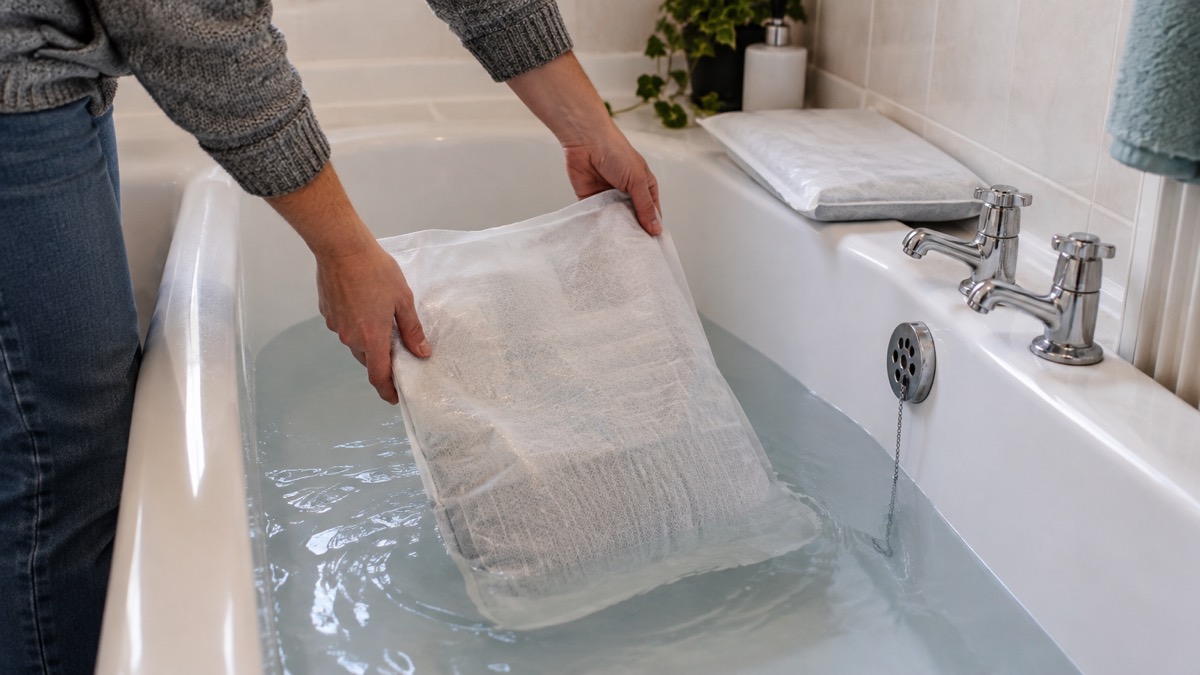
A FloodSax is a flat, fabric bag containing a gelling polymer and wood pulp. The maker describes each one as made up of 4 layers with 12 internal absorbent sections, creating a multi-chamber system to keep the water where it is put, sewn into an outer sleeve of nonwoven material1. The inner material is mostly biodegradable, while the outer cover is a nylon polymer material with nylon stitching1.
To activate one, immerse it in water in a bath, sink, bucket or the floodwater itself. The gelling polymer absorbs and retains the water, and the bag becomes taut and heavy enough to stack1. The maker says they are designed so they mould into doorways to keep floodwater out1.
For a household, the practical point is that FloodSax are a store-flat alternative to sandbags. They look a bit like pillowcases or empty sandbags until they come into contact with water, and are vacuum-packed and ultra thin with a large surface area3. FloodSax sit on a shelf until needed, then become the weight you need at the door.
Size and weight: about 20kg and 20 litres once expanded
The figures that decide how you use FloodSax are the ones before and after activation. Before activation, each bag measures 520mm (52cms) by 470mm (47cms) by 12mm (1.2cms) and weighs just under 1lb (.37 kilos), also stated as 13 ounces1. After it has absorbed the water it will be about 170mm (17cms) deep and the same length and width1.
| Stage | Size | Weight |
|---|---|---|
| Dry, single bag | 520mm by 470mm by 12mm | just under 1lb (.37 kilos)1 |
| Expanded, single bag | about 170mm deep, same length and width | around 20kg, about 20 litres1 |
| Carrier bag of 5, dry | 70cms by 50cms by 2cms | not stated1 |
| Box of 20, dry | 54cms by 50cms by 18cms | 21lbs (9.5kilos)1 |
The maker notes a manufacturing tolerance of plus or minus 20% in each FloodSax1, so treat the 20kg and 20 litre figures as approximate. A pack of 5 will soak up to 100 litres of water1. For storage planning, the maker says 24 boxes weighing 253kg can be stacked on a standard pallet, and a 40ft-high lorry container can take 1,496 boxes loose-packed or 1,120 on pallets1, figures that matter to a group buying for a street or community store rather than a single home.
The weight once expanded is the figure to plan around. Around 20kg per bag is heavy enough that you want to build a barrier before water arrives, not while wading. Keep the box somewhere you can reach it without moving other stores, and think about who in the household can lift a 20kg bag safely.
How to activate FloodSax in about 5 minutes
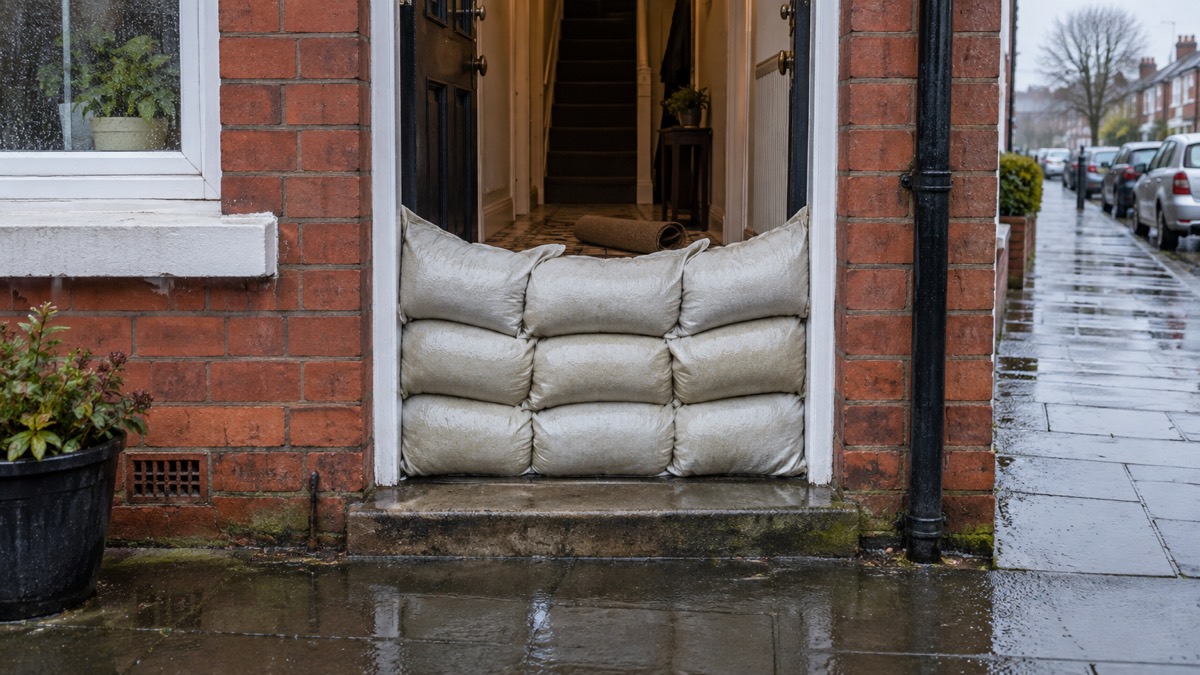
Activation is simple, but the order matters when water is rising. The maker says a FloodSax expands in about five minutes once immersed1. Work through it in this order:
- Get the dry bags to the point where you need them before water reaches the door.
- Fill a bath, sink or bucket, or use the floodwater itself, as the maker describes1.
- Immerse each bag and leave it for about five minutes until it is taut and heavy1.
- Stack the expanded bags into rows at the doorway, moulding them into the gap as the maker intends1.
- Keep the rest of the box dry and flat until you need the next row.
Building a barrier at a door: each row keeps out around 18cm of water
The maker states that each row of FloodSax will keep around 18cms (7ins) of water out1. To plan a barrier, estimate the depth of water that could reach your door and allow one row for each 18cms. A doorstep that could see 50cms of water needs three rows by that measure.
Official guidance supports having barriers ready before a flood. The Northern Ireland Executive advises households to have some sandbags, floodboards, or plastic covers prepared to block doorways and airbricks4. Natural Resources Wales lists flood doors, air bricks and hydrosacks among the product examples households can use5. Westminster City Council advises residents to buy flood protection products and find service providers on the National Flood Forum's Blue Pages Directory, and to get ready with a supply of temporary flood barriers6.
FloodSax are one temporary barrier option among several. Official guidance describes resistance measures that can be installed to keep the water out, including flood doors, barriers, gates and walls7, and product types ranging from simple sandbags to water-resistant barriers and doors and special valves on drains8. FloodSax suit a household that wants something flat to store and quick to deploy; a fitted flood door or a permanent barrier suits a home that floods repeatedly. The Flooding: A Household Guide sets out the wider plan, including warnings and evacuation.
Blocking the toilet against sewer backflow
Sewer water coming back up through the toilet is one of the less obvious flood risks, and the maker gives a specific use for FloodSax here: just one FloodSax popped down the toilet prevents floodwater sending water back up into homes from sewers1. The bag expands to block the pan.
Official guidance covers the same problem in other ways. Surrey County Council advises considering non-return valves in sewage pipes to prevent sewage backing up into the house11. Derbyshire County Council lists special valves on drains to stop water entering through the sewerage system among flood resilience products8. A non-return valve is a permanent plumbing measure; a FloodSax is a temporary one you can deploy when a warning arrives.
If a toilet is unusable because of a blockage, Public Health Wales advises considering the use of chemical toilets ("portaloos")12. For a household plan, decide in advance which toilets you would block and keep at least one dry FloodSax within reach of each. The Home Emergencies: Fire, Carbon Monoxide, Gas Leaks and Burst Pipes guide covers other indoor water problems, including burst pipes.
Soaking up leaks indoors with a dry FloodSax
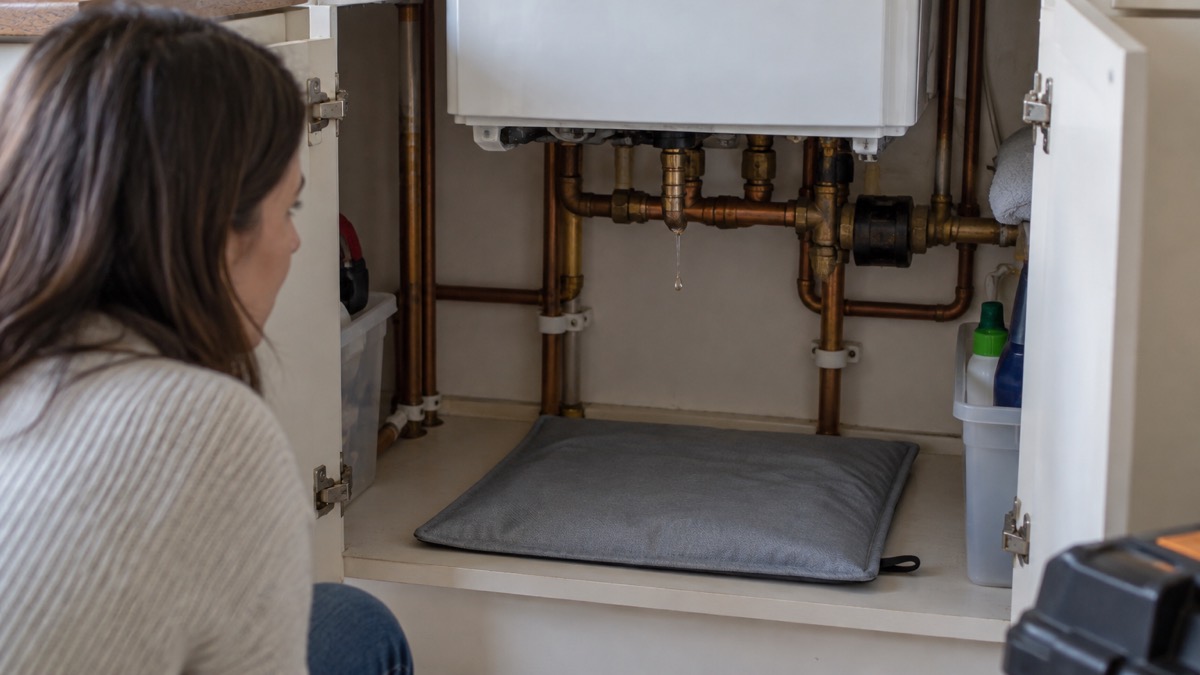
FloodSax are not only for outdoor floodwater. The maker says they can be used inside to soak up leaks and spills in hard to reach places such as beneath faulty boilers, radiators and pipes1. A dry bag placed under a drip expands as it takes on water and holds it rather than letting it spread.
This is a useful second role for a household store. A small leak under a boiler or a radiator, caught early, is a job for a dry FloodSax while you arrange a repair. The maker's design means the bag moulds to the space it is put in1. Keep a couple of dry bags in the cupboard with the stopcock and the boiler, not only in the flood box.
For a leaky toilet, Wessex Water's advice is that it can be fixed relatively easily by someone who is confident with DIY, and if not, the water company recommends contacting a qualified plumber13. A FloodSax under a leak buys time; it does not replace the repair.
Storing FloodSax: at least 5 years in good conditions
The maker states that FloodSax have a shelf life of at least 5 years in good conditions14. Store them dry, flat and out of the way of damp, and check the box each year when you review your household emergency kit. The Emergency Kit: What a UK Household Should Keep Ready guide sets out how a flood store fits alongside water, food and lighting.
For comparison, official guidance says plastic sandbags should last between 2 and 5 years if stored out of sun and rain3. FloodSax store flat, which makes them easier to keep in a cupboard or under a bed than a pile of sandbags. A box of 20 measures 54cms by 50cms by 18cms and weighs 21lbs (9.5kilos)1, so it fits on a shelf or in a hall cupboard.
Single use after a flood, and how to dispose of them safely
FloodSax are single use once activated. After a flood, the maker gives three disposal routes, and the right one depends on what the bag has been in contact with.
- General waste with salt: cut across the bag diagonally from corner to corner with a knife, pour table salt on the white inners to break down the polymer, then throw it into general waste for landfill1.
- Separate the parts: slice it open, drop the gelling polymer inners into the household rubbish bin and incinerate the outer cover, which has nylon stitching and is made from a nylon polymer material1.
- Specialist disposal: a UK specialist disposal company squeezes the water out with powerful equipment and bales the outer covers before incinerating them; call 01484 641009 for more information1.
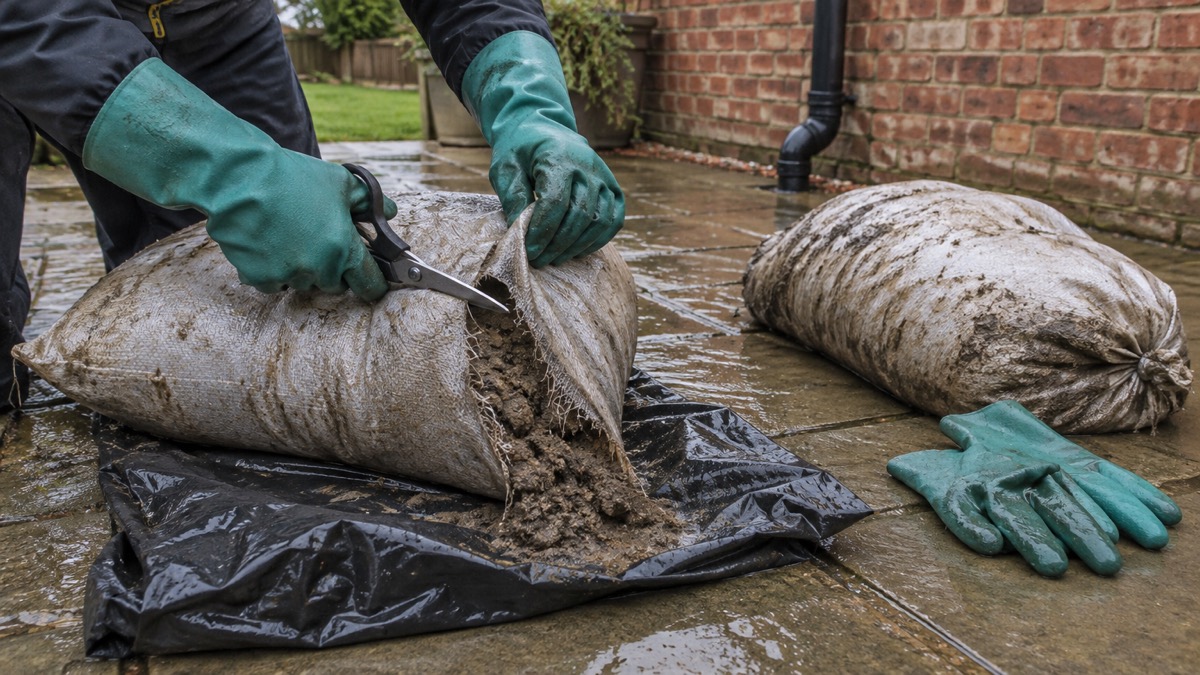
The maker's safety instruction is to always wear gloves to reduce the risk of contamination left by the floodwater1. That matches official advice: Oxford City Council says to discard floodwater-exposed sandbags as they may be contaminated9, and government recovery guidance says not to place used sandbags or their components in household waste, not to allow children or pets to come into contact with the sand, and to take contaminated sandbags to the local household waste recycling centre and inform staff15.
For local arrangements, contact Environmental Health in your local council for information about cleaning up and disposing of waste16. When cleaning up after a flood, wear gloves and a disposable plastic apron when using cleaning products and follow the manufacturer's instructions correctly17. Drying out can take weeks or even months, and if it is done too quickly it can cause structural damage and long term problems18.
Where to buy FloodSax and who makes them
FloodSax are made by Environmental Defence Systems Ltd, based in Huddersfield, West Yorkshire19. The maker says almost 3 million FloodSax have now sold worldwide1. They are sold in boxes of 20, in 4 bags of 5, and in carrier bags of 51.
For a household, the box of 20 is the natural unit for a flood plan: it gives you four packs of five, enough for a doorway barrier plus a toilet block, with spares. A pack of 5 will soak up to 100 litres of water1. Buy from a supplier you trust and check the box is intact and dry when it arrives.
Westminster City Council points residents to the National Flood Forum's Blue Pages Directory to find flood protection products and service providers6. That directory is a way to compare temporary barriers and other flood products before you decide what suits your home.
Getting warnings and help before and during a flood
A flood store only helps if you know when to use it. In England, the Environment Agency's Floodline is 0345 988 1188, a 24-hour service20. When you call Floodline, enter your quick dial code to hear flood messages for your area directly21. You can find out your quick dial code or codes online or by calling Floodline on 0345 988 118819. The London Fire Brigade advises calling Floodline on 0345 988 1188 to report flooding in your area, or if your home is flooded22.
In Scotland, the Scottish Environment Protection Agency runs Floodline and publishes quick dial codes for local flood information19. In Wales, Natural Resources Wales advises checking if your area is at risk of flooding10.
| Nation | Where to get flood warnings |
|---|---|
| England | Environment Agency Floodline, 0345 988 1188, 24-hour service20 |
| Scotland | Scottish Environment Protection Agency Floodline quick dial codes21 |
| Wales | Natural Resources Wales flood risk check10 |
| Northern Ireland | Northern Ireland Executive weather warning advice4 |
The Staying Informed and in Touch in an Emergency: A Household Guide covers warnings, radio and phone alerts in more detail. The Extra Help in an Emergency: Older, Disabled and Medically Dependent Households guide explains how to register for extra support if you or someone you care for would need help during a flood.
Sources (22)
- About FloodSax, FloodSax, 2026-11-02
- Floodsax are the original and best alternative sandbags for flood protection and flood mitigation, FloodSax (Environmental Defence Systems Ltd)
- Sandbags, Derbyshire County Council, 2026-10-29
- Thunderstorms weather warning: advice and information, nidirect, 2026-08-30
- Preparing for a flood, Natural Resources Wales, 2026-10-29
- Plan and prepare for floods, Westminster City Council, 2026-09-03
- Flood Technologies, Blue Pages, 2026-10-29
- Resilience and sandbags, Derbyshire County Council, 2026-10-29
- Clearing flood, Oxford City Council, 2026-10-29
- Flooding and health, Public Health Wales, 2026-07-31
- Getting back into your home following flooding, Surrey County Council, 2026-10-28
- Weather and health - Public Health Wales, Public Health Wales
- Spotlight on Wessex Water - offers advice on saving every drop - Case Studies - Wiltshire & Swindon Prepared, Wiltshire & Swindon Prepared (Wiltshire & Swindon Local Resilience Forum)
- Is it possible to get hold of prefilled sandbags in an emergency and are they expensive?, FloodSax (Environmental Defence Systems Ltd)
- How to recover from flooding, GOV.UK, 2023-12-19
- After flood: clearing, nidirect, 2026-05-06
- Cleaning up and returning home after flooding, Derbyshire County Council, 2026-10-29
- After a flood: flood recovery leaflet, Tewkesbury Borough Council, 2023
- Flooding FAQs, Scottish Environment Protection Agency, 2026-10-29
- Flood alerts and warnings: what they are and what to do, GOV.UK, 2026-10-29
- Live flood information quick dial codes, Scottish Environment Protection Agency, 2026-10-29
- Extreme weather summer guide, London Fire Brigade, 2024-05