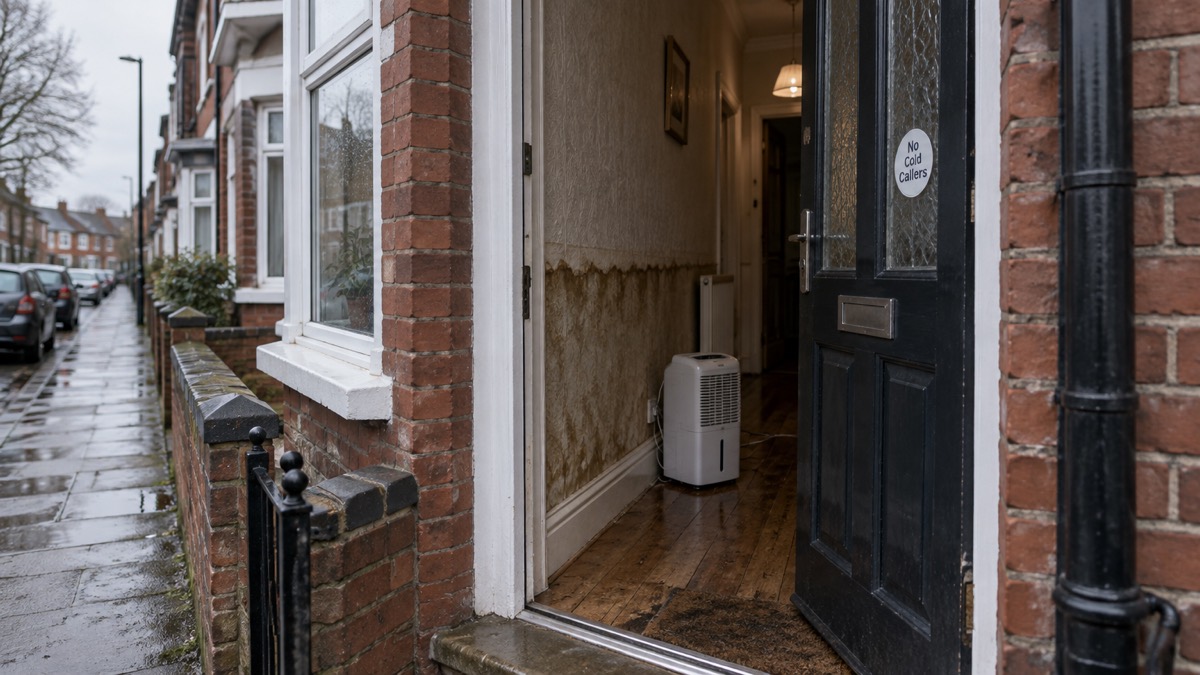
When your home has flooded, the pressure to get repairs started is enormous, and that is exactly the moment rogue traders look for. The single most important step is to speak to your insurance company before you agree to any repairs, because work begun before you contact them may invalidate your claim1. Then slow everything down: check identification, get several written quotes, check trade body approval or certification, and do not feel pressured to commit on the day2.
Official guidance is consistent across the UK on the basics. Do not let someone who appears at your door unannounced carry out the work, always use reputable building contractors, and do not pay in advance3. Get three quotes and double check them, and do not pay for the work before it has been done4. Be aware of rogue traders calling door to door offering repair works, and of tradespeople recommended on social media5.
This page sets out what to do in the order you need it: protect the claim first, recognise the warning signs, check who you are dealing with, compare written quotes, and keep money and signatures off the doorstep. If you have not yet returned to the property, start with After a Flood: Returning Home Safely and come back here before you commission any work.
Speak to your insurance company before agreeing to any repairs
The order of events matters more than anything else on this page. Contact your insurance company as soon as you can, because they may be able to provide financial assistance for blowers and skips and recommend reputable contractors6. Speak to them before engaging any company offering to repair flood damage1. For anyone unsure of their insurance status, the National Flood Forum or the Association of British Insurers can be contacted for support7.
Until you have made that contact, keep damaged items and avoid undertaking repair works, as you may invalidate your claim1. The same advice appears in easy read form: keep damaged items and do not do any repairs to your house until you have spoken to your insurance company8. Make sure you have spoken to your insurers before removing or disposing of anything9. If you are insured, get advice on repair work only from reputable companies with your insurance company's approval10.
There is a practical reason beyond the claim itself. Insurers may recommend contractors they already know, which removes much of the guesswork about who to trust. If you are not insured, the picture is different: official guidance for uninsured properties is to use local businesses where possible1. The Recovery Grants and Help If You Are Not Insured page covers the support routes, and Making an Insurance Claim After a Flood walks through the claim itself.
Door-to-door callers and social media recommendations: the warning signs
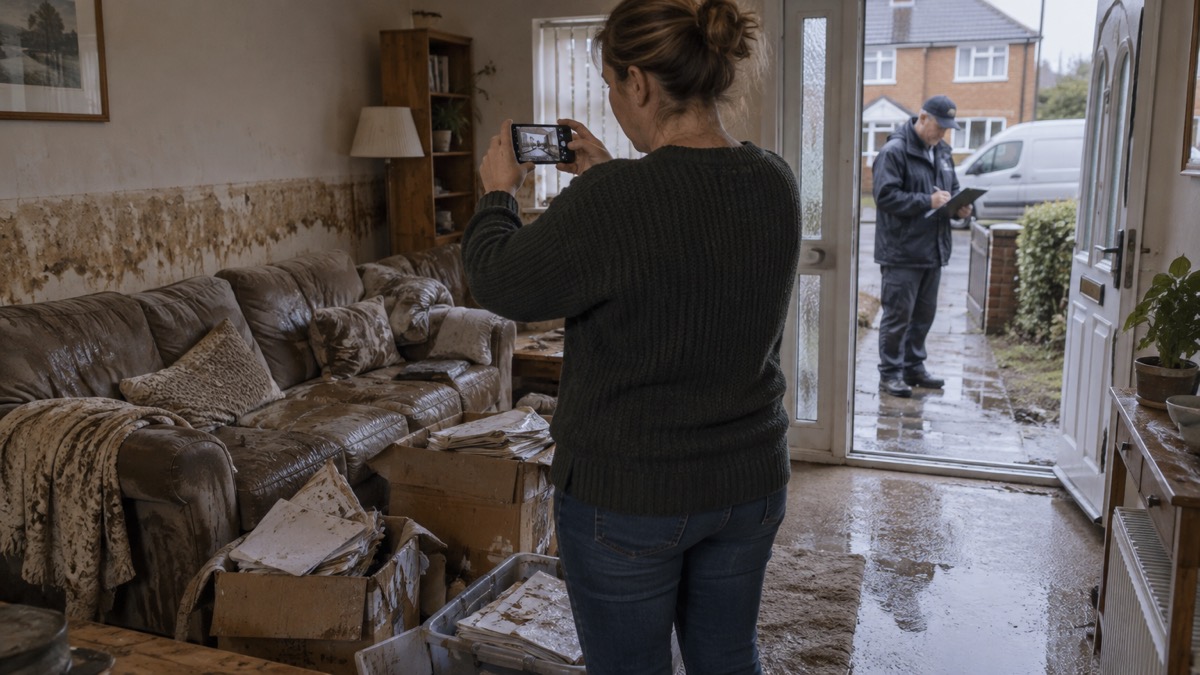
Rogue traders after a flood tend to share a style. Official guidance warns of traders and insurance management companies who appear from nowhere or "out of the blue", or who offer a "quick fix" to a problem8. Councils repeat the warning: beware of bogus trade people calling door to door, always check references and do not pay in advance9. Be aware of rogue traders or people calling door to door and offering repair works, or tradespeople recommended on social media, and choose a trader that is part of the Buy With Confidence scheme5.
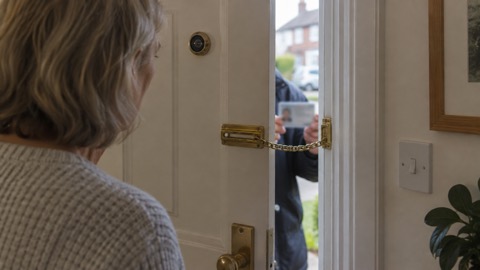
Doorstep callers can be more than a nuisance. If you need to leave your property, make sure it is left secure to reduce the risk of burglars breaking in, and be careful of doorstep callers who may trick or steal from you by asking to turn off water or check the electricity11. That specific trick, a stranger at the door offering to shut off your utilities, is worth recognising before it happens.
The warning signs, gathered in one place:
- They arrived unannounced. Someone who appears at your door offering to carry out flood repairs is the pattern official guidance warns against3.
- They offer a quick fix. Beware of companies offering a "quick fix" solution1.
- They appear out of the blue. Traders and insurance management companies who appear from nowhere are named in official advice8.
- They want a decision now. Do not feel pressured to commit on the day2.
- They want money up front. Do not pay in advance3.
- They came via a social media recommendation. Treat this with the same caution as a cold call5.
None of this means every trader who knocks is dishonest. It means the doorstep is the wrong place to make a decision about thousands of pounds of work on your home. Take a leaflet, say you will think about it, and check.
Check identification, references and trade body membership
Before anyone works on your home, check who they are. Official guidance is to always check identification, get several quotes for any work, and check trade body approval or certification2. Belfast City Council adds references and previous work to that list: check identification, references and previous work, and get three quotes4.
A simple sequence works well:
- Ask for identification and check it. Always check identification before discussing work2.
- Ask which trade body or approval scheme they belong to. Check trade body approval or certification2. One council names the Buy With Confidence scheme as a scheme to look for5.
- Ask for references and details of previous work. Check references and previous work before agreeing anything4.
- Check the scheme directly. Contact the scheme yourself rather than relying on a logo or a card.
- Read independent advice. Read information from Citizens Advice about finding a trustworthy trader before choosing a trader to carry out repairs after flooding12.
For electrical work specifically, the bar is higher. Have any installations or electrical equipment that has been flood damaged checked by an approved electrical contractor before use, and contact your electricity supplier about concerns with supply up to the meter13. The Is It Safe to Turn the Electricity Back On? page covers that in more detail.
If you are considering a formal survey before commissioning repairs, Natural Resources Wales suggests that if you live in a flood risk area or have flooded before, you might consider getting a chartered surveyor to carry out a flood survey showing where flood water might enter, how fast it will flow and where it could cause the worst damage14. That is a separate professional relationship from a repair contractor, and the Property Resilience Surveys and Professional Installation page explains how it fits with repair work.
Get several written quotes for any work
The number that matters is three. Get three quotes and double check them4. Obtain several written quotes for any work15. Getting several quotes for any work is part of the standard checklist alongside checking identification and trade body approval2.
Why written quotes rather than verbal estimates? Because a written quote is a document you can compare, question and keep. It lets you see whether two traders are pricing the same scope of work, and it gives you something to show your insurer. Double checking means reading what is actually included: what is being removed, what is being replaced, and what is excluded.
| What to compare | Why it matters |
|---|---|
| Scope of work | Two quotes only compare if they cover the same job4 |
| Who does the work | Check identification, references and previous work4 |
| Trade body approval | Check approval or certification before choosing2 |
| Payment terms | Do not pay for the work before it has been done4 |
| Insurance approval | Get advice on repair work only from companies with your insurer's approval10 |
A quote is also a chance to test how a trader behaves. Someone who is happy to put everything in writing, wait while you check, and answer questions about certification is showing you how they will handle a problem later. Someone who resists any of that is telling you something too.
Never pay in advance or sign on the doorstep
The clearest rule in the official guidance is about money. Do not pay for the work before it has been done4. Do not pay in advance3. Do not pay in advance9. Three councils, the same instruction.
The second rule is about signatures. Do not feel pressured to commit on the day2. A doorstep is not a place to sign a contract, and a trader who will not leave paperwork with you for a day is not giving you a fair chance to read it. If you are asked to sign there and then, the safe answer is that you will consider it and come back to them.
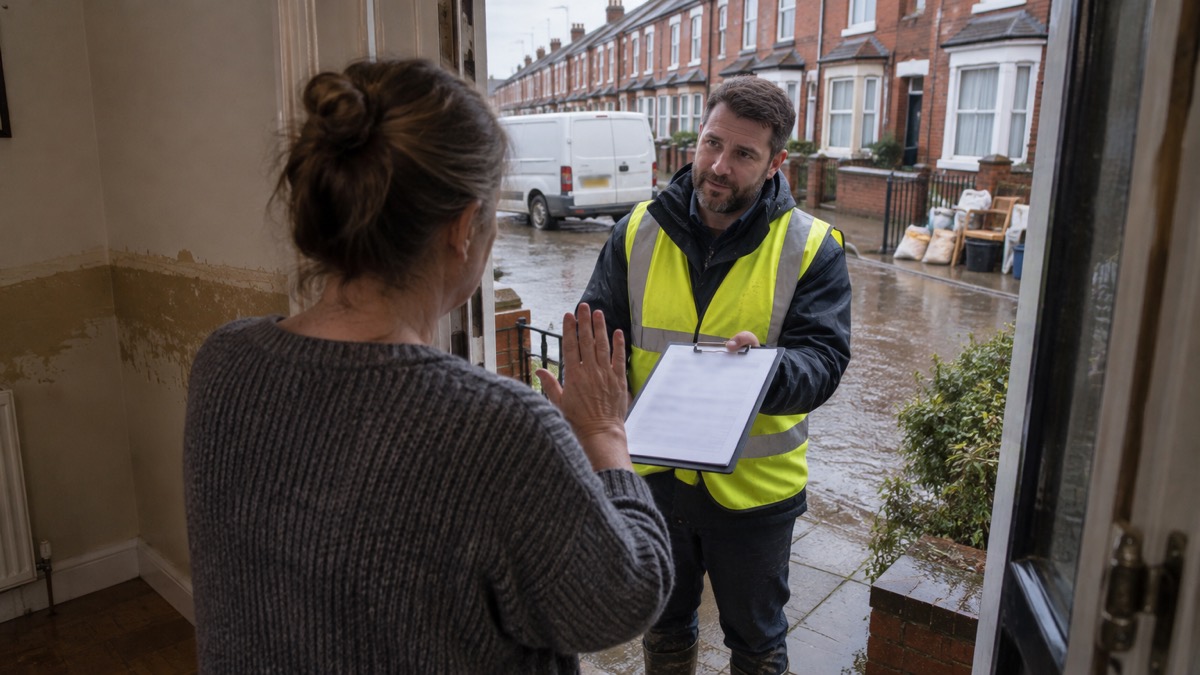
There is a wider safety point about who is in your home while it is damaged. If you are clearing up yourself while waiting for repairs, wear rubber boots, waterproof gloves and an apron12, and avoid contact with flood water as much as possible to reduce the risk of drowning and infection16. Make sure the property is safe before you enter17. None of that changes because a trader is standing in the doorway.
If you are worried about a trader's conduct, or about a company that has taken money and not done the work, your council's trading standards service is the usual route, and Citizens Advice can advise on finding a trustworthy trader in the first place12. Keep any paperwork, leaflets and messages.
If you are feeling pressured, slow it down
Pressure is the tool of the rogue trader, and the antidote is time. Official guidance is explicit that you should not feel pressured to commit on the day2. You are allowed to say no, to say you will think about it, and to shut the door.
A few practical habits help:
- Have someone with you. Ask a friend, relative or neighbour to be present for quotes and doorstep conversations. Official guidance already asks households to check on neighbours, relatives or others who may need extra support after a flood18, and the same neighbourly principle works when you are the one who needs a second pair of ears.
- Keep the property secure. If you are staying elsewhere, make sure the property is left secure to reduce the risk of burglars11.
- Write things down. Note who called, when, what they offered and what they asked for.
- Use local businesses where possible if you are uninsured1.
- Check in with your insurer before anything is agreed1.
If a trader says they will return later, that is not automatically a warning sign. What matters is whether they are willing to put the work in writing, let you check references and certification, and wait for payment until the work is done4. A genuine trader will come back. A rogue one will push for a decision now.
Where to get help and report a problem
Help is available at each stage. Your insurance company is the first call, and they may recommend reputable contractors and help with blowers and skips6. If you are unsure of your insurance status, the National Flood Forum or the Association of British Insurers can be contacted for support7. Citizens Advice can advise on finding a trustworthy trader12. Your council's trading standards service handles complaints about trader conduct.
For the wider recovery picture, the Flooding: A Household Guide section page sets out the full sequence, and Cleaning Up Safely After Floodwater covers the work you can safely do yourself while you wait for a contractor. If the flood has affected your health or your household's wellbeing, Floodwater and Your Health and Mental Health After a Flood: Where to Get Support are the places to start.
Arrangements differ slightly across the UK. In Scotland, official guidance includes checking on neighbours, relatives or others who may need extra support after a flood18. In Northern Ireland, Belfast City Council publishes the check identification, references and previous work advice4. In Wales, Natural Resources Wales publishes the speak to your insurance company first checklist2. In England, the same core messages appear in council and government guidance1. The principles are the same wherever you are: insurer first, checks before commitment, quotes in writing, and no money up front.
Sources (18)
- Advice for homeowners affected by flooding, Nottinghamshire County Council, 2026-10-29
- What to do after a flood, Natural Resources Wales, 2026-10-29
- Flooding support, Lancashire County Council, 2026-10-29
- Flooding advice, Belfast City Council, 2026-10-29
- Flood recovery leaflet, Nottinghamshire Local Resilience Forum, 2025
- Be prepared: flooding, Lancaster City Council, 2026-10-26
- How to recover from flooding, UK Health Security Agency, 2023-12-19
- Flooding advice for homeowners (easy read), Nottinghamshire County Council, 2025-11-02
- Flood recovery information for Suffolk, Suffolk County Council, 2026-10-29
- Flooding advice, Mid and West Wales Fire and Rescue Service, 2026-10-29
- Staying healthy and safe after flooding, Surrey County Council, 2026
- Flood advice, City of York Council, 2026-10-29
- Information about specific safety concerns, Northumberland County Council, 2026-05-21
- Preparing for a flood, Natural Resources Wales, 2026-10-29
- After a flood: flood recovery leaflet, Tewkesbury Borough Council, 2023
- Report a flood in Suffolk, Suffolk County Council, 2026-10-29
- Flooding aftercare in Runnymede, Runnymede Borough Council, 2026-10-26
- Flooding, Ready Scotland, 2026-03-24
 After a Break-In Checklist
 Holiday Security Checklist
 Moving Home Locks Checklist
 When to Call 999 or 101
 Reporting a Burglary Anonymously
 Doorstep Caller Will Not Leave
 Car Running While De-Icing
 Checking a Doorstep Caller
 Burglary at Christmas
 Cash in a Fire Safe
 Heating Oil Tank Theft
 Making a House Look Occupied
 Police Approved Products