No. Police and fire services across the UK give the same advice: do not post details of your trip while you are away, because many criminals monitor social media looking for posts that show a home is empty. Save the posts until you get home1.
The risk is not imaginary. Housebreaking is more likely during holidays, because thieves know valuables are more likely to be inside3. A public profile makes it worse: talking about your holiday on social media could tell an opportunistic burglar that your home will be empty for a couple of weeks1. And leaving your home empty while you are away carries a higher risk of burglars targeting it2.
The good news is that the fix is simple and costs nothing. Share the photos when you are back, check what strangers can see on your accounts, and spend half an hour before you leave making the house look lived in. This page sets out what to do, in the order you need it.
Why a holiday post tells a burglar your home is empty
A holiday post is not just a photograph. It is a dated, public statement that nobody is at your address, usually with a location attached and a return date implied. Criminals look for exactly that. Police in Wales put it plainly: many criminals monitor social media, and they will search for posts about your holidays which may indicate that your home is empty2.
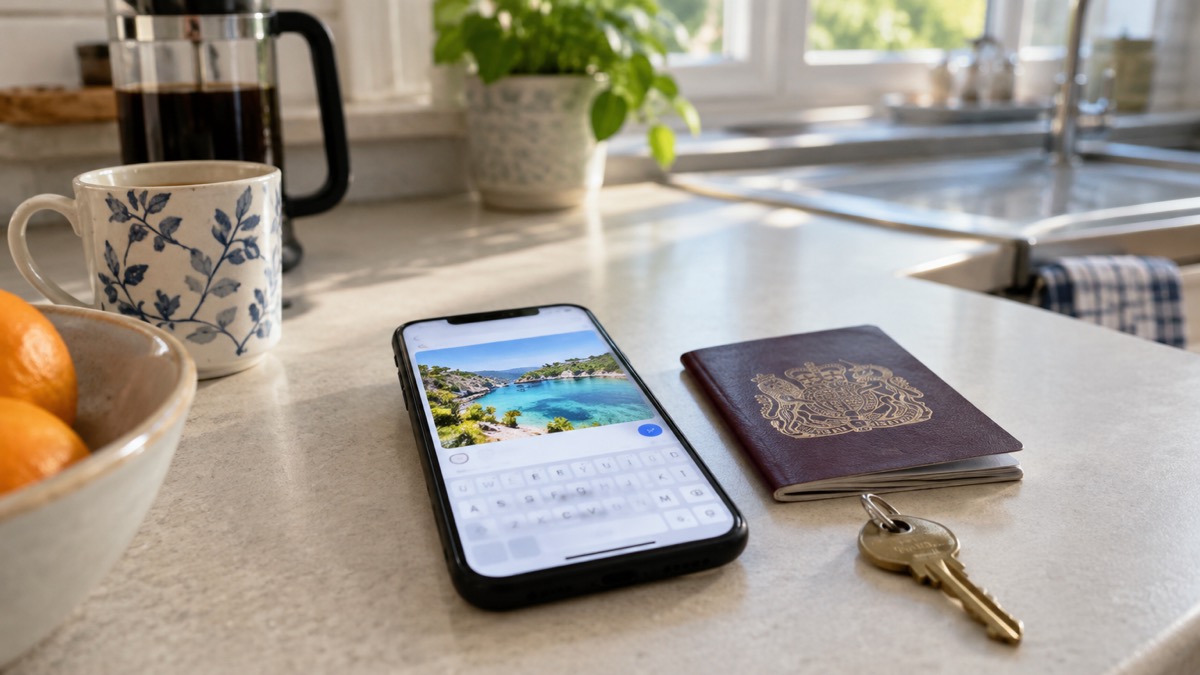
The timing matters as much as the content. A post on the first morning of a two-week trip gives a burglar a fortnight's notice. Housebreaking is more likely during holidays because thieves know valuables will be inside3. One in three festive burglaries happen because homes are left insecure5, which is a reminder that the post and the unlocked window often work together.
There is a second, quieter problem. Even a post that does not name your town can give the game away through detail: a school uniform, a street sign, a landmark, a hotel key card on the table. Police advise that even with location tags turned off, you and your children should avoid sharing other clues to location such as school uniforms and badges, street signs and landmarks6.
The practical rule is easy to remember and easy to explain to a family: the trip goes online when you get back, not while it is happening. If you want to share in the moment, send pictures directly to the people you would ring anyway.
Why a public profile matters more than the post itself
A single post is only as visible as your account allows. That is why the first thing to check is not the post but the audience. Official advice is to review your social media privacy settings to see what other internet users can see about you4, and to keep social media profiles private7.
What is visible matters because of what it adds up to. Social media can give people access to several types of personal information from what you post or from hacking your account: your name, location, workplace, friends and family, usernames and email addresses, and social groups and interests6. A burglar who can see your workplace, your family and your street does not need a location tag.
It is also worth remembering that posts are public and permanent. Even when private or deleted, posts can be shared or stay on the internet as screenshots6. Deleting a post after the event does not un-tell the story.
Two further habits help. Avoid repeating passwords for different accounts9. And if you are caught up in a cyber incident or a major IT failure while travelling, avoid creating more confusion by spreading rumours or unconfirmed information10.
Safer ways to share your holiday
You do not have to choose between sharing nothing and broadcasting an empty house. There are several middle routes, and they differ in who sees what and when.
| Approach | What it does | Suits |
|---|---|---|
| Post after you return | The house is no longer empty when the pictures appear2 | Households who want to share the trip afterwards |
| Send pictures directly | Only the people you choose see them | Sharing in the moment with family |
| Private account, checked audience | Limits who can see your posts at all4 | Accounts you use with people you do not know |
| Share warnings, not plans | Passing on official warnings helps others without revealing your plans11 | People who want to stay active online |
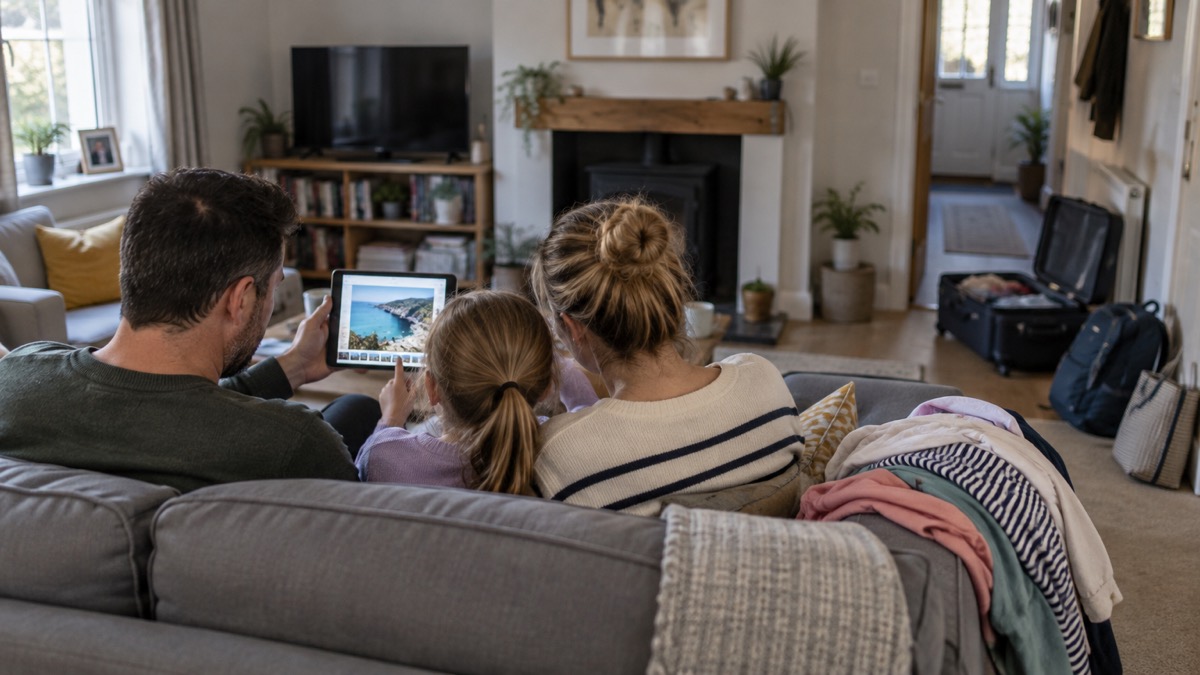
Whichever you choose, strip the clues. Police advise avoiding school uniforms and badges, street signs and landmarks even when location tags are off6. Turn the tag off as well, but treat it as one layer, not the whole answer.
Parents have an extra job. Police advise encouraging safe choices online and offline, and challenging risky behaviour that is being shared or copied on social media12. Children copy what they see, so agree the family rule before you go and apply it to everyone, including visiting relatives.
Securing your home before you go away
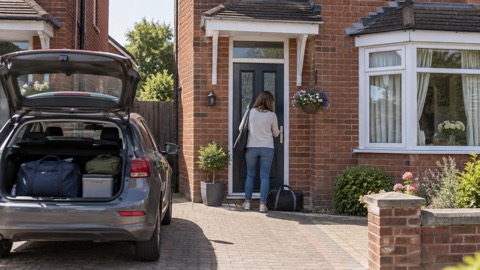
The post is only half the story. The other half is what a burglar finds when they arrive. Police advice for before a holiday is straightforward: check and lock your doors, windows, sheds and garages, put the burglar alarm on, ask someone trusted to check the house regularly and bring in bins and post, and use timers on lights1.
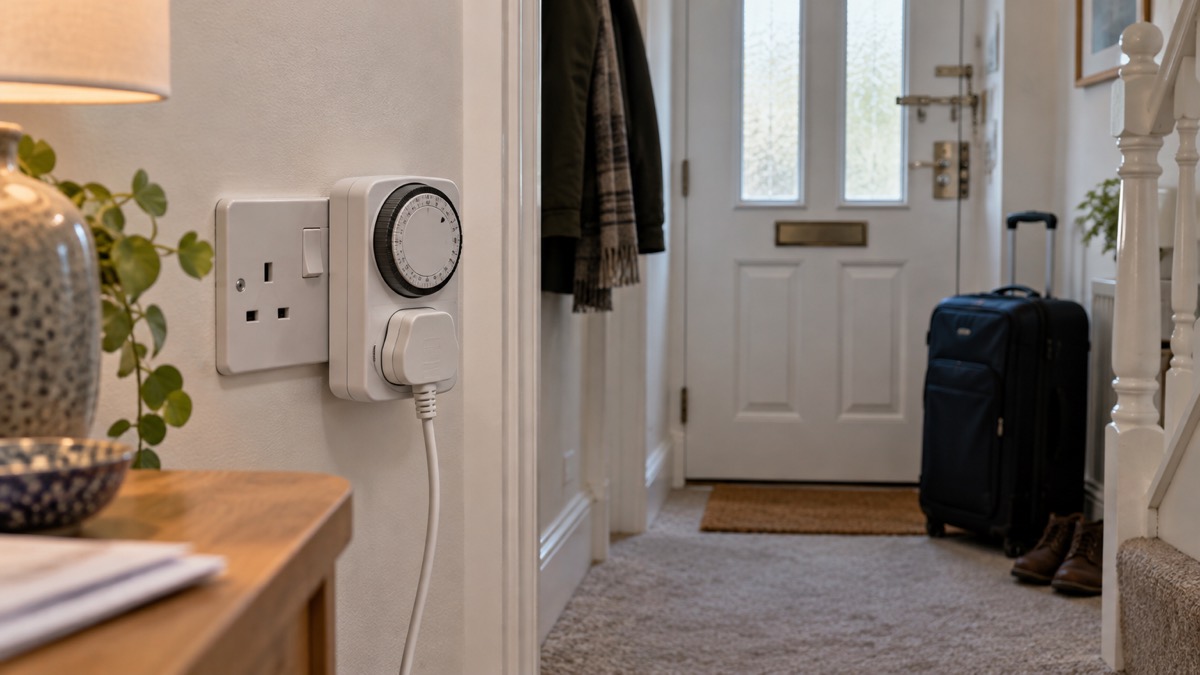
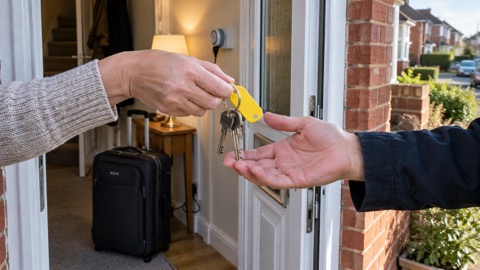
Start with the obvious. Lock doors when you leave and when you return5. Give the property an occupied look by using timer switches for lights when your home is empty5. Do not make it obvious you are not at home: leaving bins out for days or letting mail pile up is a sure sign no one is home1.
Post is the detail people forget. Ask a trusted neighbour to move your post, or ask Royal Mail to hold your letters until you return using the Keepsafe service2. Police in Scotland give the same advice: use Royal Mail's Keepsafe service to stop your post going to your house3.
A few more steps are worth the time:
- Tell the police if the house will be unoccupied. Official guidance advises informing the police if your house is unoccupied14. Use the non-emergency route, not 999.
- Report street lighting faults. A dark street can make a home look more attractive to burglars, so make sure the local authority knows about problems with the lighting2.
- Use Neighbourhood Watch. Local schemes can help when you are on holiday by increasing surveillance of your property and encouraging neighbours to report suspicious activity13.
- Mark your valuables. Police advise marking valuables with your postcode and house number, and keeping gifts and expensive items out of view15.
- Tell the people who need to know. Tell family, friends and carers where you are going, and let NHS or social care providers know if you receive visits from them16.
If you want a fuller walk-through, the holiday security checklist sets these out in order, and leaving your home while you are on holiday covers the wider routine. For the insurance angle, see home insurance conditions.
What to do if you are away and something happens
Being away does not change what you should do if something goes wrong at home, but it does change who needs to know. Tell family and friends where you are going so they know where to find you and how to contact you if something happens17. That single step means someone can act on your behalf.
If you are evacuated or have to leave accommodation while away, the same principle applies: remember to tell family, friends and carers where you are going, and let NHS or social care providers know if you receive visits from them16. If you are travelling in bad weather, tell someone where you are going and let them know when you get back18.
Fire safety does not stop at your own front door. If you are staying at different accommodation over the festive period, plan and check your escape routes and look for any potential fire risks, reporting them when necessary5. Make sure your family and visitors staying for the festive period know what to do in an emergency, and practise a fire escape plan5. If you have guests staying, share your escape plan with them19, and once you are out, stay out20.
Before you travel, find your nearest pharmacy, urgent treatment centre or minor injuries unit in advance, take plenty of regular prescribed medication, and if you are going abroad learn the local emergency services numbers22. If you are staying somewhere unfamiliar, plan and check your escape routes and look for fire risks, reporting them when necessary5.
Where to get help and advice
Most of what you need is available before you leave, from sources you can check in a few minutes.
- Your local police force publishes crime prevention advice, including pre-holiday routines and home protection. Start with the home security section for the wider picture.
- Your local fire and rescue service publishes home safety and escape planning advice, including for guests and visitors19.
- Neighbourhood Watch schemes can increase surveillance of your property while you are away and encourage neighbours to report suspicious activity13. See joining or starting a Neighbourhood Watch.
- Royal Mail's Keepsafe service holds your letters while you are away2.
- The Met Office shares weather warnings that you can pass on to family and friends or through social media, which is a useful way to be active online without revealing your plans11.
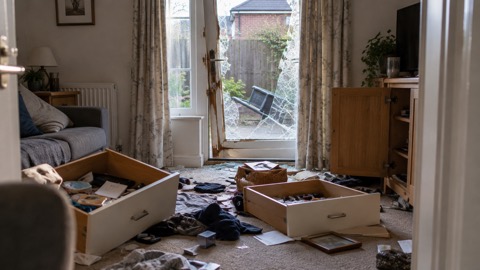
If you are going away and want to think through the whole routine, the holiday security checklist and how to make your house look occupied are the next pages to read. For the question of whether to tell the police, see should you tell the police your home will be empty. And if you come home to a break-in, what to do first sets out the first steps.
Sources (22)
- Securing your home, nidirect, 23 January 2024
- While You Are Away, Mid and West Wales Fire and Rescue Service, 29 October 2026
- Break-in and housebreaking, Police Scotland, 2 November 2026
- Risks, Surrey County Council, 28 October 2026
- Christmas safety advice, North Yorkshire Fire and Rescue Service, 15 December 2025
- Social media safety, Police Scotland, 2 November 2026
- Respond: cyber incident, Ready Scotland, 26 March 2026
- Cyber security, Essex Prepared, 29 October 2026
- Hacked accounts, Police Scotland, 3 November 2026
- Personal resilience, Scottish Borders Council, 29 October 2026
- Community resilience, Met Office, 25 October 2026
- Light nights campaign, North Yorkshire Fire and Rescue Service, 10 June 2026
- Get into a pre-holiday routine, Avon and Somerset Police, 2 November 2026
- Be prepared, Lancaster City Council, 26 October 2026
- Christmas Safety Advice | PSNI, PSNI (Police Service of Northern Ireland)
- ICE template, Surrey Prepared, 29 October 2026
- Out and about, Wiltshire and Swindon Prepared, 25 October 2026
- Weather and health, Public Health Wales, 16 July 2026
- Celebrate safely, Humberside Fire and Rescue Service, 26 October 2026
- Escape plan, Scottish Fire and Rescue Service, 26 October 2026
- Terrorism public messages, Wiltshire and Swindon Prepared, 25 October 2026
- Staying safe over the summer, Healthier Together, 29 October 2026
 After a Break-In Checklist
 Holiday Security Checklist
 Moving Home Locks Checklist
 When to Call 999 or 101
 Reporting a Burglary Anonymously
 Doorstep Caller Will Not Leave
 Car Running While De-Icing
 Checking a Doorstep Caller
 Burglary at Christmas
 Cash in a Fire Safe
 Heating Oil Tank Theft
 Making a House Look Occupied
 Police Approved Products
 Reporting a Bogus Caller