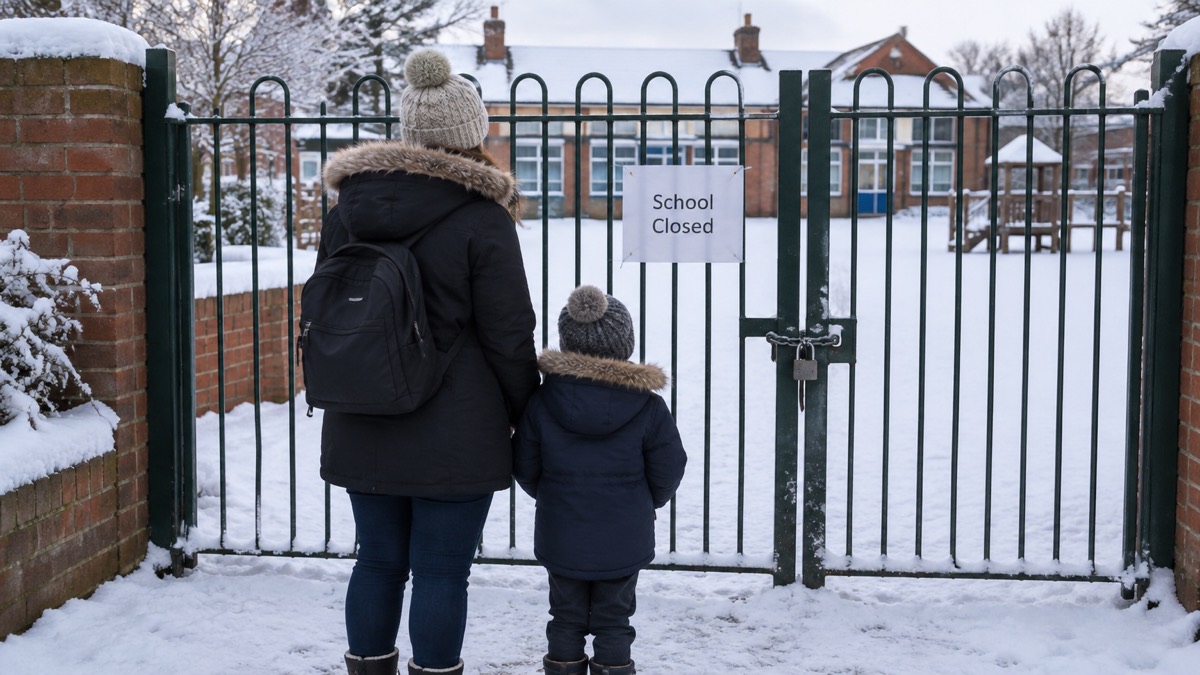
Snow rarely closes every school in an area, and it rarely closes one without warning. The first place to look is the school's own website and messages, because the head teacher is the person who generally decides whether to close1. If you are unsure whether a school is open, official guidance is blunt: look at the school's website1. If that gives you nothing, contact the school directly3.
Councils then publish a central list of the schools that have reported a closure, and many send a text or email to parents who have signed up for alerts2. Local radio and news bulletins carry closure lists and travel warnings through the morning5.
The decision itself is not taken lightly. Lewisham Council says no school will decide to close classes unless weather conditions are extreme, surface conditions make the site unsafe, or severe transport disruption prevents enough staff getting to school1. That is why a school can stay open when your own road is impassable, and why the journey, not just the school gate, is part of your decision.
Check the school's own messages first
Schools are the primary channel, and they use several at once. Cornwall Council says that if a school is closed, the school should notify you, often by text, email or messages on social media, and will also notify the council, which publishes a central list on its website3. Scottish Borders Council uses the Groupcall messaging service to notify parents about closures, with information also available on the school closures webpage, social media channels and local radio7. Angus Council may alert parents through its school closures page, by text, and via local radio8.
Text alerts only reach you if the school has the right number. Lewisham Council's advice to parents is to make sure your child's school has your most up-to-date contact details1. Do that now, before winter, rather than on the morning of the first snowfall.
If the messages are unclear, ring the school. Cornwall's guidance is to contact the school directly if you are unsure whether it is open3. Northumberland Council points parents to its Alerts Page for updates on school closures and transport disruption9.
Your council's school closures page
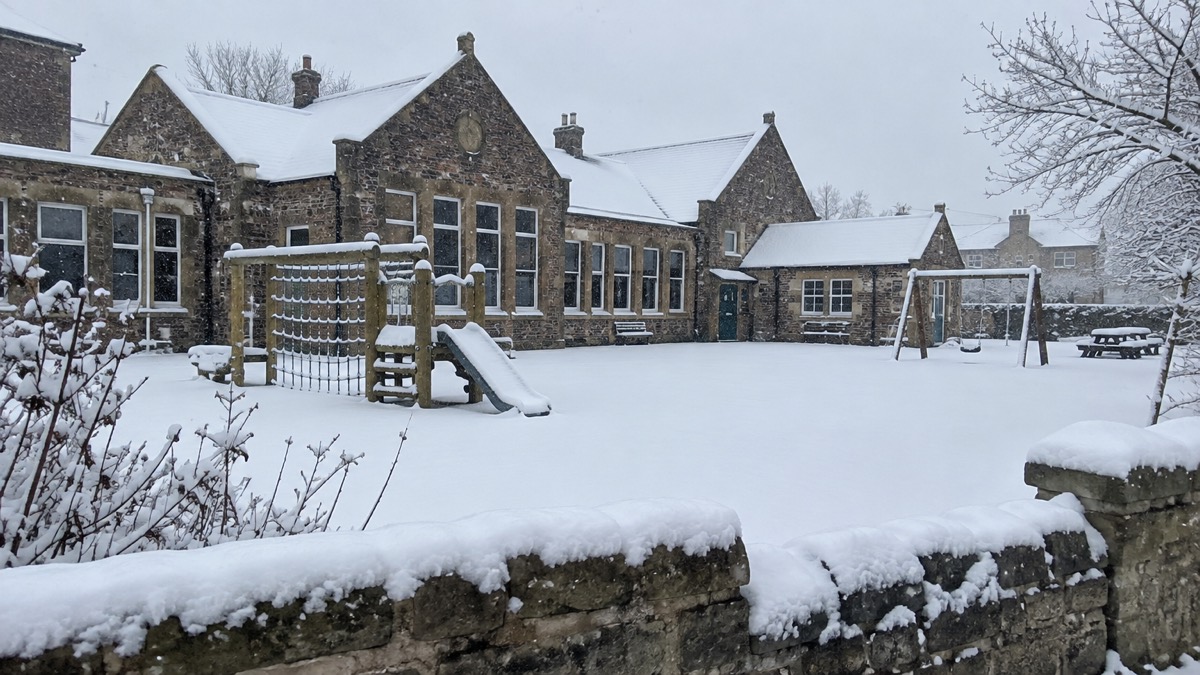
Councils publish a list of schools that have reported a closure, and it is usually the fastest way to see the whole picture in your area. Cumberland Council says a list of schools that are closed can be found on the council website10. Cornwall says that if schools are closed due to bad weather they will be listed on the school closures page11. Lancashire County Council asks residents to check its site for unavoidable closures to schools, libraries, recycling centres or museums during cold weather and snow6.
Some councils point you back to the school. Surrey County Council's advice is to refer to the school's website to check if your child's school is closed4. Anglesey says you can visit the school's website or the council's Facebook page, and notes that you do not need a Facebook account to see the information12.
The arrangements differ across the UK, so use the right one:
| Nation | Where closures are published |
|---|---|
| England | The school's website and messages, plus the local council's school closures page1 |
| Wales | The school's website or the local authority website; head teachers generally decide13 |
| Scotland | The council's school closures webpage, Groupcall messages, social media and local radio7 |
| Northern Ireland | Check with the school directly; no separate closure channel is set out here |
Local radio and news closure lists
Radio still earns its place on a snow morning, because it reaches you when the power is off or the mobile signal is patchy. The South Western Ambulance Service advises listening out for local news bulletins to keep up to date with road closures, flooding and forecasts5. Staffordshire County Council's winter driving guidance is to listen to local and national radio for travel and weather information14. North Wales Fire and Rescue Service says travel warnings are broadcast on local TV and radio, and points drivers to the North Wales Police website for the latest on road closures15.
In Scotland, NHS Inform advises checking any National Severe Weather Warnings covering your area and following any advice given, and listening to local radio for updates on current weather conditions16. Mid and West Wales Fire and Rescue Service gives the same advice: check local and national weather forecasts before you set off, and listen to local radio for the latest weather and traffic updates17.
Keep the frequencies and station names written down where you can find them without a phone. The Met Office's winter checklist includes keeping key information and phone numbers to hand18. If a closure is announced during the school day, radio may be one of the channels used: Angus Council says it may alert parents via its closures page, by text and via local radio8.
When the school is open but the journey is not safe
This is the decision most parents actually face. The school gates are open, but the pavements, the bus or the side roads are not safe. The starting point is that the judgement is yours. Scottish Borders Council says that where schools are open in bad weather, parents ultimately have the responsibility to decide whether or not to send their children7.
School transport adds a layer. Scottish Borders says school bus drivers have discretion to cancel or vary a route if local weather conditions make it necessary19. Where a driver decides the journey is unsafe, it is at the parents' discretion whether they take the child to and from school themselves19. Transport not running does not automatically mean the school is closed, and parents who take their child in must also collect them at the end of the day20. Oxfordshire County Council relies on school transport operators to judge whether they can safely transport children, so contact the operator directly with queries and check the school closures page21.
If a vehicle is caught out, Cornwall's severe weather procedures say that where a vehicle can move and it is safer to return to the school than continue home, providers are encouraged to do so, and schools should keep a member of staff on site for a reasonable length of time. If the vehicle cannot move at all, students should remain in the vehicle where it is safe to do so, and providers should inform parents and schools as soon as possible3.
Before you set off at all, the Met Office advises planning your route, checking for delays and road closures, leaving more time to prepare and checking your car, including wipers, tyres and screenwash22. West Yorkshire Prepared's simple rule for snow and ice is to avoid travel if possible23. For the road itself, see driving in snow and ice and should I delay my journey.
Remote learning and what happens on a snow day
A closure does not always mean a lost day. Scottish Borders Council says closed or partially open schools allocate work electronically through the school website, GLOW or in pre-prepared packs7. Ask your child's school what it does, and where the work will appear, before the first snow.
Plan for the day itself as a household. Cold weather and snow can last for several days or even weeks, causing travel disruption, damage to power lines and water supplies, school closures, and risking the health of the elderly and vulnerable24. Heavy snow can reduce the movement of people, disrupt deliveries of food, drink and fuel, delay emergency service responses, cause power outages from snow on power lines, and lead to snowmelt flooding25. If the power goes while everyone is at home, keep windows and doors closed to prevent heat loss, and open internal doors only as needed, closing them behind you26.
A few practical points for a snow day:
- Have a plan for keeping warm if the heating fails; see getting your home ready for cold weather.
- Keep windows and doors closed to prevent heat loss, opening internal doors only as needed and closing them behind you23.
- Avoid travel if possible while snow and ice last25.
- Expect cold weather and snow to last several days or even weeks, and be ready to be without food, heat or light for a number of days if cut off26.
If the school closes during the day
A closure announced mid-morning is the hardest case, because children may already be on their way or in class. Northumberland Council warns that in extreme weather a school may close and your child may be sent home early9. That makes your contact details and your collection plan the things that matter most.
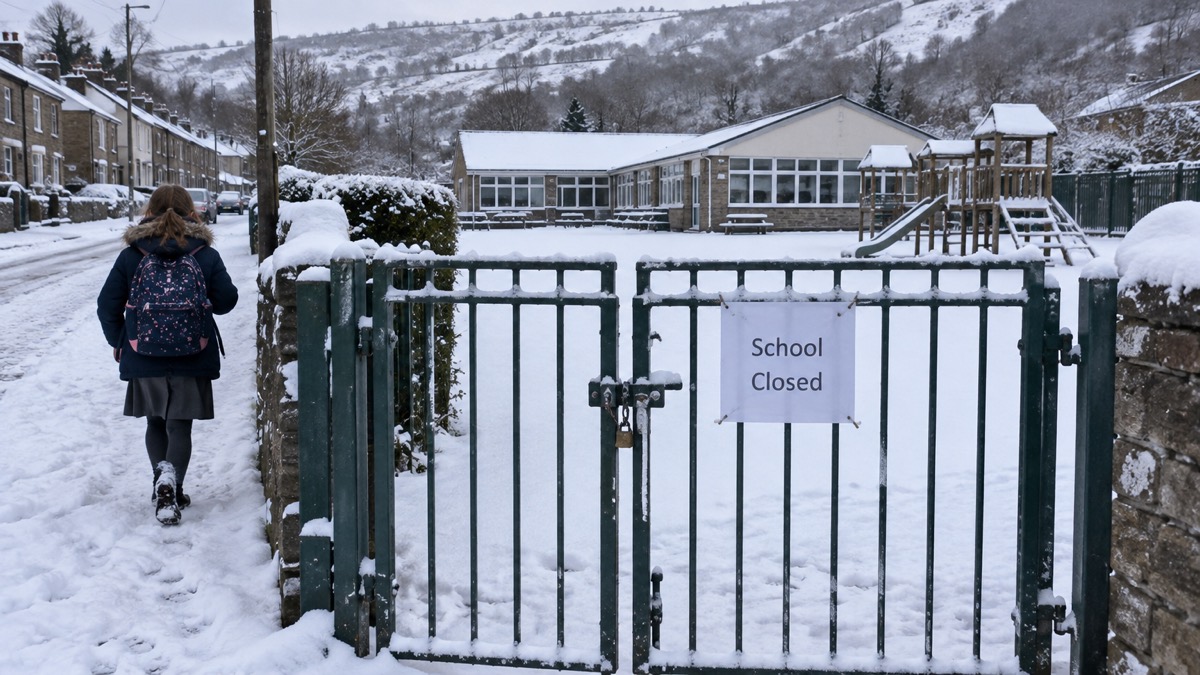
Make sure the school can reach you during the day, and that your child knows what to do if you are not there at the usual time1. If school transport is involved, the operator should inform parents and schools as soon as possible when a vehicle cannot move3. Angus Council's approach is to use a variety of methods to alert parents to a closure during the school day, including its closures page, text and local radio8.
If you drive to work, the Dorset and Wiltshire Fire and Rescue Service advises trying to plan to work from home, particularly if you live in a rural area27. That single step removes most of the mid-day scramble. For the wider picture on travel and closures, see travel disruption and council help in severe weather.
Sources (27)
- Emergencies at school, Lewisham Council, 2026-09-14
- Emergency school closures, Staffordshire County Council, 2026
- Severe weather procedures for student travel, Cornwall Council, 2026-10-29
- School closures, Surrey County Council, 2026-10-28
- Winter travel and driving safety advice, South Western Ambulance Service NHS Foundation Trust, 2026-10-29
- Cold weather and snow, Lancashire Prepared, 2026-10-29
- Winter and gritting FAQs, Scottish Borders Council, 2026-10-29
- Emergency school closures and transport updates, Angus Council, 2026
- Information for parents during periods of severe weather, Northumberland County Council, 2026-02-26
- Snow, ice and winter ready advice, Cumberland Council, 2026
- Snow and Ice in Cornwall - Cornwall Council, Cornwall Council
- Winter ready, Isle of Anglesey County Council, 2026-10-25
- Winter weather advice, Welsh Government, 2026
- Winter driving, Staffordshire County Council, 2026
- Driving in snow, North Wales Fire and Rescue Service, 2026-10-29
- How to stay safe in cold weather, NHS Inform, 2026-09-21
- Winter driving, Mid and West Wales Fire and Rescue Service, 2026-10-29
- WeatherReady winter poster, Met Office, 2026-10-28
- Winter and gritting FAQs, Scottish Borders Council, 2026-10-29
- School closures | Winter and gritting frequently asked questions | Scottish Borders Council, Scottish Borders Council
- Salting and snow clearance, Oxfordshire County Council, 2026
- Stay safe in snow, Met Office, 2026-10-25
- Severe weather, West Yorkshire Prepared, 2026-10-29
- Snow and ice, Essex Prepared, 2026-10-29
- Low temperatures and heavy snow, Dorset Prepared, 2024-03-14
- Be prepared, Lancaster City Council, 2026-10-26
- Driving in snow and icy conditions, Dorset and Wiltshire Fire and Rescue Service, 2026-01-02
 Car Checks Before Winter
 Flood Warning Checklist
 First Steps After a Flood
 Bedroom Temperature at Night
 Hitting Black Ice
 Car Battery in Winter
 Car Stuck in Snow
 Clearing Snow and Ice Safely
 Clearing Snow from Pavements
 Using Fog Lights
 Signs of Frostbite
 Falling Through Ice
 De-Icing a Frozen Windscreen
 Request or Refill a Grit Bin
 Overtaking a Gritter