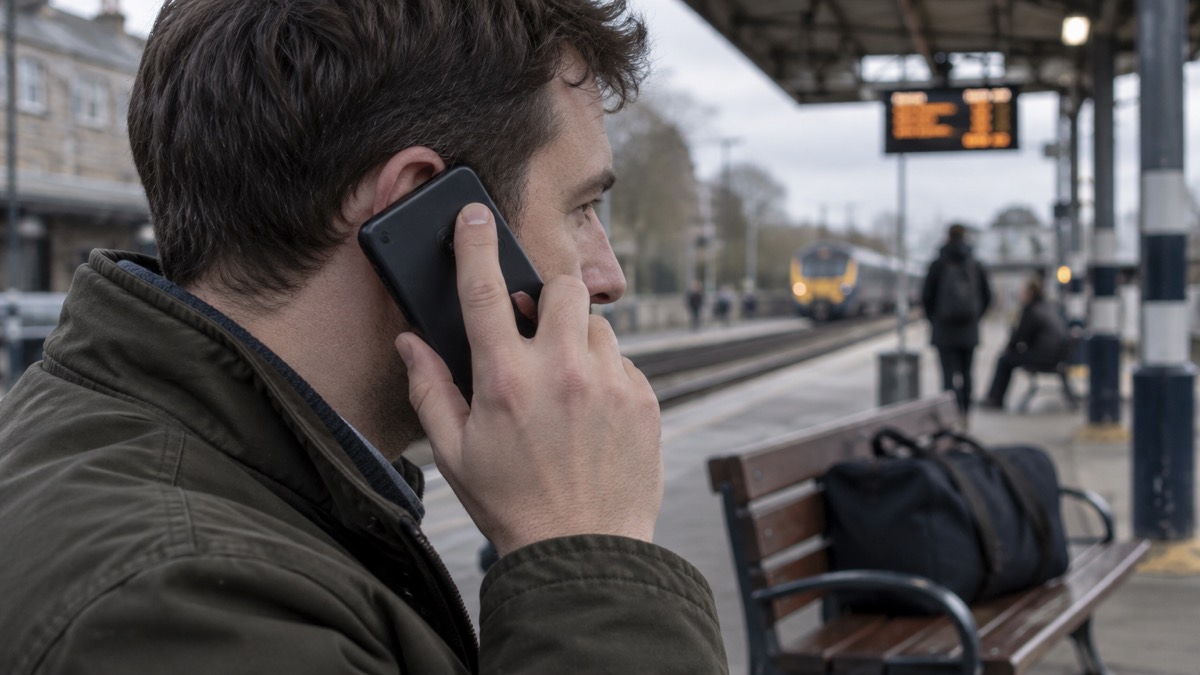
If you have seen or heard something that could be terrorist related, the police ask you to trust your instincts and report it. In an emergency, or if you need urgent police assistance, always dial 999, or call the police anti-terrorist hotline on 0800 789 321 to report an immediate terrorist threat1. If there is no immediate danger, you can report suspicious activity in confidence by calling the Anti-Terrorist Hotline on 0800 789 321, or online and in confidence at gov.uk/ACT2.
You do not need to be certain. Counter-terrorism police are explicit that you should report anything that doesn't feel right, and that you should not be concerned about wasting police time: specially trained officers and police staff take the details and pass them on for further checks, the information is kept secure and your identity is protected3. Your call to the hotline will be handled by specially trained officers who will treat it in confidence4.
Call 999 if there is an immediate threat
If you or someone else is in immediate danger, call 9999. That applies to a terrorist threat as much as to any other emergency: gov.uk advises calling 999 or the police anti-terrorist hotline to report an immediate terrorist threat1, and the national terrorism preparedness guidance tells you that in an emergency you can report any activity you deem to be suspicious to your local police force using 9994. If someone is in immediate danger, call 999 or 112; both numbers reach the emergency services from a mobile phone10.
Use 999 when something is happening now, or is about to: a person attacking or threatening people, a suspicious item that appears to be a bomb, or a bomb threat. All bomb threat communications are a crime and should be reported to the police by dialling 99911. If you are caught up in an attack itself, follow Run, Hide, Tell: run to safety if you can, hide if you cannot, and tell the police by calling 999 when it is safe to do so5.
One instruction from the official bomb threat guidance is absolute: under no circumstances should any item assessed as suspicious be touched or moved in any way. Once an item is declared suspicious by a competent person, evacuate immediately and dial 99911. Keep your distance, warn others away, and let the police take it from there. Our page on unattended or suspicious items explains the HOT protocol and safe distances in detail.
Trust your instincts and report anything that doesn't feel right
The single most repeated instruction in UK counter-terrorism guidance is to trust your instincts. ProtectUK, the national police security website, puts it plainly:
"If you've seen or heard something that could potentially be related to terrorism, trust your instincts and report it."12
The same message runs through every official channel. The RUN HIDE TELL leaflet tells you that if you see or hear something that could be terrorist related, trust your instincts and call the Anti-Terrorist hotline5. Police Scotland's advice is that if you see anything suspicious, report it: it could save lives13. West Yorkshire's preparedness guidance adds that your information may be vital7. The Metropolitan Police have urged the public and businesses to be alert but not alarmed and to report anything suspicious14.
Two points matter here. First, you are not being asked to investigate or to be sure. Guidance prepared for schools and young people makes the principle general: it is not your responsibility to decide why someone is behaving as they are; if you find someone's behaviour suspicious, just report it so the police can investigate8. Second, you are not being asked to live in fear. "Alert but not alarmed" is the official framing, and it is the right one: go about your life, and pass on anything that doesn't sit right14.
Friends and family are often best placed to spot the signs, particularly where someone may be being drawn towards extremism. The ACT Early campaign asks friends and family to trust their instincts and tell the police their concerns in confidence12. If you are worried about someone you know rather than something you have seen, our page on radicalisation covers the signs and where to get help.
What counts as suspicious behaviour
Counter-terrorism police group the activity they want reported into broad types. They ask you to report any of the activity below if you believe it to be suspicious or it causes a threat15.
| Type of activity | Examples the police ask you to report |
|---|---|
| Suspicious or worrying behaviour | Someone who travels but is vague about where they are going; someone with multiple passports in different names; someone who looks at extremist material, or shares or creates content that glorifies terrorism; somebody promoting hateful ideas or extremist views3 |
| Gathering materials or equipment | Someone receiving deliveries for unusual items; unusual commercial vehicle hire or sales; buying large amounts of chemicals, fertilisers or gas cylinders for no reason15 |
| Hostile reconnaissance | Anyone observing CCTV or security arrangements, or taking photos of entrances and exits of specific buildings15 |
| Financing | Unusual bank transactions, or someone who has suddenly come into a lot of money for no reason15 |
| Storing dangerous materials | The police list this among the types of activity to report if you believe it to be suspicious or it causes a threat15 |
Hostile reconnaissance deserves a word, because it is the stage at which an attack is being planned rather than carried out. Someone filming or photographing security cameras, staff entrances, barriers or exit routes of a specific building, or timing how long a guard takes to patrol, is the classic example. It can look harmless, which is exactly why the police want to hear about it15.
When you report, the more precise your description, the more useful it is. The Police Service of Northern Ireland's Protect Yourself booklet suggests a mnemonic for recording suspicious activity, SALUTE16:
- Situation: what is happening
- Activity: what the person is doing
- Location: where
- Unit: who is involved, and how many
- Time: when you saw it
- Equipment: anything they have with them16
Write it down as soon as you can, before details fade. If you are reporting during an attack rather than before one, the police teaching guidance sets out what to tell the call handler: location, where the suspects are; direction, where you last saw them; descriptions, numbers and features; and further information such as casualties, injuries, entrances and exits8.
Suspicious vehicles and packages
Unattended bags should always be considered to be suspicious and reported immediately8. The same guidance lists other warning signs for items: things deliberately hidden, items showing wiring or batteries visible, items that have been taped up, and items that are simply not typical of the location8. A rucksack left on a platform, a package stuffed behind a bin, a case with wires protruding: report it, do not approach it, and never touch or move it11.
Vehicles matter too. Unusual commercial vehicle hire or sales, and vehicles receiving or delivering unusual items, are among the activities the police ask about under gathering materials or equipment15. A vehicle parked where it should not be, left running unattended, or being loaded with odd cargo at odd hours is worth a call.
For post, the PSNI booklet advises treating a letter as suspect if it is more rigid than expected, for example if it contains cardboard or metal, as it may explode on opening16. Our page on suspicious letters and parcels covers what to do at home, and our bomb threat call page covers what to record if someone phones in a threat.
Anti-Terrorist Hotline: 0800 789 321
For anything that could be terrorist related but is not an immediate emergency, the Anti-Terrorist Hotline is the dedicated number: 0800 789 321. It is confidential, free to call, and staffed around the clock by specially trained officers4. You can report suspicious activity by contacting the police in confidence on 0800 789 3213, and the same number is given by police forces and resilience partnerships across the UK: Lancashire's guidance gives the anti-terrorist hotline on 0800 789 32117, West Yorkshire's gives the anti-terror hotline 0800 789321 alongside 1017, and Police Scotland advises calling the counter-terrorism hotline on 0800 789 32113. The number is the same in every nation of the UK.
What you get when you ring is not a switchboard but specialists. Your call will be handled by specially trained officers who will treat it in confidence4. They will take the details you have, ask questions to draw out what matters, and pass the information on for further checks3. You do not need a name, a crime or a theory; a description of what you saw, where and when, is enough to start with.
If you are unsure whether your concern is "urgent enough", the dividing line is simple and is stated in the official guidance: in an emergency, or if you need urgent police assistance, always dial 999; for everything else that could be terrorist related, use the hotline or the online form3.
Reporting online in confidence at gov.uk/ACT
You can also report online, and in confidence, at gov.uk/ACT2. Counter-terrorism police promote the secure online form as an equal route to the hotline: if you see or hear something that doesn't feel right, report it online and in confidence at gov.uk/ACT2, and West Yorkshire's guidance likewise points to the secure online form at gov.uk/ACT as an alternative to ringing7.
The online route suits people who would rather write than talk, who want to set out details at their own pace, or who have something to report that is not time critical: a pattern noticed over weeks, a social media account, a purchase that struck you as wrong. The official guidance is simple on this point: if you see or hear something that doesn't feel right, report it online and in confidence at gov.uk/ACT2.
The online form is not for emergencies. If police assistance is needed urgently, dial 9993. It is also not the route for terrorist material you find online, such as videos or posts glorifying terrorism; that is reported differently, and our page on reporting terrorist content online explains how. For suspicious emails and phishing, which are a different kind of threat, forward them to the National Cyber Security Centre's Suspicious Email Reporting Service at report@phishing.gov.uk18, and forward suspicious text messages to 7726, a free service19.
What happens after you report
Many people hold back from reporting because they do not know what follows, or they fear being drawn into something. The official guidance addresses both worries directly. Specially trained officers and police staff take the details you give and pass them on for further checks. The information you provide is kept secure and your identity will be protected. And you are told, in terms: don't be concerned about wasting police time3.
What the police do next is theirs to decide, and it depends on what you reported. A single vague sighting may simply be logged and compared against other reports; several reports of the same person or vehicle can build a picture that no one report could. This is why the police repeat that your information may be vital7: one call rarely solves anything on its own, but it may be the piece that fits.
You will not normally hear back, and you should not expect to. The absence of a follow-up does not mean your report was ignored. When you report, specially trained officers and police staff take the details and pass them on for further checks, and the information you provide is kept secure with your identity protected3. If you used Crimestoppers, your call is anonymous: no mobile number, address or location of calls are tracked20.
Crimestoppers or the hotline: which to use
The two services do different jobs, and choosing between them comes down to what you are reporting and how anonymous you need to be.
| Anti-Terrorist Hotline | Crimestoppers | |
|---|---|---|
| Number | 0800 789 3214 | 0800 555 1116 |
| Run by | The police, with specially trained officers4 | A national organisation independent of the police17 |
| Covers | Anything that could be terrorist related3 | Information about criminal activity generally, including terrorism concerns6 |
| Confidentiality | In confidence; your identity is protected3 | Anonymous; no mobile number, address or location of calls is tracked20 |
| Emergencies | No: for an immediate threat call 9991 | No: for an immediate threat call 9999 |
For terrorism concerns, you can report suspicious activity in confidence by calling the police on 0800 789 321, or online at gov.uk/ACT2. But Crimestoppers also takes information about criminal activity in confidence, and some local guidance routes suspicious behaviour reports to both: fire service arson advice, for example, tells you to call Crimestoppers on 0800 555 111 or the police on 101 if you have information on fires started deliberately21. Other fire service guidance likewise asks anyone with information about fires started deliberately to call Crimestoppers anonymously on 0800 555 111, or ring 1016.
The National Risk Register records that if you would prefer not to call the police, you can also report fire-starting activities to Crimestoppers, and that both routes allow you to remain anonymous22. That is the practical answer to "which to use": if you are content for the police to know who you are, use the hotline or the online form; if you want to be completely untraceable, use Crimestoppers.
Reporting anonymously through Crimestoppers
Crimestoppers is a national organisation independent of the police, where you can give information free and in confidence17. Its defining feature is anonymity, and the definition is stronger than "confidential". As the Mid and West Wales Fire Service guidance puts it:
"Anonymous means that no mobile number, address, or location of calls are tracked."20
That is the difference from the hotline. A confidential police report protects your identity within the investigation3; an anonymous Crimestoppers report means the organisation itself cannot identify you, because it does not record the details that would20. If you are worried about being traced, or about a report being linked back to you by someone you know, that is what Crimestoppers exists for.
Call 0800 555 111 from anywhere in the UK6. The service covers all crime, not just terrorism: it is the route local guidance gives for deliberately started fires6, and in Wales, countryside guidance asks anyone who comes across suspicious activity in the countryside to call Crimestoppers anonymously on 0800 555 111, or ring 10120. If you see suspicious activity and would rather not call the police at all, Crimestoppers is the standing alternative22.
Reporting other kinds of suspicious activity
Not everything suspicious is terrorism, and the routes differ. A quick map:
- Crime in progress, immediate danger: call 9999.
- Crime that is not an emergency: call the police on 101. Local guidance gives 101 for non-emergency police contact, alongside 999 for emergencies7, and fire services direct information about deliberately started fires to the police on 1016.
- Any crime, anonymously: Crimestoppers on 0800 555 1116.
- Suspicious emails: forward to the NCSC's Suspicious Email Reporting Service at report@phishing.gov.uk18.
- Suspicious text messages: forward to 7726, a free service19.
- Scams, cyber-crime and fraud: report to Action Fraud, online at www.actionfraud.police.uk or by telephone on 0300 123 204016.
- Hate crime in Scotland: report it to a third party reporting centre if you think it might have been a hate crime13.
Two cautions on suspicious phone calls and messages. If you receive a nuisance, suspicious or unwanted call, hang up and contact your phone provider18. And be alert to suspicious messages that follow a data breach: if stolen information includes phone numbers, you might receive a suspicious call asking for banking details or passwords, or for access to your computer19. Never give those details to a caller who contacted you.
Calling from a mobile, and what your phone may do
All the numbers on this page work from a mobile. If someone is in immediate danger, call 99910. You can report suspicious activity by contacting the police in confidence on 0800 789 3214, or speak to someone anonymously by calling Crimestoppers on 0800 555 1116.
One thing worth knowing so it does not startle you: the government's Emergency Alerts service can send warnings to your mobile phone or tablet, and your device may make a loud siren-like sound even if it is set on silent, vibrate, and read the alert out23. An alert does not mean you should call 999; it means read the message and follow its instructions. If you get an email claiming to be an alert, it could be a phishing attempt or a scam, and anything you think is suspicious should be reported through the official reporting services on GOV.UK23.
Teaching children what to report
Children can report too, and the police have built material specifically for them. Guidance and lesson plans for key stages 3 and 4 were produced for the National Counter Terrorism Security Office by the PSHE Association as part of the ACT for Youth campaign8, and ProtectUK has published a school teaching guide with the ACT for Youth video showing the steps to take when caught up in a terrorist event15.
The research behind that material is reassuring about young people's instincts. Research with online participants found many young people have a good sense of what they should do in an attack through instinct, and spontaneously mention running and calling the police8. But it also found a widespread belief among young people that filming an attack could be useful for evidence, and that this needs countering8. The message to teach is therefore clear: run, hide, and tell, and do not film. Our page on what young people should do in a terror attack goes further.
For younger children, the same advice applies: if they see or hear something that could be terrorist related, trust their instincts and report it8. Reports can be made in confidence on the Anti-Terrorist Hotline on 0800 789 321, or online at gov.uk/ACT2. If they are ever in immediate danger themselves, they call 9999.
Where this fits in your household's preparedness
Reporting suspicious activity is one part of staying ready for the terrorism threat in the UK. Alongside it, know the current UK terrorism threat levels and what they mean, and consider the free ACT Awareness e-Learning course, which the ProtectUK reporting guidance promotes alongside the reporting routes15. The national preparedness campaigns all point the same way: call 999 if you or someone else is in immediate danger9, stay alert and report concerns24, and if you see or hear something that doesn't feel right, report it2.
Sources (24)
- Contact the police, GOV.UK, 2026-10-29
- What you can do, Counter Terrorism Policing, 2026-01-12
- ACT: Report suspicious activity, awareness guidance, ProtectUK, 2026-06-01
- Be informed about hazards: terrorism, Prepare campaign, 2026-10-12
- RUN HIDE TELL leaflet, ProtectUK, 2023-07
- Reducing arson risk, Devon and Somerset Fire and Rescue Service, 2026
- Malicious threats and security incidents, West Yorkshire Prepared, 2026-10-29
- RUN HIDE TELL guidance and lesson plans, Counter Terrorism Policing, 2017-11
- Be ready for emergencies, Be Ready campaign, 2026-10-21
- Using 999, East of England Ambulance Service, 2026-10-28
- Bomb threats, ProtectUK, 2022-03-01
- ACT: Report suspicious activity, response guidance, ProtectUK, 2026-06-01
- Advice on major events, Police Scotland, 2026-10-29
- Improve your resilience, Greater London Authority, 2016-03-22
- ACT: Report suspicious activity, preparedness guidance, ProtectUK, 2026-06-01
- Protect Yourself booklet, Police Service of Northern Ireland, 2024
- Protect yourself: terrorist attack, Lancashire Prepared, 2026-10-29
- Data breaches guidance, National Cyber Security Centre, 2021-01-28
- Data breaches infographic, National Cyber Security Centre, 2023
- WildfireWise campaign, Mid and West Wales Fire and Rescue Service, 2026-10-29
- Reducing arson risk, London Fire Brigade, 2026-10-25
- UK National Risk Register 2017, HM Government, 2017-09
- Emergency Alerts, GOV.UK, 2026
- Protect and prepare, Coventry City Council, 2026-10-29
 Bomb Threat Calls
 Radiation Checklist First Hour
 Power Cut Kit Checklist
 UK Terrorism Threat
 Terrorism Threat Levels
 Unattended or Suspicious Items
 Radicalisation Concerns
 Support for Attack Victims
 CBR Attack Signs
 Chemical Releases Near Home
 Radiation Emergency
 Site Sirens and Warnings
 Stable Iodine Tablets
 Radiation Dose Levels