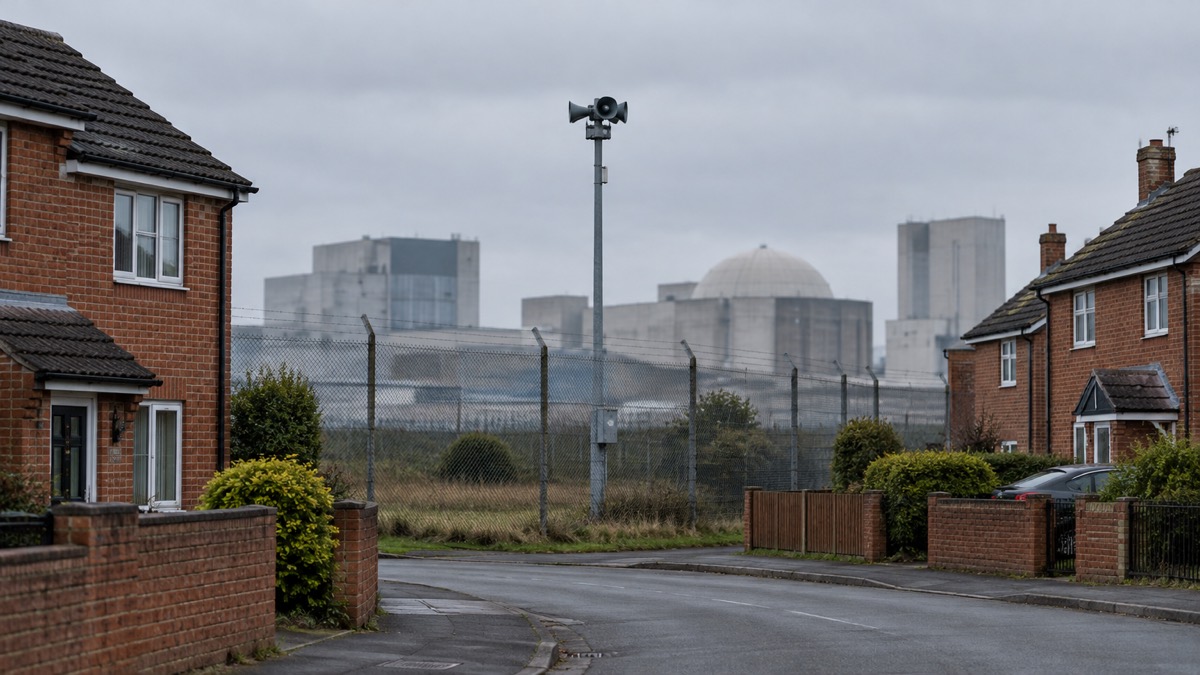
If you live or work near a nuclear site, a naval base or a large chemical works, the area will have its own warning arrangements: sirens on the site, free telephone warning systems you can join, and an emergency booklet delivered to your door. A rising and falling wailing note at a naval base signals an emergency, and that siren is tested at 9:30am on the last Wednesdays of February, June and October1. Sellafield now has a single site siren, sounded several times a year during exercises with advance notice given in the local press and on local radio2. Households in the villages around Sellafield can also sign up, for free, to an automated telephone warning system that will call or text them if an emergency ever affects the area3.
These warnings exist because the law requires them, not because an emergency is likely. Nuclear licensed sites are designed, built and operated so that the chance of an emergency and any release is very low4, and radiation emergencies are rare events5. But the sirens and phone systems are there to reach you quickly if the worst ever happens, and knowing in advance what each sound means, and whether you are signed up, is the whole of the preparation this page asks of you.
What the sirens sound like and what they mean
Different sites use different sounds, and knowing which one serves your area is the first step. Around the naval bases, the warning is unmistakable: Portsmouth City Council's residents' booklet describes it plainly.
"The naval base siren will also be used, a rising and falling wailing note."
That same rising and falling note is used at naval bases generally, and Portsmouth's resident leaflet gives the same description with the same test schedule7. If you hear it outside a published test time, treat it as a real warning: go indoors, stay in, and tune in to local radio for instructions. The National Risk Register sets out the reasoning behind that advice: depending on the incident, those affected may be asked to "go in, stay in and tune in" to local radio stations or check official sources of information online, and going inside and seeking further information is often the safest thing to do unless there is an obvious risk to the building8. Our page on go in, stay in, tune in explains the practical steps.
At BAE Systems' site in Barrow, the booklet for residents describes a "Site Nuclear Alert Siren (reminiscent of the old air raid siren)", which is sounded if a radiation emergency occurs on a submarine that could affect the safety of people on the site and, potentially, the public9. The same booklet notes one important exception: the siren is not sounded if a radiation emergency occurs at Ramsden Dock Basin, where you would be warned by local radio instead9.
Sellafield, Europe's largest single nuclear site, which stores and handles industrial size quantities of radioactive material, has now moved to having only one site siren sound2. That simplification matters for residents: whatever the nature of an incident on the site, the same siren will sound, and the action it asks of you is the same. The booklet divides possible incidents into four alert states, and the siren and the Public Telephone Warning System carry the message for each.
| Alert state | What it means | What you should do |
|---|---|---|
| Operational Alert | An event on or off-site that affects normal operations but is not large enough to be a Site Incident, Off-Site Chemical Emergency or Off-Site Nuclear Emergency | Carry on with normal day-to-day activities; refer to the booklet and the Sellafield Information Line; further safety information comes via the Public Telephone Warning System2 |
| Site Incident | Principally a radiation or chemical incident, such as a large spillage of material, giving rise to unsafe conditions on the site but not capable of having an effect outside the site boundary fence | Carry on with normal day-to-day activities; further safety information comes via the Public Telephone Warning System2 |
| Off-Site Chemical Emergency | A chemical emergency, such as a toxic gas release, directly affecting activity on the site and with the potential to affect an area just beyond the site boundary fence, or having already done so | Follow the instructions issued with the warning2 |
| Off-Site Nuclear Emergency | A radiation emergency, such as a major fire, directly affecting activity on the site and with the potential to affect areas outside the site boundary fence, or having already done so | Everyone within the Detailed Emergency Planning Zone and Inner Emergency Planning Zone must immediately find shelter indoors and stay there2 |
Chemical sites use sirens too. In Edinburgh, the guidance for the INEOS Dalmeny site states that sirens will warn people who live or work in the area of any risk from an incident on the site, and gives the same core advice: go in, stay in, tune in10. Our page on chemical leaks and toxic smoke covers that side in more detail.
Siren tests and exercise dates: how you get advance notice
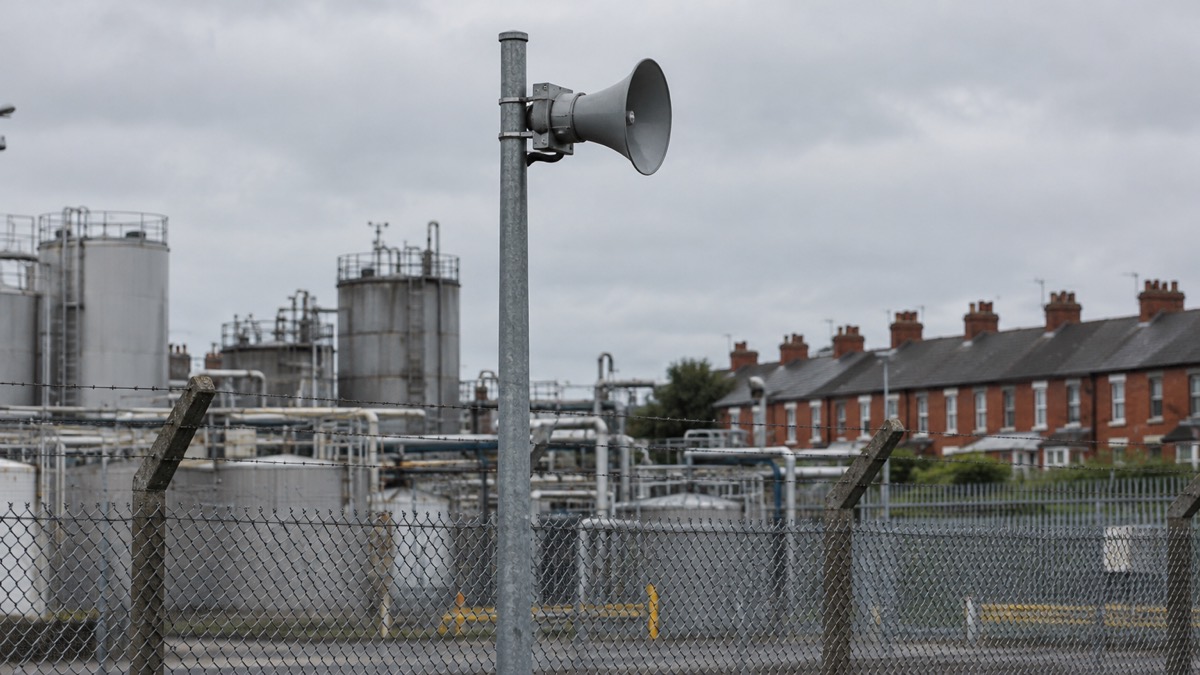
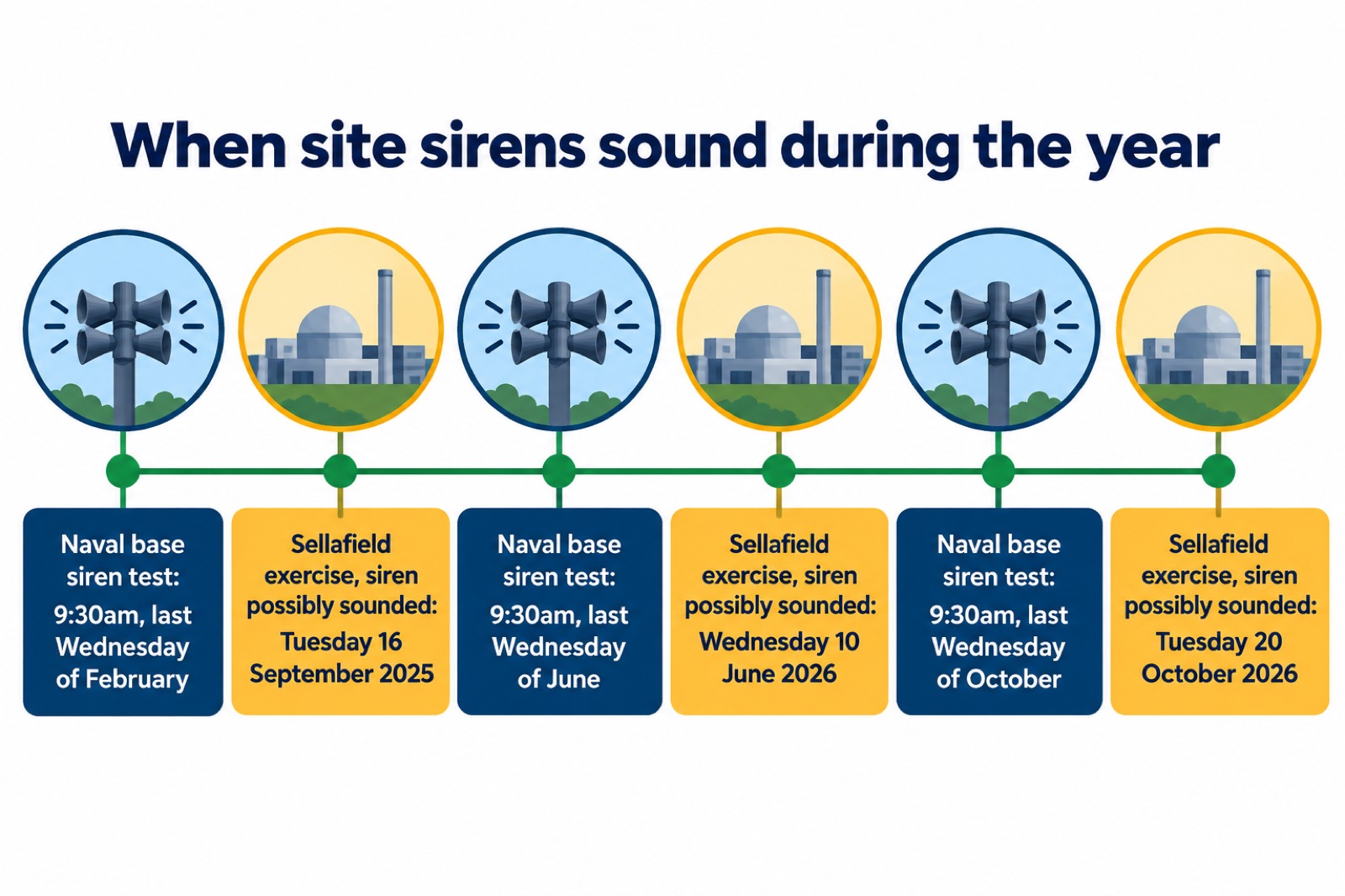
Every site that keeps a siren tests it, and every one of them publishes the test arrangements in advance so that a test is never mistaken for a real warning. The naval base siren is tested at 9:30am on the last Wednesdays of February, June and October1, a schedule confirmed in Portsmouth's resident leaflet7. If you live near a naval base, those three mornings a year are the only times you should expect to hear the siren without an emergency behind it.
At Sellafield, the siren is sounded several times a year during exercises, and advance notice of this will be given in the Whitehaven News and on BBC Radio Cumbria and CFM2. Cumberland Council publishes the exercise dates on which the site siren may be sounded: Tuesday 16 September 2025, Wednesday 10 June 2026 and Tuesday 20 October 20263. The dates are announced in advance precisely so that residents can recognise them, and the council encourages people living near Sellafield to take note of them rather than be alarmed on the day3.
The BAE Systems booklet gives the same assurance for Barrow: the siren is tested regularly and advance notice is always given in the local newspapers9. The pattern across every site is the same, and it is worth checking your own local booklet or council page for the equivalent arrangement where you live.
One point of reassurance worth holding onto: the reason the tests and exercises exist is that the operators are required to prove their arrangements work. Legislation requires operators of nuclear licensed sites to have plans to deal with emergencies, and each site must have emergency plans flexible enough to deal with the on and off-site consequences of any emergency4. Lancashire's REPPIR plans stress that the possibility of such emergencies occurring is remote, and that the design and operation of all plants on all sites are independently monitored by the Office for Nuclear Regulation and the Environment Agency11. Hearing a siren on a published exercise date is the system working, not the system failing.
Free phone warnings near Sellafield: who can sign up
Sirens only work if you are outdoors or near a window. For everyone else, Sellafield's primary warning mechanism is the Public Telephone Warning System, and Cumberland Council encourages people living near Sellafield to sign up for it. It is a free automated telephone warning system providing a warning in the highly unlikely event of an emergency at the Sellafield site, plus updates via text messages, email and mobile calls on exercises3. It is an opt-in system, and it is free2.
When an alert is triggered, you will receive advice on actions to take by landline, mobile phone, SMS text message or email, depending on how you registered2. The system is only available to householders and premises within the Detailed Emergency Planning Zone2. That zone ranges from 6.1km to 8km from the centre of the site3, and the booklet identifies the areas between 6.1km and 8km from the centre of the Sellafield site as those which could be the most likely to be directly affected during and following a radiation emergency2. For a chemical emergency, the most likely affected area is smaller: an area up to 2km from the centre of the site, called the Inner Emergency Planning Zone2. Beyond both sits the Outline Planning Zone, extending 50km from the centre of the site3. Our page on emergency planning zones explains what each zone means for the information you receive.
The council lists the eligible villages for the telephone warning system3:
- Calder Bridge
- Haile
- Ponsonby
- Wellington
- Gosforth
- Drigg
- Holmrook
- Seascale
- Braystones
- Nethertown
- Middletown
- Thornhill
- Beckermet
If you live in one of these villages, registration is free and the system is described as the primary mechanism for notifying residents of an emergency2. The revision of the Detailed Emergency Planning Zones followed an Office for Nuclear Regulation review in January 2014, drawing on lessons learnt from the Fukushima Daiichi Nuclear Power Plant incident in 20113, so the boundaries reflect current national thinking rather than historical convenience.
How to register for the Sellafield Public Telephone Warning System
Registration is straightforward, and the system is free and opt in2. You can register online at sellafield.registration-site.co.uk, or contact the Joint Emergency Management and Resilience Team at Cumbria Fire & Rescue Service HQ, Carleton Avenue, Penrith CA10 2FA, by telephone on (01768) 812500 or by email at emergency.planning@westmorlandandfurness.gov.uk2:
- Online: register at sellafield.registration-site.co.uk2
- By post or in writing: contact the Joint Emergency Management and Resilience Team, Cumbria Fire & Rescue Service HQ, Carleton Avenue, Penrith CA10 2FA2
- By phone: telephone (01768) 8125002
- By email: emergency.planning@westmorlandandfurness.gov.uk2
If you do not have access to the internet, Cumberland Council advises that you may wish to ask a friend or neighbour to assist you in signing up for the service3. That is worth doing before any emergency rather than during one, since the whole value of the system lies in your details already being in it. If you are helping an older or less confident neighbour with the form, our page on extra help in an emergency has wider advice on supporting households that need it.
Once registered, you do not need to do anything further. The system is tested through the exercise updates sent via text message, email and mobile calls3, so you will know it is working without ever needing to chase it. If you move house within the zone, or change your phone number or email address, re-register with the new details so the warning reaches the right place.
Phone warnings near Heysham and other nuclear and industrial sites
Sellafield is not the only site with a telephone warning system, and the arrangements elsewhere follow the same pattern under the same regulations. Sites such as Heysham Power Station and Westinghouse Springfields are governed by strict nuclear Radiation Emergency Preparedness and Public Information Regulations, known as REPPIR12. Lancashire's emergency plans set out what that means for households: EDF Energy provides a free Public Emergency Telephone Information System for people living within the Detailed Emergency Planning Zone for Heysham Power Stations, giving a warning in the highly unlikely event of an emergency at the Heysham site11. You can sign up by completing the sign-up card that is attached to the annual calendar delivered to households in the zone11.
Elsewhere in the country the mechanisms differ in name but not in purpose:
| Site or area | Warning arrangement | How to join |
|---|---|---|
| Sellafield, Cumbria | Public Telephone Warning System: landline, mobile, SMS or email alerts2 | Register online, by post, phone or email2 |
| Heysham Power Stations, Lancashire | Public Emergency Telephone Information System, provided free by EDF Energy11 | Complete the sign-up card attached to the annual calendar11 |
| Devonport, Plymouth | Emergency Notification System, notifying residents and local businesses in the very unlikely event of a nuclear emergency13 | Sign up as a resident or local business in the area13 |
| South-east Cornwall | Operators must pass information to affected premises by mobile phone (voice or SMS) and landline, advising actions to take and when the all-clear is given14 | Register to receive alerts via the sendwordnow page if you have a family member in the area14 |
The south-east Cornwall arrangement is worth noting for its legal footing: the operators of these sites must pass you information if there is an accident or emergency which may affect you14. That duty comes from REPPIR and its sister regulations, and it is the same duty that puts a booklet through your door. Southampton's guidance gives a concrete example of the distance involved: legislation requires people living up to 1.5km away from an operational berth to be given prior information about a nuclear emergency15. Our page on radiation emergency plans at the naval bases covers Portsmouth, Devonport and Southampton in detail.
The Sellafield Emergency Information Line: a recorded update at any time
Alongside the siren and the telephone warning system, Sellafield maintains a permanent information line. A pre-recorded message giving brief details of the current emergency state at the site is always available on 0808 909 80902. Calls to this number are free from landlines, though mobile operators may make a charge depending on your call plan2. The line exists so that at any moment, day or night, you can check the current state of the site without waiting for a broadcast or an alert.
In an actual emergency, the booklet asks you to be sparing with the phone networks. The advice is to try not to use telephones, because mobile telephone networks may become overloaded; if you must make a call, avoid using your mobile phone, use a landline and be brief, or send a mobile text message2. Text messages place far less load on a network than voice calls, and they get through when calls cannot. Our page on staying informed and in touch covers this more generally.
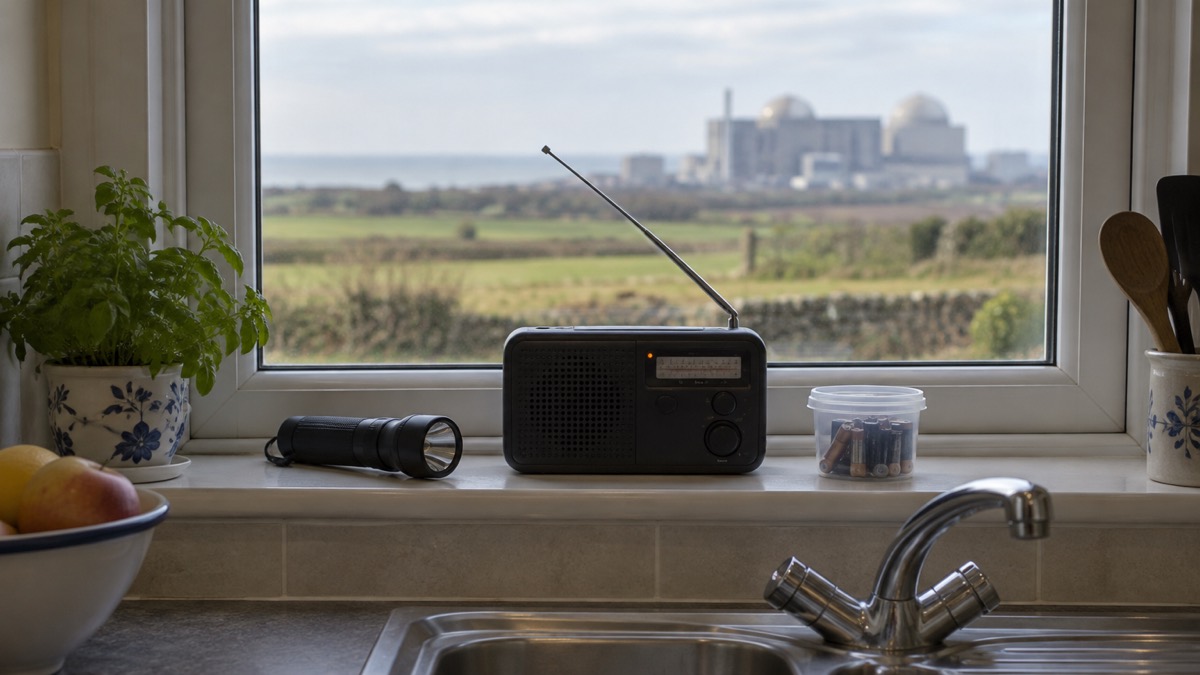
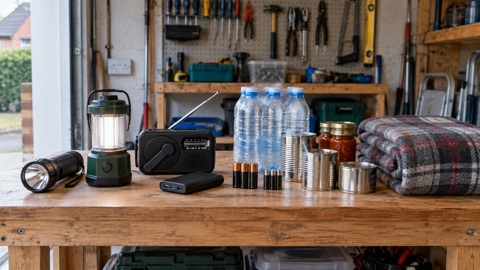
For the same reason, the radio is the backbone of public information in a Sellafield emergency. Information and advice will be broadcast live on local radio such as BBC Radio Cumbria on 104.1 MHz FM or 206m (1458kHz) MW, or CFM on 103.4 MHz FM2. A battery or wind-up radio in the house means you can receive that even if the power is out; our emergency kit page lists what else belongs alongside it. After the emergency has passed, keep listening and looking for announcements and updates on the news, watch for long-term safety information in the news and in leaflets, and wait for the all-clear announcement1.
Government Emergency Alerts on mobile phones
Separate from all the site-based systems is the UK government's Emergency Alerts service, which warns you about serious nearby threats to life through your mobile phone or device6. It needs nothing from you: you do not need to sign up for the service and there is no charge to receive alerts16. The technology allows a message to be broadcast to a defined area, meaning any compatible device in or entering that area immediately receives it, and alerts may include a URL or helpline and are always replicated on gov.uk/alerts8.
When an alert arrives, you will hear a loud siren-like sound for up to 10 seconds and your phone will use a distinct vibration6. The device may play the sound even if it is set to silent, vibrate for around 10 seconds, read the alert aloud if accessibility settings are enabled, and display information about the emergency and the actions to take16. A message will appear on your screen and stay there until you acknowledge it17. The design is deliberately accessible: compatible phones use a loud, siren-like sound so that people with visual impairments are not excluded, the alert may work with screen magnification, may read the message out having overridden volume settings, and the noise should be audible for those who use a hearing aid18.
The system is tested from time to time: when you receive any alert, including the test alert, your phone will give off a loud noise which sounds like a siren, even if your phone is on silent, and will read out the alert and vibrate, lasting about 10 seconds19. Compatible mobile phones and tablets will receive an alert, make a loud siren-like sound and vibrate20. You will hear a loud siren-like sound for up to 10 seconds21.
Where to find your local emergency booklet
Every one of these warning systems is backed by a printed booklet, and that booklet is the document to read before anything happens. The Sellafield booklet is valid from July 2024 to July 20272. The government's own guidance is direct about what to do with it: if you live close to a nuclear licensed site, you should refer to the specific local information provided to you4.
The booklets are refreshed on a cycle. Portsmouth's residents' booklet, distributed to households within a 1.5-kilometre radius of the nuclear berths, is valid from July 2024 to July 20271. Southampton's residents' leaflet, covering households within 1.5km of the Docks nuclear vessel berth, runs July 2024 to July 202715. At Devonport, the booklet "What You Should Do if There Is a Radiation Emergency at the Devonport Site" is published every three years and distributed to households and businesses in the detailed emergency planning zones, with an Easy Read version available13. When a new edition arrives, replace the old one: the 2023 Sellafield booklet replaces the similar green booklet issued in 2021, which should now be disposed of via your Cumberland Council kerbside recycling box2.
Inside the Sellafield booklet you will find a map divided into sectors, and the emergency services may use those sector locations when issuing messages or instructions during an emergency; note that there is no Sector "I"2. Knowing your sector before an emergency means an instruction such as "residents in Sector C should shelter indoors" lands immediately. During and after any incident, emergency information will be available on local radio stations, on social media, at Rest Centres or other facilities, and on emergency services and council websites22.
If you cannot find your booklet, contact your local council's emergency planning team, which is the same team that handles registration for the telephone warning systems in most areas. And for the wider picture of what to do when a warning arrives, our pages on what to do in a radiation emergency and the radiation emergency checklist take you through the first hour step by step.
Sources (22)
- REPPIR residents' booklet 2024, Portsmouth City Council, 2024-08
- Sellafield emergency booklet, Cumberland Council, 2023-09
- Chemical and nuclear sites in Cumberland, Cumberland Council, 2026
- Nuclear emergencies: information for the public, GOV.UK, 2026-09-28
- What to do in a radiation emergency, GOV.UK, 2024-09-10
- Frequently asked questions about Emergency Alerts, UK Government, 2023
- Radiation emergency guide: resident leaflet, Portsmouth City Council, 2023-11
- 2023 National Risk Register, UK Government, 2023
- What to do in an emergency booklet 2023 to 2027, BAE Systems / Westmorland and Furness Council, 2023
- Release of gas, toxic chemical or radiation, City of Edinburgh Council, 2026-10-29
- REPPIR plans, Lancashire County Council, 2026-10-29
- Industrial incident advice, Lancashire Prepared, 2026-10-29
- Devonport offsite emergency plan, Plymouth City Council, 2026
- Emergency planning in south-east Cornwall, Cornwall Council, 2025-07-30
- Radiation leaflet 2024 for residents, Southampton City Council, 2024-07
- Emergency alerts service, Croydon Council, 2026
- National emergency alert system: what is it?, Essex Prepared, 2026-10-29
- Emergency planning: emergency alerts, Surrey County Council, 2023-04-14
- Emergency Alerts test 7 September: accessible materials, GOV.UK, 2025-08-27
- Emergency alert: 14 August 2026 wildfire warning, GOV.UK, 2026-08-14
- Smoke alarms and emergencySMS, Cheshire Fire and Rescue Service, 2026-07-27
- Emergency preparations you can do, Moray Council, 2026-10-29
 Bomb Threat Calls
 Radiation Checklist First Hour
 Power Cut Kit Checklist
 UK Terrorism Threat
 Terrorism Threat Levels
 Reporting Suspicious Activity
 Unattended or Suspicious Items
 Radicalisation Concerns
 Support for Attack Victims
 CBR Attack Signs
 Chemical Releases Near Home
 Radiation Emergency
 Stable Iodine Tablets
 Radiation Dose Levels