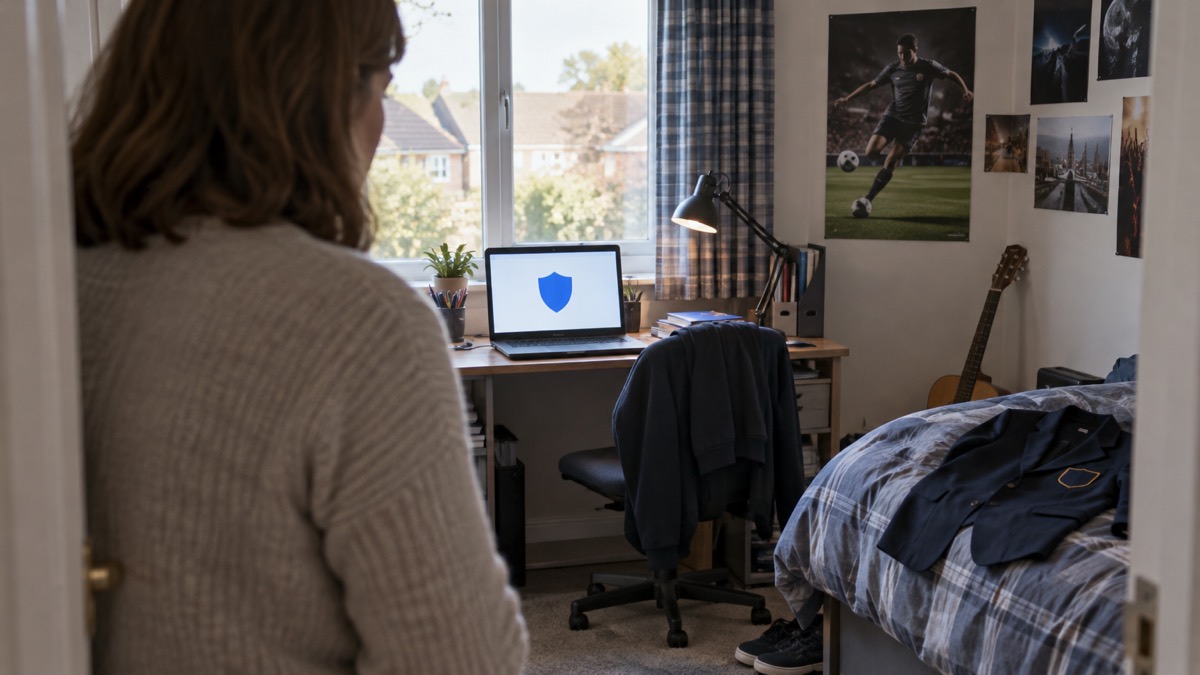
If you are worried that someone close to you is being radicalised, the single most important piece of official advice is simple: act early and seek help1. You do not need to be certain. You do not need to prove anything. Police forces across the country have specially trained officers who work alongside other organisations, through a Home Office programme called Prevent, to help people vulnerable to radicalisation move away from violent extremism1. The support they offer is voluntary, and your own identity as the person reporting is protected2.
This page explains what radicalisation means, the signs official guidance asks you to look for, how Prevent works, who to contact and what happens after you do. It also covers the questions families most often worry about: whether reporting will get someone into trouble, and what help exists for the rest of the household.
What radicalisation means
Radicalisation is defined in official guidance as the process by which a person comes to support terrorism and extremist ideologies1. It is not a single event, and it is not the same as holding strong or unpopular opinions. It is a process, which means it happens over time, and which also means there is usually a window in which someone close to the person notices that something is changing and can act.
Understanding it as a process matters for two reasons. First, it explains why the official advice is to act early: the earlier help is offered, the more of the process there is to work with1. Second, it explains why the signs listed in the next section are about patterns of behaviour, such as repeated travel without explanation or a sustained interest in extremist material, rather than any single moment2.
The wider context is that terrorism remains a live risk in the UK. The national threat level stands at SEVERE, meaning an attack is highly likely4, and the aim of the Prevent strategy is to reduce the threat to the UK from terrorism by stopping people becoming terrorists or supporting terrorism5. Prevent sits alongside the work of the police and security services; it is the part of the system aimed at the earliest stage, before any crime has been committed, and its help is offered on a voluntary basis2. You can read more about the wider picture in our guide to the terrorism threat in the UK and what the threat levels mean.
Signs of radicalisation: what official guidance asks you to look for
Official counter-terrorism guidance lists specific behaviours it asks you to report if you believe them to be suspicious or if they cause a threat1. The behaviours most relevant to a family member are:
- Someone who travels but is vague about where they are going2
- Someone with multiple passports in different names2
- Someone who looks at extremist material, or shares or creates content that glorifies terrorism2
- Somebody promoting hateful ideas or extremist views2
The same guidance also lists behaviours that point towards planning rather than persuasion: gathering materials or equipment, storing dangerous materials, hostile reconnaissance and financing1. Those are covered in more detail in our guide to how to report suspicious activity.
Two things about this list are worth dwelling on. The first is that the police want people to use their gut feeling and common sense: anything that worries or concerns you counts as suspicious, and in familiar places people instinctively know when something is not right6. You are not being asked to make a legal judgement about whether a person has crossed a line. You are being asked to pass on what worries you and let trained officers make the assessment.
The second is that the guidance is deliberately broad about who it covers. Official advice is to report any concerns you have about anyone, adult or child, who you think may be vulnerable to being drawn into extremism, because support is available to them5. That includes your own child, your partner, a sibling or a friend. The phrase "don't rely on others to report it" appears in the official advice precisely because families sometimes assume school, a doctor or someone else will raise it5.
Prevent: the Home Office programme that helps people move away from extremism
Prevent is a Home Office programme through which specially trained officers work alongside other organisations to help people vulnerable to radicalisation move away from violent extremism1. Its stated aim is to reduce the threat to the UK from terrorism by stopping people becoming terrorists or supporting terrorism5.
For a worried family member, three features of the programme matter most.
The support is voluntary. Receiving support is voluntary2. The programme is built around offering help to a person who is being drawn towards extremism, not around compulsion. That is worth knowing if your fear is that reporting someone will set an unstoppable process in motion: the official description of the help is that it is offered and accepted, not imposed.
It is not only the police. Specially trained officers work alongside other organisations through Prevent1. Those organisations are not named in the national guidance, but the structure means the response to a concern can draw on services beyond policing, such as local authority and community support, rather than being a purely criminal-justice matter.
It is national. Police forces across the country have specially trained officers working through the programme7. Wherever you live in the UK, the route in is the same: contact the police in confidence and your concern will reach the people trained to handle it.
The Prevent strategy is long-standing UK policy, and its work sits within the broader national picture of terrorism risk. The National Security Risk Assessment, a classified cross-government and scientifically rigorous assessment of the most serious risks facing the UK, treats terrorism as one of those risks8, and local resilience planning reflects the same picture: in West Yorkshire, for example, the police, national agencies and local authorities work together continuously to ensure the region is prepared for and protected from malicious attacks9. Prevent is the early-intervention end of that system.
What specially trained Prevent officers do
When you contact the police with a concern, specially trained officers and police staff take the details you give and pass them on for further checks2. The information you provide is kept secure and your identity is protected2. The guidance addresses the worry that stops many people picking up the phone: don't be concerned about wasting police time2.
This is worth pausing on, because it is the most common reason families give for not acting. The official position is the opposite of what fear suggests. The officers who take these reports do so as their job, they are trained for it, and the explicit instruction in the national guidance is not to worry about wasting their time2. A report that turns out to be nothing is treated as part of how the system works, not as a nuisance.
The same confidentiality applies whichever route you use. If you call the Anti-Terrorism Hotline, your call will be handled by specially trained officers who will treat it in confidence10. If you report online, the same protections around your information and your identity apply2. What the officers do next is take the details and pass them on for further checks2: in other words, your report is the start of an assessment by trained people, not the end of the matter decided by you alone.
If your concern is about an immediate danger, the route is different. Call 999 if you or someone else is in immediate danger3. An emergency, as defined in official personal security guidance, includes a crime in progress, someone suspected of a crime being nearby, danger to life, or violence being used or threatened11. For everything short of that, the confidential routes below are the right ones.
Who to contact through ACT Early
ACT stands for Action Counters Terrorism, the national campaign through which the police ask the public to report their concerns. There are three routes, and the right one depends on how urgent the situation is.
| Your situation | Who to contact | What happens |
|---|---|---|
| Immediate danger to anyone | 9993 | Emergency police response |
| Suspicious or worrying behaviour, including concerns about radicalisation | The police, in confidence, on 0800 789 3212 | Specially trained officers take details and pass them on for further checks2 |
| Online material that promotes terrorism | The Home Office's terrorist material reporting service12 | The material is assessed by the Home Office |
The confidential reporting number, 0800 789 321, is the main route for a family member worried about radicalisation2. You can also report suspicious activity through ProtectUK, the official counter-terrorism security advice site13. Whichever you use, the guidance is the same: trust your instincts and report anything that could potentially be related to terrorism2.
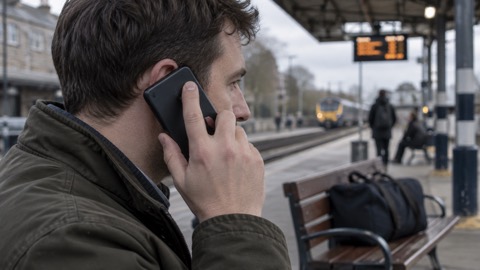
If you are unsure whether what you have seen counts, the official test is deliberately low. Suspicious behaviour is anything that makes someone feel uneasy or worried, and if you see anything that makes you feel this way, you should report it6. The police want people to use their gut feeling and common sense, and you can tell an adult, someone who works where you are, a police officer, call 999, or use the online reporting tool6. For a parent, this also means the advice applies to what a child reports to you: if your child tells you something that worries them about a friend or an online contact, the same routes exist.
Our separate guide covers how to report suspicious activity or terrorism concerns in more detail, and how to report terrorist content online explains the Home Office route for online material.
Police and other organisations working together
Prevent is not a police-only operation. The consistent description across official guidance is that specially trained officers work alongside other organisations through the programme1. That partnership structure exists at every level of the UK's counter-terrorism work: nationally, through the Home Office programme itself, and locally, where the police, national agencies and local authorities work together continuously to ensure regions are prepared for and protected from malicious attacks9.
For you as a family member, this has a practical meaning. The person who takes your call is a police officer or police staff member, but the help that may follow a referral can come from beyond the police. The programme exists to help someone move away from violent extremism1, and the organisations working alongside the police are part of how that help is delivered.
It also means your report is one input into an established system, not a lone accusation. Local preparedness partnerships across England, Scotland, Wales and Northern Ireland plan for malicious threats as part of their wider emergency planning, and official community guidance asks groups to show awareness of risks that may affect them, both nationally and locally, and how vulnerable they are to those risks, including who may be most in need of support14. The same thinking, applied to individuals rather than communities, is what Prevent does: identify who is vulnerable and get support to them.
If you want to understand the wider system your report feeds into, see our guides to how the UK prepares for emergencies and community resilience.
Worries about online content
Much of the concern families have today is about what a person is watching, reading and sharing online. Official guidance treats online extremist material as something to report in its own right: report information, pictures or videos to the Home Office if they promote terrorism12. The Home Office runs a dedicated service for this, and our guide to reporting terrorist content online walks through it.
If the worry is about a person rather than a post, the behaviours to report include someone who looks at extremist material, or shares or creates content that glorifies terrorism2. That applies whether the material is being consumed privately or being pushed at others.
For parents, official fire and rescue service guidance on young people's safety asks adults to encourage safe choices online and offline, and to challenge risky behaviour being shared or copied on social media15. General online safety guidance also advises everyone to be careful about what they post online16. These are not counter-terrorism measures in themselves, but they set the habit that matters here: paying attention to what happens in a young person's online life, and being willing to act on it.
It helps to know that worry about online harm is now ordinary in UK households. Surveys have found 58% of British people worried about their money being stolen online, 53% about having their personal details stolen, and 48% about their devices being infected by viruses or malware, with those aged 25 to 34 the most worried, at 86%17. Concern about a family member being drawn into extremism online sits in that same landscape of everyday digital worry, and the response to it is the same as for the offline signs: report what worries you, in confidence, and let trained officers assess it.
Support for the family and the person you are worried about
Official preparedness advice asks households to look out for any vulnerable family or friends and to ask whether there is anything they can do to help18. Applied here, that means the rest of the family is part of the picture, not an afterthought. Seeking advice through the confidential routes above is itself a form of help for you: it moves a worry you have been carrying alone into the hands of people trained to deal with it, in confidence, with your identity protected2.
For the person you are worried about, the help available is the Prevent programme's: support, offered voluntarily, to help them move away from violent extremism1. Because officers work alongside other organisations, that support can extend beyond policing into the services those partner organisations provide1.
Two boundaries are worth being clear about. First, if the person is in immediate danger, or someone else is, call 9993. Second, if what you have seen is a crime in progress, that too is a 999 matter11. Everything else, including the vague, nagging worry that someone is changing in ways that frighten you, belongs with the confidential routes, and the official advice is not to wait until you are certain.
If your household is affected more widely, by an attack or by the aftermath of one, our guide to support for victims and families after a terror attack covers that help. If you want to be better prepared as a household for major incidents generally, start with our major incidents guide and getting started.
Sources (18)
- ACT: report suspicious activity, ProtectUK preparedness guidance, ProtectUK, 2026-06-01
- ACT: report suspicious activity, ProtectUK awareness guidance, ProtectUK, 2026-06-01
- Be Ready for emergencies, UK Government Be Ready campaign, 2026-10-21
- Terrorism threat levels, ProtectUK, 2026-05-01
- Emergency planning: Prevent strategy, Scottish Borders Council, 2026-10-29
- RUN HIDE TELL guidance and lesson plans, National Counter Terrorism Security Office and PSHE Association, 2017-11
- ACT: report suspicious activity, ProtectUK response guidance, ProtectUK, 2026-06-01
- Community Risk Management Plan, Lincolnshire Fire and Rescue, 2026-10-29
- Malicious threats and security incidents, West Yorkshire Prepared, 2026-10-29
- Be informed about hazards: terrorism, UK Government Prepare campaign, 2026-10-12
- Personal security guidance, ProtectUK, 2022-10-06
- Advice on major events and reporting terrorist material, Police Scotland, 2026-10-29
- Protect and prepare: HOT protocol and ACT reporting, Coventry City Council, 2026-10-29
- Information for communities and community groups, UK Government Prepare campaign, 2026-10-16
- Light Nights campaign: young people's safety, North Yorkshire Fire and Rescue Service, 2026-06-10
- Responding to a cyber incident, Ready Scotland, 2026-03-26
- Test your cyber risk, Wiltshire and Swindon Prepared, 2021-03
- Winter preparedness, South East Coast Ambulance Service NHS Foundation Trust, 2025-10-22
 Bomb Threat Calls
 Radiation Checklist First Hour
 Power Cut Kit Checklist
 UK Terrorism Threat
 Terrorism Threat Levels
 Reporting Suspicious Activity
 Unattended or Suspicious Items
 Support for Attack Victims
 CBR Attack Signs
 Chemical Releases Near Home
 Radiation Emergency
 Site Sirens and Warnings
 Stable Iodine Tablets
 Radiation Dose Levels