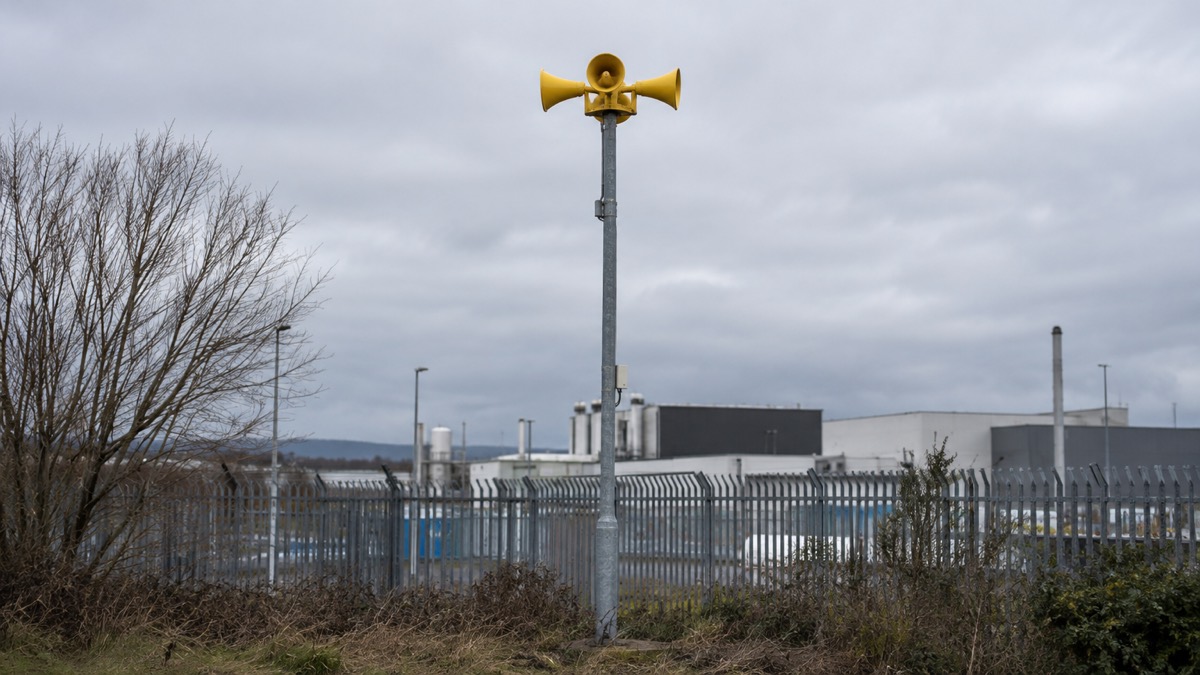
Governments and councils across the UK test their emergency plans before they ever need to use them. Sometimes that testing reaches ordinary households directly: a national test message arrives on every compatible mobile phone, a siren sounds near a nuclear site on a scheduled exercise day, or a community group gathers to practise setting up its emergency hub. None of these means anything has gone wrong. They mean the system is being checked so that it works when it matters.
The most visible example is the Emergency Alerts system, which sends warnings and advice directly to your phone or tablet. It was tested nationally on Sunday 7 September 2025 at 3pm, when a test message went to every compatible phone nationwide, lasting about 10 seconds1. The system has also been used for real: the government told Parliament it had been used "in live scenarios, in two storms that posed a real risk to life during last winter"3.
This page explains each kind of exercise a household may encounter, what has been learned from them, and what the findings suggest you should have ready at home. For the wider picture of how the UK prepares, see How the UK Prepares for Emergencies: A Household Guide.
National Emergency Alerts tests: what happens on your phone
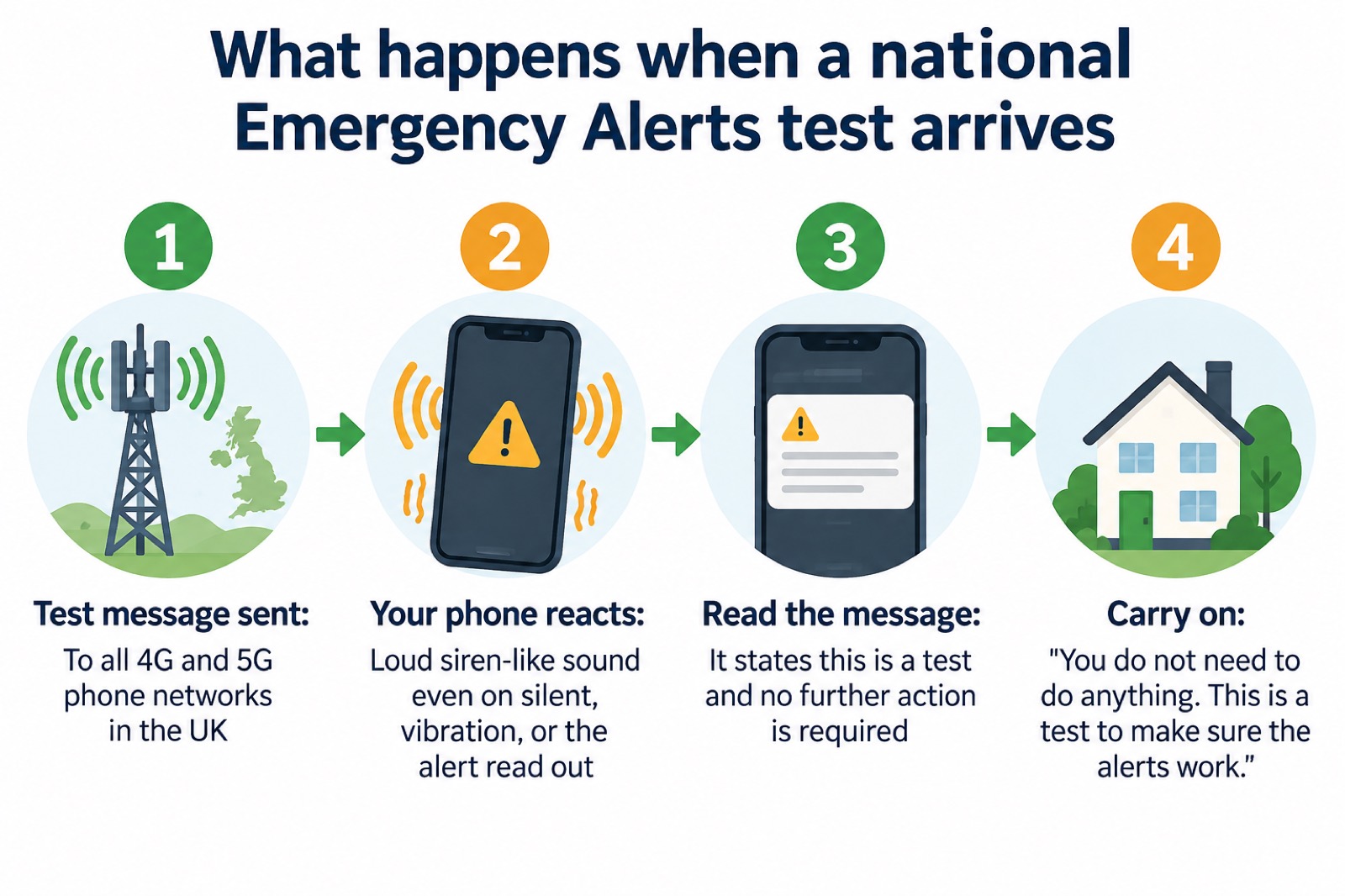
The Emergency Alerts system is the government's way of reaching mobile phones quickly when there is a danger to life nearby. Alerts are sent to your phone or tablet based on your current location, and you do not need to turn on location services to receive them7. The organisations sending the alerts do not need to know your phone number or location either8. When an alert arrives, your device may make a loud siren-like sound even if it is set to silent, vibrate, and read the alert out7.
The government tests this system nationally so that it works when it is genuinely needed. The second public national test took place on Sunday 7 September 2025 at 3pm, with the test message lasting about 10 seconds1. The message was sent to all 4G and 5G phone networks in the UK and made clear that it was a test and no further action was required9. The test had been announced on 7 July, alongside a new Resilience Action Plan9, and the plan confirmed the test message would go "to every compatible phone nationwide"2.
If a test arrives, the instruction is simple. As the government's easy-read notice put it: "You do not need to do anything. This is a test to make sure the alerts work."1 The siren-like sound can be startling, especially if your phone is silent, so it is worth telling everyone in your household in advance that tests happen and are harmless. If you are driving when any alert arrives, and there is nowhere safe and legal to stop and no one in the vehicle to read it for you, you can listen to news on live radio to find out about the emergency8.
Alerts work on compatible devices connected to UK 4G and 5G mobile networks, and you do not need to be connected to Wi-Fi or mobile data to receive them10. That is worth checking in your own household: ask everyone whether their phone is capable of receiving the National Emergency Alerts, as Central Bedfordshire Council's emergency kit guidance suggests11. If someone's phone cannot receive them, they are not cut off. Emergency Alerts are just one of many tools the government has to communicate with the public: those without a mobile will still be made aware through the media and local emergency services12.
Live alerts: the system in real floods and storms
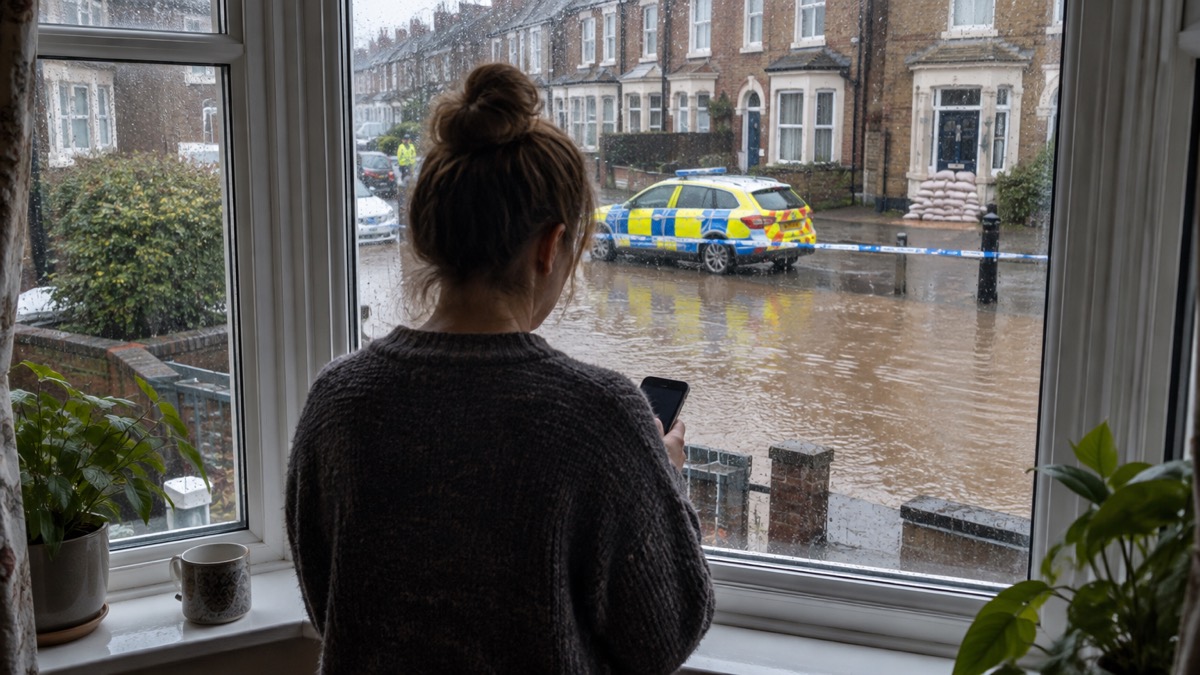
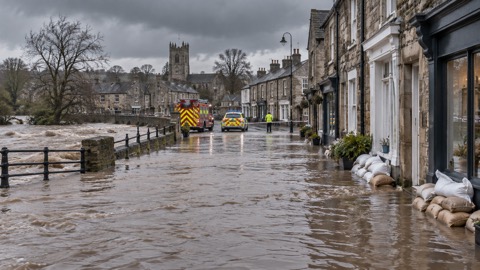
Tests are practice; live alerts are the system doing its job. The government told Parliament in July 2025 that the system had been used "a few times in live scenarios, in two storms that posed a real risk to life during last winter and in one or two more localised situations"3. So the question "will my phone ever get a real one?" has a clear answer: it already happens, most often around flooding and severe weather.
The situations most likely to trigger an alert are severe flooding, fires and extreme weather8. Croydon Council's guidance adds major fires and other incidents that require immediate action to the list10, and the government's factsheet gives severe flooding as its example of a life-threatening emergency the system would warn you about13. The National Risk Register describes the service as issuing urgent messages to mobile phones "when there is a live or imminent risk to life and specific instructions on how to respond are required"14.
Because alerts are sent by location, you may receive one while travelling, about an emergency you cannot yet see. The message will tell you what to do. If you are unsure whether an alert is genuine, the government's advice is to check it: alerts include a link to gov.uk/alerts, where you can verify that an alert is real, and if in doubt you can contact neighbours, friends or family in the nearby area to check whether they received it too12. Scam messages imitating alerts are a known concern, so treat any "alert" that asks for money or personal details with suspicion and verify at gov.uk/alerts.
For households, the practical points are these. Keep your phone charged and capable of receiving alerts. Know that the loud sound is deliberate, so it cuts through even a silent phone7. And remember that alerts are one channel among several: radio, local news and the emergency services all carry the same warnings, which matters if a member of your household has no mobile or an older phone. Our Staying Informed and in Touch in an Emergency guide covers those backup channels in full.
Opting out, and alerts on older phones
You can opt out of emergency alerts, and the government recognises there are good reasons some people do. Its guidance gives the example of victims of domestic abuse with a concealed phone, who may find it appropriate to turn off alerts so a hidden device never makes a sound5. Opting out is done in your phone's settings, and the method differs slightly by device.
| Device | How to opt out |
|---|---|
| iPhone | Search settings for "emergency alerts" and turn off Severe alerts and Emergency alerts15 |
| Android phones and tablets | Search settings for "emergency alerts" and turn off "test alerts", "exercise alerts", "operator defined" and "operator alerts"16 |
| Other phones and tablets | Find emergency alerts settings, possibly named "wireless emergency alerts" or "emergency broadcasts", and turn off the same categories16 |
| Any device | If it does not work, contact your device manufacturer; further advice at gov.uk/alerts/opting-out13 |
The government's factsheet puts the general method simply: "If you'd like to opt out, search your settings for 'emergency alerts' and turn off Emergency Alerts. If this does not work, contact your device manufacturer."13 Croydon Council's version is the same in substance: search for "emergency alerts" in your phone settings and follow the instructions for your device10. Note that turning alerts off is not the same as silencing your phone: you will not receive alerts at all if your device is turned off or in airplane mode17.
On older phones, the position is straightforward. Alerts work on compatible devices connected to UK 4G and 5G mobile networks10, so a phone that cannot use those networks will not receive them. If yours cannot, the household is not left uninformed. The alerts system is one tool among many, and people without a mobile will still be made aware through the media and local emergency services12. Information might also be provided through the emergency alert system if mobile networks are available during an incident, as Ofcom notes in its advice on staying connected in severe weather, which again makes radio a sensible standby18.
Sellafield exercises: sirens near a nuclear site
If you live in West Cumbria, emergency exercises can be audible. The Sellafield nuclear site runs scheduled emergency exercises, and Cumberland Council publishes the dates in advance because the site siren may be sounded on those days. Exercises were scheduled for Tuesday 16 September 2025, Wednesday 10 June 2026 and Tuesday 20 October 20264. Hearing the siren on one of those dates does not mean an emergency is under way.
The council is clear about the level of risk. It states that "the possibility of such emergencies occurring is remote and that the design and operation of all plants on the site are independently monitored" by the Office for Nuclear Regulation, the Health and Safety Executive and the Environment Agency4. The exercises exist to keep the off-site response rehearsed, not because an incident is expected.
Two planning zones matter to nearby residents. The Detailed Emergency Planning Zone around Sellafield ranges from 6.1km to 8km from the centre of the site, and areas within that band could be the most likely to be directly affected during and following a radiation emergency4. Beyond it, an Outline Planning Zone extends to 50km from the centre of the site4. For chemical emergencies, a separate Inner Emergency Planning Zone covers an area up to 2km from the centre of the site19. The size of emergency planning areas differs site by site across the UK, with consideration given to the individual factors of each site4.
| Zone around Sellafield | Distance from centre of site | What it covers |
|---|---|---|
| Inner Emergency Planning Zone | Up to 2km | The area most likely to be directly affected in a chemical emergency19 |
| Detailed Emergency Planning Zone | 6.1km to 8km | The area most likely to be directly affected in a radiation emergency4 |
| Outline Planning Zone | 50km | The wider area covered by outline planning4 |
Cumberland Council provides emergency information for Sellafield, and residents with questions can contact the council's Joint Emergency Management and Resilience (JEMR) Team4. If a siren sounds on a date not on the published list, follow the council's emergency information rather than assuming it is an exercise. Our Major Incidents guide covers what to do in chemical and radiation emergencies more generally.
Community Emergency Hubs: where local plans meet your street
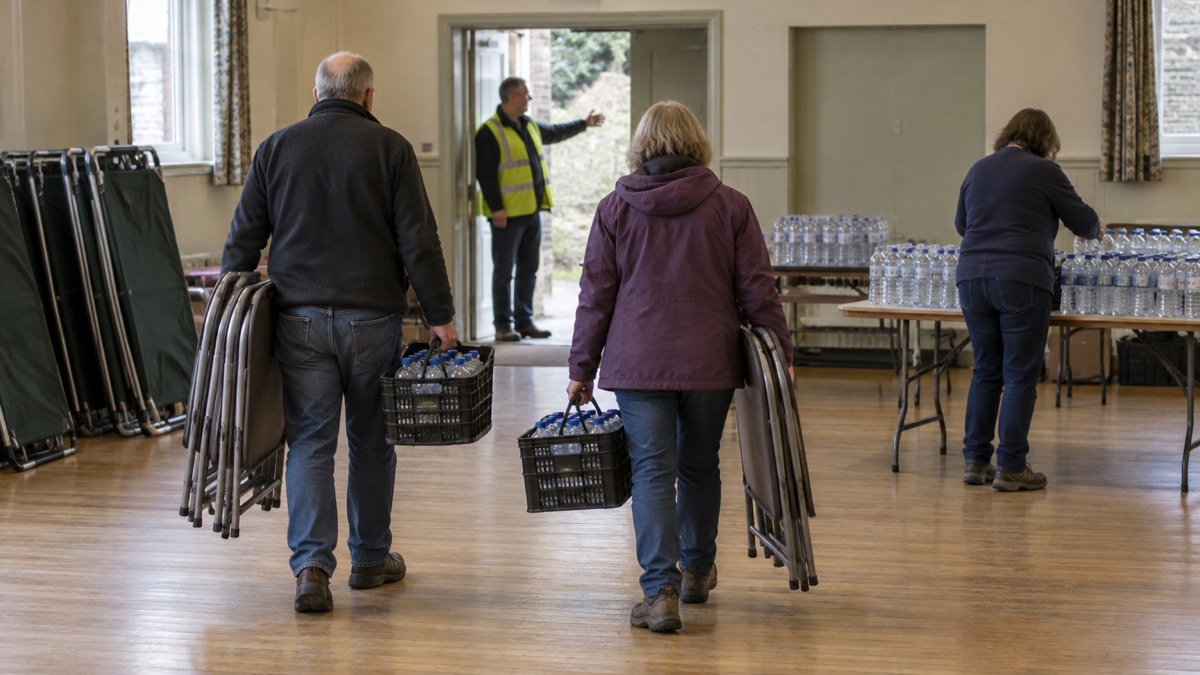
Exercises are not only for government. Across the UK, community groups test their own plans, and the most developed example is the Emergency Contact Hubs scheme run by Wiltshire and Swindon Prepared. The idea is simple: communities identify a place to meet so that "people really do know where to go in an incident where they may get information or need support"20. Some communities meet regularly at their hub to develop emergency and flood plans, practise how they would set it up, and spread the word about its role21. Others, particularly in urban areas, take a different approach, using the hub for signposting, messaging and raising awareness at local events like fetes or markets21.
Communities in the scheme test themselves the same way the government does. Many have run tabletop exercises or physical exercises to test their own emergency or flood plan and their hub, ranging from a simple discussion to setting the hub up with a scenario such as flooding20. Wiltshire and Swindon Prepared plan to repeat online engagement sessions later in the year, asking communities to share insight, good practice or issues overcome20. The concept is now being adopted in other regions across the UK to strengthen local resilience and build whole-society preparedness21, and households in Wiltshire and Swindon can join the growing network through Wiltshire and Swindon Prepared21.
Elsewhere, the route in is through existing groups. Greater Manchester's guidance is to join or support a local volunteering or community group before an emergency happens, which could be a local charity, a flood action group or a Neighbourhood Watch22. West Yorkshire Prepared publishes a community resilience guide that helps groups think about risk scenarios that may affect their area and what they might do in an emergency or major incident, and it has a ready-made tabletop exercise groups can use to test their response to various scenarios23. In Scotland, the national community emergency planning guide is written for exactly this purpose: groups that want to help their communities cope better in an emergency and become more resilient by making a Community Emergency Plan together24.
Councils help with the practicalities. Argyll and Bute Council advises groups making a community plan to identify a list of sites and complete the key locations template, and it can send copies of completed emergency plans from other communities on request25. Its guidance also covers how to practise and check the plan, who to keep in touch with when doing so, and how to decide on actions after the plan is used in an emergency and learn from the experience26. Somerset Council will give talks on emergency planning and what can be achieved to provide community self-help during emergencies, on request27. Our Community Resilience guide goes through the whole process of starting a group.
Council guides, local resilience forums and what they ask of you
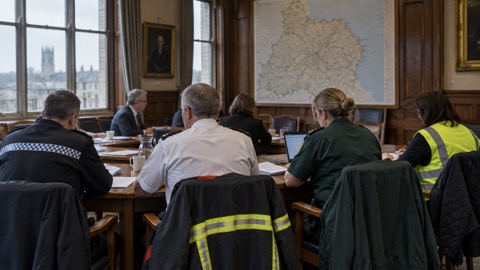
Behind every local exercise programme sits a Local Resilience Forum. These are partnerships made up of representatives from local public services, including the emergency services, local authorities, the NHS, the Environment Agency and other organisations involved in emergency preparedness, such as utilities providers28. Their job is to identify potential risks and produce emergency plans to either prevent or lessen the impact of any incident on their local communities29. Each forum publishes a Community Risk Register setting out the risks most likely to cause disruption in your region, and your forum will publish information online about the risks in your local area28.
The arrangements differ across the four nations, which affects where you look for your local information.
| Nation | Body | How many |
|---|---|---|
| England | Local Resilience Forums | 386 |
| Wales | Local Resilience Forums | 46 |
| Scotland | Regional Resilience Partnerships | 36 |
| Northern Ireland | Emergency Preparedness Groups | Established across the province6 |
The National Risk Register confirms the same picture: 38 LRFs in England, 4 in Wales, 3 Regional Resilience Partnerships in Scotland and Emergency Preparedness Groups in Northern Ireland14. Community groups can go straight to their forum: Greater Manchester's advice is to get in touch with Greater Manchester Resilience Forum to find out more about preparing your community for an emergency22. Our Local Resilience Forums page explains how to find yours.
Councils, for their part, translate the forums' risk work into what households should actually do. Nottinghamshire County Council's emergency planning role includes writing and reviewing emergency plans and providing emergency planning guidance to schools30. Somerset Council asks households to make up a home emergency pack, prepare an evacuation checklist, and keep a basic emergency kit in the vehicle depending on the time of year27. It also provides templates for personal, parish and business emergency plans27. Argyll and Bute's guide includes a Household Emergency Plan template for individuals and families to plan how they would cope in an emergency25.
One point worth checking with your own council rather than assuming: arrangements for shelter during an emergency vary from area to area, and councils generally use existing public buildings as rest centres when people cannot stay in their homes, rather than maintaining dedicated shelters. If being displaced is a concern for your household, our Who Houses You If an Emergency Leaves You Homeless page explains how rest centres and humanitarian assistance work.
Drought: how a slow emergency is declared and messaged
Not every emergency arrives with a siren. Drought develops over months, and it is managed through a staged process rather than a single dramatic announcement. UK water utilities follow a six-stage process: 1 Normal Operation, 2 Developing Drought, 3 Drought, 4 Severe Drought, 5 Emergency Measures, and 6 End of Drought31.
For households, two things follow from this. First, the messaging you receive will come through your water company and trusted national and local organisations: an official review of public messaging on extreme heat, drought and wildfires found that guidance is consistently issued by trusted national and local organisations, and that drought-related messaging across UK water utilities has a high degree of uniformity, with content largely homogenised across geographic regions31. Wherever you live, the advice at each stage will be broadly the same. Second, preparation happens before the dry summer: the government's Resilience Action Plan records that Thames Water told it that it is preparing drought mitigation measures3. Our Heatwaves and Drought and Water in an Emergency guides set out what to store and how to use less.
What the exercises mean for what you keep at home
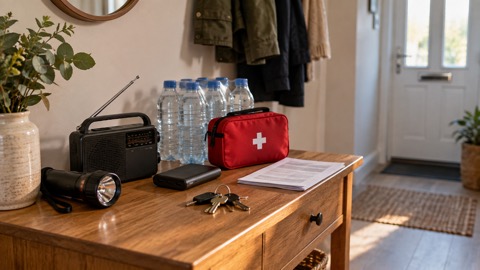
The clearest summary of what government expects of an ordinary household comes from the Resilience Action Plan itself. For the average person, it says, preparedness "may involve looking out for vulnerable neighbours and stocking up on some basics like bottled water and a torch"2. That is the conclusion the national exercise and testing programme points to, and it is deliberately modest: the exercises exist so that the state's systems work, and so that households only need to hold a small buffer.
The practical checklist that follows from the alerts system and local guidance is short:
- Check that every phone in the household is capable of receiving the National Emergency Alerts11
- Know what an alert sounds like: a loud siren-like sound even on a silent phone, vibration, or the alert read out7
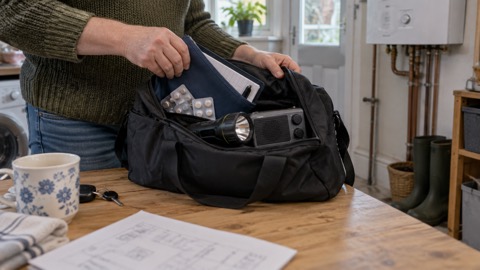
- Make up a home emergency pack, with bottled water and a torch among the basics2
- Prepare an evacuation checklist, and keep a basic emergency kit in the vehicle depending on the time of year27
- Complete a Household Emergency Plan template so the family knows how they would cope25
- Look out for vulnerable neighbours, before and during an emergency2
- Find your Local Resilience Forum's published risks for your area28
The exercises also tell you what not to worry about. A test alert needs no action1. A siren at Sellafield on a published exercise date is a rehearsal4. A community hub meeting in your village hall is neighbours practising, not a warning21. Knowing which signals are drills is itself a form of preparedness, because it keeps the real signals meaningful. To build the kit itself, start with Emergency Kit: What a UK Household Should Keep Ready and Getting Started: Preparing Your Household for an Emergency.
Sources (31)
- Emergency Alerts test: easy read, UK Government, 2025
- The UK Government Resilience Action Plan, UK Government, 2025
- Government Resilience Action Plan debate, Hansard, 2025
- Chemical and nuclear sites, Cumberland Council, 2026
- Opting out of emergency alerts, GOV.UK, 2026
- What is a Local Resilience Forum?, Essex Prepared, 2026
- Get prepared for emergencies: alerts, Prepare Campaign, 2026
- Be ready for emergencies: alerts and warnings, Be Ready Campaign, 2026
- Emergency alert test Sunday 7 September at 15:00, Wiltshire and Swindon Prepared, 2026
- Emergency Alerts service, Croydon Council, 2026
- Emergency kits and grab bags, Central Bedfordshire Council, 2026
- Emergency Alerts factsheet, UK Government, 2023
- Emergency Alerts System factsheet, Prepare Campaign, 2025
- National Risk Register 2025, UK Government, 2025
- National emergency alerts, Warwick District Council, 2026
- Emergency Alerts system testing, GOV.UK, 2026
- Frequently asked questions about Emergency Alerts, UK Government, 2023
- Stay connected in severe weather, Ofcom, 2026
- Sellafield emergency planning information, Cumbria County Council, 2023
- Spotlight on Emergency Contact Hubs (ECHs), Wiltshire and Swindon Prepared, 2026
- Spotlight on Emergency Contact Hubs, Wiltshire and Swindon Prepared, 2026
- Prepare your community, Greater Manchester Combined Authority, 2026
- Community resilience guide, West Yorkshire Prepared, 2026
- Community emergency planning guide: why, Ready Scotland, 2026
- Making your plan, Argyll and Bute Council, 2026
- How to make a community emergency plan, Argyll and Bute Council, 2026
- Preparing for emergencies, Somerset Council, 2026
- Check the risks where you are, Be Ready Campaign, 2026
- Check the risks where you are, Prepare Campaign, 2026
- Our role in emergency planning, Nottinghamshire County Council, 2026
- Public messaging for summer concurrent risks, UK Government, 2025
 30-Day Household Checklist
 Emergency Plan Template
 Supply Interruption Checklist
 National Risk Register
 How Emergency Risks Are Scored
 Civil Contingencies Act 2004
 What Counts as an Emergency
 Category 1 and 2 Responders
 Local Resilience Forums
 Strengthening Local Resilience
 What Your Council Does
 Central Government Response
 Gold, Silver and Bronze Command
 Major Incident Declared
 Emergency Powers